Showing posts with label 2009 Alternate Best Actor. Show all posts

Sunday, 30 July 2023

Alternate Best Actor 2009: Results

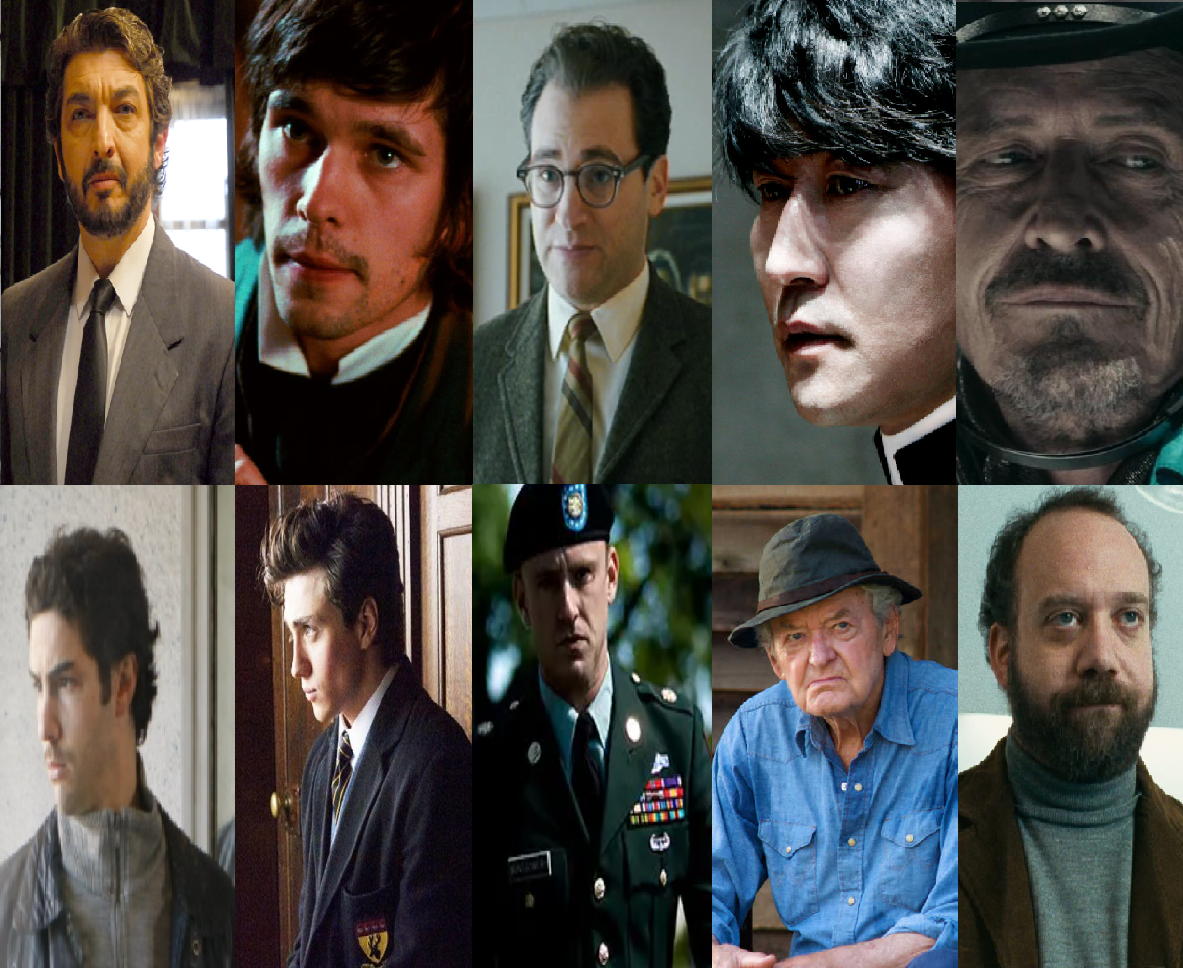
10. Song Kang-ho in Thirst - The film is a bit too scattershot overall for Song to truly make something special out of his priest turned vampire. He's good, but it's a lot less than you'd hope for. 

Best Scene: Ending. 
9. Paul Giamatti in Cold Souls - Paul Giamatti as himself is an idea with potential, but really doesn't add up to too much. He's good as himself but it isn't something special.

Best Scene: Feeling too much. 
8. Hal Holbrook in That Evening Sun - Holbrook is consistently honest, despite working with a very weak script. 

Best Scene: Reconciling with his son.  
7. Ben Whishaw in Bright Star - Whishaw unsurprisingly brings a natural ease and power to a poet, both in words but also hidden longing. 

Best Scene: Last meeting. 
6. Aaron Taylor-Johnson in Nowhere Boy - Taylor-Johnson gives a terrific depiction of John Lennon, by not playing to the icon, but rather finding the young man before it all. 

Best Scene: Reacting to his uncle's death. 
5. Stephen McHattie in Pontypool - McHattie rather wonderfully sells every extreme turn the film sends him in, going through unscathed even when the films gets ridiculous. 

Best Scene: Heroic broadcast. 
4. Ben Foster in The Messenger - Foster gives a striking depiction of self contained PTSD and the potent struggles of the man dealing with home and the memories of war.  

Best Scene: Second report.  
3. Michael Stuhlbarg in A Serious Man - Stuhlbarg gives a hilarious but also very human depiction of a man falling apart. 

Best Scene: Breaking in front of his lawyer. 
2. Tahar Rahim in A Prophet - Rahim gives a brilliant portrait of the slow adaptation of a young man lost, to finding his way to survive in a horrible situation and then mastering it.   

Best Scene: The murder. 
1. Ricardo Darin in The Secret in Their Eyes - Good predictions Luke, Perfectionist (x2),Bryan, Omar, Calvin, Emi Grant (x2) & RatedRStar.  Darin gives an absolutely wonderful performance that makes every disparate tone and story element cohere but also amplifies them into a performance that is so much all in one performance.

Best Scene: The train. 

Next: 2009 Supporting

Alternate Best Actor 2009: Paul Giamatti in Cold Souls

Paul Giamatti did not receive an Oscar nomination for portraying himself in Cold Souls. 

Cold Souls depicts the complications involving a service that will remove and replace souls. 

That concept and the fact that Paul Giamatti is playing himself probably suggests two things, that the filmmaker probably was heavily influenced by Charlie Kaufman and two those that sound like potentially fun concepts...sadly you'd be wrong on the latter. Paul Giamatti plays Paul Giamatti, but evidently, he was well cast in films like Sideways, because apparently, Giamatti is also a rather neurotic, befuddled, and often exasperated man, at least according to the portrayal of himself. Giamatti is doing the thing he's known for here, and I suppose there is a reason he's known for it because he is good at it. Of course, playing "himself" you'd hope he'd be good at it, but regardless, he does engage on a basic level and you almost instantly are granted a sense of a man stuck on the role of Uncle Vanya, which I don't know I like the play but between this and Drive My Car, perhaps one needs to just avoid it all that emotional turmoil. Anyway due to the role though, Giamatti takes the rash choice of having his soul removed after learning of the service, of course making no note that the technician looks an awful lot like David Straithain. And I think in a way this is where you get one of the weaknesses of the film, which is it really doesn't find too much depth and really not much fun in the concept of seeing the now soulless Giamatti interact with the world. He's just kind of more distant and more blunt. I don't have anything against the way Giamatti is playing this, but in a way, there's just not enough to what could be a far more interesting idea than what we get here. 

The next step of misused potential is when Giamatti finds he can borrow souls and takes on a Russian poet. This makes the slight change of him being more neurotic and upset. Giamatti is good at playing up their already innate desperation of himself and just putting it up that much more. Showing this both as the man desperate around his wife (Emily Watson), but also becomes overly passionate now as a performer. Giamatti becoming this man who is breaking a bit at the seams. So much that he has to bring the soul back due to the pressure of it all. And again I will say Giamatti is good at being able to portray this emotional desperation and exasperation. You instantly understand the plight of his anxiety and he is effective. Again though I think the film is less than what it could be because it doesn't draw this out or have Giamatti take it towards any real depth. That is a criticism of the film, not his performance, that sells what he is given, even if I wanted him to be given a lot more. There's just only the amount we get which falls into a little bit of the shades of a better performance from Giamatti. Not that what Giamatti is doing is ever less than good, he just got to do more with very similar ideas to something like Sideways. And the whole it being Paul Giamatti strangely really functions largely for plot purposes and we don't get much in terms of Giamatti getting to really play on his image, or even have fun with it. You could've just made him an actor with a different name and the film wouldn't have changed. 

The film only gets more perfunctory in its third act when Giamatti finds that his soul has gotten lost in a black market soul market involving Russians, again all concepts that sound more interesting than they are actually realized here. Including the soul mule Nina (Dina Korzun), who is a very underutilized but interesting actress, who sadly is underutilized here as well. They develop a decent chemistry but are kind of meaningless except take that she's probably a fan of Giamatti's work and wants to help him. They're natural together, making it a bigger shame that the film really struggles to do more with them than a rudimentary recovery plot that has little emotional stakes despite souls being on the line. This includes Nina to helping him find his soul and recovering by looking inward, something he refused to do initially. A scene that again, is a lot less than the idea, where we see Giamatti looking around his soul. His reactions speak to some kind of fascination and reflection, that delivers as much as he can, despite the actual images not being terribly interesting. Nor is the denouement of Giamatti becoming whole again and learning from his experience. No fault to Giamatti who plays the comfort in the man, and is still concerned for Nina who helped him, but again it just doesn't add up to anything more than just fine. This is a real shame as everything Giamatti is doing here is good, it just is in service to a film that is nothing but potential, unrealized potential. Leaving Giamatti as someone who does give some life to the film, but in a way that makes it only all the more frustrating. As Giamatti is ready to go where the film will take him, sadly it never takes him anywhere interesting. 

Tuesday, 18 July 2023

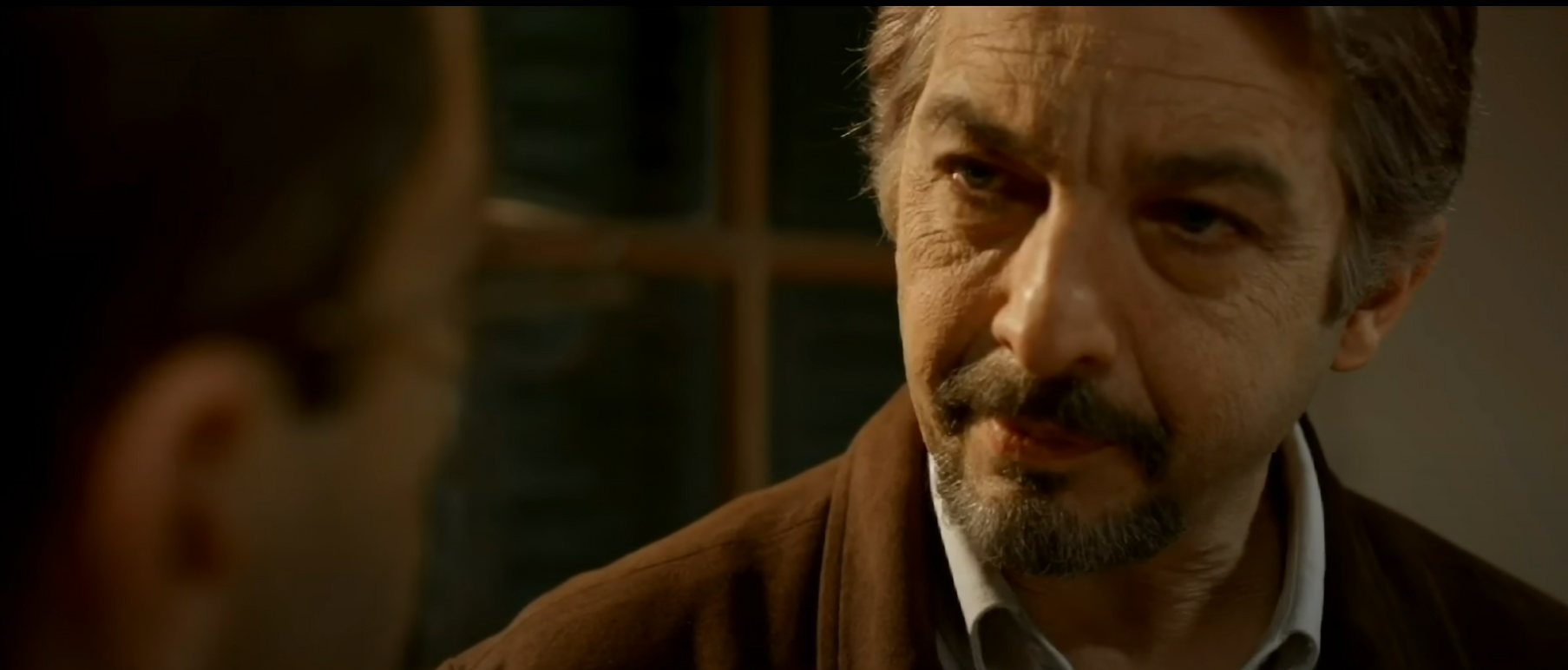
Alternate Best Actor 2009: Ricardo Darín in The Secret in Their Eyes

Ricardo Darín did not receive an Oscar nomination for portraying Benjamín Espósito in The Secret in Their Eyes. 

The Secret in Their Eyes follows the investigation of a rape and murder of a woman in Argentina. 

Finally getting one of the most famous Argentinian actors Ricardo Darín, in a leading role, in a role that is very much a showcase for him, though in a rather low-key way. Because as much as this film seems like a murder mystery from its description it is so much more than that, as it covers a lot of ground in terms of character and story, but also in tone. An approach that can be a risk, as inconsistencies are always possible, but one that this film pulls off rather magnificently. One of the reasons for this success is Darín in the lead role, who has a very easygoing style as a performer. He isn't someone who tries to force his brilliance on the viewer, rather he takes kind of a "they'll come to me" approach, which works great for the character of Benjamin here. A character who we see earliest, chronologically, just working as the judiciary in Argentina as he would any sort of job. And there is a very casual manner that makes Benjamin pretty immediately likable, and charming, though again not as someone who is trying to force anyone to love him, which in a way is one of the problems that I will get to, a problem for Benjamin by the way not the viewer. 

An essential facet of a film that allows for a wandering tone is that it provides the essential stakes and that those stakes are consistent across the board. When we first see the crime scene of the woman, Liliana, brutally murdered, Darín's reaction is that of sincere disbelief at the sight and shows how clearly the image impacts Benjamin. Perhaps even more impactful are his moments early on with Ricardo Morales (Pablo Rago) the husband of Liliana, who deeply loved his wife and is heartbroken over her loss. Darín's wonderful in the scenes with Rago because of really how he often takes the side of the scenes in a way, and shows in these moments of Benjamin just appreciating the gravity of the man's loss. Darín finds in his eyes, fittingly, such a potent sense of empathy in every moment that Rago's speaking. Darín doesn't simply listen, you see the way Benjamin is truly taking in the grief of the man, and basically being worn down by it himself. Particularly as he even sees that Morales begins to dutifully wait at a train station just thinking he might spot the killer at some point. Darín is very moving by showing the way that this undiluted expression of love and persistence impacts Benjamin almost as deeply. It is again in just the quiet ease of Darín's work that makes it so powerful because you just see the man recognizing, taking it in, and being moved by it himself. 

That basis is consistent within Darín's performance, and never something that he plays with. However, that isn't to say he doesn't play with things around otherwise including the investigation itself, where he makes most of it with his often drunken, yet insightful, coworker Pablo (Guillermo Fracello). These two have just great chemistry together and make for a pair of investigators not based on conflict but rather camaraderie. Something that just simply works here and the two are so much fun together, includes when Pablo often encourages Benjamin to skirt outside the confines of the law just a bit in their investigation. Darín's a great straight man to Fracello's flamboyance, as you see in his interactions with him firstly just the great sense of friendship between the two, he brings the right sense of a slight exasperation towards some of his friend's antics, yet there is always a smile that Darín seems to be holding back for Benjamin, as he makes it clear that Benjamin loves some of the mess that Pablo gets him into, but more important he also just loves Pablo. Together though you see them work the case, and in some moments, such as sloppily sneaking into a house, the two are hilarious together with Fracello showing Pablo going in headfirst and Darín being pitch-perfect in his less-than-certain reactions at seeing where his somewhat impulsive friend takes him.

Irene Menéndez Hastings (Soledad Villamil) is the last essential relationship we see throughout the film who is the new chief of Benjamin and Pablo's department. We see even in flashback to a flashback, the first time that Benjamin even sees Irene, and Darín's reaction is perfection in showing just how instantly Benjamin is infatuated with her at their initial encounter. Darín is great at playing the shyness of Benjamin towards her, as someone who clearly loves her, but can't quite get there to say it. There is a playfulness that Darín brings in these moments that makes Benjamin particularly endearing early on and manages to sell the sort of state of arrested development in the relationship. The relationship is more complicated than just Darín's affection for her, as Irene ends up being a bit of a moderator between herself, Pablo, and Benjamin in the investigation. And as much as Benjamin's in love with her you, get the right sense of how she's also the "mom" of the office, in the moments of a bit of petulance in their investigation methods, which again brings some natural low-key comedy to the film that totally works, but also gives you a real sense of camaraderie between the three. There is a sense of fun between them that the performers make so natural, that it never feels out of place with the severity of the investigation. 

And I suppose I should note SPOILERS from here on out, as this film is a great one, well worth watching, and where the final takes itself to is truly remarkable. When they finally track down the killer one can see the success of manuevring the tone because it feels natural when Benjamin and Irene very seriously attempt to interrogate, the vicious Gómez, who they only have relatively weak evidence. Darín is as convincing in portraying the intensity in this moment as he was in the levity of others as he tries to prod the man to admit to his crime before Irene takes over using reverse psychology to cause the man to finally lash out and even attack here, and openly admit to committing the crime. It would seem they were successful, if not for the fact that the man gets quickly released, not due to lack of evidence, but rather the government finds use of him as a government hitman. The scene of Irene and Benjamin confronting the corrupt official who allowed his release is exceptional work from Darín in presenting the undercurrent of rage and distress, that slowly moves towards anxiety as the government official not only ignores the request but also taunts them with their powerlessness with this issue. Worse even that soon afterward government thugs murder Pablo unexpectedly, which is a heartbreaking scene through Darín's devastating reaction to the moment that delivers the horror and loss of the moment so viscerally. Leaving Benjamin to essentially go into exile, and leaving Irene behind, who is protected via family name. Their goodbye though is exceptional work, because they don't verbally declare their love, but both performers just say in every other reaction. That also brings such a sense of grief of the loss of Pablo, but also the sense of them both deciding to give up in searching for justice.

That would be enough for Darín to have delivered a great performance, but there is a whole aspect that I haven't gotten to, which is the film takes place at two different times. The second time frame is decades later when both Irene and Benjamin have been married to other people and divorced, however, Benjamin has not moved on from the crime. These scenes are interwoven throughout, and Darín's performance is excellent in conveying the character, not in an overt physical manner, though he is more reserved, but rather through his expression of the man who is always slightly haunted by the crime over the years. It isn't an overt desperation he depicts, but rather this quiet fixation of basically a memory he can't forget or ignore. Darín projects it powerfully as this kind of broken nostalgia as it is a most essential memory for him, even while being one of that of tragedy. Darín's delivery of the moments of describing his wish to document the crime through a book, or try to find where the man disappeared to, he makes so powerful actually through the subtle nuance of that fixation. He presents as the older man now just having to live with it, but can't move from it.  And we see him retracing the steps revisiting Irene, and their chemistry is again great though very different from the other scenes, as we see this kind of understanding between the two, but also the sense of the loss of years as they look at one another. It is less playful but still the sense of connection is unquestionable. And in Darín's work, we see the man seeking catharsis, of any kind from the past, and where that leads is unexpected. And part of that is just from himself, where he reveals how he envisions Pablo's death, as his friend having sacrificed himself or him. Where Darín delivers this choice of memory, in a surprisingly poignant way, as the man finding some sense of love, within an overt tragedy. However when discovering the truth of the main mystery we don't see Darín boast, or brag in Benjamin's discovery but there is a sense of a profound closure in his discovery of the truth. And albeit briefly, the man afterward we see more at comfort and more at ease, to be able to finally end the film, where he should be in stating his fundamental truth to Irene. And in this, Darín gives a great performance, one of heartbreaking loss, one of rich romance, one of the dogged then haunted investigator, and even one of the kind of hapless investigator. There isn't a side to the film or Benjamin that Darín reveals though that doesn't feel honest, and in turn, helps to create such a variety and such a tremendous power in the journey of this film.  

Tuesday, 11 July 2023

Alternate Best Actor 2009: Tahar Rahim in A Prophet

Tahar Rahim did not receive an Oscar nomination for portraying Malik El-Djebena in A Prophet. 

A Prophet is Jacques Audiard's best film, about French youth of Algerian descent attempting to survive in prison. 

Tahar Rahim plays the youth who we meet under less than auspicious circumstances as he enters into the film basically berated as he's been sentenced to six years in prison. No one particularly cares about him, and Rahim's performance says much without verbally saying much of anything in these earliest scenes. He exudes a sense of trauma, while we don't know the exact details of his past, Rahim instantly suggests someone who has been burdened by so much before ending up in prison. There is a quiet vulnerability that Rahim expresses at the moment, an innate intensity of someone who has had to fight for the little that he has and the little that he has gotten. Rahim is terrific in basically showing through this mix of maturity yet still kind of an innocent quality within the character all the same. He is only a teenager in this opening scene and Rahim shows wrapped in the pain and is very much close to being just a scared kid in some of his reactions. Of course, things don't really get much better for him, as the first thing that happens to him is he gets his shoes stolen by two other prisoners and then is beaten up when trying to retrieve them. Raham's performance is filled with so much anxiety as his whole physical manner is withdrawn, scared, and defensive as the young man who appears is only seen as someone to exploit by most. Something that becomes immediately evident when a Corsican gang in the prison led by César Luciani (Niels Astrup) takes notice of him. 

Takes notice of him not for prospective ability, but as a potential scapegoat as they want him to kill a witness, Reyeb, for them. Rahim's performance stays as the scared near kid as they attempt to force this, and he almost immediately attempts to go to the warden for help, however, is instead tortured by the Corsicans who were informed via a corrupt guard. Rahim's performance is great as he just makes everything immediately real and pulls you into the world of the prison and also the specific mental space of this teenager who is attempting to just mind himself in prison. Rahim's work is subtle yet extremely powerful in creating an immediate sense of turmoil at the prospect of the murder, and his reactions towards the request are that of genuine horror. When it becomes clear that the men will kill him unless he kills the man for them, Malik goes along with it. And I think it is important how Rahim plays the scenes where he is getting the instruction on how to kill the man, who made a pass at Malik in the shower, Rahim reflects a man truly just going through the motions be it required, almost a like a soldier on a front line. There's no sense that he's with the men at this point, or at all wanting to do this, it is rather this horrendous duty that has been forced upon him by these cruel men. 

The sequence of the killing is amazing work from Rahim as in every moment of it he makes you feel what Malik is going through as he is so filled with tension. His eyes are affixed with this sense of knowing what he has to do, so filled with fear that Rahim presents as Malik trying his hardest to hold it all in. Meanwhile, while Reyeb is genuinely friendly, and not as just sex obsessed as their initial interaction might've suggested, Rahim's way of taking in this is basically silence of the man still focused on what he has to do, yet in a way that is filled with desperation. When he goes for the kill, and really initially bungles it by being much too far away, Rahim's performance isn't about animalistic violence or hate but sheer distress of just doing the thing he has to do. There isn't a moment where it is the professional killer, but rather just a sloppy man just doing it as basically a lifeline for himself, and Rahim makes it such a harrowing moment by showing how it is truly just a moment of survival for himself. And from that Malik does survive, earning the protection of the Corsicans, however within their crew becoming essentially their glorified servant. Regardless, of the scenes immediately afterward, Rahim's performance so naturally adjusts. He physically now is a man more comfortable with this environment and more able. Though still more to go, as with the Corsicans, while less of the scared kid he was, still he acts as the deferring employee, never the equal. 

Rahim is absolutely captivating then as we watch him cultivate this progression in Malik, as the lead Corsican César puts more faith in him, but also Malik becomes more confident in general. Getting to hone his intelligence through schooling and also becoming familiar with the ins and outs of prison life. Rahim is terrific in the way he so comfortably creates this growth in confidence in the man, and we see with him the steps to becoming a proper associate within this world and not just a bystander. I think what is important is Rahim very carefully makes the most out of any moment in which we still see the humanity in Malik even as he has to exist in this inhumane world. Take the moments where he is essentially haunted by the ghost of Reyeb, the weird idea that completely works in execution, where Rahim conveys this understated guilt flawlessly. It is particularly remarkable because Rahim doesn't portray it as this overt somber suffering, but rather something that Malik accepts, lives with as what he had to do to survive, yet still, there is shame in his eyes that he just has as part of him. Or take the moment where Malik gets a day's leave, supposedly due to good behavior but also due to the mechanizations of César. The glint of joy we see in Malik in his little taste of freedom is so potently conveyed by Rahim's appreciation in his eyes as he sees the outside world, albeit briefly. 

The freedom is only for a day however and is still under the thumb of the Corsicans as his first job is just to do a drop and collect a hostage. This does give him a chance to connect more with a friend of his he made in prison Ryad (Adel Bencherif) who was released due to a cancer diagnosis. The chemistry between Rahim and Bencherif is fantastic because there is such a sense of honest friendship between the two with no sense of condition between them. Rahim's great in that there is greater ease in these moments, particularly as the two become partners technically in crime as the two decide to make their own deals through the prison and the outside to make money beyond what the Corsicans expect of him. And in part Rahim projects that growing sense of power within Malik as he makes the deal. Rahim is able to convey intelligence so well with the character, and just his eyes project the man who isn't now just following the next threat but rather is trying to figure out a way for himself to become on top. However, that isn't to say he's escaped his predicament and every so often César still cuts him down violently when he thinks what Malik is doing might undermine him in some way. Rahim's great even in the reaction to this showing often the physical pain of César abuse, but doesn't present a man as hopelessly browbeaten. 

And in the final act of the film, what Rahim has been building throughout his entire performance into turning Malik into a wholly capable criminal if not even a crime boss. We see Malik as he begins to realize his power by destroying a gang who kidnapped Ryad for extortion, as Rahim in the moment of the threat is fully menacing and shows this innate control in Malik then. When he is tasked with César to kill his own boss, the whole sequence is brilliant, however Rahim at the center point of it is amazing in showing the calm and really the cool of Malik now as he goes about the assassination, however the assassination his way, where he only kills the bosses bodyguards in order to set up César and his cohorts for the actual fall. And I think a fascinating aspect of this is that while Malik's journey is somewhat Michael Corleone-esque, with two scenes in particular very much alluding to that journey, his portrayal for the most part isn't about a man losing his humanity, rather it is a depiction of a man coming to terms with what he has to do to survive and thrive in the world he was thrust into. We still have the moments where Rahim tries his best to let Ryad know that he will protect his family after he is gone, and in that whole friendship, we see so much genuine camaraderie. And even the idea of freedom Rahim always expresses so poignantly what every moment of it still means to him, even as he's embedded into this world of crime. Rahim's performance depicts a man essentially overpowering his plight at every turn, so by the time he leaves the prison, we see a complete transformation from the scared kid to a man wholly in control of his environment. Tahar Rahim delivers a great performance that makes this difficult journey absolutely convincing while also being absolutely captivating every step of the way.  

Tuesday, 4 July 2023

Alternate Best Actor 2009: Stephen McHattie in Pontypool

Stephen McHattie did not receive an Oscar nomination for portraying Grant Mazzy in Pontypool.

I do love going into films blind sometimes because I get something like Pontypool which honestly I thought was going to be a character study of a shock jock...it is decidedly not that. 

Anyway, the terrific character actor Stephen McHattie, also Lance Henriksen's cinematic younger brother, does indeed play a seemingly new DJ, and former shock jock, for a local Canadian radio station, coming into work during a blizzard and having a strange interaction with a random woman before getting to work. McHattie naturally has a great presence, though not the presence you'd attribute to your typical leading man. McHattie has a naturally intense presence, one that actually makes you often not very comfortable because there just seems to be something innately intimidating about him. And despite being our protagonist here, McHattie doesn't exactly shirk that idea either with portraying Grant, who first comes into the scene of the radio station, which also only contains a technical assistant Laurel-Ann and the station manages Sydney (Lisa Houle, who also is McHattie's real-life wife). 

In the early scenes of the film, we see perhaps what was closer to my initial perception of what the film might be about, as Grant as the shock jock comes in conflict with Sydney who genuinely just wants him to host in a straightforward way. McHattie is terrific in presenting two sides of Grant in this scene, by presenting first probably Grant in his "prime" as the shock-jock where his particular cutting is ideal for that specific kind of radio, where one accentuates the negative and often philosophizes towards the extreme negative. McHattie is able to spit that kind of venom with that particular bravado most effectively. This however is in contrast to Sydney always pushing him away from going into that routine, and McHattie delivers well this kind of fumbling moments. Suggesting quickly a guy who probably isn't where he wants to be in terms of his very specific career, and his turning away from the extreme, with almost a bitten tongue, instantly gives a strong understanding of where Grant is at this point in his career. 

The film's plot begins to reveal itself as Grant and crew hear from a correspondent who begins to detail a strange event where a massive group of people starts acting strange. McHattie is great in shifting gears in his performance, as we see the slow processing of Grant as he takes in the situation, that seems potentially a prank at first however that slowly goes away. McHattie modulates his delivery effectively from somewhat confused to genuinely concerned, showing any notions of playing the cynical shock jock going away, and instead presenting this quiet building urgency. McHattie adds to the eeriness of it all quite powerfully as his reactions in each new message, which become more and more foreboding, convey so well this confusion segueing to a genuine sense of withdrawn horror. McHattie shows someone starting to believe something horrible is happening but also trying not to accept it because it honestly scares him. A slightly out of the main story moment is when Grant comments on the BBC, and I do love the moment McHattie showing suddenly Grant without any confidence on this bigger stage, his delivering becoming stumbling and almost a bit shy in his manner of someone only confident in a smaller setting and dealing with material that he knows. 

The film then takes a swerve due to the appearance of Dr. Mendez (Hrant Alianak) literally through a random vent. The film drops being horrifying as it becomes a black comedy about a virus that infects via certain words in English, a concept sold by the Dr. in a rather heightened tone and we see in action as the technical assistant becomes a zombie who spits out her guts when she can attack the crew. Where I'll say the film gets a bit messy, McHattie manages to handle the shifting tone rather well and quickly resets his work to become kind of quickly this heroic horror protagonist trying to figure the situation out. His eyes suddenly denote this sort of sense of conviction as he listens to the insanity and becomes kind of the man trying to find sanity within it all. And while the film lost me in parts, McHattie managed to keep me at least in general engaged on the human level he brings in continuing Grant's story effectively to becoming suddenly this strange kind of hero, that even continues as Sydney gets infected, which Grant cures by associated her infection word randomly with a kiss. The two suddenly become a heroic romantic pair, but they do have some great chemistry together and are extremely endearing even as the strand they get on is as random as the word associations they end up broadcasting to fight the infection. McHattie turning Grant into the hero does work on a certain level because McHattie's performance works. His suddenly forceful delivery of hope via nonsense is filled with this eager sincerity that is rather wonderful and convincing in the oddball energy it contains. And while I wouldn't quite say the film remained consistent on a whole, McHattie's performance at the center of it is consistent, which is particularly impressive given how chaotic the film gets at a certain point. McHattie never loses the thread of his character even as the film becomes one very messy ball. 

Wednesday, 28 June 2023

Alternate Best Actor 2009: Aaron Taylor-Johnson in Nowhere Boy

Aaron Taylor-Johnson did not receive an Oscar nomination for portraying John Lennon in Nowhere Boy. 

Wednesday, 21 June 2023

Alternate Best Actor 2009: Ben Whishaw in Bright Star

Ben Whishaw did not receive an Oscar nomination for portraying John Keats in Bright Star. 

Bright Star depicts the romance between the poet John Keats and Fanny Brawne (Abbie Cornish). A film I must admit I more so appreciated, particularly in terms of the aesthetic, than I loved or fully connected with. 

Wednesday, 14 June 2023

Alternate Best Actor 2009: Ben Foster in The Messenger

Ben Foster did not receive an Oscar nomination for portraying SSG Will Montgomery in The Messenger. 

The Messenger follows a recently returned Iraq war veteran assigned to a casualty notification team. 

Ben Foster stars in one of his better films where he is the lead, which unfortunately is a bit too rare, as the returned vet, who we open with as he is undergoing recovery from having been injured in Iraq, though he is very much alive and physically able. Foster is innately a performer who can allude to much without saying much because he has that intensity which is almost always an asset to his performances. As Will that is a great asset as the moment we see Foster, his eyes, not even considering the wound, denote someone who has been through a great deal. The character though as we see it stands firm in himself and is a soldier through and through. Foster presents this clash effectively as the man who has a lot of chaos going on beneath the surface, and who keeps a straight face while doing so. Foster creates the sense of the man just keeping it inside and going about it as he does. We see this all the more quickly, as he meets up with his old flame Kelly (Jena Malone), where they have sex and reconnect despite the fact that she has moved on to another man. Foster's performance in these scenes again denotes the surface against the truth within, as he delivers his lines with enough of a sense of accommodation as he just goes along with her choices and also his choices of the two not being together. Meanwhile though on the just underlying accentuates there is some sardonic energy, and also some hurt even as he smiles in his jests against the man she is going to marry soon. 

The film shifts into Will's professional story as he is teamed up with a career Captain Tony Stone (Woody Harrelson), to perform the terrible duty of informing the loved ones of recently deceased soldiers. This is where the film is really the most successful and most powerful. And Foster's performance is excellent in these scenes and is highlighted within his work as a performer. He's great even in the scene where Stone takes the lead for the first one, and Foster's internalized sense of anxiety at the severity of the situation is powerful in itself, creating such a sense of discomfort and the reactionary empathy of the man seeing the grief. In the second one with a father who becomes hostile at the news, Foster is amazing in the scene by portraying the strict front of the soldier just trying to deliver the news as professionally as possible, not completely without care, but also cold in the sense of still just trying to follow the procedure as set out by the military. Foster though shows subtly in each moment the real heartbreak going on through Will's mind but is holding it all together best he can as it is going on. Every one of these moments is a standout in the film and just incredibly moving in just how blunt the moments are of painful grief. Foster along with Harrelson is tremendous in showing the real severity of every single message that must be relayed, and Foster does terrific work in showing the moments of Will attempting to show more empathy when he can. Making a natural progression to a man just trying to represent his genuine care as best as he can. 

Re-watching the film again after many years, I think my feelings have remained similar where the notification scenes are great, but the rest of the film gets a little rambly at times even somewhat cliched at the very least in conception. One such instance of this is when Will becomes involved with one of the women he informed of her husband's death, Olivia (Samantha Morton), who was a bit oddly accommodating when hearing the news. This progression is actually fairly obvious however what does make it work though is through the performances of Foster and Morton. They are both on point consistently in creating this low-key sense of solace they find between each other, and Foster moving on from his girlfriend and trying to find any connection with someone else. He is terrific in the moments of quietly revealing a bit more of himself as he tells her more of the truth about what is going on within him. And they manage not to make it into an obvious romance either in terms of lust or love. Rather what they do manage to do in each of their scenes together is create this sense of understanding through two people who have been through trauma. In conception, it could've faltered, but it works thanks to Foster and Morton. They manage to create honesty within a cliched situation, and in doing alleviate the cliché in a way by making two actual people in this situation. 

Where I find the film to be most rambling though are the scenes with Tony, as they go out drinking and just get into various situations fueled by drink, including going into Olivia's wedding to make a bit of a ruckus. I'll say these scenes do fall a bit more overtly into Indie cliché and often are pretty repetitive. Foster is consistently good in these scenes to be sure, oftentimes just kind of uncomfortable in the wake of Tony's antics as someone who truly has no idea how to deal with the trauma of his job. Foster though is more than decent as the facilitating and somewhat conflicting sidekick often in the situation. Even in the big wedding scene, which I might hate at a concept level, Foster certainly delivers on his end of playing what the man has been hiding away in full view in a bit of mania. More powerful in this regard, and more naturally realized, is when Will reveals what really caused his injuries in war, which was accidentally putting a friend in harm's way. Foster is great in this scene in truly revealing all the vulnerability of the man, and just letting the emotions and pains out in the moment. He naturally goes from a man telling the tale to just living it again and shows the searing heartbreak that is really beneath the man's tough exterior. Although the film itself is a mix of greatness, and far from that, Foster is dialed in during every scene and gives a consistently captivating portrayal of a man trying to come to terms of the impact of war at the most basic human level.  

Wednesday, 7 June 2023

Alternate Best Actor 2009: Michael Stuhlbarg in A Serious Man

Michael Stuhlbarg did not receive an Oscar nomination for portraying Lawrence "Larry" Gopnick in A Serious Man.

A Serious Man follows a Jewish professor in Minnesota dealing with several strains all at once. 

A Serious Man very much is the spiritual successor to Barton Fink, in terms of the Coen Brothers using a very clearly established Jewish protagonist and dealing with a very cerebral story. While there are of course many differences between these stories, most notably perhaps the setting from the theoretical glitz and glamor of Hollywood against the mundanity of the suburbs in the 60s. The protagonists of Larry and Barton though are similar men in terms of trying to figure out what is going on around them however the essential difference is Barton is doing so through creative storytelling whereas Larry is dealing with Math. And in that sense there lies the pivotal difference in these stories of a kind of need but failure to find answers, and we see this in the performance of Michael Stuhlbarg in his breakout role. Stulhbarg begins the film very much as an average man of any sort, even if in a specific job and a specific religion. It's very much an inviting performance, more so than John Turturro as the extremely insecure Barton, as Stuhlbarg's work doesn't seek to separate Larry from the viewer, even if some traits Larry the viewer may not share. We see him go about his job as a professor and Stuhlbarg brings an unfussy likability to the part. He's not trying to charm anyone, but he's charming enough as just an average guy you might run into. There are no extra mannerisms, no obvious fixation, just a man going about his day and teaching about a dead cat. 

The troubles of Larry seem to almost immediately begin as a foreign student asks Larry for a higher grade, despite not successfully completing the work. Stuhlbarg's performance in this scene really accentuates Larry as fair enough in accentuating the why for the low grade and just trying to explain that anything more would be unfair. He's not at all pompous or pushy about it, he's just trying to explain his position as clearly as he can, albeit if slightly awkward just from the situation. And Stuhlbarg brings really what is likability just through the lack of pretension about Larry in this moment and emphasis the man trying to deal with the situation as clearly as he can. Even when answering a cryptic call from one of the most aggravating cinematic villains of Sy Abelman (Fred Melamed), Stuhlbarg's reaction is just of slight confusion before discovering the student left a high monetary bribe, which Stuhlbarg's immediate reaction of distress about sets up Larry as a pretty straightforward man. Although these first couple of scenes might seem small, they are important in that Stuhlbarg shows us the content enough man before what is going to befall him. The man who is easy enough to sympathize if not empathize with, creates a complete lack of barriers again, regardless if one lives in Minnesota or is of the Jewish faith. One can easily like Larry as Stuhlbarg establishing him as an average if technically specific, man. 

Although this is when the crumbling begins and Stuhlbarg's performance begins as a hilarious straight-man performance, while hilarious, also never less than very human as we see him deal with his family. Some matters do seem minor, whether it is his children fighting over their mutual pilfering of Larry's money for various ends, his son's constant demand that his dad fixes the tv antenna so that way he'll be able to watch F-Troop, or his older unemployed brother (Richard Kind) always seemingly taking up extra room in various parts of the house  These seemingly minor, though they do add up, where Stuhlbarg's has a great quiet sense of just taking it all in with every reaction, though initially just with kind of a slightly longer breath goes about taking care of what he can and exist around with what he has to. What is less easy to deal with is as his wife announces to him that she wants a divorce that way she can marry Sy Abelman. Stuhlbarg's reaction here is more fundamental in his disbelief and his trying to keep it calm yet just exuding sudden anxiety. Stuhlbarg's wonderful in his ability to kind of create the insanity of being sane at the moment, of trying to be reasonable in what is not all that reasonable of a situation. Stuhlbarg shows the man was genuinely taken aback by it all and what is humorous, though also still very easy to emphasize, is the modesty of the reaction, which isn't unemotional, rather this sort of societal shield of not getting upset, because that is what is expected of him. 

Unfortunately for poor Larry, those troubles only add on top of each other, and in the first meeting between Larry, his wife, and Sy, we get an extra dose of torture. As not only are they essentially flaunting the affair in front of his face, though they both are so good at ensuring that nothing inappropriate has gone on, they are also almost patronizing as they make suggestions for Larry including asking Larry to sleep at a local motel rather than his own home. Stuhlbarg's exceptional in this scene because I love how with everything Sy says, Stuhlbarg's delivery is of true befuddlement in the face of such a man, who can be so courteous while in the act of cuckolding him, though with his wife Stuhlbarg begins to display the first sharp edges in Larry, such as the pent up frustration when he insists he'll see a lawyer as she's been demanding. A pivotal, and brilliant moment, in Stuhlbarg's performance as he suggests that his wife simply move in with Sy, which Stuhlbarg delivers with the perfect modest "well obvious" type delivery, which the reaction of the two is complete horror at the suggestion, which Stuhlbarg's reaction of Larry's own disbelief is pure gold. Stuhlbarg shows really the armor of the serious man falls away as he tries to deal with what are these personal attacks, that are presented with such pleasantries. 

Larry's life though only continues to spiral and Stuhlbarg is our navigator through every moment. Some are minor in their subdued comedy, like his befuddlement in observing his aggressively AHHHmerican neighbors who are leaning on his land and constantly playing the same game of catch over and over again. His quietly lusty glances towards another neighbor who sunbathes in the nude and is fairly welcoming when Larry perhaps gives in to some lesser impulses of hers. Or the continued behavior of his brother, who is first caught gambling, then later soliciting a man, and in every and each of these Stuhlbarg quietly finds just the right reaction to amplify each moment as this man just taking it all in as he can. What he's less able to just take in is the constant more extreme barrage upon him, with his financial strain as he must use lawyers or even more so his inability to find any help for his concerns by talking to his local rabbis, two who give him only more uncertainty, and one who refuses to speak with him. Stuhlbarg is exceptional in just taking it all in and becoming this ball of frustration that slowly becomes more and more tense. I love especially his conversation with a pushy record scam company, where Stuhlbarg launches in both confusion and emotional desperation after he attempts to talk about the situation after having been in a car accident. Stuhlbarg begins to let more and more out in his pent frustration, and from where we start there is a real punch to each and everyone, both comedic and emotional as Larry begins to crumble. 

And what is this story if not of uncertainty, which Stuhlbarg presents as a man trying and often failing to reason with life. And unlike Barton from Coens' previous venture into the life of the mind, we have a man who calculates rather than creates and it is hard to make an equation work with these variables. And all this is very funny to see the reaction to this madness, to only become more frustrated by the lack of answers and continued insanity, however, what I love about Barton Fink and this film, is as much as the men are going through a ringer, there is never a true detachment in this process. This is essential and brought forth most strongly by the central performances. Throughout the film there are moments where we do get maybe a little bit of solace, or just maybe some comfort in humanity, when Larry is truly experiencing family, and not as some hostile group. Take the moment where he talks to his sister, where Stuhlbarg brings a quiet tenderness in this scene of trying to figure it out. Or the, although it's a dream, scene where he sends his brother off to Canada, Stuhlbarg suggests some honest comfort in this familial connection. Most of all though we have the near-climactic Bar Mitzvah for his son, where Stuhlbarg's reaction is great at the sincerity of the love and joy we do see in Larry as he just can enjoy this brief moment in his life. Stuhlbarg creates an essential heart within it all, to make this a portrait that is in part darkly comic as we just see the building of every woe, but also very much giving an honest life to the human condition of trying to figure out what it all means.

Wednesday, 31 May 2023

Alternate Best Actor 2009: Hal Holbrook in That Evening Sun

Hal Holbrook did not receive an Oscar nomination for portraying Abner Meecham in That Evening Sun. 

That Evening Sun follows an old man who escapes from his retirement home and comes into conflict with the father of a family that took over his old farm. 

The always reliable character actor of Hal Holbrook is given the rare opportunity to take the leading role here within the "old codger" genre, of a man of a bygone era who is our protagonist lashing out at something current. As a film in this genre, this film isn't particularly good, as there are too many things missing in the script to really create a captivating central conflict, which I will get to, or any sort of thematic exploration of who exactly the character of Abner is or what his struggle means even. Holbrook is a great actor and he is the one thing I will readily praise about this film. From the opening scene, he brings a reality to the potential cliches of Abner, as he even goes about looking for his watch and dismissing the local man who becomes quickly exasperated by the quest. Holbrook's work just tears through the scene and you instantly get a sense of the years of this man living his life his way and not taking a moment to suffer fools. Holbrook exudes that far more than the film really sets it up in any meaningful way, and creates a striking figure through his performance. He is worth watching from the first frame because you do believe Abner as a man because Holbrook is so convincing as this man regardless. When he speaks there is the weight of years of seeming wisdom in there, even as the film progresses in a way that isn't exactly the most captivating. 

Holbrook's Abner returns to his home which he finds is now lived in by the Choat family, including Lonzo Choat (Ray McKinnon), whom Abner views as the lowest of the low. Holbrook's performance excels in being the old "coot" who bluntly states his views without exception. And with that, Holbrook does create nuance within the character. We have his moments with the daughter (early Mia Wasikowska), where Holbrook makes no bones about his beliefs and even states directly about her use of language, though there is a seeded bit of warmth in Holbrook's performance. Just enough warmth really as even when correcting bluntly, and making his views about her father clear, Holbrook doesn't hesitate or hide a single sentiment about it. And in that Holbrook grants a bit more depth within the character of Abner, perhaps even as written as it would've been very easy to make these lines just as onery as the rest of him, but Holbrook brings a bit more life to them suggesting a more paternal figure than we will see the rest of the time. With Choat's wife, Holbrook is straightforward, though in a somewhat more amiable way in that he doesn't emphasize anything more than what he sees as the truth and just tells her what he thinks he needs to know. This is in stark contrast to how he interacts with Choat himself, where Holbrook is just exuding venom towards the man, and delivers every word to the man as curtly and without any empathy as possible. 

The progression of the conflict is very weak because it stakes the deck so heavily. As much as Abner is grumpy and set in his ways, he is automatically a saint compared to Lonzo, who despite one action near the end of the film that feels frankly false compared to his portrayal throughout, is a completely wretched human being in every sense of the word. There could've been something more here if say Lonzo was flawed in some ways, but being straight-up horrible really makes the conflict rather dull. Instead, basically, we get the beef we see as Abner is himself, which again is a great man compared to Lonzo, compared to Lonzo who is horrible to everyone (emphasized by Ray McKinnon's nuance-less performance, which is rare for him). We see him set up some ways to "make his moves" but they really are honestly rather uninteresting. The only thing interesting is Hal Holbrook's acting of them, just because he is a compelling performer who always knows how to emphasize a bit more history to every moment, even when the history really is barely there in the script. I think this is most evident with his son (Walton Goggins in a thankless role), who placed him in the home, to begin with, and doesn't want him in this conflict. Holbrook's directness again is different, he is blunt, callous at times, but without the venom like with Choat. Rather he presents a father, but a very tough father, who wants his son to be an honest man and doesn't care for his dishonest ways at times. Of course from the son we get how he was apparently a terrible father, and what does this all add up to? Not much, because the film likes to ask questions, but doesn't really like to answer them, or at least not answer them particularly well. Instead, we get what just the actors are giving us, which thanks to Holbrook is more than something, but he's asked a bit too much of it all. I think this is most evident in the climax of the conflict which is an extremely desperate moment, that really comes along too quickly, without proper buildup with the characters, and has a resolution that just feels dishonest compared to everything else we've seen up until this point. The only thing not dishonest is Holbrook's portrayal of the moment as he mixes this desperation with a somber nostalgia, and manages to be moving in the scene, even while the moment seems more than a little rushed. Speaking of rushed, there is a quick resolution and reconciliation with his son. Again Holbrook gives it his all and does produce something but it is all from him, with the writing helping so little he can only do so much. Still, as just a showcase for the talents of Holbrook, this is still a very good performance, even if still a missed opportunity in some ways due to lackluster material. 

Friday, 26 May 2023

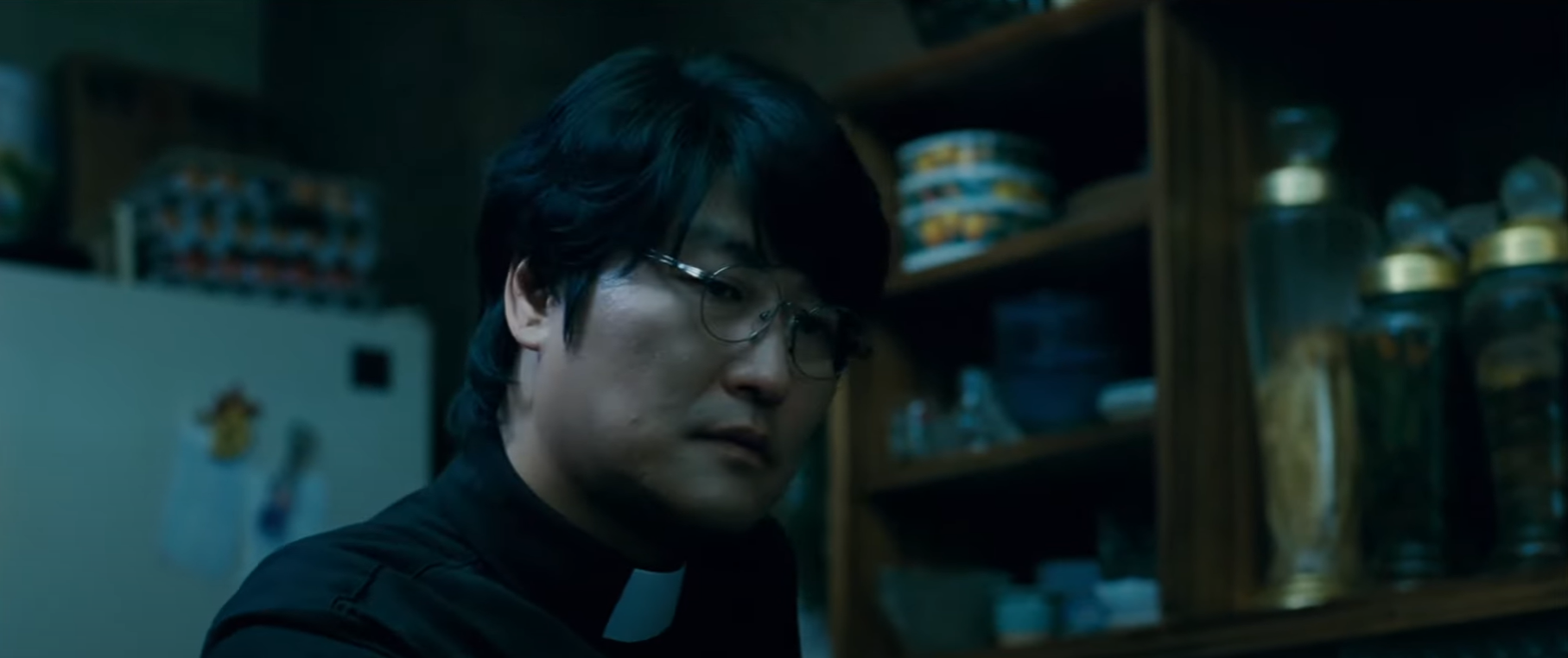
Alternate Best Actor 2009: Song Kang-ho in Thirst

Song Kang-ho did not receive an Oscar nomination for portraying Sang-hyun in Thirst.

Thirst tells the story of a priest who gets infected with a deadly virus that he survives through a blood transfusion that turns him into a vampire. 

If just getting to the vampire part seems complicated, it is, and in this instance, I would say overly complicated. The whole first act of Thirst I would say is a rambling narrative as it touches upon several different ideas but in a way that is just a mess of them rather than any cohesive tapestry. We have our priest played by Song of course, who is going about his duties for dying patients. Song portrays the character very much as any priest you might see often in such scenes, having this calm dignity about him, and careful manner as he goes about administrating prayers and last rites. We essentially have the common priest for many an introspective film, as we see him in private quarters pained over potential doubts and that careful manner seems to show a depressed mood after all. Song certainly portrays this effectively and grants you a sense of the specific malaise of the man behind the apparent dignity. We then jump to his potentially suicidal act by asking to be part of an experimental vaccine for a deadly virus that will most likely kill him. And when asking for this Song certainly conveys just a man staring into the void seemingly without purpose in his life. And through the series of odd circumstances leads up to the other side as a cured man but as a vampire. Leading again for his local congregation to see him as a true healer, and I'll bluntly say this whole aspect of the film could've been cut out. It never really goes anywhere, or at least anywhere interesting, and frankly, Sang-hyun seems just slightly baffled by them. I'd extend that to really his occupation as a priest is nearly set dressing because aspects of faith and morality are barely considered and really only leave this one thread, represented by a one-note group of believers, that amount to absolutely nothing. I think again Song is more than fine in presenting sort of the man going through the motions as the healer, even as his belief is clearly failing him. 

The film remains on shaky ground as we explore Sang-hyun as he begins his feelings of bloodlust but also sexual lust that often seems more dominating than his blood lust more often than not. We discover this through his frequent visit to a family of his parishioners which includes Tae-ju (Kim Ok-bin), the young wife fed up with her husband and family. And here where the film really continues to be sloppy as Sang-hyun and Tae-ju begin an affair, and I would say would be his vampire allure I guess. Because in this stage of the relationship, Song and Kim's chemistry is limited at best. There's more than a little missing in the puzzle particularly if you say compare it to the relationship in Decision to Leave, where you instantly felt here, here it honestly just feels forced...at the start. This is both the writing and acting I think, as writing wise there just isn't enough substance to create any meaningful connection or even just lust between them, and performance wise the urge also specifically between them seems somewhat absent. Song isn't bad in these scenes mind you, he's good in presenting the hidden growing lust within his own performance, but the importance given to the relationship makes it seem like there should be more. Outside of those scenes what we get from Song is essentially the portrayal of the vampire as a junkie. And here Song is quite good in just exuding constant desperate need. Where he successfully switches within the moments of being completely enthralled in his desperate lust for blood and creates the vicious sense of that titular thirst. Against moments where he creates internally the pained conflict of the man literally drinking blood and the shame in it. He successfully creates the constant pull of conflict within the character of Sang-hyun and fashions successfully the idea of creating a very real idea within the mythic concept of vampirism. 

Where the film gets interesting, if not entirely non-sloppy still, is when he begins to take Tae-ju as a partner in his crimes, as she asks him to kill her husband for him. This is when they actually do discover some actual chemistry, what was missing in the just initial relationship, is found once they start realizing the "bond" is a wholly toxic one. This is where things get more interesting and Song's performance, while it has been always good, becomes its most dynamic. His performance particularly comes to life in terms of embodying the conflict of Sang-hyun who doesn't want to be a vampire but has to be one. In these moments about going for the murder, we see him go to his lowest, where Song conveys in his eyes the peak of the desperation that he accentuates as a mix between sexual lust, straight up hunger but also this sort of depressive urge to fall into a kind of despair that goes along with him at his lowest morality. Although I'll still say it doesn't quite have *it* in terms of making this a truly captivating depiction just yet. In fact, you have to go through him murdering the husband, then Tae-ju almost dying due to becoming regretful, which really doesn't feel earned, and leading her to almost die causing Sang-hyung to turn her into a vampire. Song portrays this moment well in instantly evoking such a striking sense of loneliness as he spirals into the act and revives her against his best judgment. And here is where we get slightly closer to something truly captivating, though not really writing wise, as Tae-ju becomes entirely vicious as a vampire and proceeds to kill indiscriminately. Song's performance shifts from the completely messed up drug addict to the one trying to temper his psychotic co-dependent. And there is something in his reaction as we see the sense of honest fear of what has he done and the attempts to be any sort of directing figure for her while she goes off on the deep end. Eventually leading to the ending of the film where he decides they need to both die from the sun, and here is where I most liked Song and the film in general. The quiet calm conviction in Song's performance as he shows perhaps the priest of old trying to hold strongly onto what is the right thing to do while also conveying the severity of what this choice means. He is moving in a subtle manner he takes as he quietly embraces Tae-ju, after fighting with her attempts to survive, and accepts their mutual fate. Having said that, my review probably seems all over the place, because for me the film was all over the place. There are moments I really like, maybe even love, in this film, but they are pieces of a puzzle that don't fit together. Even this ending could've been something truly special if we had a stronger connection to the relationship from start to finish. Instead, it is a messy situation that keeps far from one of Park Chan-wook's best films. Song for his efforts is good, consistently good even, but I'll be honest this is not one of his best performances, for me. There are aspects that suggest he could've brought something special, however, the unwieldy nature of the film, also keeps him from being able to craft a completely cohesive portrait of the reluctant vampire.