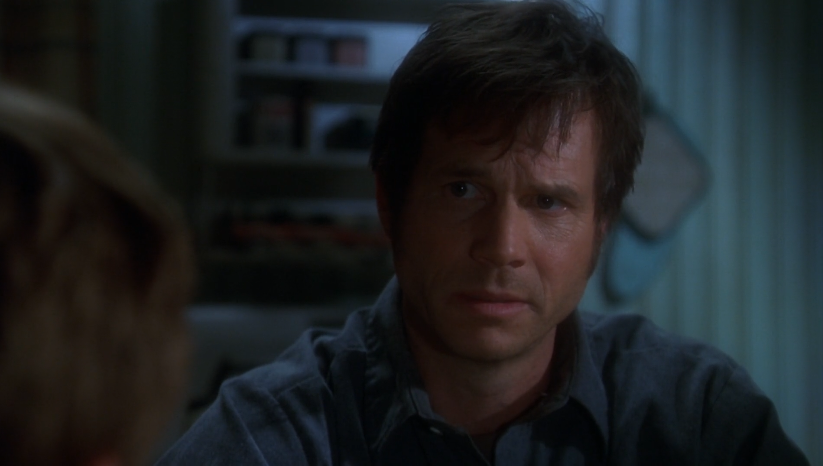
9. Sol Kyung-gu in Oasis - Sol delivers a convincing portrayal of a man with disability, if only it was in a film I had more patience for.
Best Scene: Bus.
8. Greg Kinnear in Auto Focus - Kinnear gives a fascinating depiction of a man living as a contradiction and the degradation that occurs as he tries to maintain this strange illusion.
Best Scene: Seeing his agent the last time.
7. Leslie Cheung in Inner Senses - Cheung gives a performance that leaves all the greater impact due to its real life connections, however even standing on its own it is a moving portrayal of dealing with guilt.
Best Scene: Ending.
6. David Gulpilil in The Tracker - Gulpilil excels in his off-beat portrayal of a man quietly taking control of a situation.
Best Scene: Making the turn.
5. Bill Paxton in Frailty - Paxton plays off his presence well in helping to create his southern Gothic horror story, in being both the seeming a genuine father and a deranged fanatic.
Best Scene: After the death of the sheriff.
4. Philip Seymour Hoffman in Love Liza - Although I found the film repetitive I found Hoffman as usual gives a convincing portrayal, here offering a moving portrait of a man suffering through his specific despair.
Best Scene: Reading the letter.
3. Olivier Gourmet in The Son - Gourmet gives a compelling portrayal of a normal man essentially dealing with a revenge scenario.
Best Scene: Confrontation.
2. Chiwetel Ejiofor in Dirty Pretty Things - Ejiofor delivers a compelling leading turn portraying effectively a decent man trying to navigate a troublesome situation.
Best Scene: Airport goodbye.
1. Hiroyuki Sanada in The Twilight Samurai - Sanada delivers a brilliant low key turn as a samurai who more than anything just wants to be able to live his life.
Best Scene: Talk before the final duel.
Updated Overall
Next: 2002 Supporting
Showing posts with label 2002 Alternate Best Actor. Show all posts
Monday, 17 August 2020
Alternate Best Actor 2002: Sol Kyung-gu in Oasis
Sol Kyung-gu did not receive an Oscar nomination for portraying Jong-du in Oasis.
Oasis tells the story of an off-beat ex-con trying to bond with a woman with cerebral palsy.
Telling that quick little summary really doesn't cover the half of it, as is the case it seems for every film by Lee Chang-dong, a filmmaker who tells his unique stories in his own way at his own pace. This film is no different in this regard, as all his films are more a spiral of storytelling than a through line. Poetry was about a woman dealing with dementia but also not that. Burning was about a man trying to discover what happened to his girlfriend, but also not that. Well here we have that central conceit that honestly sounds like the set up for a bad Hollywood feel good film like I Am Sam. Made by Lee Chang-dong though it is of course not that, but it isn't wholly not that either. I guess though the "feel good" intention it itself more than a bit of struggle I think, where I have to digress into how one even examines a film with a particular subject matter. I suppose this was on my mind a bit more from also watching the unlikely original screenplay Oscar winner from this year in question, Talk to Her. A film I would describe as well written in a general sense, well directed, and in general well acted, however the essential conceit of the film, and how that conceit was treated prevented me from at all embracing the film. This as that film features a man who is essentially a stalker very intimately treating a coma patient, the woman he was stalking. Now the film treats it as though that character is some innocent sort of character that alleges a purity of some sort, however that approach in a way made me reject that film all the more. Again even though I could recognize overall the film was artfully done, however that barrier stood too tall fundamentally within the narrative to quite overcome it.
I say all that as a similar experience came from Oasis, which again is by a filmmaker who clearly has a vision and is attempting to take a risk. This in this unlikely love story between Sol's ex-con and the woman with cerebral palsy, who is also related to the man's past, as she is family member of the person Jong-du killed in a hit and run that led to his imprisonment. Well the man takes interest in the woman, Han Gong-ju (Moon So-Ri), but that interest is to first attempt to sexually assault her, which is only prevented from her naturally freaking out about his behavior. This element is frankly less fundamental to this film than the conceit of Talk to Her, but it did cause my interest within the story to almost immediately cease. Again though it is more execution than just content, as obviously I've followed technically far more sinister leads in films, the problem is though this isn't the story about a sociopath, it seems like it's trying to be a sweet romance. Although all of that isn't really all that much attached to what I'm here to write about, Sol's performance, however it is a starting point that is where I come to this film. Anyway, so how about Sol's work. Well he has the secondary challenge within the film, Moon's is greater in terms of portraying a mentally and physically handicapped person, his Jong-du is just somewhat mentally handicapped, which is never gone into great detail. Sol's performance though is one of a man who just is off in some way anyways that is hard to exactly completely put your finer on though one thing that is obvious is he stands out like a sore thumb.
I must grant Sol credit that he does disappear into the role as the man he portrays he finds just a naturalism within the man's manner. This in the slightly odd way of overly smiling, and his movements that have a consistent sort of awkwardness to them. He portrays them with the right quality as basically a given as the man. This amplified further in his way of speaking that is with an over eagerness that again emphasizes a man whose mind is functioning fully, it is broken in more than one sense. This as he successfully presents a man who is too eager to please, and his whole manner seems as though the man has some constant wish to do this. Of course this then leads into the relationship that portrays that initial meeting, which I won't fault Sol's performance. His portrayal is that of the man's awkwardness going to the point of becoming dangerous in the moment of the attempted rape, which I'm not quite sure why it is in the film. Anyway past that questionable inclusion though we get to the meat, which is why it is more questionable, as the film has scenes of more sincere bonding between Jong-du and Gong-ju. This that I had no real interest in again, not to keep harping on it, but..."what the hell Lee?". In a setup like this though the worst thing that can happen is becoming detached from the film's reality, which unfortunately happened for me....so things went a bit more slowly as the film went on. This in that I just didn't care about the romance of any potential at this point, so I guess I really looked just at the acting, which for a film like this is a bit of a problem actually.
Not taking stock into the character's leads one to just look at the posturing of the actors. Again I can praise Sol to the extent that I believed him, less so for Moon So-Ri unfortunately who sadly is no Daniel Day-Lewis. This in that I wasn't at all convinced by her physical portrayal of the palsy leading to me just feeling as though it was just...well acting. Again this leading to further problems in the romance I was already not invested in, this as I found half it not even convincing as a person within the film. This only leaving Sol in his character that I didn't care about, playing his part with a reasonable degree of effectiveness, again only in that I believed his portrayal of the disability. The character though remained static, this as really the creation of the humanity and sympathy for him should come from the romance. The romance I don't care about nor do I believe. So there's a bit of a problem here for Sol, who honestly can only do so much in my mind. This in that he hits the note that he does hit, he sets up really the template for the man and is convincing in that. Lee Chang-Dong's choices though left it as a template and only that however. Again I say this without relishing the criticism as I've liked all his others films that I've seen and found their off-beat approach intriguing to say the least. I suppose though then it is only befitting that one of his great gambles doesn't pay off. Well that was the case for me and Oasis. The off-beat choices frankly detracted from the conceit rather than amplifying it. A conceit that was genuinely already a big enough risk on its own. Its choices for brutality to avoid sentimentality didn't work for me, frankly didn't even make it any less overly sentimental, just jarring. Sol does what he can in the lead, but I'll admit the film ended up obscuring my perspective of his work.
Oasis tells the story of an off-beat ex-con trying to bond with a woman with cerebral palsy.
Telling that quick little summary really doesn't cover the half of it, as is the case it seems for every film by Lee Chang-dong, a filmmaker who tells his unique stories in his own way at his own pace. This film is no different in this regard, as all his films are more a spiral of storytelling than a through line. Poetry was about a woman dealing with dementia but also not that. Burning was about a man trying to discover what happened to his girlfriend, but also not that. Well here we have that central conceit that honestly sounds like the set up for a bad Hollywood feel good film like I Am Sam. Made by Lee Chang-dong though it is of course not that, but it isn't wholly not that either. I guess though the "feel good" intention it itself more than a bit of struggle I think, where I have to digress into how one even examines a film with a particular subject matter. I suppose this was on my mind a bit more from also watching the unlikely original screenplay Oscar winner from this year in question, Talk to Her. A film I would describe as well written in a general sense, well directed, and in general well acted, however the essential conceit of the film, and how that conceit was treated prevented me from at all embracing the film. This as that film features a man who is essentially a stalker very intimately treating a coma patient, the woman he was stalking. Now the film treats it as though that character is some innocent sort of character that alleges a purity of some sort, however that approach in a way made me reject that film all the more. Again even though I could recognize overall the film was artfully done, however that barrier stood too tall fundamentally within the narrative to quite overcome it.
I say all that as a similar experience came from Oasis, which again is by a filmmaker who clearly has a vision and is attempting to take a risk. This in this unlikely love story between Sol's ex-con and the woman with cerebral palsy, who is also related to the man's past, as she is family member of the person Jong-du killed in a hit and run that led to his imprisonment. Well the man takes interest in the woman, Han Gong-ju (Moon So-Ri), but that interest is to first attempt to sexually assault her, which is only prevented from her naturally freaking out about his behavior. This element is frankly less fundamental to this film than the conceit of Talk to Her, but it did cause my interest within the story to almost immediately cease. Again though it is more execution than just content, as obviously I've followed technically far more sinister leads in films, the problem is though this isn't the story about a sociopath, it seems like it's trying to be a sweet romance. Although all of that isn't really all that much attached to what I'm here to write about, Sol's performance, however it is a starting point that is where I come to this film. Anyway, so how about Sol's work. Well he has the secondary challenge within the film, Moon's is greater in terms of portraying a mentally and physically handicapped person, his Jong-du is just somewhat mentally handicapped, which is never gone into great detail. Sol's performance though is one of a man who just is off in some way anyways that is hard to exactly completely put your finer on though one thing that is obvious is he stands out like a sore thumb.
I must grant Sol credit that he does disappear into the role as the man he portrays he finds just a naturalism within the man's manner. This in the slightly odd way of overly smiling, and his movements that have a consistent sort of awkwardness to them. He portrays them with the right quality as basically a given as the man. This amplified further in his way of speaking that is with an over eagerness that again emphasizes a man whose mind is functioning fully, it is broken in more than one sense. This as he successfully presents a man who is too eager to please, and his whole manner seems as though the man has some constant wish to do this. Of course this then leads into the relationship that portrays that initial meeting, which I won't fault Sol's performance. His portrayal is that of the man's awkwardness going to the point of becoming dangerous in the moment of the attempted rape, which I'm not quite sure why it is in the film. Anyway past that questionable inclusion though we get to the meat, which is why it is more questionable, as the film has scenes of more sincere bonding between Jong-du and Gong-ju. This that I had no real interest in again, not to keep harping on it, but..."what the hell Lee?". In a setup like this though the worst thing that can happen is becoming detached from the film's reality, which unfortunately happened for me....so things went a bit more slowly as the film went on. This in that I just didn't care about the romance of any potential at this point, so I guess I really looked just at the acting, which for a film like this is a bit of a problem actually.
Not taking stock into the character's leads one to just look at the posturing of the actors. Again I can praise Sol to the extent that I believed him, less so for Moon So-Ri unfortunately who sadly is no Daniel Day-Lewis. This in that I wasn't at all convinced by her physical portrayal of the palsy leading to me just feeling as though it was just...well acting. Again this leading to further problems in the romance I was already not invested in, this as I found half it not even convincing as a person within the film. This only leaving Sol in his character that I didn't care about, playing his part with a reasonable degree of effectiveness, again only in that I believed his portrayal of the disability. The character though remained static, this as really the creation of the humanity and sympathy for him should come from the romance. The romance I don't care about nor do I believe. So there's a bit of a problem here for Sol, who honestly can only do so much in my mind. This in that he hits the note that he does hit, he sets up really the template for the man and is convincing in that. Lee Chang-Dong's choices though left it as a template and only that however. Again I say this without relishing the criticism as I've liked all his others films that I've seen and found their off-beat approach intriguing to say the least. I suppose though then it is only befitting that one of his great gambles doesn't pay off. Well that was the case for me and Oasis. The off-beat choices frankly detracted from the conceit rather than amplifying it. A conceit that was genuinely already a big enough risk on its own. Its choices for brutality to avoid sentimentality didn't work for me, frankly didn't even make it any less overly sentimental, just jarring. Sol does what he can in the lead, but I'll admit the film ended up obscuring my perspective of his work.
Saturday, 15 August 2020
Alternate Best Actor 2002: Mads Mikkelsen in Open Hearts
Mads Mikkelsen did not receive an Oscar nomination for portraying Niels in Open Hearts.
Opens Hearts tells the intertwined lives of two couples created after an accident.
Well in a bit of a reworking of this year's lineup I've decided to hold off on Timothy Spall's work in All or Nothing, where I have to describe him as supporting for the said to supporting work of Mikkelsen here, who I must describe as lead. This is while the film gives time for all four parties, that is those being cheated on and the adulterers, the latter is the focus, with Mikkelsen's doctor almost taking the major focus later on in the film. Anyway I think this can continue off my review of Hiroyuki Sanada's work, as Mikkelsen is another actor somewhat wasted in the world of Hollywood, not to the extent of the former, but still notable. I think this falls into the unfortunate Hollywood mentality where apparently if you have a European accent you must be evil. This unfortunately doesn't give Mikkelsen enough of a chance to show of his ability in multiple types of roles, such as this fairly low key one here. This in playing the doctor to, and husband of the person who ran over, a man Joachim who becomes bitter as a tetraplegic. In turn he meets the man's financee Cecile (Sonja Richter), whom he takes a liking to. This being an example of Mikkelsen excelling as the normal man. This in portraying initially just this general likability within the films purposefully overtly reality based style. Mikkelsen thrives in this normalcy in presenting just an ease onscreen and in particular an earnest charm that is never too much but importantly never too little in making the doctor just a sympathetic man.
The man though that falls into an affair with Cecile which Mikkelsen excels in portraying in avoiding extreme cliche. This in presenting the man just naturally coming together with her in the moment, and portraying the complexity after their initial tryst. This in the shyness he brings as he speaks that it is the first time he has cheated on his wife, and captures in the moment his affection for the woman he just had sex with along with though the embarrassment for the betrayal of the situation. Mikkelsen's work is remarkable in how tangible he makes every element of the situation within his performance. This that he strictly ever avoids melodrama within Niels's manner at every point. This being entirely convincing in portraying the genuine moments of affection with Cecile, though being just honest and vulnerable as he is confronted by his wife. Mikkelsen is great in how much he downplays these moments in just showing in his reactions the man pulling within himself and accentuating the shame that overwhelms the man. My favorite scene of the film actually is after Niels moves out for some time from his family to be with Cecile though coming back to visit his kids for Christmas. Mikkelsen is outstanding in the scene because he very much articulates the difficultly of the situation within Niels, without forgetting a single complication. This in that he finds an a real warmth in his moments with his kids showing that Niels is genuinely loving towards them. This though even towards his wife though that captures the underlying tension that still exists.
This though when pressed about his affair, Mikkelsen is great in his expression that captures again the palatable shame of his existence. This though again not simplifying it as he shows a believable sense of the man living with that shame though evidently still of course pained by it when pressed to really look upon the duality of his life. This with the forces of his family he still cares about out against his affair that he's in part forgotten them for. Although the film does cover other facets of the situation the most compelling moments are consistently the depiction of Niels's failing marriage. A great deal of this is Mikkelsen's work that manages to so effortlessly create the reality of the situation. This finding artfully what can be found in the real degradation that is created within Niels as even the affair begins to struggle. Mikkelsen's work is heartbreaking in crafting every moment with just pure honesty of this normal man dealing with the harsh situation. This moment of lashing out against her, with just a distraught pain of a man realizing his mistakes as the "perfection" of the relationship falls apart. Mikkelsen crafts every moment of the man's reality that is potent with emotion yet never feels forced or inconsistent with overall design of the film. It again shows his great ability to portray just a normal man going through a difficult situation. Mikkelsen's work here is example of his incredible range which is rarely touched upon in this way in his international work. This in one of his greatest assets being his ability to portray such intimate vulnerability so potently.
Opens Hearts tells the intertwined lives of two couples created after an accident.
Well in a bit of a reworking of this year's lineup I've decided to hold off on Timothy Spall's work in All or Nothing, where I have to describe him as supporting for the said to supporting work of Mikkelsen here, who I must describe as lead. This is while the film gives time for all four parties, that is those being cheated on and the adulterers, the latter is the focus, with Mikkelsen's doctor almost taking the major focus later on in the film. Anyway I think this can continue off my review of Hiroyuki Sanada's work, as Mikkelsen is another actor somewhat wasted in the world of Hollywood, not to the extent of the former, but still notable. I think this falls into the unfortunate Hollywood mentality where apparently if you have a European accent you must be evil. This unfortunately doesn't give Mikkelsen enough of a chance to show of his ability in multiple types of roles, such as this fairly low key one here. This in playing the doctor to, and husband of the person who ran over, a man Joachim who becomes bitter as a tetraplegic. In turn he meets the man's financee Cecile (Sonja Richter), whom he takes a liking to. This being an example of Mikkelsen excelling as the normal man. This in portraying initially just this general likability within the films purposefully overtly reality based style. Mikkelsen thrives in this normalcy in presenting just an ease onscreen and in particular an earnest charm that is never too much but importantly never too little in making the doctor just a sympathetic man.
The man though that falls into an affair with Cecile which Mikkelsen excels in portraying in avoiding extreme cliche. This in presenting the man just naturally coming together with her in the moment, and portraying the complexity after their initial tryst. This in the shyness he brings as he speaks that it is the first time he has cheated on his wife, and captures in the moment his affection for the woman he just had sex with along with though the embarrassment for the betrayal of the situation. Mikkelsen's work is remarkable in how tangible he makes every element of the situation within his performance. This that he strictly ever avoids melodrama within Niels's manner at every point. This being entirely convincing in portraying the genuine moments of affection with Cecile, though being just honest and vulnerable as he is confronted by his wife. Mikkelsen is great in how much he downplays these moments in just showing in his reactions the man pulling within himself and accentuating the shame that overwhelms the man. My favorite scene of the film actually is after Niels moves out for some time from his family to be with Cecile though coming back to visit his kids for Christmas. Mikkelsen is outstanding in the scene because he very much articulates the difficultly of the situation within Niels, without forgetting a single complication. This in that he finds an a real warmth in his moments with his kids showing that Niels is genuinely loving towards them. This though even towards his wife though that captures the underlying tension that still exists.
This though when pressed about his affair, Mikkelsen is great in his expression that captures again the palatable shame of his existence. This though again not simplifying it as he shows a believable sense of the man living with that shame though evidently still of course pained by it when pressed to really look upon the duality of his life. This with the forces of his family he still cares about out against his affair that he's in part forgotten them for. Although the film does cover other facets of the situation the most compelling moments are consistently the depiction of Niels's failing marriage. A great deal of this is Mikkelsen's work that manages to so effortlessly create the reality of the situation. This finding artfully what can be found in the real degradation that is created within Niels as even the affair begins to struggle. Mikkelsen's work is heartbreaking in crafting every moment with just pure honesty of this normal man dealing with the harsh situation. This moment of lashing out against her, with just a distraught pain of a man realizing his mistakes as the "perfection" of the relationship falls apart. Mikkelsen crafts every moment of the man's reality that is potent with emotion yet never feels forced or inconsistent with overall design of the film. It again shows his great ability to portray just a normal man going through a difficult situation. Mikkelsen's work here is example of his incredible range which is rarely touched upon in this way in his international work. This in one of his greatest assets being his ability to portray such intimate vulnerability so potently.
Friday, 14 August 2020
Alternate Best Actor 2002: Hiroyuki Sanada in The Twlight Samurai
Hiroyuki Sanada did not receive an Oscar nomination for portraying Seibei Iguchi in The Twilight Samurai.
The Twilight Samurai is a wonderful film depicting a widower samurai near the end of the feudal system.
If I may quickly bemoan the Hollywood mentality when it comes to foreign language actors. Where evidently they wish to cast them after seeing or at least hearing of their work in their own home countries then only to cast them in largely thin and generic roles. That is of course the case for Hiroyuki Sanada, though I will say that always creates a bit of a bread crumb trail for me to find what was that sparked this interest to begin with. Well here it takes me to this film, where I'll admit I always have a bit of enthusiasm to find Japanese cinema outside of the golden era, given sadly so little of it makes an international impression. This film being both a throwback and modernization I'd say on so many of the films of that golden era however, being based around the life of the samurai. The difference being that our central character of Seibei Iguchi isn't some great lord or general, nor is he a renegade ronin or something. He's really just a guy who happens to be a samurai. Well and Hiroyuki Sanada's performance is wonderful by portraying him just as that. This in the early scenes of the film where we see him interacting in his little home with his 2 daughters and his mother. Sanada bring such a fantastic unassuming quality to his work. This in just a guy really very much content within this existence and most importantly brings this warmth within his interactions with his family. There's such a sense of love in his eyes and we see a man who really adores his existence in a certain sense.
We witness though Seibei interact within society where things are a little different however from that contentment within his home life, no matter how simple or small his surroundings might be. In this we see Sanada portray this certain shyness within the samurai as he must interact with the feudal hierarchy, however as a man unable to really deliver on the pomp or circumstance requested for his class of samurai. This to the point that when he ponders if he could maybe someday be a farmer instead of being a samurai Sanada delivery is of just this earnest question of a man who really would rather live as such. Sanada shows the shyness really in this sense of a man who knows he will be looked upon with ridicule by other along with this sense of unease largely by the nature of the life he really has no great comfort with. This when he is admonished for his somewhat unkempt demeanor Sanada is great in showing that rather it really being a blow to his pride it rather just the intense reactions of others that causes a sense of any distress. This as Sanada shows a man really just wanting to do the best to succeed with his family and with those around him rather than holding a need to be seen anything more than he is...in fact Seibei might honestly be fine with being seen as less if it would help his circumstances. Sanada creates the right sympathy for this though in creating that understated quality of the man who isn't looking to make a big splash but rather just float within the joys he does have.
Things change slightly when an old childhood sweetheart returns, Tomoe (Rie Miyazawa) who comes to stay with his family and reminisce though no romance is spoken of. Sanada's chemistry with Miyazawa is pitch perfect. This in as Sanada brings a genuine charm within that warmth he brings with the interactions and a strong sense of their connection from the past. In that though he grants still that hesitation and shyness of the relationship of old now technically detached. Sanada being terrific again in showing the man's very palatable love for her in glimpses though hidden still within his nearly always retiring manner. This even when Seibei is proposed the idea of marrying Tomoe through an intermediary, Sanada honestly is heartbreaking through how genuine he makes Sanada's distress in the moment. This in reacting with embarrassment as though it would be ridiculous for a woman of some status to marry a samurai of his low standing of wealth. Sanada is great as he speaks every word of his own struggle with his former wife due to the very little he makes from being a retainer samurai. Sanada is fantastic in bringing such a quiet heartbreak within every word of Seibei struggle that shows the man's wish more than anything to avoid further complication knowing how life can be difficult within poverty. Sanada emphasizing the man's vulnerability of this beautifully within the man's modest style as a person.
The one place where it seems that perhaps there is more to Seibei than meets most eyes as the samurai derided by most as the "twilight samurai" that is in dueling. This we initially see as he defends a friend from an ornery samurai through fighting with a wooden sword. In this duel though Sanada's performance is important as he presents a man directly to the point in every action. This as a man attempting to end the conflict as quickly as possible, not as a purposeful badass but really an accidental one. This in he grants the sense of conviction but only to finish the fight, not to relish in any sense of defeat. This as we see after the successful duel, Sanada's manner shows a man looking down and away, along with a timid voice that denies any great feat or any great skill within himself. This again showing a man avoiding being beyond his source of contentment within his family. Eventually though pressed to take on a rogue samurai by his Zenemon Yogo (Min Tanaka) who has balked at a request harakiri and instead killing anyone who approaches his home. Although in his usual manner Sanada depicts the man avoiding really pushing his boundaries, but eventually is forced to through the demands of his lords.
We then see different shades of the man one real and one sort of fake. The real one is when he decides to take the chance to fully declare his love to Tomoe. This is an amazing scene for Sanada as the earned pride in the moment, and the reflection of the internalized love now externalized is palatable. This made heartbreaking when it appears she can't accept because she's accepted a different proposal. Sanada's switch back to the man's old self is heartbreaking, as in his eyes you see the man's being torn up from it but he speaks with just quiet assurances that he was foolish to make any such request. Now there Sanada showed a real different side, however in his intention as a lord's warrior we see the false side. This in Sanada showing the man basically trying to be the cold calm samurai as he approaches his task, and faces the man in his home. Sanada's manner though instantly reverts when the Yogo instead surprises him by inviting him to a drink to discuss their mutual lives of hardship despite their status as samurai. Sanada is outstanding in the scene in his reflections upon Seibei's hard life particularly regarding the death of his wife. This as Sanada brings the right somberness but almost this comical manner of laughing upon his own misfortunes given how poverty seemed to create one problem after another for himself. Sanada in the moment granting this idea of truly living the memory within his head as he speaks the words to Yogo. Sadly these troubles eventually amount to Yogo believing Seibei isn't taking the man seriously leading to a duel after all. Again I love the way Sanada makes the inherent skill of the man a given as he attempts to avoid killing the man as long as he can in this state of consistent control but never hateful violence. This within the overarching idea of the character that Hiroyuki Sanada so beautifully realizes This as a samurai who is defined through his love for his simple life and his family, not his ambitions of any kind. This creating a uniquely moving portrait of a samurai in turn, one of quiet power of a family man just trying to life his simple life.
The Twilight Samurai is a wonderful film depicting a widower samurai near the end of the feudal system.
If I may quickly bemoan the Hollywood mentality when it comes to foreign language actors. Where evidently they wish to cast them after seeing or at least hearing of their work in their own home countries then only to cast them in largely thin and generic roles. That is of course the case for Hiroyuki Sanada, though I will say that always creates a bit of a bread crumb trail for me to find what was that sparked this interest to begin with. Well here it takes me to this film, where I'll admit I always have a bit of enthusiasm to find Japanese cinema outside of the golden era, given sadly so little of it makes an international impression. This film being both a throwback and modernization I'd say on so many of the films of that golden era however, being based around the life of the samurai. The difference being that our central character of Seibei Iguchi isn't some great lord or general, nor is he a renegade ronin or something. He's really just a guy who happens to be a samurai. Well and Hiroyuki Sanada's performance is wonderful by portraying him just as that. This in the early scenes of the film where we see him interacting in his little home with his 2 daughters and his mother. Sanada bring such a fantastic unassuming quality to his work. This in just a guy really very much content within this existence and most importantly brings this warmth within his interactions with his family. There's such a sense of love in his eyes and we see a man who really adores his existence in a certain sense.
We witness though Seibei interact within society where things are a little different however from that contentment within his home life, no matter how simple or small his surroundings might be. In this we see Sanada portray this certain shyness within the samurai as he must interact with the feudal hierarchy, however as a man unable to really deliver on the pomp or circumstance requested for his class of samurai. This to the point that when he ponders if he could maybe someday be a farmer instead of being a samurai Sanada delivery is of just this earnest question of a man who really would rather live as such. Sanada shows the shyness really in this sense of a man who knows he will be looked upon with ridicule by other along with this sense of unease largely by the nature of the life he really has no great comfort with. This when he is admonished for his somewhat unkempt demeanor Sanada is great in showing that rather it really being a blow to his pride it rather just the intense reactions of others that causes a sense of any distress. This as Sanada shows a man really just wanting to do the best to succeed with his family and with those around him rather than holding a need to be seen anything more than he is...in fact Seibei might honestly be fine with being seen as less if it would help his circumstances. Sanada creates the right sympathy for this though in creating that understated quality of the man who isn't looking to make a big splash but rather just float within the joys he does have.
Things change slightly when an old childhood sweetheart returns, Tomoe (Rie Miyazawa) who comes to stay with his family and reminisce though no romance is spoken of. Sanada's chemistry with Miyazawa is pitch perfect. This in as Sanada brings a genuine charm within that warmth he brings with the interactions and a strong sense of their connection from the past. In that though he grants still that hesitation and shyness of the relationship of old now technically detached. Sanada being terrific again in showing the man's very palatable love for her in glimpses though hidden still within his nearly always retiring manner. This even when Seibei is proposed the idea of marrying Tomoe through an intermediary, Sanada honestly is heartbreaking through how genuine he makes Sanada's distress in the moment. This in reacting with embarrassment as though it would be ridiculous for a woman of some status to marry a samurai of his low standing of wealth. Sanada is great as he speaks every word of his own struggle with his former wife due to the very little he makes from being a retainer samurai. Sanada is fantastic in bringing such a quiet heartbreak within every word of Seibei struggle that shows the man's wish more than anything to avoid further complication knowing how life can be difficult within poverty. Sanada emphasizing the man's vulnerability of this beautifully within the man's modest style as a person.
The one place where it seems that perhaps there is more to Seibei than meets most eyes as the samurai derided by most as the "twilight samurai" that is in dueling. This we initially see as he defends a friend from an ornery samurai through fighting with a wooden sword. In this duel though Sanada's performance is important as he presents a man directly to the point in every action. This as a man attempting to end the conflict as quickly as possible, not as a purposeful badass but really an accidental one. This in he grants the sense of conviction but only to finish the fight, not to relish in any sense of defeat. This as we see after the successful duel, Sanada's manner shows a man looking down and away, along with a timid voice that denies any great feat or any great skill within himself. This again showing a man avoiding being beyond his source of contentment within his family. Eventually though pressed to take on a rogue samurai by his Zenemon Yogo (Min Tanaka) who has balked at a request harakiri and instead killing anyone who approaches his home. Although in his usual manner Sanada depicts the man avoiding really pushing his boundaries, but eventually is forced to through the demands of his lords.
We then see different shades of the man one real and one sort of fake. The real one is when he decides to take the chance to fully declare his love to Tomoe. This is an amazing scene for Sanada as the earned pride in the moment, and the reflection of the internalized love now externalized is palatable. This made heartbreaking when it appears she can't accept because she's accepted a different proposal. Sanada's switch back to the man's old self is heartbreaking, as in his eyes you see the man's being torn up from it but he speaks with just quiet assurances that he was foolish to make any such request. Now there Sanada showed a real different side, however in his intention as a lord's warrior we see the false side. This in Sanada showing the man basically trying to be the cold calm samurai as he approaches his task, and faces the man in his home. Sanada's manner though instantly reverts when the Yogo instead surprises him by inviting him to a drink to discuss their mutual lives of hardship despite their status as samurai. Sanada is outstanding in the scene in his reflections upon Seibei's hard life particularly regarding the death of his wife. This as Sanada brings the right somberness but almost this comical manner of laughing upon his own misfortunes given how poverty seemed to create one problem after another for himself. Sanada in the moment granting this idea of truly living the memory within his head as he speaks the words to Yogo. Sadly these troubles eventually amount to Yogo believing Seibei isn't taking the man seriously leading to a duel after all. Again I love the way Sanada makes the inherent skill of the man a given as he attempts to avoid killing the man as long as he can in this state of consistent control but never hateful violence. This within the overarching idea of the character that Hiroyuki Sanada so beautifully realizes This as a samurai who is defined through his love for his simple life and his family, not his ambitions of any kind. This creating a uniquely moving portrait of a samurai in turn, one of quiet power of a family man just trying to life his simple life.
Monday, 10 August 2020
Alternate Best Actor 2002: David Gulpilil in The Tracker
David Gulpilil did not receive an Oscar nomination for portraying the titular character in The Tracker.
The Tracker is an intriguing off-beat film about a posse tracking an indigenous man accused of murdering a white woman.
The posse features a tyrannical and violent leader known as the Fanatic (Gary Sweet) with two other white men whom he also berates, and their tracker played by David Gulpilil. As mentioned some reviews ago, Gulpilil has a unique presence as a performer which once again comes to play here. This as he can stand out really without doing much of anything. This being essential in the early scenes of the film which almost play like a musical in a strange way where there is very little dialogue as we see the men walking through the desert, title cards telling us their purpose, and really the music filling most of the blanks past that. In these scenes we see the tracker technically as part of the group but not as part of the group. This as Gulpilil delivers this certain distance in his manner as a man doing a job he doesn't particularly like. This in his eyes a gaze of lack of investment as they follow the brutal Fanatic. One of the earliest acts of the Fanatic being to slaughter a group of aborigines. The initial cut to Gulpilil's immediately after this act is depicted through a painting is incredible. This as his reaction is a specific heartbreak. He's clearly devastated but more internalized as a man who knows how he must behave in order to survive the circumstances he is in. This as even with that monstrous act he must continue going on with the group and the Fanatic's whims.
Gulpilil is great though in almost bringing a comic quality to his performance as it continues on. This as he finds the right tone in his manner that is both uncaring to Fanatic's cause, but also as disarming as possible. Gulpilil finds this effortless combination as he portrays the Tracker showing his ways to try to basically avoid the Fanatic's wrath while also in a way mocking him in his sort of quiet way of delivering every mention of his expertise in trying to find the supposed murderer. This of course doesn't satiate the mad man who instead chain up the tracker to bring him along the trip.Gulpilil still makes remarkable use of his presence in he has this certain command in presence in the sense of assured intelligence within the man even when shackled the way he is. He keeps both a reality and dignity intact with the character that simply is wonderful. There is a particularly great moment for Gulpilil takes a moment even to eulogies one of the fallen men of the posse. Gulpilil brings such an understated yet palatable warmth in the moment, showing the tracker caring for another even within this divide with such a honest humanity. Again Gulpilil is captivating in his work by being so genuine in every moment here even in the film's rather atypical and at times overtly stylistic approach, Gulpilil is able to stand out in this essential reality within his own work.
After the tide turns though, where the tracker and the other surviving posse member team up against the fanatic, Gulpilil's performance changes. Naturally he shows the tracker more overt in his defiance, after all he is in charge. This is so powerfully shown though in the intensity he brings in a moment when he shows the fanatic directly his cruelty by looking upon a dead aborigine. There is such a notable strength in Gulpilil's glare no longer diluted by the need to seem harmless. This eventually leading to the tracker condemning the fanatic, where I love how straight forward Gulpilil is in the moment. This as his sentencing is even delivered with almost this casual quality, however in this creates such an honesty if even humor in the moment by showing that same manner of how he used to survive now inform him in his way of punishing the Fanatic. In this though still Gulpilil's casual quality has a real power to it as it feels so pure to the man and the character. It is again part of the man's presence so wonderfully. The film continues past this point as the tracker decides to still go to figure if the man is guilty or not. Gulpilil's sort overt confidence in terms of how much he expresses grows all the more. This again reinforcing the idea of the hidden intelligence of the tracker basically no longer being hidden, and the confident man that was there all along just being completely open in the moment. In the end we see the man wholly within his power and it is great just to see Gulpilil own the screen in these moments, no longer on the edge of moments but just dominating them. Now that is a relatively brief part of his work, however it is the natural end to his work. This being a fantastic realization of this arc of the tracker in a way revealing himself, but Gulpilil's artful gradual increase of his basically his charisma as a performer.
The Tracker is an intriguing off-beat film about a posse tracking an indigenous man accused of murdering a white woman.
The posse features a tyrannical and violent leader known as the Fanatic (Gary Sweet) with two other white men whom he also berates, and their tracker played by David Gulpilil. As mentioned some reviews ago, Gulpilil has a unique presence as a performer which once again comes to play here. This as he can stand out really without doing much of anything. This being essential in the early scenes of the film which almost play like a musical in a strange way where there is very little dialogue as we see the men walking through the desert, title cards telling us their purpose, and really the music filling most of the blanks past that. In these scenes we see the tracker technically as part of the group but not as part of the group. This as Gulpilil delivers this certain distance in his manner as a man doing a job he doesn't particularly like. This in his eyes a gaze of lack of investment as they follow the brutal Fanatic. One of the earliest acts of the Fanatic being to slaughter a group of aborigines. The initial cut to Gulpilil's immediately after this act is depicted through a painting is incredible. This as his reaction is a specific heartbreak. He's clearly devastated but more internalized as a man who knows how he must behave in order to survive the circumstances he is in. This as even with that monstrous act he must continue going on with the group and the Fanatic's whims.
Gulpilil is great though in almost bringing a comic quality to his performance as it continues on. This as he finds the right tone in his manner that is both uncaring to Fanatic's cause, but also as disarming as possible. Gulpilil finds this effortless combination as he portrays the Tracker showing his ways to try to basically avoid the Fanatic's wrath while also in a way mocking him in his sort of quiet way of delivering every mention of his expertise in trying to find the supposed murderer. This of course doesn't satiate the mad man who instead chain up the tracker to bring him along the trip.Gulpilil still makes remarkable use of his presence in he has this certain command in presence in the sense of assured intelligence within the man even when shackled the way he is. He keeps both a reality and dignity intact with the character that simply is wonderful. There is a particularly great moment for Gulpilil takes a moment even to eulogies one of the fallen men of the posse. Gulpilil brings such an understated yet palatable warmth in the moment, showing the tracker caring for another even within this divide with such a honest humanity. Again Gulpilil is captivating in his work by being so genuine in every moment here even in the film's rather atypical and at times overtly stylistic approach, Gulpilil is able to stand out in this essential reality within his own work.
After the tide turns though, where the tracker and the other surviving posse member team up against the fanatic, Gulpilil's performance changes. Naturally he shows the tracker more overt in his defiance, after all he is in charge. This is so powerfully shown though in the intensity he brings in a moment when he shows the fanatic directly his cruelty by looking upon a dead aborigine. There is such a notable strength in Gulpilil's glare no longer diluted by the need to seem harmless. This eventually leading to the tracker condemning the fanatic, where I love how straight forward Gulpilil is in the moment. This as his sentencing is even delivered with almost this casual quality, however in this creates such an honesty if even humor in the moment by showing that same manner of how he used to survive now inform him in his way of punishing the Fanatic. In this though still Gulpilil's casual quality has a real power to it as it feels so pure to the man and the character. It is again part of the man's presence so wonderfully. The film continues past this point as the tracker decides to still go to figure if the man is guilty or not. Gulpilil's sort overt confidence in terms of how much he expresses grows all the more. This again reinforcing the idea of the hidden intelligence of the tracker basically no longer being hidden, and the confident man that was there all along just being completely open in the moment. In the end we see the man wholly within his power and it is great just to see Gulpilil own the screen in these moments, no longer on the edge of moments but just dominating them. Now that is a relatively brief part of his work, however it is the natural end to his work. This being a fantastic realization of this arc of the tracker in a way revealing himself, but Gulpilil's artful gradual increase of his basically his charisma as a performer.
Wednesday, 5 August 2020
Alternate Best Actor 2002: Bill Paxton in Frailty
Bill Paxton did not receive an Oscar nomination for portraying Mr. Meiks in Frailty.
Frailty is a chilling directorial debut by Bill Paxton about a man (Matthew McCoanughey) recounting his childhood that involved his father claiming God has told him to kill demons in the form of people.
The one of a kind Bill Paxton cast himself within the co-leading role of the Meiks' father, who we initially meet in semi-idyllic settings where he lives as a single father, his wife having died in childbirth, with his sons Adam and Fenton. Paxton's performance beautifully sets up really the unnerving switch we will quickly see. Paxton creating this seemingly just warm and loving father. This in just an earnest demeanor as he hangs out with his two sons and has a generous caring demeanor. This quickly switches though as the film takes it turn, and exactly what this film is, is essential really to Paxton's performance. This is it is a horror mood piece, a scary sort of southern Gothic style story, not in a fully kitschy way, but in a definitely stylized fashion. I think one can almost take this as the type of performer Paxton was, which he had a style kind of within himself that was typically heightened. This made him far more ideal for certain roles more than others, however it definitely granted him an idiosyncratic presence that made him stand out nonetheless. This being ideal for his directorial debut here, where there is just something particularly skin crawling the moment Mr. Meiks wakes up his two sons in the middle of the night. This where he immediately begins to tell them of his vision from angel that he has been told that he must start killing demons on the earth and will be given tools to do so. Although this is technically lower key Paxton, Paxton is terrific in carrying that same earnestness before, but here speaking towards a concept that immediately raises more than just an eye brow.
Paxton though portrays the man with this sort of clarity of man that is in fact particularly disturbing as he shows his kids an axe and gloves given to him as weapons to destroy demons. Paxton speaks as though this would simply be a job for them at first. Paxton wisely does change this manner, though more info on why, later as he captures the first demon on the list, also seemingly just some woman. Paxton in the capture importantly actually shows more of a rush of emotion than any maniacal glee in the moment. When he shows her to their sons Paxton brings a certain undercurrent of fear into his own performance both upon looking at the woman but also after touching her allowing him to see her "true" nature as a demon supposedly. Paxton's delivery portraying this as not something wholly with conviction with the first kill actually. This in throughout the moment there is that undercurrent of a personal terror potentially at his own act, or potentially in seemingly the burden of his "mission". Either way though Paxton is terrifying though by making the emotional context so palatable and not portraying the moment with any distance. He rather shows very much the act of killing with his portrayal of Mr. Meiks as he goes about his perceived duty. This with the support of his one son Adam who claims also to be able to see the demons for what they are against his other son Fenton who claims to not see anything, which we as the audience also see.
Now as his mission continues and Mr. Meiks kills more people he claims are demons, while Fenton continues to doubt, Paxton's performance moves closer towards sort of the more extremes of the Paxton style. This entirely works in granting the sort of extremism needed as he paints Mr. Meiks fanaticism with this certain emotional desperation within it. This in speaking every word of his mission with a ferocity though within that an anxiety that makes it all the more unnerving as though the man is potentially trying to convince himself of his own mission. This element of his performance though actually basically has a double meaning. This as upon initial viewing it is easy to take Paxton on face value as just a desperate crazy man, but by the end of the film you learn that spoilers the demons are entirely real. With that in mind Paxton's performance works a bit differently as one can instead see that desperation as attached to both the burden of the duty and his genuine need for his son Fenton to see, the son who is in fact a demon. This informs Paxton's performance for the rest of the film as on initial viewing he is terrifying in creating the all the greater intensity of the man who is so emotional in speaking his zealotry like a deranged preacher, but upon re-watch he's a man with the same desperation trying to save his son. The key technically to this is when Fenton informs the local sheriff of the killings leading Mr. Meiks to kill the sheriff. After this kill Paxton presents Meiks differently as there is a sadness over it and there are no words that support his claims that it was an earned killing. This is against the final attempted demon kill where again Paxton shows in the view of the man, who is in fact not insane, in a way emotionally burdened still by his mission particularly as it pertains towards his son. Paxton's performance ends up working both was, and is actually quite powerful and disturbing both ways. This as Paxton portrait of a mental illness wrapped around in a wannabe zealot is chilling within that intensity he brings to it, but also works as a man being driven to a brink by the difficult calling he must fulfill. As much as the film itself is an impressive debut as a filmmaker, it's a shame his directing career was so limited overall, it is also an excellent example of his own talent as a performer. This in finding a role that effective wields his own unique presence to create a memorable impression as a deranged killer and as a burdened crusader.
Frailty is a chilling directorial debut by Bill Paxton about a man (Matthew McCoanughey) recounting his childhood that involved his father claiming God has told him to kill demons in the form of people.
The one of a kind Bill Paxton cast himself within the co-leading role of the Meiks' father, who we initially meet in semi-idyllic settings where he lives as a single father, his wife having died in childbirth, with his sons Adam and Fenton. Paxton's performance beautifully sets up really the unnerving switch we will quickly see. Paxton creating this seemingly just warm and loving father. This in just an earnest demeanor as he hangs out with his two sons and has a generous caring demeanor. This quickly switches though as the film takes it turn, and exactly what this film is, is essential really to Paxton's performance. This is it is a horror mood piece, a scary sort of southern Gothic style story, not in a fully kitschy way, but in a definitely stylized fashion. I think one can almost take this as the type of performer Paxton was, which he had a style kind of within himself that was typically heightened. This made him far more ideal for certain roles more than others, however it definitely granted him an idiosyncratic presence that made him stand out nonetheless. This being ideal for his directorial debut here, where there is just something particularly skin crawling the moment Mr. Meiks wakes up his two sons in the middle of the night. This where he immediately begins to tell them of his vision from angel that he has been told that he must start killing demons on the earth and will be given tools to do so. Although this is technically lower key Paxton, Paxton is terrific in carrying that same earnestness before, but here speaking towards a concept that immediately raises more than just an eye brow.
Paxton though portrays the man with this sort of clarity of man that is in fact particularly disturbing as he shows his kids an axe and gloves given to him as weapons to destroy demons. Paxton speaks as though this would simply be a job for them at first. Paxton wisely does change this manner, though more info on why, later as he captures the first demon on the list, also seemingly just some woman. Paxton in the capture importantly actually shows more of a rush of emotion than any maniacal glee in the moment. When he shows her to their sons Paxton brings a certain undercurrent of fear into his own performance both upon looking at the woman but also after touching her allowing him to see her "true" nature as a demon supposedly. Paxton's delivery portraying this as not something wholly with conviction with the first kill actually. This in throughout the moment there is that undercurrent of a personal terror potentially at his own act, or potentially in seemingly the burden of his "mission". Either way though Paxton is terrifying though by making the emotional context so palatable and not portraying the moment with any distance. He rather shows very much the act of killing with his portrayal of Mr. Meiks as he goes about his perceived duty. This with the support of his one son Adam who claims also to be able to see the demons for what they are against his other son Fenton who claims to not see anything, which we as the audience also see.
Now as his mission continues and Mr. Meiks kills more people he claims are demons, while Fenton continues to doubt, Paxton's performance moves closer towards sort of the more extremes of the Paxton style. This entirely works in granting the sort of extremism needed as he paints Mr. Meiks fanaticism with this certain emotional desperation within it. This in speaking every word of his mission with a ferocity though within that an anxiety that makes it all the more unnerving as though the man is potentially trying to convince himself of his own mission. This element of his performance though actually basically has a double meaning. This as upon initial viewing it is easy to take Paxton on face value as just a desperate crazy man, but by the end of the film you learn that spoilers the demons are entirely real. With that in mind Paxton's performance works a bit differently as one can instead see that desperation as attached to both the burden of the duty and his genuine need for his son Fenton to see, the son who is in fact a demon. This informs Paxton's performance for the rest of the film as on initial viewing he is terrifying in creating the all the greater intensity of the man who is so emotional in speaking his zealotry like a deranged preacher, but upon re-watch he's a man with the same desperation trying to save his son. The key technically to this is when Fenton informs the local sheriff of the killings leading Mr. Meiks to kill the sheriff. After this kill Paxton presents Meiks differently as there is a sadness over it and there are no words that support his claims that it was an earned killing. This is against the final attempted demon kill where again Paxton shows in the view of the man, who is in fact not insane, in a way emotionally burdened still by his mission particularly as it pertains towards his son. Paxton's performance ends up working both was, and is actually quite powerful and disturbing both ways. This as Paxton portrait of a mental illness wrapped around in a wannabe zealot is chilling within that intensity he brings to it, but also works as a man being driven to a brink by the difficult calling he must fulfill. As much as the film itself is an impressive debut as a filmmaker, it's a shame his directing career was so limited overall, it is also an excellent example of his own talent as a performer. This in finding a role that effective wields his own unique presence to create a memorable impression as a deranged killer and as a burdened crusader.
Tuesday, 4 August 2020
Alternate Best Actor 2002: Philip Seymour Hoffman in Love Liza
Philip Seymour Hoffman did not receive an Oscar nomination for portraying Wilson Joel in Love Liza.
Love Liza is the type of independent film that kind of give independent films a bad name, about a man dealing with the sudden suicide of his wife.
That earlier statement comes just as it features the Indie tropes of some dark topic filtered through a semi-quirky spin then processed through a whole lot of repetitious nothing. That is what we have here that is a film that believes it is creating meaning yet falls into really acts of nothingness in its procession to a particularly obvious conclusion, though hey at least it doesn't have the as obnoxious tropes of no music, unearned long takes and or even less earned ambiguous endings. What the film does have an actor that I kind of hate to look back against because once again we lost him far too soon. Of course Philip Seymour Hoffman was an incredible talent, and this film is another example of that, even when then character of his Wilson Joel I don't think is the most well written he ever played. Hoffman though was a great actor, so he can at least fill in some of the gaps of the character even if he can't quite make the film work. We have the early scenes where Hoffman creates a certain daze the man is in from reeling from the sudden suicide of his wife. Hoffman vividly realizes this sort of early state that he makes nearly denial. This as he portrays Wilson still as able to basically function, but a bit off in just how well he can function. This in his moments of reacting to the happiness of others Hoffman delivers Joel's laughs too much, of a man trying to be happy, though there is an obvious failure in this. This in showing the front that cannot really hide the obviously trauma inside.
This quickly deteriorates, again I think a problem with the film is just in the writing never quite supports Hoffman enough, though Hoffman does well in portraying this deterioration. This in now granting a man less in a daze and more so in a fixation. A fixation on the death with a sadness in his eyes though also a focus as though he is trying to uncover the meaning of his relationship. This is a bit overly represented by the last letter from his wife that he refuses to open. This pain though Wilson quickly tries to cover up, in something that hits sadly too close to home regarding Hoffman's own story, as Wilson begins to engage in substance abuse by huffing gasoline fumes. Hoffman though is terrific in realizing these moments as basically a man trying to fill his head with anything other than his pain and return to at least some kind of daze. These scenes become a bit repetitive though, and sadly quirky, as he comes across different people asking about his fumes to which he lies about being interested in model planes. This adds up to nothing really, but Hoffman is good in presenting the very limited front he can muster through the daze to appease his slowly more suspicious onlookers, his co-workers and friends. Too much of the film basically sits on that idea as we just get scene after scene of Wilson getting high without really an effective progression in the narrative or further examination of the situation of character. Hoffman is still good in all these scenes mind you but they don't give him the most interesting material to work with.
The one relationship that does offer something more interesting is with his mother-in-law Mary (Kathy Bates). This as the two develop a great kind of anti-chemistry. I like that they are able to realize in their interactions between the two, not a dislike but rather just an indifference of two people who really didn't interact before much, now are connected in their mutual grief. Hoffman is great in these moments in the way he realizes Wilson's way of becoming even more physically withdrawn around her, as against creating that sense of the connection within the lack of connection. This until late in the film where it appears she's taken his memories of his wife including her last letter. This where we finally get a more cathartic release of emotions and Hoffman unsurprisingly delivers on the sheer intensity of the man's grief. This in showing the sudden rush of emotions of trying to reclaim the little he did have of her left. This until finally getting the letter and choosing to read it. Hoffman is legitimately outstanding in this scene in quietly reading each word and in that reflecting the heartbreak in every word. This though as she essentially tells him in the letter to move on, Hoffman wonderfully realizes every ounce of pain though with the sense of the very real love he shared for all the same. It's strong work from him, and though I won't hand wave it as a "of course it is", I will say in the end there was a certain detachment from me in viewing the film. This in the flaws of the film I felt kept Hoffman from being able to quite make the next step in terms of crafting a truly unforgettable portrait of grief. Although I won't call it a technical exercise on his own part, it felt that way by the particularly manufactured feeling elements of the screenplay. I can't criticize Hoffman himself, as he excels here, I only wish the material was fully able to support his own efforts.
Love Liza is the type of independent film that kind of give independent films a bad name, about a man dealing with the sudden suicide of his wife.
That earlier statement comes just as it features the Indie tropes of some dark topic filtered through a semi-quirky spin then processed through a whole lot of repetitious nothing. That is what we have here that is a film that believes it is creating meaning yet falls into really acts of nothingness in its procession to a particularly obvious conclusion, though hey at least it doesn't have the as obnoxious tropes of no music, unearned long takes and or even less earned ambiguous endings. What the film does have an actor that I kind of hate to look back against because once again we lost him far too soon. Of course Philip Seymour Hoffman was an incredible talent, and this film is another example of that, even when then character of his Wilson Joel I don't think is the most well written he ever played. Hoffman though was a great actor, so he can at least fill in some of the gaps of the character even if he can't quite make the film work. We have the early scenes where Hoffman creates a certain daze the man is in from reeling from the sudden suicide of his wife. Hoffman vividly realizes this sort of early state that he makes nearly denial. This as he portrays Wilson still as able to basically function, but a bit off in just how well he can function. This in his moments of reacting to the happiness of others Hoffman delivers Joel's laughs too much, of a man trying to be happy, though there is an obvious failure in this. This in showing the front that cannot really hide the obviously trauma inside.
This quickly deteriorates, again I think a problem with the film is just in the writing never quite supports Hoffman enough, though Hoffman does well in portraying this deterioration. This in now granting a man less in a daze and more so in a fixation. A fixation on the death with a sadness in his eyes though also a focus as though he is trying to uncover the meaning of his relationship. This is a bit overly represented by the last letter from his wife that he refuses to open. This pain though Wilson quickly tries to cover up, in something that hits sadly too close to home regarding Hoffman's own story, as Wilson begins to engage in substance abuse by huffing gasoline fumes. Hoffman though is terrific in realizing these moments as basically a man trying to fill his head with anything other than his pain and return to at least some kind of daze. These scenes become a bit repetitive though, and sadly quirky, as he comes across different people asking about his fumes to which he lies about being interested in model planes. This adds up to nothing really, but Hoffman is good in presenting the very limited front he can muster through the daze to appease his slowly more suspicious onlookers, his co-workers and friends. Too much of the film basically sits on that idea as we just get scene after scene of Wilson getting high without really an effective progression in the narrative or further examination of the situation of character. Hoffman is still good in all these scenes mind you but they don't give him the most interesting material to work with.
The one relationship that does offer something more interesting is with his mother-in-law Mary (Kathy Bates). This as the two develop a great kind of anti-chemistry. I like that they are able to realize in their interactions between the two, not a dislike but rather just an indifference of two people who really didn't interact before much, now are connected in their mutual grief. Hoffman is great in these moments in the way he realizes Wilson's way of becoming even more physically withdrawn around her, as against creating that sense of the connection within the lack of connection. This until late in the film where it appears she's taken his memories of his wife including her last letter. This where we finally get a more cathartic release of emotions and Hoffman unsurprisingly delivers on the sheer intensity of the man's grief. This in showing the sudden rush of emotions of trying to reclaim the little he did have of her left. This until finally getting the letter and choosing to read it. Hoffman is legitimately outstanding in this scene in quietly reading each word and in that reflecting the heartbreak in every word. This though as she essentially tells him in the letter to move on, Hoffman wonderfully realizes every ounce of pain though with the sense of the very real love he shared for all the same. It's strong work from him, and though I won't hand wave it as a "of course it is", I will say in the end there was a certain detachment from me in viewing the film. This in the flaws of the film I felt kept Hoffman from being able to quite make the next step in terms of crafting a truly unforgettable portrait of grief. Although I won't call it a technical exercise on his own part, it felt that way by the particularly manufactured feeling elements of the screenplay. I can't criticize Hoffman himself, as he excels here, I only wish the material was fully able to support his own efforts.
Monday, 3 August 2020
Alternate Best Actor 2002: Chiwetel Ejiofor in Dirty Pretty Things
Chiwetel Ejiofor did not receive an Oscar nomination for portraying Okwe/Olatokumbo Fadipe in Dirty Pretty Things.
Dirty Pretty Things is an effective, more character piece than thriller, about illegal immigrants in London who get intertwined in a criminal black market based within a hotel.
So I return to Chiwetel Ejiofor in one of his first major film roles in what was part of his minor breakout, that he's slowly expanded, though never quite enough to really match what I think could be his potential. Ejiofor here plays the seemingly unassuming character in Okwe who we meet working as a cab driver in the day then a hotel concierge at night. Ejiofor's performance offers his typical charisma here as we see the man going about his day. This with a consistent natural African accent that helps us see his character as the immigrant, though obviously has long spent his time elsewhere causing it to be reduced. Ejofor gets along typically as he grants early on Okwe's this sort of quiet near stoicism. He doesn't simplify him but rather establishes him as a man who obviously wishes to fly under the radar. He still has a low key charm about him as he picks up passengers at an airport, but at the same time there's a weight within his work. This Ejiofor has a certain sense of trauma within the man, a dormant quality within Ejiofor's work that is a given. There isn't something he immediately states about his past, but rather he creates the sense that Okwe has gone through something within his past that bares on him now. This is effectively drawn though as an internalized quality within Ejiofor's performance. This as in the present Ejiofor shows us a man attempting to live through his existence without making a particular splash at first, an existence though that is one of a near constant motion.
Ejiofor then is a captivating lead to follow as Okwe goes through his rather difficult existence as he comes across the nastier side of things in each. Whether that seeing severely injured men at his cabby station or finding a human heart within a bathroom at his hotel. Ejiofor's performance captures a careful sort of contained empathy within the man. This as Okwe obviously wants to stay under the radar yet in these moments we can see his immediate horror or low key disbelief in moments. This finding the nature of the man and the odd symmetry we find him in. This as Ejiofor finds the right balance in his reactions in terms of creating are concern in part, but also a sense of distaste towards the guilty parties that seem to be associated with the horrible acts. We get a better relationship in his moments where we see Okwe interacting with his friend Guo Yi (Benedict Wong). He and Wong share a nice chemistry between them in that you get a good sense of camaraderie within sort of attempting to make the best of an area filled with hardships. The most essential relationship though is Turkish Muslim immigrant Senay (Audrey Tautou), with whom he partially shares a home, though in technically practical not sexual relationship sort of way. This is where I'd say Ejiofor's nuance is most pivotal. This as he creates the right manner in Okwe where he portrays his manner towards her most often in an almost paternal context. This in creating a sense of warmth more so than a winning charm, in accentuating the way Okwe is trying to support her just as she supports him with her home.
The more we find about Okwe the more is revealed about him, though Ejiofor very much accentuates a man who is who he is, even if he is more than he is. This as it becomes evident that he was an educated doctor in Africa now working the menial jobs due to some past circumstance. This as we see Okwe in action as a doctor helping an injured taxi cab man, Ejiofor is fantastic. This in such conviction and empathy in his eyes, a calm determination, but also a sense of frustration in seeing the sort of failure of the system around him within the suffering right in front of him. This as he learns that there is a black market organ scheme in the hotel he is working for, spearheaded by its sleazy manager Sneaky (Sergi Lopez). Ejiofor is fantastic in creating such an honest heroic quality within Okwe as he undergoes these revelations. Those revelations along with seeing Senay continued hardships that are slowly leading towards the desire to exploit her, particularly sexually. Ejiofor is great by making these moments of interacting with Sneaky and Senay separately so powerfully inform his characters actions. This in his interactions with Sneaky, and thinking about them later, there is that profound sense of both distaste and distress over this horrible behavior. With Senay, Ejiofor is wonderful in again projecting this pitch perfect chemistry with Tautou, who presents an overt infatuation, while Ejiofor is marvelous by slightly deflecting as pure love, but wholly non-sexual in that sense. Ejiofor instead so poignantly emphasizes in every moment he looks upon her the genuine concern just for a person he cares about.
Ejiofor makes it wholly convincing then as Okwe takes rather extreme action, though heroic action, by exploiting the devious Sneaky, by getting passports from him, before drugging him to use him for a kidney payoff rather than Senay as Sneaky intended. Ejiofor's terrific though by making the determination of Okwe in these scenes a given, and with that conviction in his eyes of a man simply committing a righteous act in the moment. After taking the successful gambit, that will allow him to return to Africa and let Senay go to the US, first Okwe reveals his past. This where he was forced to flee when his wife was purposefully murdered and he was forced to flee away from his daughter. Ejiofor is marvelous in the scene in so quietly yet still emotionally raw delivering of the recounting of the story. Ejiofor suggesting the lost of his wife but also that very real pain of being separated from his daughter. This is why he and Senay must part ways. Their two final parting just being excellent work from Ejiofor again. Here in portraying just a slight ease away from the purely paternal to grant a sense of perhaps the potential for more overt romance internalized with him, though still with this manner that keeps a distance while only expressing the strongest of affections for her. This though is a prelude to when just a moment later when Okwe finally calls his daughter again and calling home. Ejiofor is outstanding in this moment as that haunted quality in his work come to the forefront in this outpouring of pent up emotion and is absolutely heartbreaking. This in making one care wholly about this relationship in a moment that we only really heard about a few minutes before. This is a great performance by Chiwetel Ejiofor, as he not only leads the film effortlessly in just a low key charismatic turn, but also anchors it with such a palatable sense of humanity.
Dirty Pretty Things is an effective, more character piece than thriller, about illegal immigrants in London who get intertwined in a criminal black market based within a hotel.
So I return to Chiwetel Ejiofor in one of his first major film roles in what was part of his minor breakout, that he's slowly expanded, though never quite enough to really match what I think could be his potential. Ejiofor here plays the seemingly unassuming character in Okwe who we meet working as a cab driver in the day then a hotel concierge at night. Ejiofor's performance offers his typical charisma here as we see the man going about his day. This with a consistent natural African accent that helps us see his character as the immigrant, though obviously has long spent his time elsewhere causing it to be reduced. Ejofor gets along typically as he grants early on Okwe's this sort of quiet near stoicism. He doesn't simplify him but rather establishes him as a man who obviously wishes to fly under the radar. He still has a low key charm about him as he picks up passengers at an airport, but at the same time there's a weight within his work. This Ejiofor has a certain sense of trauma within the man, a dormant quality within Ejiofor's work that is a given. There isn't something he immediately states about his past, but rather he creates the sense that Okwe has gone through something within his past that bares on him now. This is effectively drawn though as an internalized quality within Ejiofor's performance. This as in the present Ejiofor shows us a man attempting to live through his existence without making a particular splash at first, an existence though that is one of a near constant motion.
Ejiofor then is a captivating lead to follow as Okwe goes through his rather difficult existence as he comes across the nastier side of things in each. Whether that seeing severely injured men at his cabby station or finding a human heart within a bathroom at his hotel. Ejiofor's performance captures a careful sort of contained empathy within the man. This as Okwe obviously wants to stay under the radar yet in these moments we can see his immediate horror or low key disbelief in moments. This finding the nature of the man and the odd symmetry we find him in. This as Ejiofor finds the right balance in his reactions in terms of creating are concern in part, but also a sense of distaste towards the guilty parties that seem to be associated with the horrible acts. We get a better relationship in his moments where we see Okwe interacting with his friend Guo Yi (Benedict Wong). He and Wong share a nice chemistry between them in that you get a good sense of camaraderie within sort of attempting to make the best of an area filled with hardships. The most essential relationship though is Turkish Muslim immigrant Senay (Audrey Tautou), with whom he partially shares a home, though in technically practical not sexual relationship sort of way. This is where I'd say Ejiofor's nuance is most pivotal. This as he creates the right manner in Okwe where he portrays his manner towards her most often in an almost paternal context. This in creating a sense of warmth more so than a winning charm, in accentuating the way Okwe is trying to support her just as she supports him with her home.
The more we find about Okwe the more is revealed about him, though Ejiofor very much accentuates a man who is who he is, even if he is more than he is. This as it becomes evident that he was an educated doctor in Africa now working the menial jobs due to some past circumstance. This as we see Okwe in action as a doctor helping an injured taxi cab man, Ejiofor is fantastic. This in such conviction and empathy in his eyes, a calm determination, but also a sense of frustration in seeing the sort of failure of the system around him within the suffering right in front of him. This as he learns that there is a black market organ scheme in the hotel he is working for, spearheaded by its sleazy manager Sneaky (Sergi Lopez). Ejiofor is fantastic in creating such an honest heroic quality within Okwe as he undergoes these revelations. Those revelations along with seeing Senay continued hardships that are slowly leading towards the desire to exploit her, particularly sexually. Ejiofor is great by making these moments of interacting with Sneaky and Senay separately so powerfully inform his characters actions. This in his interactions with Sneaky, and thinking about them later, there is that profound sense of both distaste and distress over this horrible behavior. With Senay, Ejiofor is wonderful in again projecting this pitch perfect chemistry with Tautou, who presents an overt infatuation, while Ejiofor is marvelous by slightly deflecting as pure love, but wholly non-sexual in that sense. Ejiofor instead so poignantly emphasizes in every moment he looks upon her the genuine concern just for a person he cares about.
Ejiofor makes it wholly convincing then as Okwe takes rather extreme action, though heroic action, by exploiting the devious Sneaky, by getting passports from him, before drugging him to use him for a kidney payoff rather than Senay as Sneaky intended. Ejiofor's terrific though by making the determination of Okwe in these scenes a given, and with that conviction in his eyes of a man simply committing a righteous act in the moment. After taking the successful gambit, that will allow him to return to Africa and let Senay go to the US, first Okwe reveals his past. This where he was forced to flee when his wife was purposefully murdered and he was forced to flee away from his daughter. Ejiofor is marvelous in the scene in so quietly yet still emotionally raw delivering of the recounting of the story. Ejiofor suggesting the lost of his wife but also that very real pain of being separated from his daughter. This is why he and Senay must part ways. Their two final parting just being excellent work from Ejiofor again. Here in portraying just a slight ease away from the purely paternal to grant a sense of perhaps the potential for more overt romance internalized with him, though still with this manner that keeps a distance while only expressing the strongest of affections for her. This though is a prelude to when just a moment later when Okwe finally calls his daughter again and calling home. Ejiofor is outstanding in this moment as that haunted quality in his work come to the forefront in this outpouring of pent up emotion and is absolutely heartbreaking. This in making one care wholly about this relationship in a moment that we only really heard about a few minutes before. This is a great performance by Chiwetel Ejiofor, as he not only leads the film effortlessly in just a low key charismatic turn, but also anchors it with such a palatable sense of humanity.
Friday, 31 July 2020
Alternate Best Actor 2002: Olivier Gourmet in The Son
Olivier Gourmet did not receive an Oscar nomination, despite winning Cannes, for portraying Olivier in The Son.
The Son follows a carpenter instructor taking interest in one of his students at a rehab school.
The Dardenne brothers take a matter of fact approach in their film-making, though their actual subjects typically touch the melodramatic in terms of content though not in execution. We have that here as we have Olivier Gourmet portraying the character of Olivier. Now Gourmet is the directors' most frequent collaborator, though the sizes of his roles differ. This is his largest as the lead, and leading to the point that the directors essentially stay within Olivier's view almost throughout the film. Now the central crux of the film is a rather extreme one this as the boy that Olivier takes interest in was imprisoned originally for having killed Olivier's son in a robbery. Gourmet's performance is a curious and fascinating one. This as even with this knowledge his character is not one we can immediately understand. This is that he has no inner monologue and most of his spoken words a perfunctory. This as he largely talks about directly what he is doing as a carpenter rather than revealing anything about himself. This then leads us to examine Gourmet's work which essentially must create so much of the film's drama, almost all of it through his mostly silent performance. This as we immediately see him it appears he might just be a rather firm and tough teacher. This with a sense of conviction in his manner of a good teacher though with a force about him particularly as he speaks to the certain boy Francis.
This is though as we follow him it is obviously not just any normal student as he not only demands that the student spend more time with him in the school, we follow Olivier as he follows him around. Gourmet though is incredible in the way his manner is a whole lot of things at once in these scenes of following the boy around. There is firstly the weight of his expression that bares a grief that is unspoken but obviously within him. There is the awkwardness of a man essentially being a stalker without really the ability or manner appropriate for such an act. This in as he moves around in fidgeting and nervous way. Gourmet's performance emphasizes that while the man is doing this, there probably is not an assured sense of why he is doing this. There is though in that a strange conviction about it, an intensity that Gourmet brings. This intensity that is particularly well realized as it is not of some traditional revenge seeker, but rather a man with a sense of confusion and though also hate in intensity. We see this stalking inter-spliced with the moments of just Olivier teaching. There he's terrific in showing the man more so in his normal state where he offers almost even a warmth just in the manner in which he attempts to show the boy the methods of his craft. This though even there is still the sense in his eyes the man's focus upon the boy that obviously isn't normal.
We are not told Olivier's plan, even when called upon it, Gourmet accentuates the confusion and more than anything an inability to speak in the moment. This naturally intensifies when he takes Francis on a road trip to pick up wood, and this extended sequence is tremendous work from Gourmet. This as Gourmet's, again basically silent, performance takes us through the steps in his mind as he looks upon the boy. There is a great moment where he takes almost a instinctual attack by stopping the car short. In the moment Gourmet's eyes just intensifies for a second showing it as this almost subconscious moment. Through the trip though inter-spliced between questions about craft Olivier does ask about the boy's crimes. Gourmet delivers this so well with a calm understatement of just man conversing with the troubled boy, though again with his eyes he finds the nuance of someone looking for answers. Eventually he takes the boy to the secluded supply area where Olivier suddenly reveals his connection to the boy as the father of his victim. I love Gourmet's delivery again even in this is almost random as though his mind has just pulled this from him. We see the same as he then attempts to chase the boy who naturally runs upon hearing this. Gourmet is fantastic by how natural he makes the complete chaos he displays in Olivier's "plan". This as he speaks that he won't hurt the boy wholly earnestly, however it is with a real intensity that when he does catch the boy he begins to choke him. Gourmet's performance makes sense of the senseless essentially, as any behavior is given a truth about it by showing the man's mind as randomly trying to come to a personal conclusion on his wound. The problem is there is no real solution. Gourmet is incredible as Olivier doesn't kill the boy, however immediately afterwards his whole scene of breathing alone says so much. This as Gourmet is searing with the sense of anger still in the man even as the man returns to essentially his life by preparing the wood again. The final moment is essential in this as when the boy returns, his look is not one of forgiveness but rather we see a man choosing to move forward. This is a truly striking performance as Olivier Gourmet work create an honesty in a man basically being senseless in reacting to senselessness. He avoids being vague, but rather finds something truly powerful in a man wandering around trying and failing to figure out what to do.
The Son follows a carpenter instructor taking interest in one of his students at a rehab school.
The Dardenne brothers take a matter of fact approach in their film-making, though their actual subjects typically touch the melodramatic in terms of content though not in execution. We have that here as we have Olivier Gourmet portraying the character of Olivier. Now Gourmet is the directors' most frequent collaborator, though the sizes of his roles differ. This is his largest as the lead, and leading to the point that the directors essentially stay within Olivier's view almost throughout the film. Now the central crux of the film is a rather extreme one this as the boy that Olivier takes interest in was imprisoned originally for having killed Olivier's son in a robbery. Gourmet's performance is a curious and fascinating one. This as even with this knowledge his character is not one we can immediately understand. This is that he has no inner monologue and most of his spoken words a perfunctory. This as he largely talks about directly what he is doing as a carpenter rather than revealing anything about himself. This then leads us to examine Gourmet's work which essentially must create so much of the film's drama, almost all of it through his mostly silent performance. This as we immediately see him it appears he might just be a rather firm and tough teacher. This with a sense of conviction in his manner of a good teacher though with a force about him particularly as he speaks to the certain boy Francis.
This is though as we follow him it is obviously not just any normal student as he not only demands that the student spend more time with him in the school, we follow Olivier as he follows him around. Gourmet though is incredible in the way his manner is a whole lot of things at once in these scenes of following the boy around. There is firstly the weight of his expression that bares a grief that is unspoken but obviously within him. There is the awkwardness of a man essentially being a stalker without really the ability or manner appropriate for such an act. This in as he moves around in fidgeting and nervous way. Gourmet's performance emphasizes that while the man is doing this, there probably is not an assured sense of why he is doing this. There is though in that a strange conviction about it, an intensity that Gourmet brings. This intensity that is particularly well realized as it is not of some traditional revenge seeker, but rather a man with a sense of confusion and though also hate in intensity. We see this stalking inter-spliced with the moments of just Olivier teaching. There he's terrific in showing the man more so in his normal state where he offers almost even a warmth just in the manner in which he attempts to show the boy the methods of his craft. This though even there is still the sense in his eyes the man's focus upon the boy that obviously isn't normal.
We are not told Olivier's plan, even when called upon it, Gourmet accentuates the confusion and more than anything an inability to speak in the moment. This naturally intensifies when he takes Francis on a road trip to pick up wood, and this extended sequence is tremendous work from Gourmet. This as Gourmet's, again basically silent, performance takes us through the steps in his mind as he looks upon the boy. There is a great moment where he takes almost a instinctual attack by stopping the car short. In the moment Gourmet's eyes just intensifies for a second showing it as this almost subconscious moment. Through the trip though inter-spliced between questions about craft Olivier does ask about the boy's crimes. Gourmet delivers this so well with a calm understatement of just man conversing with the troubled boy, though again with his eyes he finds the nuance of someone looking for answers. Eventually he takes the boy to the secluded supply area where Olivier suddenly reveals his connection to the boy as the father of his victim. I love Gourmet's delivery again even in this is almost random as though his mind has just pulled this from him. We see the same as he then attempts to chase the boy who naturally runs upon hearing this. Gourmet is fantastic by how natural he makes the complete chaos he displays in Olivier's "plan". This as he speaks that he won't hurt the boy wholly earnestly, however it is with a real intensity that when he does catch the boy he begins to choke him. Gourmet's performance makes sense of the senseless essentially, as any behavior is given a truth about it by showing the man's mind as randomly trying to come to a personal conclusion on his wound. The problem is there is no real solution. Gourmet is incredible as Olivier doesn't kill the boy, however immediately afterwards his whole scene of breathing alone says so much. This as Gourmet is searing with the sense of anger still in the man even as the man returns to essentially his life by preparing the wood again. The final moment is essential in this as when the boy returns, his look is not one of forgiveness but rather we see a man choosing to move forward. This is a truly striking performance as Olivier Gourmet work create an honesty in a man basically being senseless in reacting to senselessness. He avoids being vague, but rather finds something truly powerful in a man wandering around trying and failing to figure out what to do.
Thursday, 30 July 2020
Alternate Best Actor 2002: Leslie Cheung in Inner Senses
Leslie Cheung did not receive an Oscar nomination for portraying Jim Law in Inner Senses.
Inner Senses is a spooky, if sloppy, little ghost story about a woman, after being haunted in her apartment, going to her therapist for help.
This sadly marks the final performance of Leslie Cheung, who unfortunately committed suicide about a year after the release of this film. I will say my own, limited, exposure to Cheung places his tragic passing not in the middle of a phase like it is with so many actors, but rather the beginning of a new one. This is as all the other performances of his that I've seen emphasized a youthful vibe, this even in Happy Together, where he was nearly in his 40's yet came off in his early 20's still. Here however he looks like a man of his 40's, and not in a bad way, as we first see him giving a seminar on ghosts. Cheung is wholly comfortable here, even if almost say him as an entirely different actor, in presenting a middle aged man. This with a quiet assured quality as he rattles off a ghost encounter before dismissing it and the overall concept as a false perception of the mind. Cheung effectively exuding that sort of slight pompousness of a college professor though with the right degree of charisma not feel like a blowhard. When the woman Cheung Yan (Karena Lam) comes to him with her ghost problem, Cheung reacts effectively as a caring yet dismissive psychiatrist regarding the claim. He finds the right balance in that he grants the empathy to the distress of the woman well his eyes also suggest the certain indifference to the claim, suggesting the man quite assured in his lack of beliefs regarding ghosts.
As Yan continues to seek his help, as her counters continue, Cheung naturally increases that sense of empathy towards her. This as he continues to present and speak in a calmly reassuring way, through that of consistent denial towards the existence of the ghosts. This though slowly developing into a more romantic chemistry which I like that Cheung doesn't overplay. This in making sort of a natural flirtation based on his natural charm more so than any overt, potentially creepy attempt, to seduce her. When her condition doesn't improve to the point of severe depression he has her committed. Cheung's portrayal of this is important in the film as even though he presents being comfortably distant in the moment, earnestly as to not encourage her from trying to romantically with him, his eyes still appropriately emphasize the empathy even within that situation. The only problem is Law himself begins to see the ghosts as well. This where Cheung's performance naturally loses that self confidence and ego. This rather falling into just a fear in which he work portrays someone being wholly crippled in his stricken manner and horrified expression. This to the point that his character shocks himself in some futile attempt to end the haunting. This naturally leading himself to believe Yan and actively try to solve the problem without just simply doubting it.
This leading first to a frankly terrible love montage scene that is tonally out of whack with the rest of the film, however Cheung makes his way through it without any issue of his own. This in more than anything granting the sense of connection between the characters, as Law seems to solve Yan by connecting her with her past traumas by reuniting her with her parents. The ghosts continue to haunt Law though and Cheung's performance captures with it the emotional exasperation as the pressures mounts against him. This creating a sense of a devastating depression that seems to form as he begins to realize who the ghost is, a girlfriend who had committed suicide in the past after he had broken up with her. This leading to final confrontation with the ghost through sadly with an eerie connection to Cheung's actual death, as we see Law face this on top of a building where the ghost wants him to jump off. Even forgetting that unfortunate connection to the man's actual reality, Cheung is devastating in the sequence. This in presenting so bluntly the real grief of the man filled with a real anguish and shame as he attempts to apologize for his previous actions, though without taking the next step of killing himself for them. Cheung finding a reality within the personal connection of the scene with a powerful portrayal of the man dealing with the sins of the past. This is a strong performance from Leslie Cheung, even if unfortunately his last, as it suggests he had potential a new phase of his career in store. This in his performance here shows a different side of him, a maturity in his moving portrayal of a man dealing with his past literally haunting him.
Inner Senses is a spooky, if sloppy, little ghost story about a woman, after being haunted in her apartment, going to her therapist for help.
This sadly marks the final performance of Leslie Cheung, who unfortunately committed suicide about a year after the release of this film. I will say my own, limited, exposure to Cheung places his tragic passing not in the middle of a phase like it is with so many actors, but rather the beginning of a new one. This is as all the other performances of his that I've seen emphasized a youthful vibe, this even in Happy Together, where he was nearly in his 40's yet came off in his early 20's still. Here however he looks like a man of his 40's, and not in a bad way, as we first see him giving a seminar on ghosts. Cheung is wholly comfortable here, even if almost say him as an entirely different actor, in presenting a middle aged man. This with a quiet assured quality as he rattles off a ghost encounter before dismissing it and the overall concept as a false perception of the mind. Cheung effectively exuding that sort of slight pompousness of a college professor though with the right degree of charisma not feel like a blowhard. When the woman Cheung Yan (Karena Lam) comes to him with her ghost problem, Cheung reacts effectively as a caring yet dismissive psychiatrist regarding the claim. He finds the right balance in that he grants the empathy to the distress of the woman well his eyes also suggest the certain indifference to the claim, suggesting the man quite assured in his lack of beliefs regarding ghosts.
As Yan continues to seek his help, as her counters continue, Cheung naturally increases that sense of empathy towards her. This as he continues to present and speak in a calmly reassuring way, through that of consistent denial towards the existence of the ghosts. This though slowly developing into a more romantic chemistry which I like that Cheung doesn't overplay. This in making sort of a natural flirtation based on his natural charm more so than any overt, potentially creepy attempt, to seduce her. When her condition doesn't improve to the point of severe depression he has her committed. Cheung's portrayal of this is important in the film as even though he presents being comfortably distant in the moment, earnestly as to not encourage her from trying to romantically with him, his eyes still appropriately emphasize the empathy even within that situation. The only problem is Law himself begins to see the ghosts as well. This where Cheung's performance naturally loses that self confidence and ego. This rather falling into just a fear in which he work portrays someone being wholly crippled in his stricken manner and horrified expression. This to the point that his character shocks himself in some futile attempt to end the haunting. This naturally leading himself to believe Yan and actively try to solve the problem without just simply doubting it.
This leading first to a frankly terrible love montage scene that is tonally out of whack with the rest of the film, however Cheung makes his way through it without any issue of his own. This in more than anything granting the sense of connection between the characters, as Law seems to solve Yan by connecting her with her past traumas by reuniting her with her parents. The ghosts continue to haunt Law though and Cheung's performance captures with it the emotional exasperation as the pressures mounts against him. This creating a sense of a devastating depression that seems to form as he begins to realize who the ghost is, a girlfriend who had committed suicide in the past after he had broken up with her. This leading to final confrontation with the ghost through sadly with an eerie connection to Cheung's actual death, as we see Law face this on top of a building where the ghost wants him to jump off. Even forgetting that unfortunate connection to the man's actual reality, Cheung is devastating in the sequence. This in presenting so bluntly the real grief of the man filled with a real anguish and shame as he attempts to apologize for his previous actions, though without taking the next step of killing himself for them. Cheung finding a reality within the personal connection of the scene with a powerful portrayal of the man dealing with the sins of the past. This is a strong performance from Leslie Cheung, even if unfortunately his last, as it suggests he had potential a new phase of his career in store. This in his performance here shows a different side of him, a maturity in his moving portrayal of a man dealing with his past literally haunting him.
Tuesday, 28 July 2020
Alternate Best Actor 2002: Greg Kinnear in Auto Focus
Greg Kinnear did not receive an Oscar nomination for portraying Bob Crane in Auto Focus.
Auto Focus tells the life story of Hogan's Heroes star Bob Crane.
Auto Focus is one of the many films by Paul Schrader depicting a man living on a kind of a razor's edge, This being unique in the story is built around a at one time particularly public figure in Bob Crane. At the center of it we have some brilliant casting in Greg Kinnear in the lead role. This is as Greg Kinnear is a particularly earnest performer which is an ideal match for Bob Crane who was much the same. This creates an ease in creating really what is first the public persona that Bob Crane was initially known for. This being sort of the 50's easy going any man. Kinnear has this done pat of course as his own manner and delivery is with that same casual seeming sincerity. Kinnear from the outset does something important in creating the right hint of nuance in creating Bob Crane the star and Bob Crane the man even in a wholly public situation. This as Crane wasn't exactly a great actor and in the brief performance scene Kinnear emphasizes just the breezy easy going quality. This is similar, though not exactly the same, as we see Bob at home with his first wife (Rita Wilson). Kinnear emphasizes a sort of straight forward gee whiz early 60's straight forward sitcom dad. He doesn't overplay it though finding the right sort of place as this being the guy in a way in the way he speaks and his general manner. This as basically his foundation as a person in terms of his behavior, affected to a degree, though not to the degree as Hogan. This in showing the man created by expectation which Kinnear plays well with that earnestness of his as is basically who Crane technically is, but only as a sort of general presentation of self.
Kinnear handles this setup well creating the right balance in giving us the sitcom guy, from a certain sitcom era, though with enough of a sense of reality beneath the surface, that beneath that the film will come to explore. This begins as Kinnear meets video equipment specialist John Henry Carpenter (Willem Dafoe) who introduces him to the world of strip clubs...as a starter. I think the exploration of is where the essential element of Kinnear's performance, that really twists the film in a certain way, an effective way for this story. This as Kinnear doesn't portray his typical manner as this facade, but rather the way the man goes through life. This in not being overly charming, or overly anything else. Rather he presents a man who just gets by at being likable enough. Kinnear playing the part earnestly as this, that in turn actually creates a particularly disturbing quality as Crane begins to engage in this underbelly. This as Kinnear plays this with the same earnestness despite technically the extreme contrast it holds against the seemingly wholesome image his presence suggests. This is to the point he even recounts these initial visits to his priest, not as a confession, with the same wry smile. Kinnear portrays it appropriately in turn as this compulsion within Crane. Although moments of hesitation are there, Kinnear depicts these moments not as breaking exactly a facade but rather the man experiencing life as himself. The disconnect being found between the values of the life and the way the man seems to present himself. Kinnear makes it unnerving by portraying just as the public saw him, but in turn we see what he was doing outside of that public life.
Kinnear in turn shows as Crane goes further into the life, which involves affairs, orgies, pornography and sex tapes, we see a man who largely isn't battling against himself, more of the image we have of him. This in presenting the confidence of self in any of these scenarios, and makes the juxtaposition created by this quietly disturbing. This amplified by Kinnear's performance as he plays Crane so purely this even as the man names every euphemism for breasts and how he loves him, he delivers as he would selling a commercial in a carefree commercial. Crane's descent then is a little atypical for a Schrader film, though it still shows a man falling off that edge as expected, the nature of it is a bit different as realized in Kinnear's performance. This as Kinnear strictly portrays Crane as lacking in self-awareness regarding the duality of his life. This as his compulsion pushes him, which Kinnear as earnestly depicts as a fixation towards sex, however at the same time without the sense of what this really means for how others perceive him. What we see though is the sort of separation becomes all the thinner. Again though in Kinnear's performance it never is as two men, but rather his fixation bleeds into his persona. Kinnear delivers with this the sense of desperation in the man both in granting a sense of exasperation in his eyes but also a frustrated physical manner. This as Kinnear still projects a man who thinks he can get by that casual confidence of his though even as his vices become all the more apparent. This as Kinnear's performance becomes grotesque for a lack of a better word. Not grotesque in way that breaks the reality of the man, but rather expresses the oddity of this guy who thinks he can just give an easy smile, while everything else about him expresses an intense anxiety and dissatisfaction with his life. "Hogan" merges with the sex crazed man in Kinnear's work that again is unnerving by granting something genuine to the seeming contradiction. Again this has a particular power through Kinnear's own presence, that makes a man who complains about dirty jokes and talks about editing sex tapes in front of son in the same sentence honest. In turn his descent doesn't involve a revelation rather the lack of one. This as we see Crane belittle his partner-in-crime Carpenter, it is with that same unshakable confidence in Kinnear's even as the rest of the man seems in a state of deterioration. Kinnear delivers a terrific performance here not by only subverting his presence or even Crane's, but rather merging that contradiction that creates the unusual downfall of the man.
Auto Focus tells the life story of Hogan's Heroes star Bob Crane.
Auto Focus is one of the many films by Paul Schrader depicting a man living on a kind of a razor's edge, This being unique in the story is built around a at one time particularly public figure in Bob Crane. At the center of it we have some brilliant casting in Greg Kinnear in the lead role. This is as Greg Kinnear is a particularly earnest performer which is an ideal match for Bob Crane who was much the same. This creates an ease in creating really what is first the public persona that Bob Crane was initially known for. This being sort of the 50's easy going any man. Kinnear has this done pat of course as his own manner and delivery is with that same casual seeming sincerity. Kinnear from the outset does something important in creating the right hint of nuance in creating Bob Crane the star and Bob Crane the man even in a wholly public situation. This as Crane wasn't exactly a great actor and in the brief performance scene Kinnear emphasizes just the breezy easy going quality. This is similar, though not exactly the same, as we see Bob at home with his first wife (Rita Wilson). Kinnear emphasizes a sort of straight forward gee whiz early 60's straight forward sitcom dad. He doesn't overplay it though finding the right sort of place as this being the guy in a way in the way he speaks and his general manner. This as basically his foundation as a person in terms of his behavior, affected to a degree, though not to the degree as Hogan. This in showing the man created by expectation which Kinnear plays well with that earnestness of his as is basically who Crane technically is, but only as a sort of general presentation of self.
Kinnear handles this setup well creating the right balance in giving us the sitcom guy, from a certain sitcom era, though with enough of a sense of reality beneath the surface, that beneath that the film will come to explore. This begins as Kinnear meets video equipment specialist John Henry Carpenter (Willem Dafoe) who introduces him to the world of strip clubs...as a starter. I think the exploration of is where the essential element of Kinnear's performance, that really twists the film in a certain way, an effective way for this story. This as Kinnear doesn't portray his typical manner as this facade, but rather the way the man goes through life. This in not being overly charming, or overly anything else. Rather he presents a man who just gets by at being likable enough. Kinnear playing the part earnestly as this, that in turn actually creates a particularly disturbing quality as Crane begins to engage in this underbelly. This as Kinnear plays this with the same earnestness despite technically the extreme contrast it holds against the seemingly wholesome image his presence suggests. This is to the point he even recounts these initial visits to his priest, not as a confession, with the same wry smile. Kinnear portrays it appropriately in turn as this compulsion within Crane. Although moments of hesitation are there, Kinnear depicts these moments not as breaking exactly a facade but rather the man experiencing life as himself. The disconnect being found between the values of the life and the way the man seems to present himself. Kinnear makes it unnerving by portraying just as the public saw him, but in turn we see what he was doing outside of that public life.
Kinnear in turn shows as Crane goes further into the life, which involves affairs, orgies, pornography and sex tapes, we see a man who largely isn't battling against himself, more of the image we have of him. This in presenting the confidence of self in any of these scenarios, and makes the juxtaposition created by this quietly disturbing. This amplified by Kinnear's performance as he plays Crane so purely this even as the man names every euphemism for breasts and how he loves him, he delivers as he would selling a commercial in a carefree commercial. Crane's descent then is a little atypical for a Schrader film, though it still shows a man falling off that edge as expected, the nature of it is a bit different as realized in Kinnear's performance. This as Kinnear strictly portrays Crane as lacking in self-awareness regarding the duality of his life. This as his compulsion pushes him, which Kinnear as earnestly depicts as a fixation towards sex, however at the same time without the sense of what this really means for how others perceive him. What we see though is the sort of separation becomes all the thinner. Again though in Kinnear's performance it never is as two men, but rather his fixation bleeds into his persona. Kinnear delivers with this the sense of desperation in the man both in granting a sense of exasperation in his eyes but also a frustrated physical manner. This as Kinnear still projects a man who thinks he can get by that casual confidence of his though even as his vices become all the more apparent. This as Kinnear's performance becomes grotesque for a lack of a better word. Not grotesque in way that breaks the reality of the man, but rather expresses the oddity of this guy who thinks he can just give an easy smile, while everything else about him expresses an intense anxiety and dissatisfaction with his life. "Hogan" merges with the sex crazed man in Kinnear's work that again is unnerving by granting something genuine to the seeming contradiction. Again this has a particular power through Kinnear's own presence, that makes a man who complains about dirty jokes and talks about editing sex tapes in front of son in the same sentence honest. In turn his descent doesn't involve a revelation rather the lack of one. This as we see Crane belittle his partner-in-crime Carpenter, it is with that same unshakable confidence in Kinnear's even as the rest of the man seems in a state of deterioration. Kinnear delivers a terrific performance here not by only subverting his presence or even Crane's, but rather merging that contradiction that creates the unusual downfall of the man.
Monday, 27 July 2020
Alternate Best Actor 2002
Leslie Cheung in Inner Senses
Chiwetel Ejiofor in Dirty Pretty Things
Bill Paxton in Frailty
Hiroyuki Sanada in The Twilight Samurai
Sol Kyung-gu in Oasis
Predict Those Five, These Five Or Both:
Greg Kinnear in Auto Focus
Olivier Gourmet in The Son
Philip Seymour Hoffman in Love Liza
David Gulpilil in The Tracker
Timothy Spall in All or Nothing
Friday, 2 August 2013
Alternate Best Actor 2002: Results
5. Edward Norton in 25th Hour- Edward Norton gives a solid performance, but never one that stands above his film.
Best Scene: Monty speaks with his father.
4. Ralph Fiennes in Spider- Fiennes gives an uncompromising performance delving into the instability of a deranged man.
Best Scene: Cleg tries to reenact his mother's murder.
3. Robin Williams in One Hour Photo-Williams reigns in himself completely giving an nerving yet sympathetic turn as a lonely man with an unhealthy obsession.
Best Scene: Sy's outburst at the police.
2. Tony Leung Chiu-Wai in Infernal Affairs- Leung gives an endearing and moving portrayal of a cop worn away by pretending to be criminal for far too long.
Best Scene: The two moles meet.
1. Ray Liotta in Narc- My win goes to Ray Liotta surprisingly heartbreaking turn as efficient cop who is willing to break too many rules to do what he believes is the right thing.
Best Scene: Oak recounts what really happened in the tunnel.
Overall Rank:
Best Scene: Monty speaks with his father.
4. Ralph Fiennes in Spider- Fiennes gives an uncompromising performance delving into the instability of a deranged man.
Best Scene: Cleg tries to reenact his mother's murder.
Best Scene: Sy's outburst at the police.
2. Tony Leung Chiu-Wai in Infernal Affairs- Leung gives an endearing and moving portrayal of a cop worn away by pretending to be criminal for far too long.
Best Scene: The two moles meet.
1. Ray Liotta in Narc- My win goes to Ray Liotta surprisingly heartbreaking turn as efficient cop who is willing to break too many rules to do what he believes is the right thing.
Best Scene: Oak recounts what really happened in the tunnel.
Overall Rank:
- Ray Liotta in Narc
- Adrien Brody in The Pianist
- Hiroyuki Sanada in The Twilight Samurai
- Tony Leung Chiu-Wai in Infernal Affairs
- Chiwetel Ejiofor in Dirty Pretty Things
- Jack Nicholson in About Schmidt
- Nicolas Cage in Adaptation
- Mads Mikkelsen in Open Hearts
- Andy Lau in Infernal Affairs
- Cillian Murphy in 28 Days Later
- Robin Williams in One Hour Photo
- Ralph Fiennes in Spider
- Leonardo DiCaprio in Catch Me If You Can
- Adam Sandler in Punch-Drunk Love
- Olivier Gourmet in The Son
- Sam Rockwell in Confessions of a Dangerous Mind
- Philip Seymour Hoffman in Love Liza
- Bill Paxton Frailty
- David Gulpilil in The Tracker
- Leslie Cheung in Inner Senses
- Greg Kinnear in Auto Focus
- Tom Hanks in Road to Perdition
- James Spader in Secretary
- Tom Cruise in Minority Report
- Viggo Mortensen in The Two Towers
- Irrfan Khan in The Warrior
- Al Pacino in Insomnia
- Michael Caine in The Quiet American
- Campbell Scott in Rodger Dodger
- Hugh Grant in About A Boy
- Marek Kondrat in Day of the Wacko
- Mel Gibson in Signs
- Jason Patric in Narc
- Edward Norton in 25th Hour
- Matt O'Leary in Frailty
- Sol Kyung-gu in Oasis
- Derek Luke in Antwone Fisher
- Markku Peltola in The Man Without a Past
- Jesse Eisenberg in Rodger Dodger
- Elijah Wood in The Two Towers
- Steve Coogan in 24 Hour Party People
- Mel Gibson in We Were Soldiers
- Tyler Hoechlin in Road to Perdition
- Song Kang-Ho in Sympathy for Mr. Vengeance
- Nicholas Hoult in About a Boy
- Javier Camara in Talk to Her
- Tobey Maguire in Spider-Man
- Edward Norton in Red Dragon
- Rupert Everett in The Importance of Being Earnest
- Alexandre Rodrigues in City of God
- Dario Grandinetti in Talk to Her
- Joseph Gordon-Levitt in Treasure Planet
- Joaquin Phoenix in Buffalo Soldiers
- Shin Ha-kyun in Sympathy for Mr. Vengeance
- Sergey Dreyden in Russian Ark
- Richard Gere in Unfaithful
- Ben Affleck in The Sum of All Fears
- Guy Pearce in The Time Machine
- James Caviezel in The Count of Monte Cristo
- Colin Firth in The Importance of Being Earnest
- Jet Li in Hero
- Eminem in 8 Mile
- Matt Damon in The Bourne Identity
- Colin Farrell in Hart's War
- Daniel Radcliffe in The Chamber of Secrets
- Richard Gere in The Mothman Prophecies
- Kevin Bacon in Trapped
- Nicolas Cage in Windtalkers
- Charlie Hunnam in Nicholas Nickerby
- Robin Williams in Death to Smoochy
- Ewan McGregor in Attack of the Clones
- Matt Damon in Spirit: Stallion of the Cimarron
- Kieran Culkin in Igby Goes Down
- Edward Norton in Death to Smoochy
- Mike Myers in Goldmember
- Stuart Townsend in Trapped
- John Corbett - My Big Fat Greek Wedding
- Pierce Brosnan in Die Another Day
- Tim Allen in The Santa Clause 2
- Will Smith in Men in Black 2
- Leonardo DiCaprio in Gangs of New York
- Adam Beach in Windtalkers
- Adam Sandler in Mr. Deeds
- Hayden Christensen in Attack of the Clones
Alternate Best Actor 2002: Adam Sandler in Punch-Drunk Love
Adam Sandler did not receive an Oscar nomination, despite being nominated for a Golden Globe, for portraying Barry Egan in Punch-Drunk Love.
Punch-Drunk Love is an off beat and enjoyable romantic comedy about a rather troubled novelty retailer who tries to deal with several things including his seven domineering sisters, his attempt to purchase pudding for frequent flyer miles, a devious phone-sex extortion scheme, while possibly finding romance.
I was originally going to review Edward Norton for his much praised performance in the 25th Hour. I changed my mind after watching that film as I thought although Norton's work was solid it wasn't especially remarkable. He also falls victim Spike Lee's direction which randomly would have spurts of his ham-fisted style which were especially jarring when he seemed to be a different direction for most of that film. This would not be that much of a problem but Norton tends to be the focus in the scenes that do this. Instead I will look at the performance I think is considerably more interesting and unique as it is Adam Sandler giving a performance in a film made by P.T. Anderson.
Although this is a change from his often extremely stupid comedies, which through the years seem to be getting purposefully awful, this actually is not Sandler being cast against type in any way. In his earliest comedies, which were no masterpieces but at least did not seem made to test audiences ability to withstand visual and audio torture, Sandler usually plays characters who were nice guys who would talk calmly put would have sporadic moments of intense anger. In those films the scenes where just there for laughs and had no real purpose, but in this film that is the foundation for Sandler's portrayal of the character of Barry Egan which bothers to actually delve into the character's mental state.
Sandler actually gives a Adam Sandler performance here but reigned in to create an actual character, and used properly by Anderson. On the outside Sandler plays the off beat somewhat quiet Barry quite effectively. Sandler forgets having any anger on the outside and when Barry is just going along with things he is as pleasant as can be. Sandler handles this incredibly well playing the role with a certain charm, and having the right sort of awkwardness that alludes to the nature of Barry as a person. The awkwardness is rather dominant most of the time, but Sandler uses it in a way to show it as a defense mechanism of sorts that Barry uses to try to hide his more extreme emotions.
This is not to say that Barry is putting on a facade, but Sandler is very good in showing the rage inducing scenes how he seems to become more and more aloof when his anger builds up.When he does explode Sandler again plays it in the right way as an extreme precise action. The reason for this works properly because Barry always returns to his usual after the quick show of violent rage so it would only really be momentary and seem almost random in the way he does it. Sandler's portrayal of the man with some very severe anger issues is very remarkable because he suggests how it comes from the repressed life of the man, but as well the spontaneous nature of it.
This is not your usual character study though in that this strange character is put into a romantic comedy plot technically speaking. The film isn't really to solve his problems at least not in the way one would expect, in fact he eventually uses his anger to solve one of his problems. It is a very odd twist to the formula but one that pays off for the film as Sandler makes for an interesting protagonist to watch as he makes his way through the "formula". Sandler's performance is a compelling one to watch as Barry maneuvers all of his problems while falling in love with the also somewhat off herself Lena (Emily Watson).
Barry during the film doesn't exactly lose his anger, nor does he lose his awkwardness, but there is change in Barry which is particularly well handled by Sandler. What Barry does is not lose what he has but instead takes charge of what he has and uses for himself. Barry doesn't change himself but instead comes to self realization. This might not be the usual transition, but Sandler is absolutely winning in his portrayal of Barry pretty much taking hold of himself. What Sandler shows that Barry loses actually is that withdrawn quality found at the beginning, and the anger now comes when he wants it to rather than the almost primal manner it came out before.
This is a very interesting case for Sandler because this is not in any way against type for him. Barry Egan is actually firmly in his type but the character is from a far better written film, and far better directed film than Sandler usually finds himself in. What Sandler does along with Anderson is find what there was in his earlier performances that could be adjusted to actually create something special from. Sandler in this performance uses his talents not in the creation of juvenile character whose main goal seems to be for the lowest common denominator as he did before this film, and unfortunately continues to do, but instead takes what he has refining it into an actual character who we can honestly become invested in and actually be intrigued by his personal journey throughout the film.
I was originally going to review Edward Norton for his much praised performance in the 25th Hour. I changed my mind after watching that film as I thought although Norton's work was solid it wasn't especially remarkable. He also falls victim Spike Lee's direction which randomly would have spurts of his ham-fisted style which were especially jarring when he seemed to be a different direction for most of that film. This would not be that much of a problem but Norton tends to be the focus in the scenes that do this. Instead I will look at the performance I think is considerably more interesting and unique as it is Adam Sandler giving a performance in a film made by P.T. Anderson.
Although this is a change from his often extremely stupid comedies, which through the years seem to be getting purposefully awful, this actually is not Sandler being cast against type in any way. In his earliest comedies, which were no masterpieces but at least did not seem made to test audiences ability to withstand visual and audio torture, Sandler usually plays characters who were nice guys who would talk calmly put would have sporadic moments of intense anger. In those films the scenes where just there for laughs and had no real purpose, but in this film that is the foundation for Sandler's portrayal of the character of Barry Egan which bothers to actually delve into the character's mental state.
Sandler actually gives a Adam Sandler performance here but reigned in to create an actual character, and used properly by Anderson. On the outside Sandler plays the off beat somewhat quiet Barry quite effectively. Sandler forgets having any anger on the outside and when Barry is just going along with things he is as pleasant as can be. Sandler handles this incredibly well playing the role with a certain charm, and having the right sort of awkwardness that alludes to the nature of Barry as a person. The awkwardness is rather dominant most of the time, but Sandler uses it in a way to show it as a defense mechanism of sorts that Barry uses to try to hide his more extreme emotions.
This is not to say that Barry is putting on a facade, but Sandler is very good in showing the rage inducing scenes how he seems to become more and more aloof when his anger builds up.When he does explode Sandler again plays it in the right way as an extreme precise action. The reason for this works properly because Barry always returns to his usual after the quick show of violent rage so it would only really be momentary and seem almost random in the way he does it. Sandler's portrayal of the man with some very severe anger issues is very remarkable because he suggests how it comes from the repressed life of the man, but as well the spontaneous nature of it.
This is not your usual character study though in that this strange character is put into a romantic comedy plot technically speaking. The film isn't really to solve his problems at least not in the way one would expect, in fact he eventually uses his anger to solve one of his problems. It is a very odd twist to the formula but one that pays off for the film as Sandler makes for an interesting protagonist to watch as he makes his way through the "formula". Sandler's performance is a compelling one to watch as Barry maneuvers all of his problems while falling in love with the also somewhat off herself Lena (Emily Watson).
Barry during the film doesn't exactly lose his anger, nor does he lose his awkwardness, but there is change in Barry which is particularly well handled by Sandler. What Barry does is not lose what he has but instead takes charge of what he has and uses for himself. Barry doesn't change himself but instead comes to self realization. This might not be the usual transition, but Sandler is absolutely winning in his portrayal of Barry pretty much taking hold of himself. What Sandler shows that Barry loses actually is that withdrawn quality found at the beginning, and the anger now comes when he wants it to rather than the almost primal manner it came out before.
This is a very interesting case for Sandler because this is not in any way against type for him. Barry Egan is actually firmly in his type but the character is from a far better written film, and far better directed film than Sandler usually finds himself in. What Sandler does along with Anderson is find what there was in his earlier performances that could be adjusted to actually create something special from. Sandler in this performance uses his talents not in the creation of juvenile character whose main goal seems to be for the lowest common denominator as he did before this film, and unfortunately continues to do, but instead takes what he has refining it into an actual character who we can honestly become invested in and actually be intrigued by his personal journey throughout the film.
Thursday, 1 August 2013
Alternate Best Actor 2002: Ralph Fiennes in Spider
Ralph Fiennes did not receive an Oscar nomination for portraying Dennis "Spider" Cleg in Spider.
Spider is an interesting psychological thriller about a mentally disturbed man who relives his worst memories after he has been released from a mental institute and moved into a halfway house.
Ralph Fiennes plays the role of the very troubled man. This is the sort of role that stays on a specific note as he portrays man whose mental derangement makes it so he can barely function. These sort of roles, which Oscar often loves, usually are time for some very obvious acting Fiennes puts most of those performances to shame as there is nothing theatrical about his performance here. He creates him as a man constantly hunched over, always troubled, and barely able to speak beyond some random garbled words. Fiennes creates Cleg as a man whose recovery is not something that will happen soon if ever as he has been troubled for so long.
Fiennes although plays the type of part that is often described as showy this is a very withdrawn work actually for two reasons. One reason is that Fiennes develops all the mannerisms of Cleg's mental state in a natural fashion that makes him an appropriately withdrawn figure fitting for his character who has been closed off for his entire life. The other reason though comes in that this is an almost silent performance by Ralph Fiennes. Throughout the film particularly in the scenes where Cleg watches his childhood memories play out which are the majority of the film actually. At most he will just say a word or two and even then the words are quiet and rather quick.
Fiennes even though he is mostly silent Fiennes is very effective in all of the scenes as he watches the memories play out. Even though he technically is the observer of the scenes for the most part, but despite his placement in these scenes he never is overshadowed by them. Fiennes brings a certain poignancy and power to all of the memories as we see how Cleg feels about the memories. They do not bring just one emotion to his mind but instead they flood into him as their are moments of confusion, of hatred, of intense sadness, and even just a little bit of happiness. We see how the scenes play out, but Fiennes adds the extra layer by expressing exactly what each moment means to Cleg, and how it lead to his current mental state.
Fiennes role technically is fairly consistent in that he will not be changing his behavior all that much. Fiennes does allow for a minute change as the disturbed Cleg moves back to his full derangement. It is obvious that Cleg did not have far to go so the transition is not the longest nevertheless Fiennes handles it admirably. In each of the memories there is something that moves Cleg further toward his more violent insanity, it is kept very subtle by Fiennes and he never overplays or underplays the change. Fiennes brings Cleg back to original state all still within the jumble of the man that Cleg is anyway, it is difficult to show such small changes especially in this type of man yet Fiennes pulls it off incredibly well.
I have to say not knowing much about this film before watching it this work was rather surprising to see such a character lead the film, but also lead in such an unassuming fashion that seems to stress his observances far more than his actions. It is very compelling work by Ralph Fiennes who manages to make an impact through the meek position his character holds within the film, and even with the character who is very much in a world of his own. It is refreshing to see such a character without any sentiment as character's with mental disability are almost made out to be cute sometimes like Sean Penn in I Am Sam for example. Fiennes doesn't compromise giving an unusual and searing performance.
Spider is an interesting psychological thriller about a mentally disturbed man who relives his worst memories after he has been released from a mental institute and moved into a halfway house.
Ralph Fiennes plays the role of the very troubled man. This is the sort of role that stays on a specific note as he portrays man whose mental derangement makes it so he can barely function. These sort of roles, which Oscar often loves, usually are time for some very obvious acting Fiennes puts most of those performances to shame as there is nothing theatrical about his performance here. He creates him as a man constantly hunched over, always troubled, and barely able to speak beyond some random garbled words. Fiennes creates Cleg as a man whose recovery is not something that will happen soon if ever as he has been troubled for so long.
Fiennes although plays the type of part that is often described as showy this is a very withdrawn work actually for two reasons. One reason is that Fiennes develops all the mannerisms of Cleg's mental state in a natural fashion that makes him an appropriately withdrawn figure fitting for his character who has been closed off for his entire life. The other reason though comes in that this is an almost silent performance by Ralph Fiennes. Throughout the film particularly in the scenes where Cleg watches his childhood memories play out which are the majority of the film actually. At most he will just say a word or two and even then the words are quiet and rather quick.
Fiennes even though he is mostly silent Fiennes is very effective in all of the scenes as he watches the memories play out. Even though he technically is the observer of the scenes for the most part, but despite his placement in these scenes he never is overshadowed by them. Fiennes brings a certain poignancy and power to all of the memories as we see how Cleg feels about the memories. They do not bring just one emotion to his mind but instead they flood into him as their are moments of confusion, of hatred, of intense sadness, and even just a little bit of happiness. We see how the scenes play out, but Fiennes adds the extra layer by expressing exactly what each moment means to Cleg, and how it lead to his current mental state.
Fiennes role technically is fairly consistent in that he will not be changing his behavior all that much. Fiennes does allow for a minute change as the disturbed Cleg moves back to his full derangement. It is obvious that Cleg did not have far to go so the transition is not the longest nevertheless Fiennes handles it admirably. In each of the memories there is something that moves Cleg further toward his more violent insanity, it is kept very subtle by Fiennes and he never overplays or underplays the change. Fiennes brings Cleg back to original state all still within the jumble of the man that Cleg is anyway, it is difficult to show such small changes especially in this type of man yet Fiennes pulls it off incredibly well.
I have to say not knowing much about this film before watching it this work was rather surprising to see such a character lead the film, but also lead in such an unassuming fashion that seems to stress his observances far more than his actions. It is very compelling work by Ralph Fiennes who manages to make an impact through the meek position his character holds within the film, and even with the character who is very much in a world of his own. It is refreshing to see such a character without any sentiment as character's with mental disability are almost made out to be cute sometimes like Sean Penn in I Am Sam for example. Fiennes doesn't compromise giving an unusual and searing performance.
Subscribe to:
Posts (Atom)