Showing posts with label 1973 Alternate Supporting. Show all posts

Sunday, 17 January 2021

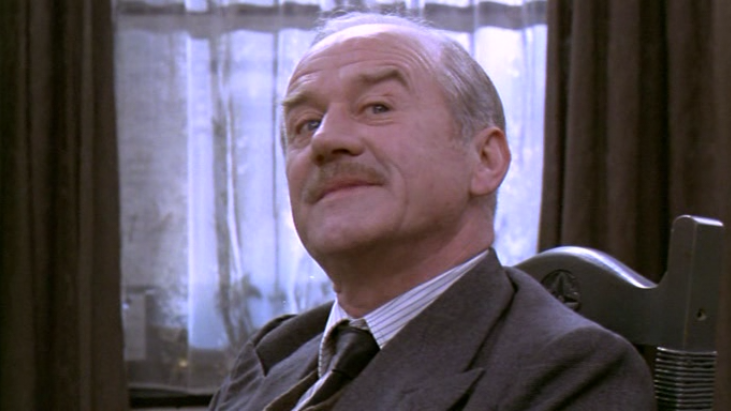
Alternate Best Supporting Actor 1973: Paul Newman in The Sting

Paul Newman did not receive an Oscar nomination for portraying Henry Gondorff in The Sting. 

I ought to open with a few complete asides and just re-state my enjoyment of this film. It's just a wonderfully entertaining and fun film. I always love when the same people who decry a best picture win like this, also decry the academy not recognizing comedy. The Sting is not a great serious drama, it's great entertainment. Anyways, one of the major reasons for this quality is in the star-pairing of Robert Redford as young up and comer con man Johnny Hooker, and Paul Newman as the old pro Henry Gondorff. Redford was the only actor recognized for the film, perhaps as the "hotter" commodity at the time, which given the academy's love for the film the lack of Robert Shaw as the chief villain Doyle Lonnegan and Paul Newman does feel a bit of an oversight strangely enough. Now it has to be said, despite Newman's star theoretically fading when compared to Redford at this point (though it wasn't really), Newman might as well be in his prime here. In fact while they make for a give and take duo in their previous collaboration Butch Cassidy and the Sundance Kid, Newman takes ownership of this film despite definitely not being lead, and...actually on this watch I had to admit something that I couldn't quite believe...Newman is supporting in the film. Now hear me out, Gondorff's role is specifically as the supporting mentor to Hooker, and though he has a few scenes to himself, so do Robert Shaw and Harold Gould as other con pro Kid Twist. Like those two, his scenes are almost exclusively in service to the creation or motivation of the con, that is technically all for Hooker's story. To kind of seal it I did a rough screentime count, where I was generous if anything, and from that I was surprised to learn Newman only has a few minutes more than 15 minutes of screentime, making him in a grand total of about 15% of the film, hard to call him a lead, particularly when Redford is an unquestionable lead standing right there with his over an hour of screentime. If the role wasn't played by Newman, I might've come to this conclusion a lot quicker.
 
That of course speaks to the strength of this performance and the star power of Newman in this role. This as we open with Newman's entrance into the film being a classic sort of anti-star entrance as we meet the "great Henry Gondorff" as he's sleeping off a hangover between a wall and his bed. This followed by being awoken through a cold shower, and we start with not the best introduction for this supposed ultimate con artist. Newman is of course great at being sloppy just as he is at being smooth. This as he instantly endears a bit to Henry in just showing his lack of pretense in his interactions with Hooker. Newman brings a nice bit of warmth just as he attempts to guides Hooker and even cautions him about revenge. Newman does it with really such a naturalistic way that makes Gondorff instantly endearing as this mentor to Hooker. Now as we follow Gondorff as he goes about recruiting his crew to set up Lonnegan, we get full movie star Newman in all his glory. This is just Newman at his most in that regard. Newman could be a great actor, but here he is a great movie star. This just in every one of his interactions, and nose flicks, there's a sheer sense of a joy of performance there. This as it is hard not to have the fun right along Newman every step of the way. Of course Newman does balance this in showing a sense of intelligence as he discusses the plan, pausing on moments to show regarding Lonnegan's potential wrath, but also just bringing so much energy to the build of the plan. He has such a wonderful zest within figuring out each bit of it. Newman making for a great leader for the plan that it is hard not to get wrapped up into the plan, and wish you could be part of his con in some way. 

Now the planning of the con leads to what is the best scene of the film, remember this is a film I adore, largely because it solely focuses on the two best performances in the film, that being Shaw and Newman going to toe to toe in a poker game. Before that though we do get a quick moment that kind of sums up Newman's performance a bit here, and what makes him just so likable. This as he shows off his card tricks to Hooker. This as he shows them off he is so impeccably smooth in his manner, but then when he fumbles a bit, Newman sort of "oops" reaction is perfection. This as Newman brings the right bits of subversion within the confidence to make him all the more likable actually. Now onto the poker game that is amazing in every regard and I love every minute of it. This as Newman is terrific in portraying Gondorff play the poker lout "Shaw". His whole manner being a mess, and being as abrasive and obnoxious as possible. He is hilarious in just how sloppy he is and particularly in stark contrast to Shaw who just is getting more and more angry in his reactions throughout. They make great foils for one another throughout the scene. I especially love one moment where Shaw finally verbally lashes out, and Newman's "aw crap" face (which apparently might've been genuine thinking Shaw was about to actually punch him) is the perfect moment of Gondorff losing his bearings just a bit. Newman's great though in showing in that sloppiness the casual confidence about the performance Gondorff is doing, making it seem all too easy. I especially love his rather comical way of glancing at his final hand, while also eyeing Lonnegan's henchman with a certain suspicion. Newman is hilarious throughout the scene, and against Shaw's reactions, you have a truly classic scene. 

That scene is Newman's highlight however Newman doesn't waste a moment from that point in portraying Gondorff trying to make it all work. This as there's actually a nice balance. This in moments of portraying his concern for Hooker's safety. Newman's actually fairly moving in portraying this low key concern wholly earnestly as he remains uncertain of the kid's life throughout the affair. This while also portraying a nice duality in the moments of the actual sting. This in capturing the degree of stress as Newman portrays a lack of confidence in the moment of running around trying to make it work and creating a good sense of the pressure of it. This against his moments of still playing Shaw as this cocky and mean employer of a corrupt race betting room. Newman though creates a good character in these moments with stiff and dismissive anger he brings in playing the part of the boss you'd believe Hooker's character supposedly hates. Of course this all being just part of the game and in the moments of success where you get that carry over chemistry of Redford and Newman from Butch and Sundance. This as when the two share joy it just seems all the brighter. The final sequence in particularly being all the more joyous just in their mutual jubilation being just so infectious. Even in his supporting screentime, Newman seems the lead just by his presence throughout once he appears. He makes for the proper con man of all con mans. I'll say though watching the film again, I must've had a little bit of a case of Oscar sickness in my evaluation of Robert Redford's work, that is being overly dismissive of it largely due to my love of the Oscar snubbed Newman and Shaw. I will correct that of course. Nonetheless though still, Newman and Shaw do steal the film, Shaw through his vicious and volatile presence and Newman through his charming one. This may not be the technically best acted performance by Paul Newman, but it is perhaps his most entertaining and the clearest example of his star power. 

Sunday, 2 April 2017

Alternate Best Supporting Actor 1973 Results

5. Yul Brynner in Westworld -  Brynner is easily the highlight of his film giving a chilling portrayal of an unstoppable android.

Best Scene: The gunslinger wins. 
4. Sterling Hayden in The Long Goodbye - Hayden gives a terrific performance portraying the boisterous man attempting to love life, well in reality only hiding the sad man that hates it.

Best Scene: Wade has to pay a fee.
3. Christopher Lee in The Wicker Man - Lee grants the grandiose menace needed for his island leader of pagans, but adds subtle nuance to his character and film by showing the underlying motivations of the man as well.

Best Scene: Just before the sacrifice.
2. Cyril Cusack in The Homecoming - Cusack gives a quietly brilliant performance as seemingly the only non-miserable soul in a house through his realization of a sunny demeanor which alludes to a complex relationship with his family.

Best Scene: Words of warning.
1. Richard Jordan in The Friends of Eddie Coyle - Good Predictions Luke, Charles, Tahmeed, Michael Patison, Michael McCarthy, and Omar. Richard Jordan gives a fantastic performance by so cruelly realizing the tactics of his law officers which would be the style of a heroic cop in a different film.

Best Scene: Foley tells Eddie some bad news.
Updated Overall
Next Year: 1984 Lead

Alternate Best Supporting Actor 1973: Yul Brynner in Westworld

Yul Brynner did not receive an Oscar nomination for portraying the Gunslinger in Westworld.

Westworld introduces the amusement parks populated by androids that let visitors do whatever they wish, and kind of calls it a day with the concept.

The film begins with that very interesting concept which is just used to tell a fairly simple story. Most of the time we just watch a few guests hanging around, with the staff being confused by a few malfunctions, with the main focus on two men Peter (Richard Benjamin) and John (James Brolin) on vacation. The highlight of the film without question is Yul Brynner as the aptly named Gunslinger. Brynner in a send up to his role in The Magnificent Seven, right down to almost the exact same costume, plays the constant antagonist for the park guests. Brynner, once again proving that playing villains was his true calling, is quite effective in the early scenes a less serious fiend though. His whole point is to pester the guests until they shoot him in response. Brynner in turn is quite the enjoyable troll as he attempts to mock the men into shooting them, though while doing so Brynner does carry himself with imposing enough to suggest you wouldn't want him as your real enemy. Of course this is only a warm up to the finale of the film when the robots reject all previous programming and are set loose upon the guests.

Brynner's best scenes in the film though are when he confronts the unsuspecting Peter and John, after the systems have gone haywire. Brynner has the Gunslinger take his usual style until he successfully outdraws John and kills him. The smile that Brynner brings to his face is absolutely chilling almost suggesting perhaps a bit of emotion in the Gunslinger's satisfaction in finally killing his target, which makes him quite menacing as he begins chasing down Peter. Brynner throughout the final sequence is  pioneering work as the unstoppable villain, apparently influencing Michael Myers and the Terminator. Brynner actually doesn't make it as simple as being a cold face killer. Again those hints of satisfaction in the machine are particularly unnerving, but he does more than that. Brynner also does more in his physical manner throughout the sequence because he actually walks with this very particular outlaw swagger, that is so exact in repetitive is rather off-putting in revealing the mechanical nature of the killer. The point of the performance is the consistency in this portion but there is one great moment in there when Peter hides from the Gunslinger's heat seeking vision by hiding below a torch. Brynner's good in portraying the unnatural switch in the Gunslinger since he does not portray a human confusion, but rather a computer's awkward attempt to break through a glitch. Brynner's work as the killing machine works as making a fierce villain, but he also allude to a bit more when given the chance. The film unfortunately doesn't allow him to explore any more, and does not make much use of what he brings through his performance. Brynner isn't only the best part of the film but his performance alludes towards a better film than the one he's in.

Saturday, 1 April 2017

Alternate Best Supporting Actor 1973: Richard Jordan in The Friends of Eddie Coyle

Richard Jordan did not receive an Oscar nomination for portraying ATF agent Dave Foley in The Friends of Eddie Coyle.

Although the Godfather did reveal the brutality of mob life it presented there to be certain codes, and a general class to the criminal life. The Friends of Eddie Coyle feels like strict rejection of that in its dog eat dog depiction of criminals. The film doesn't do this though by depleting them of their humanity, not at all, in fact the way it humanizes all the criminals makes the world they live in all the more unsettling. Richard Jordan is the only principal actor not playing a criminal in the film. His character Dave Foley is the one named law officer we see and it is interesting the way he further amplifies the harsh tone of the story. The reason being the main point of Foley within the story is when he is meeting a couple of the criminals. Foley is not corrupt though, he's meeting with them because they are both his informers unbeknownst to each other.

It's a little interesting that Richard Jordan is an actor who for quite awhile I only knew from a single performance in Gettysburg, which I consider to be one of the all time great supporting turns. I could say he was a great actor from that performance but that was the only performance I knew him from. I still have not seen a great deal of Jordan's work but now seeing another one of his turns it is confirmed to me at least, that he is indeed a great actor. His work in Gettysburg feels in a way even greater seeing that he's unrecognizable between the two performances, and not just because the age difference and the period facial hair in that later film. Jordan might as well be a different person entirely in his realization of Dave Foley. Jordan's approach to Foley is rather fascinating in that he's almost the hero cop character you might see in a different film, the problem though here is that Foley's not the hero of this story, not that there is one.

Jordan though plays the part realistically though with just the right touches of a personal style not unlike say a Steve McQueen in Bullitt. Jordan carries a certain "cool" in his work that one would normally associate with the cop hero that we like, but again Jordan does something brilliant with this. Jordan actually makes this rather  in a way as he only takes this approach when he is talking to either of his informants whether it is the past his prime Eddie (Robert Mitchum) or the completely amoral Dillon (Peter Boyle). Jordan in these scenes plays it Foley as a guy who just doesn't sweat the small stuff or in this case the big stuff. Jordan makes Foley rather casual as he speaks to both men about essentially trading in their friends for favors. Jordan brings that "cool" about it that grants this vicious edge to the scenes though making the informing seems perhaps a little too easy in a way. Jordan smartly contrasts though against Foley in the field the field where he portrays not quite as as smooth of an operator. Oh he's good at his job but Jordan is careful to reveal a genuine in tension as Foley carefully takes down his friends. Jordan's remarkable because he gives these moments the needed severity as though he is indeed the hero, and lead of the film, though again of course he's not. Jordan's best scenes though are those with the informers particularly the ones he shares with Mitchum. Jordan's great by creating this combination of attitude Foley has towards Eddie. In that he brings enough of a casual ease as though he's his friend, yet Jordan underlines this all with a definite intensity particularly when he notes a lack of effort by Eddie to produce real information. Jordan's terrific in the way he so effectively makes Foley completely manipulative yet never appearing as such. When he tells Eddie that he needs more, after Eddie already has given info out, Jordan offers such a sympathetic face like he honestly cares about the man. He so warmly speaks to him, suggests he give more info, yet there is no true empathy in his eyes, as he coveys a indifference towards Eddie just below the surface reinforced by his cold disinterest whenever Eddie can produce something. What makes this performance so special is the way Jordan is law offer hero we'd usually empathize with, using methods you'd usually describe as slick, but since the film humanizes the crook, particularly the sad sack Eddie, it in turn shows how cruel such a figure can be through a shifted perspective.

Friday, 31 March 2017

Alternate Best Supporting Actor 1973: Cyril Cusack in The Homecoming

Cyril Cusack did not receive an Oscar nomination for portraying Sam in The Homecoming.

The Homecoming is a bare bones play adaptation detailing the turmoil resulting when a man takes his wife to visit his strange family. 

Cyril Cusack is a rather unique character actor from the period as his even in small roles there is usually something a bit different based on his atypical screen presence. This is a particularly effective quality for his role here as Sam the brother of the family patriarch Max (Paul Rogers). Cusack from the start makes Sam standout against the curmudgeon Max, Max's equally miserable son Lenny (Ian Holm), and his other seemingly stunted other son Joey (Terence Rigby). Cyril Cusack in his first scene comes in with Sam discussing his success as a chauffeur do to his refusal to impress himself on others. Cusack carries himself as the proper chauffeur through much of the scene. He has such a pleasant smile and apparent likability as a man who seems to aim to please. Cusack makes Sam seem like just such a gentle soul, unlike the other men, as he so kindly speaks with his nephews and his brother, taking such a quiet pride in his apparent abilities to please his customers as a chauffeur.

Cusack's sunny demeanor earns an impression since he always feels a bit separate for the rest of his downtrodden kin. Cusack does not use this for a simplification of a character, nor does he show that Sam is in some way blissfully unaware. Cusack instead shows this to essentially be a defense mechanism of sorts, a fashioned state for Sam to always try to keep a smile on his face. Cusack makes sense of this by how we see his brother and nephew Lenny in particular who rarely have anything to say that isn't a complaint or a put down of another. Cusack shows the jovial front of Sam as his way of trying to stay beyond the rest of his house hold, and it alludes to this long history. Sam after all has been part of it longer than the rest and Cusack shows this as this built conditioning in Sam to deal with his often intolerable brother. Cusack goes further in revealing Sam's relationship to his brother even when smiling. Cusack does so much with just eyes even at times as every glance to his brother has these quiet hints of disdain towards him, and shows that Sam does not ignore his brother's severe character flaws.

I love the way Cusack's performance is one that cuts through the nonsense in a way even though he shows Sam technically having a personal shield. Cusack does this with such an ease though such as when Max goes off on his stories about the film, and Cusack's reactions say so much through just subtle facial suggestions. There is a moment where Max is going on and on, and Cusack creates the sense of knowing of a man who has heard all the nonsense before. He only occasionally gets into verbal spats, which Cusack reinforces the idea that Sam has his own way with things. There is a moment where he defends himself for example but Cusack portrays this as merely a lapse for him. As he briefly makes his case, but Cusack again in just in his eyes conveys Sam is  just quickly remembering who he's dealing with giving sense to his instant departure from the conversation. Other times though Cusack's terrific in showing Sam managing to get in his own snipes in. Cusack carefully delivers these lines though in that jovial way showing that Sam is getting to enjoy insulting his brother, but making it so it basically goes over the man's head. Now Cusack, despite having only a few lines, is pivotal in the last act of the film when the family, besides Sam, decide to steal away the last brother, Teddy(Michael Jayston)'s, wife Ruth (Vivien Merchant). Cusack gives the most cinematic performance in the film since he never is merely there, his work suggests he knows the camera will pick up anything he does as long as it's onscreen. Cusack uses this to offer the only empathetic man as Cusack is rather moving by showing that Sam is so quietly horrified by the terrible idea the rest of the family has to steal the wife and make her work as a whore. Cusack, wholly in the background, builds towards Sam finally saying something fully without a facade in a broken attempt to warn Ruth about his family's intentions in a very effective moment. Sam though collapses seemingly dead, though he is said to be breathing. Cusack allows for an interpretation of the moment by how he builds towards the short breakdown. Cusack's work suggests that while not quite physically finished, Sam is emotionally finished with dealing with his horrible family. This is a brilliant performance by Cyril Cusack as with such ease he realizes his character in such vivid detail, adding a real substance to the history of the film, as well as giving a quietly poignant portrayal of a semi decent man entrapped in a deranged family.

Thursday, 30 March 2017

Alternate Best Supporting Actor 1973: Christopher Lee in The Wicker Man

Christopher Lee did not receive an Oscar nomination for portraying Lord Summerisle in The Wicker Man.

The supporting performances of the Wicker Man all have this eerie consistency as they portray this strangely sinister happiness within all the pagan denizens of the island, which stands in stark contrast to Edward Woodward's portrayal of the devote Christian and police officer Howie there to find a missing little girl. All of the supporting performances share that same consistency except for Christopher Lee as Lord Summerisle. Lord Summerisle being the the lord of the island in more than just a title. Now on the surface Lee seems to fulfill a similar style to the Lord as was found in his subjects. When he greets Howie, he does it with a friendly smile that it subverted with a powerful undercurrent of disdain in his eyes and in his words. When he speaks of the local rituals, that disgust Howie, Lee delivers his lines like that of a proud father to his children, overjoyed to see them performing the rites he "holds dear" and then offers quite the undercurrent of venom in his words whenever he responds to Howie's objections.

Lee's performance though goes deeper than the others because Lord Summerisle isn't quite a typical islander. In one of his early scenes the Lord takes a walk with Howie where he reveals his family's history which involved setting up a fruit plantation in the island, and encouraging the islanders to return to the pagan religion of their ancestors.  Lee speaks these words differently than when defending or praising the rituals. There's more of a distance in the words of Summerisle, and in that distance Lee suggests a certain separation. There is not quite the passion within the description, Lee speaks not as a preacher but rather as a manipulator. Although it is not directly stated Lee alludes to a certain falsehood in Summerisle's own belief by revealing this intelligence around it of a man who is uses the religion rather giving himself to it. Lee nuance in this regards adds greatly to the film as he's not simple another worshiper adding another layer by realizing that the Lord uses the religion to control the populace as his father and grandfather had done.

The focal point of Lee's performance comes in the finale where the islanders have their mayday celebration to which Howie believes will result in a sacrifice, he's right but unfortunately for him he's the sacrifice. In the turn towards the truly sinister nature of the islanders coming out they are all just as jovial as before. Lee is incredibly menacing in revealing Summerisle as this terrible ringmaster for his people as he leads them to go about sacrificing Howie in giant wooden statue. Lee shows the full extent of the manipulation through his powerful voice that now is that of the preacher leading his flock in this chilling joyous celebration about ending a man's life supposedly to bring back a good harvest. Lee though again uses this scene though to bring more than perhaps what is even demanded of him. Lee again separates Summerisle from of the islanders as in between the margins, when the islanders are not focused on him, he suggests the ritual is based on manipulation of the masses rather a true belief from himself. My favorite moment in his entire performance is when Howie attempts to get some sort of revenge by telling the islanders they must sacrifice Summerisle next if the harvest fails again, which it likely will. Lee's reaction is perfection as he shows all the confidence fade from the Lord, and reveals a real fear showing that the Lord realizes his life will be on the line if his plan does not work. Lee portrays an effort in Summerisle as he attempt to return to his form as the grand preacher though struggles delivering his statement now with a raw anger towards Howie. Lee throughout the rest of the scene conveys this desperation in the Lord as they finish the sacrifice, and only returns to his earlier conviction when he sees the islanders have clearly become satiated. Lee gives a very strong performance as his work offers further depth to the character of Lord Summerisle but also the film itself. 

Alternate Best Supporting Actor 1973: Sterling Hayden in The Long Goodbye

Sterling Hayden did not receive an Oscar nomination for portraying Roger Wade in The Long Goodbye.

Sterling Hayden is best known for his cold tough guy roles in films like The Killing and The Asphalt Jungle, even his best performance in Dr. Strangelove is a subversion of that idea. His performance in The Long Goodbye is a complete departure from that type. We first see Roger Wade, a successful novelist, as Elliott Gould's Philip Marlowe finds him staying in a shady rehab center for celebrities with drug and alcohol problems. Marlowe gets him out and returns him home to his wife, but that doesn't mean Roger's all okay. Hayden's work is unlike any other performance I've seen of his in his portrayal of the mess of the man that is Roger Wade. Hayden's performance though isn't just of any trouble man it's sort of a Ernest Hemingway pseudo genius who happens to also be a complete drunkard. Hayden's terrific in bringing to life that sort of grand larger than life personality. Apparently Hayden was in reality drunk and high throughout the shoot, well this is one time where it actually works out. Hayden doesn't just wear it well he kind of glories in it as he should in this role. Hayden plays the way Wade projects himself as just a guy loving life. Hayden is this curiously endearing bundle of life in his portrayal as he never feels over the top it only feels natural to the state of man that Roger is. Now the reason Hayden's apparent intoxication works here is because this is not just a performance to watch to be a mess. Hayden's work is surprising in its level nuance particularly given the circumstances supposedly behind the performance.

Hayden though with company brings that whole lively boisterous routine, but it definitely hiding something as he underlines it with such unease whenever he speaks alone with his wife. His scene we see alone with his wife it is rather striking to see such a sensitive and vulnerable Hayden as he reveals the insecurities of the Wade who in reality isn't enjoying life in the least. Hayden shows that most of the time though Wade hides a sadness in front of other that is until  his former doctor (Henry Gibson) comes to collect a bill. Hayden surprisingly heartbreaking in this scene by starting with Wade trying to work through by yelling at the man but as the doctor is not deterred Hayden reveals the facade of Wade's deteriorate. There is such a powerful sorrow that Hayden brings by withdrawing himself, losing that boisterousness, portraying this self-examination in his eyes that forces Wade into this lonely place. What happens to Wade in the end is made an unfortunate inevitability by Sterling Hayden fantastic performance. Hayden goes against his usual style so effectively to create this tragic figure of a man whose disposition cannot hide his depression.

Wednesday, 29 March 2017

Alternate Best Supporting Actor 1973

And the Nominees Were Not:

Richard Jordan in The Friends of Eddie Coyle

Sterling Hayden in The Long Goodbye

Yul Brynner in Westworld

Christopher Lee in The Wicker Man

Cyril Cusack in The Homecoming

Saturday, 2 February 2013

Alternate Best Supporting Actor 1973: Results

5. Max von Sydow in The Exorcist- Sydow has a limited role but properly gives the weight and power to his role.


Best Scene: Father Merrin sees the demonic statue in the desert. 
4. Edward G. Robinson in Soylent Green- His film is not much but Robinson gives a heartfelt performance that brings dramatic weight to a film sorely lacking in it otherwise.

Best Scene: Sol's euthanasia scene.
3. Robert De Niro in Mean Streets- De Niro gives an effectively manic performance that infuses a childlike enthusiasm that works perfectly for the part.

Best Scene: Johnny Boy threatens the man he owes money to. 
2. Robert Ryan in The Iceman Cometh- Ryan gives a powerful performance piercing through the film by realizing his character's cynicism brilliantly by always managing to show that this comes from his broken dreams.

Best Scene: Larry's final speech. 
1. Robert Shaw in The Sting- Good Prediction Lezlie. This was a difficult choice to make as Ryan and Shaw are both incredible Ryan realizing his complex character brilliantly, but Shaw making so much out of a part that is so little. For the moment the win goes to Shaw showing why he is my favorite supporting actor ever tearing into scenes with such conviction, and giving a striking villianous turn.

Best Scene: "The name's Lonnegan Doyle Lonnegan you're gonna remember that name."
Overall Rank:
  1. Robert Shaw in The Sting
  2. Robert Ryan in The Iceman Cometh
  3. Paul Newman in The Sting
  4. Robert De Niro in Mean Streets
  5. Edward G. Robinson in Soylent Green
  6. Richard Jordan in The Friends of Eddie Coyle
  7. Cyril Cusack in The Homecoming
  8. Christopher Lee in The Wicker Man
  9. Sterling Hayden in The Long Goodbye
  10. Max von Sydow in The Exorcist 
  11. Ralph Richardson in A Doll's House
  12. Ian Bannen in The Offence
  13. Mark Rydell in The Long Goodbye
  14. James Mason in The Last of Sheila
  15. Trevor Howard in Ludwig
  16. Harold Gould in The Sting
  17. Denholm Elliott in A Doll's House
  18. Peter Boyle in The Friends of Eddie Coyle
  19. Hal Holbrook in Magnum Force
  20. Michael Jayston in The Homecoming
  21. Michael Lonsdale in The Day of the Jackal
  22. Jeff Bridges in The Iceman Cometh
  23. Yul Brynner in Westworld 
  24. Bob Bingham in Jesus Christ Superstar
  25. Kurt Yaghjian in Jesus Christ Superstar
  26. James Coburn in The Last of Sheila  
  27. Harry Dean Stanton in Dillinger
  28. Jean-Pierre Leaud in Day For Night
  29. Robert De Niro in Bang the Drum Slowly
  30. Charles Durning in The Sting 
  31. Barry Dennen in Jesus Christ Superstar 
  32. Lee J. Cobb in The Exorcist 
  33. Henry Gibson in The Long Goodbye
  34. Peter Ustinov in Robin Hood  
  35. Richard Dreyfuss in American Graffiti
  36. Alex Rocco in The Friends of Eddie Coyle 
  37. Trevor Howard in The Offence
  38. Peter Egan in The Hireling
  39. Paul Sorvino in A Touch of Class
  40. Francois Truffaut in Day For Night
  41. James Mason in The Mackintosh Man 
  42. Paul Le Mat in American Graffiti
  43. Steven Keats in The Friends of Eddie Coyle
  44. Eiji Okada in Lady Snowblood
  45. Yaphet Kotto in Live and Let Die  
  46. Fredric March in The Iceman Cometh
  47. Vincent Gardenia in Bang the Drum Slowly 
  48. Lee Marvin in The Iceman Cometh 
  49. Charles Martin Smith in American Graffiti
  50. Ian Bannen in The Mackintosh Man
  51. Ray Walston in The Sting 
  52. Eli Wallach in Cinderella Liberty 
  53. Richard Dreyfuss in Dillinger
  54. Tony Roberts in Serpico 
  55. Otis Young in The Last Detail
  56. Randy Quaid in The Last Detail 
  57. Robert Earl Jones in The Sting
  58. John Houseman in The Paper Chase 
  59. Richard Benjamin in The Last of Sheila
  60. John Hillerman in Paper Moon
  61. Richard Romanus in Mean Streets 
  62. Ralph Richardson in O Lucky Man!
  63. Joe Don Baker in Charley Varrick 
  64. Larry Marshall in Jesus Christ Superstar 
  65. Lindsay Anderson in O Lucky Man!
  66. Jack Gilford in Save the Tiger  
  67. Ian McShane in The Last of Sheila
  68. Philip Stone in O Lucky Man!
  69. Charles Durning in Sisters 
  70. Phil Harris in Robin Hood
  71. Arthur Lowe in O Lucky Man!
  72. Geoffrey Holder in Live and Let Die
  73. Philip Toubus in Jesus Christ Superstar
  74. William O'Malley in The Exorcist 
  75. Charles Tyner in Emperor of the North Pole
  76. John Vernon in Charley Varrick
  77. Robert Morley in Theatre of Blood
  78. Bob Dylan in Pat Garrett and Billy The Kid 
  79. Ernest Borgnine in Emperor of the North Pole
  80. William Finley in Sisters 
  81. Milo O'Shea in Theatre of Blood
  82. Andy Robinson in Charley Varrick
  83. John Moulder-Brown in Ludwig
  84. James Brolin in Westworld 
  85. Don Gordon in Papillon
  86. Billy Curtis in High Plains Drifter
  87. Juan Margallo in The Spirit of the Beehive
  88. Toshio Kurosawa in Lady Snowblood
  89. Josh Mostel in Jesus Christ Superstar
  90. Jack MacGowran in The Exorcist
  91. Harry Andrews in The Mackintosh Man
  92. Ko Nishimura in Lady Snowblood 
  93. Randy Quaid in Paper Moon
  94. Ron Howard in American Graffiti
  95. Leo McKern in Massacre in Rome
  96. Robert Deman in Papillon
  97. Burt Young in Cinderella Liberty
  98. Shih Kien in Enter the Dragon
  99. Alan Oppenheimer in Westworld
  100. Julius Harris in Live and Let Die 
  101. Tony Lo Bianco in The Seven-Ups 
  102. Kirk Calloway in Cinderella Liberty
  103. John Saxon in Enter the Dragon
  104. Graham Beckel in The Paper Chase
  105. Steve Franken in Westworld 
  106. Bradford Dilman in The Way We Were 
  107. Jim Kelly in Enter the Dragon
  108. Clifton James in Live and Let Die
  109. Renato Salvatori in A Brief Vacation

Alternate Best Supporting Actor 1973: Edward G. Robinson in Soylent Green

Edward G. Robinson did not receive an Oscar nomination for portraying Sol Roth in Soylent Green.

Soylent Green is a film set in a dystopic New York City where a Detective Thorn (Charlton Heston) finds himself in trouble when he gets close to discovery the secret behind a government foodstuff. The film has its moments but never becomes that interesting particularly due to its mundane and tacky art direction.

Edward G. Robinson gives his very last film performance here as a former scholar who lives with the detective Thorn. There are only two things that are at all memorable from this film one being the last line of the film, and Edward G. Robinson as Roth. Although this might not be the most prestige project Robinson was ever in Robinson still gives it his all, which is always a sign of a good actor. As Roth Robinson gives the role a lot of heart as a man who seems to have lived to long to see the world he once loved completely washed away by decay.

Robinson is very good as Roth because depression is not the overwhelming element of his performance. There are moments where it comes out powerful when he is reminded too much of his past, but early in the film Robinson is very good in portraying the more optimistic elements in Roth. This not to say he is an optimist, but whenever there is moment he is reminded of the past in a positive way like enjoying food from the past Robinson infuses the moment with a lot of heart and happiness that shows just how fondly Roth remembers the past.

Robinson here has a really nice chemistry with Charlton Heston that is rather surprisingly. Their friendship seem genuine and the best scenes of the film are the two together in their small little apartment. Honestly I think it would have been a much better film if they rewrote as a film about Heston and Robinson living in this type world just through the apartment, as they are by far the best scenes in the film. The two are excellent in as they set up the dynamic between the younger man who is unaware of the past, and the old man who can do nothing to forget.

Robinson makes Roth a wise old man effectively and always seems genuine in his excitement over something as simple as just some reports on foodstuffs that are in book form. He always manganese to find the honest emotions in these scenes which is really something considering how ineffectual the scenes away from him tend to be. Robinson though achieves something that the poor art direction of the film does not, which is honestly portraying the loss at the center of the film.

The highlight of his performance, Heston's performance, and of the film is when he decides to be euthanized as a government facility. What really adds to this scene though is the scene where he decides this is particularly strong because Robinson portraying it in such a quiet way. Robinson shows that in finding the horrible truth makes Roth just sadly gives his resignation from a place he feels he can no longer tolerate. Robinson is excellent in the scene as any of his contentment goes away as the full extent of his grief comes out in a heartbreaking moment. This may be far from the best film in his career but Robinson gives a performance worthy to be his last.

Friday, 1 February 2013

Alternate Best Supporting Actor 1973: Robert De Niro in Mean Streets

Robert De Niro did not receive an Oscar nomination, despite winning NSFC, for portraying Johnny Boy in Mean Streets.

Mean Streets is an effective film about a low level criminal Charlie (Harvey Keitel) who has trouble succeeding particular due to his impulsive friend.

Robert De Niro portrays Johnny Boy, Charlie's impulsive friend who is more than a little bit of trouble for Charlie's reputation as a respectable sort of mafia man. Johnny Boy is a character in the film who comes in and out and is almost like weight on Charlie's attempt to do anything else. De Niro here plays Johnny Boy as a bit of an idiot who doesn't have any self control. Early in the film when Charlie first confronts him over his debts, De Niro is great in showing that the name Johnny Boy is quite apt in that he is basically is just a boy in a man's body. This particularly effective when he tries to side step the debts by saying, just like a kid would, that it is just not a big deal.

Something that De Niro does importantly here as Johnny Boy is that he does not really portray him as thuggish as many actors might have done. Johnny Boy does some criminal acts as well as gets involves with some of the activities run by Charlie, but he is not really a career criminal by any means. De Niro importantly gets down the characterization of Johnny Boy perfectly. He is capable of violence like getting into fights, he will even blow up things, but I think De Niro expression after blowing up the mail box shows the most important thing about Johnny Boy. His expression is not of cunning, or of an enjoyment of violence. It instead is the face of a not particularly smart man having some fun, nothing more than that.

De Niro finds just this right tone for the troublesome Johnny Boy who consistently gets into trouble through his manic behavior, which De Niro portrays really well with a great deal of manic energy. Whenever he gets into a fight or is partying around in some what De Niro has an effective youthful enthusiasm into the role that is fitting of Johnny Boy as a man who never grew up. I mention his child like behavior again because it is really important to him being at least somewhat likable, and the fact that he does not portray Johnny Boy's antics as that of a truly lowly criminal, makes it far easier to like him at least to some degree.

The likability of Johnny Boy is essential because it has to be believable that Charlie would bother to stand by him despite all the trouble he causes for him. De Niro makes it acceptable that Charlie would keep making excuses for him, despite being such a problem. He and Harvey Keitel have a certain chemistry that really works together. Although they never state their friendship out loud the two manage a nice camaraderie in their scenes together to properly suggest that they go way back. This camaraderie between the two reinforces this idea that Charlie would keep getting himself into bad situations simply because Johnny Boy gets in these situations.

Robert De Niro gives a very strong performance here as Johnny Boy that offers just the right type of dynamic with Keitel's more controlled performance as Charlie. He adds nicely to the film throughout making Johnny Boy the crazy variable he should be, that builds nicely to the moment near the end when he really breaks down even more. De Niro handles these final scenes well because he built to them with Johnny Boy's increasing frantic behavior throughout the film. De Niro gives a realistic portrayal of Johnny Boy, who could easily have been played far too flamboyantly. He leaves a remarkable impact on the film, and makes Johnny Boy one of the most memorable aspects of the film.

Thursday, 31 January 2013

Alternate Best Supporting Actor 1973: Robert Shaw in The Sting

Robert Shaw did not receive an Oscar nomination for portraying Doyle Lonnegan in The Sting.

Robert Shaw portrays the main villain of the film an Irish mobster who is chosen to be the mark by con artists Johnny Hooker (Robert Redford), and Henry Gondorff (Paul Newman) due to Lonnegan having ordered the murder of Hooker's mentor. Robert Shaw is one of my favorite actors and he shows exactly why with his performance here as Lonnegan. Lonnegan honestly is not that complex of the role as he  really does fall entirely for the con artists plan all the way. What is great about Shaw's work here is making Lonnegan a compelling villain when he easily could have been a one note and frankly boring performance.

Robert Shaw has a certain screen presence where he just tears into a scene. Shaw honestly has a lot of fun with the role while keeping his performance being entirely serious. Whether it is his Irish accent that only amplifies Lonnegan's characterizations as a hard Irish mobster. He also even incorporates his own personal injury into again suggesting a bit of history of the man by playing Lonnegan a man with a limp, he just adds so much with these smaller elements in his performance. Robert Shaw technically is doing a quite of lot of "acting" here but he has deadly conviction in the role making it so, just like all my favorite actors, it is a completely invisible.

Lonnegan is a fairly small role, and really does get have all that much to say, but Shaw makes the most every moments he has.  This particularly true in the scene where he plays cards with Gondorff as they both try to out cheat each other to win the game. Shaw is the master of the deadly stare, and he is brilliant in the way he shows just how much anger he is cooking up inside himself. When Gondorff repeatedly beats him Shaw conveys that level of disgust in Lonnegan in his steely eyes, and that violence is cooking right beneath his surface. When Lonnegan finally forcible corrects Gondorff on the correct pronunciation of his last name the intensity in Shaw's performance is incredible.

For a harsh villain one needs to look no further than to Robert Shaw for cold brutality never is portrayed by anyone more naturally than Robert Shaw. In one of the earliest scenes with Lonnegan he casually orders the murders of two people, as well as just as casually remarks to one of his men that if those two men are not killed he will have to kill far more people to retain his power. Shaw is brilliant in delivery such unabashed cruelty in Lonnegan. There is not even a second thought in his head about the situation he is just going to have them killed. Shaw shows this as just business as usual something that Lonnegan is very use to by now, and any hesitations would make things bad for business.

In the actual process of the Sting almost everyone around Lonnegan is playing some sort of game, acting out a part, or playing up some sort of angle to set up Lonnegan for the Sting. Shaw is right in the center of it all and he plays a very important role as the mark, because he stands as the man who is acting in a completely honest fashion oddly enough. Shaw therefore gives a very realistic performance here, and his reactions through the process are spot on. This is very important to the film as Shaw runs the fine line of showing Lonnegan going along with the Sting, but as well there is a incisive way in the way he looks that properly suggests at any moment the Sting could be kaput. 

This is a great performance by Robert Shaw, as the role of Lonnegan could have been easily eaten whole by the purposefully more flamboyant performances of the con artists. Shaw never allows this to happen instead he successfully steals scenes (from Redford) or perfectly shares scenes (with Newman) as the villain of the piece. Shaw simple sinks his teeth into this part in a way that most other actors would not have been able to do. If there is one reason more than any other why Robert Shaw is one of my five favorite actors is that he makes me just love to watch him act in a way that very few actors do. I love watching his performance here which absolutely makes Doyle Lonnegan a villain you love to hate.

Alternate Best Supporting Actor 1973: Max von Sydow in The Exorcist

Max von Sydow did not receive an Oscar nomination, despite being nominated for a Golden Globe, for portraying Father Lankester Merrin in The Exorcist.

Max von Sydow actually opens the film as Roman Catholic priest who is the head of an archeological dig that unearths an artifact that represents an ancient demon. These early scenes are basically silent and set up the mood of the picture. Sydow helps sets up these scenes with his performance as Merrin. Despite not saying anything Sydow establishes Merrin quite well here  as we see his reactions to the demonic symbols. He portrays a certain fear in Merrin that set up his past knowledge of the demon. His haunted expression in Merrin creates the appropriate dread, but as well suggest that Merrin most likely has a personal history with this particular evil.

Max von Sydow does not appear again until late in the film when Merrin is called in to exorcize the demon that has possessed Regan MacNeil (Linda Blair). Sydow despite only showing up for a few scenes near the end of the film makes a considerable impact. What works well about his performance is the dynamic between his portrayal of Mirren and Jason Miller's portrayal of Father Karras. Where Miller portrays Karras as a hesitate priest filled with doubts, as well as being quite lost when it comes to dealing with the possession, Sydow portrays Merrin as man with a full grasp and command of the situation. When he first comes in telling Karras about the Demon Sydow makes Merrin a man with a clear understanding of the situation.

In the actual exorcism scenes Merrin goes directly at the demon. In the scenes Sydow is a constant of strength as he shows no hesitations as he fiercely goes against the demon. Sydow's performance is very effective portraying a passionate force for good against the demon. He brings the appropriate power to the situation from the front of the priests and stands as a man of conviction within the chaos of the demon. Within all the insanity of these scenes it would have been easy frankly to get lost within the craziness that is going around them and be completely forgotten in face of the possessed girl. He and Miller both stay in the scene and their realistic reactions add greatly to the film.

Sydow in his few scenes makes Mirren exactly what he should be which is almost a comforting factor in the film, to show someone who seems to be able to stand up against the evil of the demon. Sydow is moving in the way he is quietly reassuring in his scenes, particularly when he attempts to explain why the demon uses the girl to Karras. Sydow acts as the steadfast faith in the pivotal moments against Miller's doubting Karras. When Sydow leaves the film suddenly it has the proper disconcerting affect it should because of Max von Sydow's proper portrayal beforehand. In the title role he delivers the precise spiritual reinforcement required of him through his quiet but forceful performance.

Wednesday, 30 January 2013

Alternate Best Supporting Actor 1973: Robert Ryan in The Iceman Cometh

Robert Ryan did not receive an Oscar nomination, despite winning a few critic awards, for portraying Larry Slade in The Iceman Cometh.

The Iceman Cometh is a very long film, almost four hours long, but it certainly is a film with some powerful moments.

The film is notable in that it features the last film performances of both Robert Ryan and Fredric March. March though lived a few years after the release of the film, but Ryan was dying of cancer during production and the film was released posthumously. Ryan here portrays character who basically is waiting to die. A former anarchist activist who has long since given up the cause and has regulated himself to be part of the scenery in a bar filled with drunkards with their failed hopes, and dreams which they still try to hold onto in some way. Slade is different from the rest of them as there clearly is not any dream he is holding onto anymore.

Robert Ryan is best known for portraying rather low individuals, frankly evil characters from the sadistic Master d'Arms in Billy Budd, to the racist army soldier in his Oscar nominated role in Crossfire, as well as the murderous racist in A Bad Day Rock. As I said in my review of his performances in Crossfire Ryan definitely was good at playing these sorts of roles, but here in his last performance he has the chance to play a character far from his type casting. One thing that Ryan seemed to try his hardest to do, particularly in Billy Budd, was to avoid being just a one dimensional evil character. He would certianly play them as evil but he would always attempt to portray the more underlying emotions within the bad man.

In this role as Larry Slade is amazing to see Ryan take on a complex role, considering he was usually the one doing his best to add complexities to those who are not complex. Larry is a constant in the film as always a man in the bar as we see his tired worn face in the background. Ryan's expression is perfect there because it expresses the sorrow and hard life that this man has lived. It is not just a face of pain though as there is also anger there to in Larry that comes from his hatred for the world. It is the face of a cynical man who no longer can deal with any of the woes of society, instead he just sits back and observes instead just waiting for the point when he will die.

Something incredibly special about this performance is the way Ryan never allows Larry to devolve into a one note character. Early on the film he pierces through every scene he has with the harsh brutality of the statements that Larry makes. He is quite brutal with just how blunt Ryan is able to bring about the cynical edge of this character. What is equally special about his performance though is the way he still shows hints of the passion that once was in the man. It is not that he has any left over, he doesn't really, but Ryan is able to bring to life an intense passion that is in Larry. He still is a man with passion, but the problem with him is he has nothing to be passionate about other than his cynicism.

This is a film where one could argue it is seems like each actor is trying to make a bigger impression than another, and almost every actors is given such a chance in either a yelling or a breakdown scenes. There is no question though who gives the strongest performance in the film and it is clearly Robert Ryan. Ryan is terrific in every scene where he tears into to the other men. He is perfect in his performance because unlike some of the others there is no visible performance here. Ryan is brutally honest in his performance and it makes the moments where Larry espouses his disgust with the other particularly powerful. He always manages to go right for the throat with his portrayal making a strong impact whenever he can.

What is especially outstanding about Ryan's depiction Larry though is despite the harshness of his lines, Ryan somehow does manage to infuse some warmth within his performance. There are the smallest glimpses of the past in his face of happier times. In his scenes with Jeff Bridges as Don the son of Larry's former girlfriend Ryan is masterful. Ryan is able to portray that past love that is long gone in these scene in the smallest of smiles without ever losing the edge of Larry. He is fantastic in the way he weaves in the anger and disgust Larry feels toward Don for selling out his mother who was a fellow anarchist, along right with that hidden humanity that Larry still holds onto to some degree.

In this four hour film it would be easy to lose track of the character's stories, and even more easily each story could lose their strength, some of them do. One that definitely does not is Robert Ryan's. He absolutely steals the film with his heartbreaking turn as Larry Slade. All the loses of these people, and broken dreams are brought the appropriate weight through Ryan's uncompromising turn as Larry Slade. His portrayal is fantastic as he succeeds in making him the man who cuts through all the falseness of the others, but equally great in showing the man's own demons that never stop haunting him. Ryan's always finds the truth of his character and this is one of the greatest final performances ever given.

Tuesday, 29 January 2013

Alternate Best Supporting Actor 1973

And the Nominees Were Not:

Robert De Niro in Mean Streets

Robert Ryan in The Iceman Cometh

Robert Shaw in The Sting

Max von Sydow in The Exorcist

Edward G. Robinson in Soylent Green