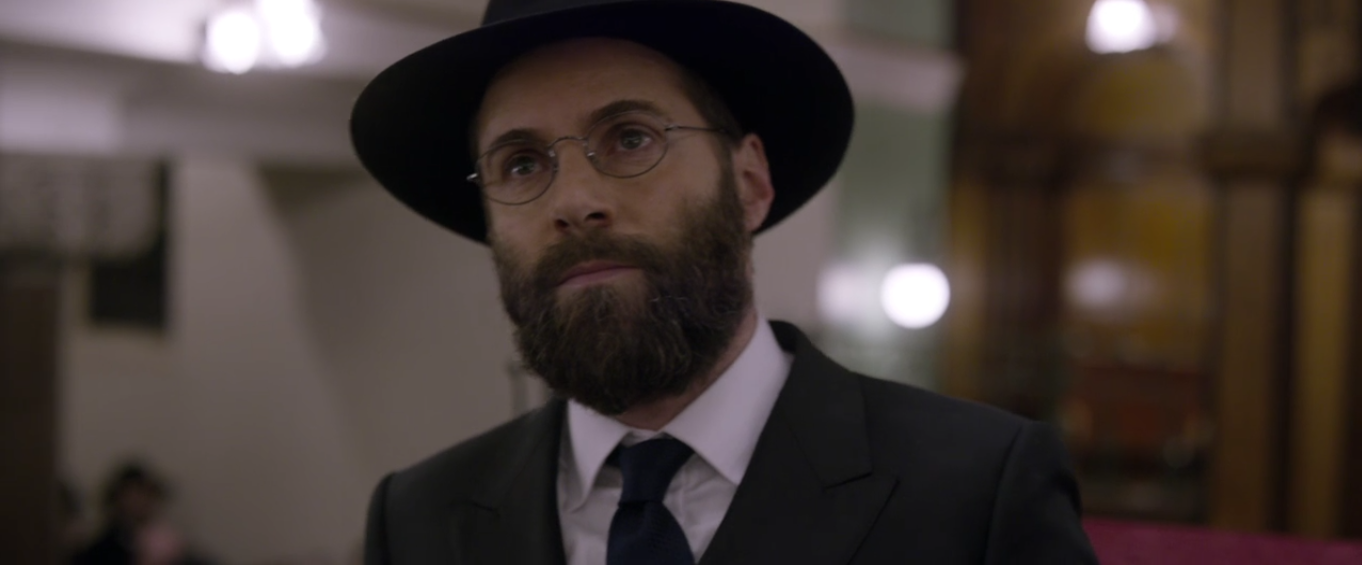
Nicholas Hoult did not receive an Oscar nomination for portraying Robert Harley, 1st Earl of Oxford and Earl Mortimer in The Favourite.
The Favourite is a brilliant film following essentially the struggle between Sarah Churchill, Duchess of Marlborough (Rachel Weisz) and her servant cousin Abigail Masham (Emma Stone), for essentially the favoritism and power as bestowed upon by the troubled Queen Anne (Olivia Colman).
Well here we are again with Nicholas Hoult, not stuck in a thankless or boring hearthrobbish role, in a nominations juggernaut at the Oscars, though almost completely ignored for his own work, though also with the most necessary ingredient...being caked in white makeup. Hoult once again transforms his image away from his young up in comer appearance, though where in his role as Nux, he was still a boy in a certain sense, Hoult as Harley is firmly a man. This is actually a rather fascinating character I'll admit on the outset as Harley is the leader of the opposition in the court of the Queen, leader of the country landowners in opposition to the city merchants led by Goldophin (James Smith). Harley seeks to end the war while Sarah and Goldophin seek to have it extended indefinitely. This is with Harley's claim to save lives, but also perhaps more so to end the heavy taxation for on his side. This subplot frankly could be worthy of its own film as the two men vie in their own war for power though on technically a much larger scale, however it is secondary, as we see how it is influenced, by the triangle of the women. This nonetheless leaves a fascinating character within the role of Harley, that Hoult takes on with great aplomb. He quite frankly owns it in a way as the giant wigs, and lavish clothes could not seem a better fit.
This is in itself a brilliant start in his work within the conception of his approach to Harley, that is rather intriguing. Although Hoult is in fact a tall actor, this has really never been emphasize in any of his roles, until this one. This is worth noting because of the way he essentially brandishes in his physical approach to the part. This being in standing with this grand poses that seem to try to enforce a command, while also conveying this certain ease of power within the casual quality of this physical manner. Hoult's manner just has this certain nearly portrait perfection of it fitting a man who seems ready to be indeed immortalized on some grand painting only befitting to the most powerful man of England. As I noted before this part is well written in conception, however it still would be easy enough to swallowed whole by the three leads. Hoult though essentially excels within the margins becoming this certain lighting strike every time he pops into the film with his forceful performance. This in that aforementioned physical work, but every part of his being including his refined, though so very incisive accent he brings with the role. Harley may be a supporting player within this particular story, but Hoult is fantastic by very much playing the part as the man who will be the lead of his own story as he undergoes his own path to power.
Hoult is outstanding here by essentially just nailing every single moment he has with such a perfection in state, and manner. There is throughout the character of Harley this very specific method which Hoult portrays as respectability, almost at all times, though particularly in front of the queen. The one real break within this is one of his earliest scenes where his demands are not met but in fact derided by Sarah. Hoult's outburst is magnificent as he delivers only a moment of intensity, then bares the real vile hatred in his face, though quickly held back within the requisite refinement for his position particularly within this society. The rest of the film is just one knock out moment after another of essentially Hoult being amazing in delivery the very particular power and presence of Harley. This being one that is defined by a distinct wit that is essentially the nature of his power that he tries to build in the court. Although the lines are indeed there, Hoult's impressive feat is essentially delivery every single one of them with such flawless ability. His interactions with Sarah being in particular these lovely bit of barely hidden hatred, though every one Hoult is exceptional in his the sheer venom he brings to every little barb sent her way.
With Abigail there is a bit more mediation, and I love the bit of fascination that Hoult portrays towards her, as in his eyes he suggests the wheel turning on how he can possible utilize her. When she decides to broker a deal with him, Hoult is marvelous in the scene, in the way he shows Harley not being even remotely phased by her threats. Hoult instead offers just this quiet bit of glee to Harley's face that is testament to a sense of joy of a proper opportunity. In presence of the Queen though Hoult is perhaps at his most magnificent, in finding this most calculated approach in the man. In this every line is proper to the court, but in every little glance, and subtle lack of sincerity, he finds the great manipulations of Harley even as he puts on the act of a proper civil servant. Hoult's work here is essentially of the expert marks man, he only takes a handful of shots throughout the film, but he finds a bullseye with each and every one of them. We don't get a great deal of time with Harley as a man, though we have more than enough time to find the grand manipulator he is, who is probably not wholly genuine in his claim that he's trying to save the realm, thanks to Hoult's wonderful work. We don't see every motion in Harley's own rise to power, however every checkpoint is such a vivid one, and this journey is nearly as compelling as the central one in the facets we find of it, this in large part due to Hoult's always pointed and wonderfully entertaining work.
Wednesday, 6 February 2019
Tuesday, 5 February 2019
Alternate Best Supporting Actor 2018: Russell Crowe in Boy Erased
Russell Crowe did not receive an Oscar nomination for portraying Marshall Eamons in Boy Erased.
There is this perspective that Russell Crowe's career has been on a downward slope ever since the end of his Oscar run with a win for Gladiator, and a last second loss for A Beautiful Mind. It is certainly true that Crowe did not maintain the critical/commercial and awards success that he found in his initial American breakout, however that sort of consistency of success would be nearly impossible for any actor to maintain. This may also stem from the view of the fallen star so to speak in terms of fading from his status of the leading man. Although even that isn't entirely true given his collaborations with Ridley Scott, which while haven't been as successful as their first, they are in no way true blemishes. Crowe certainly has made the wrong choices here and there, though they are only here and there. Contrasting that perspective Crowe has found ways to effectively adjust his choices to honestly reflect his age. This has become especially evident most recently in his delightful turn as the schlubby fists for hire in The Nice Guys, and here where the film almost seems to accentuate his gut in the clothing choices given to. Of course this is not really something that necessarily matters however there is clear commitment here, and decided lack of vanity from the outset with his performance here. A very tricky character within the scheme of a film about a young man, Jared (Lucas Hedges), who is sent to a conversion therapy camp by his parents played by Crowe as Marshall, and Nicole Kidman as his mother, Nancy.
This role is a challenge for several reasons, as so many elements of the character would be easy to get wrong, especially given the type of character. One being he's playing an American southerner, and a baptist preacher at that, a role that is easy to become overblown. Crowe avoids this entirely though giving a nicely restrained, though thick enough, accent that reflects the character's heritage. This is a particularly strong accent as it just is telling of who is rather than at all distracting from the character. Crowe importantly just quietly embraces every aspect of the role in the scenes set early on chronologically. There is no great bluster, or anything even in the preaching sermons we see. Crowe portrays them with a definite passion, but understated as a convincing portrayal of a man delivering essentially weekly sermons. In his eyes Crowe expresses that every sermon is clearly important to him, however they are still of someone who is doing this week in week out for some time so not every one is this earth shattering event by any means. This is not a criticism, as it is nicely sets the nature of the character as the sermons themselves just exude an honest lived in quality. Crowe's preacher isn't THE preacher, he's just a preacher who is certainly devote, but very much so as a man who lives in a real day to day world.
Now making a convincing southern preacher is step one, step two is perhaps the even greater challenge in the film, as Crowe frankly does not have great deal of screen time to pull it off in. This being that Marshall makes the terrible decision to default to the recommendation to send his son to a conversion therapy camp suggested by other people at their family's church. This is as the character is decidedly unsympathetic to the son's plight in discovery he is gay. The whole trajectory of the character here could be easily and very much overblown. Instead Marshall's journey becomes perhaps the most powerful element in the film due to Crowe's work. This is first and foremost established in the early scenes of the film before the issue of Jared's sexual orientation comes up. Crowe is wonderful in these moments in just exuding essentially this most honest hospitality to his son. He delivers such honesty in every glance of affection, and even in his words of caution involving potential premarital sex, Crowe delivers the lines with an earnest warmth of a father believing he is giving some sage advice to his son. Eventually though the issue arrives, via technically a lie, that the family is told Jared has been engaging in homosexual behavior at college.
Crowe is outstanding in the confrontation scene as he finds this very specific balance in the scene. In that he certainly finds the unease and worry in his physical unrest, and harried delivery, of a man frankly dealing with something he doesn't know how to handle. I love though the moments where in the argument Jared swears, and Marshall asks his son to watch his language twice. This is interesting in that these little outbursts would be easy moment to curse to the high heavens and frankly turn Marshall into the cartoon. These moments though most humanize him actually as in this we see essentially the same values pushing Marshall in the moment. When he asks Jared to watch his mouth it is intense, but not really an anger that Crowe conveys. It is rather almost a sadness in seeing his son breaking his values in this way. Crowe in these moments reveals this stress that he plays as this state of near confusion of the father not really knowing what to do or really exactly how to react, fitting to a man who has lived his life with always a strict understanding stemming from his upbringing. This initial fight, which is briefly calmed by Jared revealing the nature of the lie against him, comes a second moment where Marshall attempts to find some mediation with his son. Again this scene would be easy to go over the top with, as Marshall, a salesman, is essentially trying to sell his son on the idea of traditional relations. Crowe benefits the film by resisting such an approach, as even portraying this desperate moment, as difficult as in his eyes he shows this weakness not in his beliefs but in rather what he prodding him to try to sell the idea to his son. In his words within his beliefs though Crowe finds a pure passion within just the central idea of essential childbirth, though weakened by its use in the moment.
When Jared comes out to them, Crowe's reaction is brilliant in that he is able to capture this very subtle unease, and heartbreak without falling into an idea of hatred. It is rather almost of this break in a break of a worldview he's held for a long time. Crowe is able to show a man not doing the wrong thing because he's motivated by any form of hate, but rather is doing the wrong thing firmly because he believes it is the right thing to do. The therapy of course does not work leaving to a strife between father and son that lasts for several years. Crowe essentially is the film in the last final minutes as Jared and his wife press him to read about Jared's experience. A moment that initially leaves a strained scene between father and son, where Crowe is simply incredible This in his physical portrayal of a definite shame in the man as he delivers his lines weakly as a man without any real passion, something completely against the man that we've seen in the rest of the film, showing firmly that he holds no convictions in his former choice. He still tries to explain and deflect, but Crowe shows so well the weakness within as well as essential the strain as he tries not to connect within his son in the moment. Marshall does eventually read about Jared's experience leading to the two to meet one more time. Marshall imparts Jared a gift, but Jared pushes back against his distance as well as his inability to recognize his past actions. Crowe is absolutely heartbreaking in this scene as he initially portrays just a bit of the old fatherly love of Marshall as he gives him a parting gift a special pen. It's a reduced with still that shame as he speaks recognizing that conflict and history. This is also with again a speech about his motivation, which is again with this earnest passion, though now no longer created as persuasion towards Jared, rather Crowe plays the words almost internally to try to explain it to himself. As Jared gives the ultimatum of either accepting for who he is, or just becoming estranged, Crowe finds such a poignancy within his quiet portrayal of Marshall's breakdown showing just in this silent reaction how must love he shares for his son, and that this idea would be impossible for him to accept. I love what Crowe does here in that he does not show this as an immediate change in the father but rather a most important step. A step he so naturally and powerfully realizes through the foundations of his entire performance where Marshall's love for his son was simply an unquestioned fact, though ingrained values got in the way of this. This is a great performance by Russell Crowe as he delivers such a genuine turn that humanizes every moment of his character from his scenes of devoted love, and those of a carelessness of faith.
There is this perspective that Russell Crowe's career has been on a downward slope ever since the end of his Oscar run with a win for Gladiator, and a last second loss for A Beautiful Mind. It is certainly true that Crowe did not maintain the critical/commercial and awards success that he found in his initial American breakout, however that sort of consistency of success would be nearly impossible for any actor to maintain. This may also stem from the view of the fallen star so to speak in terms of fading from his status of the leading man. Although even that isn't entirely true given his collaborations with Ridley Scott, which while haven't been as successful as their first, they are in no way true blemishes. Crowe certainly has made the wrong choices here and there, though they are only here and there. Contrasting that perspective Crowe has found ways to effectively adjust his choices to honestly reflect his age. This has become especially evident most recently in his delightful turn as the schlubby fists for hire in The Nice Guys, and here where the film almost seems to accentuate his gut in the clothing choices given to. Of course this is not really something that necessarily matters however there is clear commitment here, and decided lack of vanity from the outset with his performance here. A very tricky character within the scheme of a film about a young man, Jared (Lucas Hedges), who is sent to a conversion therapy camp by his parents played by Crowe as Marshall, and Nicole Kidman as his mother, Nancy.
This role is a challenge for several reasons, as so many elements of the character would be easy to get wrong, especially given the type of character. One being he's playing an American southerner, and a baptist preacher at that, a role that is easy to become overblown. Crowe avoids this entirely though giving a nicely restrained, though thick enough, accent that reflects the character's heritage. This is a particularly strong accent as it just is telling of who is rather than at all distracting from the character. Crowe importantly just quietly embraces every aspect of the role in the scenes set early on chronologically. There is no great bluster, or anything even in the preaching sermons we see. Crowe portrays them with a definite passion, but understated as a convincing portrayal of a man delivering essentially weekly sermons. In his eyes Crowe expresses that every sermon is clearly important to him, however they are still of someone who is doing this week in week out for some time so not every one is this earth shattering event by any means. This is not a criticism, as it is nicely sets the nature of the character as the sermons themselves just exude an honest lived in quality. Crowe's preacher isn't THE preacher, he's just a preacher who is certainly devote, but very much so as a man who lives in a real day to day world.
Now making a convincing southern preacher is step one, step two is perhaps the even greater challenge in the film, as Crowe frankly does not have great deal of screen time to pull it off in. This being that Marshall makes the terrible decision to default to the recommendation to send his son to a conversion therapy camp suggested by other people at their family's church. This is as the character is decidedly unsympathetic to the son's plight in discovery he is gay. The whole trajectory of the character here could be easily and very much overblown. Instead Marshall's journey becomes perhaps the most powerful element in the film due to Crowe's work. This is first and foremost established in the early scenes of the film before the issue of Jared's sexual orientation comes up. Crowe is wonderful in these moments in just exuding essentially this most honest hospitality to his son. He delivers such honesty in every glance of affection, and even in his words of caution involving potential premarital sex, Crowe delivers the lines with an earnest warmth of a father believing he is giving some sage advice to his son. Eventually though the issue arrives, via technically a lie, that the family is told Jared has been engaging in homosexual behavior at college.
Crowe is outstanding in the confrontation scene as he finds this very specific balance in the scene. In that he certainly finds the unease and worry in his physical unrest, and harried delivery, of a man frankly dealing with something he doesn't know how to handle. I love though the moments where in the argument Jared swears, and Marshall asks his son to watch his language twice. This is interesting in that these little outbursts would be easy moment to curse to the high heavens and frankly turn Marshall into the cartoon. These moments though most humanize him actually as in this we see essentially the same values pushing Marshall in the moment. When he asks Jared to watch his mouth it is intense, but not really an anger that Crowe conveys. It is rather almost a sadness in seeing his son breaking his values in this way. Crowe in these moments reveals this stress that he plays as this state of near confusion of the father not really knowing what to do or really exactly how to react, fitting to a man who has lived his life with always a strict understanding stemming from his upbringing. This initial fight, which is briefly calmed by Jared revealing the nature of the lie against him, comes a second moment where Marshall attempts to find some mediation with his son. Again this scene would be easy to go over the top with, as Marshall, a salesman, is essentially trying to sell his son on the idea of traditional relations. Crowe benefits the film by resisting such an approach, as even portraying this desperate moment, as difficult as in his eyes he shows this weakness not in his beliefs but in rather what he prodding him to try to sell the idea to his son. In his words within his beliefs though Crowe finds a pure passion within just the central idea of essential childbirth, though weakened by its use in the moment.
When Jared comes out to them, Crowe's reaction is brilliant in that he is able to capture this very subtle unease, and heartbreak without falling into an idea of hatred. It is rather almost of this break in a break of a worldview he's held for a long time. Crowe is able to show a man not doing the wrong thing because he's motivated by any form of hate, but rather is doing the wrong thing firmly because he believes it is the right thing to do. The therapy of course does not work leaving to a strife between father and son that lasts for several years. Crowe essentially is the film in the last final minutes as Jared and his wife press him to read about Jared's experience. A moment that initially leaves a strained scene between father and son, where Crowe is simply incredible This in his physical portrayal of a definite shame in the man as he delivers his lines weakly as a man without any real passion, something completely against the man that we've seen in the rest of the film, showing firmly that he holds no convictions in his former choice. He still tries to explain and deflect, but Crowe shows so well the weakness within as well as essential the strain as he tries not to connect within his son in the moment. Marshall does eventually read about Jared's experience leading to the two to meet one more time. Marshall imparts Jared a gift, but Jared pushes back against his distance as well as his inability to recognize his past actions. Crowe is absolutely heartbreaking in this scene as he initially portrays just a bit of the old fatherly love of Marshall as he gives him a parting gift a special pen. It's a reduced with still that shame as he speaks recognizing that conflict and history. This is also with again a speech about his motivation, which is again with this earnest passion, though now no longer created as persuasion towards Jared, rather Crowe plays the words almost internally to try to explain it to himself. As Jared gives the ultimatum of either accepting for who he is, or just becoming estranged, Crowe finds such a poignancy within his quiet portrayal of Marshall's breakdown showing just in this silent reaction how must love he shares for his son, and that this idea would be impossible for him to accept. I love what Crowe does here in that he does not show this as an immediate change in the father but rather a most important step. A step he so naturally and powerfully realizes through the foundations of his entire performance where Marshall's love for his son was simply an unquestioned fact, though ingrained values got in the way of this. This is a great performance by Russell Crowe as he delivers such a genuine turn that humanizes every moment of his character from his scenes of devoted love, and those of a carelessness of faith.
Monday, 4 February 2019
Alternate Best Supporting Actor 2018: Alessandro Nivola in Disobedience
Alessandro Nivola did not receive an Oscar nomination, despite winning the BIFA, for portraying Dovid Kuperman in Disobedience.
Disobedience follows a formerly shunned woman Ronit (Rachel Weisz) returning to her former Orthodox Jewish community after the death of her father, a prominent rabbi in that community.
Alessandro Nivola plays one of the great thankless roles of drama, the other man that must be discarded in order for true love to prevail. These roles often rife with overacting, bland acting, or just being a forgotten note in the film. Thankfully though none of those things are the case with Alessandro Nivola's work here. Nivola is an actor who frankly is on a little bit of a redemption arc of an actor, which thankfully has been ongoing for awhile, as he began his career frankly as a bit of a bad ham. His work in recent years though has been one of a far more understated performer where his talents also seem to lie. That is certainly evident here as the other man who as we open the film is married to Ronit's former forbidden lover Esti (Rachel McAdams). Dovid is in an even greater predicament given his prominent place also as the chosen successor to Ronit's father. Nivola's performance for much of the film is this quiet, yet very eloquent realization of the history of his character within the community as well as his childhood friendship with Ronit. Nivola's work is very subtle, yet so effective in terms of creating the state of Dovid within the current still traditionalist community, while also wishing to remains friends with Ronit who is seen as pariah of sorts. Nivola's performance is initially is of this certain calm understanding and judgement of sorts. In that we initially see him somberly, yet warmly, greet Ronit, while also swaying her to avoid conflicts with others by delivering these moments as the most calm requests.
Nivola in his few interactions with Weisz creates the sense of a very old friendship, paused naturally by circumstances, yet still alive just in there quiet glances that suggest better times with an earnest affection. Nivola underplays this again though properly showing the man just trying to maintain his place as someone in the community with an understanding that she shirked it. Nivola though presents Dovid's methods as being as sincere as possible to respect her while also respecting her beliefs. In this though Nivola portrays this certain difficultly in this, as he physically moves away from her in these moments and looks away as to create as little tension as possible. This however is in contrast to his scenes within the community directly, where Nivola conveys this internalized tension. This in moments of speaking of the problems within it, or a hold to the required values. Nivola's work offers this palatable yet silent unease in Dovid that establishes well that he is not a blind zealot at any point. Dovid maintains this quiet dignity until it becomes evident that his wife desires Ronit and that the intention is for their relationship to continue. This is in the initial moment of anger that Nivola is terrific in as he presents as indeed a moment of sincere concern for his wife's mental well being as he asks Ronit to leave, in a pointed yet subdued delivery, however in his eyes conveying the unease at the definite personal wound the relationship creates. This comes to a head strangely enough at the ceremony for Ronit's father, where both women are in attendance and that Dovid must address.
Though Nivola's entire performance is necessary to the success within the realization of his character, I will say it is this scene that takes his work beyond being simply good. Nivola is outstanding in this scene as he embodies every complex emotion in the moment in his delivery of Dovid's speech to the congregation, but honestly directed to the women. Nivola is amazing as he doesn't portray this as an easy thing for him showing the weight in his brow, and his eyes that reveal the real pain, knowing what he is giving up, even though he knows he must do so. There is the right hesitation there, but then as he speaks Nivola delivers this true passion with his work. He finds the right combination between the words and power, of a sermon however with the intimacy of a tender message of love and understanding. Nivola makes this such a powerful moment as he offers only the strictest sincerity in his eyes, and within the words towards encouraging his wife to choose as she wishes. This with though a quieter moment briefly where he turns down any future promotion that Nivola conveys as a resignation realizing the end of those doubts that had woven within throughout his work. Nivola leaves such a lasting impact in this single scene as he expresses essentially the entire arc of his character a single relatively brief scene, that not only doesn't feel rushed, but instead feels wholly earned through this frankly beautiful moment. It is a striking performance, and I found the most poignant element of the film, as he realizes such convincing portrait of a man doing right by those he loves by letting them go.
Disobedience follows a formerly shunned woman Ronit (Rachel Weisz) returning to her former Orthodox Jewish community after the death of her father, a prominent rabbi in that community.
Alessandro Nivola plays one of the great thankless roles of drama, the other man that must be discarded in order for true love to prevail. These roles often rife with overacting, bland acting, or just being a forgotten note in the film. Thankfully though none of those things are the case with Alessandro Nivola's work here. Nivola is an actor who frankly is on a little bit of a redemption arc of an actor, which thankfully has been ongoing for awhile, as he began his career frankly as a bit of a bad ham. His work in recent years though has been one of a far more understated performer where his talents also seem to lie. That is certainly evident here as the other man who as we open the film is married to Ronit's former forbidden lover Esti (Rachel McAdams). Dovid is in an even greater predicament given his prominent place also as the chosen successor to Ronit's father. Nivola's performance for much of the film is this quiet, yet very eloquent realization of the history of his character within the community as well as his childhood friendship with Ronit. Nivola's work is very subtle, yet so effective in terms of creating the state of Dovid within the current still traditionalist community, while also wishing to remains friends with Ronit who is seen as pariah of sorts. Nivola's performance is initially is of this certain calm understanding and judgement of sorts. In that we initially see him somberly, yet warmly, greet Ronit, while also swaying her to avoid conflicts with others by delivering these moments as the most calm requests.
Nivola in his few interactions with Weisz creates the sense of a very old friendship, paused naturally by circumstances, yet still alive just in there quiet glances that suggest better times with an earnest affection. Nivola underplays this again though properly showing the man just trying to maintain his place as someone in the community with an understanding that she shirked it. Nivola though presents Dovid's methods as being as sincere as possible to respect her while also respecting her beliefs. In this though Nivola portrays this certain difficultly in this, as he physically moves away from her in these moments and looks away as to create as little tension as possible. This however is in contrast to his scenes within the community directly, where Nivola conveys this internalized tension. This in moments of speaking of the problems within it, or a hold to the required values. Nivola's work offers this palatable yet silent unease in Dovid that establishes well that he is not a blind zealot at any point. Dovid maintains this quiet dignity until it becomes evident that his wife desires Ronit and that the intention is for their relationship to continue. This is in the initial moment of anger that Nivola is terrific in as he presents as indeed a moment of sincere concern for his wife's mental well being as he asks Ronit to leave, in a pointed yet subdued delivery, however in his eyes conveying the unease at the definite personal wound the relationship creates. This comes to a head strangely enough at the ceremony for Ronit's father, where both women are in attendance and that Dovid must address.
Though Nivola's entire performance is necessary to the success within the realization of his character, I will say it is this scene that takes his work beyond being simply good. Nivola is outstanding in this scene as he embodies every complex emotion in the moment in his delivery of Dovid's speech to the congregation, but honestly directed to the women. Nivola is amazing as he doesn't portray this as an easy thing for him showing the weight in his brow, and his eyes that reveal the real pain, knowing what he is giving up, even though he knows he must do so. There is the right hesitation there, but then as he speaks Nivola delivers this true passion with his work. He finds the right combination between the words and power, of a sermon however with the intimacy of a tender message of love and understanding. Nivola makes this such a powerful moment as he offers only the strictest sincerity in his eyes, and within the words towards encouraging his wife to choose as she wishes. This with though a quieter moment briefly where he turns down any future promotion that Nivola conveys as a resignation realizing the end of those doubts that had woven within throughout his work. Nivola leaves such a lasting impact in this single scene as he expresses essentially the entire arc of his character a single relatively brief scene, that not only doesn't feel rushed, but instead feels wholly earned through this frankly beautiful moment. It is a striking performance, and I found the most poignant element of the film, as he realizes such convincing portrait of a man doing right by those he loves by letting them go.
Sunday, 3 February 2019
Alternate Best Supporting Actor 2018: Linus Roache in Mandy
Linus Roache did not receive an Oscar nomination for portraying Jeremiah Sand in Mandy.
Mandy is the psychedelic revenge fairy tale about lumberjack Red (Nicolas Cage) seeking justice after a cult steals his girlfriend, fittingly named Mandy (Andrea Riseborough).
Linus Roache, who is perhaps best known for his quietly respectable turn as Thomas Wayne in Batman Begins, unleashes a complete 180 in his portrayal of Jeremiah Sand the cult leader, of a handful of people, with obviously more than a few delusions in his head. Roache initially appears in the film as his cult rides along in their mystery van passing by Mandy to whom Jeremiah takes a keen interest in. Roache's performance is initially as what you'd expect from the cult leader in his casual lean looking off into the distance as though lives with this greater perspective on the world. His physical performance having this burden in the way he leans as though he is posing for a renaissance painting of Christ being taken off the cross, though Jeremiah would probably consider this to be a self-portrait. When he first speaks to one of his disciples, requesting the addition of Mandy to his disciples, Roache speaks in an excessively calm, spiritual tone, as though he is a new age healer. Roache exuding the theoretical zen state of a man who just is simply beyond the normal human, or at least that's what he'd tell you. Of course this setup makes Roache's break down of this absolutely hilarious as whines in a decidedly more earthly fashion, and his performance is more akin to a spoiled teenager than a messiah. The lack of eloquence in Roache's shift is comic gold, just as it is effective in revealing the hollowness of his act.
Sand steals away Mandy, by naturally making a blood sacrifice of one of his followers to a group of demonic bikers, as one does, who kidnap her for him. Of course before meeting her he naturally has her sufficiently drugged up before "witnessing him". Roache is quite simply amazing in this scene in every thing he does is absolutely brilliant here. This is in his whole presence he concocts up with his posture, and pose of a man so cocksure (pun intended), in his place of his delusion of grandeur in his moment. Nearly every delivery, Roache infuses such an overload of confidence through his way of milking every nonsense phrase in his own personal testament towards his own greatness. Now I write nearly, because my favorite element of Roache's work is how he doesn't really make Sand even that good at being a z-rate cult leader. He brings these little cracks in his portrayal of this that again illustrate his true nature, but also are quite simply funny. In this moment initially when he plays a song, written and sung by Sand himself of course, about himself to Mandy by prefacing that it's like the Carpenters but better. In that moment, Roache shifts nicely just for a second from a man selling himself as a demi-god, to briefly just trying to sell his single, which is simply wonderful. Roache though is a magnificent mess in the moment, that by the time he decides to show us, and Mandy his full Roache, that what becomes so laughable is the sheer unearned confidence that Roache infuses into the moment of *ahem* exposure.
Jeremiah's show doesn't impress Mandy, even when under the influence, leaving again Roache to reveal just the spoiled brat. This is brilliantly portrayed though by Roache as the intensity he brings in the sense of pathetic desperation as she laughs him, becomes frightening even if pathetic, as he reveals the danger of breaking his delusion. The viciousness then he brings is this horrible mix of trying to have moments of his false spiritualism with just the outrage of a weak boy. Roache capture the sheer horror of the moment as he enacts his vengeance on Mandy and Red for the "slight" in his snide delivery, and in his eyes that seem mesmerized by the cruel punishment he is delving out. In the moment he expresses almost this jubilation whiel trying to recapture his "glory" in the moment, and Roache makes it a terrifying moment of Jeremiah lusting to recreate his ego by his terrible act. Of course after that Jeremiah essentially becomes the "final boss" that Cage's Red makes track down once he destroys his series of henchmen. Thankfully though we get one more magnificent scene with Linus Roache's performance. This being when Red slowly confronts him. This beginning with Jeremiah trying to take control by espousing his nonsense that Roache unleashes as a zealot in fear, trying hard to hold onto his face. When this obviously does not work as Red begins to physically assault him, Roache is amazing he melts to Jeremiah at his most "normal" as he begs for his life just like any man would, well weak man, only to become a bit more pathetic as he offers a sexual favor in return. It's a fantastic moment though as there is no surface ego, or even the petulance of the brat, just a very scared fool. When that too doesn't appear to work, Roache's final desperate attempt to return to the egomaniac is glorious as he is able to express such venom while attempting, and failing, to reach some mental upper hand. Mandy is a film with an utterly insane tone, and I don't think any performer rides this madness better than Linus Roache. His portrayal of Jeremiah is simply incredible as he wholly convincing in creating the cult villain the film needs, doing so with all the appropriate pomp and circumstance, while also managing to just being extremely entertaining in revealing the many cracks within this facade.
Mandy is the psychedelic revenge fairy tale about lumberjack Red (Nicolas Cage) seeking justice after a cult steals his girlfriend, fittingly named Mandy (Andrea Riseborough).
Linus Roache, who is perhaps best known for his quietly respectable turn as Thomas Wayne in Batman Begins, unleashes a complete 180 in his portrayal of Jeremiah Sand the cult leader, of a handful of people, with obviously more than a few delusions in his head. Roache initially appears in the film as his cult rides along in their mystery van passing by Mandy to whom Jeremiah takes a keen interest in. Roache's performance is initially as what you'd expect from the cult leader in his casual lean looking off into the distance as though lives with this greater perspective on the world. His physical performance having this burden in the way he leans as though he is posing for a renaissance painting of Christ being taken off the cross, though Jeremiah would probably consider this to be a self-portrait. When he first speaks to one of his disciples, requesting the addition of Mandy to his disciples, Roache speaks in an excessively calm, spiritual tone, as though he is a new age healer. Roache exuding the theoretical zen state of a man who just is simply beyond the normal human, or at least that's what he'd tell you. Of course this setup makes Roache's break down of this absolutely hilarious as whines in a decidedly more earthly fashion, and his performance is more akin to a spoiled teenager than a messiah. The lack of eloquence in Roache's shift is comic gold, just as it is effective in revealing the hollowness of his act.
Sand steals away Mandy, by naturally making a blood sacrifice of one of his followers to a group of demonic bikers, as one does, who kidnap her for him. Of course before meeting her he naturally has her sufficiently drugged up before "witnessing him". Roache is quite simply amazing in this scene in every thing he does is absolutely brilliant here. This is in his whole presence he concocts up with his posture, and pose of a man so cocksure (pun intended), in his place of his delusion of grandeur in his moment. Nearly every delivery, Roache infuses such an overload of confidence through his way of milking every nonsense phrase in his own personal testament towards his own greatness. Now I write nearly, because my favorite element of Roache's work is how he doesn't really make Sand even that good at being a z-rate cult leader. He brings these little cracks in his portrayal of this that again illustrate his true nature, but also are quite simply funny. In this moment initially when he plays a song, written and sung by Sand himself of course, about himself to Mandy by prefacing that it's like the Carpenters but better. In that moment, Roache shifts nicely just for a second from a man selling himself as a demi-god, to briefly just trying to sell his single, which is simply wonderful. Roache though is a magnificent mess in the moment, that by the time he decides to show us, and Mandy his full Roache, that what becomes so laughable is the sheer unearned confidence that Roache infuses into the moment of *ahem* exposure.
Jeremiah's show doesn't impress Mandy, even when under the influence, leaving again Roache to reveal just the spoiled brat. This is brilliantly portrayed though by Roache as the intensity he brings in the sense of pathetic desperation as she laughs him, becomes frightening even if pathetic, as he reveals the danger of breaking his delusion. The viciousness then he brings is this horrible mix of trying to have moments of his false spiritualism with just the outrage of a weak boy. Roache capture the sheer horror of the moment as he enacts his vengeance on Mandy and Red for the "slight" in his snide delivery, and in his eyes that seem mesmerized by the cruel punishment he is delving out. In the moment he expresses almost this jubilation whiel trying to recapture his "glory" in the moment, and Roache makes it a terrifying moment of Jeremiah lusting to recreate his ego by his terrible act. Of course after that Jeremiah essentially becomes the "final boss" that Cage's Red makes track down once he destroys his series of henchmen. Thankfully though we get one more magnificent scene with Linus Roache's performance. This being when Red slowly confronts him. This beginning with Jeremiah trying to take control by espousing his nonsense that Roache unleashes as a zealot in fear, trying hard to hold onto his face. When this obviously does not work as Red begins to physically assault him, Roache is amazing he melts to Jeremiah at his most "normal" as he begs for his life just like any man would, well weak man, only to become a bit more pathetic as he offers a sexual favor in return. It's a fantastic moment though as there is no surface ego, or even the petulance of the brat, just a very scared fool. When that too doesn't appear to work, Roache's final desperate attempt to return to the egomaniac is glorious as he is able to express such venom while attempting, and failing, to reach some mental upper hand. Mandy is a film with an utterly insane tone, and I don't think any performer rides this madness better than Linus Roache. His portrayal of Jeremiah is simply incredible as he wholly convincing in creating the cult villain the film needs, doing so with all the appropriate pomp and circumstance, while also managing to just being extremely entertaining in revealing the many cracks within this facade.
Saturday, 2 February 2019
Alternate Best Supporting Actor 2018: Peter Bogdanovich in The Other Side of the Wind
Peter Bogdanovich did not receive an Oscar nomination for portraying Brooks Otterlake in The Other Side of the Wind.
The Other Side of the Wind is the final, initially unfinished film, by brilliant egomaniac Orson Welles about a brilliant egomaniac, Jake Hanneford (John Huston), failing to finish his final film.
Keeping in mind that this synopsis that leads to a meta exploration of the nature of filmmakers, their acolytes and film analysis, we have Peter Bogdanovich in the role of Brooks Otterlake, Brooks a former film critic/historian, protege of Hanneford turned commercially successful director, meanwhile Bogdanovich was a critic/historian, protege of Welles, turned commercially successful director. Bogdanovich obviously is not known as an actor, typically only featured in cameo roles, sometimes to his own detriment in the case of his work in his own film Targets. Bogdanovich in turn was not the original choice for this role, replacing impersonator Rich Little who originally played the role, for reasons that differ depending on the source, though if you've seen Little's impersonathan take on the Christmas Carol you'd probably say it is for the best. Bogdanovich was moved out of his original bit part as one of the interested cinefanatics, and instead was cast as a version himself, to the point Welles told him to evoke their relationship with his performance. This perhaps helped then in Bogdanovich gives a strangely far more committed work here than his nearly abysmal work in his own earlier film, of course the old hand wave of playing himself can be wrongly lobbed as always, especially since what Bogdanovich gets at here is far more than a surface examination.
Although the film is ostensibly about Huston's Jake Hanneford you perhaps are granted a far more intimate insight into Brooks. This in part is helped from Bogdanovich giving the only bit of acting that is from beyond the original bursts of filming in the original production, this is through the opening introduction where Brooks offers the introduction to the "documentary" to the viewer. Bogdanovich, though servicing a need to the film's introduction, doesn't cut short the character finding his delivery these years of exasperated pain in trying to uncover the exact truth of his old mentor though with a resignation in regards to letting his and Hanneford's legacy be as it may. In the actual film though we open up to a very different Brooks seemingly in his hay day having fun along with the large entourage of Hanneford. Bogdanovich carries himself magnificently as we see him in the initial press light portraying Brooks seemingly in his element of discussing Hanneford. Bogdanovich successfully delivers a unique charisma and confidence of these moments, with this just the right touch of smug assurance, as though he is the alpha dog, though of the hangerons. This though with the bright badge of honor of his success, which Bogdanovich carries with this casual calm, that he illustrates sometimes in an old Hollywood impersonation. Evidently this was Little's main approach in the part, playing each scene with a different accent which seems a touch broad, however Bogdanovich uses these rather brilliantly as these naturalistic little asides that suggest Brooks as he is so well into his element, but also an allusion to his state as essentially a living impersonation.
At the arrival to Jake's party, and where there will also be a rough cut showing of the film, we are given a series of circumstances that reveals every toxic interaction and relationship created by Hanneford over the years. This puts upon pressure on all specifically Brooks who is pushed by all including other filmmakers. Although we initially are granted Bogdanovich still carrying that certainty, with his delicious delivery of "Jake's surrounded by disciples, I'm the apostle" as this creed that grants a superiority well also is clever admission of the truth of the man. Bogdanovich is quite effective as he wears away, and he manages to convey this certain ease up of the excessive confidence. It rather becomes nearly this defense mechanism as he hears criticisms of himself as essentially a copy of Hanneford, and nothing but an imitator in the end. Bogdanovich is especially effective of this wearing away of the overly clever facade. This even in his brief, public, back and forth with Hanneford who makes many passive aggressive remarks to which Bogdanovich usually plays against an eye roll, though an eye roll that hides more than he initially lets on towards the nature of Brooks. One particularly remarkable moment in this is where he recommends, jokingly, to have a fight with one of his "critics". Bogdanovich delivers the recommendations of fisticuffs with a jovial spin, however now in his eyes bringing this greater desperation in the moment of actually having to defend his relationship with Jake beyond a certain point. Bogdanovich has a surprising depth in his work as he slowly dissolves the nature of Brooks in the progression of the night to essentially reveal a failure of Brooks. Bogdanovich is excellent in the way of playing around with the confidence, depending on the audience, showing the man trying to keep his pride, by making the act all the more pathetic as it goes on. This is until finally he essentially reveals himself fully in a private moment with Jake. All that bravado is gone as Bogdanovich plays the moment as essentially this quiet, even shy, little fanboy who is hesitant knowing his disappointment in the eyes of the mentor, as despite his success can't help him fund his film. Bogdanovich, despite being the last addition to the film, provides the most human element, even within his deeply flawed character. That is obviously not going to come from the delusional Hanneford, instead Bogdanovich surprises with his rich textured work of a man living his own delusion while still within the shadow of another. Bogdanovich, in his efforts to release Welles's final work director, actually helped to uncover an artifact of a greater ability as a performer, though perhaps that was because he uncovered a real pain within himself through this self-portrait of sorts.
The Other Side of the Wind is the final, initially unfinished film, by brilliant egomaniac Orson Welles about a brilliant egomaniac, Jake Hanneford (John Huston), failing to finish his final film.
Keeping in mind that this synopsis that leads to a meta exploration of the nature of filmmakers, their acolytes and film analysis, we have Peter Bogdanovich in the role of Brooks Otterlake, Brooks a former film critic/historian, protege of Hanneford turned commercially successful director, meanwhile Bogdanovich was a critic/historian, protege of Welles, turned commercially successful director. Bogdanovich obviously is not known as an actor, typically only featured in cameo roles, sometimes to his own detriment in the case of his work in his own film Targets. Bogdanovich in turn was not the original choice for this role, replacing impersonator Rich Little who originally played the role, for reasons that differ depending on the source, though if you've seen Little's impersonathan take on the Christmas Carol you'd probably say it is for the best. Bogdanovich was moved out of his original bit part as one of the interested cinefanatics, and instead was cast as a version himself, to the point Welles told him to evoke their relationship with his performance. This perhaps helped then in Bogdanovich gives a strangely far more committed work here than his nearly abysmal work in his own earlier film, of course the old hand wave of playing himself can be wrongly lobbed as always, especially since what Bogdanovich gets at here is far more than a surface examination.
Although the film is ostensibly about Huston's Jake Hanneford you perhaps are granted a far more intimate insight into Brooks. This in part is helped from Bogdanovich giving the only bit of acting that is from beyond the original bursts of filming in the original production, this is through the opening introduction where Brooks offers the introduction to the "documentary" to the viewer. Bogdanovich, though servicing a need to the film's introduction, doesn't cut short the character finding his delivery these years of exasperated pain in trying to uncover the exact truth of his old mentor though with a resignation in regards to letting his and Hanneford's legacy be as it may. In the actual film though we open up to a very different Brooks seemingly in his hay day having fun along with the large entourage of Hanneford. Bogdanovich carries himself magnificently as we see him in the initial press light portraying Brooks seemingly in his element of discussing Hanneford. Bogdanovich successfully delivers a unique charisma and confidence of these moments, with this just the right touch of smug assurance, as though he is the alpha dog, though of the hangerons. This though with the bright badge of honor of his success, which Bogdanovich carries with this casual calm, that he illustrates sometimes in an old Hollywood impersonation. Evidently this was Little's main approach in the part, playing each scene with a different accent which seems a touch broad, however Bogdanovich uses these rather brilliantly as these naturalistic little asides that suggest Brooks as he is so well into his element, but also an allusion to his state as essentially a living impersonation.
At the arrival to Jake's party, and where there will also be a rough cut showing of the film, we are given a series of circumstances that reveals every toxic interaction and relationship created by Hanneford over the years. This puts upon pressure on all specifically Brooks who is pushed by all including other filmmakers. Although we initially are granted Bogdanovich still carrying that certainty, with his delicious delivery of "Jake's surrounded by disciples, I'm the apostle" as this creed that grants a superiority well also is clever admission of the truth of the man. Bogdanovich is quite effective as he wears away, and he manages to convey this certain ease up of the excessive confidence. It rather becomes nearly this defense mechanism as he hears criticisms of himself as essentially a copy of Hanneford, and nothing but an imitator in the end. Bogdanovich is especially effective of this wearing away of the overly clever facade. This even in his brief, public, back and forth with Hanneford who makes many passive aggressive remarks to which Bogdanovich usually plays against an eye roll, though an eye roll that hides more than he initially lets on towards the nature of Brooks. One particularly remarkable moment in this is where he recommends, jokingly, to have a fight with one of his "critics". Bogdanovich delivers the recommendations of fisticuffs with a jovial spin, however now in his eyes bringing this greater desperation in the moment of actually having to defend his relationship with Jake beyond a certain point. Bogdanovich has a surprising depth in his work as he slowly dissolves the nature of Brooks in the progression of the night to essentially reveal a failure of Brooks. Bogdanovich is excellent in the way of playing around with the confidence, depending on the audience, showing the man trying to keep his pride, by making the act all the more pathetic as it goes on. This is until finally he essentially reveals himself fully in a private moment with Jake. All that bravado is gone as Bogdanovich plays the moment as essentially this quiet, even shy, little fanboy who is hesitant knowing his disappointment in the eyes of the mentor, as despite his success can't help him fund his film. Bogdanovich, despite being the last addition to the film, provides the most human element, even within his deeply flawed character. That is obviously not going to come from the delusional Hanneford, instead Bogdanovich surprises with his rich textured work of a man living his own delusion while still within the shadow of another. Bogdanovich, in his efforts to release Welles's final work director, actually helped to uncover an artifact of a greater ability as a performer, though perhaps that was because he uncovered a real pain within himself through this self-portrait of sorts.
Friday, 1 February 2019
Alternate Best Supporting Actor 2018: Brian Tyree Henry in If Beale Street Could Talk
Brian Tyree Henry did not receive an Oscar nomination for portraying Daniel Carty in If Beale Street Could Talk.
If Beale Street Could Talk follows two African American lovers as they try to stay together amidst much tribulation during the 1970's in New York City.
2018 was a banner year for Brian Tyree Henry appearing in six different films throughout the year. Several showing very different sides of his talents from his colorful vocal performance in Spider-Man: Into the Spider-Verse as a loving if somewhat goofy cop and father, to his menacing work in Widows as a vicious gangster turned wannabe politician vying for legitimacy, but for me his most striking work was found in the lyrical If Beale Street Could Talk. Henry's role is rather small here appearing in only one major scene with some brief work otherwise, but it is the sort of part that a talented performer can make a lasting impression. Now in some sense his character seems minor, just a random friend of our lead Fonnie (Stephan James), who plot wise only important in that he is alibi for Fonnie after he's been accused of rape, although even there Daniel's testimony matters little in front of the prejudiced legal process. The film though is more inclined towards the moments of life than its plot, as Daniel appearance is to focus on this interaction between two old friends. Henry in his few minutes of screentime opens up with such a vibrant turn opening up initially as we see the glimmers of the friendship between Fonnie and Daniel. Henry and James as terrific together in that their interactions share such a naturalistic warmth. The years together in the past just is exuded in their ease as they speak to one another. For me this is the very best scene of the film, particularly as the dialogue scenes, actually because the two create such a lived in quality in the interactions. There film is always trying to find this beauty in the mundane in a way, and here that works as their is such a warmth in every casual interaction. I could've spent almost a whole just seeing the two talk, as I felt the scene managed to move past the idea of these people, something the film occasionally struggles with for me, and wholly just shows us people. Henry is an essential facet of this as his approach to James Baldwin's prose is the most natural. He does not try to oversell its "grandeur" but rather grants a grounded weight. This becomes most evident when Daniel speaks of his incarceration. Henry is outstanding in this moment as he captures in his haunted eyes the real horrors of his situation. In just a few seconds Henry realizes this intensity of his unease, and a bitterness of his state. There is more in his exact delivery that is of this pain he honestly can't speak of in his treatment, as Henry conveys how palatable the pain is in his heart even as he only alludes to what happened to him. When he compares his white captors to Satan, it doesn't feel poetic, but rather his delivery conveys this harrowing anxiety within him that will never leave him. Henry makes this whole segue this powerful descent into the post traumatic stress, that without showing it, reveals this systematic monster through his performance. Henry is only in the film for a few minutes, yet h in that time grants a such a vivid portrait of this man that feels as though he exists far beyond those confines while also creating the film's most remarkable scene.
If Beale Street Could Talk follows two African American lovers as they try to stay together amidst much tribulation during the 1970's in New York City.
2018 was a banner year for Brian Tyree Henry appearing in six different films throughout the year. Several showing very different sides of his talents from his colorful vocal performance in Spider-Man: Into the Spider-Verse as a loving if somewhat goofy cop and father, to his menacing work in Widows as a vicious gangster turned wannabe politician vying for legitimacy, but for me his most striking work was found in the lyrical If Beale Street Could Talk. Henry's role is rather small here appearing in only one major scene with some brief work otherwise, but it is the sort of part that a talented performer can make a lasting impression. Now in some sense his character seems minor, just a random friend of our lead Fonnie (Stephan James), who plot wise only important in that he is alibi for Fonnie after he's been accused of rape, although even there Daniel's testimony matters little in front of the prejudiced legal process. The film though is more inclined towards the moments of life than its plot, as Daniel appearance is to focus on this interaction between two old friends. Henry in his few minutes of screentime opens up with such a vibrant turn opening up initially as we see the glimmers of the friendship between Fonnie and Daniel. Henry and James as terrific together in that their interactions share such a naturalistic warmth. The years together in the past just is exuded in their ease as they speak to one another. For me this is the very best scene of the film, particularly as the dialogue scenes, actually because the two create such a lived in quality in the interactions. There film is always trying to find this beauty in the mundane in a way, and here that works as their is such a warmth in every casual interaction. I could've spent almost a whole just seeing the two talk, as I felt the scene managed to move past the idea of these people, something the film occasionally struggles with for me, and wholly just shows us people. Henry is an essential facet of this as his approach to James Baldwin's prose is the most natural. He does not try to oversell its "grandeur" but rather grants a grounded weight. This becomes most evident when Daniel speaks of his incarceration. Henry is outstanding in this moment as he captures in his haunted eyes the real horrors of his situation. In just a few seconds Henry realizes this intensity of his unease, and a bitterness of his state. There is more in his exact delivery that is of this pain he honestly can't speak of in his treatment, as Henry conveys how palatable the pain is in his heart even as he only alludes to what happened to him. When he compares his white captors to Satan, it doesn't feel poetic, but rather his delivery conveys this harrowing anxiety within him that will never leave him. Henry makes this whole segue this powerful descent into the post traumatic stress, that without showing it, reveals this systematic monster through his performance. Henry is only in the film for a few minutes, yet h in that time grants a such a vivid portrait of this man that feels as though he exists far beyond those confines while also creating the film's most remarkable scene.
Alternate Best Supporting Actor 2018
And the Nominees Were Not:
Tom Waits in The Ballad of Buster Scruggs
Tim Blake Nelson in The Ballad of Buster Scruggs
Alessandro Nivola in Disobedience
Russell Hornsby in The Hate U Give
Nicholas Hoult in The Favourite
Peter Bogdanovich in The Other Side of the Wind
Predict those five or these five:
Jeff Bridges in Bad Times At the El Royale
Lewis Pullman in Bad Times At the El Royale
Linus Roache in Mandy
Steven Yeun in Burning
Brian Tyree Henry in If Beale Street Could Talk
Russell Crowe in Boy Erased
Or Both, and for Prediction purposes:
Waits from Scruggs
Bridges from Bad Times
Tom Waits in The Ballad of Buster Scruggs
Tim Blake Nelson in The Ballad of Buster Scruggs
Alessandro Nivola in Disobedience
Russell Hornsby in The Hate U Give
Nicholas Hoult in The Favourite
Peter Bogdanovich in The Other Side of the Wind
Predict those five or these five:
Jeff Bridges in Bad Times At the El Royale
Lewis Pullman in Bad Times At the El Royale
Linus Roache in Mandy
Steven Yeun in Burning
Brian Tyree Henry in If Beale Street Could Talk
Russell Crowe in Boy Erased
Or Both, and for Prediction purposes:
Waits from Scruggs
Bridges from Bad Times
Subscribe to:
Posts (Atom)