Showing posts with label Bruno S.. Show all posts

Tuesday, 15 October 2024

Alternate Best Actor 1977: Results

5. Rutger Hauer in Soldier of Orange - Hauer gives an effective depiction of his character slowly finding his purpose and confidence, though doesn't quite leave as much of an impact as I might've thought. 

Best Scene: Being given alibi.  
4. Fernando Rey in Elisa, Vida Mía - Rey's working with a limited role but is effective in the different perspectives he is presented in. 

Best Scene: Teaching.
3. Bruno S. in Stroszek - S's role is limited though there is something innately captivating about him once again. 

Best Scene: Street performance. 
2. William Devane in Rolling Thunder - Devane manages to maintain a captivating portrayal of a soldier lost at home and revenge, even though his film is all over the place. 

Best Scene: Time to kill. 
1. Boris Plotnikov in the Ascent - Plotnikov gives a truly haunting portrayal of a man finding his passion for life just as he is about die. 

Best Scene: Final scene. 


Next: A few 77 supporting reviews.

Thursday, 8 August 2024

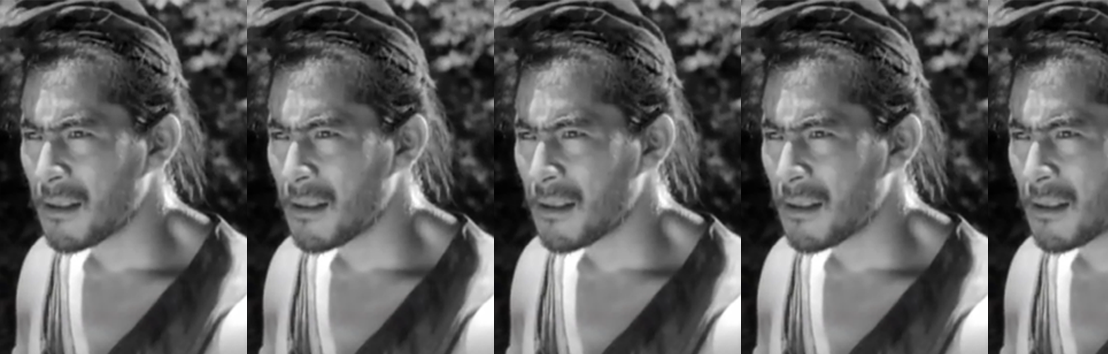
Alternate Best Actor 1977: Bruno S. in Stroszek

Bruno S. did not receive an Oscar nomination for portraying Bruno Stroszek in Stroszek. 

Stroszek follows an idiosyncratic German musician who moves to America. 

Stroszek is the second of two films directed by Werner Herzog to feature Bruno S., after playing the peculiar man who had a natural musical ability who had gone through many years of a strange imprisonment in The Enigma of Kaspar Hauser, this film too follows a man we see released from prison, who is a musician, although now during the modern era. In both instances of Herzog's use of Bruno S., there is a clear specificity of the choice as an alternative to Klaus Kinski, as there's a certain innocence to Bruno S. as opposed to the spawn of Satan's innate presence of Kinski. But I think in both instances this goes beyond that choice, as the fact that he plays a character nearly with his own name I would say is no coincidence. If one were to read about Bruno S.'s life, which is rather heartbreaking, where he was abused as a child, apparently tortured by Nazis, and spent time also imprisoned in mental institutions, the casting of Bruno S. in both instances has a certain autobiographical quality. Although I wouldn't say he is being cast as "himself" in both instances, as there is a progression within his character in Hauser that certainly is performed, the certain particular way Bruno S. interacts with the world, supported also by an interview I watched of him, is very much his personal thing. I won't make any diagnosis of S., but I think it is safe to say he takes in and reacts to stimuli differently from the average person. What Herzog seems to be doing, especially in this film, is merely presenting this unique man to us through the theoretical character of Stroszek. And I should note, I don't think this is a case of someone "not acting", as obviously what Stroszek is going through is not what Bruno S. is going through, these are fictional scenarios, but nonetheless what we do get is the reaction of this man that is very much his own if filtered through performance. 

And we see this man going about his life of leaving prison, to find himself in a world accosted by local thugs, while being friendly towards a local prostitute. S. doesn't react to any of this as a man with hardship, even when they are torturing him, but rather just a man kind of taking it in, in his own particular way, that is very much his way. This is one of those instances where it is hard to say what Bruno S. has, but he has *it* in that there is just something innately captivating about Bruno S., even if to say exactly why, isn't the easiest. He moves to America even and even then, Bruno S. looks at every sight his own way, every interaction his own way, later when things start not going his way for his small group, including the prostitute, there is frustration in the words he speaks, however even that is Bruno S.'s own way about himself. He never exactly states anything to anyone, it is this internalized sort of spoken way. Even as things go wrong, such as that prostitute running off with a trucker, his other companion getting arrested, his house getting taken away, being lost in America, Bruno S. presents Stroszek as just going through these landscapes, these moments as his man does, as he does, which is as he is, in this way that only he can be. I mean there truly should be nothing to a man riding an amusement park ride by himself while seeming to be lost, but just the particular expression that Bruno S. is making as he goes around and around is oddly fascinating, in just being so much himself that it is hard not to look at what he is doing. The sequences that are contrasting the rest of his work are when he plays music, and if one thing I wholeheartedly wish was there had been more scenes of Stroszek playing music and singing. One segment in particular where he takes the street to perform, simply seeming to do so, Bruno S. is absolutely captivating and suddenly he communicates in such a universal way it is kind of beautiful. This is not your traditional performance, or film, yet just like the film, Bruno S. delivers performance here that does captivate, even if the *how* may remain a bit enigmatic. 

Thursday, 1 August 2024

Alternate Best Actor 1977

And the Nominees Were Not:

William Devane in Rolling Thunder
 
Rutger Hauer in Soldier Of Orange
 
Fernando Rey in Elisa, Vida Mía
 
Bruno S. in Stroszek 
 
Boris Plotnikov in The Ascent

Thursday, 12 October 2017

Alternate Best Actor 1974: Results

5. Bruno S. in The Enigma of Kaspar Hauser - S. creates a proper enigma as he is always at a certain distance yet is always compelling.

Best Scene: Philosophies.
4. James Caan in The Gambler - Caan gives a terrific performance where he plays with his usual image to create a man at odds with himself as essentially meek man deluding himself with the risk his gambling addition entails.

Best Scene: End of the game.

3. Robert Mitchum in The Yakuza - Mitchum is a proper badass as you'd expect yet he finds a real substance within the role by so effectively exploring the history with the man.

Best Scene: Amputation forgiveness.
2. John Hurt in Little Malcolm - Hurt gives a downright brilliant performance that makes sense of his potentially unwieldy material, and is always engaging even as the film loses steam.

Best Scene: Malcolm's delusions are confronted.
1. Warren Oates in Bring Me the Head of Alfredo Garcia - Good Predictions Luke, Charles, Robert, Tahmeed, Omar, RatedRStar, Matt C., BRAZINTERMA Prêmio Fictício, Anonymous and Calvin. Oates easily wins this lineup for me for his dynamic and daring portrayal of a man already on the edge falling off.

Best Scene: "Because it feels so good."
Updated Overall

 Next Year: 1974 Supporting

Wednesday, 11 October 2017

Alternate Best Actor 1974: Bruno S. in The Enigma of Kaspar Hauser

Bruno S. did not receive an Oscar nomination for portraying the titular character of The Enigma of Kaspar Hauser.

The Enigma of Kaspar Hauser is an interesting film that follows a strange young man appearing in a town with only an odd note in hand.

Bruno S.'s performance, as typical for a Herzog lead, is as a man that is either an extreme himself or in an extreme situation. This is the former for the strange man at the center of the film. This is not a film where we are meant to necessarily emphasize with the outsider, Herzog positions us technically closer to the view of the town's people trying to decipher the man. We are only given slightly more information then they are initially since we at the very least see Kaspar as he is in his confinement in a dank basement, and is taught some strange lesson by a man even more mysterious than Kaspar himself. The man leaves Kaspar in the town with the note, and teaches him to repeat a single phrase about becoming a gallant rider, and that is all. After that we are much like the town just trying to understand the man, and it is with this idea that Bruno S.'s performance is built around. S.'s performance is to give us the behavior, but only he is to understand it, not us. In the opening scenes, and his initial moment in town S.'s whole physical performance is of this strange specimen that we're are not expected to fully know. He grants Kaspar wide eyes that seem to take in everything around him, and his body language is distinct almost statuesque. He is a curiosity just from looking at him, which is exactly as Kaspar should be.

Bruno S. succeeds in being compelling just in himself as you watch there is just something about him that intrigues and captivates even beyond his strange note and past. This is essential to the character given that everyone becomes so interested him to the point they present him in a show despite there technically being nothing overtly abnormal about him physically. It isn't just the story though as S.'s performance also brings that strangeness so effectively to life. S. creates the sense that there is a mystery there even though he never tells you what it is. S. gives us a man who has been in an experience that does not relate to any other man in his state of this distance, but it is a certain type of distance that he expresses. S. is carefully not to be off-putting in the early scenes as his whole state of being has this naivety only to Kaspar himself. He's not exactly a child yet there is an innocence to him that makes it as though you not only want to learn more  of the enigma even though S. gives you few additional clues through his own performance to what the man is.

The film has a time jump where Kaspar has learned to easily communicate at least verbally with others, however that in no way removes the mystery of the man. S. portrays the growth in communication is only to a point as even the way he delivers the lines still is more at others, or even to himself rather than with another. He never loses that certain stare of his that now seems to come less of a man who wishes to observe everything around him, but rather of a man whose sight is of some other plain. S. keeps the man as much of a mystery still not allowing you into his plight or to really emphasize with him. Herzog and S. instead keep you still with those around him attempting to decipher what is the story to this man. Every moment of S.'s performance keeps this self containment of the man is. When Hauser mentions his own views on things these are delivered bluntly just as almost random thoughts, and S. portrays these distinctive emotions of the man. He never emotes as a normal person exactly he almost emotes in this particularly intense yet still abrupt and remote way that again keeps him far from an attachment. The main different in the time jump even is that in a way Kaspar becomes less innately likable since now one knows he can communicate yet chooses not to. S.'s performance technically though is of the same man who has just the only difference was his vocabulary of words and knowledge of the world has grown. This is a idiosyncratic performance by Bruno S. as he just is as Kaspar should be. He purposefully is never quite relatable, instead S. gives a performance that succeeds in bringing to life a true enigma that is impossible to fully comprehend.

Thursday, 28 September 2017

Alternate Best Actor 1974

And the Nominees Were Not:

Warren Oates in Bring Me the Head of Alfredo Garcia

Robert Mitchum in The Yakuza

James Caan in The Gambler

John Hurt in Little Malcolm and His Struggle Against the Eunuchs

Bruno S. in The Enigma of Kaspar Hauser