Showing posts with label 2018 Alternate Supporting. Show all posts

Tuesday, 12 February 2019

Alternate Best Supporting Actor 2018: Results

10. Russell Hornsby in The Hate U Give - Hornsby gives a very strong performance realizing the intense determination of his character based around both his past hardships and his genuine love for his family.

Best Scene: How to behave when pulled over.
9. Peter Bogdonavich in The Other Side of the Wind - Bogdonavich's performance, 40 years in its making, is a surprisingly nuanced portrayal of the vulnerable ego of a man who built his own legacy by imitating his mentor.

Best Scene: Trying to tell Hanneford the truth.
8. Brian Tyree Henry in If Beale Street Could Talk - Henry gives the highlight of his banner year in his moving portrayal of essentially memory both those of a loving friendship and a harrowing traumatic experience.

Best Scene: His scene.
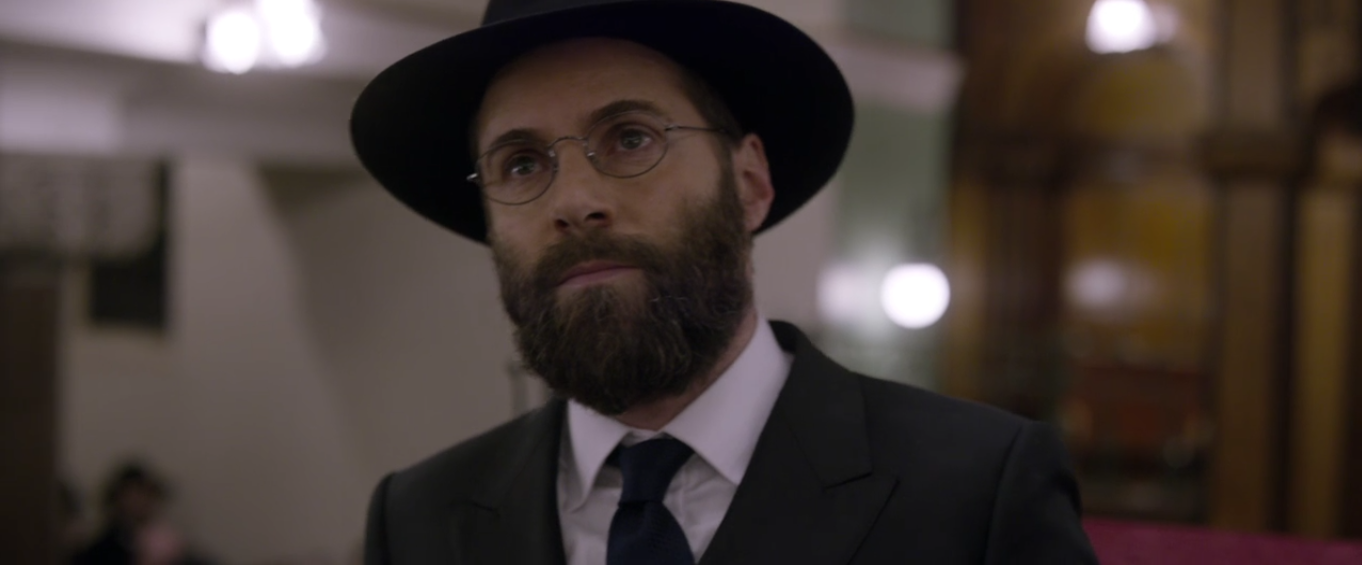
7. Alessandro Nivola in Disobedience - Nivola disappears into his role as one of the pillars of a Jewish community and gives a particularly powerful portrayal of a man coming to terms with his beliefs and how they relate to his friendship and his marriage.

Best Scene: "Choose"
6. Linus Roache in Mandy - Roache gives an amazing turn capturing both the hilarity and the horror of a wannabe prophet with severe delusions and pathetic desperation.

Best Scene:  Presenting himself.
5. Nicholas Hoult in The Favourite - Hoult once again is given a meaty role and once again makes the most of it in his masterful portrayal of a vicious wit and ambition.

Best Scene: Abigail's Offer.
4. Russell Crowe in Boy Erased - Crowe gives one of his best performances in his nuanced portrayal of a father failing then slowly learning to understand his homosexual son.

Best Scene: Ford Dealership.
3. Tom Waits in The Ballad of Buster Scruggs - Waits delivers a wonderful one man show that creates such an empathetic journey in one man's search for gold.

Best Scene: "You Didn't Hit Nothin' Important"
2. Steven Yeun in Burning - Yeun gives a masterful portrayal of an egotistical detachment that creates a most unnerving sort of possible evil.

Best Scene: Burning Greenhouses. 
1. Jeff Bridges in Bad Times At the El Royale - Good prediction Michael McCarthy, and AnonymousBridges takes the top spot overall for me as he delivers one of his best performances. This is giving a thoroughly engaging turn in giving so much life to every facet of his character from the various levels of the facade he puts on, the camaraderie he finds, and most of all his absolutely heartbreaking depiction of a man with dementia.

Best Scene: Describing his memory loss.
Overall Ranking:
  1. Jeff Bridges in Bad Times At the El Royale
  2. Steven Yeun in Burning
  3. Tom Waits in The Ballad of Buster Scruggs
  4. Richard E. Grant in Can You Ever Forgive Me? 
  5. Lewis Pullman in Bad Times At the El Royale
  6. Russell Crowe in Boy Erased
  7. Tim Blake Nelson in The Ballad of Buster Scruggs
  8. Nicholas Hoult in The Favourite
  9. Linus Roache in Mandy
  10. Lily Franky in Shoplifters
  11. Bill Heck in The Ballad of Buster Scruggs - 4.5
  12. Alessandro Nivola in Disobedience
  13. Jonathan Pryce in The Man Who Killed Don Quixote
  14. Harry Melling in The Ballad of Buster Scruggs 
  15. Jonjo O'Neill in The Ballad of Buster Scruggs 
  16. Grainger Hines in The Ballad of Buster Scruggs
  17. Brian Tyree Henry in If Beale Street Could Talk
  18. Peter Bogdonavich in The Other Side of the Wind
  19. Daniel Kaluuya in Widows 
  20. Chris Hemsworth in Avengers: Infinity War 
  21. Robert Forster in What They Had
  22. Anton Yelchin in Thoroughbreds
  23. Russell Hornsby in The Hate You Give 
  24. Josh Brolin in Avenges: Infinity War
  25. Michael B. Jordan in Black Panther
  26. Jesse Plemons in Game Night - 4
  27. Mark Rylance in Ready Player One
  28. Riz Ahmed in The Sisters Brothers 
  29. Kairi Jō in Shoplifters
  30. Sam Elliott in A Star is Born 
  31. Dolph Lundgren in Creed II
  32. Florian Munteanu in Creed II
  33. Josh Brolin in Deadpool 2
  34. Josh Hamilton in Eighth Grade
  35. James Smith in The Favourite
  36. Brian Tyree Henry in Widows
  37. Gabriel Byrne in Hereditary 
  38. Liev Schreiber in Isle of Dogs
  39. Sylvester Stallone in Creed II 
  40. Tom Waits in The Old Man and the Gun
  41. Sean Harris in Mission Impossible: Fallout
  42. Armie Hammer in Sorry to Bother You 
  43. Wyatt Russell in Overlord
  44. Cameron Mitchell in The Other Side of the Wind
  45. Richard Brake in Mandy 
  46. Topher Grace in Blackkklansman 
  47. Dave Bautista in Hotel Artemis
  48. Ron Livingston in Tully 
  49. Ben Whishaw in Mary Poppins Returns
  50. Robert Downey Jr. in Avengers: Infinity War
  51. Adam Driver in Blackkklansman
  52. Jake Johnson in Spider-Man: Into the Spider-verse
  53. Christian Slater in The Wife 
  54. Matthew McConaughey in White Boy Rick 
  55. Ed Helms in Chappaquiddick
  56. Benedict Cumberbatch in Avengers: Infinity War
  57. Harry Belafonte in Blackkklansman
  58. Paul Bettany in Avengers: Infinity War
  59. Joel Edgerton in Boy Erased - 3.5 
  60. Sebastian Stan in Destroyer
  61. Jake Gyllenhaal in Wild Life
  62. Tom Holland in Avengers: Infinity War
  63. Kyle Chandler in Game Night
  64. Joe Alwyn in The Favourite
  65. Sterling K. Brown in Black Panther
  66. Mads Mikkelsen in At Eternity's Gate 
  67. Bruno Ganz in The House That Jack Built
  68. Jon Hamm in Bad Times At the El Royale
  69. Steve Buscemi in Nancy 
  70. Edoardo Pesce in Dogman
  71. Masaharu Fukuyama  in Mirai
  72. Michael Shannon in What They Had 
  73. Bradley Cooper in Avengers: Infinity War
  74. Bruce Dern in Chappaquiddick
  75. F. Murray Abraham in Isle of Dogs
  76. Lin Manuel Miranda in Mary Poppins Returns 
  77. Henry Cavill in Mission Impossible: Fallout
  78. Julian Dennison in Deadpool 2
  79. Brendan Gleeson in The Ballad of Buster Scruggs
  80. Norman Foster in The Other Side of the Wind 
  81. Edward Norton in Isle of Dogs
  82. Jeff Goldblum in Isle of Dogs
  83. Bill Murray in Isle of Dogs
  84. Bob Balaban in Isle of Dogs
  85. Chelcie Ross in The Ballad of Buster Scruggs
  86. Tom Vaughan-Lawlor in Avengers: Infinity War 
  87. Andrew Dice Clay in A Star is Born 
  88. Jude Law in Fantastic Beasts: The Crimes of Grindelwald
  89. Cedric the Entertainer in First Reformed
  90. Anthony Welsh in Journeyman
  91. Jason Clarke in First Man 
  92. Brian Tyree Henry in Spider-Man: Into the Spider-verse 
  93. Ben Mendelsohn in Ready Player One 
  94. Bill Camp in Wild Life
  95. Jasper Paakkonen in Blackkklansman
  96. Paul Stewart in The Other Side of the Wind
  97. Stephen Root in The Ballad of Buster Scruggs 
  98. Colin Farrell in Widows 
  99. Dick Van Dyke in Mary Poppins Returns
  100. Corey Hawkins in Blackkklansman
  101. Stephen Dillane in The Outlaw King
  102. Nicolas Cage in Spider-Man: Into the Spider-verse
  103. James Franco in The Ballad of Buster Scruggs 
  104. Steven Yeun in Sorry to Bother You 
  105. Simon Pegg in Mission Impossible: Fallout
  106. Rob Delaney in Deadpool 2
  107. Gregory Sierra in The Other Side of the Wind
  108. Ned Dennehy in Mandy
  109. Saul Rubinek in The Ballad of Buster Scruggs
  110. Noah Jupe in A Quiet Place
  111. Paul Sparks in Thoroughbreds 
  112. Joe Alwyn in Boy Erased 
  113. Willie Watson in The Ballad of Buster Scruggs 
  114. Mark Ruffalo in Avenges: Infinity War
  115. Rupert Friend in At Eternity's Gate 
  116. T.J. Miller in Deadpool 2 
  117. Aaron Taylor-Johnson in Outlaw King
  118. Colman Domingo in If Beale Street Could Talk 
  119. Flea in Boy Erased 
  120. Michael Beach in If Beale Street Could Talk  
  121. Trevante Rhodes in Bird Box
  122. Michael Douglas in Ant-Man and the Wasp 
  123. J.K. Simmons in The Front Runner 
  124. Jeff Goldblum in Hotel Artemis
  125. Bill Duke in Mandy - 3
  126. Rory Cochrane in White Boy Rick
  127. Jeffrey Donovan in Sicario: Day of the Soldado
  128. Tom Hiddleston in Avengers: Infinity War
  129. Ving Rhames in Mission Impossible: Fallout
  130. Tamuera Morrison in Aquaman 
  131. Blake Jenner in American Animals
  132. John Leguizamo in Nancy
  133. Chris Evans in Avengers: Infinity War
  134. Roland Møller in Papillon
  135. Corey Stoll in First Man 
  136. Winston Duke in Black Panther
  137. Benedict Wong in Avengers: Infinity War
  138. Dave Chappelle in A Star is Born 
  139. Liev Schreiber in Spider-Man: Into the Spider-verse 
  140. Kevin J. O'Connor in Widows 
  141. Tom Hollander in A Private War
  142. Dave Bautista in Avengers: Infinity War
  143. Ted Danson in Hearts Beat Loud 
  144. Steve Buscemi in Lean on Pete
  145. Alfred Molina in The Front Runner
  146. Edmond O'Brien in The Other Side of the Wind 
  147. Lamorne Morris in Game Night 
  148. Udo Kier in American Animals 
  149. John Magaro in Overlord
  150. Johnny Depp in Fantastic Beasts: The Crimes of Grindelwald
  151. John Mulaney in Spider-Man: Into the Spider-verse 
  152. Steve Zahn in Lean on Pete
  153. Tom Hollander in Bird Box
  154. Ryan Eggold in Blackkklansman
  155. Pedro Pascal in If Beale Street Could Talk 
  156. Mahershala Ali Spider-Man: Into the Spider-verse
  157. Allan Corduner in Disobedience
  158. Lukas Haas in Widows
  159. Danny Glover in Sorry to Bother You
  160. Pilou Asbaek in Overlord
  161. Brad Bird in Incredibles 2
  162. Liam Neeson in The Ballad of Buster Scruggs  
  163. Travis Fimmel in Lean on Pete 
  164. Sebastian Koch in Never Look Away
  165. Chris Hemsworth in Bad Times At the El Royale
  166. Tom Hollander in Bohemian Rhapsody
  167. Alec Baldwin in Mission Impossible: Fallout
  168. Harvey Keitel in Isle of Dogs
  169. Paul Walter Hauser in Blackkklansman
  170. Liam Neeson in Widows
  171. Sebastian Stan in Avengers: Infinity War 
  172. Jamie Dornan in A Private War
  173. David Krumholtz in The Ballad of Buster Scruggs
  174. Mark Gatiss in The Favourite
  175. Woody Harrelson in Solo 
  176. John Malkovich in Bird Box
  177. Wood Harris in Creed II 
  178. Yorick van Wageningen in Papillon
  179. Clancy Brown in The Ballad of Buster Scruggs   
  180. Algee Smith in The Hate U Give 
  181. Chadwick Boseman in Avengers: Infinity War
  182. Russell Hornsby in Creed II
  183. Jon Øigarden in 22 July
  184. Bruce Dern in White Boy Rick
  185. Xavier Dolan in Boy Erased 
  186. Garrett Dillahunt in Widows 
  187. Alec Baldwin in Blackkklansman
  188. Brian Tyree Henry in White Boy Rick
  189. Billy Howle in Outlaw King
  190. Joseph Mazzello in Bohemian Rhapsody
  191. Stellan Skarsgard in The Man Who Killed Don Quixote
  192. Sam Rockwell in Vice
  193. David Kross in Sorry to Bother You 
  194. Kyle Chandler in First Man
  195. James LeGros in Support the Girls 
  196. Danny Glover in The Old Man and the Gun
  197. Gwilym Lee in Bohemian Rhapsody
  198. Terry Crews in Sorry to Bother You
  199. Forrest Whittaker in Black Panther
  200. Billy Magnussen in Game Night
  201. Walton Goggins in Ant-Man and the Wasp
  202. Tyler Perry in Vice 
  203. Courtney B. Vance in Ben is Back
  204. Patton Oswalt in Sorry to Bother You 
  205. Wayne Knight in Blindspotting
  206. Colin Firth in Mary Poppins Returns
  207. Mandy Patinkin in Life Itself 
  208. Laurence Fishburne in Ant-Man and the Wasp
  209. Jonah Hill in Don't Worry He Won't Get Far On Foot
  210. Bob Odenkirk in Incredibles 2 
  211. Ben Kingsley in Operation Finale
  212. Don Cheadle in Avengers: Infinity War
  213. Donald Glover in Solo
  214. Clancy Brown in Chappaquiddick 
  215. Jack Lowden in Mary Queen of Scots
  216. John Cena in Bumblebee
  217. Stacy Keach in Gotti
  218. Benedict Wong in Annihilation -  2.5
  219. Robert Duvall in Widows 
  220. Willem Dafoe in Aquaman 
  221. Will Patton in Halloween
  222. Jude Law in Vox Lux
  223. Joe Alwyn in Mary Queen of Scots
  224. Nick Kroll in Operation Finale 
  225. Timothy Hutton in Beautiful Boy 
  226. Gen Hoshino in Mirai
  227. Anthony Mackie in Avengers: Infinity War 
  228. Jake Gyllenhaal in The Sisters Brothers
  229. Henry Golding in A Simple Favor
  230. Dan Fogler in Fantastic Beasts: The Crimes of Grindelwald
  231. Yahya Abdul-Manteen II in Aquaman 
  232. Jim Gaffigan in Chappaquiddick
  233. Jack Black in Don't Worry He Won't Get Far On Foot
  234. Stanley Tucci in A Private War
  235. Xavier Dolan in Bad Times At The El Royale
  236. Ben Falcone in Can You Ever Forgive Me?
  237. Bob Random in The Other Side of the Wind  
  238. Daniel Kaluuya in Black Panther 
  239. Ezra Miller in Fantastic Beasts: The Crimes of Grindelwald
  240. Mark Duplass in Tully
  241. Jared Abrahamson in American Animals
  242. Common in The Hate U Give
  243. John Ortiz in Bumblebee
  244. Ben Hardy in Bohemian Rhapsody
  245. Paul Bettany in Solo
  246. Dimitar Marinov in Green Book 
  247. Andy Serkis in Black Panther
  248. Chris Pratt in Avengers: Infinity War 
  249. Patrick Wilson in Aquaman
  250. Oscar Issac in At Eternity's Gate
  251. Martin Freeman in Black Panther
  252. Rufus Jones in Stan & Ollie
  253. Dolph Lundgren in Aquaman
  254. Dave Franco in If Beale Street Could Talk
  255. Anthony Mackie in The Hate You Give  
  256. Manuel Garcia-Rulfo in Sicario: Day of the Soldado 
  257. Mamoudou Athie in The Front Runner
  258. Aidan Gillen in Bohemian Rhapsody
  259. K.J. Apa in The Hate U Give 
  260. Antonio Banderas in Life Itself
  261. Jorge Lendeborg Jr. in Bumblebee 
  262. Danny Huston in Stan & Ollie - 2
  263. James Cromwell in Jurassic World: Fallen Kingdom 
  264. Joe Alwyn in Operation Finale
  265. Riz Ahmed in Venom
  266. Steve Carell in Vice  
  267. Ted Levine in Jurassic World: Fallen Kingdom
  268. Guy Pearce in Mary Queen of Scots
  269. Jimmy O. Yang in Crazy Rich Asians
  270. David Gyasi in Annihilation
  271. Toby Jones in Jurassic World: Fallen Kingdom
  272. Michael Pena in Ant-Man and the Wasp
  273. Justin Theroux in Mute
  274. Ken Jeong in Crazy Rich Asians - 1.5
  275. Jefferson Hall in Halloween
  276. Alex Monner in Life Itself 
  277. Allen Leech in Bohemian Rhapsody 
  278. Haluk Bilginer in Halloween 
  279. Benedict Hardie in Upgrade
  280. Rafi Gavron in A Star is Born 
  281. Harrison Gilbertson in Upgrade
  282. David Tennant in Mary Queen of Scots
  283. Charlie Day in Hotel Artemis
  284. Max Irons in The Wife
  285. Oscar Isaac in Life Itself
  286. Harry Lloyd in The Wife
  287. Oscar Isaac in Annihilation
  288. Shea Whigham in Vice - 1
  289. Spencer LoFranco in Gotti 
  290. Jesse Plemons in Vice 
  291. Mike Myers in Bohemian Rhapsody 
  292. Justice Smith in Jurassic World Fallen Kingdom 
  293. Toby Kebbell in Destroyer
  294. Rafe Spall in Jurassic World Fallen Kingdom
Next: 2018 Lead

Monday, 11 February 2019

Alternate Best Supporting Actor 2018: Russell Hornsby in The Hate U Give

Russell Hornsby did not receive an Oscar nomination, despite being nominated and winning a few critic awards, for portraying Maverick 'Mav' Carter in The Hate U Give.

The Hate U Give follows a teenage girl, Starr (Amanda Stenberg)'s, struggle after witnessing the death of her best friend by a the hands of a police officer. The film certainly has many more than decent elements however struggles a bit by funneling all of these through YA trappings.

Russell Hornsby, who made a fine impression a couple years ago as Denzel Washington's much older son in Fences, plays Mav Carter the father to Stenberg's Starr. A role similar in intention to Laurence Fishburne's Furious Styles in Boyz n the Hood.  A man who has made mistakes in his past and intends to make sure his family survives and thrives. This is made abundantly clear through the film's striking opening scene where Mav outlines how to handle when being pulled over by the police. Hornsby's in turn makes quite the impression in this scene delivery through this monologue with a strict intensity. He creates the right sense of the danger of it through his hollow method, though shows within it the sort of conviction with his work to support the sense that all for the good of children. Hornsby lays it down bluntly with all the seriousness of a man preparing them to survive most of all, and doesn't even make a glint of anything else. Within this also there is this sort of inherent harshness he brings within his presence that effectively suggests a man who has had his own hard life, and that this too is part of this point blank conditioning. Hornsby in his eyes captures this certain weight of a difficult life as he explains this, making quite the powerful first impression in the film.

Hornsby naturally reduces that overt intensity in his next scene, though it is always something inherent in his performance, effectively so. This is as he manages to convey the loving father who tries to give his children a blunt truth for their lives. Hornsby brings this warmth just as this rather subdued yet potent quality in the character. Hornsby almost makes this the exceptions in a sense as these moments of ease when he can find them to show his affection for his children openly. Hornsby finds the right balance in this and does a particularly good job of in finding just brief subtle moments when watching his children this sense of an unconditional love. This is always intertwined with the harshness of the man's past and how that has influenced Mav's present view. Hornsby again though portrays well the way this informs a certain adamant passion in the character. This is as we see it as he explains his views of the drugs being pushed into the neighborhood by outside forces where Hornsby's delivery accentuates this as another blunt truth to Mav who wishes to instill an understanding to this perspective in his children. These moments could fall into posturing, but Horsnby really ground it well through his performance which always makes it this expression of this internalized experience of the man.

After the inciting incident occurs Hornsby's is perhaps too much of a secondary character much of the time. Every moment he appears though is a strong one due to his devoted work. One of the best moments being when he comforts his daughter from a nightmare after the shooting. Hornsby's great in the scene as he plays it more like a soldier comforting a fellow comrade with PTSD than just a concerned father. He importantly doesn't overplay this though again making it rational by making the state of Mav such a vivid one. This is not shown to be always a positive thing as we see him fight with his wife (Regina Hall), and shows his own limits of tolerance when Starr brings home a white boyfriend. The former scenes Hornsby brings the right determination again within the spirit of the character that he attaches to a conviction to protect his home, much as he protects his family, that he shows to be stubborn though based within an earnest belief. The latter Hornsby is great in as it could've been a moment that easily devolved to some over the top act. Thankfully Hornsby realizes this so well as he portrays not so much a disappointment in his daughter, but rather in himself in his expression of the scene as one of self-loathing surrounding the mistakes of his past. I wish the film had focused more on his character as his scenes are the best in the film. The film gets unfortunately a little muddled in its portrayal of the conflict between the family and an old drug dealer acquaintance of Mav's where that YA influence becomes evident. This in that the drug dealer, despite being played by the reliable Anthony Mackie, feels more like a YA villain than a realistic menace. This simplifies the interactions of the conflict and unfortunately makes most of Hornsby's late scenes pretty limited in scope and potential for him. Now he's still very good in every moment he does have and brings as much of a reality and weight to even the more contrived moments. This is especially in the scene of the "giving hate" speech, that while it seems more reminiscent of something more like a speech from the Hunger Games, than something from Boyz N the Hood, in its approach. Hornsby's though is so very genuine in his switch from an intense hate to an adamant love that he does make up for that to an extent. Hornsby's consistently grants an honesty to these moments even as the narrative becomes a little unwieldy in its overarching tone. His performance though is a consistently potent element in the film that is frankly of a greater film than the one he appears in.

Sunday, 10 February 2019

Alternate Best Supporting Actor 2018: Jeff Bridges and Lewis Pullman in Bad Times At the El Royale

Jeff Bridges did not receive an Oscar nomination for portraying Father Daniel Flynn or is it Daniel "Dock" O'Kelly nor did Lewis Pullman for portraying Miles Miller in Bad Times At The El Royale.

Bad Times At The El Royale is a very entertaining film about a group of strangers at a rundown glamor hotel in the 1960's. Thankfully for all it isn't in reality set in the mind of man child serial killer with multiple personalities(I wish I was making up that plot point for a different film with a similar setup).

Full fledged acting veteran now, Jeff Bridges plays one of these strangers who is one of the first we are introduced to. We meet him alongside Darlene Sweet (Cynthia Erivo), whose only secret is that she's an underappreciated singer. Bridges initially appearing effectively giving us two sides of his character upon the outset. The first as he is introduced to sweet to which there is a harder look in his eyes, and a more reserved demeanor. Upon her introducing herself and recognizing his "priesthood" Bridges takes upon a much brighter disposition fitting to a priest. Bridges brings an unassuming jovial quality once this happens bringing a believable enough bright smile to his face, and eager demeanor to deflect any real interest in what he's doing beyond being a priest. Of course this is just a primer in a sense of Bridges's brilliant approach to the part from the outset that plants the seeds of the true nature of his character, well properly putting on the show of the man most would probably be convinced by. Although one can easily overlook such things initially just to be yourself taken away by very charismatic turn from Bridges, which is always a delightful thing. Bridges properly regulates though as bringing his typically endearing presence though wrapping it within the context supposedly of a priest just there to travel while living to spread the word of God.

Lewis Pullman, the son of Bill Pullman which is quite evident in his shared demeanor and voice of his old man, on the other hand is not one of the arriving strangers, but the single employee of the hotel. This is as he appears from the dark den of the maintenance closet. Pullman essentially plays the part that would be taken on by Elisha Cook Jr. in the 40's or perhaps Steve Buscemi in the 90's, that as the seemingly rather pathetic concierge who is a personification of the lost of its glory days. This is right within Pullman's performance which evokes those sort of turns, though without imitation, quite effectively in his portrayal of Miles. From the outset Pullman just exudes desperation right from his initial reaction as though even meeting the new guests is some painful exercise in holding it just long enough to do his job of presenting the hotel. The hotel presentation being a horribly purposefully poor presentation on Pullman's part, showing just the strain through every put upon smile, and just the weakness of his delivery as he attempts, and fails horribly to put a little zest in his delivery. It is perhaps the weakest of all the facades within the film as it is obvious that Miles is terrible at his job, but it goes even deeper than that. This in this 1000 yard stare that Pullman brilliantly portrays as his resting expression when not forcing himself some sort of front, immediately suggesting some terrible past before we learn a single thing about the man.

The film then becomes a clashing of secrets of many different sorts. Bridges's for one being the right texture to his work as a man with a secret, worse than some, better than others, and in turn expresses that in his work of portraying just the right sense of it even in the waiting scene. He brings in just small little glances nearly the face of another man with some weight and anxiety as he spins a coin to determine his room. Now quickly the secrets force the revelations of one another, one of the first being that each room is fitted with recording equipment including one way mirrors. This revealing one secret of Bridges's "father" looking for something beneath the floor boards with some desperation, meanwhile no one way mirror is needed to see Pullman's Miller in a state of unconsciousness as he writhes in heroine use. Soon afterwards though we see Bridges putting on the kindly act again as he invites Darlene for a meal within hotel. As now there is a bit of a task at hand, Bridges finds just the right approach in leaning as this jovial priest sort. It's a reasonably believable approach however Bridges's delivery is occasionally just a little too outgoing. This is not in a way that would alarm most, but just enough that it would alarm someone who is a little more seasoned with dealing with BS artists as Darlene is.

There is a brief moment though between Darlene and the priest where the facade completely disappears, though not to that harder look, but rather something else as the priest attempts to explain that he seems to be losing his mind and frequently loses time. Bridges is downright amazing in this moment as he captures instantly this very real unease in the man as even the explanation seems to aspire this palatable fear.. There is such a moving vulnerability in this moment that Bridges express so powerfully suggesting that even if so much else of the man may not be true, what he is speaking in this moment is unquestionably so. It is frankly one of the best acted moments of the career as there is only the most honest poignancy in his performance as he manages in the moment to show the pathos of a man facing death but wrapped with the disjointed confusion brought upon the specific disease that has befallen him. This heart to heart is cut short when the priest reveals himself to be anything but when he tries to drug Darlene, and Darlene reveals herself to be more than capable by slamming a bottle of champagne in his face. This briefly makes the switches in this review a tad easier as Miles is the one to help the priest from his injury.

Upon awakening we see again the gruffer man in Bridge's physical work that emphasizes how the real man here would react in an unknown situation. This with an internalized intensity with again this hard eyes and pointed delivery that evokes even a menace as he interrogates Miles on where he is. When he is reminded Bridges is fantastic in the moment of suddenly refashioning the facade, though almost as this halfway thing, which is enough given Miles's state. Miles's state being that he must confess his sins to a priest with perhaps as much of a need as Kichijiro's in Silence. Pullman is also great in this moment as he goes from the mild concierge to expelling this desperate need in his quietly earnest delivery of asking the father to hear his sins. Pullman is terrific in this moment by showing again that stare in his eyes as though he is looking upon those sins as he asks the priest, showing this preoccupation of thought making it believable that he in no way would pick up on the cracks Bridges reveals in the "father's" facade. Pullman expression so well internalizes this need that is just on the cusp of becoming unbearable for him, before this is silence by further inquiries about the hotel by the "priest".  This being a careful scene where Bridges shows some subtle manipulations as he allows for the priestly misconception to manipulate the young man, while showing that harder of eye of a man trying to find a way to his prize.

Unfortunately for poor Miles this is disrupted when he gets, through the peeping Tom mirrors, some accidental buck shot via another guest Emily (Dakota Johnson) due to her attempt to protect her sister Rose (Cailee Spaeny), from an interfering FBI agent and the cult Emily's trying to steal her sister from. While Miles faces that though we return to the father who we in fact learn is a career bank robber named Dock O'Kelly who is trying to find an old stash of cash that was left by his brother, who was killed by a treacherous third man in their old heist crew. Bridges again is so on point in terms of giving us this other side again to his character. As even in the brief scene of the heist he accentuates the professional man during the event in his direct delivery of the frustration towards the eventual treacherous man hurting people during the robbery. We then see him in brief series of flashbacks in his time in jail for the robbery where again Bridges is quite harrowing in showing the man lost in his mind. Bridges doesn't simplify these moments but makes them truly remarkable by portraying them so genuinely. He delivers them with the right blunt distress as the Dock finds himself lost in his thoughts within jail, and is so very moving in his subtle reaction as he is told of his diagnosis of dementia. In Bridges's hands this is not just a simple plot point to enforce substance, but brings such reality to it that makes such a notable impact due to power of his performance.

Things go less well for Miles as Emily considers his fate for witnessing her murder someone, to which his defense is he's seen all sorts of terrible things at the hotel. Pullman is amazing in this scene as he outlines the horror of his job for the past few years. Pullman grants such vividness to every detail through his reactions that evoke such misery and is especially haunting as his delivery suggests how these tales weigh upon his soul. Pullman though is also so good in just granting a necessary desperation in his plea as he so effectively portrays Miles stating his reasons for being let live in addition to them being intertwined as part of the sins that trouble him so deeply. One of the reasons though being that he knows so little about the women, which Rose purposefully screws up in her demented way by giving info on both of them. Pullman's reaction to this is incredibly moving as his face takes upon such a sad resignation of his fate, which likely be death. Dock on the other hand seeks negotiations of a different sort with Darlene as he comes clean to the point of offering her half of the money he believes he buried under her room. It is here we get more of Erivo and Bridges in their interactions, which built off their initial ones to create a wonderful chemistry between the two of them. Both actors just find the right gradual warmth in this sense of understanding, that isn't focused upon too long plot wise, yet the actors in their way of speaking and physically interacting, manage to convey a believable friendship of sorts that develops between the two of them.

All of these plot threads come to a head when the cult arrives led by Billy Lee (Chris Hemsworth) who brings everyone together to attempt to decide their fate. Bridges is excellent here as well in portraying the complete disregard for Lee in every unimpressed glance and disrespecting delivery towards him. He also within this has some wonderful moments Erivo in their momentary trades that again bring a real warmth even within the intense situation, as they earn the gradual connection the two slowly find during their mutual present existence. Pullman on the other hand is great by being a complete wreck the entire time as he shows the man nearly ready to scream out his heart, and then naturally does so when it appears he may be killed, through a game of life or death roulette put on by Billy. Pullman is fantastic in showing in the moment as a hysterical purge as he looks to Dock for benediction as he still believes him to be a priest. Bridges in turn is fantastic in his reactions that capture a certain embarrassment and unease that the man will not be able to find any real solace in him. The one point that Billy knocks Dock off is when he asks him his name. Bridges is down right astonishing in this moment as he is able to convey the way Dock is honestly trying to recall the name, and creates such a real sense of the anguish at being able to do so. He then is equally powerful in the tenderness he brings within his confusion as Bridges delivers the line so quietly as Dock as Darlene if he ever told him his real name. Bridges again never simplifies the state of Dock's disease, but rather so consistently reveals the tragedy of it.

Fed up nonetheless with Billy's games, Dock tries to physically overpower him leaving it up to Miles to save the day when he has a handgun in reach. Pullman again is great in revealing Miles's own anxieties as he looks upon the gun and that stare again shows up as he timidly admits to killing over a hundred people. Through flashback, and when Miles gains the courage in the present, Pullman is simply marvelous in portraying Miles the soldier. In the moment Pullman shows the man entirely in his element as he kills all the cultists with this strict precision which Pullman portrays with this eloquent form of a well oiled machine. Nonetheless the crazy Rose stabs Miles leaving him for dead, and one final chance to repent for his sins. Bridges and Pullman are both outstanding in this moment. This is with Pullman finally releasing his sins though now with a sense of comfort that he portrays as the young man losing that desperation in his stare, and with Bridges showing Dock put on his priest facade one more time. This time different though as Bridges shows the respectful earnestness within every word reflecting a man who truly does want to comfort this man in his time of need. The two are heartbreaking together as Pullman portrays this moment of loving release, against Bridges who is able to portray both the facade as pure thing now along within his eyes accentuating Dock understanding that performing this lie is the right thing to do and through his impassioned delivery of each word of forgiveness. Bridges, Pullman as well as Erivo, are each essential to the film as the heightened writing could've easily led to too much exaggeration. I love the work of all three though as each find a real humanity and weight within the scenario to deliver such remarkable portraits that go beyond mere archetypes. This is truly a magnificent break through performance by the young Pullman, and for Bridges it is one of the greatest achievements of his storied career.

Friday, 8 February 2019

Alternate Best Supporting 2018: Tim Blake Nelson and Tom Waits in The Ballad of Buster Scruggs

Tim Blake Nelson did not receive an Oscar nomination for portraying the titular character of The Ballad of Buster Scruggs.

The Ballad of Buster Scruggs is a brilliant film, perhaps the greatest anthology film of all time (though that sounds like more of an achievement than it is), about various tales of the old American west.

The Coen Brothers for all their idiosyncrasies are filmmakers with a tremendous range in terms of their talent, and this perhaps is their greatest showcase for that for that range. In that you almost have a touch for every single type of Coens for your more specific Coen brothers fan. If you love their more cerebral efforts like Barton Fink and A Serious Man, perhaps the "The Mortal Remains" and "Meal Ticket" are for you, if your preference is an adapted drama like No Country For Old Men or True Grit, you have "All Gold Canyon" and "The Girl Who Got Rattled" or if you're more into their comedies like The Big Lebowski or Raising Arizona, you have the titular segment and "Near Algodones". There's a little bit of Coens' magic for every Coen fan, or if you're someone like me, for whom they rarely take a misstep, this is simply a treasure trove. I'll admit that re-watching the film fully for a third time, after indulging in some of the single segments separately more than a few times, each segment has resonated all the more for me particularly in the way there are certain echoes and conversations within the pieces in Coen's portrait of the west, that each are idiosyncratic yet all build as one to this singular vision of the brothers.

As with almost any Coen brothers film, the film is enriched by a cast filled with names and unknowns. This one being a particular remarkable effort in this regard in terms of creating such a fantastic ensemble, each reaching for a certain tone and style, where even the smallest ruffian, house guests, or bartenders make their little mark on the film. Within that though there is no shortage of potential standouts within the various segments each who leave their striking impression on the film. Whether that be Harry Melling's spirited turn as an atypical orator, Jonjo O'Neill as a demonic story teller, Bill Heck in his portrayal of a man of a few words but a large heart, or Grainger Hines as the secret badass with a surprising bit of tenderness in him. The film too has its own variety of offerings in the Coen brothers players essentially, and it is no surprise that there lacks a consensus favorite among the riches the film has to offer in this regard. After all every story here, every performance, may speak to one differently to you through this expression of these characters that are us, but not us. Well with that in mind let's turn to those two that just thumped me over the head in that special way, the first being Tim Blake Nelson in the titular segment which is perhaps the silliest segment of the film.

Buster Scruggs is essentially a parody of a largely forgotten western sub-genre, portrayed with great affection by the Coens in their previous film Hail Caesar, the singing cowboy ,movie. This is where the old west was a pretty pleasant affair for most, and there was always time to break out into song. Well Scruggs is a strict subversion of that as led by Tim Blake Nelson as the ole singing cowboy. Nelson initially after all seems more than up to the job of a proper singing cowboy in his opening number of "Cool Water" that he sings to his horse Dan, and the distance of Monument Valley. Nelson does have a rather magnificent warble and that sort of unabashed joy in his delivery needed for a proper signing cowboy. Of course Buster doesn't only love to sing you a tale or two, he also likes to tell you his own tale straight to the audience. This being done with a knowing wink by Nelson who offers his bit of fourth wall breaking with such affection to allow those watching to be party to his own keen insight on the west. Of course this insight isn't of the fluffy west of a singing cowboy picture, nor even a John Ford west, hell it isn't a Sam Peckinpah west, it's a west filled with much violence and carnage right around every swinging door.

The comedy of this though then arrives with Nelson who still plays Scruggs mostly with the same sunny disposition you'd except with any singing cowboy, but now he just happens to brutally murder people while doing it. After all Buster violates both the laws of men and the almighty, a fact that Buster admits openly, which is comedic gold through that bright big smile that Nelson bares on his face along with his delivery that just has this certain upbeat rhythm granted to every word, even those that are not sung. Nelson even sings the prose essentially, and just chews into it with such an affectionate joy. A hilarious bit of comedy though stems from this being in such strict contrast to his actions that involve one killing after another, which take on such a brilliantly darkly comedic edge. I'll admit particularly great affection for Nelson's Cheshire grin he gives to an unlucky bartender before granting him a proper coup de grace from his "tool belt". Nelson is an endless delight as the greatness of his work is the purity of this exercise that is consistently entertaining in his somewhat brief time walking the earth. While there though we are granted more than a few pitch perfect reactions of a morbid joy before breaking out into another joyous number, like "Little Joe the Wrangler" for a surly man with a poor trigger instincts that Scruggs exploits.

Nearly every moment of this Nelson offers the most welcoming of smiles to enjoy his misadventures that have more deaths than some horror films. I write nearly though as I do love the little hints of a more overt, you might say, psychopathy that Nelson brings to Scruggs. Now I know Buster would prefer I not make such accusations, but the little shades of darkness Nelson brings to his delivery on his feelings towards mankind, or the actually rather chilling grimace he briefly gives a man for calling him a "twit" are rather effective in granting a bit more to this remarkable display. I'll admit that is just a bonus in a sense as Nelson already gives so much in the overarching creation of Scruggs that leads us through such a wonderful comic romp of death, right down to Scruggs's own. This being perhaps a highlight of Nelson's comic tour de force of a performance, from the humor of his loss in his smile this time in his confusion at seeing a hole through his hat, or hilarity of his aw shucks delivery of "Well that ain't good" as his final living words. The greatest moment though must be in his duet with the man in black who slayed him (Willie Watson) as they passionately sing "When a Cowboy Trades his Spurs for Wings". A magnificent display as the two capture both the comedy of the thought, but also the bit of poignancy in the sendoff this rather idiosyncratic rogue.
Well speaking of idiosyncratic rogues, Tom Waits did not receive an Oscar nomination for portraying the prospector in The Ballad of Buster Scruggs.

Where Nelson as Scruggs was about running away with a rich role, Waits's work is in essence creating the role through his performance. His work being essentially a one man show about an old prospector looking for gold in an untouched valley. A simple enough story, but why is it so great? Well many reasons actually from Carter Burwell's score, to Jack London's source material, to Bruno Delbonnel's extraordinary cinematography, how the Coen's orchestrate these elements together, and of course Tom Waits's devoted work. I've mentioned before that Tom Waits is one of the most naturally compelling presences in film anyways, there's just something fascinating about his grizzled voice, and just his whole being. I'll admit that I take great joy in any time Waits is in anything as even in a small role Waits will make a large impact through simply that Waitsness of it all, so I was overjoyed to see this being potentially a proper showcase all to himself. He does no disappoint in this. Again the prospector we, really don't know much about, other than he is a prospector who has arrive on this valley. He arrives simple enough, a little bit like Scruggs honestly, though far more reality, both in Waits trademark mumbly singing "Mother Machree" and walking in with his ride, here a mule named Lucky. Although far more realistic, Waits brings something just even in his gradual singing of this song that naturally endears us to this prospector in his quest for wealth. This song being with a bit of wear on the road, but with the passion of a spirited man with a purpose.

That's just the opening act though for Waits's work which capitalizes so magnificently on his curiously engaging style as a performer. This is in that even as he does such simple things as digging up dirt, and panning it for signs of bits of gold, there is something just so compelling in it. It is perhaps in Waits's earnest delivery, or his physical work that finds the weight of the effort so to speak, but there is just also that little bit of Waits extra something that only Waits has or could ever bring to a part like this. Waits's work captures the spirit of this task with such a magnificent vigor. This is technically just the search for wealth but it goes much further than that due to Waits's work. This is most evident in his use of the name "Mr. Pocket" representing his pocket of gold. A remarkable line that Waits makes the absolute most of to realize this nearly religious quality within the task of the prospector. I love the way he cheers to the high heavens that he will continue his search to Mr. Pocket, as though he is speaking not only to the heavens, but also to his friend in a way. It isn't even quite a frenzy he portrays, but rather this zeal of expression in his little way of dancing below the sky as swears to find Mr. Pocket towards the stars himself. This is not just a lust for gold for the prospector, rather so much more in the hands of Mr. Waits.

Now as in any proper one man show the performance must engage even beyond the brief characteristics we might see of our man. There must just be something about him, which there certainly is as Waits doesn't waste a single moment of his performance. As even in the way he steals away an egg from an owl, Waits captures just the most wonderful low key humor in his little reactions of judging his chances with bird, a little sympathy for the bird, and just the right bit of impish justification to take just one for his breakfast. Waits ropes us into not simply only watching the prospector, but really becoming involved in every step of his prospect, through Waits's uniquely engrossing manner. As we make our way towards Mr. Pocket, Waits lets us right in on the thrill of the search through the purity he brings in his exclamation of "Mother Machree" when he's on his way, then sheer loving enthusiasm at finally finding his old friend with his marvelous delivery of "Hello Mr. Pocket" as he beholds the mother load. In Waits's eyes he shows us a man achieving a dream, and it is difficult not to get swept right into this moment with him. The same is true in his horror at the sight of a strangers shadow upon Mr. Pocket, where Waits brings such moving display of sorrow, and genuine vulnerability in his small little head shake pleading for mercy.

When no mercy is given, I'll admit experiencing quite the devastation at the broken sight of the prospector being brutally shot in the back by a potential thief on my first viewing. Thankfully, "All Gold Canyon" is not a tragedy, the prospector survives the shot while allowing him to get a surprise attack on the thief and overpower. Waits is outstanding in this moment by just offering a brutal reality in his harried and pained manner, as he kills the man. I love Waits's strained approach to the words of "You Piece of Skunk" that offer an earned disgust but also a sadness of a man who in no way enjoyed what he had to do. This only bested by his delivery of "You didn't hit nuthin important" which is this moment of perfection as Waits finds a combination of jubilation and excruciating pain as the prospector tends to his wounds. It is incredible as throughout Waits finds a real poignancy, and even tenderness towards his find of Gold, in his oh so earnest way of promising to find Mr. Pocket even with this set back. In this performance, Tom Waits makes it not just a search but for gold, but almost achievement of one's life purpose. This is as he makes it invigorating experience, that actually has a quality that is not always one's first association with Waits as an actor. In that though he is compelling as always, and naturally so, he is so distinctly empathetic here, in allowing us to be right with the prospector on this journey, and making it such a personal one. Waits takes a simple role, that lack even a name, and makes it truly remarkable man, that we feel we've come to know by the time he leaves nature to itself once again.

Thursday, 7 February 2019

Alternate Best Supporting Actor 2018: Steven Yeun in Burning

Steven Yeun did not receive an Oscar nomination, despite winning LAFCA and NSFCA, for portraying Ben in Burning.

Burning follows a young working class man Lee Jong-su (Yoo Ah-in) as he unexpectedly reconnects with an old female acquaintance Hae-mi (Jeon Jong-seo) before agreeing to watch her cat, while also returning to work his family's farm as his father faces criminal charges.

Korean-American actor Steven Yeun is currently best known for his efforts in American film and television. He recently semi-dipped his toe into the Korean film industry through the Korean-American production Okja, that was directed by Bong Joon-ho one of the great Korean directors. This is a step further in that direction where this is entirely a Korean production with the similarly noted South Korean director Lee Chang-dong. Although Yeun ostensibly here to simply be in a Korean film, his western notoriety perhaps isn't wholly unnoticed in his role of the mysterious Ben who enters the film when Hae-mi returns from travels abroad. Ben is a rich yuppie, and Yeun's initial impact is fascinating one, as to borrow a terminology from Seinfeld, we don't exactly who's dude this dude, and if he's Hae-mi's dude or just some dude. One thing it is clear though is Yeun rips through his scenes in a rather fascinating way. This is especially notable in that he's been more known for more quiet if even modest sorts in most of his American roles, but here Yeun portrays the master of his domain (second Seinfeld allusion not intended). The confidence that he exudes though is considerable though notable in the way Yeun pulls it off, in just how effortless he makes it all. It is rather just in that sly grin of his here, that just seems of a man who has everything he wants, to the point that Yeun makes it almost this biting charisma that is unpleasant in its peculiar understated intensity.

One could imagine that Yeun's work is merely delivering a charismatic turn, however Yeun's work, much like Ben, has a hidden motivation the entire time which informs the entirety of his work. On first viewing one can try to decipher what is going on, as Yeun could be misinterpreted as just some Lothario with a little too much personal confidence. Yeun certainly, properly allows this misinterpretation in the charisma he does bring to Ben. The fascinating thing though is this isn't even a facade exactly, not at all. Yeun actually portrays Ben as almost entirely exactly who he is the entire time as his whole performance as this strangely venomous indifference. This is how approaches every initial scene with that gleaming expression, but lack of any real warmth or connection to these people he will even call friends in the moment. The thing is though Yeun still doesn't make it as though it is secretly he simple hates them, and this is just a facade. No, rather what is so fascinating about this performance is that Yeun doesn't quite lie, nor does Ben. Yeun's portrayal after all is of a man who is essentially observing the two people. He is always watching with just a general graciousness of someone keeping their distance emotionally but with a keen interest in those he watches nonetheless. This is even in his delivery of commentary on Hae-mi, that is not of a lustful man, but rather a wolf eyeing his prey.

This is where the requisite spoiler is required as Yeun throughout the entire film plays Ben seemingly as a serial killer who is simply having some fun watching his eventual victim, and taking his time to observe before he proceeds. He portrays no connection with either as people, he plays every moment as though he was observing curiosities which is what makes Yeun's performance so brilliantly disturbing. He spends time with them sure, he's even pleasant to them in a basic sense of the word, yet Yeun's approach infuses into the character essentially this hatefulness through the detachment he brings. He doesn't hate with raw fire, but rather the hate stems from the lack of even a hint of empathy to these "things" to him. I love the way that even how he physically moves in a given scene has this method to it that lacks sincerity of an effort to connect, as he is never as they are, always in his own way. It is amazing how Yeun manages to have just these little tweaks in just his position to be casual when they are formal, formal when they are casual, that accentuates a lack of connection as though Ben believes himself to be a higher form of being than they are. The greatest example of this is when Jong-su pours his heart to Ben over the lost of his mother, where he burned her clothes after she left, to which Ben counters with his own story of burning.

Although Ben specializes in burning "greenhouses", and this speech about his particular hobby, is all about the subtext of it. Yeun opens the speech with no a hint of concern for Jong-su's past heartbreak, and instead internalizes the focus on his peculiar crime. A crime he tells about with such a understated but palatable glee. In each lurid detail there is this off putting pleasure of it, and appreciation of the act through Yeun's delivery of the speech.Yeun finally reveals a strange affection towards something, that unfortunately being this act, which he finds this quietly terrifying passionate love for. The idea of the act seemingly being his greatest joy in his life, that he participate in every two months. Time goes by though and no greenhouses are burnt though Hae-mi disappears, and if one reads between the lines it becomes evident that Ben murdered her without a second thought. Ben is more than willing to speak of his crime still as the initially Jong-su inquires about the lack of an obvious burning, and again Yeun's work is so distinctly unnerving in the calm he brings in reliving the moment. This again though with this strange allure of Ben he cultivates because the man still seems as though he is walking on the air only granted to some immortal. Yeun is so intriguing to watch here within the scene, but on reflection of the film is where the greatness of this work lies. Yeun's whole performance not only succeeds in giving a unique and dynamic approach on the serial killer it also explains the man's actions throughout. This being as even as Ben stays cordial enough to Jong-su even after Hae-mi's disappearance.  Of course cordial in his own way, where again Yeun emphasizes that presence of the voyeur not the friend, that he makes so vile because of the lacking of human connection. This creating this sort of passive aggressive cruelty. Yeun shows to us man who doesn't feel he needs to put on any act, since he simply of a higher form than those he has deigned below him. The only point there is any sense of understanding is in Ben's demise where after being stabbed to death by Jong-su, Yeun's reaction is of both horror and pain, but finally in this moment do we finally see Ben notice that he too is human just like Jong-su and Hae-mi. This in his pathetic demise that he presents as this break in his personal reality. This is an amazing performance by Steven Yeun as he constructs a mystery out of a character by his performance essentially showing his hand from his first frame, we just lack the perspective to understand his game.

Wednesday, 6 February 2019

Alternate Best Supporting Actor 2018: Nicholas Hoult in The Favourite

Nicholas Hoult did not receive an Oscar nomination for portraying Robert Harley, 1st Earl of Oxford and Earl Mortimer in The Favourite.

The Favourite is a brilliant film following essentially the struggle between Sarah Churchill, Duchess of Marlborough (Rachel Weisz) and her servant cousin Abigail Masham (Emma Stone), for essentially the favoritism and power as bestowed upon by the troubled Queen Anne (Olivia Colman).

Well here we are again with Nicholas Hoult, not stuck in a thankless or boring hearthrobbish role, in a nominations juggernaut at the Oscars, though almost completely ignored for his own work, though also with the most necessary ingredient...being caked in white makeup. Hoult once again transforms his image away from his young up in comer appearance, though where in his role as Nux, he was still a boy in a certain sense, Hoult as Harley is firmly a man. This is actually a rather fascinating character I'll admit on the outset as Harley is the leader of the opposition in the court of the Queen, leader of the country landowners in opposition to the city merchants led by Goldophin (James Smith). Harley seeks to end the war while Sarah and Goldophin seek to have it extended indefinitely. This is with Harley's claim to save lives, but also perhaps more so to end the heavy taxation for on his side. This subplot frankly could be worthy of its own film as the two men vie in their own war for power though on technically a much larger scale, however it is secondary, as we see how it is influenced, by the triangle of the women. This nonetheless leaves a fascinating character within the role of Harley, that Hoult takes on with great aplomb. He quite frankly owns it in a way as the giant wigs, and lavish clothes could not seem a better fit.

This is in itself a brilliant start in his work within the conception of his approach to Harley, that is rather intriguing. Although Hoult is in fact a tall actor, this has really never been emphasize in any of his roles, until this one. This is worth noting because of the way he essentially brandishes in his physical approach to the part. This being in standing with this grand poses that seem to try to enforce a command, while also conveying this certain ease of power within the casual quality of this physical manner. Hoult's manner just has this certain nearly portrait perfection of it fitting a man who seems ready to be indeed immortalized on some grand painting only befitting to the most powerful man of England. As I noted before this part is well written in conception, however it still would be easy enough to swallowed whole by the three leads. Hoult though essentially excels within the margins becoming this certain lighting strike every time he pops into the film with his forceful performance. This in that aforementioned physical work, but every part of his being including his refined, though so very incisive accent he brings with the role. Harley may be a supporting player within this particular story, but Hoult is fantastic by very much playing the part as the man who will be the lead of his own story as he undergoes his own path to power.

Hoult is outstanding here by essentially just nailing every single moment he has with such a perfection in state, and manner. There is throughout the character of Harley this very specific method which Hoult portrays as respectability, almost at all times, though particularly in front of the queen. The one real break within this is one of his earliest scenes where his demands are not met but in fact derided by Sarah. Hoult's outburst is magnificent as he delivers only a moment of intensity, then bares the real vile hatred in his face, though quickly held back within the requisite refinement for his position particularly within this society. The rest of the film is just one knock out moment after another of essentially Hoult being amazing in delivery the very particular power and presence of Harley. This being one that is defined by a distinct wit that is essentially the nature of his power that he tries to build in the court. Although the lines are indeed there, Hoult's impressive feat is essentially delivery every single one of them with such flawless ability. His interactions with Sarah being in particular these lovely bit of barely hidden hatred, though every one Hoult is exceptional in his the sheer venom he brings to every little barb sent her way.

With Abigail there is a bit more mediation, and I love the bit of fascination that Hoult portrays towards her, as in his eyes he suggests the wheel turning on how he can possible utilize her. When she decides to broker a deal with him, Hoult is marvelous in the scene, in the way he shows Harley not being even remotely phased by her threats. Hoult instead offers just this quiet bit of glee to Harley's face that is testament to a sense of joy of a proper opportunity. In presence of the Queen though Hoult is perhaps at his most magnificent, in finding this most calculated approach in the man. In this every line is proper to the court, but in every little glance, and subtle lack of sincerity, he finds the great manipulations of Harley even as he puts on the act of a proper civil servant. Hoult's work here is essentially of the expert marks man, he only takes a handful of shots throughout the film, but he finds a bullseye with each and every one of them. We don't get a great deal of time with Harley as a man, though we have more than enough time to find the grand manipulator he is, who is probably not wholly genuine in his claim that he's trying to save the realm, thanks to Hoult's wonderful work. We don't see every motion in Harley's own rise to power, however every checkpoint is such a vivid one, and this journey is nearly as compelling as the central one in the facets we find of it, this in large part due to Hoult's always pointed and wonderfully entertaining work.

Tuesday, 5 February 2019

Alternate Best Supporting Actor 2018: Russell Crowe in Boy Erased

Russell Crowe did not receive an Oscar nomination for portraying Marshall Eamons in Boy Erased.

There is this perspective that Russell Crowe's career has been on a downward slope ever since the end of his Oscar run with a win for Gladiator, and a last second loss for A Beautiful Mind. It is certainly true that Crowe did not maintain the critical/commercial and awards success that he found in his initial American breakout, however that sort of consistency of success would be nearly impossible for any actor to maintain. This may also stem from the view of the fallen star so to speak in terms of fading from his status of the leading man. Although even that isn't entirely true given his collaborations with Ridley Scott, which while haven't been as successful as their first, they are in no way true blemishes. Crowe certainly has made the wrong choices here and there, though they are only here and there. Contrasting that perspective Crowe has found ways to effectively adjust his choices to honestly reflect his age. This has become especially evident most recently in his delightful turn as the schlubby fists for hire in The Nice Guys, and here where the film almost seems to accentuate his gut in the clothing choices given to. Of course this is not really something that necessarily matters however there is clear commitment here, and decided lack of vanity from the outset with his performance here. A very tricky character within the scheme of a film about a young man, Jared (Lucas Hedges), who is sent to a conversion therapy camp by his parents played by Crowe as Marshall, and Nicole Kidman as his mother, Nancy.

This role is a challenge for several reasons, as so many elements of the character would be easy to get wrong, especially given the type of character. One being he's playing an American southerner, and a baptist preacher at that, a role that is easy to become overblown. Crowe avoids this entirely though giving a nicely restrained, though thick enough, accent that reflects the character's heritage. This is a particularly strong accent as it just is telling of who is rather than at all distracting from the character. Crowe importantly just quietly embraces every aspect of the role in the scenes set early on chronologically. There is no great bluster, or anything even in the preaching sermons we see. Crowe portrays them with a definite passion, but understated as a convincing portrayal of a man delivering essentially weekly sermons. In his eyes Crowe expresses that every sermon is clearly important to him, however they are still of someone who is doing this week in week out for some time so not every one is this earth shattering event by any means. This is not a criticism, as it is nicely sets the nature of the character as the sermons themselves just exude an honest lived in quality. Crowe's preacher isn't THE preacher, he's just a preacher who is certainly devote, but very much so as a man who lives in a real day to day world.

Now making a convincing southern preacher is step one, step two is perhaps the even greater challenge in the film, as Crowe frankly does not have great deal of screen time to pull it off in. This being that Marshall makes the terrible decision to default to the recommendation to send his son to a conversion therapy camp suggested by other people at their family's church. This is as the character is decidedly unsympathetic to the son's plight in discovery he is gay. The whole trajectory of the character here could be easily and very much overblown. Instead Marshall's journey becomes perhaps the most powerful element in the film due to Crowe's work. This is first and foremost established in the early scenes of the film before the issue of Jared's sexual orientation comes up. Crowe is wonderful in these moments in just exuding essentially this most honest hospitality to his son. He delivers such honesty in every glance of affection, and even in his words of caution involving potential premarital sex, Crowe delivers the lines with an earnest warmth of a father believing he is giving some sage advice to his son. Eventually though the issue arrives, via technically a lie, that the family is told Jared has been engaging in homosexual behavior at college.

Crowe is outstanding in the confrontation scene as he finds this very specific balance in the scene. In that he certainly finds the unease and worry in his physical unrest, and harried delivery, of a man frankly dealing with something he doesn't know how to handle. I love though the moments where in the argument Jared swears, and Marshall asks his son to watch his language twice. This is interesting in that these little outbursts would be easy moment to curse to the high heavens and frankly turn Marshall into the cartoon. These moments though most humanize him actually as in this we see essentially the same values pushing Marshall in the moment. When he asks Jared to watch his mouth it is intense, but not really an anger that Crowe conveys. It is rather almost a sadness in seeing his son breaking his values in this way. Crowe in these moments reveals this stress that he plays as this state of near confusion of the father not really knowing what to do or really exactly how to react, fitting to a man who has lived his life with always a strict understanding stemming from his upbringing. This initial fight, which is briefly calmed by Jared revealing the nature of the lie against him, comes a second moment where Marshall attempts to find some mediation with his son. Again this scene would be easy to go over the top with, as Marshall, a salesman, is essentially trying to sell his son on the idea of traditional relations. Crowe benefits the film by resisting such an approach, as even portraying this desperate moment, as difficult as in his eyes he shows this weakness not in his beliefs but in rather what he prodding him to try to sell the idea to his son. In his words within his beliefs though Crowe finds a pure passion within just the central idea of essential childbirth, though weakened by its use in the moment.

When Jared comes out to them, Crowe's reaction is brilliant in that he is able to capture this very subtle unease, and heartbreak without falling into an idea of hatred. It is rather almost of this break in a break of a worldview he's held for a long time. Crowe is able to show a man not doing the wrong thing because he's motivated by any form of hate, but rather is doing the wrong thing firmly because he believes it is the right thing to do. The therapy of course does not work leaving to a strife between father and son that lasts for several years. Crowe essentially is the film in the last final minutes as Jared and his wife press him to read about Jared's experience. A moment that initially leaves a strained scene between father and son, where Crowe is simply incredible This in his physical portrayal of a definite shame in the man as he delivers his lines weakly as a man without any real passion, something completely against the man that we've seen in the rest of the film, showing firmly that he holds no convictions in his former choice. He still tries to explain and deflect, but Crowe shows so well the weakness within as well as essential the strain as he tries not to connect within his son in the moment. Marshall does eventually read about Jared's experience leading to the two to meet one more time. Marshall imparts Jared a gift, but Jared pushes back against his distance as well as his inability to recognize his past actions. Crowe is absolutely heartbreaking in this scene as he initially portrays just a bit of the old fatherly love of Marshall as he gives him a parting gift a special pen. It's a reduced with still that shame as he speaks recognizing that conflict and history. This is also with again a speech about his motivation, which is again with this earnest passion, though now no longer created as persuasion towards Jared, rather Crowe plays the words almost internally to try to explain it to himself. As Jared gives the ultimatum of either accepting for who he is, or just becoming estranged, Crowe finds such a poignancy within his quiet portrayal of Marshall's breakdown showing just in this silent reaction how must love he shares for his son, and that this idea would be impossible for him to accept. I love what Crowe does here in that he does not show this as an immediate change in the father but rather a most important step. A step he so naturally and powerfully realizes through the foundations of his entire performance where Marshall's love for his son was simply an unquestioned fact, though ingrained values got in the way of this. This is a great performance by Russell Crowe as he delivers such a genuine turn that humanizes every moment of his character from his scenes of devoted love, and those of a carelessness of faith.

Monday, 4 February 2019

Alternate Best Supporting Actor 2018: Alessandro Nivola in Disobedience

Alessandro Nivola did not receive an Oscar nomination, despite winning the BIFA, for portraying Dovid Kuperman in Disobedience.

Disobedience follows a formerly shunned woman Ronit (Rachel Weisz) returning to her former Orthodox Jewish community after the death of her father, a prominent rabbi in that community.

Alessandro Nivola plays one of the great thankless roles of drama, the other man that must be discarded in order for true love to prevail. These roles often rife with overacting, bland acting, or just being a forgotten note in the film. Thankfully though none of those things are the case with Alessandro Nivola's work here. Nivola is an actor who frankly is on a little bit of a redemption arc of an actor, which thankfully has been ongoing for awhile, as he began his career frankly as a bit of a bad ham. His work in recent years though has been one of a far more understated performer where his talents also seem to lie. That is certainly evident here as the other man who as we open the film is married to Ronit's former forbidden lover Esti (Rachel McAdams). Dovid is in an even greater predicament given his prominent place also as the chosen successor to Ronit's father. Nivola's performance for much of the film is this quiet, yet very eloquent realization of the history of his character within the community as well as his childhood friendship with Ronit. Nivola's work is very subtle, yet so effective in terms of creating the state of Dovid within the current still traditionalist community, while also wishing to remains friends with Ronit who is seen as pariah of sorts. Nivola's performance is initially is of this certain calm understanding and judgement of sorts. In that we initially see him somberly, yet warmly, greet Ronit, while also swaying her to avoid conflicts with others by delivering these moments as the most calm requests.

Nivola in his few interactions with Weisz creates the sense of a very old friendship, paused naturally by circumstances, yet still alive just in there quiet glances that suggest better times with an earnest affection. Nivola underplays this again though properly showing the man just trying to maintain his place as someone in the community with an understanding that she shirked it. Nivola though presents Dovid's methods as being as sincere as possible to respect her while also respecting her beliefs. In this though Nivola portrays this certain difficultly in this, as he physically moves away from her in these moments and looks away as to create as little tension as possible. This however is in contrast to his scenes within the community directly, where Nivola conveys this internalized tension. This in moments of speaking of the problems within it, or a hold to the required values. Nivola's work offers this palatable yet silent unease in Dovid that establishes well that he is not a blind zealot at any point. Dovid maintains this quiet dignity until it becomes evident that his wife desires Ronit and that the intention is for their relationship to continue. This is in the initial moment of anger that Nivola is terrific in as he presents as indeed a moment of sincere concern for his wife's mental well being as he asks Ronit to leave, in a pointed yet subdued delivery, however in his eyes conveying the unease at the definite personal wound the relationship creates. This comes to a head strangely enough at the ceremony for Ronit's father, where both women are in attendance and that Dovid must address.

Though Nivola's entire performance is necessary to the success within the realization of his character, I will say it is this scene that takes his work beyond being simply good. Nivola is outstanding in this scene as he embodies every complex emotion in the moment in his delivery of Dovid's speech to the congregation, but honestly directed to the women. Nivola is amazing as he doesn't portray this as an easy thing for him showing the weight in his brow, and his eyes that reveal the real pain, knowing what he is giving up, even though he knows he must do so. There is the right hesitation there, but then as he speaks Nivola delivers this true passion with his work. He finds the right combination between the words and power, of a sermon however with the intimacy of a tender message of love and understanding. Nivola makes this such a powerful moment as he offers only the strictest sincerity in his eyes, and within the words towards encouraging his wife to choose as she wishes. This with though a quieter moment briefly where he turns down any future promotion that Nivola conveys as a resignation realizing the end of those doubts that had woven within throughout his work. Nivola leaves such a lasting impact in this single scene as he expresses essentially the entire arc of his character a single relatively brief scene, that not only doesn't feel rushed, but instead feels wholly earned through this frankly beautiful moment. It is a striking performance, and I found the most poignant element of the film, as he realizes such convincing portrait of a man doing right by those he loves by letting them go.

Sunday, 3 February 2019

Alternate Best Supporting Actor 2018: Linus Roache in Mandy

Linus Roache did not receive an Oscar nomination for portraying Jeremiah Sand in Mandy.

Mandy is the psychedelic revenge fairy tale about lumberjack Red (Nicolas Cage) seeking justice after a cult steals his girlfriend, fittingly named Mandy (Andrea Riseborough).

Linus Roache, who is perhaps best known for his quietly respectable turn as Thomas Wayne in Batman Begins, unleashes a complete 180 in his portrayal of Jeremiah Sand the cult leader, of a handful of people, with obviously more than a few delusions in his head. Roache initially appears in the film as his cult rides along in their mystery van passing by Mandy to whom Jeremiah takes a keen interest in. Roache's performance is initially as what you'd expect from the cult leader in his casual lean looking off into the distance as though lives with this greater perspective on the world. His physical performance having this burden in the way he leans as though he is posing for a renaissance painting of Christ being taken off the cross, though Jeremiah would probably consider this to be a self-portrait. When he first speaks to one of his disciples, requesting the addition of Mandy to his disciples, Roache speaks in an excessively calm, spiritual tone, as though he is a new age healer. Roache exuding the theoretical zen state of a man who just is simply beyond the normal human, or at least that's what he'd tell you. Of course this setup makes Roache's break down of this absolutely hilarious as whines in a decidedly more earthly fashion, and his performance is more akin to a spoiled teenager than a messiah. The lack of eloquence in Roache's shift is comic gold, just as it is effective in revealing the hollowness of his act.

Sand steals away Mandy, by naturally making a blood sacrifice of one of his followers to a group of demonic bikers, as one does, who kidnap her for him. Of course before meeting her he naturally has her sufficiently drugged up before "witnessing him". Roache is quite simply amazing in this scene in every thing he does is absolutely brilliant here. This is in his whole presence he concocts up with his posture, and pose of a man so cocksure (pun intended), in his place of his delusion of grandeur in his moment. Nearly every delivery, Roache infuses such an overload of confidence through his way of milking every nonsense phrase in his own personal testament towards his own greatness. Now I write nearly, because my favorite element of Roache's work is how he doesn't really make Sand even that good at being a z-rate cult leader. He brings these little cracks in his portrayal of this that again illustrate his true nature, but also are quite simply funny. In this moment initially when he plays a song, written and sung by Sand himself of course, about himself to Mandy by prefacing that it's like the Carpenters but better. In that moment, Roache shifts nicely just for a second from a man selling himself as a demi-god, to briefly just trying to sell his single, which is simply wonderful. Roache though is a magnificent mess in the moment, that by the time he decides to show us, and Mandy his full Roache, that what becomes so laughable is the sheer unearned confidence that Roache infuses into the moment of *ahem* exposure.

Jeremiah's show doesn't impress Mandy, even when under the influence, leaving again Roache to reveal just the spoiled brat. This is brilliantly portrayed though by Roache as the intensity he brings in the sense of pathetic desperation as she laughs him, becomes frightening even if pathetic, as he reveals the danger of breaking his delusion.  The viciousness then he brings is this horrible mix of trying to have moments of his false spiritualism with just the outrage of a weak boy. Roache capture the sheer horror of the moment as he enacts his vengeance on Mandy and Red for the "slight" in his snide delivery, and in his eyes that seem mesmerized by the cruel punishment he is delving out. In the moment he expresses almost this jubilation whiel trying to recapture his "glory" in the moment, and Roache makes it a terrifying moment of Jeremiah lusting to recreate his ego by his terrible act. Of course after that Jeremiah essentially becomes the "final boss" that Cage's Red makes track down once he destroys his series of henchmen. Thankfully though we get one more magnificent scene with Linus Roache's performance. This being when Red slowly confronts him. This beginning with Jeremiah trying to take control by espousing his nonsense that Roache unleashes as a zealot in fear, trying hard to hold onto his face. When this obviously does not work as Red begins to physically assault him, Roache is amazing he melts to Jeremiah at his most "normal" as he begs for his life just like any man would, well weak man, only to become a bit more pathetic as he offers a sexual favor in return. It's a fantastic moment though as there is no surface ego, or even the petulance of the brat, just a very scared fool. When that too doesn't appear to work, Roache's final desperate attempt to return to the egomaniac is glorious as he is able to express such venom while attempting, and failing, to reach some mental upper hand. Mandy is a film with an utterly insane tone, and I don't think any performer rides this madness better than Linus Roache. His portrayal of Jeremiah is simply incredible as he wholly convincing in creating the cult villain the film needs, doing so with all the appropriate pomp and circumstance, while also managing to just being extremely entertaining in revealing the many cracks within this facade.