5. Patton Oswalt in Young Adult - Oswalt improves his film as much as he can through his funny and sometimes moving performance.
Best Scene: Matt talks about his injury.
4. Nikolaj Coster-Waldau in Headhunters - Waldau gives an enjoyably smug and properly straight forward portrayal of a true cutthroat in every sense.
Best Scene: Clas at the meeting.
3. Tom Hiddleston in Thor - Hiddleston succeeds in bringing the needed complexity to Loki who he shows to be far more than a simple trickster.
Best Scene: Loki reveals his plan.
2. Sam Worthington in The Debt - Worthington proves himself more than capable in a supporting role creating a heartbreaking depiction of man broken by tragedy.
Best Scene: David and Rachel at the party.
1. Brian Cox in Coriolanus - Good predictions Robert MacFarlane, Luke, Anonymous, and Calvin. Cox gives a great Shakespearean performance as he manages to modernize the Bard's words in his surprisingly affecting portrayal of a man attempting to save his friend and his country.
Best Scene: Menenius makes his final plea to Caius.
Updated Overall
Next Year: 1960 Lead
Showing posts with label 2011 Alternate Supporting. Show all posts
Sunday, 18 September 2016
Alternate Best Supporting Actor 2011: Sam Worthington in The Debt
Sam Worthington did not receive an Oscar nomination for portraying David Peretz in The Debt.
The Debt is a somewhat effective thriller about a team of Israeli operatives attempting to capture a Nazi war criminal, and the fallout from it years afterwards.
Sam Worthington made his breakout with Avatar, which went on to become the highest grossing film of all time. This lead to a certain period of Worthington being cast as the leading man in a series of roles, where he was most often seen as underwhelming or bland. Now one failing to succeed as a leading man does not mean one's a bad actor, sometimes the actor just might not be right for those types of roles. Well with that in mind let's take a look at his supporting role in this film. The Debt jumps back and forth in time as it follows the three operatives, Rachel (Jessica Chastain, Helen Mirren), Stefan (Marton Csokas, Tom Wilkinson), and David (Worthington, Ciaran Hinds) in youth and in their later years. In the later years we find Rachel and Stefan as a bitterly divorced pair, and we only meet David briefly before he unexpectedly commits suicide.
David's fate is already known before we come back to follow his younger self on the mission to capture the Nazi doctor Dieter Vogel (Jesper Christensen), and essentially Worthington must lead the character to this point. We first meet David as he is preparing the mission with the others and Worthington presents an isolated man. Worthington keeps an emotional detachment around David, and no this is not in in the way you might expect. Worthington is instead very effective in realizing a man placed into this state of a strange apathy. When it is revealed that David lost his entire family in the holocaust, this seems as though we already know this fact through Worthington's performance. That grave loss can be seen in every second of Worthington's performance as he presents a man who seems to always be actively closing himself off in order to not constantly be reminded of his past.
Worthington is haunting by portraying the intensity in David's to be the way he is, and portrays his time performing the actual requirements of the mission as the only thing that can keep his mind from his pain, if only for a moment. Worthington's work acts a powerful reminder of what the entire point of their mission is, as he wears the deep scars of their motivation. As the mission develops so does a love triangle between the three operatives. Although it is clear that Rachel is most interested in David, we know she ends up with Stefan. Worthington makes this dynamic absolutely believable for his portrayal of David's terrible state. Worthington captures the emotional mess that David, as there is a constant desperation and confusion of a man who wants to pursue this love but can't bring himself to. Worthington portrays the difficult struggle in David to try to reach out, then pulls back as though to avoid the possibility of suffering that same loss once again.
The team eventually captures the Nazi though they fail to properly extract him leaving them to watch over him, waiting for the an possible escape route. Worthington once again excels as this positions David's exact state as he interacts with Vogel. Again Worthington keeps this overarching attempt at that detachment, as he focuses on his duty, and away from what the man did to his family. David is able to keep this detachment until Vogel purposefully continues to prod David with his hateful words. Worthington is brilliant in the breakdown scene as he absolutely earns the moment, and makes it feel as though David for a brief moment is releasing his anguish as he attacks Vogel. This leads to Vogel's escape, and Stefan to encourage them to concoct a lie that they actually succeeded in killing the man. Worthington shows that this lie essentially is the final limit to his repression, depicting a vicious anger at the very notion of reiterating the lie. This however also finally allows him to reveal his love to Rachel. Worthington is absolutely heartbreaking as he conveys such vulnerability in the moment, and is devastating in his reaction as she ignores his plea. As we end on Worthington's performance he has brought David to a man only a moment away from giving up on life. Worthington's soulful portrait of man being overwhelmed by despair elevates the film, and proves his talent as an actor.
The Debt is a somewhat effective thriller about a team of Israeli operatives attempting to capture a Nazi war criminal, and the fallout from it years afterwards.
Sam Worthington made his breakout with Avatar, which went on to become the highest grossing film of all time. This lead to a certain period of Worthington being cast as the leading man in a series of roles, where he was most often seen as underwhelming or bland. Now one failing to succeed as a leading man does not mean one's a bad actor, sometimes the actor just might not be right for those types of roles. Well with that in mind let's take a look at his supporting role in this film. The Debt jumps back and forth in time as it follows the three operatives, Rachel (Jessica Chastain, Helen Mirren), Stefan (Marton Csokas, Tom Wilkinson), and David (Worthington, Ciaran Hinds) in youth and in their later years. In the later years we find Rachel and Stefan as a bitterly divorced pair, and we only meet David briefly before he unexpectedly commits suicide.
David's fate is already known before we come back to follow his younger self on the mission to capture the Nazi doctor Dieter Vogel (Jesper Christensen), and essentially Worthington must lead the character to this point. We first meet David as he is preparing the mission with the others and Worthington presents an isolated man. Worthington keeps an emotional detachment around David, and no this is not in in the way you might expect. Worthington is instead very effective in realizing a man placed into this state of a strange apathy. When it is revealed that David lost his entire family in the holocaust, this seems as though we already know this fact through Worthington's performance. That grave loss can be seen in every second of Worthington's performance as he presents a man who seems to always be actively closing himself off in order to not constantly be reminded of his past.
Worthington is haunting by portraying the intensity in David's to be the way he is, and portrays his time performing the actual requirements of the mission as the only thing that can keep his mind from his pain, if only for a moment. Worthington's work acts a powerful reminder of what the entire point of their mission is, as he wears the deep scars of their motivation. As the mission develops so does a love triangle between the three operatives. Although it is clear that Rachel is most interested in David, we know she ends up with Stefan. Worthington makes this dynamic absolutely believable for his portrayal of David's terrible state. Worthington captures the emotional mess that David, as there is a constant desperation and confusion of a man who wants to pursue this love but can't bring himself to. Worthington portrays the difficult struggle in David to try to reach out, then pulls back as though to avoid the possibility of suffering that same loss once again.
The team eventually captures the Nazi though they fail to properly extract him leaving them to watch over him, waiting for the an possible escape route. Worthington once again excels as this positions David's exact state as he interacts with Vogel. Again Worthington keeps this overarching attempt at that detachment, as he focuses on his duty, and away from what the man did to his family. David is able to keep this detachment until Vogel purposefully continues to prod David with his hateful words. Worthington is brilliant in the breakdown scene as he absolutely earns the moment, and makes it feel as though David for a brief moment is releasing his anguish as he attacks Vogel. This leads to Vogel's escape, and Stefan to encourage them to concoct a lie that they actually succeeded in killing the man. Worthington shows that this lie essentially is the final limit to his repression, depicting a vicious anger at the very notion of reiterating the lie. This however also finally allows him to reveal his love to Rachel. Worthington is absolutely heartbreaking as he conveys such vulnerability in the moment, and is devastating in his reaction as she ignores his plea. As we end on Worthington's performance he has brought David to a man only a moment away from giving up on life. Worthington's soulful portrait of man being overwhelmed by despair elevates the film, and proves his talent as an actor.
Wednesday, 14 September 2016
Alternate Best Supporting 2011: Nikolaj Coster-Waldau in Headhunters
Nikolaj Coster-Waldau did not receive an Oscar nomination for portraying Clas Greve in Headhunters.
Headhunters is an enjoyable off-beat thriller about an art thief/executive recruiter Roger (Aksel Hennie) who chooses the wrong man to be his next mark.
Now in the lead role we have an atypical leading man in Aksel Hennie, which plays directly into his character. A shorter man so insecure about his relationship with his attractive wife that it is actually his motivation to steal the art. We follow our unusual lead as he goes about ripping people off, and eventually he reaches his next target. This next target looking perhaps the type of man we'd usually follow in the role of an international art thief. That being Clas Greve played by Jamie Lannister himself Nikolaj Coster-Waldau. Coster-Waldau plays into this idea wholeheartedly by embracing a full on charismatic smugness. From his first scene where Roger comes across Clas, as both someone to steal from and for his job as a recruiter, Clas is in a different class (no pun intended) of his own. Coster-Waldau dominates in the way he should, as he brings such an unabashed assurance to the man who seems as though he is absolutely in control of the situation even though Roger decides to use the man as simply another target to steal from.
Coster-Waldau effectively makes Clas a good personification for all of Roger's insecurities as he presents a man who is without doubt, without hesitation, and most importantly Coster-Waldau just exudes self-confidence with that sly grin of his. This is even when Roger begins to find out less savory elements of the man, such as severe scarring on his back, and the fact that he appears to be a former mercenary. Of course nothing helps when it appears that Roger's wife has slept with Clas, and there is a great moment where Roger is pondering this with Coster-Waldau just being so perfectly complacent in his superiority. The film eventually has its turn when Clas begins to try to kill Roger, though Roger is unsure of the exact reason. Coster-Waldau technically does not switch up his performance as the film shifts into a direct thriller, and in doing so helps the film keep its intended lighter touch.
Coster-Waldau makes for a great sadistic pursuer simply by staying that same smug satisfied self. This works since the man without a personal shame also works for a man without mercy. Coster-Waldau merely reveals that Clas was never really hiding himself in anyway, but rather was simply more literally cutthroat than in the corporate sense. Coster-Waldau certainly brings more than enough menace in his portrayal of a man who is as assured as a hitman, as he is socially. Coster-Waldau carries himself through these scenes as a man whose done it many times before, and killing another is something he is most comfortable with. This is technically a limited performance, much more season one Jamie than season three Jamie, but that's is entirely the point as he stands as such a great contrast to Hennie's performance. Clas is a man without regrets or empathy, and Coster-Waldau realizes that so well through his purposefully constricted performance. This makes the ending all the more satisfying, and Coster-Waldau is equally good in that payoff through the brief moment where Clas's confidence finally slips.
Now in the lead role we have an atypical leading man in Aksel Hennie, which plays directly into his character. A shorter man so insecure about his relationship with his attractive wife that it is actually his motivation to steal the art. We follow our unusual lead as he goes about ripping people off, and eventually he reaches his next target. This next target looking perhaps the type of man we'd usually follow in the role of an international art thief. That being Clas Greve played by Jamie Lannister himself Nikolaj Coster-Waldau. Coster-Waldau plays into this idea wholeheartedly by embracing a full on charismatic smugness. From his first scene where Roger comes across Clas, as both someone to steal from and for his job as a recruiter, Clas is in a different class (no pun intended) of his own. Coster-Waldau dominates in the way he should, as he brings such an unabashed assurance to the man who seems as though he is absolutely in control of the situation even though Roger decides to use the man as simply another target to steal from.
Coster-Waldau effectively makes Clas a good personification for all of Roger's insecurities as he presents a man who is without doubt, without hesitation, and most importantly Coster-Waldau just exudes self-confidence with that sly grin of his. This is even when Roger begins to find out less savory elements of the man, such as severe scarring on his back, and the fact that he appears to be a former mercenary. Of course nothing helps when it appears that Roger's wife has slept with Clas, and there is a great moment where Roger is pondering this with Coster-Waldau just being so perfectly complacent in his superiority. The film eventually has its turn when Clas begins to try to kill Roger, though Roger is unsure of the exact reason. Coster-Waldau technically does not switch up his performance as the film shifts into a direct thriller, and in doing so helps the film keep its intended lighter touch.
Coster-Waldau makes for a great sadistic pursuer simply by staying that same smug satisfied self. This works since the man without a personal shame also works for a man without mercy. Coster-Waldau merely reveals that Clas was never really hiding himself in anyway, but rather was simply more literally cutthroat than in the corporate sense. Coster-Waldau certainly brings more than enough menace in his portrayal of a man who is as assured as a hitman, as he is socially. Coster-Waldau carries himself through these scenes as a man whose done it many times before, and killing another is something he is most comfortable with. This is technically a limited performance, much more season one Jamie than season three Jamie, but that's is entirely the point as he stands as such a great contrast to Hennie's performance. Clas is a man without regrets or empathy, and Coster-Waldau realizes that so well through his purposefully constricted performance. This makes the ending all the more satisfying, and Coster-Waldau is equally good in that payoff through the brief moment where Clas's confidence finally slips.
Friday, 9 September 2016
Alternate Best Supporting Actor 2011: Tom Hiddleston in Thor
Tom Hiddleston did not receive an Oscar nomination for portraying Loki in Thor.
Thor is an average enough superhero about the titular god of thunder(Chris Hemsworth) being cast down to Earth after his arrogant actions.
Now I say Thor is an average superhero film, because it is. Not every character works, the romance doesn't work, and Kenneth Branagh does not handle the action scenes in an especially compelling fashion. However the film is worth noting for its specific achievements for the Marvel cinematic universe. One being that it successfully bridged the far more mythical elements of the comics universe to the technically more grounded aspects set up in Iron Man. The other thing the film brought was the good Marvel villain or at least apparently the only villain people seem to ever remember with Marvel. Now Tom Hiddleston has had more chances with the character but it is interesting to see actually how Loki changed in terms of his role per film. In the Avengers he was a straight forward villain, though entertainingly so, and later in Thor: The Dark World he was basically a rock star anti-hero.
Hiddleston began here with Loki at his most low key (no pun intended). Now this is rather fitting given that this is before any idea of Loki's villainy is known to the central characters, playing the sly manipulator rather than the grandiose super villain. Now Hiddleston deserves a great deal of credit, along with Anthony Hopkins as Odin, for effectively grounding the whole Norse elements of the story. Hiddleston importantly does not show his cards, and actually plays the role as though one never heard of Loki before in comics or mythology. Hiddleston rather effectively instead portrays Loki very much as the calm thinker of Thor's group, and the more reasonable of the two brothers. Hiddleston succeeds in making the whole early manipulations of Loki, to set Thor up to be expelled, wholly believable. Hiddleston does not emphasis a slick charm, something he would do in his later turns, but rather exudes a sympathetic support.
Loki's plans of course work early on, which gets Thor sent to Earth, but in doing so Loki finds he was in fact adopted by Odin from the gods' sworn enemies the Frost Giants. Hiddleston brings a surprising degree of pathos in his moment when confronting Odin over this. There is no simplification in his portrayal as he reveals Loki somewhat lost with understanding over his exact purpose. Hiddleston does not suddenly make Loki's nature change, and importantly brings the history of Loki and Odin to the scene. When Odin collapses, Hiddleston voices genuine concern in Loki for his father, bringing to life a very real connection that should be prevalent between father and son. It seems like this might change though as Loki assumes the throne of Asgard, and attempts to ensure that his brother never makes it out of Earth.
Hiddleston in these scenes brings more of the Avengers Loki, though still a bit more subtle, in revealing the cold villain who seems to be trying to usurp all power for himself. Hiddleston though plays the villain well and does so rather bluntly particularly when he goes about making a deal with the frost giants for them to murder his father. This is not Hiddleston compromising the rest of his performance though. The reason Hiddleston is playing the pure villain is because Loki himself is playing the part of the villain. Loki ends up betraying the frost giants by killing them when they try to kill Odin. In the end Loki's plan is only to prove his worth to his father, and Hiddleston's work matches this intention so well. There is a real desperation in the act, and he's actually surprisingly moving in the end as he reveals Loki's sadness as he fails in this task. Hiddleston never loses the personal connection in his work and he makes Loki's defeat in the end surprisingly tragic. It's a strong performance by crafting a compelling villain who never is defined by his status as the antagonist.
Thor is an average enough superhero about the titular god of thunder(Chris Hemsworth) being cast down to Earth after his arrogant actions.
Now I say Thor is an average superhero film, because it is. Not every character works, the romance doesn't work, and Kenneth Branagh does not handle the action scenes in an especially compelling fashion. However the film is worth noting for its specific achievements for the Marvel cinematic universe. One being that it successfully bridged the far more mythical elements of the comics universe to the technically more grounded aspects set up in Iron Man. The other thing the film brought was the good Marvel villain or at least apparently the only villain people seem to ever remember with Marvel. Now Tom Hiddleston has had more chances with the character but it is interesting to see actually how Loki changed in terms of his role per film. In the Avengers he was a straight forward villain, though entertainingly so, and later in Thor: The Dark World he was basically a rock star anti-hero.
Hiddleston began here with Loki at his most low key (no pun intended). Now this is rather fitting given that this is before any idea of Loki's villainy is known to the central characters, playing the sly manipulator rather than the grandiose super villain. Now Hiddleston deserves a great deal of credit, along with Anthony Hopkins as Odin, for effectively grounding the whole Norse elements of the story. Hiddleston importantly does not show his cards, and actually plays the role as though one never heard of Loki before in comics or mythology. Hiddleston rather effectively instead portrays Loki very much as the calm thinker of Thor's group, and the more reasonable of the two brothers. Hiddleston succeeds in making the whole early manipulations of Loki, to set Thor up to be expelled, wholly believable. Hiddleston does not emphasis a slick charm, something he would do in his later turns, but rather exudes a sympathetic support.
Loki's plans of course work early on, which gets Thor sent to Earth, but in doing so Loki finds he was in fact adopted by Odin from the gods' sworn enemies the Frost Giants. Hiddleston brings a surprising degree of pathos in his moment when confronting Odin over this. There is no simplification in his portrayal as he reveals Loki somewhat lost with understanding over his exact purpose. Hiddleston does not suddenly make Loki's nature change, and importantly brings the history of Loki and Odin to the scene. When Odin collapses, Hiddleston voices genuine concern in Loki for his father, bringing to life a very real connection that should be prevalent between father and son. It seems like this might change though as Loki assumes the throne of Asgard, and attempts to ensure that his brother never makes it out of Earth.
Hiddleston in these scenes brings more of the Avengers Loki, though still a bit more subtle, in revealing the cold villain who seems to be trying to usurp all power for himself. Hiddleston though plays the villain well and does so rather bluntly particularly when he goes about making a deal with the frost giants for them to murder his father. This is not Hiddleston compromising the rest of his performance though. The reason Hiddleston is playing the pure villain is because Loki himself is playing the part of the villain. Loki ends up betraying the frost giants by killing them when they try to kill Odin. In the end Loki's plan is only to prove his worth to his father, and Hiddleston's work matches this intention so well. There is a real desperation in the act, and he's actually surprisingly moving in the end as he reveals Loki's sadness as he fails in this task. Hiddleston never loses the personal connection in his work and he makes Loki's defeat in the end surprisingly tragic. It's a strong performance by crafting a compelling villain who never is defined by his status as the antagonist.
Monday, 5 September 2016
Alternate Best Supporting Actor 2011: Patton Oswalt in Young Adult
Patton Oswalt did not receive an Oscar nomination for portraying Matt Freehauf in Young Adult.
Young Adult tells the story of a "young adult" ghost writer Mavis (Charlize Theron) who goes to her hometown in order to steal her boyfriend back, despite him being married with a child.
Young Adult is a film I thoroughly disliked, and no it's not because the film's central character is unlikable. There are plenty of films I love with technically unlikable leads. The film seems to have a distinct disdain for all of its characters, even the ones presented as happy in some way are presented in a detached fashion as caricatures, though that may have been unintentional. The film's most fervent desire seems to be to make one as uncomfortable as possible while watching it. The majority of the actors are stuck in one note roles, and do not overcome that problem. Charlize Theron tries her best though I would say struggles to find balance with the writing behind the character who too often becomes just a full blown cartoon due to the script. The only other actor with a part that even comes slightly close to breaking out of the square is of course Patton Oswalt.
Patton Oswalt is probably best known for his standup comedy, and just generally being an enjoyable comedic presence in whatever he appears in whether that is a film, tv show, or just in an interview. Now part of the role here plays into that with his portrayal of almost a sitcom "best friend" to Theron's character. The set up isn't exactly that, but Mavis ends up making Oswalt's Matt her confident since she tells him what's she's exactly up to in her homecoming as well as due to his certain supply of alcohol he has at his disposal. Oswalt is often there to offer a few one liners and sardonic remarks at Mavis's expense or at the expense of her idea. Oswalt to his credit does this quite well, and importantly never overplays this element. He allows the humor to come very naturally throughout his performance. He never makes it feel like a zinger exactly, making it feel rather like what Matt would actually say in any given situation.
Mavis and Matt's connection though technically goes a bit deeper than merely their mutual appreciation for a yeast based beverage. The connection stemming from their inability to forget about high school. For Mavis this is seen through her disillusion in regards to her own popularity to the point that she firmly believes that her old flame Buddy (Patrick Wilson) will immediately drop his family to get back with her. Matt's inability to forget is caused by something a bit more concrete in that he was permanently injured due to a vicious attack by bullies in high school. Oswalt is very effective in the two moments where he specifically describes the attack as he reveals the pain in Matt, without breaking down, but as he speaks of the attack Oswalt portrays the very real scars left on Matt. Oswalt never forgets this essential element to his character, underlining it throughout his performance.
In even his lighter moments Oswalt still brings a shade of the bitterness fitting to a man broken due to others' senseless hate. Now with this Oswalt offers two things the film very much needs, a likable presence in the film, and a three dimensional character who never devolves into a cartoon. Oswalt's Matt lives past the frame as you understand his past, even while you enjoy some of his jokes in the present. Now in terms of Matt's relationship with Mavis, Oswalt makes it convincing in terms of his depiction of the sort of the desperate attachment to the past. Where the two end up doesn't exactly work, but to Oswalt's credit he does his absolute best to make the scene in question feel natural on his end. Oswalt doesn't save the scene nor can he save the movie. He improves the film best he can though, acting as the clear standout with his nuanced yet amusing performance.
Young Adult tells the story of a "young adult" ghost writer Mavis (Charlize Theron) who goes to her hometown in order to steal her boyfriend back, despite him being married with a child.
Young Adult is a film I thoroughly disliked, and no it's not because the film's central character is unlikable. There are plenty of films I love with technically unlikable leads. The film seems to have a distinct disdain for all of its characters, even the ones presented as happy in some way are presented in a detached fashion as caricatures, though that may have been unintentional. The film's most fervent desire seems to be to make one as uncomfortable as possible while watching it. The majority of the actors are stuck in one note roles, and do not overcome that problem. Charlize Theron tries her best though I would say struggles to find balance with the writing behind the character who too often becomes just a full blown cartoon due to the script. The only other actor with a part that even comes slightly close to breaking out of the square is of course Patton Oswalt.
Patton Oswalt is probably best known for his standup comedy, and just generally being an enjoyable comedic presence in whatever he appears in whether that is a film, tv show, or just in an interview. Now part of the role here plays into that with his portrayal of almost a sitcom "best friend" to Theron's character. The set up isn't exactly that, but Mavis ends up making Oswalt's Matt her confident since she tells him what's she's exactly up to in her homecoming as well as due to his certain supply of alcohol he has at his disposal. Oswalt is often there to offer a few one liners and sardonic remarks at Mavis's expense or at the expense of her idea. Oswalt to his credit does this quite well, and importantly never overplays this element. He allows the humor to come very naturally throughout his performance. He never makes it feel like a zinger exactly, making it feel rather like what Matt would actually say in any given situation.
Mavis and Matt's connection though technically goes a bit deeper than merely their mutual appreciation for a yeast based beverage. The connection stemming from their inability to forget about high school. For Mavis this is seen through her disillusion in regards to her own popularity to the point that she firmly believes that her old flame Buddy (Patrick Wilson) will immediately drop his family to get back with her. Matt's inability to forget is caused by something a bit more concrete in that he was permanently injured due to a vicious attack by bullies in high school. Oswalt is very effective in the two moments where he specifically describes the attack as he reveals the pain in Matt, without breaking down, but as he speaks of the attack Oswalt portrays the very real scars left on Matt. Oswalt never forgets this essential element to his character, underlining it throughout his performance.
In even his lighter moments Oswalt still brings a shade of the bitterness fitting to a man broken due to others' senseless hate. Now with this Oswalt offers two things the film very much needs, a likable presence in the film, and a three dimensional character who never devolves into a cartoon. Oswalt's Matt lives past the frame as you understand his past, even while you enjoy some of his jokes in the present. Now in terms of Matt's relationship with Mavis, Oswalt makes it convincing in terms of his depiction of the sort of the desperate attachment to the past. Where the two end up doesn't exactly work, but to Oswalt's credit he does his absolute best to make the scene in question feel natural on his end. Oswalt doesn't save the scene nor can he save the movie. He improves the film best he can though, acting as the clear standout with his nuanced yet amusing performance.
Thursday, 1 September 2016
Alternate Best Supporting Actor 2011: Brian Cox in Coriolanus
Brian Cox did not receive an Oscar nomination for portraying Menenius in Coriolanus.
This version of Coriolanus removes itself from its original ancient times setting by placing it in a modern state in its telling of the rise and fall of the troubled soldier Caius Martius Coriolanus (Ralph Fiennes). Now this has been done before to a degree with Ian McKellen's Richard III, still made period just a different period, and of course how could one forget Baz Luhrmann's Romeo + Juliet, as I much as I'd like to. Now treating Shakespeare with a modern bent is a challenge in itself. I will say playing the roles of a blunt and intense soldier the more traditional approach seems wholly fitting. A soldier is one thing though, but a senator is another. A politician of then is not exactly equal to the politician of now. So who to find the proper approach, well none other than the one and only Brian Cox. By the way on rather unrelated note would someone get the man a part on Game of Thrones. If Brian Cox of all people wants a part on your show, get the man a part, come on! Anyway back to Brian Cox in this film.
Cox plays the role of Menenius a leading Roman senator and a definite supporter of Caius Martius. We first meet Menenius as he goes to visit the home of Caius well he is away and sees Caius's mother Volumnia (Vanessa Redgrave), wife Virgilia (Jessica Chastain) and his son. From this first scene one can see that Cox is magnetic as usual. There is just something about the way he maneuvers a scene it's captivating, now Cox goes even further here with his approach to Shakespeare. Now I have to admit even before seeing this film Cox is someone you'd expect to do well with the Bard anyways. Cox's ability though perhaps surpasses that expectation. This is because he successfully modernizes it in every sense except literally changes the words to modern equivalents. Cox masters the words in a most remarkable fashion. There is such an effortlessness and ease about it. Cox makes every word seem so utterly natural. The man of modern clothing speaking the old words, which Menenius is always in, never seems a gimmick or out of place due to Cox. Cox makes it so it seems this is exactly how the man should speak.
Cox's ability in the role goes past that mastery though, as he takes the part of Menenius who seems like he is there often to delivery exposition or perhaps set up the more emotional moments for the other characters, particularly Caius. Cox never allows this to be a limitation, through his exceptional approach to the part. Again the idea of modernizing the character is key to Cox's work. Cox does not play Menenius as a senator of old, but rather as a modern elder statesmen. Cox brings that grace that you'd expect from such a man. Cox finds the needed eloquence about him, in there is even this lightness to him fitting for man who specializes in easing situations rather than exacerbating them. Cox presents the right type of confidence in the man in that it's not confrontational. Cox instead exudes the pivotal quality of a different kind of leader, as the emphasis is not on command but rather a definite charm underlined with a definite sense of empathy for those he speaks for.
Now something I love about Cox's work is how honest he makes Menenius as a character throughout the film, it's especially nice change of pace considering how often Cox plays the duplicitous sort. There is such a warmth in every scene with Caius's family. You really feel his history with every family member, and Cox gives understanding to Menenius's motivations throughout. In the moments where Caius acts out in such anger, Cox is so effective in realizing a genuine concern in Menenius, not only for the state but for a man he cares for. There's a great scene for Cox where he speaks to other politicians of the state, less supportive of Caius, and Cox nicely downplays the overt charm revealing a more directly incisive sort ready to deal with those who wish to stab Caius in the back. This is no unveiling a facade by Cox instead he only reinforces the earnestness of Menenius's support of Caius, as he portrays the intensity of the man's passion as he argues to support Caius. Again there is very little time exclusively spent on the development of Menenius's character, luckily that the little there is more than enough for Cox. Cox does not waste a reaction or a line, as he portrays the gradual decay of Menenius in a different way from Caius's decay. As the Roman authorities continue to betray Caius, Cox gradually reveals a growing depression in the senator as he sees everything he worked for is crumbling around him. After Caius is banished, only to come back to wage war against Rome, Menenius is sent as the envoy to attempt to negotiate a peace with the man. Cox's outstanding in the scene as he plays a definite desperation in Menenius as he tries to bring back his old charm, and warmth as he attempts to call upon his old friendship with the man. Cox is affecting in the way he shows this to all fall apart as Caius's cuts off his old friend with a simple "away". Cox depicts a shock in Menenius and a real pain as his face wears a true sense of despair. After the meeting Cox is heartbreaking as presents Menenius as man without place or purpose, haunted by his failure to serve either his country or his friend. This is a truly inspired Shakespearean performance by Brian Cox. This is not only in terms of his new approach to the old text, but also in the complexity and poignancy he finds in his portrait of character who would be nothing in the wrong hands.
This version of Coriolanus removes itself from its original ancient times setting by placing it in a modern state in its telling of the rise and fall of the troubled soldier Caius Martius Coriolanus (Ralph Fiennes). Now this has been done before to a degree with Ian McKellen's Richard III, still made period just a different period, and of course how could one forget Baz Luhrmann's Romeo + Juliet, as I much as I'd like to. Now treating Shakespeare with a modern bent is a challenge in itself. I will say playing the roles of a blunt and intense soldier the more traditional approach seems wholly fitting. A soldier is one thing though, but a senator is another. A politician of then is not exactly equal to the politician of now. So who to find the proper approach, well none other than the one and only Brian Cox. By the way on rather unrelated note would someone get the man a part on Game of Thrones. If Brian Cox of all people wants a part on your show, get the man a part, come on! Anyway back to Brian Cox in this film.
Cox plays the role of Menenius a leading Roman senator and a definite supporter of Caius Martius. We first meet Menenius as he goes to visit the home of Caius well he is away and sees Caius's mother Volumnia (Vanessa Redgrave), wife Virgilia (Jessica Chastain) and his son. From this first scene one can see that Cox is magnetic as usual. There is just something about the way he maneuvers a scene it's captivating, now Cox goes even further here with his approach to Shakespeare. Now I have to admit even before seeing this film Cox is someone you'd expect to do well with the Bard anyways. Cox's ability though perhaps surpasses that expectation. This is because he successfully modernizes it in every sense except literally changes the words to modern equivalents. Cox masters the words in a most remarkable fashion. There is such an effortlessness and ease about it. Cox makes every word seem so utterly natural. The man of modern clothing speaking the old words, which Menenius is always in, never seems a gimmick or out of place due to Cox. Cox makes it so it seems this is exactly how the man should speak.
Cox's ability in the role goes past that mastery though, as he takes the part of Menenius who seems like he is there often to delivery exposition or perhaps set up the more emotional moments for the other characters, particularly Caius. Cox never allows this to be a limitation, through his exceptional approach to the part. Again the idea of modernizing the character is key to Cox's work. Cox does not play Menenius as a senator of old, but rather as a modern elder statesmen. Cox brings that grace that you'd expect from such a man. Cox finds the needed eloquence about him, in there is even this lightness to him fitting for man who specializes in easing situations rather than exacerbating them. Cox presents the right type of confidence in the man in that it's not confrontational. Cox instead exudes the pivotal quality of a different kind of leader, as the emphasis is not on command but rather a definite charm underlined with a definite sense of empathy for those he speaks for.
Now something I love about Cox's work is how honest he makes Menenius as a character throughout the film, it's especially nice change of pace considering how often Cox plays the duplicitous sort. There is such a warmth in every scene with Caius's family. You really feel his history with every family member, and Cox gives understanding to Menenius's motivations throughout. In the moments where Caius acts out in such anger, Cox is so effective in realizing a genuine concern in Menenius, not only for the state but for a man he cares for. There's a great scene for Cox where he speaks to other politicians of the state, less supportive of Caius, and Cox nicely downplays the overt charm revealing a more directly incisive sort ready to deal with those who wish to stab Caius in the back. This is no unveiling a facade by Cox instead he only reinforces the earnestness of Menenius's support of Caius, as he portrays the intensity of the man's passion as he argues to support Caius. Again there is very little time exclusively spent on the development of Menenius's character, luckily that the little there is more than enough for Cox. Cox does not waste a reaction or a line, as he portrays the gradual decay of Menenius in a different way from Caius's decay. As the Roman authorities continue to betray Caius, Cox gradually reveals a growing depression in the senator as he sees everything he worked for is crumbling around him. After Caius is banished, only to come back to wage war against Rome, Menenius is sent as the envoy to attempt to negotiate a peace with the man. Cox's outstanding in the scene as he plays a definite desperation in Menenius as he tries to bring back his old charm, and warmth as he attempts to call upon his old friendship with the man. Cox is affecting in the way he shows this to all fall apart as Caius's cuts off his old friend with a simple "away". Cox depicts a shock in Menenius and a real pain as his face wears a true sense of despair. After the meeting Cox is heartbreaking as presents Menenius as man without place or purpose, haunted by his failure to serve either his country or his friend. This is a truly inspired Shakespearean performance by Brian Cox. This is not only in terms of his new approach to the old text, but also in the complexity and poignancy he finds in his portrait of character who would be nothing in the wrong hands.
Monday, 29 August 2016
Alternate Best Supporting Actor 2011
And the Nominees Were Not:
Brian Cox in Coriolanus
Nikolaj Coster-Waldau in Headhunters
Patton Oswalt in Young Adult
Tom Hiddleston in Thor
Sam Worthington in The Debt
Brian Cox in Coriolanus
Nikolaj Coster-Waldau in Headhunters
Patton Oswalt in Young Adult
Tom Hiddleston in Thor
Sam Worthington in The Debt
Wednesday, 7 November 2012
Alternate Best Supporting Actor 2011: Results
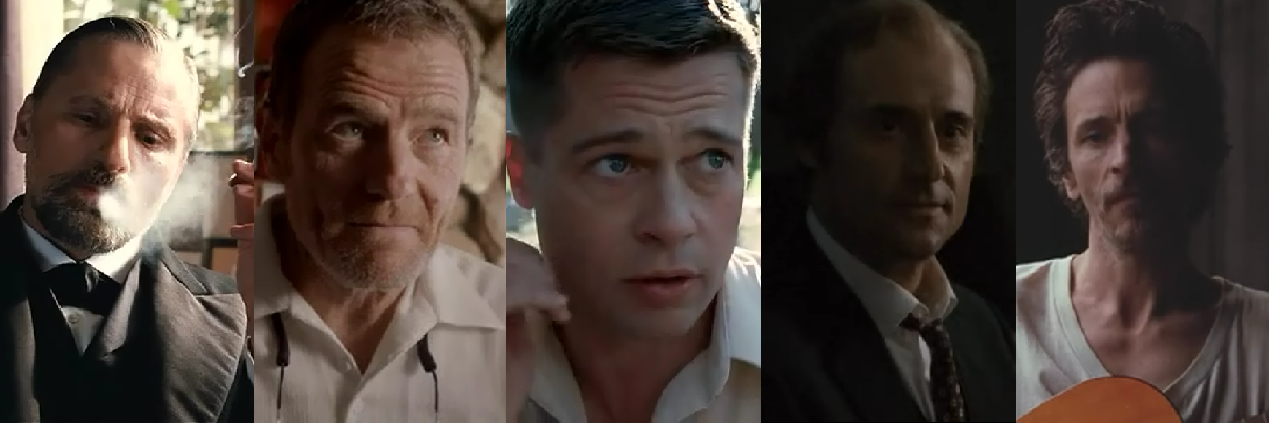
5. John Hawkes in Martha Marcy May Marlene- Hawkes combines effortlessly a charming and threatening personality in his portrayal of a cult leader.
4. Viggo Mortensen in A Dangerous Method- Mortensen gives a strong performance as Sigmund Freud succeeding well in creating the charismatic and persuasive personality of the man.
3. Bryan Cranston in Drive- Cranston even with his limited screen time creates both an enthusiastic as well as tragic presence in his film.
2. Brad Pitt in The Tree of Life- Pitt gives an astonishing performance and fully realizes his character despite limitations created by the direction of the film.
1. Mark Strong in Tinker Tailor Soldier Spy- Strong wins this year for me, even with Brooks who on re-watch I still love, and would give a 5, but he is no longer my favorite of the year. That goes to Strong even though it is close very close among the top three. Strong is my favorite though who gives an absolutely masterful performance, there is not a wasted moment or even a single facial gesture in his portrayal.
Overall Rank:
4. Viggo Mortensen in A Dangerous Method- Mortensen gives a strong performance as Sigmund Freud succeeding well in creating the charismatic and persuasive personality of the man.
3. Bryan Cranston in Drive- Cranston even with his limited screen time creates both an enthusiastic as well as tragic presence in his film.
2. Brad Pitt in The Tree of Life- Pitt gives an astonishing performance and fully realizes his character despite limitations created by the direction of the film.
1. Mark Strong in Tinker Tailor Soldier Spy- Strong wins this year for me, even with Brooks who on re-watch I still love, and would give a 5, but he is no longer my favorite of the year. That goes to Strong even though it is close very close among the top three. Strong is my favorite though who gives an absolutely masterful performance, there is not a wasted moment or even a single facial gesture in his portrayal.
Overall Rank:
- Mark Strong in Tinker Tailor Soldier Spy
- Albert Brooks in Drive
- Brad Pitt in The Tree of Life
- Brian Cox in Coriolanus
- Bryan Cranston in Drive
- Tom Hardy in Tinker Tailor Soldier Spy
- Viggo Mortensen in A Dangerous Method
- John Hurt in Tinker Tailor Soldier Spy
- Don Cheadle in The Guard
- Benedict Cumberbatch in Tinker Tailor Soldier Spy
- Sam Worthington in The Debt
- John Hawkes in Martha Marcy May Marlene
- Ben Kingsley in Hugo
- Kevin Spacey in Margin Call
- Gerard Butler in Coriolanus
- Gary Oldman in Kung Fu Panda 2
- Tom Hiddleston in Thor
- Colin Firth in Tinker Tailor Soldier Spy
- Nikolaj Coster-Waldau in Headhunters
- Oscar Isaac in Drive
- Kenneth Branagh in My Week With Marilyn
- Max Von Sydow in Extremely Loud and Incredibly Close
- Bill Nighy in Arthur Christmas
- Corey Stoll in Midnight in Paris
- Patton Oswalt in Young Adult
- Shahab Hosseini in A Separation
- Jared Harris in Sherlock Holmes: A Game of Shadows
- Toby Jones in Tinker Tailor Soldier Spy
- Bobby Cannavale in Win Win
- Jeremy Irons in Margin Call
- Christopher Plummer in The Girl With the Dragon Tattoo
- David Dencik in Tinker Tailor Soldier Spy
- Alan Rickman in Harry Potter and the Deathly Hollows Part II
- Ron Perlman in Drive
- Liam Cunningham in The Guard
- Jim Broadbent in Arthur Christmas
- Paul Bettany in Margin Call
- Kevin Bacon in X-Men First Class
- James Cromwell in The Artist
- Hugh Laurie in Arthur Christmas
- Mark Strong in The Guard
- Ben Foster in Rampart
- Bill Nighy in Rango
- Eddie Marsan in Tyrannosaur
- James Hong in Kung Fu Panada 2
- Kiefer Sutherland Melancholia
- Kevin Spacey in Horrible Bosses
- Jesper Christensen in The Debt
- Krzysztof Pieczyński in Suicide Room
- Jeremy Renner in Mission Impossible: Ghost Protocol
- Stephen Fry in Sherlock Holmes: A Game of Shadows
- Paul Giamatti in The Ides of March
- Stellan Skarsgard in The Girl With The Dragon Tattoo
- Laurence Fishburne in Contagion
- John Slattery in The Adjustment Burea
- Philip Seymour Hoffman in The Ides of March
- Philip Quast in The Devil's Double
- Chris Cooper in The Muppets
- Matt Damon in Contagion
- Terence Stamp in The Adjustment Burea
- Christopher Plummer in Beginners
- Matthew Lewis in Harry Potter and the Deathly Hollows Part II
- Ciaran Hinds in Tinker Tailor Soldier Spy
- Jeffrey Wright in Extremely Loud and Incredibly Close
- Robert Forster in The Descendants
- Anthony Mackie in The Adjustment Burea
- Nick Frost in Attack the Block
- Jan Cornet in The Skin I Live In
- George Clooney in Ides of March
- Simon Pegg in Mission Impossible: Ghost Protocol
- Yorick van Wageningen in The Girl With The Dragon Tattoo
- Nick Nolte in Warrior
- David Wilmot in The Guard
- Dustin Hoffman in Kung Fu Panda 2
- Stanley Tucci in Margin Call
- Burt Young in Win Win
- John Hurt in Melancholia
- Toby Jones in Captain America
- Eric Bana in Hanna
- Jamie Bell in Jane Eyre
- Ned Beatty in Rango
- Jeffrey Wright in Source Code
- Anthony Hopkins in Thor
- Ciaran Hinds in The Debt
- Ned Beatty in Rampart
- Stellan Skarsgaard in Melancholia
- Brian Cox in Rise of the Planet of the Apes
- Sam Rockwell in Cowboys & Aliens
- Stellan Skarsgard in Thor
- Zachary Quinto in Margin Call
- Dwayne Johnson in Fast Five
- Sacha Baron Cohen in Hugo
- Tom Wilkinson in The Debt
- Vincent Cassel in A Dangerous Method
- Tom Hiddleston in War Horse
- Sean Penn in The Tree of Life
- Matthew Lillard in The Descendants
- Jonah Hill in Moneyball
- Jude Law in Contagion
- Tom Hiddleston in Midnight in Paris
- Tom Felton in Rise of the Planet of the Apes
- Anton Yelchin in The Beaver
- Michael Nyqvist in Mission Impossible: Ghost Protocol
- Philip Seymour Hoffman in Moneyball
- John Goodman in The Artist
- Philip Baker Hall in 50/50
- Bryan Cranston in The Lincoln Lawyer
- Beau Bridges in The Descendants
- William H. Macy in Lincoln Lawyer
- Josh Lucas in J. Edgar
- Michael Sheen in Midnight in Paris
- Tom Hanks in Extremely Loud and Incredibly Close
- Tommy Lee Jones in Captain American
- Jamie Foxx in Horrible Bosses
- Nicholas Hoult in X-Men First Class
- Dominic Cooper in Captain America
- Donald Sutherland in The Mechanic
- Seth Rogen in 50/50
- Ralph Fiennes in Harry Potter and the Deathly Hollows Part II
- Colin Farrell in Horrible Bosses
- Hugo Weaving in Captain America
- Armie Hammer in J. Edgar
- Hugh Dancy in Martha Marcy May Marlene
- Peter Mullan in War Horse
- David Thewlis in War Horse
- Nick Frost in Paul
- Jim Broadbent in The Iron Lady
- Marton Csokas in The Debt
- James Badge Dale in Shame
- JoaquÃn Cosio in A Better Life
- Niels Arestrup in War Horse
- Ryan Phillipe in The Lincoln Lawyer
- Michael Arden in Source Code
- Robert Alamo in The Skin I Live In
- David Oyelowo in Rise of the Planet of the Apes
- Goran Visnjic in Beginners
- Ezra Miller in We Need to Talk About Kevin
- Nick Krause in The Descendants
- Matt Milne in War Horse
Alternate Best Supporting Actor 2011: Bryan Cranston in Drive
Bryan Cranston did not receive an Oscar nomination for portraying Shannon in Drive.
Bryan Cranston who is currently giving one of the greatest continuing performances as chemistry teacher turned meth dealer Walter White in Breaking Bad, plays a very different character here in Drive. Cranston portrays Shannon a car mechanic and a man who organizes stunt cars for movies. Shannon has a limp, and just seems to be a bit of a sorry sort to say the least. One positive thing in his possession of sorts seems to be that of the driver (Ryan Gosling) who works at his car garage as well as does stunt work for Shannon.
Cranston portrays Shannon as really a likable loser. Shannon repeatedly and unrepentantly remarks about how he really does use the driver for his own exploitation, but Cranston portrays the technically speaking less than positive aspects of Shannon with a certain warmth and smile. It is easy to see why he could so easily take money from the driver, as well even from gangster Bernie Rose (Albert Brooks), becuase Cranston has a genuine though low key charm in his performance. Rose states that he liked having Shannon around, and Cranston makes it believable that he would say that.
Cranston very effectively acts as a bright spot in this film which is filled with very seedy characters throughout. Cranston does it well with a great deal of enthusiasm, and more importantly he is able to do this despite that Shannon really is not entirely not a bit of a seedy sort himself. Cranston though is consistently jovial in the seedier qualities found in Shannon, even in the moment where he tries to convince the driver to share the money from a botched money Cranston still makes Shannon likable in that he shows that really Shannon can barely contain his understandable self interest.
The big reason that Cranston makes Shannon's self interest understandable is that he is able to portray a tragedy within Shannon, as Rose says in the film that Shannon never had a lot of luck. These are subtle, and short moments in Cranston's performance but are quite powerful when they do come about. These are mostly in small reactions like when Rose's partner mentions Shannon legs, and in just brief moment Cranston portrays a far deeper sadness within him. Cranston plays it well portraying that his more seeming overt happiness in the other moments, although while not a facade, is very much a way of him trying to overcome his troublesome past.
Shannon really is a fairly small role in the film, and he comes in and out, but Cranston makes an impact within the film whenever he does appear. He creates Shannon into an endearing character, as well as heartbreaking in the end of the film. He combines the various elements into making Shannon a compelling character that adds well to his film. Cranston makes what happens to Shannon in the end not just something that is part of the film, but instead makes it so the Driver's final actions all the more poignant and powerful. Cranston works extremely well with his somewhat limited screen time and turns Shannon into far more than he would have been in lesser hands.
Bryan Cranston who is currently giving one of the greatest continuing performances as chemistry teacher turned meth dealer Walter White in Breaking Bad, plays a very different character here in Drive. Cranston portrays Shannon a car mechanic and a man who organizes stunt cars for movies. Shannon has a limp, and just seems to be a bit of a sorry sort to say the least. One positive thing in his possession of sorts seems to be that of the driver (Ryan Gosling) who works at his car garage as well as does stunt work for Shannon.
Cranston portrays Shannon as really a likable loser. Shannon repeatedly and unrepentantly remarks about how he really does use the driver for his own exploitation, but Cranston portrays the technically speaking less than positive aspects of Shannon with a certain warmth and smile. It is easy to see why he could so easily take money from the driver, as well even from gangster Bernie Rose (Albert Brooks), becuase Cranston has a genuine though low key charm in his performance. Rose states that he liked having Shannon around, and Cranston makes it believable that he would say that.
Cranston very effectively acts as a bright spot in this film which is filled with very seedy characters throughout. Cranston does it well with a great deal of enthusiasm, and more importantly he is able to do this despite that Shannon really is not entirely not a bit of a seedy sort himself. Cranston though is consistently jovial in the seedier qualities found in Shannon, even in the moment where he tries to convince the driver to share the money from a botched money Cranston still makes Shannon likable in that he shows that really Shannon can barely contain his understandable self interest.
The big reason that Cranston makes Shannon's self interest understandable is that he is able to portray a tragedy within Shannon, as Rose says in the film that Shannon never had a lot of luck. These are subtle, and short moments in Cranston's performance but are quite powerful when they do come about. These are mostly in small reactions like when Rose's partner mentions Shannon legs, and in just brief moment Cranston portrays a far deeper sadness within him. Cranston plays it well portraying that his more seeming overt happiness in the other moments, although while not a facade, is very much a way of him trying to overcome his troublesome past.
Shannon really is a fairly small role in the film, and he comes in and out, but Cranston makes an impact within the film whenever he does appear. He creates Shannon into an endearing character, as well as heartbreaking in the end of the film. He combines the various elements into making Shannon a compelling character that adds well to his film. Cranston makes what happens to Shannon in the end not just something that is part of the film, but instead makes it so the Driver's final actions all the more poignant and powerful. Cranston works extremely well with his somewhat limited screen time and turns Shannon into far more than he would have been in lesser hands.
Tuesday, 6 November 2012
Alternate Best Supporting Actor 2011: Brad Pitt in The Tree of Life
Brad Pitt did not receive an Oscar nomination for portraying Mr. O'Brien in The Tree of Life.
The Tree of Life certainly is a film that you either go along with the indulgences of Terrence Malick or you do not.
What is really the best part of the film really is the character of Mr. O'Brien as portrayed by Pitt, even though the film's treatment of the character does not quite work all that well. I mostly refer to the fact that at times it treats him like he is the worst father who ever lived, particularly in the scene with the son contemplates killing him. That actually just made me want to slap the kid because although he is not father of the year material by any measure, he certainly should not die because the son seems to hate even the slightest bit of strictness.
I think perhaps a problem in the depiction of Mr. O'Brien is that maybe Pitt gives too much of a complex performance for the way the film wants to represent the character. It is actually quite extraordinary that Pitt manages to give the performance that he gives considering the limitations brought on by the way Malick directs the film. It is always far more interested in scenery and spectacle of the world rather than the people in it, as the camera commonly drifts off faces, or to some angle that really would not be ideal for any actor in any film. This is probably contributes to why some actors, like Christopher Plummer, have a problem with Malick's methods.
To the absolute credit of Pitt though he manages to make Mr. O'Brien the most compelling character in the film even when the film commonly drifts from him, or even sometimes drifts away from him within a frame of a single shot. Pitt makes a stamp on the film whether or not the camera seems to want him to do so. He creates Mr. O'Brien into a father of the 50's in the manner he carries himself, and acts around the children. He is very much head of the household, and Pitt holds a command over the proceedings in any scene where Mr. O'Brien is with his family.
Even though the film gives Mr. O'Brien a ridiculously hard time for being human Pitt never once leaves Mr. Mr. O'Brien as just a one dimensional being for his sons to hate. What is so important about his portrayal is the warmth he does put into his performance. Pitt always makes it abundantly clear that he does love his sons very much in the way he interacts with them, and as well grieves over another one. It is a very moving portrait of a father who tries to do what is best for his sons despite the way his sons my view some of his behavior.
In the scenes like the one where Mr. O'Brien teaches the boys fight, or disciplines them in some way, Pitt never portrays any of this as random abuse. In his face, and his manner towards the boys particularly the way he really is always very encouraging, Pitt shows that Mr. O'Brien is trying to teach the boys valuable lessons, not just to punish them. Pitt always shows these as the lessons of a father who cares, whether he is right or wrong, the passion that Pitt puts into the part makes the character of Mr. O'Brien far more interesting because in reality he is not trying to be abusive in any way.
The big attack against Mr. O'Brien by his son is that he is hypocritical, and does many of the things he tells his son not to do. Pitt actually plays it well because in the way he portray Mr. O'Brien, he is actually aware of that. Pitt portrays a genuine sadness subtly in short but important moments over his own flaws and lost potential. Pitt makes it so it is not that Mr. O'Brien really is being contradictory, but rather Pitt shows that he honestly wants his sons to be better men than he was. He wants them to be able to reach places that he himself never could.
What is wrong with the academy when it comes to Pitt, I have not gotten to 1995 yet, but in both this year and 2008 they failed to nominate his superior supporting work in favor of his lesser leading work. This is once again a strange occurrence considering The Tree of Life was nominated for Best Picture, and the actual nominees were a sorry sort. It is a shame they missed this incredible performance by Pitt, that I think honestly went far above with the part. I really only wanted more of Pitt's Mr. O'Brien in the film, and it is truly astonishing how much he managed to do with this character despite the limitations set by Malick's directorial style.
The Tree of Life certainly is a film that you either go along with the indulgences of Terrence Malick or you do not.
What is really the best part of the film really is the character of Mr. O'Brien as portrayed by Pitt, even though the film's treatment of the character does not quite work all that well. I mostly refer to the fact that at times it treats him like he is the worst father who ever lived, particularly in the scene with the son contemplates killing him. That actually just made me want to slap the kid because although he is not father of the year material by any measure, he certainly should not die because the son seems to hate even the slightest bit of strictness.
I think perhaps a problem in the depiction of Mr. O'Brien is that maybe Pitt gives too much of a complex performance for the way the film wants to represent the character. It is actually quite extraordinary that Pitt manages to give the performance that he gives considering the limitations brought on by the way Malick directs the film. It is always far more interested in scenery and spectacle of the world rather than the people in it, as the camera commonly drifts off faces, or to some angle that really would not be ideal for any actor in any film. This is probably contributes to why some actors, like Christopher Plummer, have a problem with Malick's methods.
To the absolute credit of Pitt though he manages to make Mr. O'Brien the most compelling character in the film even when the film commonly drifts from him, or even sometimes drifts away from him within a frame of a single shot. Pitt makes a stamp on the film whether or not the camera seems to want him to do so. He creates Mr. O'Brien into a father of the 50's in the manner he carries himself, and acts around the children. He is very much head of the household, and Pitt holds a command over the proceedings in any scene where Mr. O'Brien is with his family.
Even though the film gives Mr. O'Brien a ridiculously hard time for being human Pitt never once leaves Mr. Mr. O'Brien as just a one dimensional being for his sons to hate. What is so important about his portrayal is the warmth he does put into his performance. Pitt always makes it abundantly clear that he does love his sons very much in the way he interacts with them, and as well grieves over another one. It is a very moving portrait of a father who tries to do what is best for his sons despite the way his sons my view some of his behavior.
In the scenes like the one where Mr. O'Brien teaches the boys fight, or disciplines them in some way, Pitt never portrays any of this as random abuse. In his face, and his manner towards the boys particularly the way he really is always very encouraging, Pitt shows that Mr. O'Brien is trying to teach the boys valuable lessons, not just to punish them. Pitt always shows these as the lessons of a father who cares, whether he is right or wrong, the passion that Pitt puts into the part makes the character of Mr. O'Brien far more interesting because in reality he is not trying to be abusive in any way.
The big attack against Mr. O'Brien by his son is that he is hypocritical, and does many of the things he tells his son not to do. Pitt actually plays it well because in the way he portray Mr. O'Brien, he is actually aware of that. Pitt portrays a genuine sadness subtly in short but important moments over his own flaws and lost potential. Pitt makes it so it is not that Mr. O'Brien really is being contradictory, but rather Pitt shows that he honestly wants his sons to be better men than he was. He wants them to be able to reach places that he himself never could.
What is wrong with the academy when it comes to Pitt, I have not gotten to 1995 yet, but in both this year and 2008 they failed to nominate his superior supporting work in favor of his lesser leading work. This is once again a strange occurrence considering The Tree of Life was nominated for Best Picture, and the actual nominees were a sorry sort. It is a shame they missed this incredible performance by Pitt, that I think honestly went far above with the part. I really only wanted more of Pitt's Mr. O'Brien in the film, and it is truly astonishing how much he managed to do with this character despite the limitations set by Malick's directorial style.
Monday, 5 November 2012
Alternate Best Supporting Actor 2011: John Hawkes in Martha Marcy May Marlene
John Hawkes did not receive an Oscar nomination for portraying Patrick in Martha Marcy May Marlene.
Martha Marcy May Marlene is fairly effective psychological drama, even it is very much weakened by its ending. It is bolstered by its great lead performance by Elizabeth Olsen as a trouble young woman who has recently escaped from a cult that lives in a secluded area.
John Hawkes is Patrick who is the leader of the cult "family" who takes Martha (Olsen) in. Patrick's first action with Martha is to rename her Marcy May, his next is to rape her as a way to welcome her to the fold. It should be said that Hawkes really is at a constant in this film, Partick never changes, and this actually is what probably helps him be a force in the film even when he is not onscreen. This is also certainly helped by Hawkes assured performance as Partick.
Hawkes is excellent because he finds just the right tone with his character that variates with just the right degrees. Hawkes most importantly is extremely charismatic in the role of Patrick, and there is never a question to the way he sways others so easily in the film. He has a quiet sway that there is something Hawkes brings that makes Patrick's personality and actually makes it entirely believable that he is so easily able to make someone change their name by simply saying that is the way they see them.
What is important though is that Hawkes within the charisma though certainly is never a warmth filled presence. He great in bringing to life the undercurrent of darkness in Patrick, and that Patrick's intent for his "family" certainly is not something positive. Whenever he abuses them there is no hesitation in Hawkes's portrayal showing that Patrick is only controlling these people for his own ends, and his charm is merely a trick to pull them in.
Hawkes comes in and out of the film, and we never truly learn all there is to Patrick. We only ever see him through the view of Martha, and we never learn we here comes from or how he ever did start this cult who he is the leader. Hawkes uses this mystery well to create Patrick into a fascinating character, and is convincing no matter how far Patrick goes. One scene in particular when Patrick tries to say a murder was fine, is chillingly portrayed by Hawkes because he has so much conviction that he clearly conveys the fact that Patrick honestly believes his insanity.
Patrick really is sparingly used in the film, and his character does not have a conclusion scene. He stays an enigma to the end. Hawkes absolutely does make the most of his creation of Patrick, and his achievements are quite enormous actually in portraying this cult leader. I did really want more of his performance, but really there is not a single bad thing I can say about his performance which is quite striking. Hawkes really can take a great deal of the credit and succeeds in being able to create the overwhelming dread and paranoia that builds in the film due to his characterization of Patrick.
Martha Marcy May Marlene is fairly effective psychological drama, even it is very much weakened by its ending. It is bolstered by its great lead performance by Elizabeth Olsen as a trouble young woman who has recently escaped from a cult that lives in a secluded area.
John Hawkes is Patrick who is the leader of the cult "family" who takes Martha (Olsen) in. Patrick's first action with Martha is to rename her Marcy May, his next is to rape her as a way to welcome her to the fold. It should be said that Hawkes really is at a constant in this film, Partick never changes, and this actually is what probably helps him be a force in the film even when he is not onscreen. This is also certainly helped by Hawkes assured performance as Partick.
Hawkes is excellent because he finds just the right tone with his character that variates with just the right degrees. Hawkes most importantly is extremely charismatic in the role of Patrick, and there is never a question to the way he sways others so easily in the film. He has a quiet sway that there is something Hawkes brings that makes Patrick's personality and actually makes it entirely believable that he is so easily able to make someone change their name by simply saying that is the way they see them.
What is important though is that Hawkes within the charisma though certainly is never a warmth filled presence. He great in bringing to life the undercurrent of darkness in Patrick, and that Patrick's intent for his "family" certainly is not something positive. Whenever he abuses them there is no hesitation in Hawkes's portrayal showing that Patrick is only controlling these people for his own ends, and his charm is merely a trick to pull them in.
Hawkes comes in and out of the film, and we never truly learn all there is to Patrick. We only ever see him through the view of Martha, and we never learn we here comes from or how he ever did start this cult who he is the leader. Hawkes uses this mystery well to create Patrick into a fascinating character, and is convincing no matter how far Patrick goes. One scene in particular when Patrick tries to say a murder was fine, is chillingly portrayed by Hawkes because he has so much conviction that he clearly conveys the fact that Patrick honestly believes his insanity.
Patrick really is sparingly used in the film, and his character does not have a conclusion scene. He stays an enigma to the end. Hawkes absolutely does make the most of his creation of Patrick, and his achievements are quite enormous actually in portraying this cult leader. I did really want more of his performance, but really there is not a single bad thing I can say about his performance which is quite striking. Hawkes really can take a great deal of the credit and succeeds in being able to create the overwhelming dread and paranoia that builds in the film due to his characterization of Patrick.
Sunday, 4 November 2012
Alternate Best Supporting Actor 2011: Viggo Mortensen in A Dangerous Method
Viggo Mortensen did not receive an Oscar nomination, although he did receive a golden globe nomination, for portraying Sigmund Freud in A Dangerous Method.
A Dangerous Method is a somewhat interesting film about the relationship between the psychoanalyst Carl Jung (Michael Fassbender), and one of his female patients Sabina Spielrein (Keira Knightley). I can see why this film had such a tepid reception as the story really never becomes as compelling as it should. I would say that one thing that really holds the film back is Keira Knightley's terrible performance that unfortuantely is distractingly bad.
Viggo Mortensen probably is not the first actor one would think of when casting the part of Sigmund Freud the founder father of psychoanalysis. Mortensen though from his first scene in the film proves that there is clearly not any miscasting. Mortensen takes on the part with a complete assurance with his portrayal of him. From his manner to his voice he creates Freud vividly. Although both his manner and voice are something very different from Mortensen usual on screen persona, they both feel entirely natural though, and only succeeding in making his depiction of Freud a compelling one.
The scenes involving the discussions between Jung and Freud about their differences in regards to the human psyche. This is helped greatly by Mortensen's performance, and as well by the fact that Fassbender has better chemistry with Mortensen than he does with Knightley. In their first scene together as they first talk, and the differences between the two's views come out Mortensen is amazing. Mortensen as Freud absolutely controls the discussion, and Mortensen controls the scene. What is magnificent though is that Mortensen does this all so quietly, but through his calm but overpowering charisma Mortensen portrays power of Freud's personality.
It is fantastic the way Mortensen with such ease portrays the way Freud would go unquestioned by many. What he does so well is the portrayals of the flaws of Freud. The reason why Mortensen succeeds so well in establishing the idea that Freud is very much unquestioning when it comes to his own ideas. There is no hesitations to any of his statements regarding his theories or when he takes disregarding someone else's who questions his own particularly earlier in the film. Equally effective though are the moments later on when he is taken aback by Jung's more fervent attacks of Freud's established theories, as well as even his stature within the community.
When Freud is attacked Mortensen is great in showing that Freud barely knows what to do with such an opposition. Mortensen subtly conveys well a silent fear in Freud when he is being attacked, and really all that he does try to push forward with his charm again but Mortensen properly portrays Freud's considerable charisma that it wains greatly when he proven wrong. This is an excellent depiction of the character, and Mortensen really succeeds wonderfully with the role. I actually wish that Mortensen's Freud had his own film, or at least this film was more about just Freud and Jung as Freud is the best part of this film thanks to Mortensen.
Unfortunately this film treats Freud a little too much as a pawn in Jung's relationship with Spielrein, as Mortensen's Freud deserves much better than that. This problem is especially true towards the end of the film where Freud could use a better scene for a conclusion, but instead his last scene is more of there just for the main relationship between Jung and Spielrein. It is a shame that this occurs because Mortensen completely steals the movie, and Fassbender and Knightley (mostly because of Knightley) do not turn the central relationship into anything special. Even though Freud is misused in the film, this should not take away the fact that Mortensen absolutely meets the challenge of the character, and left me only wanting more of his depiction of Sigmund Freud.
A Dangerous Method is a somewhat interesting film about the relationship between the psychoanalyst Carl Jung (Michael Fassbender), and one of his female patients Sabina Spielrein (Keira Knightley). I can see why this film had such a tepid reception as the story really never becomes as compelling as it should. I would say that one thing that really holds the film back is Keira Knightley's terrible performance that unfortuantely is distractingly bad.
Viggo Mortensen probably is not the first actor one would think of when casting the part of Sigmund Freud the founder father of psychoanalysis. Mortensen though from his first scene in the film proves that there is clearly not any miscasting. Mortensen takes on the part with a complete assurance with his portrayal of him. From his manner to his voice he creates Freud vividly. Although both his manner and voice are something very different from Mortensen usual on screen persona, they both feel entirely natural though, and only succeeding in making his depiction of Freud a compelling one.
The scenes involving the discussions between Jung and Freud about their differences in regards to the human psyche. This is helped greatly by Mortensen's performance, and as well by the fact that Fassbender has better chemistry with Mortensen than he does with Knightley. In their first scene together as they first talk, and the differences between the two's views come out Mortensen is amazing. Mortensen as Freud absolutely controls the discussion, and Mortensen controls the scene. What is magnificent though is that Mortensen does this all so quietly, but through his calm but overpowering charisma Mortensen portrays power of Freud's personality.
It is fantastic the way Mortensen with such ease portrays the way Freud would go unquestioned by many. What he does so well is the portrayals of the flaws of Freud. The reason why Mortensen succeeds so well in establishing the idea that Freud is very much unquestioning when it comes to his own ideas. There is no hesitations to any of his statements regarding his theories or when he takes disregarding someone else's who questions his own particularly earlier in the film. Equally effective though are the moments later on when he is taken aback by Jung's more fervent attacks of Freud's established theories, as well as even his stature within the community.
When Freud is attacked Mortensen is great in showing that Freud barely knows what to do with such an opposition. Mortensen subtly conveys well a silent fear in Freud when he is being attacked, and really all that he does try to push forward with his charm again but Mortensen properly portrays Freud's considerable charisma that it wains greatly when he proven wrong. This is an excellent depiction of the character, and Mortensen really succeeds wonderfully with the role. I actually wish that Mortensen's Freud had his own film, or at least this film was more about just Freud and Jung as Freud is the best part of this film thanks to Mortensen.
Unfortunately this film treats Freud a little too much as a pawn in Jung's relationship with Spielrein, as Mortensen's Freud deserves much better than that. This problem is especially true towards the end of the film where Freud could use a better scene for a conclusion, but instead his last scene is more of there just for the main relationship between Jung and Spielrein. It is a shame that this occurs because Mortensen completely steals the movie, and Fassbender and Knightley (mostly because of Knightley) do not turn the central relationship into anything special. Even though Freud is misused in the film, this should not take away the fact that Mortensen absolutely meets the challenge of the character, and left me only wanting more of his depiction of Sigmund Freud.
Friday, 2 November 2012
Alternate Best Supporting Actor 2011: Mark Strong in Tinker Tailor Soldier Spy
Mark Strong did not receive an Oscar nomination for portraying Jim Prideaux in Tinker Tailor Soldier Spy.
One thing that always annoys me about the Oscar season is the way sheep like behavior prevails among voters in so many diverse groups. I find it so hard to believe that all those various groups would nominate Jonah Hill for his unsubstantial performance, yet it seemed difficult for supporting players from Tinker Tailor Soldier Spy to get even a few nominations. After all Tinker Tailor Soldier Spy had the greatest ensemble of 2011, and really several of the performers in this film would have been more deserving of a nomination than all of the actual nominees.
This is especially true for Mark Strong who did not get even a single nomination anywhere for this performance. I can certainly understand why as Mark Strong is not a big name, which is always too much of an unfortunate requirement in the awards game, as well as this is an intensely subtle performance from Strong. I have to say it is a real shame that he went as unnoticed as he did, since this is quite an interesting against type performance from Strong. Strong usually plays fairly loud heavies, not that he does that badly. In fact he was quite enjoyable in The Guard as one, but usually the characters are almost prop like, such as his character in Syriana for example.
Strong shows a very different side to his acting abilities though as the spy Jim Prideaux, whose story is one of the most interesting parts of the film. I suppose I should say this will be spoilers filled, even though just by nominating him I sort of spoiled the film a bit, as the character of Prideaux appears to have been shot and killed at the beginning of the film. Prideaux is of course not killed and his testimony is one of the keys to Smiley uncovering the mole at the top of British intelligence. This is an extreme case of minimalism for Strong as his total amount of lines are fairly sparse, and most of them are at the beginning of the film when a meeting goes wrong.
The amount of lines he has matters not in fact it only helps with Strong's portrayal of the introverted Jim. Strong in this performance conveys so much with his face, and with a single look does more than some actors do in a single film. He almost creates his entire character on this aspect of the performance as it really does bring tremendous power within it. This is true whether it is a less stressful moment where Jim meets one of his students, an introvert like him, and through just the slightest smiles and welcoming eyes he shows the fact that Strong sees the boy as sort of a kindred spirit. The same goes though when we see Jim being tortured and Strong flawlessly portrays the sheer horror in Prideaux as well as his waning attempts to hold on to his secrets.
There is never a moment on screen that Strong fails to bring an honest emotional truth to his part of the proceedings, which stand as very important to the film. For the most part the men in the agency are either opportunist, or even they are not they are very cold like Control (John Hurt) and George Smiley (Gary Oldman), but there is the small group who, like Alec Leamus in The Spy Who Came in From Cold, are more deeply hurt by the tricks of the spy game. One of these is the hi man with a conscience Ricki Tarr (played well by Tom Hardy), and the other is Jim. Strong infuses a great devotion in Jim toward the service, as there he does not portray hating his time there, and seems to have regrets over having to give it up all together.
Strong though portrays an especially great pain within Jim over having to find the supposed Mole, and his sadness in finding out one of them is betraying the rest weighs on him greatly. Strong though even suggests that there may be more to this strain as perhaps Jim has created suspicions in his head. This is where his friendship, or perhaps more it technically speaking does not matter, with Colin Firth's Bill Haydon comes in. They actually only share one moment together, and fitting to Strong's performance they only share a look at one another, but that says it all. Although as absurd as it seems the two actors in that short moment establish the friendship, and amazingly conveys the deep connection the two have.
The fact that in the end of the film the mole in the organization turns out to be Bill leads to the two most powerful moments in the film brought about all due to Strong. The first being in his trailer at the school he teaches clearly wounded over the revelation, as well as embittered. Not one emotion suffices Strong as he portrays the intense internal struggle within Jim, as well still even has in the same moment he struggles to tell the boy to try to break his introversion, and not suffer from his fate. After this scene it leads to when Prideaux shoots Haydon in the most heartbreaking scene as the actors once again show the connection with one another, but Strong poignantly as well as silently brings to life both the hatred toward Bill over the betrayal, but as well as the sadness over the fact that he must kill the only person he has ever loved. This is a absolutely masterful performance by Strong, there is not a wasted moment or even a single facial gesture.
One thing that always annoys me about the Oscar season is the way sheep like behavior prevails among voters in so many diverse groups. I find it so hard to believe that all those various groups would nominate Jonah Hill for his unsubstantial performance, yet it seemed difficult for supporting players from Tinker Tailor Soldier Spy to get even a few nominations. After all Tinker Tailor Soldier Spy had the greatest ensemble of 2011, and really several of the performers in this film would have been more deserving of a nomination than all of the actual nominees.
This is especially true for Mark Strong who did not get even a single nomination anywhere for this performance. I can certainly understand why as Mark Strong is not a big name, which is always too much of an unfortunate requirement in the awards game, as well as this is an intensely subtle performance from Strong. I have to say it is a real shame that he went as unnoticed as he did, since this is quite an interesting against type performance from Strong. Strong usually plays fairly loud heavies, not that he does that badly. In fact he was quite enjoyable in The Guard as one, but usually the characters are almost prop like, such as his character in Syriana for example.
Strong shows a very different side to his acting abilities though as the spy Jim Prideaux, whose story is one of the most interesting parts of the film. I suppose I should say this will be spoilers filled, even though just by nominating him I sort of spoiled the film a bit, as the character of Prideaux appears to have been shot and killed at the beginning of the film. Prideaux is of course not killed and his testimony is one of the keys to Smiley uncovering the mole at the top of British intelligence. This is an extreme case of minimalism for Strong as his total amount of lines are fairly sparse, and most of them are at the beginning of the film when a meeting goes wrong.
The amount of lines he has matters not in fact it only helps with Strong's portrayal of the introverted Jim. Strong in this performance conveys so much with his face, and with a single look does more than some actors do in a single film. He almost creates his entire character on this aspect of the performance as it really does bring tremendous power within it. This is true whether it is a less stressful moment where Jim meets one of his students, an introvert like him, and through just the slightest smiles and welcoming eyes he shows the fact that Strong sees the boy as sort of a kindred spirit. The same goes though when we see Jim being tortured and Strong flawlessly portrays the sheer horror in Prideaux as well as his waning attempts to hold on to his secrets.
There is never a moment on screen that Strong fails to bring an honest emotional truth to his part of the proceedings, which stand as very important to the film. For the most part the men in the agency are either opportunist, or even they are not they are very cold like Control (John Hurt) and George Smiley (Gary Oldman), but there is the small group who, like Alec Leamus in The Spy Who Came in From Cold, are more deeply hurt by the tricks of the spy game. One of these is the hi man with a conscience Ricki Tarr (played well by Tom Hardy), and the other is Jim. Strong infuses a great devotion in Jim toward the service, as there he does not portray hating his time there, and seems to have regrets over having to give it up all together.
Strong though portrays an especially great pain within Jim over having to find the supposed Mole, and his sadness in finding out one of them is betraying the rest weighs on him greatly. Strong though even suggests that there may be more to this strain as perhaps Jim has created suspicions in his head. This is where his friendship, or perhaps more it technically speaking does not matter, with Colin Firth's Bill Haydon comes in. They actually only share one moment together, and fitting to Strong's performance they only share a look at one another, but that says it all. Although as absurd as it seems the two actors in that short moment establish the friendship, and amazingly conveys the deep connection the two have.
The fact that in the end of the film the mole in the organization turns out to be Bill leads to the two most powerful moments in the film brought about all due to Strong. The first being in his trailer at the school he teaches clearly wounded over the revelation, as well as embittered. Not one emotion suffices Strong as he portrays the intense internal struggle within Jim, as well still even has in the same moment he struggles to tell the boy to try to break his introversion, and not suffer from his fate. After this scene it leads to when Prideaux shoots Haydon in the most heartbreaking scene as the actors once again show the connection with one another, but Strong poignantly as well as silently brings to life both the hatred toward Bill over the betrayal, but as well as the sadness over the fact that he must kill the only person he has ever loved. This is a absolutely masterful performance by Strong, there is not a wasted moment or even a single facial gesture.
Thursday, 1 November 2012
Alternate Best Supporting Actor 2011
Viggo Mortensen in A Dangerous Method
Bryan Cranston in Drive
Brad Pitt in The Tree of Life
Mark Strong in Tinker Tailor Soldier Spy
John Hawkes in Martha Marcy May Marlene
Friday, 17 February 2012
Best Supporting Actor 2011: Albert Brooks in Drive
Albert Brooks should have received his second Oscar nomination for portraying Bernie Rose in Drive. (Well since it might be a bit before I get a chance to see Branagh, I am reviewing him here anyway)
Drive is a great thriller about an unnamed stunt driver (Ryan Gosling) who also moonlights as a getaway driver for criminals which inadvertently causes him serious problems.
Albert Brooks really should have gone down with the likes of Robert Montgomery for portraying the most different of character between his first and second nomination, since his great performance as Aaron Altman in Broadcast News has basically nothing in common with his performance here. Bernie and Aaron basically have nothing in common other than the fact that it shows off that Albert Brooks is an incredible actor if given the chance to be. From beginning to end Brooks gives a completely uncompromising performance as Bernie Rose that proves just what he is capable of.
Albert Brooks makes the absolute most out of Bernie Rose who is a mobster who is not exactly on the top of the heap, but still he does not answer to anyone. He has his specific place, and specific spot in the crime world that he is relatively happy in. Brooks is terrific from his first moment on screen as he establishes Bernie. In his earlier scenes he does not seem to be an entirely unreasonable man, there is always the sense that you definitely do not want to tick him off, but there is a certain degree of a strange sort of friendliness.
Brooks has a perfect matter of fact quality in Bernie that he uses effectively throughout. Brooks shows that is almost is that Bernie reached this place in his life by cutting through the crap and always saying things are exactly how sees them. There is a dominance Brooks has that suggests exactly where Bernie came from, and how he became exactly the way he is now. Brooks is excellent though because he never shows Bernie as a bad man exactly rather a man firstly, who does bad things only when he is forced to.
When Bernie's violent side finally appears Brooks is terrifying aided greatly by the fact that he didn't overplay Rose's negative side early on. Brooks makes Bernie moments of violence especially disconcerting and intense because of the way he brings it out. What I love about his two killing scene is how he actually shows a great deal of who Bernie is when he does this. Brooks does not simple kill them as a completely dissociative reaction that he has no emotional attachment to.
Brooks shows that Rose kills because of business entirely, but it is a very personal thing when he does it. The first person he kills he clearly has not respect for in the least, and does basically consider it pretty much taking out the trash, yet Brooks still shows Bernie disgusted to so almost blaming the his cause for disgust on the man he is killing. Brooks creates a fascinating killer who doesn't like to do it, but will do it when he needs to even though he doesn't mind blaming the victim for why he must do it.
The second person he kills though Brooks again shows a very different side of Rose, although it still reflects the idea that Rose only does it when needed and takes no joy in it. The second person he kills though is different because he actually likes the man, and really never had any desire to murder the man. It is of course a brutal violent moment, but Brooks inserts a degree of humanity in the scene. During the killing and afterwards he actually makes it sad necessity for Bernie that he most certainly feels very regretful and guilty of. The killing itself even Brooks portrays it as Bernie trying to kill a man in the nicest way he knows how.
Brooks is absolutely brilliant in his ability to suggest Bernie's small humane side while still staying absolutely imposing as well. Brooks is amazing in his final threatening speech to the Driver. It actually is very easy to overact a scene like this, or simply seem just nonthreatening as well, but Brooks is outstanding. Albert Brooks doesn't overplay the scene but lays it out on the line in the scene in a realistic and fierce manner. It is an incredible performance that turns what could have been a forgettable part, into a powerful memorable villain.
Drive is a great thriller about an unnamed stunt driver (Ryan Gosling) who also moonlights as a getaway driver for criminals which inadvertently causes him serious problems.
Albert Brooks really should have gone down with the likes of Robert Montgomery for portraying the most different of character between his first and second nomination, since his great performance as Aaron Altman in Broadcast News has basically nothing in common with his performance here. Bernie and Aaron basically have nothing in common other than the fact that it shows off that Albert Brooks is an incredible actor if given the chance to be. From beginning to end Brooks gives a completely uncompromising performance as Bernie Rose that proves just what he is capable of.
Albert Brooks makes the absolute most out of Bernie Rose who is a mobster who is not exactly on the top of the heap, but still he does not answer to anyone. He has his specific place, and specific spot in the crime world that he is relatively happy in. Brooks is terrific from his first moment on screen as he establishes Bernie. In his earlier scenes he does not seem to be an entirely unreasonable man, there is always the sense that you definitely do not want to tick him off, but there is a certain degree of a strange sort of friendliness.
Brooks has a perfect matter of fact quality in Bernie that he uses effectively throughout. Brooks shows that is almost is that Bernie reached this place in his life by cutting through the crap and always saying things are exactly how sees them. There is a dominance Brooks has that suggests exactly where Bernie came from, and how he became exactly the way he is now. Brooks is excellent though because he never shows Bernie as a bad man exactly rather a man firstly, who does bad things only when he is forced to.
When Bernie's violent side finally appears Brooks is terrifying aided greatly by the fact that he didn't overplay Rose's negative side early on. Brooks makes Bernie moments of violence especially disconcerting and intense because of the way he brings it out. What I love about his two killing scene is how he actually shows a great deal of who Bernie is when he does this. Brooks does not simple kill them as a completely dissociative reaction that he has no emotional attachment to.
Brooks shows that Rose kills because of business entirely, but it is a very personal thing when he does it. The first person he kills he clearly has not respect for in the least, and does basically consider it pretty much taking out the trash, yet Brooks still shows Bernie disgusted to so almost blaming the his cause for disgust on the man he is killing. Brooks creates a fascinating killer who doesn't like to do it, but will do it when he needs to even though he doesn't mind blaming the victim for why he must do it.
The second person he kills though Brooks again shows a very different side of Rose, although it still reflects the idea that Rose only does it when needed and takes no joy in it. The second person he kills though is different because he actually likes the man, and really never had any desire to murder the man. It is of course a brutal violent moment, but Brooks inserts a degree of humanity in the scene. During the killing and afterwards he actually makes it sad necessity for Bernie that he most certainly feels very regretful and guilty of. The killing itself even Brooks portrays it as Bernie trying to kill a man in the nicest way he knows how.
Brooks is absolutely brilliant in his ability to suggest Bernie's small humane side while still staying absolutely imposing as well. Brooks is amazing in his final threatening speech to the Driver. It actually is very easy to overact a scene like this, or simply seem just nonthreatening as well, but Brooks is outstanding. Albert Brooks doesn't overplay the scene but lays it out on the line in the scene in a realistic and fierce manner. It is an incredible performance that turns what could have been a forgettable part, into a powerful memorable villain.
Subscribe to:
Posts (Atom)