Showing posts with label 1997 Alternate Best Actor. Show all posts

Friday, 29 April 2022

Alternate Best Actor 1997: Results

5. Sam Lee in Made in Hong Kong - Lee gives an off-beat yet often poignant portrayal of a wannabe gangster.

Best Scene: Failing to be a gangster.
4. Takeshi Kitano in Hana-bi - Kitano gives a very specific yet potent performance that artful stoicism mixed in with punctuations of violence, sadness and love.

Best Scene: In the car with his wife.
3. John Cusack in Grosse Pointe Blank - Cusack gives a terrific subversion and execution of his typical rom com lead by being charming yet psychopathic all the same.

Best Scene: Breakfast.
2. Stellan Skarsgård in Insomnia - Skarsgård gives an uncompromising portrayal of a man who goes to the most vile extremes to do "good".

Best Scene: Seeing the cat.
1. Ray Winstone - Nil By Mouth - Winstone gives a bluntly brutal portrayal of visceral intensity, yet is also quietly heartbreaking as a man whose violence is defined by his painful vulnerability.
 
Best Scene: Nil by mouth. 
 
Next: 1997 Supporting

Thursday, 28 April 2022

Alternate Best Actor 1997: John Cusack in Grosse Pointe Blank

John Cusack did not receive an Oscar nomination for portraying Martin Q. Blank in Grosse Pointe Blank. 

Grosse Pointe Blank is an entertaining comedy about a hit-man returning to his hometown for a high school reunion. Interestingly also features 2 of the eventual Oscar nominees for supporting actress delivering superior performances than their Oscar nominated turns. 

Once again returning to John Cusack for the fourth review in a short amount of time, after successfully avoiding Cusack reviews for the longest time, we once again return to where perhaps Cusack is most at home, by in a way changing up the expectations a bit. Cusack made his name in teen romantic comedies in the late 1980s, and this film is essentially a basic subversion of that. One side of it is that it takes place ten years after his time in high school, the central set-piece being Martin's high school reunion, the other being that he's also a hitman, dealing with a jealous and controlling hitman Grocer (Dan Aykroyd) wanting to set-up a hitman union while also attempting to deal with somewhat more expected ideas of returning to one's high school. In turn, this performance from Cusack is both the expected Cusack performance and not the expected Cusack performance and combined that really is the beauty of this performance. 

On one hand, you do get Cusack being the sort of fresh-faced, slightly less of a youngster this time around, whose certain charm is kind of based on the fact that he's not quite sure of his charm in a way. Cusack delivers that once again here, but again the comedy of this comes in the form that we have an alternative knowledge about his character as a psychopathic hitman whom we know from the opening scene where he carries out a somewhat bungled job involving multiple hit-men. It is a wonderful combination because Cusack manages to play Martin both as a hitman, and not as a hitman, it is that grey area I think that defines so much of the comedy of the film, which is rather winning in its own way. Cusack establishes this in the early scenes where he speaks to his assistant (Joan Cusack) or his scared psychiatrist (Alan Arkin), about his "job". Cusack's particular casual indifference about it is where the comedy is, as his fixation in terms of concern is far more on the fear of the prospect of his high school reunion than his series of murders.
 
The comedic value of Cusack's performance comes very much from the consistency of his turn here in portraying that sort of blithe indifference about the man's murders, even going so far as to bluntly tell all his old school friends that he was in fact a hitman without hesitation, all of them taking it as a joke initially. The clearest break from this actually being in his hilarious scenes with Aykroyd where in a way you could say Martin is most himself in plying his trade with a fellow craftsman in their moments of mutual hatred for one another. The random, and even kind of goofy, intensity Cusack and Aykroyd share together is rather fantastic. This is particularly well shown in a breakfast diner confrontation where both rush through their lines in such a great way as basically every line being this barb at one another, while their eyes providing the dagger. Again the juxtaposition being the great bits of comedy as the two exist in a seemingly normal reality, while both being focused on their act of killing. I especially love Cusack's extreme way of arguing with the waitress as he tries to run through his order including an empty omelette with his forcefulness of just saying he "wants the protein" to try to end the conversation as soon as possible. 
 
There is more going though as we find in the central romance with Minnie Driver's Debi, whom Martin left cold prom night. Cusack and Driver's chemistry is pretty great here in just this off-beat nature of it. As it is eccentric, charged, but also traditionally sweet. They capture instantly this old fashioned connection but doing so in an oddball way as again Cusack always portraying Martin as psychopathic to an extent even in the way he navigates this relationship with this kind of interesting distance, that makes his sort of verbalization of his feelings towards the end of it actually feel natural because that is how Martin would approach it. Cusack though is fantastic throughout the man seeing his old life as he has great moments of comedy, love particularly his creepy way of hanging out with an old friend who is a real estate agent by saying he would like a "wife" just like the one a potential customer has in a perfectly oddly creepy way. He also though does have moments of theoretical pathos such as going to see his dad's grave or visit his mom in a mental ward. Cusack's actually great by not putting too much on it, rather showing Martin's sense of it in a very Martin way. Cusack's performance is winning here because he actually so well defines his character within the idea of the hitman always being the hitman, even in the moments of theoretical humanity. He never becomes a good guy, he rather states his change of heart in the way a psychopath would, which in a way makes it an atypical comedy, but one that works. Cusack's performance in turn is an atypical romantic lead, but one that works because his performance matches and in many ways creates the film's off-beat energy just as it should. He is a proper psychopath, but one you do end up liking whether he's murdering another hitman, or finding what seems like true love for himself.

Monday, 18 April 2022

Alternate Best Actor 1997: Ray Winstone in Nil By Mouth

Ray Winstone did not receive an Oscar nomination, despite being nominated for BAFTA, for portraying Raymond in Nil By Mouth. 

Nil By Mouth is a striking directorial debut by Gary Oldman (and currently his only film) about a dysfunctional family in South London. Notable in his approach, and I think often the pifalls of lesser films covering similar material, is that Oldman doesn't pile misery upon misery, though there definitely still is misery, but shows the variety still even in a deeply troubled life. 

We see this in the character of Ray, played by Ray Winstone in what was his breakout role that led to him consistently working from then on, who in the earliest scenes of the film is one of the "good old boys" hanging around a club with his pals, listening to bawdy stories and of course drinking. Winstone's performance isn't instantly alarming in his portrayal he portrays this natural state well. This man just looking for the easy joys of life with just this sense of a temper lying beneath that state. We see this just in his briefest moment with this wife Valerie (Kathy Burke), and when someone accidentally bumps into him. In both interactions he's not immediately horrendous but in his delivery he brings the sort instinctual switch to intensity. The way he falls into a near violence even in a moment of just slight inconvenience. He doesn't suggest the man is about to truly break out in that moment, but the threat of it is still there. Winstone doing so well in making it the innate suggestion that seems to be the man's natural state of being. Of course this is within seeing the moments of the man just hanging around where Winstone is effective in calming enough to show the man being able to functionally have fun so to speak and hang around with the guys. He's on an edge of the cliff but he isn't always off of it.

The first immediate sign of trouble with Ray is when we see him with Valerie's drug addict brother Billy (Charlie Creed-Miles). Although their initial interactions are pleasant enough, just as we see some of Ray's interactions with Valerie. This is where the film truly excels and it speaks to both Oldman's direction and the strength of the ensemble how real they all are together. They just naturally suggest this life of the working class group whether they're home or out and about. There is the ease in their interactions that speak to a long history together as a group, even if there is very much a struggle within this as well. We see this when Billy, in need of any drugs, steals from Ray, and we get the first immediate outburst of Ray's anger. The ease of it in Winstone's performance is key as there isn't an escalation of it, it is Ray going all in terms of just how vicious it is. Winstone doesn't portray it as controlled or exacted, but rather this messy anger that pierces through in every direction. All of this becomes all the more apparent in his moment where he confronts Valerie over having played pool with a man. Winstone is many things in this scene, and all of them absolutely brilliant in terms of performance. The first foremost being downright terrifying in the visceral intensity he brings in the moment. This particularly as his voice so quickly goes from asking her about what happened to full on yelling in a moment. Winstone doesn't hold back for a moment and in that it is horrifying to watch. What I think takes this performance further than just a portrayal of a brute, even if it is that, is how vulnerable Winstone's performance is in the moment. The anger and jealousy is unquestionably there, but in Winstone's eyes and even in his yelling is a desperation of someone nearly crying in heartbreak just as he goes about mercilessly beating the woman he supposedly loves. 

Winstone's performance as the terror of Ray is that of a disturbing ferocity in the man, and so terrifying because of the lack of sense in his eyes in the moment. Winstone shows a man so far gone as he goes around yelling at his family that there is nothing but violence that is defining the man in the moment. Winstone shows the pivotal lack of sense of it, and the horror of the man just attempting to claw his way back towards his wife, who he beat so brutally, without a hint of compassion or care. Just emotions pouring out of the man in this feverish terrible pitch that he makes a proper mess. It is a mess of a man that is Ray who really only stops when he himself is beaten by a larger man for his behavior and left coughing up his own blood. Winstone's performance even in the moment is important because there is almost this shut off, even beyond being knocked unconscious of the rage of the emotions having a temporary release. Winstone doesn't portray it as Ray finally reflecting but rather being forced to stop his parade of anger via blunt force trauma. As powerful of a physical presence as Winstone is in terms of portraying the terror that is Ray when angry, his most remarkable scene is actually an extremely quiet one. We find Ray with one of his mates recounting his own past. Winstone's delivery of this entire scene is just flawless, from the way he opens in speaking the terms as though he is just talking about his life as he would at a pub. This with these natural little friendly asides he brings, but in that Winstone reveals such pain in the man. This as he speaks to his father the loveless drunk, and Winstone delivers every word with such a rich sense of the history behind it. In the moment showing in Ray the boy who never was loved by his father, and was so desperately looking for any love in the moment. This even recounting his father being close to death with such a somber description that is of a man so deeply scared, yet in the moment makes every word of this revelation feel so natural, as though he was just casually speaking to you. It is amazing work because he bares Ray's soul in the moment, yet doing it in a way that feels wholly authentic to the type of troubled man that is Ray. 
 
The last two scenes of the film one would "assume" that we see a "better" Ray as he goes to Valerie to apologize and to ask for forgiveness. In the scene Winstone is great because there is nothing false whatsoever in this apology. He shows in each moment such genuine love he has towards Valerie in the moment and the pleas are of someone who does deeply care for his wife. Even as Valerie counters that she cannot bear his anger and doesn't want to see her life as just misery. Winstone's reactions are potent because he shows that in the moment Ray is absolutely listening to everything that Valerie is saying, and in no way is this a purposeful manipulation. Winstone rather shows that really within all of it there is that stunted emotional state of the man who never received love and in turn only knows how to express his emotions in a few ways. In this moment we do see in his eyes the man looking at the woman he loves, even letting a bit of understanding that she is right in her rejection, yet it is all really of that of a child looking on and seeing his chance for honest affection moving on from him due to his uncontrolled temper. The final scene of the film is fascinating, a coda that takes place some time after Valerie then rejection of Ray, as we now see the family back together, except Billy who has been arrested. The atmosphere of the family again is so vivid, and within it there is the right ambiguity particularly with Winstone's performance. In this moment of joking and seeming love, he is pleasant enough in that moment. At the same time though Winstone's face still is that of a troubled man. Although maybe Ray will be on his best behavior for now, or even a bit, there is still the feeling that it probably is only a matter of time before his broken nature gets the best of him. This is a great performance by Ray Winstone. It is a terrifying visceral turn of an abuser, but there is so much more nuance here. Winstone's complex performance giving both a convincing sense of the horrors that the man can inflict, but also the deep seeded vulnerabilities that aren't antithetical to those horrors but rather help to define them.

Wednesday, 13 April 2022

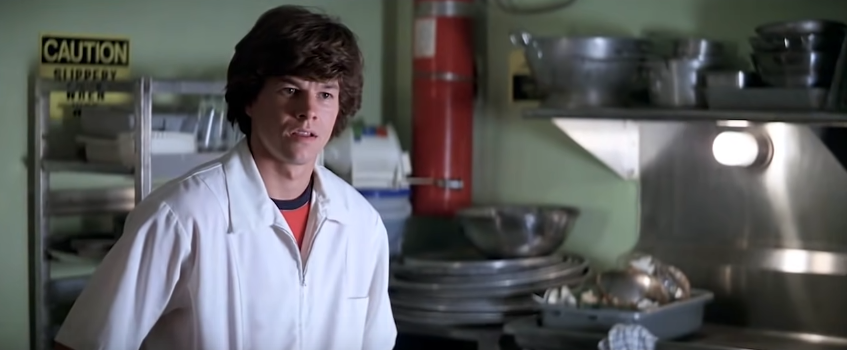
Alternate Best Actor 1997: Mark Wahlberg in Boogie Nights

Mark Wahlberg did not receive an Oscar nomination for portraying Eddie Adams better known as Dirk Diggler in Boogie Nights.

Mark Wahlberg's acting career is certainly an acting career that exists. One marked, no pun intended there, of frequent miscasting or just straight forward and usually forgettable performances as "stoic lead". The performances that are beyond "okay" from him all actually fulfill a similar tonal quality, that being the mostly comic performance though with potential dramatic intention. That was the case with his work in I Heart Huckabees, the best part of that largely indulgent effort, his Oscar nominated turn in The Departed, which was a serious film however his role as built on caustic comedy, but his crowning achievement of this is here in what was his breakout film role in Boogie Nights. The very nature of this performance is fascinating in that it is a good performance that is largely about giving a bad performance. Wahlberg excels in this role of playing, Eddie who later calls himself Dirk Diggler as a porno "star", by very much embracing the character as really a bit of an idiot to put it lightly. And while there is dramatic elements here, I'll just go with the more straight forward praise first of just praising the comedic mastery of Wahlberg's work in making Dirk a proper meathead whose prized possession is...well I'll avoid too graphic of innuendo and say that it has something also to do with meat. 

A great deal of Wahlberg's performance is purely finding the humor in just how thick headed Dirk is as this supposed star role. There are the comical phases of his performance that are indeed hilarious in portraying different sides of this sort vapid quality. This is from his earliest time as the young club worker who catches the eye of porn director Jack Horner (Burt Reynolds). Wahlberg's performance works by just portraying the wide eyed optimism about Dirk that is indeed quite thin, and comical because of how completely naive he seems to be in reaction to the whole world of porn that he finds himself suddenly. This switches quickly to Dirk trying to make a name for himself which Wahlberg performs though initially with the utmost earnestness, a just people pleasing energy and an upbeat quality of someone seemingly just trying to "perform well". This as even in his initial scene of speaking to one up Reed Rothchild (John C. Reilly), initially rival though he accepts his place as Diggler's sidekick, Wahlberg's lack of anything caustic as he kind of attempts to stay in step with their one up man ship in their weight training skills is even done with the this wide eyed smile. Wahlberg's performance is so aggressively wholesome that it really is just perfect as this contrast to the nature of the world they are in which is typically considered as far from traditionally wholesome as one typically considers.

Wahlberg's second phase is as Dirk Diggler becomes the star, which at first Wahlberg makes likable enough in still keeping the earnest energy about him as he comes across with big ideas and is very gracious with acceptance speech at the Adult Movie Awards. Wahlberg's performance remains hilarious though because there is this sense of delusion of grandeur in it, although still more endearing just as there's a complete lack of sense of reality in his delivery of describing his idea for a "James Bond" style porn series or attempting to make porn seem more than it is at every moment. This alludes though to the change of the following year once Dirk has become established and his ego has gone through the roof. Wahlberg remains hilarious though in portraying a man completely now driven by ego still with no true sense of self or most of reality. Wahlberg properly goes all in on this as he brings such a sincerity in his stupid pre-performance "kung fu" ritual or perhaps my favorite moments, the ones where Dirk discusses "the craft". There Wahlberg brings such a perfect kind of pompousness as he says a whole lot of nothing yet the key to this is there isn't a hint of doubt in his performance. It is all of someone who genuinely believes he's amazing, which in turn makes it hilarious as he's anything but. This is only exacerbated as he truly believes he can do no wrong even dismissing the always supportive Jack. A scene that Wahlberg portrays with the proper lack of depth showing someone just wholly controlled by ego in the moment, and every word of his bravado spoken as someone truly without thought. 

Really what we get then is the naturally logical follow through for Diggler as someone who believes he can do no wrong, therefore he can create "great" music, or should I really say magic. Scenes that are pure comic gold, thanks in part due to Wahlberg's musical performance, that is um...let's say not good in the traditional sense, but the most hilarious of bad singing one can witness. The key to it all though isn't just that he sings poorly, it is that Wahlberg sings poorly with just SO MUCH confidence. Now let's reverse back quickly as I'm written entirely about the comic qualities of Wahlberg's work, which is true, but to his credit, there is more than just a great comic turn here. There is behind everything that Diggler is, is the sad truth of a young man just looking for acceptance, which we initially see he gets none of from his verbally abusive mother. That scene, an outlier in tone early in the film, though I think effectively so, is the chief motivator. Wahlberg's terrific in the abusive scene actually because he still shows that same simplicity in Diggler even in this reaction, that is just of a straight forward heartbreak. What is actually rather powerful in this is that Wahlberg shows the questioning of his mom with that same earnestness but in distress as he can't understand his mother's cruelty. In turn though this gives easy understanding to the young man finding any acceptance he can, and in turn his relationship with Amber Waves (Julianne Moore), who likes to be everyone's mother, has this simple yet potent logic to it. With her Wahlberg shows someone just looking for the basic affection no more no less, not a complicated relationship but one honestly based on Diggler's pain. 

That dramatic note returns as Diggler falls on hard times away from Jack, and tries to make money any way he can, including prostituting himself. Wahlberg is amazing in the scene frankly as he shows just the intensity of the distress as Diggler cannot perform in any way, and shows the ego of Diggler lost as he all that confidence fades away. He becomes the young man berated by his mother again, which is only exacerbated by an anti-homosexual mob beating Diggler afterwards. Diggler falling to rock bottom leading to what is a scene that technically has a dramatic layer, but is still very funny, as Diggler goes along with Reed and their drug procuring "friend" Todd (Thomas Jane) to rob drug dealer Rahad Jackson (Alfred Molina). Wahlberg's performance in this scene is just great in largely reactionary moments as you perhaps see the greatest depth in Diggler, as Wahlberg eyes finally convey this sense of realization in Diggler as he seems to finally notice how far he's fallen. Wahlberg's honestly great in portraying finally just a hint of depth in the thick mind of Diggler in a way that feels natural to the character we've been following all along. This leading only to Diggler to be able to finally reconcile with Jack, which Wahlberg performs back to showing the sweetness of the early Diggler, mixed in with the late Diggler now with a much stronger degree of modesty due to his hubris laden fall. Although Wahlberg would not go onto to be a great actor, this is a pitch perfect performance by Wahlberg. It is a marvelous comic turn built on a shallow character, however when depth is needed, Wahlberg is more than game to find it in this wonderful performance.

Friday, 8 April 2022

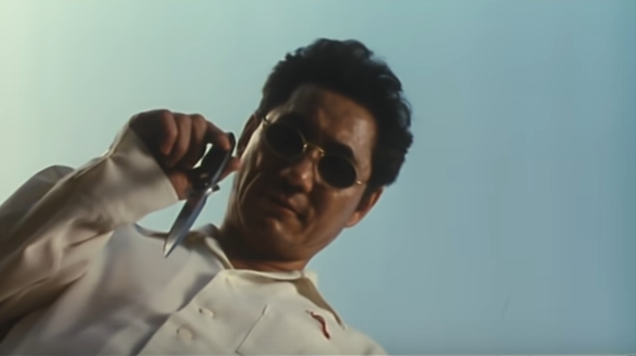
Alternate Best Actor 1997: Takeshi Kitano in Hana-bi

Takeshi Kitano did not receive an Oscar nomination for portraying Yoshitaka Nishi in Hana-bi.
 
Hana-Bi is a curious yet captivating mix of beauty and brutality, about a former police inspector dealing with two major tragedies in his life. 
 
The multi-talented Takeshi Kitano stars and directs this film, building an unusual tapestry around himself, and through himself as a tale about deep humanity and inhumanity often back to back or in the same scene. Although there is a tangible narrative going on Kitano directs the film with almost a stream of consciousness approach as the scenes move between each other with almost a dreamlike pace and manner. The idiosyncratic nature of this approach is perhaps most evident within Kitano's own performance, a performance that would be best described as austere. His typical state is that of a cold stare with typically any emotion obscured by a pair of ominous sunglasses that seem to detach his inspector from any more humanity. And in this sense, Kitano seems to craft the "badass" anti-hero of a more expected revenge thriller. Kitano's presence is of that calm cool, that killer's ease with a vicious ability to commit violent acts seemingly without a second thought in the scheme of things. His performance is much like his character, brutal and exact, though with a certain curiosity within that intensity. We learn that his character is defined by his wife dying from Leukemia and his former partner having been crippled from a botched police assignment. The brief scene setting up the latter seems most important as we see a different Nishi as he plans as a far more normal and grounded man. In fact in that scene Kitano portrays him as just a normal man planning, someone who isn't caught within this certain state the rest of the time. 

The rest of the time the performance largely is of this strict consistency of that cold stare, again usually obscure by sunglasses. Those moments of Nishi killing various Yakuza who try to get money from him or threaten him in a way. Mixed in with these rather wonderful moments that break from that. There are these brief moments where we get a different tone. Occasionally it is these playful scenes, although darkly so, like when he points a gun at a random passerby, before he goes to rob a bank, just as a joke and the sort of random demented yet comical manner that comes across Kitano's face is rather striking in this strange way. Even more remarkable though are the moments where we see Nishi with his wife as he takes her on a sort of vacation with his ill-gotten gains as she approaches her death. Kitano is quite wonderful in these moments with his wife, like when he is doing a card trick with her, as suddenly there is so much warmth between them, so much love, and there is such an earned sincere sweetness in Kitano's performance. You see a man who genuinely loves his wife, but more than that, you see the playfulness the two of them share together. They are genuinely fun together and you see what is a real loving couple here, even as these very sweet scenes come between scenes of such brutal violence. The most direct of this duplicity being a scene of Nishi's wife gather water for dead flowers while a man mocks her, leading Nishi to brutalize that man without mercy. 

As much as one can label this a "director's film" where this performance is by the director, I have to say I found myself transfixed by what Kitano was doing here as a performance even if it is but a facet of his tapestry he is painting. The exactness of his performance here though is fascinating in that he manages to play in his performance what he is creating in this film, which is this extreme dynamic between love and hate, gentleness and violence, comedy and tragedy. Kitano's performance can completely switch from scene to scene in terms of what he is conveying in a given moment, yet what he is conveying never seems at odds with each other. This even as he portrays a calm sadism when brutalizing one gangster after another, yet that doesn't seem ill-fitting from the strange compassion he seems to show towards his moments of thinking of his partner or the greatest of affections for his wife. Kitano's performance succeeds in creating the sense of a man who basically is filled with emotions towards the one's he loves, a pulled in emotion that drains him, yet is filled with the opposite kind of emotion towards those he hates as intensely. Kitano's performance works in creating a man who basically is in this state of a kind of insanity. He's not within his mind in a way, he's detached from life as he fashions some final mission for himself, and in that Kitano's performance works as this strange kind of gliding along. This as he'll enjoy a random moment of violence, comedy, or of love with the same amount of ease. This is a strange performance, but one that wholly worked for me even though the beats are technically limited in terms of overall range. Yet every moment is striking in revealing these different distinct moments that define the character that his performance left still such an impression even within the limitation. It's a performance about punctuation, careful singular notes between rests, and while that may handicap a typical performance, there is something about Kitano's presence here that overrides such considerations. Kitano makes Nishi's this one of a kind mix of the most extreme emotions, and a most powerful portrait of a man with a most unusual mix of brutal inhumanity and profound humanity.

Sunday, 3 April 2022

Alternate Best Actor 1997: Tony Leung Chiu-wai in Happy Together

Tony Leung Chiu-wai did not receive an Oscar nomination for portraying Lai Yiu-Fai in Happy Together. 

Happy Together is a beautifully told and shot film about two Hongkongers in a difficult relationship while abroad. 

The two Hongkongers being Leung and Leslie Cheung as Ho Po-Wing. A homosexual relationship really notable for the time because it doesn't really make a big deal about, in fact at all in terms of the storytelling. That aspect isn't the focus of the film in the least, that is simply the starting point, the point examining it as a complex and difficult relationship. We have the two sides of the relationship. On the side we more often follow is Leung in the role of Lai, who is more easily described as the "responsible" one who seems to have any intention for the future. We see the two initially in the throws of a more intimate relationship. Leung and Cheung do have fantastic chemistry in these moments where you get the sense of a primal attraction between the two in a moment, that is essential as an underlying constant though not the only aspect within their character. At the same time though there appears to be a discontent where we get the two shades of the idea of the relationship where Cheung portrays a blithe attitude right down to Ho's repeated "let's start over" as though the relationship can be just reset when needed, Leung's performance accentuates the burden of such an attitude as both men seemingly only have each other, as difficult as that is, being so far from their home as they are in Argentina within the opening of the film. 

Leung's performance is honestly more often silent, despite being the narrator of the film, however within the narration of the film, his work is fairly straight forward as this man just recounting his life, no fuss or overemphasis, just a man explaining what is happening to him. What Leung's work then is breathing life into this situation and this relationship, while so infrequently stating every aspect of the relationship. Where the greatness of the work, and the film, is that this idea never seems underwritten or underdeveloped even when the amount of words is often limited. That is found in the strengths of the central performances particularly Leung's work as Lai. Leung's initial scenes are of that exasperation towards the state of this relationship, this constant back and forth between Ho seeming interested towards him then in a moment later will be equally dismissive of him. Leung presents Lai as just dealing with what he has and often struggling with the difficulties of this state. The frustrations initially more so the exasperation towards Ho's immaturity before they break the first time and Lai a job at a nightclub. A nightclub he soon sees Ho visiting with a different man. Leung is amazing in his portrayal of all the thoughts storming through his head in a moment of this notice. The complex anxiety is so remarkable in Leung's performance because it isn't just jealousy or anger, there is so much more within the need of the companionship one moment just as there is the distress of it the next. 

They renew a relationship although no longer one of extreme sexual intimacy or even necessarily attraction just of intimacy as they live together but don't sleep together. Leung's performance helps to realize the strange sort of logic of this state the two exist in as it is obviously Ho is willing just to "Start over" once again, but that isn't the case for Lai. Rather Leung shows still an override stress about his interactions with Ho, and even the discomfort in being in the same place. Leung at the same time though still shows that powerful need for attachment, and really the moments of the intensity of the loneliness when completely alone. Leung's performance is so articulate in creating the detail really in the interaction between the two characters. He can't quite leave Ho, he needs Ho, but he also in a way can't stand what Ho represents and what Ho's behavior really does to him. This is remarkable because again it is all in Leung's silent portrayal of the interactions that we see this. When together they are in this state of distress together. Leung portraying just the frustration of having to be in this constant of needing this person yet also wanting so much not to need this. In his moments of lashing out and really just trying to ignore Ho, Leung shows Lai in a way trying to contain his own emotion that in a way is this constant pester of him. Leung presenting a man stuck in a painful purgatory of the relationship, as a relationship he knows he doesn't truly desire, but still not one that he feels he can entirely give up either. 

As Ho is recovering from an attack, Lai continues on attempting to resolve some path to return home to Hong Kong, where we have these essential moments where Lai receives one too many calls at work from Ho. Leung's performance in these scenes though are of this perfect kind of resignation where his voice is this unfortunate assuaging of Ho on the other line, while his face is just that of a man going through the motions of fulfilling the needs of Ho in the moment. There is no passion in his eyes, just rather a man trying to deal with this relationship that he is deeply attached to even if he in many ways he really doesn't want to be. This is in stark contrast to a relationship that develops with the slightly ambiguous Chang (Chen Chang), a fellow worker at a restaurant that Lai works for. Chang within the scheme of the film and the scheme of Lai's life seems this breath of fresh air as this slightly eccentric but also just outgoing and optimistic young man. Leung initially portrays the reactions to Chang as just this minor interest, but no more than that, as he still depicts the pained fixation on whatever emotional state Ho might be in at one time another, however always calling Lai to make sure he knows. With Chang, who genuinely seems to just enjoy life and Lai's companionship, even in just a friendly way, Leung is terrific in portraying basically the weight upon his soul that eases in these interactions. It is still a very subtle performance, and in his subtle work does he reflect this sense of natural calm and potent warmth these two men share, that lacks the pained challenge of the contentious relationship with Ho. 
 
The final act of the film, which in typical Wong Kar-wai fashion is not about the expected, and it typically is about the beauty of silences, depends greatly on Leung's performance to create the emotional anchor. His performance throughout these scenes barely says a word beyond his narration, as Lai goes off on his own to first visit Iguazu Falls before heading to go home to Hong Kong, finally cutting himself off from the difficult relationship with Ho and also leaving the potential relationship with Chang behind. Leung's performance is able to articulate in really just these silent moments of contemplation suggesting the state of Lai that suggests growth yet still struggle with his condition, which really is just the human condition. His work is exceptional in that it has such a power to it in both very specifically realizing Lai's particular circumstances while also making them wholly empathetic in just anyone facing the idea of loneliness against regression, growth into the unfamiliar or comfort within stagnation. Leung's work reveals that no matter the decision there is no ease in the choice and we come to know what Lai's mental state is as he leans to the new, even if there is a different kind of pain in that new. This is no better reflected than the final shot of Lai in the film as he rides the bus alone but back in Hong Kong. It is outstanding work from Leung as it isn't a simple note of distress in Leung's performance but so much of the memory of the experiences he's been through in this moment. He's going through so much more than a simple thought, and such poignancy is in this complexity that is all in this singular silent moment.

Tuesday, 29 March 2022

Alternate Best Actor 1997: Stellan Skarsgård in Insomnia

Stellan Skarsgård did not receive an Oscar nomination for portraying Jonas Engström in Insomnia.
 
The original Insomnia offers an intriguing comparison to Christopher Nolan's bigger-budget Hollywood remake. Both tell the morally grey if not nearly black tale of a murder investigation in a land of the midnight sun. The differences between the two are pretty fascinating to look at in terms of film-making. The remake is more impressive on a technical level, the expansions to the story do actually feel natural, and the character of the murderer is more compelling, though that is in large part due to Robin Williams's against-type performance. There is something though in the original streamlined storytelling and its more uncompromising narrative that makes it perhaps more captivating in some ways, though there are moments that feel slightly rushed, particularly the scenes of dealing with the killer.

A major difference from the outset is of course in the casting alone is having an actor like Stellan Skarsgård in the leading role. Skarsgård is perhaps one of the most innately intense actors working and his natural presence is very different from the US lead in Al Pacino, particularly the Al Pacino of the 2000s. Where Pacino certainly can and has played morally questionable if not bankrupt characters, his innate presence is still in some way typically reaffirms some kind of humanity, which isn't exactly the case with Skarsgård. That however is immediately something so striking in this film, because Skarsgård is the type of detective that is far less ordinary than our typical leading character for a murder mystery. Where a character may be driven to torture suspects after some time in other films, Skarsgård's detective almost immediately does so the moment he enters to solve the case. Skarsgård's performance is strikingly incoming from this darker place from the outset. When the film opens, Skarsgård's expression isn't of a man who has been through some things, he's clearly seen some kind of hell, and his eye pierces with the emotional trauma that defines his detective. A trauma he doesn't deal with by crying, rather instead his eyes speak to a kind of this particularly unnerving combination of hate but also at times this seeming detachment. 

Where it seems like Pacino's version of the character can still function as a person, despite clearly dealing with much, Skarsgård presents a man eternally marked by what he has through the line of duty. Skarsgård's voice here, which actually is even more innately terrifying in his native tongue, speaks with a seeming contradiction. There is a lurid calm in his voice yet at the same time Skarsgårdevokes such a vicious potential for violence even in this calm. He articulates a man who has become defined by his violence and a killer in a killer's world in a way. When Skarsgård speaks to the murdered girl's boyfriend, saying Skarsgård comes in strong is putting it lightly, there is the energy more of a medieval torturer than a cop as he prods the questions to the man. Skarsgård's eyes burned with that hatred and a lack of even the remotest concern for the young man's protestations. Skarsgård is an angel of vengeance-seeking his retribution and there is nothing about him that can ease away from that intensity. Watching Skarsgård here is so powerful in itself, as this unrelenting personality is so tangible, and this is before we get to the idea of the central guilt of the piece. 

We do see that as much as he's a terrifying force there is an efficiency in Engstrom. Skarsgård's work is powerful in just that intensity of his eyes that suggest a man highly skilled in tracking killers, even while burdened potentially by the task in his own way. When he prepares an ambush for the killer or interrogates the dead girl's so-called best friend, Skarsgård's performance is rather terrifying by presenting the nature of Engstrom in his task. Skarsgård portrays a man who has no hesitation in his acts, to the point of his interrogation with his best friend, a high schooler, isn't to drive into oncoming traffic like Pacino to throw her off, it is to sexually stimulate her. Skarsgård in that particular moment is particularly disturbing because he doesn't even show that Engstrom is getting off on this method, rather he presents that same kind of vicious intention of the man's method even in this moment. It is just another tool that Skarsgård presents before he begins to more actively terrorize her and search for further knowledge from her. Skarsgård is brilliant here in a way because far before we ever meet the actual murderer, Skarsgård has presented a far more horrifying figure in man with such a vile kind of conviction. 

The construction of both films puts the detective into a precarious state wherein the ambush to catch the killer, he instead shoots his partner in what appears to be accidental friendly fire. This idea of guilt is VERY different from the remake which relies more heavily upon conveying this sense through Nolan's frequent editing to explore the thoughts of that detective, the direction of Erik Skjoldbjærg relies far more heavily on Stellan Skarsgård to convey the internal conflict within the detective. A wise choice honestly, and one that I wish Nolan had kept given he was working with an actor of Pacino's caliber, Skarsgård though is put at the center of this. This version being different, and in some ways simplified as there's no sense of him doing it to silence his partner, which is interesting because overall Engstrom is the darker figure overall. We see this as Engstrom nearly rapes the hotel manager and kills a dog to help hide his shooting of his partner. Skarsgård's remarkable in what he actually does in a way is convey the hints of morality in the man rather than the immorality. The immorality is what defines Skarsgård's performance. We see in his penetrating stare that this is some sense of guilt, that becomes stronger as in a way he becomes more spent from his experience of never sleeping. The gradual physical degradation of Skarsgård's work is remarkable here as we see the man becoming more and more tired so articulately in his portrayal, but there is more to it. The sense of the man becoming tired with his state is here, even if this is largely just within Skarsgård's performance. There is an amazing moment where he hides as he's set up someone for the crime, and Skarsgård's portrayal of dealing with all the emotions of this just silently is fantastic acting. You see all that the man is going through in a moment of silence and it is incredible work. The final moments of the film are Skarsgård embodying this state of a man becoming this harbor of all of Engstrom's anxieties and sense of moral failure. Skarsgård is notable though in that his performance is in a unrelenting, there is never true regret, rather there are feelings of regret. His performance in a way showing the man dealing with what is this break from typical detachment from the deaths he examines or commits. It is a fascinating atypical portrait of such as Skarsgård shows a man in a way not escaping it, rather coming to terms with it through this kind of mental rot, until the man is still as himself but now writing in that state of insomnia.

Wednesday, 23 March 2022

Alternate Best Actor 1997: Sam Lee in Made in Hong Kong

Sam Lee did not receive an Oscar nomination for portraying To Chung-Chau, 'Moon' in Made in Hong Kong. 

Made in Hong Kong is a good if imperfect film, particularly in terms of some of the direction and technical elements, that details a low key coming of age tale of a criminal Hong Kong youth. 

Sam Lee is our narrator and our hero into the world of the youth of Hong Kong as depicted in this film. His recounting of the tale itself is this blunt speaking of his life which is the best way I can describe this performance. Lee was discovered for this film and was not a star before this film. In turn Lee innately isn't some extremely notable youth, he's a youth in this world. His delivery of his story is nearly that of rambling just recounting of who this young man is and what he is going through. Lee brings no pretense to the narration nor to his performance. His work is just kind of what it should be as a man being himself in a way seemingly, though I think it is notable because of all that this young man is dealing with. All that he is dealing with though is just part of his life and that is where we see the strengths of this performance from Lee. Lee isn't trying to make the young man who should be above and beyond his standings. Rather Lee portrays someone who is living within these standings and in a way that is essential per the tone of the film that just kind of shows this life as is, this with random lows, random highs, peace at times but also a whole lot of violence. 

We open the film as the wayward youth trying to make his way in the criminal underworld seemingly while also just making his way in being a youth in a way, the two mix together rather frequently which this dynamic is one of the strengths of the film. The strength of this realized within Lee's performance. This as in moments Lee does bring a natural charm about him. He's got swagger though not to some extreme, honestly he does not need it as in a way Lee's presence is more teenager than gangster and that is key to his character of Moon. He is most naturalistic in the moments of just hanging around the basketball court and randomly trying to recruit people like the rather slow witted Sylvester who becomes his friend/lackey. What Lee does portray well though is the attempt to be more than he is. This in the attempt a swagger or intensity. The early scene of beating down a "bully" Lee throws himself into it, but he also throws himself into it as a bit of an act. He hits the man down and the act of it is a bit of an act. Lee portrays with very broad gestures however it works in the man portraying the part of the gangster trying to be the gangster. This is in contrast to the different kind of awkwardness we see when he's trying and failing to make love to a young woman, the rather ill Ping. Lee suddenly embodies teenage style anxieties with as he he doesn't quite look where he should and his moments of confidence are naturally segued to nervousness. He's a proper mess of everything in the moment, and not quite anything at once.

Lee's performance is interesting as this kind of guide throughout this world with this certain manner of his as a young man trying to negotiate every situation. His portrayal of Moon in turn is kind of dancing around this world that wanders between moments of levity, intensity or something more. In each though Lee is as natural in creating the moments of Moon being natural or unnatural in a way. There are moments where he is just with his friends hanging out and there is a genuine sense of fun between them. Lee brings just the joy of the young man in these moments. He's as good at the moments of the gangster which have a great variety to them in his performance. There is the early scene of him trying to "strong arm" some money out of a woman where his delivery is perfectly weak, in the right way, as the man who clearly is far less than he says. He's good though in other moments where the situation seems to dictate a bit more personal power and he alludes to possibly the gangster within even as he acts up with this bravado and confidence. A confidence that is phony in a way in Lee's work but also almost quite there. Lee shows some one who could be a gangster at some point, but also might seem completely overwhelmed by the idea. 

There's a great scene where he goes to see the actual Triad boss and Lee again is able to present this natural mix between the sort of passive intensity of a would be killer with the completely hapless manner of a never be killer. He's not quite either, and he's terrific at not being either. He kind of has the swagger but he kind of doesn't have it all. There's a great scene of pure physical acting later on in the film where we see Moon taking on the full job the gangster with a potential hit. When preparing for the hit Lee portrays the utmost forceful manner, and style really of what he would believe is what a gangster should be. He has all the manner of the killer as he runs out to do the deed. The moment of it actually coming though his reaction is truly moving in showing the immediate panic in Moon as the reality seems to set in. His presentation of the fear reveals again the more sincere young man behind it all. His moment is so powerful as Lee's breaths of both this relief but also fearful realization of not being cut out for this life in a way. As good as Lee is in most of the film in the more surface revelations of Moon, what makes this so impressive, particularly as a debut, are the moments of quiet contemplation and introspection. The moment for example after he witnesses a random violent attack, Lee is incredible in just a silent reaction internalizing all the pain that Moon really feels in living in such a violent world and in his eyes seems a little boy trapped in an abusive place. Throughout the film Lee reveals in a greater depth the maturation in Lee as his emotions become more real and to the point. His delivery even becoming so much less petulant and just honest as someone perhaps finding their adulthood in a rather terrible way. His walk now seemingly with an actual confidence and an honesty to himself. When he goes back to confront the Triad, Lee now is an actual force. He has a power to himself, he's not the weakling just pushing for it all, he really is it though in the way Moon would've expected. Lee gives a very striking debut here. It is a surprisingly articulate and dynamic portrait of a young man coming into his own, going from the phony wannabe, to something real though in a way that might be too painful to survive.

Sunday, 20 March 2022

Alternate Best Actor 1997

And the Nominees Were Not:

Ray Winstone in Nil By Mouth
 
Takeshi Kitano in Hana-bi
 
Sam Lee in Made In Hong Kong 

John Cusack in Grosse Pointe Blank 
 
Stellan Skarsgård in Insomnia
And Reviews of:

Mark Wahlberg in Boogie Nights
 
Tony Leung Chiu-wai  in Happy Together

Friday, 8 August 2014

Alternate Best Actor 1997: Results

5. Al Pacino in Donnie Brasco - Pacino gives a moving portrayal of a mobster whose past his prime but has a little bit to offer to an up and comer criminal who unfortunately happens to be an uncover F.B.I agent.

Best Scene: Lefty asks Donnie about the boat.

4. Ian Holm in The Sweet Hereafter - Holm gives a interesting two sided performance one the false performance of a lawyer pushing for a cause for monetary reasons, the other being a heartfelt portrayal of a father who feels like he has lost his own daughter.

Best Scene: Mitchell recounts saving his daughter's life.

3. Guy Pearce in L.A. Confidential - Guy Pearce gives a fantastic portrayal that slowly dissects the cop who seems absolutely driven to only do good while following the letter of the law.

Best Scene: Ed interrogates the suspected killers.

2. Russell Crowe in L.A. Confidential - Crowe also gives a fantastic performance that slowly dissects the cop who seems absolutely driven to do good, but by any means necessary.

Best Scene: Bud reveals his vulnerabilities to Lynn.
1. Philip Baker Hall in Hard Eight - Good Prediction Psifonian. Hall gives such a magnetic and fascinating portrait of his incredibly unique character. Well this was not an easy decision to make between the top three. I love Pearce, Crowe and Hall's performances all equally. It was hard enough just to rank Pearce and Crowe. I could just as easily change their placement. They completely excel in their roles and get the absolute most out of them. I can at least somewhat justify it, I guess, in that I do think Hall technically has weaker material to begin with, but manages to give just as strong of a performance.

Best Scene: Sydney's final phone call with John.
Overall Rank:
  1. Russell Crowe & Guy Pearce in L.A. Confidential (TIE)
  2. Robert Duvall in The Apostle
  3. Philip Baker Hall in Hard Eight
  4. Tony Leung in Happy Together
  5. Ray Winstone in Nil By Mouth
  6. Ian Holm in The Sweet Hereafter
  7. Al Pacino in Donnie Brasco
  8. Samuel L. Jackson in Jackie Brown 
  9. Peter Fonda in Ulee's Gold
  10. Mark Wahlberg in Boogie Nights
  11. Stellan Skarsgård in Insomnia 
  12. Brendan Gleeson in I Went Down
  13. Robert Carlyle in Face
  14. Michael Douglas in The Game 
  15. Daniel Day-Lewis in The Boxer 
  16. Mark Addy in The Full Monty
  17. Robert Carlyle in The Full Monty 
  18. John Cusack in Grosse Pointe Blank
  19. Takeshi Kitano in Hana-bi 
  20. Sam Lee in Made in Hong Kong
  21. Billy Connolly in Mrs. Brown
  22. Johnny Depp in Donnie Brasco 
  23. Laurence Fishburne in Event Horizon
  24. Bill Pullman in Lost Highway 
  25. Sylvester Stallone in Copland 
  26. Aaron Eckhart in In the Company of Men
  27. Amir Farrokh in Children of Heaven
  28. Kōji Hashimoto in Cure
  29. Matt Malloy in In the Company of Men 
  30. Charlie Creed-Miles in Nil By Mouth
  31. Peter McDonald in I Went Down
  32. Vladimir Mashkov in The Thief
  33. Ulrich Mühe in Funny Games
  34. Mike Myers in Austin Powers 
  35. Ralph Fiennes in Oscar and Lucinda
  36. Mel Gibson in Conspiracy Theory
  37. Linus Roache in The Wings of the Dove
  38. Leslie Cheung in Happy Together 
  39. Arno Frisch in Funny Games
  40. Bruce Willis in The Fifth Element 
  41. Leonardo DiCaprio in Titanic 
  42. Djimon Hounsou in Amistad 
  43. Kevin Kline in In & Out
  44. Sam Neill in Event Horizon
  45. Tommy Lee Jones in Men in Black
  46. Will Smith in Men in Black
  47. Nicolas Cage in Face Off 
  48. Jonathan Pryce in Regeneration
  49. Stephen Fry in Wilde
  50. Jeremy Irons in Lolita 
  51. Christopher Guest in Waiting For Guffman
  52. Anthony Hopkins in The Edge
  53. Jared Leto in Prefontaine
  54. Pedro Cardoso in Four Days in September
  55. Dmitri Chigaryov in The Thief
  56. Kurt Russell in Breakdown
  57. Homayoung Ershadi in Taste of Cherry
  58. Ving Rhames in Rosewood
  59. James Wilby in Regeneration
  60. Jon Voight in Rosewood
  61. Jack Nicholson in Blood and Wine
  62. Jan Decleir in Character
  63. Jack Nicholson in As Good As it Gets
  64. Dustin Hoffman in Wag the Dog
  65. Harrison Ford in Air Force One
  66. Robert De Niro in Wag the Dog 
  67. Balthazar Getty in Lost Highway
  68. Tenzin Thuthob Tsarong in Kundun 
  69. Jeff Goldblum in The Lost World: Jurassic Park 
  70. Harrison Ford in The Devil's Own
  71. Jackie Chan in Mr. Nice Guy
  72. Brendan Fraser in George of the Jungle
  73. Keanu Reeves in The Devil's Advocate 
  74. Matt Damon in Good Will Hunting
  75. Pierce Brosnan in Tomorrow Never Dies
  76. Jim Carrey in Liar Liar
  77. Ben Affleck in Chasing Amy
  78. Nathan Lane in Mouse Hunt
  79. Matt Damon in The Rainmaker 
  80. Alec Baldwin in The Edge
  81. Chris Tucker in Money Talks
  82. John Travolta in Face Off
  83. John Cusack in Con Air
  84. Brad Pitt in The Devil's Own
  85. Tate Donovan in Hercules
  86. Nick Nolte in Afterglow
  87. Woody Allen in Deconstructing Harry
  88. Michael Jai White in Spawn
  89. Robeto Benigni in Life is Beautiful
  90. Chris Farley in Beverly Hills Ninja
  91. Charlie Sheen in Money Talks
  92. Pierce Brosnan in Dante's Peak 
  93. Johnny Lee Miller in Afterglow
  94. Tommy Lee Jones in Volcano
  95. Nicolas Cage in Con Air 
  96. Robin Williams in Flubber
  97. Jason Connery in Macbeth  
  98. Sean Penn in She's So Lovely
  99. Chevy Chase in Vegas Vacation
  100. Tim Allen in Jungle 2 Jungle
  101. George Clooney in Batman and Robin
  102. Robin Shou in Mortal Kombat Annihilation
  103. Keenan Thompson in Good Burger
  104. Casper Van Dien in Starship Troopers 
  105. Lee Evans in Mousehunt
  106. Sam Huntington in Jungle 2 Jungle
  107. Kel Mitchell in Good Burger
  108. Alex D. Linz in Home Alone 3
  109. Shaquille O'Neal in Steel
Next Year: 1997 Supporting

Thursday, 7 August 2014

Alternate Best Actor 1997: Al Pacino in Donnie Brasco

Al Pacino did not receive an Oscar nomination for portraying Benjamin "Lefty" Ruggiero in Donnie Brasco.

Donnie Brasco's is an effective film about a F.B.I agent, Joseph Pistone (Johnny Depp), who goes deep undercover to infiltrate the mob as the titular Donnie Brasco.

Al Pacino plays the secondary lead of the film Lefty who is the first wiseguy to approach Donnie. Although the later career of Al Pacino has not been filled with great films he still managed, from time to time, to bring that same creative spark he had in his seventies heyday. Thankfully Donnie Brasco is one of these cases as he plays Lefty Ruggiero a mobster who is part of a New York crime family. Pacino is certainly no stranger to playing mobsters but Lefty is far cry from Michael Corleone. Lefty has a fairly high up position in the mob and he's certainly been in it for a long time. Lefty though is basically stuck in the position that he has and the only place he can go is basically to the grave either sooner or later. It's really interesting to see Pacino, who has spent so much of his career playing either boisterous or brilliant gangsters, play a mobster who really is not meant for great things in fact he seems to be having a hard enough time just living an okay life.

This performance could almost looked at a companion performance to Philip Baker Hall's performance in Hard Eight. Both play aging men with mob history who decide to take young men under their wing and give them the knowledge they have from the lessons they've learned. The major difference is that Lefty is not nearly as smart as Hall's Sydney from Hard Eight which in turn allows the other major difference which is that Lefty is still in the mob. Pacino is quite good in the early scenes as he first approaches Donnie and begins showing him the ropes of the mob organization. Pacino is quite excellent in the way he portrays the manner of Lefty as he pulls Donnie in while simultaneously threatening to act as though he is the boss. Pacino's performance brings a certain awkwardness to Lefty's method. Pacino shows that in Lefty's case that he has to actively try to act tough, and smart because in reality Lefty isn't really cut out for his life.  

As the film proceeds forward and Lefty brings Donnie into the fold of the mob Pacino and Depp develop a rather interesting chemistry with one another. Depp, who is particularly understated here, is playing two sides one being the young gangster who wants to learn as much as he can the other side being the undercover agent who is simply infiltrating the mob to acquire as much information as he can derive by going along with Lefty. Pacino is terrific in his portrayal of Lefty manner around Donnie. On one hand Pacino gives that attempted menace of sorts with Lefty, and is quite brilliantly sad as he shows Lefty always trying and failing to act the part of a mob higher up. Pacino nicely portrays Lefty much more in his element when he is mentoring Donnie on a few things. Pacino brings a more natural Lefty in the open as Lefty seems to be able to offer something from his mob years, and that in some way by telling Donnie his knowledge his whole life seems to be a little less at a complete dead end.

Pacino's performance works best in the especially emotionally vulnerable moments as Lefty reveals to Donnie that he is quite aware of the fact that he has nowhere to go. Pacino manages to be very moving in the role despite the fact that Lefty is a killer who technically even boasts about the number of men that he has killed. What Pacino does so well though is show that when you get right down to it that Lefty is nothing more than a lonely old man who wanted to be something but sees that he is almost nothing. Pacino brings such an honest warmth in the scenes where he reaches out to Donnie in some sort of attempt to find something worthwhile in his life, which is unfortunately also a lie. One of my favorite moments in his performance is when, using a tip from Donnie, Lefty tries to set something of his own, something small but it would be his. Pacino brings such a pride and honest happiness as Lefty seems to see something that could be his own, which makes it all the more heartbreaking when it is quickly taken from him.

Al Pacino's portrayal of Lefty is the best part of Donnie Brasco as a film causing my only major complaint to be that Pacino is the secondary lead and the strongest scenes in the film are the ones with Lefty with there being an unfortunately  period in the film where Pacino's appearances become rare. Al Pacino creates such a particularly unique portrait of a gangster who rarely are front and center. Guys like Lefty are often the ones in the background or probably ones who are suddenly killed with little explanation given in other gangster films. Pacino and the film manage to realize one of these guys fully as a person. Pacino gives a very good performance as he simply gives such a genuine depiction of this guy in every scene that he is in. Pacino in doing so does not just show us some random killer, but rather gives a particularly tragic portrait of man who has nothing in his life, and the one shining thing in his life in a surrogate son is also really just another cruel joke being played on him by fate.

Tuesday, 5 August 2014

Alternate Best Actor 1997: Philip Baker Hall in Hard Eight

Philip Baker Hall did not receive an Oscar nomination for portraying Sydney in Hard Eight.

Hard Eight is a rather interesting debut feature of Paul Thomas Anderson about a seasoned gambler who takes a young man, John (John C. Reilly) under his wing.

The prolific character Philip Baker Hall plays the lead role of Sydney an older man who seemingly takes a random man in front of a cafe and proceeds to offer to show him how to be a successful gambler. Philip Baker Hall is reliable in any role that he is given no matter how small they may be. He also though is quite capable as a lead, as he proved his one-man show style portrayal of Nixon in Secret Honor. This time he once again gets a chance to lead a film, although this time its not a solo venture. Philip Baker Hall has such a unique screen presence and in turn he makes Sydney a fascinating character from the moment he asks John if he would like a cup of coffee and a cigarette. Sydney sudden and rather extreme charity to this man seems a bit extreme to say the least Hall does a particularly great job of making you feel comfortable with Sydney despite his straightforward manner. The straightforward attitude that Hall portrays is not exactly how you may expect though.

Hall plays the part with such a delicate complexity and it is fascinating to watch him play the part in a somewhat atypical fashion, yet actually completely naturalistic. Hall disarms you with this sense of warmth that he brings to the part. It's such an unusual charm that Hall infuses to the part. It never is overwhelming but makes Hall manages to use it so calmly to make Sydney so likable, and a completely magnetic character. What Hall does exceptionally well though is that he does not let the warmth define the character or even be an obvious factor. It's something you can feel, but Hall never just simply states with his performance. Hall very nicely leaves a question mark behind the man while he is encouraging John, you can't quite tell what he is up to at this point in the film. Hall allows you to think that perhaps Sydney is just helping John because he is a nice guy or it could be more. Hall never gives you too much or too little leaving Sydney such an interesting enigma of a man.

Hall is great at monologue an exposition, after all he did carry Secret Honor which was just one very long monologue, and ability with it comes into play while he tells John the ropes about how to successfully play the house and win. Hall whole delivery is pitch perfect as it shows this knowledge as almost innate in Sydney as he has obviously spent a considerable time in this sort of life, knowing exactly what to expect. Sydney is in fact kind of a good version of George C. Scott's Burt in The Hustler. Both are well dressed men who take another man under their wing with some manipulation involved, except Sydney seems to be doing for the good of John as a person. The idea of such a man seems almost impossible to believe but Hall makes you believe it as there is such an honesty in Sydney's sage like attitude. Hall brings even more than perhaps what was written though as he does always suggest that there is even more to this relationship, and not what is eventually revealed by the plot of the film.

There is something else that Hall seems to suggest in his performance and what that is, is an underlying sadness about Sydney. He's not weeping or even openly depressed or anything but Hall suggests quite carefully that Sydney is deep down a lonely man who believes by helping others they might treat him with a kindness, which is merely being his friend. Although a later revelation indicates that his decision to help John was not as random as it initially appears, his attempt to alleviate loneliness still seems to be a strong part of it, evidenced by the way he treats a waitress in a casino Clementine (Gweneth Paltrow). Hall again brings this constant sort of empathy that is always felt around Sydney as he treats everyone, who deserves it, with respect. Hall exudes this in a fascinating way because you never see any desperation on Sydney's sleeve, yet nevertheless in his own particularly subtle way Hall still allows you to see that Sydney is reaching out in his own way for some sort of happiness through helping others.

Sydney relationship with John is soon proven to be far from perfect though when he is called in by John to help deal with a blackmail situation that Clementine has come up with while John has chosen to go along with it. Hall is terrific in this scene because he plays it just so realistically. Although Sydney obviously has been a great guy to John up to this point he obviously will not allow himself go to jail by getting involved with a truly harebrained scheme that could only possibly end badly. Hall's great because he just very bluntly shows Sydney ever so slightly loses his cool, and just his survival instincts come into play. Hall knows exactly how to play the scene though because he never loses our empathy in fact he is by far still the most easy to sympathize character in the scene. Hall just wonderfully does not beat around the bush and it's so great to see him so honestly play the scene as he plays Sydney's reaction to be what many people's reaction would be when thrown into such a ludicrous position.

Due to the fact that he is given a minute to think, and that the two manage to plead with him properly Sydney ends up helping them by simply getting them out of the room and on their way. Sydney still has to deal with one more obstacle though and that is a crude friend of John's Jimmy (Samuel L. Jackson) who intends to extort Sydney due to Jimmy knowing about Sydney's past. It turns out that Sydney was once a mobster related with plenty of criminal activities including murder. When this revelation is revealed all I thought was yes that makes since. Hall properly left it open to Sydney's true "identity" so to speak, but when the revelation is made you can see that Hall completely makes it understandable. Sydney is in fact a mobster who is trying to make amends of a sort, and try to have a good life despite obviously living a bad one. The history of the man can be seen in the style in which Hall approaches the part, and even in that certain distance he has within his warmth, like it is the leftover coldness needed for a mobster capable of killing.

Jimmy's blackmail basically forces Sydney's hand and Hall brings both the new and old Sydney together in a brilliant set of scenes for him. The first being the old Sydney as he goes about confronting Jimmy. Hall is effectively jarring in this scene as he brings out the killer in Sydney without his cold method in handling Jimmy. Hall in this scene shows both Sydney as he treats a man he has no respect for as well as probably the way Sydney once operated back in the old days. Before this though we get the new Sydney in his attempt at reforming himself as he calls John, who's gone on the a run of sorts with Clementine, and simply tells John that he loves him like a son. This whole scene could have not worked at all in that it could have seemed silly or too cheesy for the rest of the film. It's an incredibly poignant scene because of Hall's performance in the scene. He does not gush or break down in anyway, that would be all wrong for Sydney, yet he still reveals these strong emotions in Sydney probably through the character's very personal manner toward life.

This is a great performance by Philip Baker Hall which kinda makes the film. Paul Thomas Anderson's direction is already very assured, even though its his first film, but the script for the film actually is far from perfection. It's attempts to make it have film noir plot of sorts are not exactly extraordinary, and easily could have sunk the film. The minor twists and turns are not exactly amazing but they all work because of Philip Baker Hall. A lesser actor very well may have left too much on the surface with Sydney, as not a whole lot is said, leaving the character a little hollow, but that is never the case with Philip Baker Hall's portrayal. He realizes the character so truthfully that you always believe in Sydney as a person allowing the film to be such a fascinating character study while with less assured hands it could have just been a second rate thriller. I would not have minded if the film had continued, and we simply followed Sydney some more because Hall's gives such a vivid portrait of this one of a kind character.

Thursday, 31 July 2014

Alternate Best Actor 1997: Russell Crowe and Guy Pearce in L.A. Confidential

Russell Crowe did not receive an Oscar nomination for portraying Officer Wendell "Bud" White in L.A. Confidential.

L.A. Confidential is a masterful film about a three detectives as they investigate the mysterious spree of murders after the incarceration of the head of L.A.'s organized crime.

The first of the lead detectives that we meet is Bud White who brutally beats and busts a husband for beating his wife before going off to the Police station's Christmas party there he proceeds to go along with his thuggish partner to beat up some men accused of violently assaulting some of their fellows police officers leaving one with the impression that Bud is more of a violent thug than keeper of the peace. Russell Crowe was perfectly cast in the part as he has the needed physical presence to make Bud White an always imposing figure. Even more important though is Russell Crowe's incredible screen presence which makes Bud White, even when he is just beating a white beater, extremely compelling to watch. Although Crowe was not a star before this film it is very easy to see why that changed with this film. Crowe commands the screen here and even makes the early thuggish Bud White an interesting character.

Guy Pearce did not receive an Oscar nomination for portraying Det. Lt. Edmund "Ed" Exley in L.A. Confidential.

The second lead detective we meet in the film is that of Ed Exley played by Guy Pearce. Pearce, was also a fairly obscure name at the time, and although, for whatever reason, he did not become a star from this film it was definitely a breakout of sorts for him. Pearce in the opening is trying to run the police station where Bud and several other cops decide to beat up the suspects. Ed in this first also seems to be a very particularly man that being the straight forward cop who just wants to do things by the books, and refuses to break any of the laws while upholding the law. Pearce does not mind really playing Ed as the stiff he is, and does well to have it so there is a certain weakness in his attempt at command especially compared to Crowe's performance as Bud. A stiff also might seem like an uninteresting character particularly in the way we see Ed from the beginning, but Pearce also makes his character instantly watchable through his considerable charisma even in a part like this.

Both men and performances seems especially specific but this is all part of the brilliance of both the film and the work here by both actors. Shortly enough we learn that this initial view of the men truly is only the surface and we learn more about them. Bud, for example, does not just take on the occasional wife beater he seems to take on every one he hears about with an extreme prejudice. Crowe is excellent in his portrayal of Bud's reaction to any moment where violence against a woman is seen or even heard about. Crowe's portrays it as something very deep inside Bud as practically a psychotic burst of energy that drives the man. It is not just anger that Crowe shows in him as it is a primal force, but there is a righteousness about it that can be felt. Crowe brings, even in such a vicious intensity, that there is just as intense of an empathy that can be felt through his portrayal of Bud's behavior.

We don't instantly learn more about Ed, that's for a little later, but Pearce still excels in fleshing out the character. One particularly effective choice on Pearce's part is to show an immediate change in Ed since after the police brutality Ed choice to testify against his own officers ensuring himself a promotion to a higher ranking detective. Pearce very naturally brings out a greater command in his performance the moment Ed takes his new position. What Pearce does so well is show that Ed has in no one changed in the brief time from his first scene to this scene, but rather that there is very prideful, and even a certain smugness to Ed since he was only proven right in his dedication to his code. Pearce from this point carries Ed as a man with an unshakable confidence thanks to being vindicated, and it absolutely works in creating Ed, at least at first, as this sort of wall of justice so strong that it seems nothing can break through it.

Pearce and Crowe are both exceptional in portraying the officers differing styles in enforcing the laws through the performance, particularly when they both go to take down some men accused of committing a massacre. Both show a great precision in their performances although in very different fashions. Crowe, when Bud goes to infiltrate their hideout early to be able to kill the culprit rather than take him in, moves with a controlled passion. Crowe is terrific because he is able to, in complete silence, suggest both the extreme hatred behind Bud's eyes yet still in a completely controlled fashion fitting for a detective who's doing his duty in a professional way, well a professional way of sorts anyway. Pearce is a little different though as Ed seems to value brains over brawn which can be seen when he interrogates the men.

Pearce is fantastic in the interrogation scene showing in vivid detail Ed's method as he confuses each man to be able to derive the confessions he wants. Pearce carries the whole side with a considerable cool and completely shows Ed Exley in his element as a detective. Pearce portrays the different methods so flawlessly form his subtle constant intimating tone, but as well through a slightly casual manner about his method as well. Pearce almost weaves the scene as if he is putting on a magic show and just handles the scene beautifully. He commands and control every moment just up until the point in which Bud White literally crashes through into the interrogation room. When Ed gets almost everything he wants out of them in his confession you absolutely believe it because Pearce realizes it so incredibly well. It's just some marvelous work by Pearce, and easily one of the highlights of this performance.

After the take down of the men the two detectives either change or more is revealed about themselves. Bud White's revelations mostly come in through his relationship with a high class prostitute Lynn Bracken (Kim Basinger) a Veronica Lake look a like. Although my liking of Basinger's performance, which I already found  not particularly special, has lessened even more Crowe's performance in these scenes is outstanding. He begins it simple enough as he acts like the tough cop pushing forward the idea of masculinity as it pertains to his general toughness. What is so amazing about what Crowe does is peel that back and reveal the much more honest Bud under his tough exterior. When Bud finally does ask her out there is such a genuine vulnerability in the moment. Crowe does not over do it, but he gives us just the right glimmer of who Bud really. In the subsequent scenes with Basinger Crowe is extremely effective as he so honestly removes the intensity to reveal Bud as a man traumatized by his youth, and rather wounded by the way he is only used as a thug.

Pearce is not one to be outshone though and stays equally as compelling as Crowe as we see Ed as he begins to see that there are some compromises that he must make if he's going to be able to catch all the criminals. Pearce is such a great actor in portraying the reactionary change of a character with very little dialogue to convey. The film never stops to have Ed explain or even stop to talk about the fact that he's going to bending some rules. This is almost a wordless transformation and thankfully Pearce is on hand since he's pretty much an expert at this. Pearce is basically flawless as he slowly shows Ed lose his own crafted exterior a bit, and loses that smugness from before. It is not that Pearce shows Ed to become less of an officer, rather Pearce effortlessly portrays the way the realities of the cop naturally set in on Ed. When Ed makes the decision to kill the suspects it's quick and to the point, but given quite the power through Pearce's expression which shows what's going in Ed's mind at the time.

One of my favorite scenes with Pearce's portrayal of Exley's loss of veneer as he confronts Lynn over her affair with Bud only to learn that it is legit. Pearce is pitch perfect in the scene as he shows a visible effort in Ed as he tightens his jaw and keeps glare to try to show as if Ed is just as manly as the Bud. Pearce creates just enough of a childish notion in Ed's behavior that when he as sex with Bracken, it is basically his faulty attempt to out man Bud. To be fair to old Ed, it's not all about a loss of veneer as seen in an important scene with the other detective of the film Jack Vincennes (Kevin Spacey). Ed tells Jack why he became a cop in the first place which was to catch the idea of the man who killed his own father, who was also a cop. Although some of his moral statements might have had slight pomposity earlier none of that can be found in this scene. Pearce brings the needed poignancy to the moment as he reveals exactly what has driven Ed from the very beginning.

Despite both Pearce and Crowe being the leads of the film they actually don't interact all that much, until the third act. The wait is well worth it though as Crowe and Pearce play off each other impeccably well. The interesting thing is they manage to both have no chemistry and a lot of chemistry at the same time. On one hand their differing styles stay firmly in place and it is wonderful to see Crowe and Pearce handle every scene with the controlled Ed and the emotional Bud. They overlap and under lap in the scenes and it is really something watch. They also do have such a chemistry they form as the characters finally understand that both of them are, despite their differences, trying to do the right thing. It is an unspoken truth about the two and that is best shown by their final scene together where one of them isn't even allowed to speak. Crowe and Pearce create the connection though so even though you don't know what both of them are saying, you understand exactly what it means.

Despite the strength of their performances, and the fact that the film definitely had support neither Peace nor Crowe managed to garner any support from the Academy for this film. Although the academy should be blamed a bit for recognizing perhaps the weakest performance in the film while ignoring every other performance in the film somehow, technically so should many other awards bodies who did exactly the same thing. It's a shame though because Guy Pearce and Russell Crowe create one of the all time great screen duos in this film. Both manage to individually fully realize their characters not as simple archetypes, as they might appear in the opening scenes of the film, but rather as truly complex men. Their dynamic together carries this film to the incredible heights that it achieves. These simply are two great performances from two great actors.