Showing posts with label 1949 Alternate Best Actor. Show all posts

Wednesday, 4 January 2023

Alternate Best Actor 1949: Ray Milland in Alias Nick Beal

Ray Milland did not receive an Oscar nomination for portraying the titular character of Alias Nick Beal, or so he says. 

Alias Nick Beal retells Faust in the then-modern setting through the style of a film noir. 

For much of the film, we follow district attorney Joseph Foster (Thomas Mitchell) as he tries to take down a crime boss. His best source is a mysterious man who called himself Nick Beale, you might find him a little suspicious as he appears quite eerily on a foggy dock and whistles in a rather peculiar way. Ray Milland was a performer with style, and when locked in had a way about the screen like few others. Milland comes into the film with this style as he just casually dominates the film the moment he wanders into a strange bar speaking in enigmatic tones and Milland delivering every word with otherworldly confidence. Mr. Beal offers what is too good to be true to Foster, exactly the evidence he needs. Milland is brilliant in the ease of his manner as he talks about his lead, as he very well just might be an intelligent journalist with a natural calm, of course, it may be more as there's just enough of a glint in Mr. Beal's eyes. Of course, the evidence is slightly illegal, and as much as Beal's offer is simple, when Foster questions what it is for, it is out of sight where Milland's eyes fixate on the idea of Foster breaking his moral code and taking the evidence, after all having claimed he'd be willing to forfeit his soul to nail the crime boss. 

Milland makes an initial potent impression and leaves a cold chill on the film with the way he suddenly appears quite unexpectedly again. Despite the unexpected entry, Milland is brilliant by not overplaying any obvious sinister quality as he talks with Foster. Milland's ease actually is what seems to create a certain chill in the air, just in the sheer confidence of it all. Milland though doesn't immediately surprise rather he plays with a sense of the interaction, as there is a genuine charm Milland brings as he speaks a strange kind of admiration for Foster, particularly when it seems like Foster may be showing any morality. Milland's manner is dishonest yet convincing as he praises Foster for the seeming integrity of the man, as he insists he'll admit to his shortcuts before running for governor. Beale disappears again only instead seeming to look for the potential use of a woman of a certain repute. Milland speaking towards her looking for a service, though in his expression isn't that of a man looking for lust for himself but rather a greater plan. Milland's lack of hesitation at any moment, is so remarkable, as he presents Beal as a man who just seems to know. When he blackmails her with an earlier crime, Milland doesn't lose a breath or even need to force the more nefarious intent, he just mentions it as though it would be natural for anyone to have such crimes in their past. 

What Milland does is wholly realize the suggested concept of Faust meets film noir. Milland gives an immensely stylish performance that is so distinctly in the shadowy tone of the noir, and with such an innate power and menace that is so fitting to a noir. Milland displays this natural power of persuasion in every moment of breaking down Foster's morality. When he pushes for his hired hand in the prostitute whom he instructs in her method to take Foster down more. Milland brings this distinct sense of joy in breaking down the act for her giving her the cues and presenting this all as Beal's true joy in his existence. Milland though is just mesmerizing to watch here in the distinct style he brings. The way his eyes go about a scene with this omnipotence but also how he always stands in a way where he isn't quite part of a scene exactly. His manner is entirely separate from anyone other than his own. Milland creates Beal as this force within the film who captivates with such ease and in turn; Milland captivates the viewer with such ease here as well. 

Milland's performance, if one hasn't guessed so far in this review, is the devil. Milland's performance though is all about not playing into any obvious choice in playing him as the sinister force. Rather Milland presents Beal with a decidedly modern bent, even beyond the time which features his performance, by presenting the state of the man more so as a political power broker than any kind of trickster, though he is that in reality. Milland presents his Beal's trick though as something slicker and in a way more appealing to most, by just suggesting the amoral choices with the panache of the greatest of salesmen. Milland is more smooth than obviously wicked as he does command every frame he's onscreen, however, it is with that ease and strange kind of grace even. Beal's temptations presented with just a sly and eager understanding of the situation. There is no reason to second guess Beal's offering because Milland makes the offer as something that just seems to innately make sense and even while his glare speaks towards a man who is getting more of it than he is claiming, the claim he's making seems so insignificant in the modern day. The only break in this are moments where others attempt to treat him as any sort of man by touching him or making offers to him. Milland uses these moments brilliantly in a way to reveal himself most by presenting such direct disgust towards them as though they aren't just lower than him, they are lower beings not worthy of approaching what he is. Milland's reinvention of the devil here is exceptional, and I would say likely influential to other later versions, because he is a man with horns, however hidden within a charismatic veneer, a true seductive quality that isn't at all the obvious fiend. 

Tuesday, 26 September 2017

Alternate Best Actor 1949: Results

5. Anton Walbrook in The  Queen of Spades - Walbrook's role is a touch limited however he is an effective coldly manipulative Lothario then incredibly entertaining in portraying the glee and madness of his greedy soldier who believes he's found the key to his success.

Best Scene: "MY WIN"
4. Howard Vernon in Le Silence de la Mer - Vernon gives a moving performance within the limits of his film through his humane depiction of a Nazi coming to terms with his situation.

Best Scene: Finally a message.
3. Robert Ryan in The Set-Up - Ryan gives a terrific portrayal of a hopeful desperation of a man trying just for one last shot in the ring.

Best Scene: The Fight
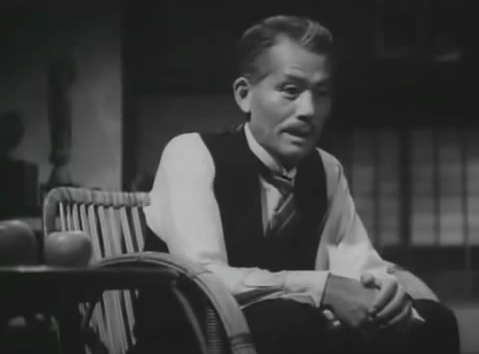
2. Chishū Ryū in Late Spring - Ryū gives such a remarkable modest performance that creates such naturalistic and downright heartbreaking depiction of a man quietly letting go of his daughter.

Best Scene: Peeling the apple.
1. David Farrar in The Small Back Room - Good Predictions Luke, Jackiboyz, RatedRStar and Michael McCarthy. Farrar gives an outstanding complex portrait of a brilliant man, yet one suffering from pain, doubt, and self-pity.

Best Scene: Tearing apart the room.
Update Overall

Next: Review of Juano Hernandez in Intruder in the Dust, and updated Supporting.

Alternate Best Actor 1949: Howard Vernon in Le Silence de la Mer

Howard Vernon did not receive Oscar nomination for portraying Lt. Werner von Ebrennac in Le Silence de la Mer.

Le Silence de la Mer is an intriguing film about a Nazi officer taking up residency in occupied France with a small French family who refuse to speak to him.

The film takes a unique approach for this story as the French family which consists of a man and his niece almost don't speak a single word in the film. Their thoughts are represented by the narration by the man. The only person we hear actively speaking within the house is the Nazi officer played by Howard Vernon. Now this is interesting in that when we open the film, and first see Vernon's Werner von Ebrennac he could easily be any Nazi from any villain stock room in terms of his appearance. This is not to say Vernon comes out all vile and mean to begin with, he begins the part with a bright smile as the man lets himself into the home of the family, though perhaps with just a bit of coldness as needed to be in his official role. The charming Nazi who reveals his vicious intents though is a common thing though, so one will sympathize with the French family at this early stage. The film continues though and in this Vernon's performance is technically the far less distant one as the family are very static characters, almost just part of the background in a way given that they do not speak. This is even with many scenes between the lieutenant and the family however in these scenes the soldier is the only one who speaks, but he's also the only one who attempts any interaction whatsoever.

After their particularly cold initial interactions the Lieutenant attempts to change it up by only visiting their sitting room in civilian clothes trying to speak to virtues of the French such as which author best represents the French spirit. There still is no real relationship however Vernon's performance is quite effective in portraying this man trying so hard to create one. Vernon beams in almost every moment projecting the enthusiasm of just a man who wants to engage in any conversation it does not need to be even an important one. In his words, and even the way he physically engages with the room itself has the right casual style to it. There's a real warmth within this method of man who essentially just wants to make friends, or at least wants to make some human connection yet the family is wholly resilient as they stay mute. As the one sided conversation continues Vernon portrays well the two sides of the man's interactions in that he keeps a real warmth in the man trying to make a connection, as every word is said as a friend not an invader, while at the same time, Vernon reveals within his eyes the growing bit of desperation and sadness as the result of trying so hard to connect yet seemingly failing to do so.

We are given scenes though with the lieutenant outside of the silent household, although these scenes are pretty sparse in terms of actual dialogue as well. What we do see is the man's connections to his duties as a Nazi in the way he interacts with France itself. In the earlier scenes in terms of speaking on his duties and the way he goes about admiring the conquered landmarks within France, Vernon expresses the attitude of a man proud of his endeavors. Vernon though is careful to portray this with a definite conviction, the conviction of a man who speaks in these grand platitudes, that he firmly believes, yet they are more fitting to a propaganda pamphlet than a wholly genuine experience. In the film though the lieutenant slowly learns of the real intentions of his armies, and again Vernon's reactionary work is essential to the power of the film. As his superiors speak of the intentions of the Nazis to destroy rather than build we see the similair desperation and hesitations as when he takes in the silence of the family. Although Vernon is the main speaker of the film even he does not speak a great deal and the arc of the officer is left often in those silent margins. Vernon finds though changes effectively to reveal slowly a reality dawning within the soldier, and that warmth dissolves in the solider, not that he becomes a hardhearted man, but rather he is moving by revealing a man who has come to understand everything he has known has been a lie. The film leaves on fittingly a silent yet poignant moment where the family interacts with the officer their only time, indirectly, by supporting his choice to leave France due to the Nazi intention. This communication is only through a passage in a book that they set up for the officer read, and Vernon's final reaction is remarkable as he realizes the somberness still of his situation, yet with just a bit of underlying joy of appreciation for the family. Howard Vernon's work, though the least limited in the film, is still fairly limited by the confines of the film's vision. Vernon though still excels well within those confines and is essential in discovering the emotional potency of the story through his humane depiction of a Nazi with a conscience.

Sunday, 24 September 2017

Alternate Best Actor 1949: Chishū Ryū in Late Spring

Chishū Ryū did not receive an Oscar nomination for portraying Shukichi Somiya in Late Spring.

Late Spring is a beautifully realized film about a young woman who is pressured to be married, but tries to stay with her father.

Chishū Ryū's performance as the older father, and professor Shukichi Somiya is a particularly understated one. This is notable though as a challenge in its own way though as it is needed for the tone of the film, but also for the nature of the character. What is remarkable about his work though is how effective it is despite how quiet it is. This is even more notable though because this isn't a performance as a character who is quietly in anguish or anything like that, not truly anyways. This is just a normal man living his life, that we get a window into after he has been widowed sometime before, and his adult daughter Noriko (Setsuko Hara) still lives with him in order to take care of him. Shukichi though is not ailing in any way we meet him just as he lives his life and still performs his duties as a professor. As we see him just sort of go about his day in his rather low key way fitting to a man of his position and age there's a certain charm to Ryū's performance. There isn't anything overt about this he just makes Skukichi this likable old man who expresses his personal knowledge without ego, just as modestly as you'd expect from someone who would rather share it, than brandish it in a way.

This performance though seems a challenge in a particular way in that as a performance it does not have the usual tenets of an inherently compelling performance. If I merely described what Ryū's does in the role, considering how unassuming he is, it may even sound boring, but it's not at all the case. This performance is an exceptional display again of what can be done in silence, and really in appealing to just a simply truth of a person. This is not to say Ryū's performance is even simple by any means, but rather what he does is capture the simplicity of life, but not in a simple way. The years of this man's life are within Ryū's performance that does not seem to have an acted moment within it. Ryū's work is genuine in every regard as you do just feel as though you are meeting the man living the life as he does, but how honest every scene is through his performance. It's interesting in the way he is very much engaging in this approach. He never wrongly acts out yet creates interest in this man by just always showing us to be an unmistakable person, with his own history, we are watching, never just some character created for the confines of this story.

The focus of the story is between the daughter and father. Ryū's and Hara's chemistry is essential to the film. Again it is an unassuming yet remarkable connection that the two realize in their scenes together. As in every moment of their interaction the years of tender affection between the two of them is an accepted if technically often unstated truth. The film focuses though as the father, in part due to pressures of friends and relatives, to attempt to apart his advice for his daughter to marry despite her wanting to stay with him. The original prodding by Shukichi to his daughter, might not seem especially important, yet they way Ryū plays these scenes is pivotal to the eventual end result of the film. Ryū's portrays no desire to rid himself of her, or a single bit of absentmindedness rather only the most sincere warmth as he suggests a potential suitor. Ryū importantly never depicts a pressure in Shukichi's suggestions but only the most earnest support for her. Ryū doesn't make these moments a father trying to force his daughter into anything she doesn't want, but trying to connect her with what he believes will allow her to find some happiness in her life.

The matter seems to become more difficult though when Noriko directly reveals her intention not to marry in order to take care of her father. Ryū's work is quite moving in the quiet reactions in this moment as he creates the sense of appreciation in the father, before the father tries to reject the notion by stating that he intends to remarry. Ryū places still only such a sincerity in his appeal to his daughter, as he does not show any intensity or bitterness in the idea of trying to get his daughter to leave. There is such genuine poignancy that Ryū finds in telling her to leave him and attempt to find her own happiness, because he makes this technical rejection of sorts filled with such heart and such a sense of the very real love the two have shared as father and daughter over the years. He eventually convinces her to be married, and this is where Ryū's performance took me off guard. Now I already thought he was incredibly effective in just giving this authentic modest portrayal of this man, but the extent of the power of this performance removed the floor out from under me in the final minutes of the film. In the final minutes Noriko is married leaving Shukichi to reveal to a friend that he was never going to remarry. Now the revelation of this lie is not a drop of the facade but rather merely a part of the truth of what we had seen of the man through Ryū's heartfelt performance. When he returns home alone for the first time living by himself, Ryū's is absolutely heartbreaking in revealing the loss of the man, the sadness that is in part of letting go. This again is no switch or anything like that. It is as authentic as the rest of his work, and that is what makes it so special in the revelation, though we really always knew it, that the father loved his daughter and will miss being with her. Ryū's work is outstanding as he creates such a eloquent and downright devastating portrait with such seemingly profound grace.

Thursday, 21 September 2017

Alternate Best Actor 1949: David Farrar in The Small Back Room

David Farrar did not receive an Oscar nomination for portraying Sammy Rice in The Small Back Room.

The Small Back Room is a terrific character study/thriller of sorts about a military scientist who deals with personal and professional issues while also attempting to figure out how to disarm a new mine dropped by German aircraft during World War II.

David Farrar returns to working with Powell and Pressburger after playing the rather cold yet still the object of some of the nuns' affection in Black Narcissus. Interestingly Farrar once again shares the screen with Kathleen Byron, this time playing Sammy's girlfriend/the secretary for his department Susan, thankfully this time both are in a much healthier relationship than the one found in their previous film together. Farrar's performance here though is a major departure from that earlier turn in more ways than that though. Farrar not only is the lead here, but the part allows him to create a far more intimate character for us to sympathize with whereas his role in Narcissus was purposefully distant. Farrar might as well be a different actor with how different his very presence here is compared to that earlier role. This is evident from his first scene where a military officer, Captain Dick Stewart (Michael Gough) goes to find Sammy in order to help him with the problem of an unusual mind that has caused several deaths of civilians. We find Sammy in a bar and Farrar's performance does have this certain charisma to it in this initial scene. It is a modest charisma which Farrar attaches carefully to when his expertise is called upon, as it is by the Captain, to help solve the problem, as Farrar finds this certain spark within the man in this moment. This is a pivotal factor that Farrar intelligently introduces that keeps a possible optimism within the character by giving a hope to the man as connected to this particular problem before we learn more about his personal problems.

Once the Captain leaves, and we are left with Sammy and Susan where in an instance any propriety for the guest is lost in Farrar's performance. Farrar is rather outstanding in this scene in revealing so much in very little time. In the moment Farrar drops putting up any facade, the facade only being though that he was hiding the burden of his pain from his artificial foot. Farrar is terrific in that moment of release not a release of comfort, but rather of letting his ache and discomfort out. Farrar goes further with this though in his first scene directly with Byron. The two have excellent chemistry together, which is rather notable considering their purposeful anti-chemistry found in their previous film together. That is not to say this is anything perfect though in terms of a relationship rather both Farrar and Byron are marvelous in the way they create this longstanding relationship between the two. In simply the way they look upon each other the love between the two is deeply felt even in silence. There is more though as Farrar in the moment reveals the sheer intensity of Sammy's vulnerability which he portrays towards Susan, that Farrar shows him looking for any sort of comfort from her. These moments though are particularly natural as the two fall into this state of Susan trying to offer any relief, while Sammy suffers, and both actors realize it as this way they've been for some time.

Farrar's performance is a captivating piece of work in the way he realizes essentially both the failure and potential of Sammy in every facet of his life. The ease Farrar and Byron have together is pivotal as the time they've been together is a given, but again this is not the two actors creating a fairy tale relationship. They do something far more remarkable though in creating the difficulty in the relationship despite keeping the mutual love for one another as unmistakable truth within it all. Farrar portrays that as a constant within his own work yet he compromises it in a certain way in portraying that the comfort she offers never quite assuages that physical pain. Farrar takes this further though in portraying this amplification of the pain by presenting this self-pity around the moments, showing it to be this almost constant burden on his mind. Farrar is very effective in his scenes with Byron around other company as in every glance and reaction to others, there is this inherent insecurity that Farrar finds. It's brilliantly portrayed in his performance though as he brings out of that pain and self-pity as this troubling mindset. Farrar finds that doubt that he exudes from himself that finds the way Sammy can't seem to help but doubt where or not Susan's love for him is completely earnest. Again what's so incredible about what Farrar does is he makes it this problematic thought that finds itself in his mind, that he shows that he almost tries to fight against, yet it can't help but poison his mind.

The fall back for most of Sammy's suffering both mental and physical is alcohol. This is a performance as an alcoholic however Farrar is careful in his approach in this regard. When he is drinking he does not attach any specific desire for the drink in itself so to speak. Farrar instead finds that in the moment of drinking he portrays rather the desire to drown out his suffering, though he's rather affecting in showing that Sammy never quite achieves that even at his drunkest. As a character study we see Sammy within his job as well where he deals with bureaucratic nonsense and his colleagues making decisions for the wrong reasons. Farrar in these scenes is once again terrific in finding the mindset of Sammy as his reactions in dealing with the other men is this quiet frustration and resignation. It is only when he's called to describe his feelings through his work itself that Farrar reveals so effectively a great strength and confidence in Sammy as it relates to the one thing he can be absolutely certain of, which is his intelligence. Farrar never plays the insufferable genius but rather reveals the suffering genius in quite the poignant fashion. Eventually his self pity leads to Susan leaving him, and we are given Sammy at his worst as he falls completely into his drinking while lashing out at everyone in a drunken stupor. This could be the time for some wild overacting, yet Farrar stays true to the character as he rightfully brings the messiness of the state yet since he does not overplay it he is very  moving in just revealing the ugliness of his inebriation and the severity of his anguish wrapped up in one. Sammy is given a chance for redemption though when he is called upon to solve the mystery of how to disarm one of the live mines. Now Farrar's approach to any scene where Sammy's expertise comes into play here as his sort of turnaround feels natural, since his assurance in that regard had been well established by Farrar before this point. Farrar does not forget what came before though as when he volunteers to disarm it himself in his eyes Farrar reflects this sort of bravery in part comes to his sadness towards the rest of his life. The disarmament is a fantastic scene and Farrar is a highlight of it. He helps to ratchet the tension not only because he's made us care for Sammy up to this point, but also in the moment he finds that certain fear in every moment, with every risky maneuver. Through the scene though Farrar naturally makes it a hopeful one by showing in every action the confidence of the man fully taking over, and the anguish fading away as he comes closer to a real undisputed success. I have to admit this performance took me a bit by surprise as this is a great performance by David Farrar. He creates such a vivid portrait of the troubled scientist never falling into cliche, but rather making the man's story truly resonate in powerful fashion.

Monday, 18 September 2017

Alternate Best Actor 1949: Toshiro Mifune in Stray Dog

Toshiro Mifune did not receive an Oscar nomination for portraying Detective Murakami in Stray Dog.

Well given that I've reviewed nearly every other leading turn by Toshiro Mifune under the guidance of Akira Kurosawa I thought I might as well cover one that I missed. Of course I previously reviewed him for this year for his work as a doctor who accidentally contracts syphilis in The Quiet Duel, where Mifune revealed his skill in a particularly internalized role, Stray Dog however is in some ways an encapsulation of so many of the elements that makes him my favorite actor. On the first is the very idea of his collaboration with Kurosawa which simply is the greatest between any actor and director in cinematic history. Their achievement together surpasses all others without question. This is abundantly obvious within this film particularly in the earliest scenes that are almost silent in a way as we follow Mifune's Detective Murakami as he goes undercover in order to find the black market operators who have his pistol that was stolen from him. Kurosawa features much of the detail of the environment of the city, however Mifune is never lost within this technique. Mifune's presence of course helps to prevent this yet in every moment we see him he effectively conveying what Murakami is going through as he either wanders the streets or tails a potential suspect. Mifune captures obviously the determination of the detective, yet also conveys the frustrations of the chase, and even a bit humor in the degree of awkwardness he portrays when finding a perpetrator. Mifune and Kurosawa amplify the scenes together, as Kurosawa grants the us the imagery, and Mifune offers that focal point that amplifies it so well.

Mifune of course is almost always kind of the individualist within even the communal society in  every Kurosawa film, which he's here too, but more on that later. This though is the pioneer of the buddy cop duo specifically the veteran detective, here Sato played by Takashi Shimura, and the rookie Mifune's Murakami. The film follows them as they work together to find the "stray dog" aka the man who has Murakami's gun that he's using to violently rob people. Again as much as Mifune stands out as a performer he is not a showboat in all reality and does not stand in the way of his co-stars. Mifune here has, once again, terrific chemistry with Takashi Shimura, this perhaps being their best collaboration in terms of their direct interactions. Mifune knows how to share a scene as does Shimura and the two of them develop naturally the relationship between the detective. They find the right dynamic in every regard with Shimura always emphasizing the wisdom of the old mentor, while Mifune emphases the youth and inexperience of Murakami. The two only amplify this further through the striking way they interact in every scene. I love the way they contrast with Shimura always so calm, yet with certain type of potential energy in the right way in portraying the way Sato deals with a crime, against Mifune who depicts that pent up urgency of a man who both has never solved a case before but has a desperate need to do so.

Now in that desperate need is where we get the really the crux of the character and as expected Mifune uses it to realize Murakami as a distinct man. In the opening scene we get just brief moment of the a cocky young man seemingly quite happy in his job as he does target practice. Mifune in that brief moment doesn't reveal him as this huge ego, but rather seemingly someone on the rise in his life. The loss of the gun causes that shift though and Mifune is terrific in revealing that shattered confidence that stems the early desperation in Murakami as he attempts to recover the weapon. When the gun gets into the wrong hands though, and his loss inadvertently causes death due to the violent man who bought it, Mifune naturally shifts the character again. Mifune brings such a powerful emotion within the case by keeping this underlying and so palatable shame within Murakami. Every time they hear news of an injury or death caused by the gun, Mifune is terrific in the way his reactions convey the immediate deep despair in Murakami as that shame rises to the surface once again. Mifune makes this facet of the character but does not allow it to overwhelm the role entirely as he delves deeper into Murakami all the while the investigation continues on. Within that there is a key facet to the character which is Murakami's relationship to the man they are trying to catch.

Murakami's association to the stray dog is not of any real association, but rather a connection in theoretical mutual experience as both were former soldiers from the war who came back to their normal lives with nothing to show for it. The experience of the war, something that Mifune had experienced in real life as well, is something innately in his performances as it can be found within his personal intensity as a performer even when he's not directly emotional. This provides such a depth within his work here as Murakami as within his approach there is an undeniable sense within his performance of technically a harsher life that was behind him though still haunts him to a certain extent. When Murakami speaks of the stray dog, and how he could have potentially gone his way of life given his similair circumstances, Mifune is outstanding in the way his eyes seem to look within to convey the way Murakami is examining his own pains from the past. This is a consistent factor that Mifune brilliantly realizes though is naturally eased within the story as Sato always counters that Murakami is indeed a better man. Mifune beautifully realizes within his work they idea of that thought that perpetuates throughout. Again Mifune even when not front and center never wastes a moment. In his moments with Shimura, when he presents an overt comfort towards the younger man, Mifune effectively portrays the slight ease yet not removal of these thoughts that are a burden to the man. One of the best moments within Mifune's performance though is almost silent when he listens to the stray dog's girlfriend defend his actions by essentially explaining his plight, which is no different than what Murakami went through. Mifune's reaction hold such power as he depicts Murakami's understanding that his choices made him a different man. Mifune when finally speaks is incredible because he does reveal sanctimony in verbalizing the different path, as there still is the sense of the shared suffering, yet now with the conviction that he was in the right. Again as much as this is accomplished portrayal of this man dealing with his shame from his current failure, and the demons of the past, he is also simply a great lead in this police procedural. Mifune is captivating to watch as he works the case in every respect in creating again that urgency, but also in every moment with Shimura the learning process as he sees the seasoned officer work. Mifune naturally builds towards the climax of the film which is amazing scene for him as he represents the strength of Murakami coming into his own as a detective yet also the direct underlying fear of the danger in the moment, but with emotional intensity of man knowing he is truly fighting for a just cause.  I've said before, but it's always worth saying, and I hope to have the pleasure of saying it again, which is this is a great performance by Toshiro Mifune. It's a turn that reveals just how effortless yet remarkable his collaboration with Kurosawa was as well as his ability to not only giving a mesmerizing performance to watch, but also one that wholly captures the complexities of his character.

Thursday, 14 September 2017

Alternate Best Actor 1949: Anton Walbrook in The Queen of Spades

Anton Walbrook did not receive an Oscar nomination for portraying Captain Herman Suvorin in The Queen of Spades.

The Queen of Spades has decent atmosphere and some great moments, though it perhaps has too much time between each of them, following the story of a Russian soldier going about a most unusual plan to win at cards.

The Austrian actor Anton Walbrook who perhaps made his international name through the films of Powell and Pressburger, here stars in perhaps less complex role as a Gothic villain. I must say the plan of Captain Herman Suvorin in this film is not exactly the most sensible even for a greedy louse. He goes about by first slowly seducing a Countess's ward in order to just get access to the Countess to demand to know basically how to supernaturally cheat at cards, because he read that she should know in a book, then use that knowledge against the rich officers he refuses to usually play cards with. Captain Suvorin has a serious not being able to see the forest for the trees problem, but I digress. As little as Suvorin's plan makes a whole lot of sense we get Walbrook here acting in as a highly unsympathetic rouge, there is more than a little entertainment to be found from this. In the first half of the film Walbrook is rather successful at being a slimy creep in his method of seduction, that involves very little passion just some random threats. Walbrook to his credit somehow makes it sort of work in his own style to this as he has this persuasive quality within his essentially pretty pathetic words. Walbrook never hides that the Captain is this terrible man yet he still fashions a convincing Lothario through his unique presence as actor. 

After making his way into the ward's mind though he gets to come in and threaten the Countess in order to learn her secrets. It is in this scene where we see Walbrook working up towards something in creating the vicious greed of Suvorin. This is but a warmup though when Suvorin using what he gained from the confrontation finally plays cards. Now this scene is where really is all that matters in regards to Walbrook's performance. Now to be sure Walbrook is pretty over the top here in his darting eyes, and the sheer almost drooling joy in his delivery every time he says "My win" or bets again. He's goes pretty hammy here to be sure, but I would be lying if I did not say I did not find him to be wildly entertaining in his portrayal of the mad greed of the Captain. Walbrook is a hoot throughout the scene in just going all in both literally and metaphorically as they play with Captain seemingly having supernatural help. Eventually though, given that this is a Gothic morality tale, the helps runs out leading to Suvorin losing everything. This thankfully gives us all some more of that very rare rather glorious, delicious, ham from Walbrook in his realization of the Captin's insane ramblings as he loses his mind after he loses the game. Anton Walbrook's performance is not this realization of this complex character it is rather creating essentially a straw man to be burned by the moral of the story basically. In this perhaps somewhat simplistic way Walbrook's work here is a success, it is not a great performance by any margin, however it is rather fun to watch.

Tuesday, 12 September 2017

Alternate Best Actor 1949: Robert Ryan in The Set-Up

Robert Ryan did not receive an Oscar nomination for portraying Bill "Stoker" Thompson in The Set-Up.

The Set-Up is a terrific film noir/boxing film that follows a boxing match where everyone is on the fix except for the man who's suppose to take the fall.

Robert Ryan is best known for playing heavies in supporting roles so it is interesting to see him here playing not only the lead but also one of the few characters who is not corrupt in the film. Early on we learn of the setup then we are introduced to Ryan's Stoker as he speaks to his wife Julie (Audrey Totter) before he goes off to fight. One only needs to look at Ryan to see that Stoker is an over the hill boxer as Ryan carries this certain underlying despair in his eyes. Stoker though wishes to fight and even speaks about the fight as a chance to potential greatness in the ring. Ryan is very moving as he carries that despair yet is convincing as Stoker makes such statements. Ryan does not depict this as lying to his wife, but rather unintentionally lying to himself. In his delivery Ryan doesn't invoke really a hope but rather this desperate need for a hope in every statement. Ryan reveals this man just trying to put himself in this optimistic mindset despite always reinforcing that underneath Stoker's feelings of doubt are probably as stronger if not stronger than his wife's. Ryan setups so effectively the state of Stoker before he goes to the arena to prepare, portraying just this man dangling on a thread trying so hard not to fall.

Now Robert Ryan is the lead in the film yet in a very specific manner as he acts as the focal point for what is Robert Wise's rather brilliant portrait of the whole atmosphere around the boxing ring. The film takes a great deal of time with Stoker as he awaits his own matches and watches the other boxers prepare to fight. Ryan makes the most out of every second in this largely reactionary performance. Ryan amplifies every other little snippet of a boxer's story through his performance, and in each of these we get a little more insight into Stoker's own life. In the womanizer coming off a victory, Ryan infuses Stoker with an intense distaste not exactly for the behavior rather reflecting his sorrow over his tense relationship with his wife. In the face of the few boxers who are up and comers Ryan finds this incredibly poignant moments as in his eyes you can see a bit of happiness for the men, as well as in the idea of success at all, but also again that sadness still underlines it as he seems to look at himself in the past when he still had an overt hope. This despair only becomes all the stronger though in watching another washed up boxer being beaten within his life. In every single one of these moments there is such a power to them because of how honestly realizes Stoker's investment in their stories since in some way they are like his own.

Eventually it becomes Stoker's turn for the match where we get one of the most powerfully realized boxing matches ever depicted in a fictional film. It is not quite typical though as we focus on almost everyone in the stadium in addition to having the drama right within the ring with Stoker taking on the younger smug boxer who is in on the fix. Ryan is terrific in this sequence, now Ryan a former amateur boxer is believable in terms of fighting, but he goes far further than that with his performance. Ryan portrays physically a certain type of fight as in every moment there is such an intensity in really the heart he brings in every punch, and every moment of facing his opponent straight on. Ryan in every strikes shows a man fighting for his life in a way finding this strength within still an emotional desperation. I love the fierceness in Ryan's his work suggesting Stoker lashing out against everyone and everything doubting him. When Stoker is told of the fix late in the round Ryan only goes further with this idea revealing such a disdain for the idea, and showing a man doing something for himself. When Stoker achieves knockout it is a great moment though as Ryan depicts physically the sheer exasperation of the fight, but also the instance of pride in a man who has had so few of them. Robert Ryan proves his measure in a leading role, technically against type, by delivering this marvelous bittersweet portrait of this boxer. He does not hesitate in revealing the severity of the desperation and vulnerability of the man, which in turn makes his few moments of happiness and hope deeply affecting.

Monday, 11 September 2017

Alternate Best Actor 1949

And the Nominees Were Not:

Anton Walbrook in The Queen of Spades

David Farrar in The Small Back Room

Robert Ryan in The Set-Up

Howard Vernon in Le Silence de La Mer

Chishū Ryū in Late Spring

And a Special Review of:
Toshiro Mifune in Stray Dog

Tuesday, 12 March 2013

Alternate Best Actor 1949: Results

5. Trevor Howard in The Passionate Friends- Howard has a limited role, and is overshadowed by a co-star, but he does handle his own role well through his charming performance.

Best Scene: Steven tries to defend his affair.
4. Takashi Shimura in Stray Dog- Shimura creates an effective portrait of a veteran detective effortlessly portraying his character's substantial wisdom, and ability.

Best Scene: Detective Sato manages a baseball game. 
3. Dennis Price in Kind Hearts and Coronets- Price meets the difficult challenge of finding the right tone for his film through his dry and thoroughly witty performance.

Best Scene: Louis defends himself in court. 
2. James Cagney in White Heat- Cagney plays his most evil role with a great deal of energy and he especially stands out when his character goes over the edge.

Best Scene: Cody finds out that his mother is dead.

1. Toshiro Mifune in The Quiet Duel- Good Prediction Mark. Toshiro Mifune gives an excellent performance as man who sacrifices his happiness to do the right thing. It is a powerful poignant performance that shows Mifune's ability to excel in both quiet and flamboyant roles.

Best Scene: The doctor finally breaks down. 
Overall Rank:
  1. Toshiro Mifune in Stray Dog
  2. Toshiro Mifune in The Quiet Duel
  3. David Farrar in The Small Back Room 
  4. Chishū Ryū in Late Spring
  5. James Cagney in White Heat
  6. Kirk Douglas in Champion
  7. Ray Milland in Alias Nick Beal 
  8. Dennis Price in Kind Hearts and Coronets
  9. Takashi Shimura in Stray Dog
  10. Van Heflin in Act of Violence
  11. Joseph Cotton in The Third Man 
  12. John Wayne in She Wore a Yellow Ribbon
  13. Robert Ryan in The Set-up 
  14. Burt Lancaster in Criss Cross
  15. Montgomery Clift in The Heiress 
  16. James Mason in Caught 
  17. Jean Gabin in The Walls of Malapaga
  18. Spencer Tracy in Adam's Rib
  19. Howard Vernon in Le Silence de la Mer
  20. Anton Walbrook in The Queen of Hearts 
  21. Cary Grant in I Was A Male War Bride 
  22. James Stewart in The Stratton Story
  23. Wendell Corey in Holiday Affair
  24. Robert Ryan in Caught
  25. Edward G. Robinson in House of Strangers
  26. Robert Mitchum in The Big Steal
  27. Trevor Howard in The Passionate Friends
  28. Van Johnson in Battleground
  29. Broderick Crawford in All The King's Men
  30. Robert Mitchum in Holiday Affair
  31. Thomas Mitchell in Alias Nick Beal
  32. Dana Andrews in My Foolish Heart
  33. Basil Radford in Whiskey Galore! 
  34. Richard Conte in House of Strangers
  35. Ronald Reagan in The Hasty Heart
  36. John Wayne in Sands of Iwo Jima
  37. Gregory Peck in Twelve O'Clock High
  38. Joseph Cotten in Under Capricorn
  39. Richard Todd in The Hasty Heart
  40. Gene Kelly in On the Town
  41. Frank Sinatra in On the Town
  42. Claude Jarman Jr. in Intruder in the Dust
  43. John Ireland in All the King's Men
  44. Michael Wilding in Under Capricorn
  45. Budd Abbott in Africa Screams
  46. Lou Costello in Africa Screams
  47. Victor Mature in Samson and Delilah
  48. David Brian in Intruder in the Dust
Next Year: 1949 Supporting

Alternate Best Actor 1949: Trevor Howard in The Passionate Friends

Trevor Howard did not receive an Oscar nomination for portraying Professor Steven Stratton in The Passionate Friends.

The Passionate Friends tells the usual story of two lovers who continue their passions far too long in their life without making a proper commitment. It is a well handled version of this story though particularly since it is directed by David Lean.

Trevor Howard portrays the man in the situation to Ann Todd's Mary who is the woman in the situation. Trevor Howard in this performance as Steven has a considerable charm in his portrayal. He and Todd don't have perfect chemistry due to Todd, but Howard is able to override this a bit with his performance. Howard handles this type of role well by not trying to make Steven some sort of rebel personality that entices Mary. Instead Howard honestly just makes Steven just a very charming, and fun loving fellow that makes it easy to see why Mary would be as taken with him as she is. 

Their problems arise at first though because Mary does not want to be married where Steven most certainly wants to be. Howard is quite good in his portrayal of the passion in Steven in this respect. He is genuine in making Steven a bit of a hopeless romantic. This type of character trait could have made Steven either seem dull or a dullard, but Howard's earnestness overcomes any problem that really could be associated with it. Howard makes this overwhelming aspect to Steven's personality work and he succeeds in showing why Mary would be both pulled in by as well as even pulled away with it due to his intensity for these feelings.

Eventually troubles arise as she leaves Steven and marries a wealthy older man Howard (Claude Rains), but they still carry on. Howard properly has that same enthusiasm in his performance to push forward to make the continued affair convincing. Howard's role is fairly straight forward except for a scene where he must more directly confront Mary's husband over the affair. Howard is good in this scene as well, showing the appropriate passion within Steven, and important showing that the love Steven feels is truthful even if not exactly the most well thought out idea either.

At the end of the film Steven moves on to another woman, and Howard plays this effectively though because he does not suggest Steven as a bad man for doing this. Instead he again shows Steven to be a genuine man who really just has a great deal of love to give more than anything else. It not that his current love is false or his past with Ann was false either instead Howard correctly portrays Steven as a true romantic. This is a nicely handled performance by Trevor Howard, even if the role is somewhat simple and there is another performance that you remember far more vividly from this film.

Alternate Best Actor 1949: Dennis Price in Kind Hearts and Coronets

Dennis Price did not receive an Oscar nomination for portraying Louis Mazzini in Kind Hearts and Coronets.

Kind Hearts and Coronets is an excellent dark comedy about the son of a disowned daughter of a Dukedom who plans to murder all the heirs in front of him in the D'Ascoyne family (all played by Alec Guinness).

Playing the lead of this film certainly is a challenge as Price must be the one really to create and maintain the tone goes by through his portrayal of the serial killer. Of course Louis Mazzini is not the standard psychopathic serial killer instead he kills as a process to meet his goal of becoming the Duke in spite of the D'Ascoyne's disowning his mother. Price finds the right tone here in a similar manner to the way Charlie Chaplin did for Monsieur Verdoux, although Price probably goes even more head first into the approach than Chaplin did. This approach being that of being incredibly dry in their portrayal.

Dennis Price is all about being dry here which works for Louis perfectly. To have Louis really sadistically enjoy the murders, or to even greatly be troubled by them would not work at all for the tone the film is looking for. Price doesn't either portray his as an every man hero for us to follow either, which also would not have worked for the tone either. Instead he takes the dry approach portraying Louis as a particularly cunning, and astute killer. He makes it so the murders are perhaps personal in a certain way, but for the most part they come off as a bit of a sport that any jolly old man from Britain might find quite agreeable to them.

Price hits just the right note with his portrayal of Louis which is really quite a cold portrayal in a certain way in terms of how he goes about the murders, and even how he goes about his romantic relations with a married childhood friend and the widow of one of the men he has murdered. He is cold which works for the black comedy that is present, but importantly he has just the right degree of wit in his portrayal. This never an obviously humorous portrayal of Louis, except his brief scenes at the beginning when he portrays Louis's Italian father, but a far more subtle ones found in his deadpan within character deliveries of his lines.

Price gives a fairly consistent performance here that is fitting of Louis who is steadfast in his desire to become Duke, and basically starts acting like the would be Duke even before he is one. There are variations to this such as when he is trying to get into the graces of one of his eventual victims or the women in his life. Price does not change all that much in demeanor just changes into slightly more welcoming in his behavior although his eyes always suggest that his mission is always on his mind even when he exchanges pleasantries with the people he intends to kill. This again works in favor of the film's very specific tone.

This is a strong performance by Dennis Price that stays constant in tone and style throughout the film. He keeps it dry, intelligent, and wit filled as the murderous Louis Mazzini. This absolutely works to the benefit of the film that has such a particular and difficult fashion of comedy found in the film. Price makes it all work through his effective and efficient performance that moves through the plot in a fantastic fashion. Honestly this was a performance that if it had been off at all, which would have been very easy to say the least, the whole film could have faltered. Price though succeeds entirely with the role, and in turn allows the film to succeed as well.

Sunday, 10 March 2013

Alternate Best Actor 1949: Toshiro Mifune in The Quiet Duel

Toshiro Mifune did not receive an Oscar nomination for portraying Dr. Kyoji Fujisaki in The Quiet Duel.

The Quiet Duel tells the story of a doctor who accidentally contracts Syphilis from a patient he was working on and refuses his bride to be because of his refusal to pass on the disease. This film is definitely melodramatic but Akira Kurosawa knows how to present this type of story in an effective fashion.

Watching this film now pretty much has secured Toshiro Mifune a place as one of my favorite actors. Although I loved his performances in Throne of Blood and the Seven Samurai which where each an incredible display of exactly how to handle a flamboyant and loud performance. It did leave me wondering if Mifune could be as successful as a quiet man as loud one. Well Mifune certainly takes on a different role here from the crazed wannabe samurai or the vicious ambitious general. Here he plays for all practical purposes just a pretty normal doctor who there is not anything particularly special about.

Mifune plays the doctor with a decidedly quiet approach which is a far cry in style from the later leading performances I have reviewed so far. At the beginning of the film we see the doctor as a hard working man who is just going about his duty which is to tirelessly treat those wounded from the war. During an operation on one soldier he accidentally nicks his finger on a scalpel and his finger is drenched with the blood of the man. Mifune is excellent in these scenes as the doctor inquires about the disease of the soldier. Mifune very much underplays the horror in the doctor as he finds out he has it. Mifune though makes it powerful by the way he shows the underlying horror in his subtle expression.

Mifune through the middle portion of the film stays consistent in his portrayal of the doctor who is such a good man that he refuses to pass on his disease, nor does he really directly express anger against the man who gave him this problem. Mifune as very effective in bringing to life the nobility of the doctor. He never makes it seem forced at all, he is able to achieve it naturally through his consistent approach as the doctor. He is entirely natural in his portrayal of the goodness of the doctor, and it really works because how unassuming Mifune plays it. He doesn't ever impress it really ever, but instead Toshiro Mifune brings it inward through his portrayal as something that is a quiet determination.

The central power of the film lies in the sacrifice that the doctor makes to stay as a descent person no matter how much he will suffer. Mifune brings the weight through the intensity of his performance which is just incredible to watch through the way he redirects in an internal rather than an external fashion here. He conveys the passion of the doctor to do the right thing so powerfully. He makes this determination vivid and always remarkable particularly in his scenes where he is forced to openly discuss why he refuses to marry the woman he loves. Mifune is excellent in these scenes showing the pains and sorrow in his eyes well making it clear that he is repressing a ocean of emotions to keep himself together as he rejects happiness.

Mifune keeps his performance very much like a dormant volcano as, yet manages to pull out the emotional strength of each and every scene he appears in the film. He builds on this repression beautifully to one scene late in the film when he is pressured to talk about his true feelings and they finally come out full force. Mifune is magnificent in this scene. He absolutely earns the moment through the restraint shown before, as well as the fact his expression here is still reserved to a degree so it is fitting for the doctor. Mifune is absolutely heartbreaking in this scene as he portrays the full extent of the damage that the doctor has suffered. It is a very moving moment as we see a man who has never complained before about his lot finally truly open up.

This is a great performance by Mifune and it is especially stunning when compared to his later more flamboyant work. Mifune, like all of the greats, proves himself adept at both being expressive outwardly and inwardly. He proves himself capable of being just as compelling as a doctor with such a small scale human struggle as he was in an epic struggle between good and evil in the Seven Samurai. He makes the doctor an effective lead with a measured charm, and an appropriate passion that makes his struggle believable. This is a terrific performance that creates this low key struggle beautifully in his performance and manages to avoid the stilted quality so common in lesser melodramas.

Saturday, 9 March 2013

Alternate Best Actor 1949: James Cagney in White Heat

James Cagney did not receive an Oscar nomination for portraying Arthur "Cody" Jarrett in White Heat.

White Heat is a pretty effective crime thriller about an undercover cop (Edmond O'Brien) who attempts to bring down a psychotic criminal and his gang.

James Cagney is obviously no stranger to the gangster genre. He played a whole slew of criminals throughout his career. There is a difference here than compared to many other of his criminals and that is with the nature of Jarrett. Where in Angles With Dirty Faces he played a bad guy who had a soft spot somewhere down there. In White Heat Jarrett is someone rotten down to the core. Even something that could seem like a soft spot such as the closeness to his mother seems more disturbing that anything else. This is probably the evilest character Cagney ever played despite having played so many violent characters in his career. 

In Angles With Dirty Faces Cagney would go from a somewhat charming fellow but fall into the role of the menacing criminal when necessary. Cagney as Jarrett though never has the vicious criminal go away. He makes Cody as a constantly violent man, and his variation is that of becoming worse. He is on the edge to begin with, and Cagney plays it that the only place Cody can go is off the edge. Cagney takes this specific way of portraying of Cody and goes all the way with it. He never lets up on the menace with Cody here and that works. In the scenes where Cody is with his wife Cagney stays true to the character never letting up on the idea that Cody could just snap from the slightest thing.

This was that Cagney takes with Cody absolutely works in making him an effective, and importantly unpredictable villain. It is quite interesting to see Cagney to play a character of this all the way, and not hold back at all. Cagney is always good at being the villain because he always manages to be quite energetic in his evil, and here he has the same sort of appropriate fun in his portrayal. He puts a great deal of glee in his evil as Cody. He makes this portrayal memorable and it stands aside from his other performances of his somewhat similar characters by just how far he goes with his intensity and insanity here that really works in making Cody a memorable villain.

The highlights of Cagney's performance comes in the moments where the already psychotic Cody snaps. The first time it occurs when he is told that his mother is dead. Cagney is great in the scene as he shows Cody break down mentally, and physically in a fit of anger and heartbreak. It is a very powerful moment, and Cagney successfully shows the only place Cody really has left to go. The other time this occurs is at the very end of the film and this almost animal side of Cody comes out again when he is backed into a corner. Again Cagney is excellent showing the insanity of Cody fully that leaves without any sort restrains left leaving him truly deranged. It is incredible end to his performance that expresses his character's lunacy in one final extreme burst.

This is a very strong performance by Cagney particularly because the most expressive moments are actually his best. The reason these scenes work so well, besides the fact that Cagney just is fascinating to watch in them, is that he builds to them properly through his tense performance as Cody the rest of the film. Cagney really succeeds well with his performance here as Cody Jarrett. It is particularly remarkable the way Cagney makes Cody such a unique memorable character all in his own right despite playing so many similar characters. Cagney manages to do this so well by finding what makes Cody different from those other characters, and expressing theses differences brilliantly. Cagney honestly makes this film with his terrific villainous turn.

Friday, 8 March 2013

Alternate Best Actor 1949: Takashi Shimura in Stray Dog

Takashi Shimura did not receive an Oscar nomination for portraying Detective Sato in Stray Dog.

Stray Dog is a very effective crime film about a rookie detective Murakami, and a veteran detective who team up to find the crook who has been using the rookie's recently stolen gun.

I actually could have once again nominated Toshiro Mifune in the role of the rookie Murakami. Mifune is again very effective in his role, and with each film I see of his the more he moves up my list of favorite actors. Anyway I chose though instead to review his somewhat frequent co-star Takashi Shimura who plays the veteran detective to Mifune's rookie. Shimura actually takes a little bit to appear as the film at first only follows Murakami's investigation to find the gun peddlers who stole his gun. After he does this we first see Shimura as the experienced detective, who takes on the case as well as takes Murakami under his wing. In the first scene we see the inherit difference between the two men where Mifune plays up the inexperience and emotions of Murakami, Shimura takes a more gentle approach with detective Sato.

In his first scene we see Sato interrogating the gun peddlar woman. It is clear that Murakami intends to forcefully get the information out, but when he gets that she is laughing comfortably well eating with Sato. Shimura is quite good in portraying the detective's technique here as a man with a long experience in his trade, therefore he handles this type of subject with slow manuevered inquiring rather than blunt questioning. Shimura handles it well by showing that Sato appraoch is an effective one in that he keeps both the prisoner at ease and relaxed well he does have that inquiring touch to get the information he wants. Shimura makes the fashion that Sato handles this entirely believable that Sato would handle a suspect this way, but also that he would get exactly what he desired from the witness.

Shimura makes Sato a true veteran in the whole film. He is very good by showing that what transpires in the investigation never surprises him in the way it does Murakami. Shimura shows the history of the detective simply through his relaxed manner of dealing with the crimes that go on. It is not that Sato does not care by any means, but rather Shimura effectively establishes that it is a job he knows so well that he simply will not have to sweat out the problems of the street as he has been fully aware of them for quite some time. It is a nicely handled portrayal as he finds the right tone for Sato who is so astute as a detective that he can go about his job as a detective the way other people would not even go about considerably less stressful positions. Shimura never goes too far with this as he always has the right undercurrent of seriousness and inquisitiveness in him along with his more casual manner.

This is a very early example of the vetran cop/rookie cop dynamic and Mifune and Shimura handle it especially well together. These two are unique as despite their tasks being quite different they are never really in conflict with one another. Shimura is very good adding a great deal of warmth to the relationship between the two. When Mifune portrays Murakami gettting angry over the crimes or greatly troubled by them Shimura always nicely combats it with his portrayal of Shimura's calm wisdom when it comes to crime. Where Murakami is rather conflicted in his philosophy Sato is firm. Shimura is excellent in the way he brings out this wisdom which he expresses so well as coming from the history of Sato as a cop. When Shimura basically shuts up a stressed out Murakami Shimura is great because he never does it with force but rather in a truly comforting fashion as a father would do for a son.

Takashi Shimura is very good throughout the film effectively bringing to life the wisdom and experience of his character to life. He and Mifune make the dynamic work perfectly and naturally ease into the mentor/student to a mutual friendship that is both believable and very moving when something happens to one of them late in the film. This is a strong performance by Takashi Shimura and simply fascinating the way he shows the much more firm view that Sato takes on morality. He makes the harsher stance that Sato takes on criminals really work because he conveys his feelings as something entirely genuine and something that comes from the fact that he has seen a truly great number of crimes in his lifetime. This is a very good performance by Shimura as he creates this character all the while moving through the film's plot.

Wednesday, 6 March 2013

Alternate Best Actor 1949

And The Nominees Were Not:

Takashi Shimura in Stray Dog

Toshiro Mifune in The Quiet Duel

James Cagney in White Heat

Dennis Price in Kind Hearts and Coronets

Trevor Howard in The Passionate Friends