Sunday, 18 October 2020
Alternate Best Actor 1944: Results
Wednesday, 14 October 2020
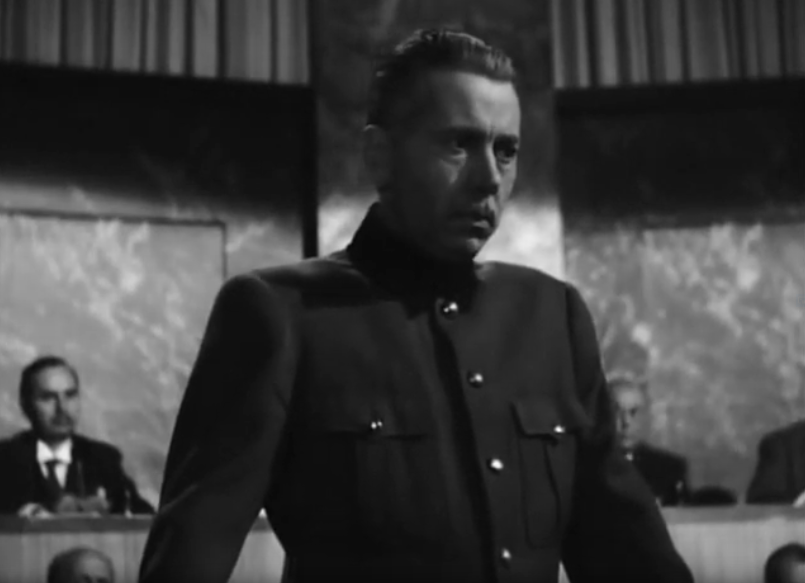
Alternate Best Actor 1944: Alexander Knox in None Shall Escape
Friday, 9 October 2020
Alternate Best Actor 1944: Dick Powell in Murder, My Sweet
Dick Powell did not receive an Oscar nomination for portraying Phillip Marlowe in Murder, My Sweet.
Saturday, 3 October 2020
Alternate Best Actor 1944: Laird Cregar in The Lodger
The Lodger is one of the many adaptations of the Jack the Ripper inspired story of a mysterious man taking residence in the upstairs of a London home.
Sunday, 27 September 2020
Alternate Best Actor 1944: Errol Flynn in Uncertain Glory
Errol Flynn did not receive an Oscar nomination for portraying Jean Picard in Uncertain Glory.
Uncertain Glory is a better than average patriotic piece, which were so common in this period, here about a career criminal who decides to take the fall for a French saboteur during world war 2 rather than face the guillotine for his crimes.I'll admit this performance is big reason I decided to do the lineup as I felt I had to review this turn from Flynn as it is so atypical for him in a lot of ways. Although Flynn often played a lot of charming pseudo rogue we always knew they were heroes at heart from the outset. Although this character might get to that point eventually, we get a side from Flynn entirely different from his typical presence. This as the film opens with his Picard awaiting execution where we first meet him as he refuses to shave his neck for the guillotine. Flynn's snap delivery in the refusal grants a surprising intensity from the performer who typically granted a more light weight approach to his roles. Here though Flynn shows a real bitterness within the man's manner with his eyes filled with a hate for his captors, and a general derision that he naturally exudes. An ideally time bombing raid though allows Picard to escape, where again we find Flynn in unlikely waters as he finds the home of an old friend. here though Flynn plays into his usual charm however now weaponized towards a wholly different sort of man. This with his easy going manner played within a different light. Flynn is genuinely charming of course with his always dynamic presence, however his eyes grant it a different quality. There's a sneering menace even in his calm delivery as threatens his friend, while smiling. This though only followed as seduces his friend's girlfriend. Flynn of course convincing in the ease of this, but even more so remarkable here though in the devious cunning he grants the moment. Flynn not easing on the edges of the role but rather embracing the man of Picard as a truly despicable sort.
His escape is short lived though as he is quickly caught dogged Inspector Bonet (Paul Lukas), who intends to take him back to be executed. Even in this it is interesting to see Flynn approach these scenes with a wry sort of cynicism that is quite different from his usual optimistic heroes. The thing is though Flynn wholly pulls it off here and grants an effective dynamic between himself and Lukas, who is also quite good in portraying his character's blunt righteousness. The two though are given a strange opportunity when they hear that the occupying Nazis intend to kill 100 random French unless a recent saboteur exposes himself first. Flynn's terrific in hearing this news as he suggests the idea that he take the place preferring the firing squad over guillotine as a form of death. Flynn doesn't play this as a sudden change of heart, rather layers it on top with a soft delivery of suggesting some virtue in Picard but only to try to convince Bonet in the moment. Flynn still has the slick glint in his eyes of a man trying really anything to give himself opportunities to escape his likely fate. This leads the two towards a small French town to await and prepare Picard to turn himself in for his false crime in order to atone for his real ones. Here Flynn broaches more typical material for him, as we see a minor romance, and really opportunities for him to be more overtly charming.
Flynn though doesn't excuse his character in these scenes and doesn't suddenly shift his performance. He tempers his work towards a more insulated charm of a man with a constant secret alluding towards the man's criminal element even as he seems to change. As this goes on though there is no quick shift here actually for Flynn's performance, which is remarkable. Flynn I often found most struggled with the most purely earnest moments of selling a philosophy in his other performances, like selling the virtues of King Richard in Robin Hood for example, but he does great with them here. One of the big reasons being he wholly changes his typical approach. This as we get a scene where he has convinced Bonet that he's changed to some degree and explains it. It is with a nearly passive tone of a man recognizing his faults. This though instantly subverted a moment later where Flynn unabashedly grins showing Picard's "confession" to Bonet being no more than a lie in an attempt to escape any type of execution. Nonetheless a series of events still wear down on Picard to eventually change his mind for real, but what is great here is how Flynn plays the scene of the true change against the false. This as Flynn goes on almost an attack of explaining the whole idea of the virtues of the saboteur with the viciousness of his earliest scenes. This in a way showing the man being honestly himself even when speaking a new truth to himself. This scene presenting the man convincing himself through essentially a realization of a hatred of himself. Flynn realizing the transformation of his character with a quiet power and artfully avoiding the typical pitfalls one finds in his work. This is a wholly different performance from Flynn utilizing his virtues as a performer but through another, even more dynamic, lens.
Saturday, 26 September 2020
Alternate Best Actor 1944
And the Nominees Were Not:
Friday, 18 October 2013
Alternate Best Actor 1944: Results
Best Scene: The "hero" tells the truth.
4. Peter Lorre in The Mask of Dimitrios- Lorre really does not have a character so it is to his testament that he still gives an effective and enjoyable performance.
Best Scene: Cornelius finds the smuggler in his room.
3. Ray Milland in Ministry of Fear- Milland leads this thriller effectively throughout and delivers when needing to delve in his character's dark background.
Best Scene: Stephen tells about how he murdered his wife.
2. Edward G. Robinson in The Woman in the Window- Robinson gives a subdued and effective performance as the lead in a noir who is frankly to old for a noir.
Best Scene: The professor tries to come up with a way to kill a blackmailer.
1. Fred MacMurray in Double Indemnity- Good Prediction Michael Patison, JackiBoyz, RatedRStar and moviefilm. (I should note I allowed the correct prediction apply in terms of Milland whether your prediction correctly placed him for The Uninvited or Ministry of Fear) MacMurray wins this year without a second thought as his portrayal of the insurance salesman whose lusts get the better for him stands easily as the strongest leading performance of the year.
Best Scene: Keyes lights the match of Neff.
Overall Rank:
- Fred MacMurray in Double Indemnity
- Laird Cregar in The Lodger
- Laurence Olivier in Henry V
- Charles Boyer in Gaslight
- Alexander Knox in None Shall Escape
- Alexander Knox in Wilson
- Edward G. Robinson in The Woman in the Window
- Ray Milland in Ministry of Fear
- Claude Rains in Mr. Skeffington
- Errol Flynn in Uncertain Glory
- Charles Laughton in The Suspect
- Gregory Peck in The Keys to the Kingdom
- Humphrey Bogart in To Have and Have Not
- Dick Powell in Murder, My Sweet
- Robert Newton in This Happy Breed
- William Powell in The Thin Man Goes Home
- Fredric March in The Adventures of Mark Twain
- Alf Kjellin in Torment
- Paul Lukas in Uncertain Glory
- Charles Vanel in Le Ciel Est à Vous
- Van Johnson in Thirty Seconds Over Tokyo
- Peter Lorre in The Mask of Dimitrios
- Ray Milland in The Uninvited
- Eddie Bracken in Hail the Conquering Hero
- Pedro Armendariz in Maria Candelaria
- Dana Andrews in Laura
- Ray Milland in Till We Meet Again
- John Carradine in Bluebeard
- Luciano De Ambrosis in The Children Are Watching Us
- Nikolai Cherkasov in Ivan The Terrible Part I
- Dennis Price in A Canterbury Tale
- Cary Grant in Arsenic and Old Lace
- Clive Brook in On Approval
- Ronald Culver in On Approval
- George Sanders in The Lodger
- John Sweet in A Canterbury Tale
- Spencer Tracy in The Seventh Cross
- Bing Crosby in Going My Way
- Cary Grant in None but the Lonely Heart
- Mickey Rooney in National Velvet
- Robert Young in The Canterville Ghost
- Walter Pidgeon in Mrs. Parkington
- Zachary Scott in The Mask of Dimitrios
Alternate Best Actor 1944: Eddie Bracken in The Miracle of Morgan's Creek
Both of the Preston Sturges comedies of 1944 are both very entertaining films with Hail the Conquering Hero about a man who could not get into the marines being made a false hero by a group of real marines, and The Miracle of Morgan's Creek about a small town girl who finds herself married and pregnant to a man she can't even remember the father's name.
Eddie Bracken plays the lead to both films and in both films he plays a sad sack who is unable to make it in the military due to failing the physical examine. The performances are similar in nature but differ in that his performance as Woodrow Truesmith is a bit more serious as Woodrow is a smarter sad sack, and his performance as Norval Jones is more directly comedic as Norval is a not particularly bright sad sack. Both find themselves in absurdest situations who don't really know how to handle them although, except for the ending to Hail the Conquering Hero, Norval is allowed just a little more control in them giving frankly some more space for comedic moments.
Out of the two performances I would say I prefer The Miracle of Morgan's Creek because of the nature of the performance being just simply funnier. Bracken is good in Hail the Conquering Hero though as well and does deliver particularly well with the dramatic final speech in the film. The Miracle of Morgan's Creek simply gives Bracken more opportunities to be funny in the film. Eddie Bracken plays the role of the somewhat whiny rather wimpy semi-romantic lead. This sorta part can often be a rather obnoxious character to say the last, but frankly Eddie Bracken is quite a master of this type of role as shown in Hail and even more so in The Miracle of Morgan's Creek.
Bracken is an easy charm as Norval and rather then the less then positive qualities of Norval being obnoxious in anyway they actually are all made rather endearing by Bracken energetic performance. Eddie Bracken manages never to go overboard with his portrayal of Norval even if the character behavior is rather absurdest to say the least. Bracken fits the screwball atmosphere perfectly and makes the most of every single comedic moment he has in the film. His physical timing could not be timing and every pratfall and slapstick moment is carried quite beautifully by Bracken throughout the film.
Eddie Bracken performance is simply a great fit for Preston Sturges's brand of comedy and in both of those films Bracken makes a most unusual but rather enjoyable protagonist to follow through the insanity of the story. Bracken performance goes along with every beat of the story and through his reactions adds greatly to the comedic value of every scene. I just found Bracken performance to be a very funny performance that leads both The Miracle of Morgan's Creek and Hail the Conquering Hero splendidly. Although even more splendidly when it comes to The Miracle of Morgan's Creek.
Thursday, 17 October 2013
Alternate Best Actor 1944: Fred MacMurray in Double Indemnity
Double Indemnity is a masterful film noir by Billy Wilder about an insurance salesman who conspires with a femme fatale to murder her husband for the insurance money.
1944 is one year I would like to know who exactly was sixth place in the voting and whose spot was taken for Barry Fitzgerald's extra nomination. I would have to imagine it was MacMurray as, in terms of nominations, Double Indemnity was quite popular with the academy and the leading actor of every other best picture nominee was represented with Going My Way being represented twice. Also the academy did nominated Charles Boyer for playing a somewhat similar character, although maybe they preferred him over MacMurray because Boyer played an eloquent murderer rather then an average sorta guy one.
Fred MacMurray, although really is best known for this role today, was an actor who mostly played the lead in lighthearted comedies. Of course something rather interesting is, other then Alice Adams, every time he was in a film which was nominated for best picture he played a dark villainous roles. This role is the most notable of all of his as he plays the lead to Double Indemnity as Walter Neff an everyday insurance salesman who happens upon a most unusual woman in Phyllis Dietrichson (Barbara Stanwyck), who seems a bit too interested in a life insurance policy for her uncaring husband. There is nothing special about Neff other then he notices the indications Phyllis is making.
Fred MacMurray is perfectly cast in this role and acts well as perhaps the any man who might find himself with such a temptation. MacMurray is great in the scene where Neff and Phyllis first meet as we see the instant charge in Neff's eyes as he first lays them upon her. MacMurray is terrific in playing ow smitten Neff is and the obvious lust in him that only becomes more extreme as he spends more time with her. The believability of Neff's rather swift descent into the dark depths of a murder plot are made wholly believable by MacMurray performance as he shows Neff to be almost entranced by Phyllis and portrays incredibly well the strong urges in Neff.
One of the great aspects of this film is the rather peculiar chemistry that MacMurray and Barbara Stanwyck have in this film. Each take on a different style that creates a rather fascinating dynamic between the two characters. MacMurray, although playing a murdering, does play Neff as a man with a soul even if that soul is up for grabs. Stanwyck on the other hand plays Phyllis Dietrichson as soulless monster although one capable of a false affection if it serves her nefarious purposes. MacMurray gets played well Stanwyck does the playing and it their performance get down to the plain and simple depths of the relationship where Neff is blinded by her worldly wiles.
A rather funny thing about the film, and part of its greatness, is that the only relationship with any warmth is actually between Walter Neff and his co-worker and insurance investigator Barton Keyes played by Edward G. Robinson. Their banter is oddly enough the heart of the film as their friendship is the only purely honest one, in terms of emotions, in the film. MacMurray is great in all of his scenes with Robinson showing Neff as how he really should have been in his friendly banter with Robinson. The person Neff says "I love you too" to isn't Phyllis but rather Keyes, and that sound all ready for a bad joke but it absolutely works especially their final poignant moments together where they both show just how much their friendship really did mean.
MacMurray plays Neff rather effectively as an intelligent fool. Although Neff does go through with the scheme of murdering the husband and foolishly thinks that he can one get away with it and two trust the duplicitous Phyllis, he does have a plan and how to attempt to handle everything. MacMurray finds this contradiction quite well by mixing in the sides of Neff. On one side there is the far more calculating Neff who thinks about the plan and MacMurray suggests Neff's intimate knowledge of the insurance game well. On the other side though MacMurray also presents a more emotional Neff that is underlying at all times whether it be showing his conscience or simply his desire for Phyllis Dietrichson.
MacMurray is outstanding in any of the scenes where Neff has to intimate part of the plan or deal with any of the accusations from Keyes. MacMurray is terrific in showing all the anxiousness in the man, all the fear and unpleasantness of it all. MacMurray is so good because he plays all of these scenes so straight and in doing so represents how an average man would react through the film. The intensity of every scene is amplified by MacMurray direct approach. Every little moment is given the emphasis needed and something as simple as a car failing to start has an overwhelming tension because of MacMurray's exceptional portrayal of Neff's anxiety.
It is ridiculous that Fred MacMurray was not nominated for one thing Barry Fitzgerald did not need to have two nominations for literally the same exact performance and even more so MacMurray work is essential to the greatness of Double Indemnity. Although one can easily point out one of the two other most important roles as the standouts in this, it is MacMurray's great work that holds it all together. MacMurray is the driving force throughout the film. MacMurray matches brilliantly both the technically showier work of Stanwyck and Robinson and his delivery of the narration helps to set the perfect tone of the film. Even more so then all that MacMurray simply gives a compelling and very powerful portrait of one man's moral decline all the way to the bitter end.
Alternate Best Actor 1944: Edward G. Robinson in The Woman in the Window
The Woman in the Window is a pretty effective film noir although it certainly has a take or leave it ending twist.
Edward G. Robinson plays a rather different role from his best known performances as gangster like his great work in Little Caesar, as well as this is just a very different role in terms of leading a film noir. Robinson plays a rather low key lead as an aging college professor who we meet when he is having a quiet mid life crises. It is interesting to see Robinson in such a humble role after seeing him succeed so well in the very intense and flamboyant roles in film like Little Caesar and Key Largo. It is no surprise though to see Robinson take on this role which he plays with a great sensitivity particularly early on as he sets up the character of Professor Wanley.
Robinson does not overplay the state Wanley's in too much, and at the beginning of the film plays him as a man very quietly going through this crisis. Robinson portrays it as something Wanley thinks about and is somewhat dreary about but not something that making him obsessive or manic in anyway. Robinson is very good in showing a rather reasonable man being a bit somber about things. Wanley's life is just fine as Robinson plays it but there is just the right amount of boredom suggested by Robinson that gives Wanley the little bit of motivation needed for him to take the path that brings him down the film noir.
Wanley by chance meets a woman used as a model for the portrait and he goes to have drinks with her. Robinson still stays fairly unassuming even as Wanley is going out of his element. What Robinson does do is show Wanley lose that bit of boredom in his voice as he speaks with the young lady. Things quickly go out of hand though when another man appears who quickly attacks Wanley leaving Wanley no other choice but to kill the man in self defense. Wanley know is firmly in the film noir plot with no where to go but deeper into things and here Robinson makes for a very different lead for such a tale.
Robinson is really quite interesting and original in his performance because rather then show a whole new level of excitement as Wanley gets involved in a murder investigation and blackmail, which is often the case with noir leads, Robinson portrays Wanley plain and simply as a man who is too old to be involved in such things. Early on Robinson is very good showing the sheer disbelief at the situation in Wanley over what just happened. Robinson internalizes the crises in Wanley effectively portraying basically how a level headed wiser man would handle such a situation, well a wise man who is not wise enough to call the police and just explain things of course.
What Robinson does more then anything in this role is stay believable as this seasoned professor. This makes for a most unusual protagonist for this plot but quite a compelling one in the different take on the proceedings that we get from it. When Wanley keeps tripping up in front of investigators Robinson makes it the simple very natural mistakes of a man who can't live such life. The best part comes when Wanley needs to dispose of a black mailer. Robinson is actually quite moving in his portrayal of Wanley honestly just trying his best to fix things but he always makes it abundantly clear that this life fits him so poorly that even coming up with the murder method causes him great exhaustion and grief.
The film does not end with Wanley end rather instead with a completely out of left field development that certainly messes with the tone of the picture. It is quite the unnecessary absurdest twist much like the one later seen in 1987's No Way Out, since just like that later film this one easily could have just ended without the twist. To the great great credit of Robinson he plays along with the twist quite smoothly which is quite something considering how extreme the twist is. Robinson plays it well though giving the ending a nice comedic edge as he portrays rather simply but to the point how the plot of the film has basically made Wanley learn his lesson about staring too long at the Woman in the Window.
Wednesday, 16 October 2013
Alternate Best Actor 1944: Peter Lorre in The Mask of Dimitrios
The Mask of Dimitrious is a decent enough mystery film about a mystery novel writer who teams up with a smuggler (Sydney Greenstreet) to find out what really happened to a notorious crook named Dimitrios.
This one is a strange one in that Peter Lorre and Sydney Greenstreet, instead of hounding Humphrey Bogart, actually team up to find out what happened to an evil criminal. Lorre actually plays the hero of sorts to the film as a mystery writer who, due to curiosity, starts trying to find out more of the criminal after seeing the man's apparent corpse. The reason I only say this is a decent enough mystery actually is that there is not enough of Lorre's search for the truth and too much of the flashbacks that show what Dimitrios was doing before the start of the film. Those scenes frankly just aren't that interesting particularly, and it is not helped by the fact neither Lorre nor Greenstreet appear in them.
Lorre's role here is rather strange one in that the writer Cornelius is always an observer of the events and only really gets involved directly with the turn of events at the very end of the film when he has to fight for his life. Before that point Cornelius goes along from place to place checking out various clues while being somewhat perplexed by Greenstreet's character who is a man who clearly knows more then he says as well seems to go by many names. Lorre's role is quite simplistic in nature and in terms of conception the story of Dimitrious should be far more interesting but it is a strong testament to Lorre's talent that he steals the film anyway.
It's funny that Lorre played so many villains so well because he is able to be such a charming fellow with such an innate likability. Lorre is just fun to be around with in this film and things are only helped once Sydney Greenstreet shows up. It is no surprise that Greenstreet and Lorre were in so many films together as they just have some great chemistry together. The two are quite brilliant at making the dialogue sing especially well giving their scenes together a wonderful life to them something that is sorely missing from the scenes without them. Lorre and Greenstreet are just terrific to watch to see them go along through the plot where they are able to bring the humor almost just through the style of their back and fourths.
Honestly this is not really much of a role in any way shape or form. Cornelius doesn't really have a back story, his motivation for getting involved in the plot is fairly weak, and he really doesn't have very much even to do. None of that matters though because Peter Lorre is in the role and that is apparently all it takes for the role to be rather interesting. Peter Lorre is incredibly enjoyable to be around so to speak and he makes it fun to go through the plot of the film with him. It is unfortunate that the part has absolutely no meat to it and would be just one big nothing if it were not for Lorre. This is not a great performance by Peter Lorre but it is a great example of a great actor doing something with almost nothing.
Alternate Best Actor 1944: Ray Milland in Ministry of Fear
Ministry of Fear is an effective thriller about a man who accidentally stumbles upon a Nazi espionage scheme.
The last two times I have reviewed Ray Milland was for his fiendish performance in Dial M For Murder and his harrowing performance as an alcoholic writer in The Lost Weekend. Milland's performance in this film and to an even greater extent in the haunted house film The Uninvited gives what can be viewed as a more traditional leading man turn by Milland. I chose Ministry of Fear out of the two performances though because it does present a little more of a challenge for Milland, although both films are examples of Milland's abilities in playing a fairly straight forward role.
Milland is quite good in both roles having a real ease in the parts and is quite able to have just a natural charm opposed to that brilliantly slimy charm that he had later in Dial M for Murder. Milland work here reminds me of Robert Donat's work in 39 Steps. Although there is a far lesser emphasis on humor, as this is not a Hitchcock thriller, when there is a chance to lighten things up a bit Milland is always able to pull off quite smoothy and never compromises the more the serious tone of the film.
Both the Uninvited and Ministry of Fear relies largely on Milland to carry the film often without even having a great deal to say. Milland though has a very strong screen presence and with great ease acts as a guide for us to follow through the plots of both films. Milland is always able to add just the right weight to any scene whether it is finding one more double cross set by Nazis or witnessing the howls of the ghostly specter. Milland is always able to assert himself just enough, to allow the story to play out as it should while keeping the audience invested in his character too.
I did choose Ministry of Fear over the Uninvited because there is a dark streak to Milland's character in this film. His character holds a secret which is that he mercy killed his wife. The film leaves this only a small part of the film, and it seems like an element of the film that should have more time devoted to it. This really is not a problem because Milland, alluding his later work in The Lost Weekend, completely delivers in the few scenes that delve into Neale's past. The scenes are quick and very much to the point but Milland completely delivers in giving the moments the impact they need.
Milland in Ministry of Fear and The Uninvited completely delivers on being an interesting and entertaining leading man to follow through both films with their twist filled stories. In both film he gives a nicely assured work and in the most serious scenes of Ministry of fear he certainly gives a strong indication to the greatness he would achieve one year later in the Lost Weekend. Neither Ministry of Fear or The Uninvited feature Ray Milland's best performance by any measure, but both are a strong indication of his talent as an actor. They also show what a shame it is that he rarely remembered for anything other then his very much deserved Oscar win.
Tuesday, 15 October 2013
Alternate Best Actor 1944
Peter Lorre in The Mask of Dimitrios
Edward G. Robinson in The Woman in the Window
Fred MacMurray in Double Indemnity
Ray Milland in Ministry of Fear
Eddie Bracken in Hail The Conquering Hero