Friday, 1 May 2020

Alternate Best Actor 1983: David Bowie & Tom Conti in Merry Christmas, Mr. Lawrence

David Bowie did not receive an Oscar nomination for portraying Maj. Jack "Strafer" Celliers nor did Tom Conti for portraying the titular Lt. Col. John Lawrence in Merry Christmas, Mr. Lawrence.

Merry Christmas, Mr. Lawrence is a more than decent film, though I think it struggles to find a proper denouement, about a WWII POW camp, controlled by a difficult camp commandant, though a damn fine composer.

The film is particularly off-beat in its approach to the POW story-line, as even the central character is shattered. The man you'd assume is the central character is Tom Conti's Lawrence, after-all he is in the title. His role though isn't that of personal discovery but rather personal examination. We have him rather in this way as the facilitator for the camp, due to his speaking Japanese. This largely seen through his interactions with Japanese Sgt. Gengo Hara (Takeshi Kitano). Conti's performance though is striking in portraying basically the part with an earthly understanding of the situation. This as Conti's work exudes the wear of the situation to be sure. This in his whole face just is that of a man who has been in this camp for a lengthy time and more importantly dealing with the sheer insanity of trying to maintain some sort of peace and safety for the British. Conti's work is interesting in the way he is this reactionary lead in a certain sense. Although he takes action, it is deferred based on trying to stay pace within the insanity of his captors. Conti wearing particularly well this careful face of the man, this as his eyes say so much in the man attempting to analyze a given situation careful and gauge each man to attempt to interfere best he can. The opening scene we see this as he tries to negotiate for even the life of a Japanese, who sodomized a prisoner. Conti's expression so well grating the humanity of the concern, but also the wagering of the man in deciphering the violence that may take place from the situation.

This differs greatly from Major Celliers portrayed by David Bowie. Although a musician turned actor is sometimes a dangerous prospective, that was not the case for David Bowie. This as not only did he almost immediately display a knack for it, he also manages to deliver that unique stage charisma and realize onscreen. That transference perhaps only otherwise has been seen in Tom Waits, in terms of offering something particularly idiosyncratic by the mere virtue of the actor's presence. Well that is the case for Bowie, whose casting does not only pay off but quite honestly is essential. This as Bowie delivers that enigmatic quality that quite honestly only Bowie could deliver in this way. This being particularly important given that Celliers's role, is more than just that of an individualistic soldier who shakes up the order of the camp a bit. This as we are introduced as that camp commandant Captain Yonoi (Ryuichi Sakamoto), attends a trial for Celliers who they are attempting to find charges to execute him on. Now in a way on one end Bowie simply delivers the expected swagger of a proper soldier as he stares down his captors in the trial, and speaks of his endeavors as a soldier with a calm reserve. Bowie showing a man in a way in control of himself at least within a situation where he technically is not. There is something more there, as Yonoi seems more than just intrigued by Celliers. This is very much where very much that Bowie in the performance is very much essential. This as Bowie has that sort of magnetism that draws in more than just a vague interest, and the Captain's near entrancement at him, does not seems some out of nowhere idea, why? because it's David Bowie, that's why.

David Bowie manages to find a careful ground within his performance that is rather notable. In that he's not quite ethereal however he is close. This as we take a moment where Celliers fake smokes waiting for his judgment, and Bowie does portray it as just a moment of sort self-joy eccentricity in the man, though such a gesture is all the more fascinating because of that Bowie presence. He however does not portray Celliers as whole detached. When the trial decide to do a fake firing squad as a bit of torture for Celliers, Bowie portrays effectively both the sense of determination not to show fear, while also conveying the sense of fear within the man still as a bit of internalization. He skillfully reveals both and in turn shows Celliers as a man very much of the moment, but there is something about him that makes him seem as though he isn't quite as tangible as the rest of the men. This continues as he is brought within the camp, even though he is responsive to the rest of the men including Conti's Lawrence. Lawrence of course though remains this peculiar figure of negotiator even in this regard. Conti is interesting in the way he plays his own sort of resilience oddly enough even in his haggard expression and exhausted manner. This even when he himself is frequently hit, this as the consistency in Conti's performance, effectively so, is the sense of calm of the man trying to keep the Japanese from killing anyone, but also keeping his own men, particularly the CO Hicksley (Jack Thompson), from spurring more wrath from their captors.

The two men do find some common bond then in their mutual endeavor of a kind of survival. There is a particularly terrific moment where Sgt. Hara comes to visit in the middle of the night to chat with Lawrence and to look upon Celliers. Conti is first wonderful in his scene with Kitano as they strike up an engaging chemistry. This in that Conti plays a certain bemusement at the soldier's belittling of the British army, even as he calmly states the reasons for surrender, but in this state Conti reflects in his eyes just a certain sense of genuine camaraderie. This just as he portrays an earnest sense of humanity in the conversation even if within the conversation they are still at odds. This is a bit different to when Sgt. Hara takes a look at Celliers, to which Celliers comments on Hara's face. Bowie again striking this unique balance in this certain near otherworldly quality of an idiosyncratic appreciation, however speaks the words with this convincing grace. A grace that again I'm not sure many actors could've mustered the way Bowie is able to do through his own idiosyncrasies. We see this interesting dynamic continue between these two men who becomes de-facto leaders of dealing with the Japanese. This includes Celliers having a funeral for a dead soldier, however defiantly saying the flowers for that were in fact for the sake of food. The moment of Bowie eating the food is something special in itself, as he carries again this particularly fascinating sense of defiance, where again we see in his eyes the sense of being above the man he's staring down, but again with that certain intangible quality that makes all the greater impact.

When we see the first confrontation between Celliers and Yonoi, Bowie is terrific in the way we see him brandish his charisma in a way. His eye darting that both creating the sense of reflection that Celliers is aware of the certain hold he has on the captain, but also portray his purposeful brandishing of that sense in an attempt to help the men. These actions though leave both Lawrence and Celliers in prison, in which both actors are excellent in portraying the differing natures of the men even as they reflect on similar thoughts. Conti being wonderful as he grants that sense of regret of what was not taken by him which fits right along within the man defined by basically a dogged exhaustion. This is again Bowie's portrayal of also a regret, however his performance is more internalized in this regard, his eye instead evoking a sense of the man piecing together his own regret. This regret being his betrayal of his hunchbacked brother in primary school where he did nothing to protect him from a mob a ridicule. Bowie's performance wears within that sense of basically a betrayal of duty, as he speaks with what is more refined regret, that positions as almost something that fuels Celliers's determination now. Although both men seem to have created a respite for a moment through their combined actions of negotiation and defiance, it is immediately shattered Hicksley forces Yonoi's hand by questioning the captain decision to make Celliers the CO of the POWs. I love the brief moment of Conti's delivery of disdain and terror as he berates Hicksley, showing the man who sees all his efforts lost in a second notice. This leading the climactic moment of the film, where Yonoi is about to execute Hicksley and Celliers takes action. Bowie is amazing in this scene, as even the way he moves across the field has this power to it, as we again see the man field a force of himself, as he saves the CO, by directly kissing Yonoi, essentially sacrificing himself and destroying the captain in  the same act. In this moment we get Bowie again using that presence of his honestly as a weapon, that makes this such a powerful moment, but he also grants the needed sense of the man acting with that conviction to attempt to deal with his former failure. The film then quickly wraps up, however we are left with a final epilogue where Lawrence visits an about to be executed Hara after the war is over. Although I think the scene itself in its thematic message isn't quite earned, the sentiment of it is all well created by the actors. Conti delivers on the sense of that former camaraderie to the man, now more openly shown, and so powerfully grants the sense of sympathy in Lawrence for his former captor. It is a poignant moment, as the performances create such a beautiful sense of the human connection between the two men formerly at war with one another. Although I again have reservations within the film, these two performances exemplify the best qualities of the film. Conti in his honest depiction of a man just trying to help everyone survive, and Bowie making the most of his onscreen abilities, to craft a wholly unique presence essential for the idiosyncratic dynamic at the center of the film.

Monday, 27 April 2020

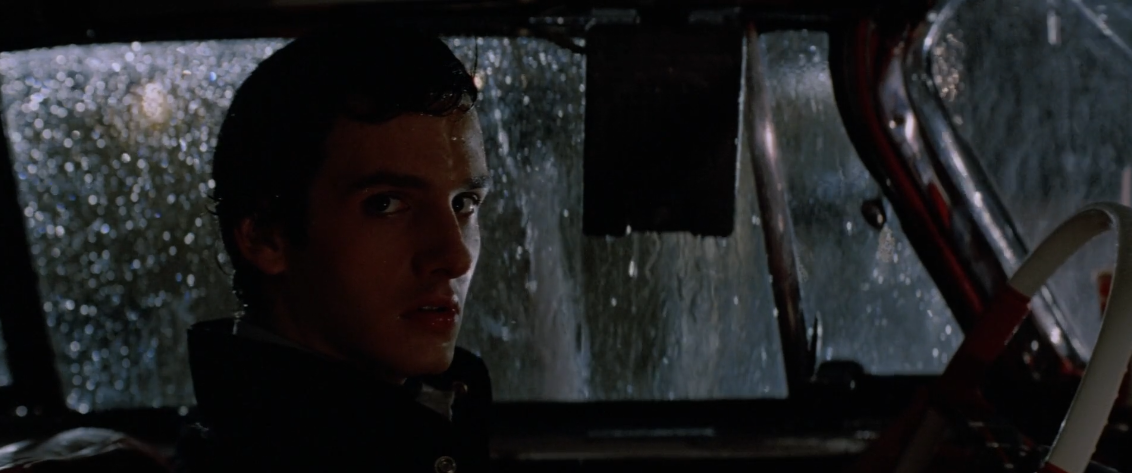
Alternate Best Actor 1983: Keith Gordon in Christine

Keith Gordon did not receive an Oscar nomination for portraying Arnold "Arnie" Cunningham in Christine.

Christine is a fun thriller about a killer car. I'll say though its plot is a bit messy and overly simplistic, and all the characters' immediate concerns over the main character's interest in the car is more comical than I think was the intention.

The film begins with as a potentially typical high school film as we have the tough, but likable every guy, in John Stockwell's Dennis, then we have Keith Gordon as his best friend, the obvious nerd in his Arnie. Directed by John Carpenter, during his still competent phase, with a certain tongue in cheek quality, that honestly is the right approach for a concept as ridiculous as a killer car. This is definitely in turned seen in Gordon's performance even before the shift in his character, just as we see Arnie hanging out with Dennis, as the retiring friend shying away from everyone and everything. Gordon's performance very much emphasizing the nerd in nerd, and not the type of nerd whose the witty and intelligent sort within his awkwardness. He's just awkward, and Gordon's performance accentuates that as he exudes a constant desperation that only expands depending on his situation. This with his time with local bullies being spent with a wide eyed anxiety and just nothing except frustrated weakness. The only brightness in his performance being shown when he randomly sees a beaten old junker car for sale, with obviously a mysterious old man selling it. A seemingly minor but important moment as Gordon's beams with an instant obsession. This time seemingly less harmful as just someone interested in getting a car that he can fix up and potentially impress with. This fact that all those around him find instantly alarming, I'd say a little too alarming, I mean he just was buying car, though I purposefully digress.

The initial obsession we see seeds towards this odd confidence that Gordon delivers in his performance as it attaches specifically to the car. This in portraying a gaze of fascination in each moment regarding the car, the titular Christine, that he has rebuilt to perfection. The film then jumps as Dennis is struck, both literally and figuratively, when gazing upon a changed Arnie, losing his glasses, donning cool jacket, and making out with the most beautiful girl in the school Leigh (a terribly underwritten part). The transition we purposefully don't see, rather we see the other end of it. This where Gordon instead exudes now that confidence entirely and a certainty in attitude regarding his car and his relationship as though it was nothing to accomplish. When Leigh questions the nature of Arnie's obsession with his car, we actually get an essential midpoint in his performance. In that we do have a few last vestiges of the old Arnie, and perhaps any goodness about him as he asks her not to leave him with the same desperation we saw in the awkward teen, but we also see in this the darkest side of Arnie that is what makes this performance truly remarkable. This is that while I would still qualify this as a stylized performance, as again a film about a killer car isn't one that urges subtlety, Gordon's approach is rather fascinating as we see Christine more than take over Arnie's life. It seems as though it is all that there is to it, this at the same time as we see the scenes of Christine carefully executing Arnie's former bullies, though we are not aware of whether or not Arnie is complicit in this or this is the car's doing.

Gordon's performance can be taken as two things I think, one expected, and one almost predictive in certain way. The first is perhaps the more obvious of the drug addict but that of the car. That can be easily enough seen I suppose, but I don't think that's quite it, and that is part of why I found this performance rather special. This as Gordon portrays it rather as what I would say is a toxic fan of the vehicle. This as Gordon's performance when speaking of the car does so with this reference, this extreme, psychotic fanaticism regarding it. His physical work even in his interactions with Christine, that is of fondling as though it were a woman, rather than just an admiration of a car. He speaks with more than just a joy of it, but rather a fervent lust regarding the car. It is his entire world, and Gordon presents as this vile passion for the car. This as though it is his entire world truly, and something that is amazing, as he twists this love into hate in his performance, much like the terrible type of fan, who seems to exude only misery from something they supposedly love. This is striking in scene where Arnie describes this lust for Christine, which his eyes are expressing such vicious adoration, however he speaks with such a horrible disregard for anything other than this adoration. I especially love the moment where Dennis mistakes this lust for Leigh, and Gordon's brutally dismissive, no is so brilliantly petulant and again grants the sense of the narrowness of this obsession. This as Gordon makes it all that exists for Arnie, in his descriptions of the "greatness" of Christine as both this breakdown and near orgasmic reaction to something that he has made define his existence. This in turn we see that putrid venom towards anyone who dares question his view of this "passion", much again like the fan tearing down everything else for the sake of his singular mindset. Now perhaps I am slightly reaching with this interpretation, although such fandom is not new just more isolated before the time of the internet, but what I think is more important is that what Gordon's performance does is two things. This as it creates a uniquely haunting portrayal of obsession which both grants the larger than life insanity needed for the devotee of a killer car, but in a way that strangely enough grants just enough of a reality within it. Gordon thrives within the film's tone playing into, but does also make you believe that not only could a man lust after his car, but that also can be a rather frightening thing.

Saturday, 25 April 2020

Alternate Best Actor 1983: Gerard Depardieu & Wojciech Pszoniak in Danton

Gerard Depardieu did not receive an Oscar nomination for portraying Georges Danton nor did Wojciech Pszoniak for portraying Maximilien Robespierre in Danton.

Danton is a terrific film that details the downfall of Georges Danton, one of the key figures in the French Revolution.

Although named Danton the film is as interested in the role of the defacto leader of the French Revolution Maximilien Robespierre as it is the titular character, and though I did not time it, Wojciech Pszoniak may have more screentime than Depardieu. A great deal of the success of the film is creating this separation and detailing each man within essentially the downfall of the revolution. A clear separation of this is created as the cast of Robespierre supporters are all played by Polish actors while Danton and his supporters are all French actors. The only unfortunate thing about this is that in turn we get the Polish actors dubbed over, and although the dubbing is done quite well, I would rather hear their verbal performances even if we had dueling languages going on. This includes Pszoniak, therefore I can only base my opinion of his work on his physical performance, though judging by that, if I were to be able to hear the original audio, I doubt I'd be disappointed on that front. This as Pszoniak begins the film leaving an impression without even needing to say a word. His whole manner, the way he carries his expression, is this of this assumed greatness and intelligence in a way. This accentuation of reason seems evident from within him as his eyes carry an incisiveness alone, even as he gets prepared for the day, with all the pomp and circumstance of a "great thinker" and even greater "thinker". This though as in his interactions with others is not of camaraderie, but rather an omnipotent sort of distance. This as Pszoniak establishes Robespierre as potentially this powerful leader, but of a man who controls very much from above.

This is in contrast to French actor Gerard Depardieu. An actor I'll admit I've had for a long time been hearing of his greatness however coming short of finding it myself. Although not that what I saw him in were bad performances, but I didn't find the man, as this sort modern Jean Gabin that many seemed to tout him as. Well thankfully that all changed with Danton. This as we find Depardieu in portraying Georges Danton, as another great leader but of a completely different ilk from Robespierre. This in the earliest scenes where we see him engage with the local people. It is with this connection and pride. Depardieu wearing the expression of a man who truly wants to absorb what the people have to say for him, and take in what they can offer. Depardieu exuding so effectively this common touch with a grace and warmth just as he sees the crowds in front of him. His manner being wholly different in place, as one touch I particularly love in the film is the difference in which Pszoniak and Depardieu interact with their powered wig. This with Pszoniak rarely touching, wearing it with extreme reverence. This is against Depardieu who treats as but something to wear for on his head. Always playing around with it in one way or another, and never forcing it to really act as his hair. Depardieu accentuating through this a man who does not wish to be swallowed whole by pomp and circumstance. Finding above else a sense of humor regarding the idea of his position. This so well in portraying more so a man who carries the idea of leadership, not exactly as a burden, but by something that shouldn't be used to create armor for himself to protect himself from others. This rather just being part of the man he already is.

We then though see already though nuance within as the proceedings begin, with Pszoniak portraying Robespierre maneuvering how to deal with Danton's opposition to his committees that is being used to abuse power, against Danton attempting to have the powers removed from those committees. We then see the two men of the leaders of their factions and in this again we see two leadership styles. Both Depardieu and Pszoniak are fantastic in realizing each man attempt to wield their unique position. In Robespierre, who actually attempts to temper the rest of his men who want immediate death for Danton and his followers, Pszoniak excels in wearing the weight of the situation within his performance. In every word spoken Pszoniak's eyes say so much in reaction, where he grants the sense of a subdued regret over the situation. This as he does defend the man, and Pszoniak portrays well the sense of difficulty in approaching this issue. He shows within it this balance between a man who is very much considering the extreme action the others are speaking of, but shows that this is taken with a subtle anxiety that he wears within him. This is against Depardieu who again emphasizes a lighter touch as we see him speaking to his other men, as their newspaper is shut down, and it seems the powers that be are scheming against them. Depardieu manages to speak with authority, while also doing so with an ease of almost a friendship as he more than anything calms his men from too rash of action. This culminating in the first act of the film in the single, but essential meeting between Robespierre and Danton.

This being a particularly wonderful scene for both actors, as again we see each set the distinction. This with Pszoniak still emphasizing a power, but the power of the man just sitting with an adamant stare. This against Depardieu being terrific as the negotiator essentially, speaking a mile a minute with both a casual regard for the other man, but a slight dismissiveness within his negativity. Depardieu portraying Danton attempting to create his case by taking Robespierre down to earth a bit, and brings this to life through the down to earth way he speaks every word of his position. This starkly against Pszoniak who presents the man carefully analyzing every word spoken by Danton, even taking a moment to fix his powered wig after Danton tussled it, ironically with as much regal grace as one could muster in that situation. We see in the scene the fissure of the two effectively, though I do love that neither presents a direct animosity. In that while we don't see the men as likely fast friends in the past, they do grant the sense that the two once managed to successfully work together in their common cause. That being long gone though represented in the differences of the men, brilliantly accentuated by the performances, that leaves Robespierre determined to agree to his factions wish for Danton's arrest, and Danton to left to be arrested. Depardieu has two separate, but fantastic scenes briefly before Danton's arrest. The first being as he gives assurance to one of the men of their faction that they will be arrested, however does so with a cheery optimism as though there is hope in this. This however is against as we see Danton silently await his arrest, Depardieu's performance is outstanding as we see so much in his expression as he realizes the real sense of his own anxiety of his upcoming fate, as well as the sense of a burden of the responsibility of his position.

I love the scenes that come then when we see each men brandish their power in public forums, and we see two very different forms of it. The first is as Robespierre successfully denounces Danton despite opposition. Pszoniak is amazing in this scene, and I really wish I could hear his actual voice. This as nonetheless he wields such a profound command in this scene. This as Pszoniak portrays it almost as man conducting the crowd, this with sheer magnetism of a overlord of the people. This in his movements of this specific controlled passion, and almost as that of the most articulate puppet master. This again as this ruler from above wielding his power certainly with ease, but almost like a hypnotist commanding his audience to do his bidding. This is opposed to Danton, where Depardieu is equally amazing in portraying him less the refined composer manipulating his orchestra, and instead more akin to a proper face pro-wrestler building up the crowd. We see this in the intended show trial for Danton and his faction, which Danton purposefully tries to use to stop the path of the revolutionary government he sees on. We see this as Danton enters the room, and Depardieu carries himself as the most crowd loving celebrity you could imagine. This with his eyes glowing with affection, even trying to touch the hands of every adoring fan around him. Depardieu beams with a man who is a true lover of the people, and this only continues as the trial begins. This with Depardieu controlling the moment brilliantly as he shows Danton eagerly speaking to the crowd assembled, rather than his show trial jury. This delivering an aggressive yet endearing passion of a man trying to speak to his people, and attempt to derail the show trial by putting a true show within it. Robespierre on the other hand fittingly handles the trial from a distance, just trying to work his way to have it so Danton's verbal defense cannot be heard by the public.

 There is a scene I love in particular where Pszoniak is hearing of how the trial is going while having a portrait of himself done. A portrait far more representing that of royal decree than revolutionary hero. Pszoniak's manner in the scene is fantastic, as though again he still carries that regal air, it is undercut in the frustration that swells when hearing the news, but what I love most a little moment where he kind of looks at himself with the costuming for the portrait. Pszoniak delivers a marvelous silent moment as you can garner the sense of Robespierre for seeing the foolishness of the man basically becoming what he supposedly overthrew.  The manipulation though does leave Danton and his men sentenced to death. Depardieu is heartbreaking in his delivering of a cracked voice Danton, just still trying desperately within his literal last breaths to speak his truth. I love the moments within prison, where Depardieu finds such a poignancy in presenting the man reflecting in depression. A depression not for his upcoming demise but rather the country he fought for. He speaks his words somberly though with not self-pity, but rather a sorrow for others reflecting a selfless spirit for his cause while granting understanding to his choice for martyrdom. This is opposed to Pszoniak's final scene that is also outstanding, as his eyes piercing now, not with power, but an overflowing anxiety. That anxiety that he had seeded in his performance earlier, not to the forefront of a man in the grip of a madness by living into some bastardization of his dream. These are two great performances. This as both actors create portrait of complex leaders, each with their personal styles, and their own unique foundation of passion that each lead to a disparate, though in the end, mutual fate. 
(For Pszoniak)
(For Depardieu)

Wednesday, 22 April 2020

Alternate Best Actor 1983: Om Puri in Ardh Satya

Om Puri did not receive an Oscar nomination for portraying Sub inspector Anant Velankar in Ardh Satya.

Ardh Satya follows a man as he is pulled between a romance with young peaceful woman, and his career put upon him as police officer, by his violent father.

Om Puri portraying the officer Velankar who we are introduced to in largely humane circumstances of a man just attending a social gathering. This is where we see him initially meet up with the lovely young woman Jyotsna (Smita Patil). Puri is charming in a low key way in just expressing the bit of happiness that stems from the two interacting. Puri bringing an earnest modesty and an appropriate shyness in the interaction, suggesting a woman he really likes, and setting up this point importantly in his character. This is before we see him though first acting as a cop, just interacting with the other police officers. This initially isn't too concerning as Puri just portrays a slight disarming boast about potentially meeting someone worthwhile to the others, and we see a man just going about hid duties which seem perfunctory for the moment. This though is interrupted however with flashback s towards Velankar's past where his father launched into verbal and physical assaults against Velankar's mother. This leaving Puri portrays sort of this a difficult state. This as Velankar only ever watched the behavior, something that clearly effected him negatively to see the mistreatment yet while reaming the dutiful son. These moments establish essentially what will be the contrasting influences for Velankar throughout the film, as he goes deeper into the relationship with Jyotsna, but also deeper into the life of the police officer with all that it entails.

The film then show the progress of each, and really the disagreement between these two sides of the man. In this reminded me strongly of Puri's later BAFTA nominated performance in East of East, where there were also two extremes within his character. This though is one more of a progression of each, and where that conflict comes in. This as we see his work as a police officer, where we initially just see the determination of a man doing his job. Puri brings an intensity to be sure, but at first it appears more of the requirements for the man of such a position. This with a stiff spine and stern look, but not beyond that. This still though is in contrast with Jyotsna that continue to have this growing tenderness between them, with both actors sharing a sweet chemistry with one another. The moments as the officer though we see the frustrations within Puri's work as Velankar's efforts are not particularly successful and he pushed towards more violent actions required within his city. This as we see him attempting to take down a legitimate criminal, posturing as the strong man doing the right thing, however this failing entirely. This too changes his relationship with Jyotsna, though largely from her concerns for his actions. This as Puri himself portrays initially this attempted distance and detachment from the other man. This as though it is just a job, portraying just a man attempting to be loving towards her, even with those concerns growing.

This as the man's violent actions only continue to worsen as he beats down protestors and becomes altogether more vicious. Puri's performance of this, as was his work in East is East, is quite frankly startling in just how real he makes the violence. This showing just it as something that is plainly ugly, and befitting a man who is basically doing the will of the very worst he saw in his own father. Puri giving a startling depiction of a horrible misery that inflicts the man, and we see what appears to be all the hate he learned from his father as he delivers it onto what essentially become his victims. Puri is remarkable though as he naturally shows us what appeared to be just a likable man initially as this horrible person. He still shows the man who tries to separate himself from it with Jyotsna, but when he goes far too far with his violence, it finally forces him to face facts. This scene is a downright amazing scene for Puri. This as we see the man finally reflect upon his actions, and upon his past regarding his mother. Puri is heartbreaking by showing the man finally facing his violent side is in a moment of such vulnerability. This showing it in his connection with this woman he clearly loves, but with a certain terrible resignation within looking at where he has gone due to his personal flaws. Puri conjures up the whole sense of the failures of his father, and regrets of childhood with such striking nuance. He shows the man desperation in the moment beautifully, even if so painfully. This showing a man finally seeing both sides of himself. This continues though as he confronts the true criminal again, and again Puri shows a slightly different combination of the sides of the man. This as we see this viciousness though with this sort emotional determination, as while his act isn't good, Puri now portrays it as personal, rather than just detaced cruelty of a state.  Puri's performance shows us the good man theoretically who could just be in this relationship, charming and even endearing at times. He makes the terrible path of the man though wholly tangible in that gradual descent, that while it eventually leads to that powerful moment of reflection, also realizes how man detaching himself from his actions can lead to near atrocities.

Monday, 20 April 2020

Alternate Best Actor 1983

And the Nominees Were Not:

Gerard Depardieu in Danton

Wojciech Pszoniak in Danton

Om Puri in Ardh Satya

Keith Gordon in Christine

Oleg Yankovsky in Nostalgia

David Bowie in Merry Christmas, Mr. Lawrence

Tom Conti in Merry Christmas, Mr. Lawrence

For Prediction Purposes:

Depardieu from Danton

Bowie from Lawrence

Alternate Best Supporting Actor 1978: Results

5. Bruce Dern in The Driver - Dern brings the right color to his purposefully minimalist role, finding the character through his eccentric presence.

Best Scene: Ending.
4. Scott Reiniger in Dawn of the Dead - Reiniger delivers the strongest performance in his film, creating a unique and moving arc within a zombie narrative.

Best Scene: "Perfect baby"
3. Barry Bostwick in Movie Movie - Bostwick best realizes the tone of his film, delivering a properly lively musical performance that has the right fun with the approach.

Best Scene: "I just need the Girl"
2. Christopher Plummer in The Silent Partner - Plummer delivers a properly diabolical turn who only hides his most overt psychopathy for a bit of sadism.

Best Scene: "We're partners"
1. Yaphet Kotto in Blue Collar - Good prediction Luke. GM, Tahmeed BRAZINTERMA, John Smith and Calvin. Kotto makes a memorable impression in the film offering so well a vivid sense of his character's camaraderie with his co-stars, but also the sense of his alternative perspective. 

Best Scene: Speech. 
Updated Overall

Next: 1983 Lead

Sunday, 19 April 2020

Alternate Best Supporting Actor 1978: Christopher Plummer in The Silent Partner

Christopher Plummer did not receive an Oscar nomination for portraying Harry Reikle in The Silent Partner.

Christopher Plummer, whose film career has been a little random in terms of jumping into the size, scope and quality of parts, perhaps alluding to why stage other stage preferring actors like Paul Scofield and Mark Rylance tended to be a bit more selective. Plummer though in this thriller gets a more than decent sized role, and a chance to show a very different side of himself, from his then most famous film role as Captain von Trapp in The Sound of Music. This as the villain of this thriller, the bank robber, whom bank teller Miles (Elliott Gould) figures out a way to steal from, so in the robbery Miles takes the majority of cash his Reikle would've taken. Technically speaking Miles is the smarter of the two players in this game, but Reikle has an advantage. That being he's a psychopath. Although Plummer is memorable enough as a mall Santa Claus with a far to incisive stare for father Christmas, his greater impression comes when he goes about targeting Miles to get the rest of his theoretical money. This beginning with a phone call and a quiet threat from Reikle, while Miles is trying to romance a co-worker. Plummer's usually quite dignified voice is used here to great effect in being extremely menacing as Reikle notes that Miles is trying to do the woman he is with, what he did to Reikle. Plummer making an immediate sense of a particularly unnerving perversity within that menace. This continues in Plummer's work as Reikle essentially congratulates Miles on his cleverness, which his technically admiring words are delivered in a playful though in turn altogether creepy fashion. Plummer though reinforces always Reikle more direct intention in his eyes that always suggest that real killer's intention for Miles, this being particularly remarkable when he peers through Miles's mailbox with a horrifying gaze.

Plummer effectively sets a stake in place, as Miles finds a way to have Reikle imprisoned, temporarily. The threat though is never gone due to the impact that Plummer makes in those early scenes that show Reikle as someone not to be taken lightly. While in prison though he sends a woman, Elaine, to spy on Miles, though this backfires when she genuinely falls for him. Plummer has a fantastic moment where Elaine falsely reports to Reikle. This as Plummer finds a way to deliver this completely fake charm in his smile towards Elaine, as though he enjoys her in anyway, which he brilliantly subverts in the same moment he loses that falls display as his expression bears a sadistic glint in a matter of a moment. Plummer creating a terrific sense of unpredictability in his own performance, that creates a logic though of Reikle being just a killer at heart, though able to put on some minor airs, if barely, when needed. This as Plummer being an effortless and properly chilling creep. This when Reikle suddenly appears to Elaine, having gotten out of prison early, and makes an instantly tense situation in just the mere way he says "hey" with a vile sleaze. Plummer portraying Reikle as not even putting up any front as a particularly horrible prospect. When Reikle unleashes his real psychosis at Elaine, Plummer doesn't hold back in bringing the extreme sadistic nature of the man, showing both a sense of rage, but also worse this certain pleasure in it all. After this though Miles come to apparently cut a bargain with Reikle to give him the cash through another robbery. Plummer is great once again though by showing that with Miles Reikle still doesn't mind playing games. This delivering this artful flow as when Miles pushes back Plummer pushes the intensity up, but when Miles seems to give in at all, that faux affability comes back to Plummer's voice, as Reikle still wishes to play with his prey. In this penultimate confrontation though there small moment, but I think quite worth mentioning where Reikle questions Elaine's motives, which Miles affirms were devoted to him not Reikle. Plummer's reaction to this though helps to kind of show the effort of this work. This as he takes the time, in this reaction, to convey not exactly humanity, but a sense of real frustration in Reikle, subtle frustration, as he conveys how honestly takes in that information that Elaine wasn't so devoted to him after all. Not as a good person mind you, but still as a person. Of course, Plummer does indeed deliver on the main intention of this role which is to be an intimidating and reprehensible villain. This making his final scene particularly cathartic, amplified by how Plummer plays it. This beginning with a face brimming with smug sat as it appears his plan is going perfectly, until Miles pulls a trick, and Plummer's "aw crap" face is equally satisfying, for us. Plummer making for a proper adversary for our hero in Gould, and the proper force of evil any decent Hitchockian style thriller should have.