Thursday, 12 December 2013

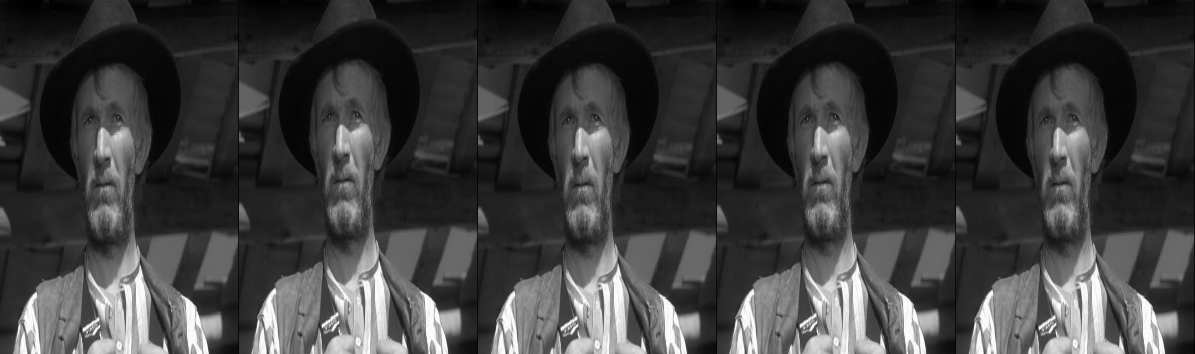
Alternate Best Supporting Actor 1964: George C. Scott in Dr. Strangelove

George C. Scott did not receive an Oscar nomination for portraying General Buck Turgidson in Dr. Strangelove.

The apparent story behind George C. Scott's performance in this film is a rather interesting one. Scott apparently wanted to play the role straight, but Kubrick wanted Turgidson to be an absurd character. Scott supposedly refused, but Kubrick would have him do just one wild take then Kubrick proceeded to only use those takes in the final film. It's a story that certainly shows the importance of a director hand in performances, but the reason I don't usually mention this in reviews is two fold. One being it is impossible to tell exactly who came up with the way to play a character in every single film, and more importantly no matter what the basis may be for the character George C. Scott is the one still making or not making this idea work through his performance.

Anyway with that out of the way how about what Scott does with the approach of making Buck Turgidson perhaps the wackiest character in the film. This is rather a departure for Scott particularly from his Oscar nominated works in The Hustler and the Anatomy of the Murder, and is really something to see Scott, who often plays rather controlled and strict characters, go completely off the wall in his performance. Scott never stops with his performance always moving in some way and gives a completely insane performance to go along with his rather insane character the entire time. It is so easy to see how this whole approach could have seriously failed because Scott makes Turgidson so big and it all could exploded but this never happens and there is a reason for that.

The reason being he's George C. Scott. Scott is on top of it every step of the way and makes his performance one absurdly entertaining moment after another. Buck Turgidson is a General called in by the President to find out why bomber planes have been launched by General Ripper (Sterling Hayden), and then proceeds to act as one of the advisers during the crisis. Scott is great playing Turgidson as a man who is far too pumped up for his own good so, unlike everyone else who sits nicely in their sits around the large table, whenever we Turgidson he can't seem to relax always moving slightly in his chair or chewing gum. Frankly Scott is always doing something and it all simply works in one building up his boisterous character, but as well being just plain funny.

Where Sterling Hayden wore his character's insanity in an icy stare, Scott wears Buck Turgidson's in just one big smile. Scott with his boundless energy portrays Turgidson as a man who believes in practically everything he says and some of the most extreme things he says is all the funnier because of the personal conviction Scott shows it as. When Buck Turgidson tells one of his ideas he does not just like his idea Scott plays it as he is deeply in love the with idea. Scott's hilarity never ceases as he brings the utmost enthusiasm to every single word that Turgidson spews out no matter how crazy it seems and well is. Scott never misses his mark once and makes every scene more enjoyable with his mere presence.

Scott is magnificent and never feels stale in this turn nicely avoiding this by not making Turgidson one note even if the character, and his performance are rather extreme. One of Scott's best moments is when Turgidson is reading off information to the President presenting a less assured Turgidson and being rather amusing by showing Turgidson as a man who really does not know all that much. Another great moment is while in the war room he gets the call from the secretary he is having an affair with who wants to talk about their relationship. Scott again brings the very best out of the comedic possibilities of the character by making the man who is so comfortable talking about the deaths of millions, but instantly appears to be queasy when faced with talking to his girlfriend.

It is strange to learn about the behind the scene story because Scott is the clown needed for the war room scenes with his constant physical antics that Scott pulls off so flawlessly, heck apparently Scott actually did fall in the role but Scott just went with making it classic moment that fits Turgidson so well since he never stops moving anyways. This is a case of Scott pretty much going all in as this performance is an all or nothing characterization, and taking home the pot. This performance simply works that is all there is to it, and Scott turns in one of the all time great comic performances. He is incredibly loud, extremely flamboyant and downright crazy, and you know what, I would not want Buck Turgidson any other way.

Wednesday, 11 December 2013

Alternate Best Supporting Actor 1964: Sterling Hayden in Dr. Strangelove

Sterling Hayden did not receive an Oscar nomination for portraying General Jack Ripper in Dr. Strangelove.

It could easily appear to some that Sterling Hayden really did not care about acting, and his personal comments would seem to support that statement, nevertheless he had a tremendous screen presence, and it did seem like he could fit into the tough guy roles like no other. That does not seem entirely fair to Hayden though because, for example, in his role in the Asphalt Jungle most of the type he just needed to be the hard man yet when more was asked of him he actually did succeed in being more than just the thug. Hayden in Dr. Strangelove again seems to be properly cast as the hard nosed General who decides to have his bombers, which are armed with nuclear weapons, to attack Russia completely based only his own authority and not the president's.

In the most base sense Hayden fits the role perfectly with his deep voice and simply his size of the man that this would be guy who would not mind intiating such a plan on his own personal authority. Hayden makes Ripper the obvious example of military might and the thinking of a man who believes himself to be in complete command of the situation. In the most serious sort of way Hayden fulfills the purpose of General Ripper, by being a man who is clearly determined in his plan no matter what the consequences will be in the end. Of course this role and Hayden's performance has much more to offer than simply being a determined military general, as the true nature of this role is not dramatic but in actuality it is comedic.

Hayden is brilliant in regard to making this a hilarious performance. The great part about Hayden's performance is he doesn't play it straight nor does he seem like he is playing it as funny either. Hayden does so much within the structure of Ripper it is amazing. As Ripper he is always chomping hard on his large cigar throughout his performance, and he has a most crazy eyed look on his face. There is something so intense about his look that it is both hilarious yet as well works in portraying the insanity of Ripper. This goes for almost everything he does as Hayden is so extreme about it that he makes what he does amusing yet he is strangely believable at just being a purely crazed war hungry General as well.

The best part of Hayden's performance though his his bizarre yet so perfect chemistry with Peter Sellers as Ripper's sane second in command Lionel Mandrake. Although Mandrake the whole time is trying to stop Ripper, Ripper never figures this out revealing much of his plan to Mandrake. Hayden is rather warm and almost fatherly toward Mandrake throughout the event making a real camaraderie there even though Mandrake is trying to undermine him the entire time. Hayden having Ripper seem so comfortable rather than hostile when talking to Mandrake makes the situation all the funnier as Mandrake tries to find something out while Ripper is in a world of his own.

The reason for Ripper's plan is the most ridiculous part of his character as he reveals that he believes the communists are after his precious bodily fluids because he apparently knows nothing about the way the human body works. Hayden brings so much conviction to this lunacy with his stone cold delivery that he makes the scene as memorable as it is, and makes it seem perfect sense to General Ripper anyway. Although I am sure that is many a fan's favorite scene for Ripper, my personal favorite is when Ripper asks Mandrake about torture. Hayden's performance is extremely funny as he keeps that psychotic look, but within that look you can see him basically wimping out at the idea of any physical torture. 

Hayden proves himself far more capable actor than one who is just good at fulfilling a certain physical type of character with his performance in Dr. Strangelove. It is quite true that Hayden successfully fulfills General Ripper in the basic description of an imposing General, but more than that he turns his depiction of a General out of his gourd into a comedic gold. Hayden gives a great performance that pulls off a most interesting trick which is to not pigeonhole himself as really playing it exactly one way or another. Sterling Hayden by taking this most unique path gives a completely fitting portrait of a man who very much has created his own form of reality within his deranged mind.

Tuesday, 10 December 2013

Alternate Best Supporting Actor 1964: Fredric March in Seven Days in May

Fredric March did not receive an Oscar nomination, despite being nominated for a Golden Globe, for portraying President Jordan Lyman in Seven Days in May.

1964 in film could be described as the year of the London set musical, or maybe the year where Bruce Dern is brutally murdered, but I would call it the year of the President of the United States. There was Fred MacMurray being the husband of the first Female President, there was presidential hopefuls vying for favor of a former president, there was two presidents negotiating with the enemy to avoid mutual destruction, and there is the president of this film who must avoid being overthrown by a coup d'état lead by a General Scott (Burt Lancaster). Fredric March had some trouble adapting after his earlier days during the Golden Age of Hollywood. In films like Inherit the Wind and Death of a Salesman March seemed out of his element giving performances where he overacted wildly, that is not the case here which was one of his final performances.

Fredric March plays the President Jordan Lyman who is not a very popular guy as no one seems to like him, but he is a man who stands by his convictions doing what he thinks is right even if many people think otherwise. March has the most difficult role actually because he has to make the President compelling even though Lyman stands by what he believes through the film. Kirk Douglas gets to show the conflict of loyalties, Lancaster is straight forward but gets to be a vicious villain, Edmond O'Brien stays on the same side but hey he gets to be a sweaty drunkard, this leave March to be man standing his ground firmly and it is amazing because March actually steals the film. March wipes the slate clean of some his other late period performance with his very assured performance here.

March is excellent because he basically goes about showing all the complexities there are within a man who is so convicted in terms of his personal beliefs. March brings the right type of dignity to his role, a natural dignity. He never glorifies the President as a Saint like man, but shows him to be simply an honest statesman. March makes it believable that he would be such a good man, but as well would be a man that so many other people could hate. March is great in his early scenes as he explains his reasons for standing by his position no matter what. There is not a hint of sanctimony in anything that March says and he brings a naturalism to all of the Lyman's points. March never gives speeches to anyone, other than his actual speech at the end, he just makes Lyman a real man just trying to do what he thinks is best.

March really makes himself stand out though because he always brings more than just conviction to the part of President Lyman. March actually nicely brings some doubt in Lyman. This is never something that overwhelms the portrayal but March brings it in nicely though to flesh out Lyman. By bringing these slight hesitations in his performance March humanizes Lyman very effectively as he shows the mind of an actual president who has to think about too many things at too many times. Importantly March never makes as if Lyman is really doubts about what he believes, but rather doubts in regards due to the way so many around him are look at his desires for peace. There is an underlying fear March suggests, not fear of war, but a fear in Lyman over an apparent hysteria gripping the people.

President Lyman, despite his unpopularity, is no fool and takes it very seriously when he hears about the possible coup which brings out the strategist in the man. March is terrific in his scenes of showing how Lyman plays the game against General Scott and how he mediates his own room of allies. March stays unassuming to a certain point but always suggests a intelligence in the man. March is very good because as the other men say their peace he always has Lyman reasoning and deciphering what they are saying in an attempt to get to the bottom of it and make his next move. March never makes Lyman a machine though and one of his best moments is when one of his close aids have died. March is very moving as he shows that it really does hit him hard, but he can't do anything other than continue working to stop the coup.

The real test of March comes down to his confrontation scene with Lancaster. March has to go toe to toe with Lancaster and make it so we the audience believe that Lyman wins against the argument, and Lancaster is not pitching softballs. March not only stands his ground in the scene he actually overtakes Lancaster with the tremendous drive he brings with his performance. Every single line March delivers like a bullet at Lancaster. Every word he has March finds the passion behind it, and leaves no one to question who wins the day when the General leaves the room. I just love seeing March really give it his all with his performance and never once indulging in overacting as he very easily could have. Fredric March gives a great performance, giving the greatest presidential performance of 1964, and I would argue his personal best as an actor.

Monday, 9 December 2013

Alternate Best Supporting Actor 1964: Frank Overton in Fail-Safe

Frank Overton did not receive an Oscar nomination for portraying General Bogan, USAF in Fail-Safe.

Fail-Safe is the dead serious version of Dr. Strangelove about a malfunction that sends a bomber on a mission that could cause a nuclear holocaust. Although this is an effective film in its own Dr. Strangelove is the superior film. This film suffers from just too many conveniences (inconveniences) that makes Dr. Strangelove honestly more believable (precious bodily fluids aside) since Dr. Strangelove compensates for unlikely human behavior by having the most gun-ho pilot of all time, and a deranged general to push the insanity forward.

Fail-Safe has a large cast in its story which jumps back and forth between the plane itself, the president (Henry Fonda) talking to the Russian premier with a young Larry Hagman as his translator, the pentagon with Walter Matthau playing against type before he had a type as a callous political science professor, and a dread filled General played by Dan O'Herlihy, and the Air Force headquarters that is run by Overton's General Bogan. Overton, who is probably best known for his role on Star Trek or playing the sheriff in To Kill a Mockingbird, plays the important role of General Bogan who must handle perhaps the most problematic group of people during the extremely tense situation.

Frank Overton plays General Bogan as a calm controlled figure who is very much a man who try his very best to diffuse the situation no matter what it might take. Overton handles his performance very well as a man set out in his duty but he carefully alludes to the emotional strain that Bogan has to face. Bogan never cracks staying assured the whole time, but Overton is effective by showing that it is not that Bogan is unemotional but he is a man who is doing his very best to stay in control of his situation. Although every situation is a stressful one the place Bogan is in is perhaps the most because it eventually is decided that the USAF must help the Soviets bring down their own planes.

Overton makes the most out of his part of Bogan who does his best to avert disaster even though many other men in the room are not really behind the idea of shooting down their own men and helping the enemy. Overton brings the emotional weight necessary in his scenes to show the urgency in Bogan to stop the upcoming travesty while to still reflecting his underlying unease in needing to give away the position of his own men. Bogan stays on course the entire time, but Overton is very effective in showing the building frustrations in Bogan. Overton lets these frustrations out in the right which are the worst times such as when either his own men or the Russians won't listen due to distrust.

Overton's best moment though is a quieter one where he talks to his Russian counterpart for a brief moment while the mayhem rages around them. Overton is excellent in this scene by honestly not becoming overly emotional in this scene either even though it is a very tender scene, one of the few of them in the film. Overton nicely plays the scene in a simple but very poignant fashion as he shows for a moment a Russian and American having understanding even though it is only for a moment. Overton succeeds by making it in a powerful moment by just giving that remarkable but brief moment of reflection where Bogan is allowed to feel the weight of the situation at the scale of an individual. Frank Overton's fulfills his role well making an impact within the large cast and amplifying the power of the scenes with the USAF war room. 

Sunday, 8 December 2013

Alternate Best Supporting Actor 1964

And the Nominees Were Not:

Nigel Green in Zulu

Fredric March in Seven Days in May

Frank Overton in Fail-Safe

George C. Scott in Dr. Strangelove

Sterling Hayden in Dr. Strangelove

Saturday, 7 December 2013

Alternate Best Actor 1964: Results

5. Michael Caine in Zulu- Caine makes a misstep with his characterization at the beginning of the film, but makes up for it through his more assured performance later in the film.

Best Scene: The volley.
4. Dirk Bogarde in King & Country- Bogarde gives a very solid and rather unique performance as a soldier who slowly grows more invested into his case even if that growing investment means a growing personal shame.

Best Scene: Captain Hargreaves questions his superior after the trial.
3. Clint Eastwood in A Fistful of Dollars- Eastwood is terrific in his creation of the Man with No Name who can be enjoyably deadpan but is as well can bring emotional poignancy when necessary.

Best Scene: The final duel.
2. Tom Courtenay in King & Country- Courtenay gives a heartbreaking portrait of the end result of an endless time in the trenches of World War I.

Best Scene: Private Hamp tells why he deserted.
1. Richard Attenborough in Guns at Batasi- Good Prediction RatedRStar. Attenborough gives two great performances this year with his moving portrayal of a weak man in Seance on a Wet Afternoon and his absurdly entertaining performance as Major Lauderdale a man with unshakable resolve.

Best Scene: The Major refuses to give up his arms.
Overall Rank:
  1. Richard Attenborough in Guns at Batasi
  2. Anthony Quinn in Zorba the Greek
  3. Peter Sellers in Dr. Strangelove
  4. Donald Pleasence in The Caretaker
  5. Innokenty Smoktunovsky in Hamlet
  6. Peter Ustinov in Topkapi 
  7. Tom Courtenay in King & Country
  8. Peter O'Toole in Becket
  9. Richard Attenborough in Seance on a Wet Afternoon
  10. Robert Shaw in The Caretaker
  11. Saro Urzì in Seduced and Abandoned
  12. Richard Burton in Becket
  13. Eiji Okada in Woman in the Dunes
  14. Clint Eastwood in A Fistful of Dollars
  15. Dirk Bogarde in King & Country
  16. Ivan Dixon in Nothing But a Man
  17. Ryō Ikebe in Pale Flower
  18. Burt Lancaster in The Train
  19. Sean Connery in Goldfinger 
  20. Peter Sellers in A Shot in the Dark
  21. Stanley Baker in Zulu
  22. Richard Burton in Night of the Iguana 
  23. Vincent Price in The Masque of the Red Death
  24. Yūzō Kayama in Yearning
  25. Jean Desailly in The Soft Skin
  26. Cary Grant in Father Goose
  27. Henry Fonda in Fail-Safe
  28. Alan Bates in Zorba the Greek 
  29. Soumitra Chatterjee in Charulata
  30. Cliff Robertson in The Best Man
  31. Kirk Douglas in Seven Days in May
  32. Sean Connery in Marnie
  33. Marcello Mastroianni in Marriage, Italian Style
  34. James Garner in The Americanization of Emily
  35. Stephen Boyd in The Third Secret
  36. Michael Caine in Zulu
  37. Vincent Price in The Last Man on Earth
  38. Maximilian Schell in Topkapi
  39. Henry Fonda in The Best Man
  40. Peter Finch in The Pumpkin Eater
  41. Rex Harrison in My Fair Lady
  42. Bernie Hamilton in One Potato, Two Potato
  43. Jean-Paul Belmondo in That Man From Rio
  44. Glenn Ford in Dear Heart 
  45. Stephen Boyd in The Fall of the Roman Empire
  46. Bendt Rothe in Gertrud
  47. Richard Widmark in Cheyenne Autumn
  48. Richard Boone in Rio Conchos
  49. Nino Castelnuovo in The Umbrellas of Cherbourg
  50. Richard Harris in Red Desert 
  51. Harve Presnell in The Unsinkable Molly Brown
  52. Tony Randall in 7 Faces of Dr. Lao
  53. Dick Van Dyke in Mary Poppins
  54. Fred MacMurray in Kisses for My President 
  55. Cameron Mitchell in Blood and Black Lace
  56. Don Knotts in The Incredible Mr. Limpet
  57. Tommy Kirk in The Misadventures of Merlin Jones
  58. Ringo Starr in A Hard Day's Night
  59. Paul McCartney in A Hard Day's Night
  60. John Lennon in A Hard Day's Night
  61. George Harrison in A Hard Day's Night
  62. John Call in Santa Clause Conquers the Martians
  63. Victor Stiles in Santa Clause Conquers the Martians
  64. Leonard Hicks in Santa Clause Conquers the Martians
Next Year: 1964 Supporting

Alternate Best Actor 1964: Michael Caine in Zulu

Michael Caine did not receive an Oscar nomination for portraying Lt.Gonville Bromhead in Zulu.

Zulu is excellent film that depicts battle of Rourke's drift that involved less than 150 British soldiers against over three thousand Zulu warriors.

Michael Caine plays one of the two leaders of the British, the other being Lt. Chard played by Stanley Baker. Caine's role is the secondary lead though in that Bromhead ends up becoming the secondary commander to Chard who has the newer orders. I might as well start with the negative which is that this definitely is not Michael Caine's most assured performance to say the least. In the early scenes of the film Caine plays Bromhead as the overly British sort, but does not do this nearly as masterfully as Richard Attenborough did in Guns at Batasi. He's kind of enjoyable doing the stiff upper lip thing but he does over do it a tad bit especially because of the turn his performance takes later.

Eventually in the film, really once the action starts, Caine completely drops the stiff upper lip act quite quickly. There really is not too much of a transition rather he just kind of stops it immediately and begins to give a far more natural performance. This is of course poorly handled by Caine and it seems like he was not sure about exactly how to play Bromhead at first resulting in this somewhat odd change in character. I have to admit though since the film is as strong as it is I never really found Caine sudden drop of his early characterization all that distracting especially since how he portrays Bromhead for the rest of the film is a much more assured turn from Caine and suggests some of his best work as an actor.

Although I would say that Baker and Caine are the leads, this is a film that gives plenty of time to flesh out the supporting player, and the only thing that really makes Caine feel lead is that the film ends and begins with the discussions between Chard and Bromhead. Caine stands out well among the entire cast through his physical presence that properly alludes to why Caine became a star. Caine is very effective in the action scenes themselves adding a great deal of intensity to them through his performance throughout the course of the long battle. Caine basically makes up for his earlier awkward transition by being so good in his portrayal of the way Bromhead gets worn down by the battle.

Michael Caine's performance does suggest some inexperience on his part because of the mistaken approach he takes with the character at the beginning of the film, but to his credit I would still not describe him as bad in those scenes really. Caine importantly though does suggests his great talent as an actor though by doing his very best to overcome his missteps at the start with a tighter grasp on his character as the film progresses. This is a far from perfect performance by Michael Caine but in the end I would describe as a good one because once he does find the right place for Bromhead within the scope of the film he does bring the right sort of power to proceedings.