Showing posts with label Anthony Quayle. Show all posts

Wednesday, 15 November 2023

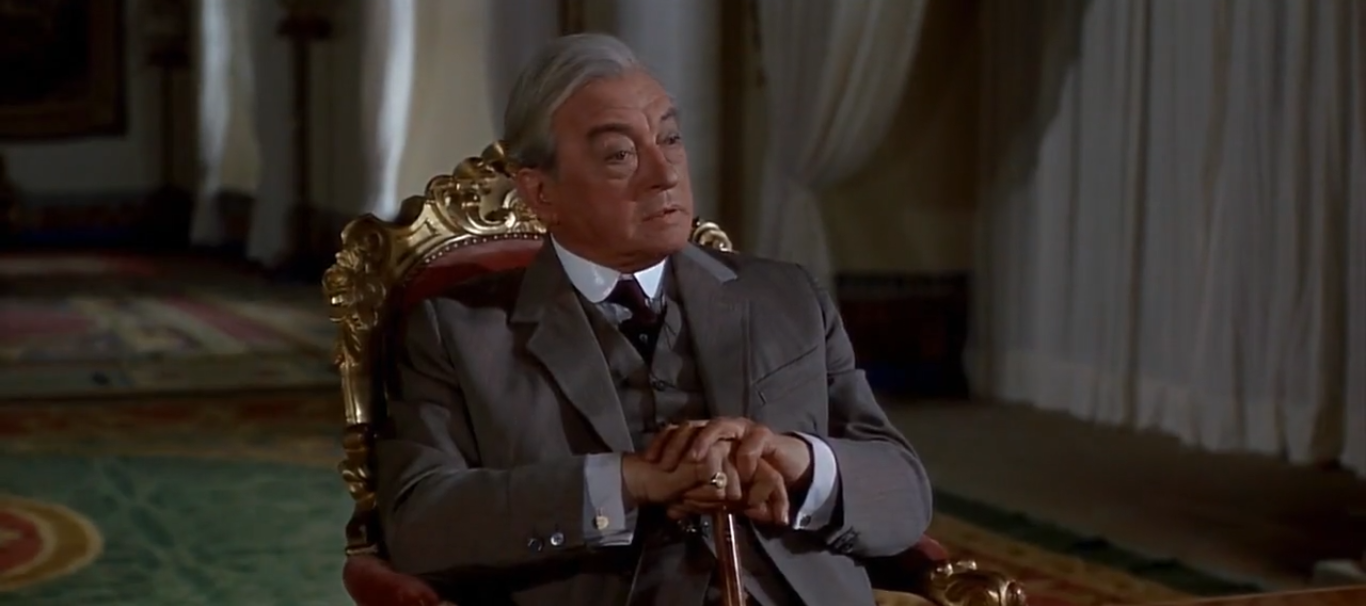
Alternate Best Actor & Best Supporting Actor 1958: John Mills, Harry Andrews & Anthony Quayle in Ice Cold in Alex

John Mills did not receive an Oscar nomination for portraying Captain Anson, nor did Harry Andrews for portraying M.S.M. Pugh, or Anthony Quayle, despite receiving a BAFTA nomination, for portraying Captain van der Poel in Ice Cold in Alex. 

Ice Cold in Alex is an excellent survival film about a small group during WWII trying to get their ambulance back to British lines. 

The success of this film is built in part by its small but wonderful ensemble of our ambulance crew. We begin with our commanding officer in John Mills's Captain Anson, where Mills, who often played the proper British soldier, is very much not the proper British soldier in many ways in this film. Mills wears the war on his face, and as much as the man is still successfully acting as the commanding officer as preps for this next journey into the war, the man's filled with an unquestioned sense of stress with an underlying mental decay within the man. Balancing that out initially is Harry Andrews as his right hand man, Pugh. The last time I covered Andrews was as the personification of the rigid military system in The Hill, and while he's playing a military man, he's far flung from that later performance here. Andrews though is really far flung from any performance I've seen from him, as more often than not he's a hard if not cold man of some ilk. Here Andrews is honestly just wonderful in not just being the right hand man but the best friend of Mill's Anson. As in the prep scenes, Andrews's performance is absolutely pitch perfect in his reactions to the obvious ill state of Anson, and in every moment Andrews acts so much with his eyes in showing the sense of empathy. The man clearly sees the somewhat dire state of his friend, even while still putting on the proper show as his military subordinate by following orders, even with that very specific glance when Anson once again falls upon more alcohol for his chosen "medicine". 

The crew end up picking up two nurses, the ill-fated Denise and the far more proactive Diana (Sylvia Syms). And along the way they quickly see the constant dangers of their trip as they are driving around land mines, in addition to avoiding bombardment and of course just the fact that they're going through a desert. And each man we see takes separate roles in this situation. Mills is perhaps at his most effective as an actor here in presenting a man who is essentially a functional nervous wreck, as he still speaks as a commander, still does the job, but everything on the edge of his performance, whether it be his hectic physical manner or particularly the anxiety within his eyes, denotes a man who is about to collapse at any moment, despite still driving his way through one danger after another. Meanwhile Andrews is the comfort in the film and provides so much warmth here. His initial conversations with Diana are beautifully performed by Andrews as he quietly, but so gently full of heart describes Anson's increasing use of alcohol from the war particularly having been captured. Andrews so naturally expresses Pugh's care in every word, while still showing the man to be the professional soldier, but the professional soldier who absolutely cares for his CO. And more than that the way he informs Diana he speaks every line with this urging for understanding and an attempt to help. There's a modesty even in it, he is brandishing his charity, he just absolutely exudes it as the nature of Pugh. 

The film is given its genius wrinkle with the introduction of a Afrikkaner soldier they find in the desert, Captain van der Poel played by Anthony Quayle. Quayle is an actor I have liked, though this is the type of performance to completely adjust your perspective of his talents, because where other performances of his are often of the British of the stiff upper lip in one way or another, this is an extreme departure from that. The most obvious aspect being his South African accent he is using, but that's not the half of it, or even a quarter of it, though effective within itself. Quayle's whole demeanor here is of a different nature entirely as he's much more just thrusting himself across the screen and making his presence known here. Quayle instantly makes a statement with this boisterousness and even a bit of bawdy manners of the man, who seems almost too happy to be in the middle of this desert and ready to join this group. This group that almost immediately this Captain begins to hector more than a bit. Quayle brings this knowing smile but also speaks up most dominantly in his delivery that is more than a touch dismissive of his compatriots. And Quayle's approach here is so different from so many of his performances, as he transforms entirely as van der Poel, as not only is he not the stiff upper lip, rather he's the guy almost making fun of that whole notion with the way he goes about prodding Captain Anson, and smirks as though the man knows far more than he should at any given point. 

And this is where the film truly takes off to greatness because now we have a tight knit group of characters to bounce off of. And we have an interesting dynamic that develops between the group of Diana trying to figure out each man in her way, then the other three each taking on a different role. Mills successfully does the very difficult thing which is part of the defining quality of his performance is his character's inconsistencies. Being inconsistent is an easy way simply to seem inconsistent in one's performance, however Mills avoids such a pitfall by showing essentially it is a mix between the past of Anson and the present. His performance for example when showing the South African Captain the way around a mind field, there is a conviction in his manner even if there is also a hectic urgency about him. This is in contrast with Quayle's performance where he seems to have pure confidence in his manner towards Mills and basically shows the Captain who seemingly has it all together, even laughing off the British Captain's alcoholism regardless. Mills though earns the moment where the South African Captain makes his first brush with death where he thinks he's stepped on a mine, and there's suddenly the switch so naturally by both performers. As Quayle presents bluntly the intensity of fear on the man's face, meanwhile Mills becomes perhaps the confident man of old as he goes down and reveals the would be mine is nothing but a bean can. However that is all in contrast to when the group comes across a German patrol, where Mills's reaction is powerful in showing really all the PTSD within the man as he in all fear drives to drive away from the German and truly becomes a man petrified in his fear. With Mills being wholly convincing in revealing just what the man has been putting away with drink for this time. Of course this is contrasting suddenly when they stop Quayle showing his Captain taking charge with such ease and manner as he claims to speak German, even passively claiming that the Germans wouldn't have shot at them, which fatally wounded Denise, if Anson hadn't tried to run.

After two close calls with the Germans, where Quayle's character somehow talks them out of capture each time, the film becomes fully a survival tale as the remaining disparate four need to try to make their way through the desert. And again, these performers are great in crafting this dynamic between them. Mills portrays so effectively the arc of the man just barely hanging on at times, and we see the pouring of guilt when he believes he might've cost a life in his panicking as he confides in Diane. His vulnerability is so potent and powerful, while also showing what it is that the man needs to overcome to get his crew back home safely. Andrews is the safety factor of it all, and again I love just how different he is here. He's just this warm bath of sunshine in such a convincing way. You sense in every interaction the care of the man for others. His eyes denote the great emotional intelligence of the man, as empathy just exudes from every moment. I love that even in a scene where he goes to spy on Quayle's character to see what secret the man may be hiding from the others, Andrews even portrays this with more curiosity than complete suspicion. Andrews even delivering the words that accuse the man of being false, Andrews is able to capture it as concern, rather distaste still and always shows his Pugh to really be the best sort of man at every turn in such a convincing way. And then there's Quayle, who gives a performance that is in itself just fascinating to watch in everything he does. Quayle portrays sort of this ideal combination between the man with this disarming pseudo friendly manner that also cuts into the other's confidence at the same time. He seems calm, yet at other moments Quayle denotes a certain fear and suspicion in others as the Captain always insists on going off with his kit, and shovel on his own. 

Where the film is unquestionably a true ensemble within how each actor portrays the survival elements of the story. You feel the heat, you feel the drought, you feel the burden as each actor portrays the weight of the situation on them. And that the exasperation of every set back, but also the glee of every success is powerfully felt within each actor. However no actor more powerfully realizes these survival scenes than Quayle. In particular one scene where they are making repairs on the truck and the South African Captain is under the truck, eventually holding up the truck partially as they try to fix it. The whole sequence is frankly amazing, and really kind of a modern scene in terms of the use of editing and slow motion at times, but also the visceral greatness of Quayle's performance. You feel the tension, you feel his pain, you feel every moment of the danger in his performance. But if that wasn't enough, there's two scenes of the ilk that are specific physical scenes of performance. The second SPOILERS stems from the other trio figuring that he is likely a spy for the Germans, one being his ease of getting them away from the Germans, but also his tendency to go alone with his pack he doesn't let the others see, that is eventually revealed to be a radio where he has been checking in. The trio rather than expose him, instead lead him into a mud trap to force him to lose his radio, though then go about rescuing him from the pit. Quayle again is great in revealing the simple horror of being stuck in the mud pit as he's slowly sinking into it, and struggles to survive as the others do attempt to help him. Again Quayle makes the situation feel entirely real, and is essential to the sequence. As much as the character of the duplicitous Captain should be villainous, thanks to the excellent script and Quayle's performance he's so much more than that, as he becomes one of the people just trying to survive this ordeal. 

Eventually we find the group trying to find one seemingly insurmountable hill to overcome it. And each fills their roles, and each performer does the same. Quayle again is great because where the character's intentions seem often so mysterious where he is straightforward is when we see his conviction in going about helping the others. Andrews again is ever the reliable one as Pugh and even as others get tense, I love the modest affirming qualities of Andrews work. Even when he loses a bit of heart, Andrews projects the sadness more so for concern of the other's well being and so naturally makes Pugh this sincere force for good. Mills on the other hand is all over the place, but in the right way. As he shows kind of a breaking point, that is also the man at perhaps his best, as he shows the man pushing everyone to help getting up being the motivator, but doing it in a way that is near mania in the push. What Mills thought emphasizes though is the lack of fear now, even if definitely having moments of frustration, we see the passionate conviction of the man, the power even as he pushes all the men to keep going. And as a group, you honestly get caught up in every moment of defeat but also success, because of the strength of these performances and how they work off one another. The actors build towards and earn the ending of the film, which is building towards, well an, "ice cold" lager in Alex. And I think this is where most films I would object to the idea of the man who is taken to drink getting the reward of a drink by the end of the film. And I think maybe I would even as written if it were not for Mills's performance. Because Mills takes the moment of reaching the bar, and even before the drink, it is no longer with desperate need, but rather this calm specific satisfaction of a man, quenching his thirst rather than drowning his sorrows. He earns this transition. Speaking of transitions, we have one left bit of business as the three decide to expose Quayle's Captain as a Nazi, but not as a Nazi spy, to avoid a death sentence. And again, earned just in the chemistry you sense between the actors that you understand as a proper unit has been through hell, and in each interaction you sense the warmth between all of them. To the point that Quayle's manner is just as one of them loving the moment of victory together, before they all quietly let him know they're going to expose him, though in the safest way possible for him. Quayle's reaction to this dynamite as he instantly captures the immediate surprise and realization of the man, the calculation, before accepting their choice. Quayle now switched to a German accent, and a changed man, though one would like to think it was more the journey than just revealing his real accent. And Quayle's final moment of thanking the crew and accepting them as more than the enemy is beautifully done because he delivers it so modestly, accentuating the man having now lost his pompous disregard and learned from his experience. Every performance here is terrific in this film, all four, Andrews again being a constant as the always caring right hand man, Quayle being absolutely dynamic and showing off a range I wasn't fully aware of, and Mills giving his very best performance by vividly realizing both the weakness and strength of his character in every moment. 
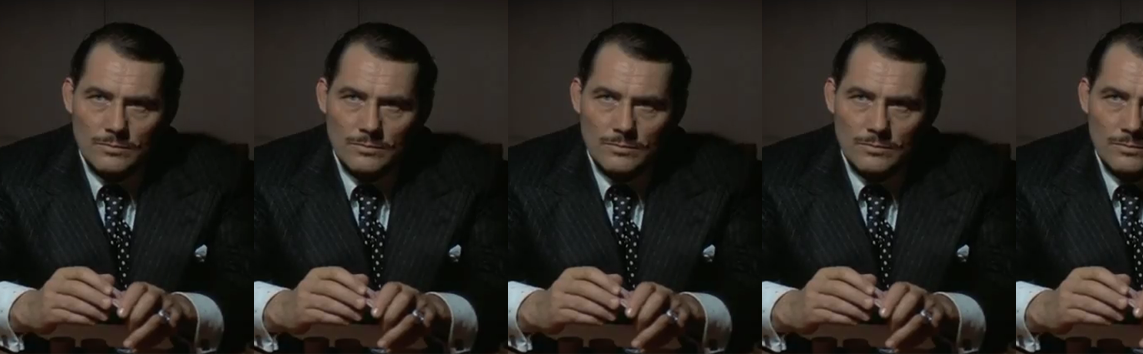
(Andrews)
(Quayle)
(Mills)

Wednesday, 2 March 2016

Alternate Best Supporting Actor 1962: Results

5. Robert Duvall in To Kill a Mockingbird - Duvall gives a flawless performance that fully realizes his his pivotal character in a matter of 3 minutes.

Best Scene: His only scene. 
4. Lee Marvin in The Man Who Shot Liberty Valance - Marvin gives a memorable villainous turn by being the absolute lout bully that Liberty Valance should be.

Best Scene: The duel. 
3. Tatsuya Nakadai in Sanjuro - Nakadai once again offers a worthy adversary for Toshiro Mifune's nameless samurai, but this time surprisingly strikes up a certain underlying connection between the foes.

Best Scene: The duel. 
2. Robert Ryan in Billy Budd - Ryan gives one of his best performances, giving a chilling portrayal of a sadist, but also manages to find the depth within what compels the man.

Best Scene: Billy tries to comfort Claggart. 
1. Peter Sellers in Lolita - Sellers gives an amazing performance as he's absolutely hilarious, but also manages to be surprisingly unnerving in the role at the same time.

Best Scene: Just a normal guy with a normal face.
7. Arthur Kennedy - Kennedy offers the needed two sides to his character the slightly shallow broadcaster, but as well the sardonic man who is well aware of what he is doing.

Best Scene: "I'll take your bloody picture"
6. Anthony Quayle - Quayle brings surprising depth to his role as he quietly portrays the affecting arc of his character, which is to fully understand who Lawrence really was.

Best Scene: The funeral. 
5. Anthony Quinn - Quinn gives an appropriately larger than life performance capturing the grandeur needed for the role, but importantly finds the right nuance when it is needed.

Best Scene: Tayi and Brighton.
4. Jack Hawkins - Hawkins naturally fulfills the role of the proper British General but goes further in his exploration of his character's relationship with Lawrence.

Best Scene: Allenby convinces Lawrence to take up the fight again.
3. Alec Guinness - As per usual Guinness gives strong work successfully disappearing into his role as well as giving a rather captivating portrait of a quiet yet powerful leader.

Best Scene: Faisal is interviewed.
2. Jose Ferrer - A brilliant one scene wonder as he completely realizes his character's disposition and finds the needed subtext of his scene through his performance.

Best Scene: His scene.
1. Claude Rains - Good predictions mcofra7, and Jackiboyz. Rains gives such an excellent performance as he does not waste a second in creating a fascinating depiction of a smooth political operator.

Best Scene: The ending.
Overall Rank:
  1. Peter Sellers in Lolita
  2. Robert Ryan in Billy Budd
  3. Omar Sharif in Lawrence of Arabia
  4. Claude Rains in Lawrence of Arabia
  5. Tatsuya Nakadai in Sanjuro 
  6. Lee Marvin in The Man Who Shot Liberty Valance
  7. Jose Ferrer in Lawrence of Arabia
  8. Brock Peters in To Kill a Mockingbird
  9. Alec Guinness in Lawrence of Arabia
  10. Robert Duvall in To Kill a Mockingbird
  11. Jack Hawkins in Lawrence of Arabia
  12. Charles Bickford in Days of Wine and Roses 
  13. Burgess Meredith in Advise & Consent
  14. Ed Begley in Sweet Bird of Youth 
  15. James Gregory in The Manchurian Candidate
  16. Anthony Quinn in Lawrence of Arabia
  17. Melvyn Douglas in Billy Budd
  18. Anthony Quayle in Lawrence of Arabia 
  19. Charles Laughton in Advise & Consent
  20. Karl Malden in Birdman of Alcatraz
  21. Lee Montague in Billy Budd
  22. Arthur Kennedy in Lawrence of Arabia
  23. Lew Ayres in Advise & Consent
  24. Frank Overton in To Kill a Mockingbird
  25. Joseph Wiseman in Dr. No 
  26. David McCallum in Freud
  27. Richard Harris in Mutiny on the Bounty  
  28. Woody Strode in The Man Who Shot Liberty Valance 
  29. Richard Attenborough in All Night Long 
  30. Henry Fonda in Advise & Consent
  31. John McGiver in The Manchurian Candidate
  32. Jack Klugman in Days of Wine and Roses
  33. Rentaro Mikuni in Harakiri
  34. David McCallum in Billy Budd
  35. Edmond O'Brien in The Man Who Shot Liberty Valance
  36. Michael Redgrave in The Loneliness of the Long Distance Runner
  37. Khigh Dheigh in The Manchurian Candidate
  38. Paul Rogers in Billy Budd
  39. Victor Buono in What Ever Happened to Baby Jane? 
  40. Akira Ishihama in Harakiri
  41. Walter Pidgeon in Advise & Consent
  42. Robert Brown in Billy Budd
  43. Gary Cockrell in Lolita
  44. John Carradine in The Man Who Shot Liberty Valance
  45. Yuzo Kayama in Sanjuro
  46. John Neville in Billy Budd
  47. Jack Kruschen in Cape Fear
  48. John Megna in To Kill a Mockingbird 
  49. Buddy Hackett in The Music Man 
  50. Telly Savalas in Cape Fear
  51. Andy Devine in The Man Who Liberty Valance 
  52. Martin Balsam in Cape Fear
  53. Rip Torn in Sweet Bird of Youth 
  54. Takashi Shimura in Sanjuro
  55. Hugh Griffith in Mutiny on the Bounty
  56. James Anderson in To Kill a Mockingbird
  57. Andrew Prine in The Miracle Worker
  58. Paul Fix in To Kill a Mockingbird
  59. Larry Parks in Freud
  60. Wesley Addy in What Ever Happened to Baby Jane? 
  61. Telly Savalas in Birdman of Alcatraz
  62. Don Murray in Advise & Consent
  63. Edmond O'Brien in Birdman of Alcatraz 
  64. Henry Silva in The Manchurian Candidate
  65. Victor Jory in The Miracle Worker
  66. Jack Lord in Dr. No
  67. Ron Howard in The Music Man
  68. Keith Mitchell in All Night Long
Next Year: 1939 Lead

Tuesday, 1 March 2016

Alternate Best Supporting Actor 1962: Alec Guinness, Anthony Quayle, Anthony Quinn, Arthur Kennedy, Claude Rains, Jack Hawkins, and Jose Ferrer in Lawrence of Arabia

Lawrence of Arabia is often touted as one of the greatest films of all time, and deservedly so. However it's one of those films were some elements are often overlooked in its praise. Of course the masterful vision of David Lean's direction, the sheer scope, and Peter O'Toole performance as Lawrence are praised, again deservedly so. What seems more often a little overlooked is how well developed the cast of characters are along with Lawrence, it is not a one character piece. These smaller, yet not underdeveloped roles, are help realized by the film's brilliant screenplay and of course its large ensemble.

Alec Guinness did not receive an Oscar nomination for portraying Prince Faisal in Lawrence of Arabia.

Naturally David Lean's frequent collaborator is in the mix here as the Arab Prince who is most active in his rebellion against the Turkish Empire. Alec Guinness disappears into the role of Faisal, which could be surprising if this were not Alec Guinness. Guinness somehow wears the makeup particularly well, and his adjustment to his accent is especially effective in realizing Faisal's character. Guinness carries himself with the needed quiet dignity of a man who does not use many words, but only seems to make use of important words. Guinness is rather captivating in the way exudes the authority of Faisal with such an ease. He has the grace of a truly great leader. The intelligence of the man just seems a given by Guinness's performance as he very plays Faisal as a leader who is constantly listening to those around him. There's something so special about Guinness's use of his eyes here as they are piercing yet comforting at the same time realizing Faisal as both a man that does not enforce himself upon you, however you cannot ignore his presence.

This is something very interesting about the way Guinness manages to conduct himself as Faisal in that he makes him seem as though he's somewhat aloof, though paints this as merely a facade in order disarm those around him. Guinness presents Faisal as an educated man, but one who purposefully does not try to remove himself from the simple view that a foreigner may take from him. Guinness's approach here is very effective as he shows the way that Faisal does this in order for his more important remarks to be all the more incisive. Guinness utilizes the set up so well as he has this the overriding feature of Faisal yet still suggests so much more about him. There's a great scene for Guinness when the Prince is interviewed about his campaign. Guinness is so good as he keeps Faisal the proper Prince on the surface, however underneath it Guinness finds a striking cutting edge to the man when he states that for him mercy is only good manners. The same holds true in the scenes where he directly interacts with the British high command. There is a definite determination, a far more fervent desire, that Guinness brings within this as Faisal questions the British intentions, and later when he goes into direct negotiations with them. Speaking of the British High Command.

Jack Hawkins did not receive an Oscar nomination for portraying General Allenby in Lawrence of Arabia.

Hawkins, having already collaborated with Lean on The Bridge on the River Kwai, once again returns as a British Officer this one of a somewhat different sort. Hawkins's carries himself as one would expect from a proper British General, that being an assured yet respectful command. Now this is the sort of role that very well could have been just the standard authority figure there to occasionally move along Lawrence's story. That's never the case as Hawkins's performance brings much more nuance to the role than one might even expect. Already important whenever Allenby speaks of military matters Hawkins portrays that proper assurance and passion for his duties. Whenever a political working comes up Hawkins infuses the right sort of exasperation delivering well Allenby's frequent aside of "I'm not a politician, thank God!", though this in itself is not simplified by Hawkins as indifference. Hawkins instead presents an underlying understanding in Allenby that he definitely knows the political issues, but uses this exasperation as basically a defense to make it so he barely has to speak of it.

Hawkins is especially strong in his scenes where he converses with Lawrence directly. Hawkins does well to show the different wavelengths that Allenby is playing at. He keeps the stature of the General correctly when trying support Lawrence's ideas, or attempt to explain away that the English may intend to take Arabia for themselves. Hawkins does not leave it at that though revealing a bit of introspection in Allenby as he puts forth some casual jealousy in the man when he ponders about his own stature when compared to Lawrence's. My favorite moments of Hawkins's though is when Allenby attempts to get Lawrence back on track in terms of defeating the Turkish empire. These moments could have been easy enough to show Allenby attempting to get Lawrence to tow the line so to speak. I love that Hawkins does not play it that way as he calls upon the certain chemistry he has with O'Toole to make it more than that. Hawkins exudes an underlying respect Allenby has as his glances which suggest that Allenby sees the man he wishes he could be. When Allenby encourages Lawrence to take back the fight once again Hawkins is genuinely inspirational as he brings so much vigor in his eyes and words as he tells Lawrence to go on and fulfill his destiny.

Now a favorite scene of mine for both Hawkins and Guinness is near the end of the film where the two argue over who Lawrence belongs to, and the two are forced to decide that he is equally useless for the both of them since either side can lay claim to his actions. Both Hawkins and Guinness are rather cold in this moment by speaking as men of straight duty trying to simply get their demands across without much care for who it might effect. The two do share an equally memorable moment though just as they agree to basically forget Lawrence and get onto more business. Before that though Hawkins and Guinness each have a silent reaction that is quietly moving as Faisal and Allenby each for the moment suggest what Lawrence really does mean to them, before overcoming their emotional connection and moving on. Both Guinness and Hawkins do very commendable work here since either could have been reduced to caricatures of just an Arab Prince or a British General, and could have been just there to occasionally move the plot along. Neither actor allows this to be the case. They both are able to realize not only what are Allenby's and Faisal's motivations, but also who they are as men as well as what their relationship with Lawrence truly is.
(For Hawkins and Guinness)

Anthony Quinn did not receive an Oscar nomination for portraying Auda Ibu Tayi in Lawrence of Arabia.

Anthony Quinn plays Auda Ibu Tayi who appears as the leader of a large tribe who Lawrence convinces to join the cause, despite Tayi originally being paid to fight for the Turks. Now this is a role where you get technically what you'd expect, but that's not a problem. This is a very much in Quinn's wheelhouse as a larger than life warrior type which is fitting for a man who will ride into battle because it is "his pleasure" to do so. Quinn brings that boisterous power to his performance, that grand stature of a man who is a true leader of his people, and wholly embraces his life style of war. Quinn's performance excels in just being the spirited aggressive force he should be, as his ability and willingness to ride into war is something that it is obvious he lives for with every breath that he takes. Quinn stands as high as he can in the role as he frankly does not hold back in terms of the exuberance he brings to the part, and nor should he. It fits so well with who Auda Ibu Tayi needs to be for the film, and Quinn stands out by presenting someone in the story who fights exactly for what he says he fights for. He has no hidden motives for his war path.

Quinn is indeed very entertaining in the role as he enlivens the screen with his presence at any given moment he is in. He has some very enjoyable moments as he shows Tayi's personal beliefs that he is very passionate about. He is also effective in showing the certain callousness that comes from such a man, particularly in his brutally straight forward delivery of "It was written then" when he hears that Lawrence had to execute man he previously risked his life to save. Quinn though does well to not make Tayi too simplistic ever. He carefully throughout the film portrays Tayi's growing personal respect for Lawrence. I really like the way he does this still within in his own blunt personal style of course. There's a moment towards the end of the film between Lawrence's right hand man Sherif Ali (Omar Sharif), and Auda Ibu Tayi, where Ali actually threatens Tayi with violence. However it's actually made a rather poignant scene by both actors as they reveal a stronger concern for Lawrence than they are willing to let on. I like how Quinn keeps Tayi rather uncouth as speaks to Ali on the matter, yet he still alludes to Tayi's own honest sympathy for their ally. Quinn's work contributes well to the film offering the right larger than life figure in Tayi, while still finding some depth within him.
Anthony Quayle did not receive an Oscar nomination for portraying Colonel Brighton in Lawrence of Arabia.

Quayle's performance here is actually rather interesting one to examine since just with a cursory glance there may not seem to be much to the character, though there actually is as he has perhaps the third most dynamic character arc after Lawrence and Sherif Ali. The earliest point chronologically speaking that we meet Brighton is when Lawrence first appears to Prince Faisal's camp. Brighton in these scenes very much is the proper British officer who just wants Lawrence to keep quiet, and stick to the plans devised by the British high command. Now apparently Quayle and Lean argued over the portrayal of Brighton as a character with Quayle wishing to play him as a fool while Lean wished for him to be shown as an honorable man. The intriguing part of this is that watching the performance you can take either interpretation to what interpretation took precedence. In that it seems Quayle went about playing it that Brighton's foolishness in fact allows him to be honorable. This is shown even when he's the British officer telling Prince Faisal to do things that mainly benefit the British, but Quayle actually does play Brighton as genuinely believing this to be their best course of action.

Now Brighton's arc is not heavily focused upon but based around his view of Lawrence changing throughout the film. Obviously he begins frankly as an obstacle who wishes to keep Lawrence from making any sort of real impact. However Lawrence proves everyone wrong by taking an important city in a way that no one believed could have been done. When Brighton continues to work along with Lawrence as they proceed to attack the Turkish rail lines. Quayle keeps the skepticism with Brighton, though it is not nearly as strong as it was a before. Quayle though is in one very good scene where he questions some of the Arabs' motivation including Auda Ibu Tayi's. Again both interpretations potentially shine through though it is no less effective as Quayle reveals the intense discontent in Brighton against them. Again Quayle manages both because, he may be foolish to hold such a simple view, yet he is honorable as Quayle once again brings only a genuine passion to Brighton as man who believes one should fight for what one believes in. Now the character's transition in regards to Lawrence continues throughout the film, and Quayle gradually reflects in Brighton as a further understanding of the man. That brings it to his most pivotal moments of the film, that are at completely opposite points in the film. That being his first and last scene, his first scene taking place after Lawrence's death, but each show Brighton's final perspective on the man. The first scene Quayle is rather moving in showing Brighton fully accepting the important, and rather great man that Lawrence was at his funeral, as in the end both men fought for what they believed was right. His last scene is equally strong as Quayle presents Brighton as the one man who can appreciate what Lawrence did without exception through his depiction of Brighton's disdain as he sees that everyone else in the end was merely using him for their own ends. This somewhat brief work once again brings so much unexpected depth to the role, and in turn the film, as Quayle makes Brighton anything but a stock side character.
Arthur Kennedy did not receive an Oscar nomination for portraying Jackson Bentley in Lawrence of Arabia.

Arthur Kennedy plays an American photojournalist based upon the real Lowell Thomas who helped to make Lawrence famous. Kennedy's not an actor who has always been a favorite of mine, though I don't dislike him, but his performance style works quite well for this part. That being Kennedy's usual method of rather accentuated delivery. This feels completely fitting for the role of Bentley as he depicts Bentley very much as a man ready to make a radio broadcast with his words. Kennedy is very good in the scenes where he is in essentially interviewer mode. Kennedy feels like a true broadcaster in these scenes as he kind of has that false refinement of sorts as he speaks so directly, and specifically about topics yet one can't help but feel he's reciting from a script. Kennedy's good in the way he undercuts that when someone basically ask Bentley for a more direct, more honest answer. Such as when Faisal asks really why Bentley's interested in Lawrence after receiving some platitudes previously. Kennedy drops the act for a moment, but importantly does not show Bentley to stumble with this. He still shows him to be an intelligent man, but rather just more naturally responds as he states the exact reason for wishing to cover Lawrence.

Kennedy's good in the scenes where he interacts with Lawrence, and the rest of the party. This is largely because Kennedy embraces the idea that Bentley is able to be the most detached from the situation given that he's really there just to get a good story out of Lawrence. Kennedy reveals the right enthusiasm as he goes about taking Lawrence's picture, and getting the icon he's looking for. Kennedy again brings back the proper broadcaster routine as he interviews Lawrence, as well as Sherif Ali, and he's very effective in the way he drifts from that to a semi-sardonic observer whenever Bentley decides on a bit of an editorial. One of his best moments is in his first scene as he eulogizes Lawrence first in a proper memorial ready for a headline which Kennedy delivers with the utmost passion and respect, then a second later the truth about the man's shortcoming which Kennedy delivers with a definite sarcastic edge. I love that not even the understandably detached Bentley is not only defined by that. Kennedy has a great final scene where he must witness a changed Lawrence as he goes on a massacre of a Turkish brigade. It's a brief moment but rather affecting one as Kennedy bluntly shows that Bentley cannot be detached from what Lawrence has done. Kennedy's excellent in revealing how disturbed Bentley is by what he sees and the outrage as he still must go about his duty to glorify Lawrence. Again this is not a huge role yet Kennedy makes a definite impact with Bentley. He successfully, in just his few scenes, creates a portrait of this journalist as man ready to make stories for more mainstream public consumption yet is well aware of the reality.
Jose Ferrer did not receive an Oscar nomination for portraying the Turkish Bey in Lawrence of Arabia.

Jose Ferrer has the smallest role out of everyone listed here. He only appears in two scenes, one for only a few seconds. His second scene takes place as Lawrence is caught by a few Turkish soldiers and taken to their superior played by Ferrer. Ferrer apparently believed this to be his greatest performance, and I'm a bit inclined to agree despite its brevity. Ferrer is brilliant as he instantly set up his character in the way he simply looks up from his desk as we see a truly exhausted individual. Physically speaking of course but more so mentally. The way he walks even keeps the proper military step yet so labored it is of a man who just is barely keeping to his step. The man then proceeds to look over the potential suspects and Ferrer again is outstanding in the way he slowly reveals more of this man. At first it seems like he might be looking for someone important as he scans the man. As we see a little longer though Ferrer's expression becomes somewhat more peculiar as he decides on Lawrence to be the man who is kept. At first it seems that Lawrence may be found out, which would mean his death, as the Bey notes his eye color. Ferrer though notes this not as though Bey is making a great discovering as an officer in the Turkish army, but rather has found something he finds rather appealing. When the Bey ponders on the fact that he's the only one who notices interesting faces where he is particularly stationed, Ferrer alludes to a consternation. This consternation is not made by Ferrer as that of a man frustrated by the lack intelligent discussion, but rather that of sexual frustration. Ferrer is terrific as he subtly reveals a bit of ache in the Bey as he examines Lawrence, and that ache he's ready to satisfy as he states to his men to "beat him" with a understated glee. After Lawrence is released he's never quite the same man. We know he was beaten but largely due to Ferrer's work we can assume it did not stop there. Ferrer's performance is outstanding as he effortlessly realizes the subtext of the scene. Ferrer like the rest of the cast, though with even less time, makes Bey more than simply a Turkish officer who detains Lawrence, far far more.
Claude Rains did not receive an Oscar nomination for portraying Mr. Dryden in Lawrence of Arabia.

Now as for Claude Rains we have one of the greatest actors of all time in one of his final roles. A quick side note I must admit there is something enjoyable to see as he and the man he shares the record for most supporting actor nominations without a win with, Arthur Kennedy, share a direct interaction with one another. Anyway Rains's performance is sort of a hidden treasure in the film. Say on a initial viewing you pay no mind to Dryden, you're missing something rather special hidden right in front of you. Rains plays Dryden the head of the Arab bureau basically the man who deals with the political matters connected with the Arab campaign. Dryden is in a more than a handful of scenes, and though he does not have an excessive amount of lines he has some pivotal ones. The thing is that the lines themselves, though well written, could often be meaningless if it weren't for Rains's delivery of them. Rains conducts himself so well here as he has Mr. Dryden be someone who takes his time in his movement, yet there is never a question that he's a man who knows exactly where he should be. The level of assurance that Rains conveys with such ease makes the strong willed characters seem meek in way, even though Rains keeps Mr. Dryden so carefully unassuming in his personal style.

Rains is terribly clever here as he makes a man so terribly clever in such a tricky way. When he sends Lawrence on his original mission it seems simple enough, yet the potential involved from the mission seems in Rains's expression the whole time. Rains makes Dryden actually the most powerful man in the film, even though he never states his power in least. In fact he acts as though he's just a modest official who has no great ambitions. There's one magnificent scene where he, Brighton, and Allenby discuss the ability to give the Arabs artillery. It is Dryden who makes decision, even though he specifically states it's Allenby's decision, yet the way Rains conveys the message within a question seems so incisive, more than if even directly told Allenby what to do. There's another great moment when Allenby inquires to Dryden if Britain has any plans for Arabia. Dryden states only that "it's a difficult question" but Rains is so perfect in making it a casual deflection yet in his expression there is no question on the matter in Dryden's mind. Rains is amazing in the way he makes it that Dryden really is always in charge even though he never in fact gives away his position. Rains could not be smoother in how eloquent he is in the depiction of a truly seasoned political operator. Rains is even fantastic when he's not do anything. Even in scenes where he is silent every glance is worth something due to Rains. He suggests Dryden analyzing and dissecting everything he sees. It is fascinating to just watch Rains in any given scene as there's not a wasted second in the entirety of his performance. One favorite moment of mine is when Dryden notices cuts have reopened on Lawrence's back, and Dryden for brief instance tries to inform Lawrence of this. Rains's reaction is so good, even humorous in a way, as he shows as Dryden quickly evaluates the situation and decides it's best not get involved with this issue. Another magnificent moment for Rains is at the end of the film is when he finally responds to Allenby claiming not to be a politician. Rains is hilarious, but also oh so shrewd as Dryden subtly scoffs at hearing the rather false claim once again. I love everything about this performance as Rains adds so much to film with a part that with the wrong actor have easily almost just been part of the background. It's such an astute piece of work by Rains as he does so much with so little.

Tuesday, 23 February 2016

Alternate Best Supporting Actor 1962

And the Nominees Were Not:

Robert Ryan in Billy Budd

Peter Sellers in Lolita

Lee Marvin in The Man Who Shot Liberty Valance

Tatsuya Nakadai in Sanjuro

Robert Duvall in To Kill a Mockingbird

Brock Peters in To Kill a Mockingbird

For prediction purposes: Duvall from the mockingbird men.

And for a single review spectacular:
The supporting cast of Lawrence of Arabia:

Arthur Kennedy in Lawrence of Arabia

Claude Rains in Lawrence of Arabia

Jose Ferrer in Lawrence of Arabia

Alec Guinness in Lawrence of Arabia

Anthony Quinn in Lawrence of Arabia

Jack Hawkins in Lawrence of Arabia

Anthony Quayle in Lawrence of Arabia

For prediction purposes, eh rank em all if you wish.

Tuesday, 13 March 2012

Best Supporting Actor 1969: Results

5. Anthony Quayle in Anne of the Thousand Days- Quayle gives a functional performance that turns Cardinal Wolsey into a basically a yes man.
4. Rupert Crosse in The Reivers- Crosse gives a charmingly wacky performance as well as combined with a more serious performance well by never overdoing either aspect of his character.
3. Elliot Gould in Bob & Carol & Ted & Alice- Gould gives an enjoyable and effective performance as he realizes the many facets of his character's confusion.
2. Jack Nicholson in Easy Rider- Nicholson as usual for this period gives a very strong performance that has that unique magnetic quality that is distinctly Nicholson. It never quite reaches the heights of his later work in the seventies but it is an excellent precursor to them.
1. Gig Young in They Shoot Horses, Don't They?- Gig Young easily gives the strongest performance this year. Gig Young's performance is terrific flawless work that realizes the master manipulator aspects of his character as well as the energetic emcee. He effective brings all the facets of his character into one brilliant characterization that never has a simple moment, and creates a fascinating memorable man in the role of Rocky. 

Friday, 9 March 2012

Best Supporting Actor 1969: Anthony Quayle in Anne of the Thousand Days

Anthony Quayle received his only Oscar nomination for portraying Cardinal Thomas Wolsey in Anne of the Thousand Days.

Cardinal Wolsey who acts basically just as a loyal man working the will of King Henry (Richard Burton). Wolsey does this until he eventually falls out of favor with the King because he is disliked by the King's second wife Anne Boleyn. Quayle is functional enough in this role being the sort of proper yes man for the King being somewhat authoritative as well when carrying around Henry's orders.

It is not a particularly compelling performance though as he basically just goes through the motions one would expect from the Cardinal as he is written in the film which is fairly simply. Although he is a man of his own great power the film as well as Quayle's performance only seem to show the Cardinal's power as nothing more than just something for the King to use. The cardinal simply is not a very interesting character in the film and barely seems to even be a power player within the Kingdom and is quite close to just being a yes man toward the king.

There are a few scenes where he tries to persuade the King off his course in regards to his marriage with Anne Boleyn but even that is quite limited. Really Quayle's biggest scene that most likely gave him the nomination is his scene where he has lost all favor with the King after he failed to keep the King in favor with the pope. Quayle does realize the sadness of cardinal well enough after he has lost everything but still it is not anything particularly remarkable.

His nomination in the end seems to be a sort of a bonus nomination for film and a career nomination for himself. There is not a single moment in his performance that really makes his character standout it is mainly a functional performance for a functional role. Although I will say that Cardinal Wolsey did not need to be functional as he is in this film, because Orson Welles in A Man for All Seasons makes a far more interesting and impressive character out of Wolsey in a single scene than Quayle ever does in his several scenes.

Wednesday, 7 March 2012

Best Supporting Actor 1969

And the Nominees Were:

Anthony Quayle in Anne of the Thousand Days

Elliott Gould in Bob & Carol & Ted & Alice

Gig Young in They Shoot Horses, Don't They?

Jack Nicholson in Easy Rider

Rupert Crosse in The Reivers