Showing posts with label 2023. Show all posts

Saturday, 3 February 2024

Best Actor 2023: Results

 5. Bradley Cooper in Maestro - Cooper gives into every possible artificial excessive choice in one of his worst performances. 

Best Scene: Getting into bed with his dying wife. 
4. Colman Domingo in Rustin - Domingo gives a passionate and convincing performance even if it is constantly limited by a weak script.

Best Scene: Training the police. 
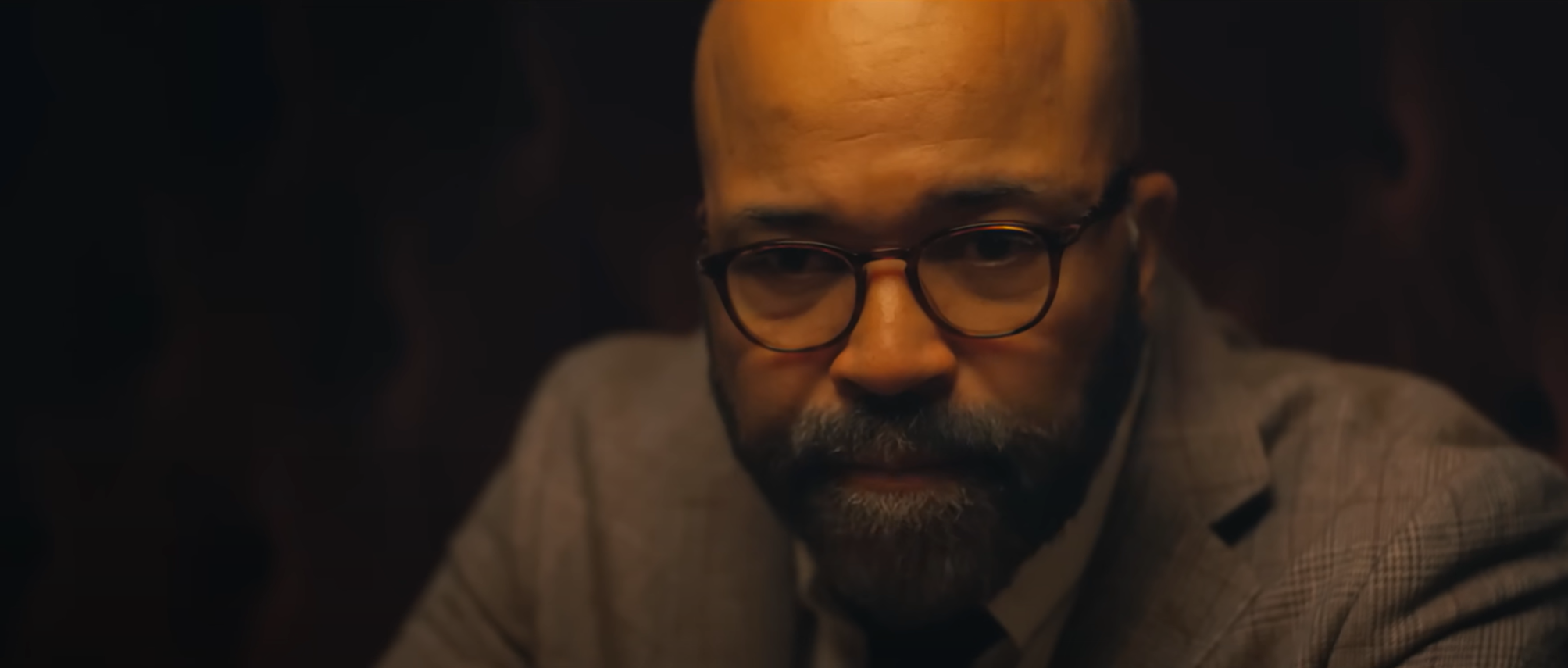
3. Jeffrey Wright in American Fiction - Wright delivers a nuanced turn creating a sense of every family relationship and bringing the right humor on the satire side in his portrayal of both exasperation and the caricature he is tasked with playing.

Best Scene: Fighting with his girlfriend. 
2. Paul Giamatti in The Holdovers - Giamatti gives an absolutely wonderful performance where he is a hilarious grump, but also a very moving portrayal of an over the hill teacher finding a real connection again. 

Best Scene: Goodbye to Angus. 
1. Cillian Murphy in Oppenheimer - Good predictions, basically everyone. Although I will say this was not a blowout because I do LOVE Giamatti's performance as well, and would be perfectly fine if he ends up taking home the win. Having said that Murphy's performance is just outstanding on every level, in creating such a convincing and wholly captivating portrayal of every potent complexity within the life of J. Robert Oppenheimer.

Best Scene: Cross examine. 
Next: 2023 Alternate Supporting

Best Actor 2023: Bradley Cooper in Maestro

Bradley Cooper received his fifth acting Oscar nomination for portraying Leonard Bernstein in Maestro.

Maestro is a so-called biopic of the famed American conductor/composer.
 
I'd like to point out the last time I reviewed Bradley Cooper, I thought he deserved both the leading and supporting wins that year, so I do believe the man has talent, but it is without apology for what I am about to do. There's a term originating from robotics called the uncanny valley, where one is disturbed by robots that look kind of like humans but are off in a way that is off-putting. Well here's the uncanny valley of biopic performances, where Cooper's approximation of Bernstein is off in such a way that penetrates the mind with just how bizarre of creation this hideous thing is. Let us speak of his speech as Bernstein which Cooper crafted for years apparently the vocal work of Bernstein, which is odd he took so long to get it wrong. Clearly Cooper saw Bernstein being interviewed by Edward R. Murrow for the basis, and unlike Cillian Murphy as J. Robert Oppenheimer, who managed to notice that maybe someone's television manner is different from his personal manner, chose this to be the absolute truth of the man's voice and manner at all times. Of course, it would help if he even got that right, as his vocal performance is much too high pitched already for Bernstein, and he gets that even more wrong when he gets older. There's clearly effort here, that makes the failure of it all the more abundant, as he clearly believes he's playing Leonard Bernstein brilliantly, so much so that only with such confidence could you be as bad as a Cooper here is in playing Bernstein.
 
Take the near opening sequence where he answers the phone with his forced put on accent that conveys no emotion, no nuance, no anything but some phony attempt to be someone, sad when he isn't even convincing as such. What's weirder are his physical choices that basically stress an un-naturalism at every turn, where clearly Cooper has thought out every moment of an extra gesture or movement as we see Bernstein in his first major conducting gig. That's of course the problem as it becomes this pantomime act of a man giving a great performance, but again a false act of a great performance is not a great performance at all, in fact it seems the parody of such a performance. Speaking of performance, young Cooper apparently liked having fun doing fake conducting and that was apparently the impetus to make this film, and having watched it twice, I'm pretty sure that motivation never expanded as such as I think he wants to just wanted to conduct like Bernstein onscreen, which we see first in this sequence where never has raising hands seemed more unnatural. Cooper doesn't ease into an iconic stance, he already believes it to be iconic, that it feels more like a man posing to be covered in clay and made into a statue by how perfect it all clearly is already...according to him. There's the artifice that Cooper brings that constrains him and is bizarre with how much he refuses to find variation. As just take his voice, never has just the most rudimentary dialogue seemed so false because Cooper refuses to shift the accent even within emotion, making this aggressively stiff affectation rather than, you know, a human speaking.
 
Cooper's performance marvels in his ability to be phony in multiple ways, and while last performance I praised heavily for the use of one's eyes, I must do quite the opposite this time around by asking WHAT THE HELL IS HE DOING WITH HIS EYES? Where are your eyelids, man? Why are his eyes open as much as possible, as though he's constantly high on cocaine? I mean one can portray excitement in a way most humans do, not some psychopathic maniac, as I'm quite sure that is the choice Cooper makes every time we see Bernstein after a conducting job, seeing a friend, seeing his eventual wife Felicia (Carey Mulligan). I have to note the scene where Bernstein sees two friends and their child. Cooper perhaps has never been worse as he plays the whole scene not as a friend being jovial but a demented freak with every over the top line delivery and action that to describe as ridiculous would be an understatement, and one should never be understated when reviewing this performance...I mean Cooper wouldn't like that based on this performance. A performance without any internalization whatsoever, I'll admit Cooper doesn't help it with his own script that I'd say is razor thin but that's kind of an insult to the thickness of razors. As we see him in love with Felicia, which he portrays with the smile of a maniac, and what is the connection between them...I don't know. Nor do I sense it in the performance of Cooper, though I'll give credit to Mulligan for desperately trying. Cooper on the other hand conveys Bernstein as a man without depth, if he's happy all teeth like a horrible Halloween mask, if he's sad, his head is cocked down like he's Charlie Brown on a bad day, and in this instance Charlie Brown has done something VERY WRONG here, he made Maestro.
 
But hey, maybe when the film switches over to the older Bernstein and Felicia, the film comes together, we'll you'd be wrong. Cooper I imagine did watch Bernstein's interview, as wholly lifting quotes from the man and poorly contextualizing them is far too much the script, but I'd be baffled by his overly nasally vocal approach to older Bernstein, whose voice was much gruffer from his cigarette smoke, which hey that wouldn't matter if what he was doing was working in some way, but Cooper's vocal intonation seems more like the audition to do a Leonard Bernstein doll THAT TALKS, just pull the string. I mean but hey so far so stiff, but maybe we get the real him, when Bernstein is more himself by being a bi-sexual man, and he gets to follow more of his homosexual feelings. Well we see him interested in a man, which I know he's interested, not by any captivating conversation or even chemistry, rather just an onslaught of noise and overacting by Cooper in scenes that stretch what one might call scenes of dialogue. But maybe there's something in his distress as a man though, nah, just looking kind of sad I guess as he speaks of his regrets of not making enough music. But you can tell Cooper thought a lot about how he crosses his leg and holds his leg in a scene, a lot of time, so much time so that wonders what the point of any of it is? Well to so specifically construct the scene in an attempt I guess to high the void of nothingness that is the conversation as he blathers on as blathering, though in turn makes you just notice how every physical and verbal movement seems rehearsed, is rehearsed and makes you ponder what exactly is Cooper trying to accomplish. 

You know what though, what about the factor that apparently propelled Cooper to make this film, which is Bernstein being a conductor? I mean you can read about the hours upon hours of preparation by Cooper for this task, so it must be something special right? Wrong, though I should stop asking questions that are in fact going to answer. First a major missed opportunity is seeing Bernstein work through his musical performances, as one can see Bernstein do in a somewhat tyrannical way in any actual footage of the man, but why would you want actual footage when you have Cooper? Whoops. Well Cooper would then need to bother to explain the genius of the man musically, which I guess was too much of a challenge so instead we just get the man saying a few random phrases without any real direction or intention, as this Bernstein is magically ready for every performance. Which again forget the writing though, what does Cooper do in these moments, well in the opposite direction of too much rather than too little. I'd say he's overcompensating for the weak script, but that's not much of an excuse when he wrote the damn thing. The much lauded Mahler's Symphony No. 2 in C-minor, which makes me question many's opinion since it is this triumphant moment that isn't attached to anything and if you think it's powerful it is because you think the music is powerful, because Cooper recreated a youtube clip and little else. Well just one more thing, and one can see Bernstein's method of conducting which was wild and over the top in his extremely expressive way of conducting....and Cooper managed to do the unthinkable which was to actually be more over the top. And here's why, where when Bernstein went wide with his arms, and opened his mouth, you felt he was reflecting his emotion from the music into the action, Cooper's is this bizarre puppet act of the movements and behaviours without the emotions. He's doing them, though always just a little more than the real man which would be impressive if it weren't so ludicrous, but also doing them, because he did them, there's no sense of the why, it just is, and as just is, it is nothing. 

But maybe the last stage relationship saves it all....not bloody likely. I must focus too much on a singular moment for a moment, which is Leonard and Felicia at a concert where he pays more attention to his male companion than to his wife. Cooper manages to overact with his thumbs HIS THUMBS, twiddling them in a way that somehow feels performative, rather than just nervous twitching, how does one do that, but as the great Ian Malcolm would say "Life, uh, Finds a Way", and I'd say Cooper found a way. As much as we learned about their budding relationship we learn even more about the strain of their late relationship, and by more mean exactly the same, and by much I mean nearly nothing. We do get a scene of couples fighting, that is the version of the Marriage Story fight scene that some parts of the internet thought they saw, as this version has nearly as little context as a broken off clip on the YouTube. It does give us the chance to see Cooper practice his portrayal of a chicken pretending to be a human in the way he moves around the room in the scene, and he does raise his phony Bernstein voice to a setting called frustrating, kind of. It's pseudo-emotion in that it has the traits of emotions, but not that thing called actually feeling them. Cooper's work is just one dishonest moment after another in this bizarre caricature of a man, except for about 30 seconds of his performance. Which is the one scene that makes me feel anything, though this is largely due to Mulligan and I do think it falls into drowning man syndrome where you'd take even dirty air if you can breathe, where Felicia is diagnosed with terminal cancer. Which on re-watch, isn't really particularly notable either, it's just less empty, but not really all that much less. You still get plenty of prancing around from Cooper, even his big scene of screaming his pain into a pillow still feels performative in a moment where honesty needed to be the truth. Although I'll give the minor bit of credit in the scene where Bernstein climbs into bed with the dying Felicia. In this moment Cooper drops all pretense and you see a glimpse of the actor he actually can be as he seems finally focused on his co-star and not on crafting his artificial image of representation to the audience. Cooper relaxes for the only moment of his performance as he embraces Mulligan and for a moment seems actually in the scene, and allows us to see a person not some empty representation. Although this 30 seconds does not save his performance in the slightest, rather it shows just what is wrong with his performance. Something we immediately see as we go ahead one more time for oldest Bernstein where Cooper is right back to just one false choice after another, that creates an image, not even an idea, but most certainly never a man. This is perhaps an ideal cautionary performance on award chasing as the film and the performance have so many of the surface traits of a great performance or a great film, traits though of a perfunctory description, lacking the actual context, depth or understanding needed. Cooper can be great, but this is a series of choices attempting to achieve greatness that only result in failure.

Friday, 2 February 2024

Best Actor 2023: Cillian Murphy in Oppenheimer

Cillian Murphy won his Oscar from his first Oscar nomination for portraying J. Robert Oppenheimer in Oppenheimer.

Oppenheimer tells the life and trials of the father of the atomic bomb.

After several supporting collaborations between Cillian Murphy and director Christopher Nolan, the latter finally cast the former in the lead role of one of his films, and seemingly waiting for the ideal opportunity, Nolan found that in the role of J. Robert Oppenheimer. A casting decision fundamental to the film, where while Murphy might not be a dead-ringer, he's remarkably close in terms of the physical presence needed for the iconic figure of the atomic age. That isn't to say that Murphy rests on the great physical casting as he seeks to recreate the man, however Murphy's method, unlike maybe a couple other historically based performances from 2023, is decidedly unfussy, though incredibly effective. Murphy's vocal work here is outstanding though very subtle in taking on Oppenheimer's specific vocal cadence into his performance. It isn't something you even think about because it is just simply IS part of his performance, that makes you just accept him as Oppenheimer, also known as, the ideal way to include such a quality into a performance. Although as subtle it is, it is as dynamic as Murphy's vocal work crafts different eras and styles of Oppenheimer convincingly, though in such a natural way that you don't even necessarily think about it, however it does entrench you more into accepting him wholly as the man. Although quite fascinating though is the fact that Murphy doesn't make it a singular idea even, rather it is a most dynamic voice he uses, throughout the film, as there isn't a single Oppenheimer voice, even though they all seem just natural coming from Murphy, but that is the nature of his performance that is decidedly unfussy while technically doing things that are typically are very fussy and in roles that seem to bring some of the more obvious choices out of actors.

Not Murphy though who I have always had a great deal of an affection for as a performer, and this is just him being dialed in, where he is clearly making the most out of his opportunity to finally take the lead for Nolan. I suppose I might as well go by chronological order, mostly, though an element of greatness of this work is the way Murphy's performance comments on different segments of his work through his portrayal of other moments that combine and amplify scenes in a rare way. His earliest work in the early days of Oppenheimer as a man is perhaps the most straightforward though still extremely captivating work. As really technically Murphy is much too old to be playing young Oppenheimer but I didn't think twice about it when watching the film because Murphy crafts completely his own Oppenheimer for these scenes that are distinct within the overarching character. Murphy's physical manner is wholly different as much more a man not quite comfortable in his own skin, creating more of an innate anxiety in even just the more hurried way he moves. His voice is not of the iconic Oppenheimer voice we will come to know, it's a bit more soft, thin even, and truly that of a man still needing to come into his own. More importantly though there is something very different in Murphy's eyes, which let's talk about Murphy's eyes which are some of the most powerful eyes out of an actor really with how striking they truly are. Murphy and Nolan are clearly well aware of this, and so many of the moments of the film are dependent on those blue windows to his soul here. As the young Oppenheimer Murphy's eyes show the man looking beyond the known realm, but when he looks into that realm from beyond he looks at it with a genuine fear of what it is as a man who is not yet ready to face the void.

After a few words of wisdom and confidence from Niels Bohr (Kenneth Branagh) Oppenheimer moves off to discover theoretical physics on his own turn and Murphy begins to adjust his work. Although there certainly still is some confidence to be found it is no longer hidden within the fear of the visions, now the key point is the way Murphy looks into these moments with a fascination of a man who wants to know more about what had haunted him. The particular success of Murphy's performance in these scenes is actually fundamental to the film itself, because Murphy makes himself this lynchpin to the film, as the object in which all other things must orbit his gravity, and in some moments it is within the power of his presence that he creates the intrigue of a scene. Murphy is magnetic, however magnetic in his way that is so distinctly him, and just seems ideal for Oppenheimer here, as someone who just seems fascinating, and only is that much more when he begins to speak. Within these scenes we are also given what will be a key feature of his performance which is crafting each individual relationship with the massive cast of characters one of the earliest as such being with Isidor Isaac Rabi (David Krumholtz), a fellow American and Jew he meets during his European travels. And as relatively brief as this relationship is screen time wise, it's absolutely wonderful the amount of warmth that Murphy does bring within the withdrawn Oppenheimer as he converses with a like minded man in multiple ways. There's such a sense of appreciation for another, but Murphy also conveys effectively the moments of thinking of the Nazis as the underlying dread within him. Murphy speaks of this as something that does eat at him, though only a minor aspect at this point.

Oppenheimer finds his place teaching theoretical physics while exploring the possibilities of it and we see the next evolution of Oppenheimer. Murphy is great in increasing the charisma mixed in with the passion and his voice changing slightly again to be all the more exact. As Murphy in these scenes shows a man wholly at ease with his work and as someone truly invigorated for the possibilities of it all. There he exudes the power of his personality as a man going headfirst into it all, and creates the right sense of a man largely optimistic in his aims. In this phase seeing the man not at all troubled professionally to the point where he speaks of his left leaning causes quite openly even towards his more conservative though not regressive colleague Ernest Lawrence (Josh Hartnett). And again Murphy fashions a different chemistry than with Krumholtz where the two instead show specifically this excitement and eagerness to discuss their mutual life's passion for their work, though they come into natural conflict as Ernest pushes back on Oppenheimer's communist ties. Moments that Murphy presents with an effective naivety of believing there can be no ramifications for exploring all beliefs, and his eyes in that state of seeming contentment if not relief. Although similarly pushes back in moments against his openly communist brother and his initial girlfriend of the mentally troubled Jean Tatlock (Florence Pugh). And while the relationship between Oppenheimer is the criticism I understand, although I disagree with it given it does serve a very specific point by providing what we see as the limitations of Oppenheimer as a man. Where we see through Murphy the incredible though specific charisma of the man that relates directly to his intelligence, which is always his method of wooing women. When speaking of matters of knowledge or study, Murphy makes Oppenheimer a master and creates that unique appeal through that.

Although matters of the personal, particularly those women, Murphy naturally undercuts the man in showing him in some ways a fool who can't really articulate himself well in terms of creating a wholly cohesive romantic connection. Rather Murphy reveals much more a man of emotional desperation and most importantly in these talks purely based on the romantic, Murphy shows the rare place of Oppenheimer stumbling and quite frankly being lost for words when anything is required beyond the most generalities. We even see this as well in his relationship with his eventual wife Kitty (Emily Blunt) who he too impresses again through his intelligence, where again Murphy makes the appeal of Oppenheimer very convincing. Whenever there is trouble between them though, such as Kitty's inability to properly raise their son, Murphy believably shows this other side of Oppenheimer of a man just lost. This never feels like a contradiction of any sort, rather a natural aspect of the man who may be a complete genius in the world of theoretical physics, even languages, but as just being a loving boyfriend or husband, he more than falls short. And I love that Murphy plays it straight as a direct strain of a man who just truly is lost in these moments, and there is here, unlike when speaking on those matters of intelligence, a man very trying in his words. In most scenes, Murphy shows a man just launching into any words and ready for any conversation at any speed. In these moments Murphy's performance is one of hesitation and reservation. He's a man who is out of his comfort zone and in this aspect of his life an utter failure.

In terms of theoretical success Oppenheimer is approached by General Leslie Groves (Matt Damon) to be head of the Manhattan project, the development of a gigantic atomic bomb partly due to the concerns that the Nazis are developing one themselves. Murphy is amazing in the interview scene, and really every scene with Damon, as the two have a great almost comedic chemistry with one another, as two men who really know exactly what they want from each other while being not completely honest with one another, though honest in that they know they're not being honest. What I love what Murphy does is show the sheer excitement in Oppenheimer at the prospect, showing quite clearly that not only is he interested he truly wants it. He speaks to his accomplishments with pride, even the moment when recognizing he couldn't run a hamburger stand but could run the Manhattan project. Murphy's performance delivers this genuine excitement within Oppenheimer that is thrilling to watch as he creates the expertise of Oppenheimer though in a different way. Instead of speaking intelligently about matters of academia, now it is a matter of life and death seemingly in the race against the Nazis, and so much more, and Murphy presents Oppenheimer not just jumping at the opportunity but relishing it. There isn't a hint of reservation or even regret in Murphy's performance rather he conveys potently the sense of ambition in Oppenheimer to do this task, and to be the ONE to do this task. Murphy fittingly is captivating as he brings this energy to Oppenheimer seemingly at his apex while doing the project that will be what he believes to be the greatest achievement of his life.

The building of the bomb sequences are exceptional work in Murphy very much being, in film terms, the leader of the massive heist as we see him first go around recruiting all the best minds of the country then proceeding to wrangle them in all their different idiosyncrasies. Murphy brings the right kind of thrill where he takes us into these moments by bringing this innate sense of conviction within his performance of someone now with an exact purpose and vision. His manner when recruiting the scientists shows a man who is most in his command in speaking in his terms with exact truths and a specific certainty in his intention. Murphy shows this side of the project manager with this particular ease as we see in the moment where he manages to get Edward Teller (Benny Safdie) back from leaving after his ideas were put down by others, including instead building a Hydrogen bomb. Murphy's great in this moment because he doesn't present his wrangling of Teller in this moment as true manipulation, nor does he present it as someone who is truly into the Hydrogen bomb as anything more than a scientific curiosity, rather a charismatic leader who knows he has to make compromises and encourage all as long as he is keeping each of them in the direction of completing the bomb, which for Oppenheimer in this moment is his "masterpiece" as a man.  

Within the bomb project sequence though there are key moments where sort of the confidence of Oppenheimer is challenged for reasons relating to his past and his connection to the communist party. The first is when a friend casually mentions sending information to the Soviets about the bomb via a back channel which Oppenheimer puts down as treachery and attempts to reveal his friend's contacts name to the military. Murphy's great in the casual awkwardness he brings in the initial attempt to basically serve what he thinks should be his role as a loyal man within the government, though with the quiet sense of anxiety of a man trying to not give up his friend in the process as well. This is taken to an extreme however when the next day he is questioned, more so interrogated, by Colonel Pash (Casey Affleck). It is one of the best scenes in the film, as we see a particularly artful display by Murphy of a spider trying to swim out of water. It is particularly striking to see Oppenheimer in this moment, where his confidence seems at its apex, with Murphy so artfully speaking in this attempted stumbling and looking around as though trying to find an escape while being completely stuck in his place. Slightly different though is his conversation with Groves afterwards, who is supportive though concerned. The reflections of Murphy's performance being extraordinary in portraying the sheer tension of his work, as the nervousness is in the stiffness of his voice and his physicality that is so stiff in his needed defensiveness. Against Murphy's work with Damon, where he exudes such a potent sense of memory and reflection of that tension, while containing this slight more openness that alludes to his sense of loyalty to his friend holding him back from clearing himself of the situation. The other moment is Oppenheimer learning of the death of Jean Tatlock, where Murphy is incredible in showing the blunt ineptitude of his emotional state of the relationship. Presenting the man wholly lost, and essentially nearly ready to die himself, in this matter in which he was never able to fully understand nor had the emotional maturity to handle.

These situations mark a slight shift eventually where a man becomes more weighted down both by his life and his situation, particularly once his target is no longer the Nazis and now the Japanese. With this motivation, being part but not all of Murphy's portrayal of the sense of the gravity of creating the bomb. Murphy when explaining Oppenheimer's reason for the race against the Nazi there is a slight doubt but also his delivery has the very logical sense of someone who has thought through this idea much, maybe too much. Even after the Nazi defeat Oppenheimer confronts the scientist trying to stop the work on the bomb and Oppenheimer's motivation changes slightly believing the bomb can be used to end all wars with the use of it being necessary to avoid further use of it. Murphy's ability to articulate this idea is simply incredible because he is convincing in the moment in the sense, and it isn't at all a lie from Oppenheimer's mouth at this moment. There is the calm reason of the voice of a man that has indeed convinced himself and has that charisma to convince others of this idea. Murphy's work of the moment though sets up the initial wall that slowly crumbles as they move closer to the testing of the bomb, even when other scientists become passionate to not drop the bomb. Murphy's performance in these moments is key because his reaction is not that of someone denying the concern, rather he is someone who wants to move past it with again in his eyes this certain fixation now to seeing his ambition come to light. it isn't something pronounced within the script, but so pronounced within his performance. With it spoken in the way Oppenheimer does offer the objection within the discussion over the bomb, though by Oppenheimer's standards his charisma being purposefully substandard, not that he purposefully is failing to deliver the message but his heart is not in it.

The greatness of Murphy as a performer is multifaceted with his ability with more overt scenes, but also very quiet ones and exuding something without frequently saying that. This facet of his ability is captivatingly on display throughout the sequence of building up to the dropping of the bomb. Murphy while still being the leader overtly, however in just minor choices in physical manner brings this sense of anticipation but also urgency in the preparations, there is excitement but also fear. His expressions as they construct his creation are different now, as his eyes seem to see the true weight of it, as they needle closer and closer to the Trinity test. With Murphy's work during the test sequence itself just being extraordinary in containing every ounce of the mix of the fear and expectation as it is about to go off. Then the moment itself Murphy's reaction is perfect because it isn't a singular emotion as there is awe, there is discovery, there is relief but there is also terror. Within the celebrations afterwards where he is congratulated by all though is equally important, as Murphy in the scene shows the man seemingly having crafted the "masterpiece" he sought, with no implications in this moment just happiness and Murphy is glowing as Oppenheimer has seemingly achieved his ambition. Almost immediately "all fame is fleeting" and Murphy's performance, even when making ignored recommendations for using the bomb, there is the sudden dread now within his work, subtle but apparent. Although perhaps even a little more as a man who seems almost slightly lost since his early days now with his ambition achieved, even his attempt to justify it again, Murphy's voice shakes, doubt is now present.

And that brings us to one of the great scenes of 2023, where Oppenheimer announces the successful use of the bomb on Japan, in the Los Alamos town hall, Murphy delivering for the first time an entirely perfunctory speech as the expected voice of the victor, meanwhile the drifting anxiety and realization of what he has unleashed on the Japanese comes to him. Murphy's eyes filled with the sheer intensity of this realization as he images the horror in his mind and Murphy's performance contains in it the devastating impact of his choice. Murphy's performance is no longer the same from this moment on, not presenting the man who has unleashed the fire he can never contain again. Which we immediately see as he speaks to Harry S. Truman (Gary Oldman) about the bomb, where Murphy is again amazing by actually not being the charismatic Oppenheimer in these scenes instead naturally stumbling in his attempt to convey his view for once to a decidedly unimpressed Truman. Murphy's delivery of "I feel I have blood on my hands" being absolutely brilliant as the moment of admission as this internalized shame, which Murphy presents almost as a man in a confessional. Murphy's ability to convey so much emotion in his face is truly unforgettable as Truman derides Oppenheimer's sorrow, because in a moment there is the sense of the startling realization of of his guilt, the lack of empathy in the men he had been working for and I think even how very minor he suddenly seems in the moment, as Murphy brings such a weight in making Oppenheimer seem meek all in one expression, Something that is especially impactful, as he was anything but since his college days.

After this point, which is also the point Oppenheimer's major opponent Lewis Strauss (Robert Downey Jr.), he has become the famous Oppenheimer and Murphy in every moment within this time-frame delivers his cadence to the pure Oppenheimer cadence he had become known for and we the see the crafted image of the man who needed to craft an image in order to be understood and make an impact. The version who could seem dismissive within his image as believed to be by Lewis Strauss, as Murphy in the moment of really Oppenheimer to the "public" performance that could seem dismissive just through sheer confidence, though Murphy striking the essential note in showing that in every slight against Strauss it is far so just part of the manner rather than genuine animus in any moment, even putting a shade of curiosity into "A lowly shoe salesman" when describing Strauss, though Strauss only hears the words not the delivery. Murphy effortlessly creates the man that seems to pester Strauss, so, well, effortlessly in making it also entirely an accident.  As in part Oppenheimer is the man voicing caution in arms building and attempting to prevent the creation of the Hydrogen bomb to react to the Soviet Atomic bomb tests. Where Murphy's work now shows conviction of a different ilk, as the man seeing a vision again and speaking with grave confidence of someone who knows it be life and death. Although much like the film, let's hold off on the vision for the end.
 
The main framing device of the film is Oppenheimer's security clearance hearings that are threaded throughout the film and which act as the context and punctuation of many scenes. Murphy's work being the key in so much of this, as his reactions in the future, as the man worn down by experiences of his life and more importantly his legacy as he must watch as his whole life is ripped apart in front of him. Murphy's reactionary work of the different testimonies is absolutely stunning work because there is such an emotional weight to each and every one of them. As we see the wearing down of his attempts to close it off, and there is something truly powerful in the way Murphy is able to be so emotional while also so quiet at the same time. As every betrayal or sense of the witch trial that it is, Murphy makes you feel it from his every pour. His one major delivery in this sequence of "Is anyone going to tell the truth" being tremendous in how much devastation he's holding back even with those words. BUT, he's just as moving in portraying, again so closed off yet so open in every time someone surprises him such as Rabi's words of encouragement, Groves's reaffirmation of care and when Kitty passionately defends him and herself. In each Murphy reveals the real warmth in these moments that standout particularly in the mistreatment of him through much of the hearing. However as great as Murphy is as a silent performer, he is even greater in the moment of cross examination by prosecutor assigned by the board Roger Robb (Jason Clarke). This would be my favorite scene of the film if not for the final scene of the film, but regardless, Murphy is mesmerizing through every second of the scene as Robb tries to tear him down. Murphy's performance is of this marvelous crescendo, as he begins with quiet exact terms of trying to document his past, though with emotion breaking from him as he is challenged by the death count of the bomb, a mix of trying to cope while his eyes show the sheer wretched pain of the decision. Murphy's delivery gets more intense as he has to explain his previous actions with the result of them, before cultivating a growing stress as he's challenged by the progress of the hydrogen bomb and becoming an opponent. Connecting the two bombs as an attack against Oppenheimer, with Murphy attempting to defer in calmly explaining what he did officially while his face searing with what he feels. Murphy's "I couldn't" when faced with the idea of potentially having created an even greater devastation with the idea of Hydrogen bomb, is filled with such extraordinary heartbreak and grief of a man trying desperately to explain himself but the guilt ripping out of him. The final note of the crescendo being his passionate defense of his later views with such tremendous power as he notes that building bombs to defend against the Soviets would only create more bombs as his voice sears in both pain and passion. Although his somber final note after a long rest, is just beautifully poignant work of him recognizing his guilt and naivety in seeing what his "masterpiece" truly was as he saw it only led to notions of greater destruction not less. And that notion we go back to an earlier scene where he converses with Albert Einstein (Tom Conti), who he previously spoke to about the chance, that was later proven extremely unlikely, that a nuclear explosion would destroy the whole world by igniting the atmosphere. The older man provides words of comfort, while Oppenheimer finally speaks his vision aloud of his belief that creating the first nuclear bomb will in fact destroy the world, and we see the consideration of the most deadly of existential threats in Murphy's singular expression. Murphy provides so much of the tremendous power of the climax through his transfixing glare that says every word of this threat unforgettably with only saying four simple words of "I believe we did". Cillian Murphy articulates every complexity of the complicated man that was Oppenheimer often with such nuanced and often modest choices, yet delivers crucial moments of devastating emotional impact in what is an extraordinary achievement. 

Wednesday, 31 January 2024

Best Actor 2023: Paul Giamatti in The Holdovers

Paul Giamatti received his second Oscar nomination for portraying Paul Hunham in The Holdovers.

The Holdovers tells the tale of boarding school students left over Christmas break, along with their teacher assigned to watch them during the winter of 1970. 

Paul Giamatti finally has gotten his due for leading an Alexander Payne film after his, to this day, fairly inexplicable snub for Sideways, which I'd argue was considered so substantial that it caused him to get a makeup nomination for his role in Cinderella Man the following year. Giamatti, though in his reunion with Payne as actor/director, finally earned his leading Oscar here for playing the much disliked teacher Paul Hunham of the prestigious boy's boarding school of Barton. A character that seemingly is right in Giamatti's wheelhouse, which sometimes there's nothing wrong with that. Although I think notable in that Giamatti is in no way playing his previous down on his luck Payne lead of Miles rom Sideways, Giamatti decidedly makes Mr. Hunham his own man. His own man being most similar to, in my mind, the great teacher character/performance of Andrew Crocker-Harris from The Browning Version as portrayed by Michael Redgrave, who also was a boarding school teacher of similar stature. A key point of that character is the teacher who basically fashioned himself through certain mannerisms that he accentuated to be a self-imposed caricature in the way he is viewed by the students. We find this in a similar way with what Giamatti does in the earliest scenes of the film where we see the Barton school on its last day before break. Giamatti's first scene of course comes in as the great grump with a lazy eye, and while it is something we know he can do, this is as good as he's ever been at being the grump. As Giamatti brings the wonderful comic ire of Mr. Hunham as he grades the student's tests with a dismissiveness that he presents as coming from years of being exasperated with the student's substandard efforts. Giamatti instantly establishing Mr. Hunham is not just a grump but really THE grump of teachers, who you seemingly just know are ready and wanting to fail you the first chance they get.

Giamatti's portrayal of the specific kind of teacher though immediately has nuance, though nuance you might not see on first watch but it is there, when he is immediately called upon by the dean of the school, a former student of his, to be informed that he will now be watching the holdover students over Christmas break, after another staff lied about a family illness though more accurately because Hunham refused to pass a student with important doner parents. Giamatti changes between two voices, not overtly, but subtly. Largely one is that of sardonic realism where he bluntly gives off his disdain for the dean, a former student of his, as carefully as he can while maintaining his job and more than a lot of disdain for the students. Something that I think Giamatti thrives by managing to do it in the way that is convincing of a very opinionated teacher where he manages to be both funny and appropriately pompous at the same time. There's something else though where he speaks about the expectations of the Barton students, there is an elevated way of speaking but there is genuine passion if only for a brief moment. Giamatti suggests perhaps what Hunham was like when he first started teaching in his firm belief in the Barton standard as personified by the old dean and clear mentor for Hunham. In that moment Giamatti does grant some idea of Hunham's genuine belief in there somewhere even as his basic state is that of more than a lot of ire for what he believes is the privilege of the unworthy. Something we see all the more when actually teaching, where Giamatti is full force with a confidence and disdain in his voice, where he is essentially playing the part of a brutal dismissive teacher, while being a brutal dismissive teacher. Giamatti accentuating the extremes of his Hunham brilliantly by showing the caricature he has constructed for himself. 

Hunham therefore seems to be the absolute worst person to run a vacation time for the students, who runs the holdover time still as an educational system of study even though the boys are supposed to be having fun. Giamatti chews wonderfully into the scene of describing his itinerary with the grandiosity of it as all some grand gestures that are helping the boys, though with the venom behind it not at all hidden as Giamatti puts more than a little bit of glee into it. My favorite moment probably being when one of the boys questions this treatment, and Hunham is too quick to remind them via a historical fact about the Romans bathing in the freezing Tiber river. Giamatti's performance of these historical facts is key I think to his performance as we see the progression of this. His earliest use of it, it is not as a fact he's sharing, even if his way of speaking is someone with the utmost understanding of this fact, but rather it is a dismissive confidence he projects into the fact in order to belittle rather than enlighten with it. Giamatti for me hits the exact right note with these scenes where he's naturally comedic, in that he is very much selling the humor of the character's overt cruelty in the situation, but doing so in a way that always feels honest to Hunham. Part of this is Giamatti's way of weaponizing the way of the man, but the reality is more so mixed in. Such as when Hunham first reacts to a fight between the boys with actual disbelief and annoyance that is much more low key, before then going into Hunham as the dictatorial teacher method with a very purposeful showmanship particularly as Giamatti devours every word of a potential punishment of library cleaning with a fiendish glee. 

This IS a performance by Hunham, even if one fashioned over years as a teacher as such, not unlike the aforementioned Crocker-Harris, as we see the first most overt glimpse of the real Hunham when one of the boys make a dismissive remark over their cook Mary Lamb (Da'Vine Joy Randolph) and you get a bit of just amazing acting by Giamatti. As his lashing in anger against the young man first is just raw emotion of anger towards the blithe attitude of the young man, but what's so remarkable about the moment is as he turns the initial real direct anger against the one then shifts it to a lesson to the rest of the boys about their privilege, Giamatti reverts back to the expected teacher timbre that is far less aggressive if still biting. We see more of this when he visits Mary watching the Newlywed game and they just talk as two people.  Giamatti's manner is very different, albeit in an understated way, although he's no longer playing up to the class, now he's just a man conversing with another person. This isn't to say that Giamatti suddenly becomes the ideal man, although even the negativity of the man is presented differently. When Mary cautions to go easy on the boys, Hunham once again speaks of all that they have, and you see a more intense, though quiet internalized bitterness where this is clearly something fundamental within the man's bones. When Mary asks him, as a former Barton student himself, if he had a privileged life, Giamatti's quiet moment of recognition has so much emotion in it even if for a moment. Although there is much negativity Giamatti is terrific in the scene actually by just the quiet empathy he does convey as Mary talks about her dead son, and naturally shows the warmth is in there somewhere. 

The film narrows its focus effectively when most of the boys end up finding an out when one of the boys ends up being picked up by his rich father leading to all of them leaving, except the considered somewhat troubled Angus (Dominic Sessa) due to Hunham being unable to contact his parents. There's a particularly interesting bit of work from Giamatti in a scene after this situation is created where he chats again with Mary and Angus is in the room. Giamatti isn't quite either version of Hunham as he's part being himself and just slightly putting it on still. Regardless Giamatti makes the most of a few moments, one where he notes not having been married with an over accentuation on his own attractiveness, which another moment later on, Giamatti shows a sort of defensiveness by Hunham almost overplaying the defense. His following statement of liking to be alone though is with a resignation that is very specific where Giamatti articulates a kind of determined thought, of some compromise that Hunham has made in his head to allow himself to live in his perpetually alone state by being "fine" with it. I adore the moment though where Mary asks where he would go if he actually left the area and the eagerness in which Giamatti says Greece reveals an instinctual passion connected to history, that even in his rather bitter view of the world, his love for history is still very much alive within him even if more than a little bit hidden. 

We get one final scene of the performative Hunham as he tries to reign in Angus who's fed up with being trapped, and Giamatti's good for a few more hilarious expressions in his strained attempts to catch the young man before his horrified face at when Angus injures himself in "the escape". Giamatti notably drops the sort of performance as Hunham as he reveals much more the real sad sack behind it all as he admits he's likely to be fired for Angus's injury, only for Angus to make up an excuse at the hospital to avoid anyone else getting informed. This leads to Giamatti easing up in portraying some kind of connection now, if limited at first. Giamatti shows naturally that Hunham can now be himself a little more. Giamatti's great though in not making it a switch without some difficulty as there's moments where he corrects Angus where he slides a little into the surface teacher Hunham, though they become briefer as the film proceeds. Giamatti though initially lets out more exasperation, just directly and in a more understated way as he would slightly closer to a real mentor though not quite. Giamatti's work opens up in an earnest pseudo connection which he doesn't make easy at any point. The connection initially is just less of putting on the defense and more so being himself, which often is as a far less than perfect self in front of Angus. 

An essential scene within the film is where Hunham, Mary and Angus go to a Christmas party hosted by the perky Lydia (Carrie Preston), a fellow worker at the school, who Angus even encourages Hunham to try to pursue romantically. I have great affection for even Giamatti's physical work of preparing before the party with a serious look that is both a mix of conviction and intense anxiety in a single expression. And Giamatti's great in the way he is able to articulate throughout the scenes the shifting of emotion of a man who clearly this isn't what is probably the easiest state for him to be in. And we see what throughout the film is always his way to often revert in social situations to his knowledge of Ancient history. Something that Giamatti always breathes a specific striking life, as the real passion of the man that you could even see as potentially something he could convey to his students even if he brought it to life in this way as we do see in these moments. where he makes the passion just a little stronger each time, as though unearthing from within himself. Giamatti mixes that in though with glimpses that come in and out naturally in his face of a quiet sorrow of almost looking for the situation to go wrong. When he speaks to Lydia about his past, Giamatti's fantastic in his way of speaking of real hardship in his past with a mix of nostalgia but mostly some sense of real sadness. When going off on his old passion mixing to a nihilistic view of the world, there's such a festering pain in him deep within the blithe statements of dismissiveness. Making his little smile when Lydia does encourage him, such a poignant moment of hope. A moment that is quickly crushed when he sees she's already obviously in a very passionate relationship, and Giamatti's reaction pictured above, is just absolutely heartbreaking because it isn't of shock, rather just this very sad resignation of a man expecting any hope of happiness for him to be crushed. 

But what the party does lead to is important words by Mary telling Hunham to try to actually make the abandoned Angus not feel unwanted. and much like Ebenezer Scrooge, Hunham attempts to make everything right Christmas morning. A grump to the better man transition has been done before of course, but what really matters is if a character and performance make you not care, which is the case for Giamatti's depiction of this for Hunham. In part because Giamatti beforehand did allude to the potential of something better deep down in Hunham prior to this point but also just how he acts the moment out of going about making at least an okay Christmas for the three of them. I love just the moment of contemplation before the choice, as you can see in Giamatti's eyes just the expression of just real empathy and decision. Then what eases it along is that Giamatti shows the effort in Hunham in a way where his eagerness is a mix of earnestness but also someone trying very hard to be earnest, which in a weird way makes it feel all the more genuine. The topper though being Hunham taking Angus to Boston to actually enjoy his vacation. Through this though we get greater connection between the two, something on one end I will get to more at a later date, though Giamatti is lovely in easing out a bit more warmth and just care in his interactions. An especially great moment is when Hunham shows Angus some Ancient pottery, where Giamatti delivers such an intense passion for the moment we see perhaps the most real fervent teacher of old that Hunham was at one time, who truly cared in every sense. Giamatti carrying this arc just in the delivery of these moments to show the real potential of the man he has long buried away. This is only topped by the following moment where Angus bluntly tells Hunham of the dire perception of him by everyone, where Giamatti's resigned recognition of that as the truth is incredibly moving in showing just the sad state of Hunham as he truly looks at himself without an obfuscation.

The real depth of connection comes at the end of the trip as Angus sneaks off to see his dad, who he previously claimed to be dead. Giamatti's amazing in this moment because you see in his outrage this time as he catches Angus genuine sense of betrayal, as though opening up as he has to the young man, for it to only be abused, as he sees it in the moment, is particularly painful. Earning then his absolute sincerity, and really relief when Angus reveals the truth to him, that his father is in fact in a mental institution. Afterwards when Angus reveals his own concerns of potentially suffering the same fate, Giamatti is just pitch perfect in the amount of emotional empathy he brings in every word as he not only tries to assuage that fear but also is so supportive towards the young man. There's almost a desperation in Giamatti, but not of weakness, but rather this desperate belief that's he's finally found again as he genuinely tells the young man he thinks he's smart and has a chance. Leading eventually to the final confrontation when after the break is over, where Angus may be kicked out for going to see his father, but Hunham instead chooses to lie to save him. A scene that 100% depends on Giamatti selling the moment, which he absolutely does because it has been such a long and difficult process to this point, and in Giamatti's voice you hear the weight of the connection and the real emotional connection he's formed in his passionate defense, that saves Angus's place in Barton even if dooms Hunham to be fired. But I actually think this is immediately topped by his moment with Angus, where Hunham reveals which of his two eyes to look at. His delivery of "it's this one", is such a pitch perfect bit of vulnerability in a way of truly showing unconditional affection for this young man. Which Giamatti carries to the final scene with Angus as Hunham is about to leave....a scene I think I'll save because I NEED to talk about both performances. And even without that I feel I've praised this work enough. As I absolutely adore this performance, which is at its base level is in Giamatti's wheelhouse but in the best possible way and as an expansion of it. He is a great grump here hitting the comic beats wonderfully well, but he's also so much more in creating this dynamic and truly moving portrait of deconstructing the uncaring teacher. That isn't about just showing the truth of the man within, but actually the man himself rediscovering that truth. 

Tuesday, 30 January 2024

Best Actor 2023: Jeffrey Wright in American Fiction

Jeffrey Wright received his first Oscar nomination for portraying Thelonious "Monk" Ellison in American Fiction. 

American Fiction follows an African American writer as he attempts to publish a new novel while dealing with familial issues. 

As much as we can all criticize the Academy it is hard not to feel more than a bit of joy in getting to see long overdue actors finally get their recognition, particularly for someone like Jeffrey Wright. Wright has been one of the great character actors since the 90's, who has proven his talent again and again, in a variety of roles. So regardless Jeffrey Wright being an Oscar nominated actor feels right, though what about the actual performance? Well for much of the film this is a rather subdued character within Wright's oeuvre, which are frequently more innately emotional or more stylistically intense characters. Where the character of Monk, as we enter the film, is an intellectual writer of apparently middling success who is put on leave from his college professor position due to his willingness to confront students. Wright grants the part the proper balance from the offset as it would be very easy to have overplayed the superiority of the character as the intellectual, whereas Wright manages to still convey that however in a way that is approachable. Wright brings a directness in his delivery, with that particularly wonderful voice of his, but in a way that conveys a certain convincing exasperation of someone who is fed-up with  the sensitivities of others, but also just might be a little fed up with in general. Wright conveys the state of the man as intellectual, but also a man who isn't exactly in the best place either.

And we find that to be the case as he is reprimanded for his candor but also reminded of his lack of published works by his colleagues, before being reminded of them again by his agent (John Ortiz) who informs him his most recent book still can't find a publisher. Wright hits just the right note in balancing a potentially insufferable quality of the author who very much decides what he thinks should be written and has perhaps an inflated sense of the importance of his own work with just also being a man we feel we can care about. Wright's manner conveys the affluent nature of the character and his stature, but he never goes over the top in this manner, like say Damon Wayans did in the very similar Bamboozled. The intelligence is just something he wears with definitely the ever critical eyes of a man who does believe him to be smarter than most, but Wright keeps a trait like this still understated enough that he makes a man rather than an idea of one. Of course this is essential as most of the film is centered around his Monk Ellison as he returns home to his family, going first to see his sister Lisa (Tracee Ellis Ross). And this is perhaps where Wright excels the most in this performance, which is just crafting relationships through performance. We are of course told plenty, but what makes it convincing is not what we are just told but more so what we feel between both actors. 

Wright and Ross are honestly great together because every interaction has this unspoken warmth in their connection that suggests the years of being siblings, which isn't to say this is at all just a loving pair. What we see, and will continue to see throughout the film, is that part of the Ellison's family dynamic is their constant desire to riff off one another regardless of the situation. And Wright and Ross are exceptional at portraying this in a way where even when they make some fairly harsh statements about one another, that sense of loving warmth is something even within those one liners. Their chemistry manages to even naturally obscure the amount of exposition in their car ride where we hear about Monk's closer relationship with their father, his degree of distance from both of his younger siblings and his theoretical "abandonment" of the family from having moved to California. It's a whole lot all at once, really too much as written, but it is to the credit to both actors that the conversation is naturally convincing in their interactions even if overstuffed. In fact Wright and Ellis's chemistry is so good, it becomes a bit of a shame in the scheme of the film that Ross exits so quickly due to dying from a surprise heart attack, as their relationship is one I would've liked to have seen more of. But they do create enough immediate investment that the following scene where Monk reads Lisa's own often comical eulogy is moving, where Wright manages to find a pitch perfect tone between showing the heartbreak of reading the words of his sister who is now gone to being quietly amused by her random comic asides. He expresses that bond beautifully, and as quick as the exit is, thanks to the actors, it does make an impact. 

Parallel to this story is the continued exasperation of Monk as he sees his books placed in the wrong section at a bookstore where we get my most hated of Indie film scenes, hassling minimum wage workers for something they have no control over. But forgetting that the bigger thing for Monk is seeing the success of another African American author Sintara Golden (Issae Rae), via a book that he believes plays into all the most obvious negative stereotypes of the African American experience, so Monk writes his book within that expected genre as a joke only to find publishers are interested in it. I'll admit the satire on rewatch wears decidedly thin, because it really does pretty much mainly reuse the same joke of white people being stupid, oblivious, pandering and still condescending all as fairly over the top one note caricatures. Whether it be the excited publishers or the excited director (Adam Brody), they are all saying the same thing of just being completely obsessed with the book immediately. And I do need a quick aside and just say filmmakers as a whole, not just Cord Jefferson, need to get better at making fake movies, as Brody's character's Plantation Annihilation, doesn't sound remotely like any film by a prestigious "issue movie" white director, even twisted to an extreme, it sounds like a trash tubi movie, so just do better in general. ANYWAY, Wright is the best part of this aspect in bringing more genuine comedy in his reactions of just growing exasperation and annoyance at the love of his writing, he believes to be terrible, only seem to give him more fame and more money. However the ruse goes beyond the book, as he's also tasked with playing the author of the book, the wanted convict Stagg R. Leigh. Wright fashions the "street" persona wanted by publishers where he puts on a false physical intensity mixed in with over the top voice of the "hood". This too is broad, but Wright sells it well as a man like Monk would fashion his own stereotype, creating an amusing caricature for a few different relatively brief scenes. 

Anyway back to the family drama, and if you thought that transition was sudden, just watch the film that doesn't all that naturally bounce back and forth between the storylines. But after the death of his sister Monk ends up being tasked with dealing with his drug addict formerly closeted brother Cliff (Sterling K. Brown), his mother who is suffering from dementia (Leslie Uggams), and the lingering memory of his father who had committed suicide, making one wonder if Monk's family really lived in Boston and not in fact the nearby Manchester By The Sea. Anyway what the film explores is this man who separated himself from his family and now has to deal with all of it at once. Where Wright excels is developing every relationship separate unto itself though convincing as such. His relationship with his brother Cliff is well realized also by both actors, as you too get the similar sardonic connection though I think what Brown and Wright do effectively is separate the chemistry from Wright and Ellis, by bringing a bit more intensity between the sardonic one. One liners that I do think the film over uses and misuses at times, and really just sometimes the one liners just aren't great. Regardless of their overall quality though Wright always delivers them with a real honesty, and timing, even when the joke is never going to work, Wright always sells it to the best of his ability. The distance and connection between the brothers is a given in each of their scenes together, where we see more than anything the separation is of Monk's ideal view of his parents against his siblings who see their parents as much more flawed. A concept that I think is a little underwritten in certain aspect, most notably their father's suicide that strangely seems like a muted point within the film. Where this is made up for is Wright's moments with their mother where Wright is terrific in just portraying a direct loving warmth with his mom, and shows no complication. Even when she deteriorates from her condition, Wright's performance is always as the deeply caring son even as his brother constantly expresses far more complicated feelings. Wright's performance in this relationship though works in presenting a lack of direct complication of the sense of love, even if in his expression Wright also quietly portrays the sort of contemplation in certain moments of essentially a man trying to entirely figure out what was going on with his family that he failed to see, or perhaps ignored for some time. Although the biggest challenge to Monk ends up being his sudden romance with a Boston moment Coraline (Erika Alexander), who honestly comes on to him. Wright and Alexander though do have a romantic chemistry that works by providing an understated honesty in their interactions which don't make this sudden intense romance. The romance rather is of two people who have been around long enough to maturely pursue it in this way. Monk though eventually is confronted by his ego when he finds that Coraline is reading Monk's own joke book and likes it. Wright suddenly accentuates every dismissive quality and sense of superiority in the scene as he expresses disregard in his attitude. Presenting really what has always been Monk, but really at his worst as articulates his thoughts as though only his thoughts matter. Of course all these threads are only sorta resolved, I guess, as even the film chooses to have it both ways or three ways really. But hey life doesn't always resolve, which is a lame excuse for a film if it tries to cover too many threads....anyway I don't dislike the film but it does have some serious holes in there. Either way Wright isn't one of them, in fact the consistent honesty of his work  as Monk through every tonal shift, every relationship, every scene, keeps the film together. While I wouldn't call it his best performance, it's a very good one from him, and writing Academy Award nominee Jeffrey Wright, just feels as it should be. 

Monday, 29 January 2024

Best Actor 2023: Colman Domingo in Rustin

Colman Domingo received his first Oscar nomination for portraying Bayard Rustin in Rustin. 

Rustin tells the story of the titular civil rights leader, specifically how he organized the march on Washington, a subject who obviously had much to say, unfortunately this film has very little to say. 

Colman Domingo has been making a name for himself in recent years as a reliable and dynamic character actor, so it is always nice to see such an actor get a chance to bite into a leading role. And Domingo seems to have a juicy role as the civil rights leader who is almost abandoned by his own people due to being a homosexual in their ranks. We open the film in a flimsy, seemingly quickly slapped together sequence as Rustin falls in and out of favor in the hierarchy of the African American rights movement, originally as one of the strongest proponents of Martin Luther King Jr. Domingo though goes head first into the part regardless bringing this sort of showmanship to the part as the man purposefully selling his energy, in this instance to sell the energy to King, and is successful in creating an immediate sense of charisma for the man. The poor writing here though hinders him a little as the relationship between he and MLK is supposed to be extremely close which we are just told in a quick snippet of the relationship where blunt exposition fails miserably to create a history, though Domingo is eager to try in expressing an excited warmth to be known as "uncle" Bayard by King's children. But just as quickly as we seem to hear so much about this he is quickly expelled for his homosexuality where we get a quick expression from Domingo, which certainly delivers on the weight of that disappointment unfortunately adds up to little more than a simple expression because we had so little build towards this moment, it truly just happens though Domingo tries his best to give it weight. 

Honestly so much of this film is a completely vapid surrounding a figure who should be anything but. Domingo's whole performance strives to not be the former, which on a technical level is impressive. The very expressive mannerisms he grants to Rustin that speaks to his eccentric but also electric personality are just naturally drawn by Domingo despite being overt. Domingo makes himself simply be Rustin in style and makes every eccentric way he presents himself as Rustin expressing himself naturally. The mannerisms are consistent and do amplify his character, in a way where we see how his big personality enlivens many but also is questioned by others, including those with most of the same goals. Domingo unfortunately isn't typically tasked with much after he crafted this characterization. We have two basic scenes repeated ad nauseam, the first type of scene are those where we see Rustin as the activist. These scenes are all pretty similar where someone has an idea or is being dismissed only for Rustin to come in to encourage the idea or to challenge that dismissiveness with his powerful candor. As much as these scenes suffer from just how little genuine detail is in there, or insight into the relationships of the people being "activist", Domingo is consistently effective in them. The reason being he does bring that energy even if selling the same idea again, the sense of passion, the positive manner of the man, but also the conviction towards his cause are all illustrated in Domingo's performance. Unfortunately these scenes rarely let Domingo go to the next step. We have minor variations, such as a scene of a spirited delivery of explaining how his group of police officer activists must behave, Domingo playing it almost as a preacher expressing enlightenment when describing the methods. We also have the occasional flashback of him being brutalized in his protests, where again Domingo does convey well the internalized fear of the physical pain believable wrapped within the conviction of his belief still in his performance, showing both the hero and humanity in the moment. Brief though are even these minor variations but Domingo makes use of the opportunities these moments do grant him. 

Where the film underwhelms the most is the depiction of Rustin's homosexuality, which has one of the most horribly written lines of 2023 where Rustin is told by a white activist that he's homosexual because his parents abandoned him as a kid. The "telling" rather than showing here is abysmal because of how unnatural it is among other things, but it also prevents Domingo from depicting Rustin's feelings of abandonment. Now despite the terrible writing there, the film isn't critical of his sexuality, though it also fails to develop it as a meaningful part of the man. We see two key relationships, one with a white man who gave up his own family to be with Rustin and a relationship with another closeted African American activist. Neither relationship has any depth, nor is there any depth to Rustin even being unfaithful to his partner who sacrificed much for him. There are just perfunctory moments of attraction, comfort and conflict. And there's kind of a strange passiveness about Rustin in these scenes as though both the relationship and questionable decisions within the relationship just kind of happen. Domingo does what he can but the simplicity of these scenes leave Domingo with little to work with in terms of engaging character development. Instead Domingo is forced to portray an extremely generalized version of a relationship related to just "caring" about both men rather developing either into anything truly complex or even just honest feeling. Domingo's frankly stuck in these moments because the material just isn't there for him to launch into any direction with his work. He just kind of maintains the same slightly uneasy expression mixed with empathy on his face. It never goes anywhere, and for what was such a fundamental part of the man it feels woefully underserved. I don't put this on Domingo, he plays the note well, it is just an aggressively limited note. He's never bad but it does almost feel like he's waiting to do something much more interesting than what the scenes ever grant him. Of course as underwhelming as these scenes are, it is not as though the activists scenes are inspired, and in away, I would say Domingo has a slight advantage in part of the reason he stands out in these scenes, is because he's the only truly good thing about them. But I won't diminish that because Domingo is charismatic in every one of these scenes, even when selling repetitive material. He's captivating in these moments even when the film is far from it. It only really offers anything new when he sees the NAACP show support for him despite the bad press around him and we see Rustin breakdown over appreciating the support. Again a well performed scene by Domingo in showing just how much the message means to him and letting it out the emotion with the sense of years of feeling ostracized. Even that though only feels like a surface scratch to what could've been explored though, because as much as Domingo sells it, it's not nearly as moving as it should be because the relationships even with the other leaders were so vaguely drawn up until this point. A moment that is a testament to the entirety of Domingo's work, which is always good, but also frustrating because what you see is the opportunity for something special that the film is always missing. In the end Domingo absolutely was the right man for this part, it's just a shame it had to be in this mediocre film. 

Sunday, 28 January 2024

Best Actor 2023

And the Nominees Are:

Paul Giamatti in The Holdovers
 
Jeffrey Wright in American Fiction

Cillian Murphy in Oppenheimer
 
Bradley Cooper in Maestro
 
Colman Domingo in Rustin