Showing posts with label 2020 Alternate Supporting. Show all posts

Tuesday, 6 April 2021

Alternate Best Supporting Actor 2020: Results

5. Nicholas Hoult in True History of the Kelly Gang - Hoult gives a terrific villainous turn, finding the right kind of derangement of a man who is quite assured in his abuse of power. 

Best Scene: Threatening a baby.
4. Hugh Laurie in The Personal History of David Copperfield - Laurie gives the year's funniest performance. This in bringing impeccable comic timing that steals every single moment he has on screen.

Best Scene: Lets go fly a kite.
3. Brian Dennehy in Driveways - Dennehy delivers a worthy sendoff to his career, giving a natural depiction of a warm relationship and delivering a knock out final monologue.
 
Best Scene: Final Speech. 
2. Mark Rylance in The Trial of the Chicago Seven - Rylance delivers a great performance that rises above the rest of the cast, making the least of Sorkin digestible, and making the best of it sing.
 
Best Scene: The Tape. 
1. Ben Mendelsohn in Babyteeth - I have to admit while lead actor was sewn up relatively quickly this year, I had absolutely no idea who my supporting winner would be going into the Oscar nominations or even going into this alternate lineup. I knew my favorites, my current top five, but there wasn't the one that made me say "that's it", until re-watching Babyteeth. Mendelsohn's work simply devastated me all the more the second time. I saw all the more nuance and a true poignancy in his heartbreaking portrayal of a father doing his best to contain his pain, to try to alleviate his daughter's own.
 
Best Scene: The beach. 
Overall Ranking:
  1. Ben Mendelsohn in Babyteeth
  2. Paul Raci in Sound of Metal
  3. Mark Rylance in The Trial of the Chicago Seven
  4. Brian Dennehy in Driveways 
  5. Hugh Laurie in The Personal History of David Copperfield - 5
  6. Nicholas Hoult in True History of the Kelly Gang
  7. Bo Burnham in Promising Young Woman 
  8. Russell Crowe in True History of the Kelly Gang
  9. Mick Jagger in The Burnt Orange Heresy 
  10. Aldis Hodge in One Night in Miami 
  11. Alebrecht Schuch in Berlin Alexanderplatz- 4.5
  12. Thomas Bo Larsen in Another Round
  13. Lars Ranthe in Another Round
  14. Magnus Millang in Another Round
  15. Barry Keoghan in Calm With Horses
  16. Malachi Kirby in Mangrove
  17. Ben Whishaw in The Personal History of David Copperfield
  18. Yahya Abdul-Mateen II in The Trial of the Chicago Seven
  19. Frank Langella in The Trial of the Chicago Seven 
  20. Will Patton in Minari 
  21. Sergei Erlish in Dear Comrades!
  22. Glynn Turman in Ma Rainey's Black Bottom
  23. Mark Gatiss in The Father
  24. Alfred Molina in Promising Young Woman 
  25. John Carroll Lynch in The Trial of the Chicago Seven
  26. Eddie Redmayne in The Trial of the Chicago Seven
  27. Robin de Jesus in Boys in the Band 
  28. Colman Domingo in Ma Rainey's Black Bottom
  29. Chadwick Boseman in Da 5 Bloods
  30. Sacha Baron Cohen in The Trial of the Chicago Seven
  31. Peter Capaldi in The Personal History of David Copperfield
  32. David Strathairn in Nomadland
  33. Guy Boyd in I'm Thinking of Ending Things 
  34. Kwak Do-won in The Man Standing Next
  35. Jack Lowden in Mangrove
  36. Bill Burr in The King of Staten Island - 4
  37. Ned Dennehy in Calm With Horses
  38. Rufus Sewell in The Father
  39. Michael Keaton in The Trial of the Chicago Seven 
  40. Colin Farrell in The Gentlemen 
  41. Johnny Flynn in Emma
  42. Michael Rooker in Love and Monsters
  43. David Wilmot in Calm With Horses
  44. Matthew Macfadyen in The Assistant
  45. Donald Sutherland in The Burnt Orange Heresy
  46. Sean Bean in Wolfwalkers
  47. Max Greenfield in Promising Young Woman 
  48. Hugh Grant in The Gentlemen
  49. Jeremy Strong in The Trial of the Chicago Seven
  50. Albert Rudbeck Lindhardt in Another Round
  51. Bill Nighy in Emma
  52. J.K. Simmons in Palm Springs
  53. Christopher Mintz-Plasse in Promising Young Woman 
  54. Aneurin Barnard in The Personal History of David Copperfield
  55. Steve Toussaint in Red, White and Blue
  56. Denis Lavant in Night of the Kings
  57. Clancy Brown in Promising Young Woman 
  58. Chris Lowell in Promising Young Woman
  59. Eli Goree in One Night in Miami 
  60. Charles Dance in Mank
  61. Jonathan Majors in Da 5 Bloods 
  62. Vladislav Komarov in Dear Comrades!
  63. Ray Romano in Bad Education  
  64. Simon McBurney in Wolfwalkers
  65. David Thewlis in I'm Thinking of Ending Things
  66. Robert Pattinson in Tenet
  67. Johnny Depp in Waiting for the Barbarians 
  68. Alex Jennings in Mangrove
  69. Kevin Pugh in Wendy
  70. Henry Cavill in Enola Holmes
  71. Jason Clarke in The Devil All The Time 
  72. Arliss Howard in Mank
  73. Lee Sung-min in The Man Standing Next
  74. Tommy Chong in Color Out of Space'
  75. Zachary Quinto in The Boys in the Band
  76. Tom Burke in Mank
  77. Robbie Gee in Alex Wheatle
  78. Kyle MacLachlan in Tesla
  79. Robert Pattinson in Waiting for the Barbarians 
  80. D’angelou Osei Kissiedu in Rocks
  81. Charlie Hunnam in True History of the Kelly Gang
  82. Tuc Watkins in The Boys in the Band 
  83. Tom Pelphrey in Mank
  84. Brendan Meyer in Color out of Space 
  85. Pedro Pascal in Wonder Woman 1984
  86. Robert Pattinson in Then Devil All the Time 
  87. David Thewlis in Eternal Beauty 
  88. Peter MacNeill in The Kid Detective
  89. Graham Norton in Soul 
  90. Chris Pine in Wonder Woman 1984 
  91. Peter Kim in The 40-Year Old Version - 3.5 
  92. Karl Markovics in Resistance
  93. William Sadler in Bill and Ted Face the Music 
  94. Tzi Ma in Mulan 
  95. Ian Hart in Escape From Pretoria
  96. Michael Stuhlbarg in Shirley
  97. Benedict Wong in The Personal History of David Copperfield 
  98. Charlie Hunnam in The Gentlemen
  99. Matt Dillon in Capone 
  100. Richard Ayoade in Soul
  101. Anthony Carrigan in Bill and Ted Face the Music
  102. Harry Melling in The Devil All the Time
  103. Jerry Adler in Driveways
  104. Kelvin Harrison Jr. in The Trial of the Chicago Seven
  105. Mathieu Amalric in Sound of Metal
  106. Adam Brody in Promising Young Woman 
  107. Rafael Casal in Bad Education 
  108. Forest Whitaker in Jingle Jangle: A Christmas Journey
  109. Andrew Rannells in The Boys in the Band
  110. Kyle MacLachlan in Capone
  111. Ben Shenkman in The Trial of the Chicago Seven 
  112. Isiah Whitlock Jr. in Da 5 Bloods
  113. Darren Boyd in The Personal History of David Copperfield 
  114. Michael Potts in Ma Rainey's Black Bottom
  115. Jack Lowden in Capone 
  116. Chris Cooper in Irresistible
  117. Norm Lewis in Da 5 Bloods
  118. Bill Skarsgard in The Devil All the Time
  119. Joe Pantoliano in Bad Boys For Life
  120. Charlie Shotwell in The Nest
  121. Marlon Wayans in On the Rocks
  122. Rupert Graves in Emma
  123. Sam Riley in Rebecca
  124. Steve Buscemi in The King of Staten Island
  125. Christopher Plummer in The Last Full Measure
  126. Alex Wolff in Bad Education  
  127. Toby Jones in First Cow
  128. Paul Walter Hauser in Da 5 Bloods 
  129. Harry Melling in Waiting for the Barbarians 
  130. Michael Benjamin Washington in The Boys in the Band
  131. Josh O'Connor in Emma 
  132. Conleth Hill in Herself 
  133. William Hurt in The Last Full Measure
  134. Jim Carrey in Sonic The Hedgehog 
  135. Kyle Chandler in The Midnight Sky 
  136. George Wendt in The Climb
  137. Samuel L. Jackson in The Last Full Measure
  138. Glenn Howerton in The Hunt 
  139. Lance Reddick in Sylvie's Love
  140. Ed Harris in The Last Full Measure
  141. Rati Oneli in Beginning 
  142. Matthias Schweighöfer in Resistance - 3
  143. Bradley Whitford in The Last Full Measure 
  144. Keegan-Michael Key in Jingle Jangle: A Christmas Journey
  145. Donnie Yen in Mulan
  146. Aldis Hodge in The Invisible Man
  147. Macon Blair in The Hunt
  148. Elliott Knight in Color Out of Space
  149. Jonny Coyne in Ma Rainey's Black Bottom
  150. Yashua Mack in Wendy
  151. Peter Macdissi in Uncle Frank  
  152. Demian Bichir in The Midnight Sky
  153. Al Madrigal in The Way Back
  154. Johnny Tri Nguyen in Da 5 Bloods 
  155. Will Sasso in Irresistible
  156. Alex Sharp in The Trial of the Chicago Seven 
  157. Rudhraksh Jaiswal in Extraction
  158. David Oyelowo in The Midnight Sky
  159. Eddie Marsan in The Gentlemen
  160. Sebastian Stan in The Devil All the Time
  161. Michael Dorman in The Invisible Man
  162. Théodore Pellerin in Never Rarely Sometimes Always
  163. Ewan McGregor in Birds of Prey
  164. Bo Hopkins in Hillbilly Elegy  
  165. Andrew Rannells in The Prom
  166. Ed Harris in Resistance
  167. Callum Turner in Emma 
  168. Jeremy Shamos in Ma Rainey's Black Bottom - 2.5
  169. Steve Zahn in Uncle Frank 
  170. Keegan-Michael Key in The Prom
  171. Jeffrey Donovan in Let Him Go
  172. Logan Lerman in Shirley
  173. Joseph Gordon-Levitt in The Trial of the Chicago Seven 
  174. Kenneth Branagh in Tenet
  175. Stephen Root in Uncle Frank 
  176. Jasper Pääkkönen in Da 5 Bloods
  177. Topher Grace in Irresistible 
  178. Dan Ewing in Love and Monsters
  179. Fred Hechinger in News of the World 
  180. Ian Lloyd Anderson in Herself
  181. Sam Claflin in Enola Holmes - 2 
  182. Oliver Jackson-Cohen in The Invisible Man
  183. Terry Chen in Falling
  184. Henry Golding in The Gentlemen - 1.5
  185. Nguyễn Ngọc Lâm in Da 5 Bloods
  186. Will Brittain in Let Him Go
  187. Jean Reno in Da 5 Bloods 
  188. Michael Covino in News of the World
  189. Jeremy Strong in The Gentlemen - 1
Next: 1980 Lead, though I will not be starting this until after the Oscars.

Alternate Best Supporting Actor 2020: Nicholas Hoult & Russell Crowe in True History of the Kelly Gang

Nicholas Hoult did not receive an Oscar nomination for portraying Constable Fitzpatrick in True History of the Kelly Gang. 

True History of the Kelly Gang is an effective, though it gets a little aimless towards the end, off beat telling of the story of Australian outlaw Ned Kelly (George MacKay). 

Let's talk some more about Nicholas Hoult, the great character actor trapped in a leading man's body. I say trapped because when he is tasked with the latter we have a far less interesting performer, and his heart seems to be in playing into far more off-beat and mad cap characters. Speaking of, Hoult here plays on the authoritarian British constables who seem to be the bane of the Aussie locals. We meet him in a better situation however as Ned meets him at the local brothel, where his Fitzpatrick actually helps with with a deranged denizen of it. Hoult's performance here is very specific in setting up this kind of friendship with Ned at first. This as Hoult actually does portray the true nature of the character even as Fitzpatrick is doing seemingly relatively nice things. This as he speaks towards Kelly with a certain interest, even more so than a smile to invite him to take part in the brothel's offerings. This even in sharing a smoke with him after their mutual indulgences. Hoult's portrayal of this is actually of a patronizing "friend", even as he speaks warmly, Hoult's eyes are of this glances of a superior, or at least man who believes himself to be. He glances around with a kind of certain smile as though he is playing some sort of game the whole time and isn't wholly interacting as an actual friend. He rather is presenting a man who is willing at this moment to be friend, since it suits him. 

Hoult crafts a false kind of affability that he conveys with a deranged sort of glint in his eyes. This in showing such a sinister joy between the lines in these early scenes. This even as he reads someone's palms speaking that it indicate promiscuity, Hoult's delivery on the surface is though he is being flirtatious, but his eyes read a more unnerving lust. Hoult displays the despicable nature of a man who is horrible even as he's being pleasant, this as he never exactly interacts with them as though they are people. There is rather just a sense of always treating each person with this kind of act as though everyone to them is a kind of pawn of his. This facade breaks down eventually when Fitzpatrick comes to negotiate with the Kelly family over an arrest warrant essentially in exchange for Ned's sister. This as he speaks he's holding Ned's sister as though he is holding a prize and just even overlooking her as though he would some kind of pet. This is against his delivery within the discussion which is with more a disinterest than anything else. When pressed though Hoult reveals the real nature of the man. Hoult is wonderfully despicable in how much pompousness he exudes as he speaks to Ned. This in even as he speaks ill of a woman Ned likes, Hoult delivers with a loving sort of sleaze towards Ned. This as he's still extremely dismissive, but with a cruel streak that he always accentuates with a horrible kind of bliss in his eyes. Hoult expresses a man who loves to play with the locales, but has no love for them. 

Hoult then becomes the villain of the piece, only for awhile unfortunately, which is to the film's detriment end the end, and Hoult gets to go full Hoult, which for me, is the best Hoult. This as we see where he arrests Ned's mom (Essie Davis) and interrogates her in prison, while stripping naturally. I think the latter is something that Hoult even makes work because his manner in his interaction is that they are nothing but playthings to him. This as even messing with his most private area, Hoult looks upon Ned's mom as kind of a pornographic visual for him to enjoy himself. Hoult accentuating the lack of shame as part of the man's sociopathic nature, and really his kind of sick joys are the only things even slightly hiding that. Hoult makes for a proper despicable villain as this representation even of their oppression as not just hateful but even more importantly aggressively callous. In his manner there is rarely a thought of threat initially in his eyes, this suggesting a man fully in his power, only because he just believes himself to be the power. This delusion only eventually breaking down fully in Hoult's final two scenes. The first being as Fitzpatrick interrogates Ned's girlfriend to find Ned's whereabouts. Hoult is amazing in this scene this as he begins with that same phony kind of cordiality, still dismissive but gentle even in a fake kind of way. As she doesn't tell him though, Fitzpatrick picks up her infant child. Hoult is terrific in showing the facade slipping as he plays with the child with a gun. Hoult's delivery loses any false kindness, and his expression the same. There just an intensity of the man suddenly, and just vicious manner of a hateful man. Hoult being effectively terrifying in the man by showing a man completely deranged when no longer with that delusion of power to hold himself together. Hoult only has a brief final scene where Ned catches Fitzpatrick at the brothel, now at gun point. Hoult effectively going through the initial moment of manners that is weaker than ever, followed by attempting to wield his intensity on Ned by brandishing the power he thinks he has fully, which is less effective on Ned than it is the girl. I love Hoult's final moment though as all delusions of grandeur break and his expression reveals a man whose whole reality has kind of broken, as Ned truly has the upper hand on him and there's nothing he can do about it. I think it is actually to the film's detriment that this conflict isn't used more so as the climax, as I think when Hoult exits is when the film loses its way a bit and falls into aimlessness, this as he made for a great target. This is another fantastic character driven turn from Hoult that shows his best side is his more atypical side. I'll admit my affection for this performance is made all the greater by seeing Sam Claflin's turn in The Nightingale, a similar actor in type playing a very similar part, that of a man in Australia abusing his power. Hoult's turn strangely almost seems an answer to that, as he fixes every flaw in Claflin's ridiculous performance. This as he not only gives an innately compelling turn, he also grants sense to the cruelty. Not that he makes the cruelty sensible but rather vividly realizes the nature of the deranged mind that would view cruelty as such. Hoult's character is similarly tricky, but he finds his way in and thrives in this proper villainous portrait of a man defined by his abuse of power. 
Russell Crowe did not receive an Oscar nomination for portraying Harry Power in True History of the Kelly Gang. 

Russell Crowe after his remarkable run in the late nineties to early aught's seemed to struggle a bit to find his place as an actor past a certain point. He seems to be discovering this again, and the performances that most realize that are those where he seems to be embracing his age and finding a new notable presence through that. Two of his best more recent performances, The Nice Guys and Boy Erased, both allowed Crowe to truly shine again, but in both he actually didn't at all hide his aging, or even his weight again, rather he seemed to own it. His performance here as Harry Power is another such a turn. This as Crowe doesn't at all hide his age or his weight gain, in fact he plays into it in just being as scraggly as would be in good taste in this depiction of the bushranger who is invited by Ned's mother to train the young Ned in basically the ways of the outlaw. Crowe's first appearance as arrives as the Kelly's home his notable presence of his leading man days is here, but now refashioned for this purpose. Crowe has this ease with dominant manner of the man. This as he is seen entreating the Kelly family to a bawdy anti-constable song, where for once Crowe is in fact appealing when singing, Crowe grants both humor and an intensity about the song. There's a sense of fun to him, but there's also a devious sort of quality. As much though there is a lustful quality as he speaks with Kelly's mother, where Crowe brings a genuine charm though funneled through a different kind of manner for himself. His approach creating a real sense of the man whose made his ways through a tough life, a tough life though that he has enjoyed in his own particular ways. We then follow as he takes the young Ned on basically a training journey to learn the ways of the bushranger. Crowe is great in these moments of presenting effectively this experience of the man though with this specific kind of combination of warmth but also roughness about him. He speaks to the boy with a learned intention but also with a rather blunt manner of explaining the boy his methods without hesitation. Of course the important part of it here is that as much as Crowe looks like one, he is not a lovable kind of teddy bear of any of the sort in fact. This as we see the man in action where Crowe presents the lack of hesitation and real the ease of his killing. There is even a bit of smile as he does it as though it is all just a day's work with him, even as he certainly crafts the right intensity of the moment of a man of violence as he performs his duty, however still with an ease about it. Crowe is terrific here in presenting real the duality of this nature of the man in an essential scene where Harry takes Ned to confront the local constable who had been abusing his power with Ned's family. Crowe again brings in the moment a sincere delivery of speaking towards the boy of the purpose of the confrontation with a kind of warmth at first, as though it is a teaching moment. As it continues though Crowe's work shows really the viscous nature of the man. This as he blasts orders towards the boy to follow along, and just the sheer menace he has as he prods the boy to kill the constable. Crowe's performance is fairly brief however wholly memorable within the scheme of the film. He makes an impact to the point you could easily see Crowe as the lead of the rest of Harry's story. This as he grants a real detail and vibrancy to bushranger. This as he shows both a man of genuine passions and brutal realities. This performance also showing the great potential for Crowe going forward, as his work here carries the qualities of his best work, but in a new way befitting to where he should now fit as an actor.

Monday, 5 April 2021

Alternate Best Supporting Actor 2020: Ben Mendelsohn in Babyteeth

 Ben Mendelsohn did not receive an Oscar nomination for portraying Henry in Babyteeth.

Babyteeth is a good film about a terminally ill teenage girl Milla (Eliza Scanlen) who befriends an older delinquent, Moses (Toby Wallace). 

Ben Mendelsohn, who unfortunately has fallen into "cast all foreign actors as villain" trope in Hollywood more recently, though he's had a better go of it than many, but nonetheless it then becomes greatly appreciated when it gets to go beyond that, something that more frequently occurs when he returns to his home-turf of Australia. This is one such opportunity as Henry the father of dying girl along with his wife Anna (Essie Davis). We open with a decidedly un-Hollywood Mendelsohn scene as psychiatrist Henry meets with his wife in his office. It must be noted first one rarely see better sandwich eating acting then we see of Mendelsohn here. This is really a fantastic focal point to the naturalism we find in the chemistry between David and Mendelsohn. This as even in his sandwich eating you get a sense of really the relaxed quality of their chemistry, even their sexual chemistry with one another. The two really dance around so many different things in this one moment, from just commenting on his own job that Mendelsohn brings a slight bemusement in trying to stay focused to with his disrobing wife in front of him, though also years of love just in the ease of their moment together even their brief bit of sex. The two of them even so gracefully ponder their daughters health in a brief moment of sincere warmth. It is really masterclass from both as you see a married couple, a mother and father, and two really life long friends in this brief moment. This is so natural in every regard, and for me the sandwich sums it, as Mendelsohn delivers his lines through it, like two people who can chew with their mouths open in front of each other, given they just are that comfortable with one another. 

Now the a major conflict of the film comes in part from the family's reaction towards Moses, a drug dealer, hanging out with Milla. This with a natural tension from their first scene together. Mendelsohn is great in the first scene as she brings Moses over for the first time. This as Mendelsohn couldn't be more artful in being kind of a silly dad, trying to relieve tension with this delivery of astute kind of casual manners, while also in his expression still reflecting his own discomfort in the situation. Mendelsohn is especially great in his little reactions towards Davis, where her Anna is immediately far less comfortable with the arrangement, his reactions convey the sense of concern for his wife, and he delivers with a simple calm trying to keep his wife from reacting too strongly. In the scene Mendelsohn conveys a father willing to present the basic support for his daughter, even when making a seemingly bad decision, while also still showing a father's natural concern for such a decision. This becoming difficult with Moses showing their home into the night to steal from them. Mendelsohn's fantastic in again showing this dad trying so hard to manage the situation. This with frustration, but also kind of a attempt at a logical distance. This in Mendelsohn's manner really reveals a truly loving father as he speaks that there should be some consequence, while also speaking a way that manages his own wish to try to do right by his daughter. It's brilliant work because Mendelsohn really makes this idea, which really could come off as totally forced in the wrong hands, seem both natural and actually an incredibly moving display of paternal love. 

Mendelsohn's work then is showing this man trying his best to deal with a very difficult situation, and in turn presents nothing easy in this attempt. This in even presenting a slightly more than flirtatious relationship with a neighbor Mendelsohn expresses so well as this frustration of just all the emotions of dealing with his daughter's situation. A later moment of looking for their daughter together, Mendelsohn is great in expressing his frustrations, with his daughter's condition, and his wife's way of coping, mostly by using drugs. This as he balances them with a quality of strength just as he shows the anxiety of it. His delivery is of it as pent up, but also spoken as someone who has this strict conviction when he speaks of every action for Milla. I love Mendelsohn's work as he expresses really the difficulty of this attempt at been selfless for his daughter. It isn't easy for him, even as everything he does there is the strong sense of love to it. It's hard and Mendelsohn makes it so poignant by showing it as such. His speech of "You cannot lose it yet" to Anna, is greatness by Mendelsohn as he manages to not sound at all pompous in it. Rather he depicts a sincere need in the man to try so hard, no matter how painful it is for them, to do what they can for their daughter they are slowly losing. This is to the point Henry goes to gather Moses to be with Milla, even willing to write him prescriptions for drugs. Mendelsohn is entirely convincing in the moment, this as he speaks towards his distaste for the man so pointedly however restrained, but even more pointed as he speaks towards his motivation to making the end of his daughter's life as wonderful as he can make it. 
 
Mendelsohn manages to capture this even in just his moments of looking on. There is concern but also this sort of stoic stability of the father watching over his daughter and hoping beyond hope, that he is doing right by her. There's an outstanding simple moment in this regard when both parents hear from Moses that Milla has a lump that she hasn't shared. Mendelsohn's reaction is perfection, this as you can sense all the anguish beneath the surface, as though he still maintains Henry's just holding together best he can in his smaller reaction. It is all there in Mendelsohn's work, even as it remains understated. We see something similar in his final reaction as he sees his daughter has died. Mendelsohn is heartbreaking in the beautiful simplicity of his reaction. There is heartbreak of course in his eyes, but the focus is on love in just his tender moment with her. This just holding her as he would've so many times in her childhood. His moment with her wholly an expression of his deep affection before finally succumbing to the grief. Thankfully the film doesn't end on a wholly tragic note, this as it flashbacks to a time the group spent on the beach, seemingly one more joyful moment, and we get perhaps all of them as they probably were at one time. Mendelsohn couldn't be better in the scene. This as we see him overflowing with happiness as the anxiety has mostly subsided for a moment. This as even his taking photographs like a just any old goofy day, leaves a real impact in showing how the man was at one time when his troubles were more limited. Mendelsohn is so good in this scene, simply outstanding as he and his daughter talk seemingly fully for the last time. Mendelsohn's instruction even on just how to use the camera is great acting. This as he tries to just give her the how, there is the wavering voice of the man knowing the truth of it, as he tries to be his best. When she asks him to take care of Moses after she's gone, Mendelsohn pulls your heart right out, in one pure moment of release of his sadness, albeit brief, yet so powerfully so. Still he shows the man trying so hard to hold it together, and the simple release of it even so briefly, is cathartic even by expressing his sadness with still this expression of love as he smiles at her, even as he tries so hard to hold back the tears. Mendelsohn showing both the smile and the tears to be absolutely real. I adore this amazing performance by Ben Mendelsohn, It is such an eloquent balancing act by Mendelsohn. This as he not only makes the central conceit entirely convincing, which is not an easy pill to swallow on the surface, he makes it something truly poignant and impactful. This as he makes this a wholly honest and utterly devastating portrait of a father trying desperately to hold in his pain, to ease his daughter's own.

Saturday, 3 April 2021

Alternate Best Supporting Actor 2020: Brian Dennehy in Driveways

Brian Dennehy did not receive an Oscar nomination for portraying Del in Driveways.

Driveways is a sweet simple, although I'd say simple slightly to a fault (largely in the scenes without Dennehy), film about a single mother and her son moving into a new neighborhood.

What the film does do is give one last opportunity to the reliable character Brian Dennehy to shine. Denney known best probably for his run in the eighties as mostly a series of gruff often tough guys particularly that of the prejudiced Sheriff in First Blood, plays a rather quiet role here as an older man living in a kind of solitude, who is neighbor to the new arrivals in Kathy (Hong Chau) and her son Cody (Lucas Jaye). We initially see him just living his life alone which Dennehy projects not quite a somberness, though certainly not a happiness, of the man just existing within this space with a kind of basic acceptance of his current existence. His first interaction delivered with truly just a neighborly suggestion for the young son on how to use a hose, before a less friendly one with Kathy for talking to strangers. Dennehy nicely puts little onto the interaction actually, almost transactional in trying to deal with hostility with understanding but also just as a kind of simple fact that Del has no real issue with. Eventually though we see Del waiting and there is a a slightly more overt sadness in Dennehy's work as the man does seem left alone. The family gives him a ride and all three actors are good in really not suddenly showing some connection. Rather there is a kind of awkwardness as each speak kind of speaks separately, showing that each are strangers still, though just kind of minor hint of friendliness as they perform this favor. 
 
The film then really is of this kind of general bonding that occurs over time, as the two neighbors begin to help one another. This is often with little dialogue, particularly in so many of Dennehy's scenes as he spends some time with Cody. Dennehy though brings an honest warmth to these interactions. Dennehy brings a real grandfatherly manner in these interactions, however what I really like is how Dennehy begins this with a certain timid quality. This as he slowly builds towards a more genuine friendship he shows that warmth with also a personal sense of comfort from their time together. There's a strict honesty about every moment we have with Dennehy here, and it is impressive by how understated these moments are. When asked about his dead wife for example, all Del does is indicate that his wife is dead with a "yeah". Dennehy though, without breaking down, shows the loss within the man's minor expression, as he so tangibly realizes Del's state. So much of the film really is just showing the people existing in a fairly seemingly simple existence, and Dennehy excels with this. This as there isn't a moment where you don't believe this guy, but more importantly you also garner the sense of who this guy is, the life he lived, and the friendship he has developed through Dennehy's performance. Every one of the scenes between Del and Jacob works because Dennehy makes the relationship absolutely work even in the most basic of interactions. You get the sense in Dennehy's heartfelt reactions just the joy of the interaction and the greater sense of life Del is getting from the situation. There's nothing forced or cloying about it, it simply just is a truth as Dennehy's work articulates it so beautifully by crafting it with such ease. 
 
Now this would be a very good performance as is, but what wholly makes it worthy sendoff for the actor is in Dennehy's final speech. This as Del is moving away to live with his daughter and has one final talk with Cody. Dennehy's work in this scene is true greatness. This as he first just speaks about how it is unlikely Cody will be able to visit him, with his calm but also direct delivery of "that's a pretty big road trip pal", of Del not wanting to create any delusions for the boy and this is really goodbye between them. He then though begins talking about a hitchhiking trip of his youth. There is just this palatable sense of nostalgia exuding from his expression and pouring from his lips. There is such a powerful sense of memory in every word. Dennehy accentuating the story with a loving memory of his old experience, presented so vividly for this boy to experience just as he seems to relieving it with the sheer joy on his face. This before articulating his time with his wife and ending the story as something short but vibrant. Dennehy's whole work you sense the whole relationship in every word he speaks, and every passing remembrance of her. It is both sad but also wholly loving. His little moment of speaking to the regrets of what might've been unsaid to his wife, is absolutely devastating, as he unearths the mistakes of the man. Dennehy's delivery of this monologue is astonishing, as he grants you in only so many words, everything that went on between Del and his wife. This done so with such eloquence but wholly sincere in its earthy truth. His final reflection, which knowing it would be one of the last lines spoken by Dennehy on screen, is heartbreaking. This as Dennehy speaks of Del's wish to do it all again, you get in his expression the somber losses of life, but also the joys of those losses he would just cherish to live through again. Although not officially his swansong, you couldn't ask for a better performance to be remembered by than the one delivered by Brian Dennehy here. It is a poignant portrait of old age that captures both so potently the bitter and the sweet of life through one more relationship built out of love.

Friday, 2 April 2021

Alternate Best Supporting Actor 2020: Hugh Laurie & Ben Whishaw in The Personal History of David Copperfield

Hugh Laurie did not receive an Oscar nomination, despite winning BIFA, for portraying Mr. Dick in The Personal History of David Copperfield. 

This adaptation of David Copperfield stands out as adaptations of the stories go with its color blind casting, vibrant costumes and production design and its general tone which skews far more comic and whimsical than most adaptations. This seems to allow for a bit more focus upon a character who is most frequently ignored, or at least reduced, that being Mr. Dick, David Copperfield(Dev Patel)'s Aunt(Tilda Swinton)'s cousin, which must be some kind of Dark Helmet like relation to David, but I digress. Mr. Dick is a classic Dickens eccentric, which this adaptation does the opposite of temper, giving the chance for Hugh Laurie, who came up as a comic actor, to return to his roots. To say Dick is eccentric though seems a little of an understatement as a man perpetually obsessed with the long dead King Charles I. The success of this character, though the scenario itself is enjoyable, is almost entirely within Laurie's impeccable comic ability. This is as he represents a kind of daffy that is most impressive, and more importantly most hilarious. This in Laurie's asking about Charles is always with this sort of pent up frustration but most importantly lack of hesitation. For him it is the most sane possible thing to ask. When asked about this obsession, Laurie is hilarious in speaking with such actual kind of seriousness about how Charles bothers him while he cannot focus on any actual work. Laurie being extremely funny by speaking about this Charles situation with a strict kind of conviction about it. Laurie speaking as man suffering a most horrible affliction, made funny by how bizarre it is, but also just the way Laurie does it. 
 
When David attempts to offer some understanding, Laurie is actually funny in presenting that even to Mr. Dick that someone believing in his condition as normal is a little strange to him. Laurie's whole manner here is impressive just in how his reactions within a given scene have this wonderfully atypical quality, that are gems in themselves. The moment where David helps Mr. Dick by having him fly a kite of King Charles to get the thoughts away from him, Laurie is amazing in the moment in showing the alleviation of the thoughts. His voice raises to a man no longer weighed as he suddenly speaks with such fluency and even greater excitement. His physical manner showing a man who seems to finally be able to fully be himself and rid of his most peculiar demons. Laurie's performance in this moment a kind of perfection this as he captures the comic nature of such an absurd treatment, but he also makes it genuinely inspiring in its own way by showing so clearly the man's relief and abilities from the treatment. Now as short as his arc seemingly is, as he gets this treatment very quickly, Laurie is hardly done, not even close, and it is the greatest choice of this adaptation to keep Mr. Dick around, thanks to Laurie. This as he becomes kind of this one liner king and every bit of his is pure joy. A moment where he comes in and so earnestly asks if his head is still attached is hilarious as Laurie says it so straight, without a sense that it would seem strange to anyone. Every appearance by Dick is an unquestioned joy thanks to Hugh Laurie, who simply just is on point to deliver whatever comedy he can. Even at a party where Mr. Dick is looking around for a good kite flying spot, his eyes darting around every where steal the moment without trying seemingly. Later stealing the whole sequence in his impeccable daffy delivery of "I don't who that is" about David's new interest, that is just perfection. 
 
Laurie simply brightens every moment by his mere presence as every line he says is hilarious every reaction of his matching the same. Every bit he gets, he does not fail, in fact he never can be tripped up. I love for example his adrift yet comically still troubled delivery when contemplating financial ruin, amplified by his curious, yet natural to his performance as Dick, way of putting food in his pockets as some immediate reaction for the notion of survival. Now I won't go over every bit of Laurie's, though tempted, because every one is the same story. This being comic genius. This as Laurie knows exactly two to accentuate the character's eccentricities, and uses every facet of himself to do so. Take it when Mr. Dick pays David's now destitute Aunt in worthless things from his pocket. Laurie maximizing the comedy here by seriously speaking the moment with a sincere expression, of Mr. Dick doing some complete nonsense. I do have to mention as well, the classic Dickens confrontation scene, which Laurie is highlight of. This is where Mr. Dick is cut as to the expert to note some forgery, and his overly simple delivery of seemingly random "swans" couldn't be better, however articulated all the greater by his blink then switching gears when prompted to explain the swans denote a forged signature. Really even this could theoretical be some bit of exposition, made great comedy by Laurie's always pitch perfect delivery. I simply can't praise this performance enough, because every second of it is worthy so. Every instance of screentime Laurie offers something to, in his work that isn't showboating, so much as tide rising, as his mere presence makes every moment of the film more joyous. 
Ben Whishaw did not receive an Oscar nomination for portraying Uriah Heap in The Personal History of David Copperfield. 

The character of Uriah Heap I'll actually say probably is the most ideal for this version, this as this character is ALWAYS portrayed in a broad fashion. Ben Whishaw's performance, just in a general sense, is much more aligned with the tone of this film than his predecessors in the part were with their versions which in general were more low key and largely serious. I for one thoroughly enjoy Whishaw's take which goes into that broad approach, though here by playing the part almost as a literal vulture. This from his mopped hair, to his dark clothing, and his walk where he is always hunched over with his head sticking out. I love the way Whishaw just interacts with every other cast member as this basic invasion of personal space. This as he's always leaning far too close towards every that he speaks as though he is ready to peck them, not on the lips, rather trying to take out an eye or something. I particularly enjoy this from Whishaw, that terrific actor who is typically better known for his more dramatic roles as generally rather meek men. As Heap, Whishaw gets to go big for once just really letting loose, and I for one am all for it. Whishaw creeps around everyone of his scenes with his accent and his smile. Whishaw being entertaining by playing up just how creepy Heap is, and how obvious in his sycophancy. Whishaw though does project an act, a meager one, of Heap attempting some minor courtesy of the vulture as he speaks with a more stilted delivery and this kind of phony smile, in that Whishaw makes it as though Heap struggles to even maintain it for the duration of his so called ruse. This against when Heap is more obviously making his attempts at strides, usually through the most underhanded of means, it is with a someone even more off-putting delivery and smile that isn't trying to be amiable, but rather is wholly sinister. The difference only being as he doesn't hid his reprehensible nature under the smallest bit of a phony facade. As is the case always for Heap, he is supposed to be an obvious villain who skids by only through obvious exploitation. Whishaw plays into this by being this vulture in each of his scenes as he basically is sniffing corpses of opportunity, by only taking the most negative methods towards advancement, while enjoying it with just a devious sneer. This is a comic performance, as Whishaw plays even more into just how obvious Heap is as this parasite, and finds an entertaining path that is fitting within this film's tone. Although again, Heap is always an obvious parasite, Whishaw just makes him a more enjoyable one than usual.

Alternate Best Supporting Actor 2020: Bo Burnham in Promising Young Woman

Bo Burnham did not receive an Oscar nomination for portraying Ryan Cooper in Promising Young Woman. 

Promising Young Woman is a great film about a woman Cassie (Carey Mulligan) seeking revenge for her friend who was raped in College. 

One of the brilliant strokes of production in the film is that much of the supporting cast are typically comic actors that offers a unique angle within the world of realizing the movie creeps. These one's are a bit less overt in many ways than the traditional one. Now seemingly that doesn't appear to apply to standup comedian as Bo Burnham, as Ryan Cooper, doctor, and former college classmate of Cassie, the latter whom never finished college. I'll admit I was less impressed with Burnham previous performance in The Big Sick, that largely played off of his stage persona. Although this always goes to show the rule of context and a whole lot of "it depends". This is because Burnham is legitimately terrific here. And the thing is he is playing with his stage persona, to an extent, however more balanced here. I actually think he finds a marvelous mix here as we follow him seemingly as the true "Nice guy" within the film. This as we have a meet cute as he reconnects with Cassie at a coffee shop. Burnham's performance does really three things at once, which is fairly impressive. On one end he seems to fulfill the role of the modern romantic lead as he brings that kind of awkwardness in his banter as he asks Cassie out. He though kind of subverts this as well, because he's genuinely funny in moments of playing around with it a bit basically just how he accentuates certain lines, or riffs on others. Thirdly though at the same time we get a sense of seemingly genuine interest for Cassie. He speaks with sincerity of his crush on her long ago, and he brings the right kind of earnestness. He seems the ideal alternate to Cassie's current existence of going out a night to strategically get under the skin of creeps.  

We have fun with Burnham just as Cassie has fun with Ryan. The two really have a great chemistry together in blending their energies of this mix of sardonic and the kind of earnest. They really make that rhythm work wonderfully well. Again it helps that Burnham's comic timing is stellar here. This as the laughs from his performance come so naturally in his moments of self deprecation or extreme sarcasm. It's a great blending of that stage personality that he really makes natural within the character. This as he never brings it to the wrong moments. This as he effectively tempers it showing really that when Ryan is being serious he is indeed serious. Burnham plays these moments well such as when initially Ryan almost immediately screws up the relationship by suggesting he and Cassie sleep together almost right away. Burnham in the moment showing naturally a side of perhaps less nobler intention, though with a quick pull back towards some self-loathing that diffuses the situation as the two do eventually reconnect. Although this is almost immediately screwed up by Ryan seeing Cassie on one of her night missions. This again as Mulligan and Burnham are so good together, that you wholly buy the moment of tension and eventual reconciliation. They're genuinely sweet with one another, even when actively participating in the romcom scenario of going to a pharmacy. This as Burnham and Mulligan become the ideal modern romcom couple, and you totally believe it too, montage and all. There is something hanging over all this, even as you might not seem to be able to notice it. This as Ryan talks about their old college friends, who either were directly involved with the rape or had some quality of guilt associated with it. This is key though as Burnham delivers these scenes though as though never ever was wrong, or seemed to have gone wrong. Everything was perfect back then and there is no element of concern whatsoever. This ideal romcom scenario shattered as a video of the rape of Cassie's friend reveals that Ryan was present for it and watching it. The confrontation scene is brilliant work for Burnham. This in he immediately pulls into himself towards instant defense and fear for himself rather than any genuine sense of guilt. Burnham effectively losing any real composure within the moment, and just the weak will of the man to do anything to save himself. His "you gotta forgive me" have the same pathetic weakness that Burnham accentuates so effectively as again this selfish fear again without any true understanding of his own faults within the reaction. This as even his former mentions of the old friends has a new light on it, as you see a man who holds no attachment to the past and has no second thoughts of any of the crimes around him. His angry retort to Cassie at the end, being just a final defensive outburst of showing the man who within everything can maintain decency only when nothing involving his own prospects is on the line. Burnham through this gives a terrific performance that is both a proper romcom lead and a potent deconstruction of it.

Wednesday, 31 March 2021

Alternate Best Supporting Actor 2020: Mark Rylance in The Trial of the Chicago Seven

Mark Rylance did not receive an Oscar nomination for portraying William Kunstler in The Trial of the Chicago Seven.

It is a shame that Mark Rylance almost completely flew under the radar that should've been considered a banner year for his performances between his work as the humanitarian in a system of cruelty in Waiting For the Barbarians and his performance here. I think here you get really two major points of opportunity for the great Rylance. The first is in the type of role that should be perhaps played by every great actor at some point in their career, that is the crusading lawyer, the juicier the better, and good for Rylance, this is a juicy one. Mark Rylance plays William Kunstler the lead attorney for 7 out of the 8 men put on trial for conspiracy to hold a riot after the protests of the 1968 democratic national convention. Rylance's performance is once again a showcase of his unique talents, this as he commands the space, probably while taking up the least amount of space this side of Ian Holm. Rylance is ideal for Kunstler as the opposite to the nature of the prosecution. This Rylance carries himself with an effortless combination of both conviction and exasperation as he broaches the unwieldy case and his unwieldy clients. Rylance's expression say more than a whole lot, as it captures Kunstler's sense of the particular kind of weight of it all. This both in terms of the odds against them in terms of the setup of the trial but also the circus of it all. Rylance's portrayal actually does something unique for such a film, as despite being the crusader lawyer type, he isn't at all distant. In fact Rylance in a way becomes kind of the audience surrogate by showing a man who seems most ready to reflect on the reality of the situation against the other men who have their minds on other things, or the prosecution and judge (Frank Langella) who are obviously quite evident in their desire to throw the proverbial book at the men. 

Rylance for me is the greatest balancing factor for the cast that really serves two purposes, one to literally portray Kunstler's way of handling the disparate forces that are his clients, or even not his clients, but also doing so in kind of dealing with the ensemble. Rylance is in many ways a terrific straight man to so much of the dynamics within the film. We have the moments of quietly trying to speak to Bobby Seale (Yahya Abdul-Mateen II) to try to advise him best he can without actually being his lawyer. Rylance brings this perfect kind of respectful candor towards asking if the man needs help in contrast to Seale's intensity. Towards the purposefully irreverent Abbie Hoffman and Jerry Rubin, Rylance's quiet questions and little near eye rolls, effectively sum up his attempts to basically cull the often ridiculous antics of the two men, while always being all too aware that they're unlikely to listen to anything he says entirely. Rylance is this wonderful facilitator in these moments, and every time I re-watch the film, the best moment of these interacting dynamics is due to Rylance. He hits just the right balance to seriously presenting Kunstler's stances, like his calm yet assured delivery on why Seale is held in jail when the rest are not, and just being slightly bemused by his clients, such as his perfectly dismissive tone towards David Dellinger (John Carroll Lynch) by breaking down Dellinger's claim of presenting himself as the ideal witness. Rylance's simple dismissive alert that being a conscientious objector during World War 2 does not make him sympathetic, is executed perfectly.  

Of course what we do expect is the serious lawyer handling the courtroom, and expectedly Rylance is superb. Rylance once again is something of a marvel by how incisive he can be simply through his restraint. When he says something quietly the potency of the conviction makes it cut through a scene entirely. Rylance just has that way with words as he cross examines a witness. Rylance is wonderful in playing the sort of leading towards logical sense of explaining things. When Kunstler breaks down a man who tried to essentially say members of the 7 were trying to extort him, Rylance is wholly in control and in power. He speaks with just such ease, yet still with power. This as he grants a whole rhythm within the man that is wholly persuasive, yet is the epitome of calm. The film though follows not Kunstler's successful defense, as much as he attempts that, but rather shows the way the whole court is against them due to the extremely hostile judge. Rylance's work then becomes in a way the man trying to work his way within this broken court. Rylance's delivery giving this exceptional combination between frustration while trying to maintain appropriate decorum. Each of Rylance's reactions has an impact, this as he exudes a sense of exasperation within each moment of speaking with the judge. His eyes grasping every frustrated opportunity and problematic situation. Rylance's performance then becomes this gradual loss of this balance, that grants a tremendous impact as he loses more and more patience towards the judge. Rylance making it so when Kunstler begins to break it is remarkable. This in his angered delivery of "No he does not" when trying to explain to the judge that Seale is not being given his rights by being tried without a trial. This greatest moment being when he tries to put the former Attorney General Ramsey Clark (Michael Keaton) to testify in front of the jury which the judge denies. Rylance is outstanding in creating the tension of the intensity of his disbelief at this point. Rylance presenting both the passion for the man for the actual law, and just his anger at this insanity. Rylance's face being broken by the illogical moment, and just the moment of Kunstler slamming down his law book, shows how far Kunstler has fallen in terms of any belief in the law in this moment. 
 
The other opportunity I did not mention yet is dealing with Sorkinese by Aaron Sorkin, which is both an opportunity and a challenge for an actor. This as Rylance never falters with it, even in lines I think many would. The challenges found whether it would be his low key way of saying "good pep talk" when speaking to somewhat hostile clients, which could've been easily way over the top, or his comic delivery of "then shut the fuck up" when he inquires if the men ever showed up for jury duty despite complaining about the jury pool. Rylance nails the lines, and just has this ease with them, even when some could be a mouth full. The opportunity found when Kunstler presses on Tom Hayden (Eddie Redmayne) on having spoken words of violence to the crowd during the convention. Rylance is amazing in this scene and makes every line sing. What I really love about this is that basically Rylance shows what is so lacking in Joseph Gordon-Levitt's performance as the prosecution, as Kunstler represents the grilling Hayden would get if he took the stand. This as Rylance actually shows a different man's methods in the moment, and is brilliant in doing so. Rylance makes every word cut to the core of the moment, and effectively shows how Hayden would be broken down with ease. Rylance successfully both being a calmer sort of lawyer and the firebrand through this scene. Although aspects of the film have lost their impact over time, not an iota of the strength of Rylance's work was lost on me. Rylance is all of the best aspects of the film at their greatest intensity, and never falls within the film's lesser qualities.

Tuesday, 30 March 2021

Alternate Best Supporting Actor 2020

And the Nominees Were Not:

Ben Mendelsohn in Babyteeth
 
Brian Dennehy in Driveways
 
Hugh Laurie in The Personal History of David Copperfield
 
Nicholas Hoult in True History of the Kelly Gang
 
Mark Rylance in The Trial of the Chicago Seven

Friday, 26 February 2021

Alternate Best Supporting Actor 2020: Mick Jagger in The Burnt Orange Heresy

Mick Jagger will not receive an Oscar nomination for portraying Joseph Cassidy in The Burnt Orange Heresy. 

The Burnt Orange Heresy is a film that despite a striking set-up devolves into not much of anything, about an art critic being hired to steal a masterwork from a reclusive painter. Honestly I think the film would've been better off it stayed more of a purely philosophical piece and didn't get into thriller/mystery trappings (or perhaps if they were better developed or paced). 

Anyway, I'll concede this is being done in part to create a new comments section, but eh I also wanted to talk about this performance after randomly watching this film. The charismatic rocker Mick Jagger plays the enigmatic host to the visiting critic, Claes Bang's James Figueras, and the reclusive painter Jerome Debney (Donald Sutherland). Jagger has a fascinating presence as a performer on screen. Now the transfer of musician to convincing actor isn't always successful, but when it is, it can be something quite special. Like his performance, in Performance, Jagger here is rather fascinating in himself. There's just something about him onscreen that is wholly unusual, he deserves to be on screen, but at the same time he's unlike anyone else who would ever grace the screen, a bit like Tom Waits in that regard. Jagger's actual screentime in the film is relatively brief, but nonetheless steals the film wholesale with that. This as he appears as the eccentric rich man Cassidy and Jagger simply owns his space in that particularly wonderful way. This as Jagger carries the right oddness just as he carries this certain precise strength as well. There's a quiet cunning just as there's affable quality within his manner. He's there to deliver some exposition, and Jagger brings such wondrous texture to every word. There's just such a life of pleasure, wealth and experience within Jagger's portrayal. There's a strange wisdom in his eager delivery, but as well there's kind of a cutting quality about his words. Jagger's words are fascinating in that he speaks everything with such a jovial enthusiasm, but just the same he's wielding a real power with such ease. Jagger is magnetic and just fascinating to watch here. A true proper host for the film as he makes even just some random of discussions of art, with a few prying questions in between, carry so much in them. There's a sense of fun, extravagance even in Jagger's word, but at the same time an odd kind of threat. Jagger's eccentricity has a certain danger about it just as it is entertaining in its own way. It is hard to perfectly gauge the man, there's a perfect kind of mystery that Jagger grants. You can't quite tell if his Cassidy is just an aged playboy looking for a source of entertainment or more truly villainous in his requests. Jagger finds an elegant balance in the purpose of the character, though just as much, it must be said he makes every bit of dialogue sing through his totally atypical direction he takes every word. Jagger's performance never simply is there, there's a liveliness to every moment that is something special. Just the way his eyes go from welcoming towards some suspicion is dynamite. He prods with the same ease that he entices. Sadly Jagger is only sparsely used, though he comes back for a bit more, very welcome, spice at the very end of the film. Again finding a sense of menace with a believable smile, but a strangely piercing stare. The way Jagger goes on about different asides, there's a bit of threat in each little rambling of his. This is an absolutely wonderful performance by Mick Jagger, and though I wouldn't quite recommend the film, he does kind of make it worth viewing. 

Saturday, 13 February 2021

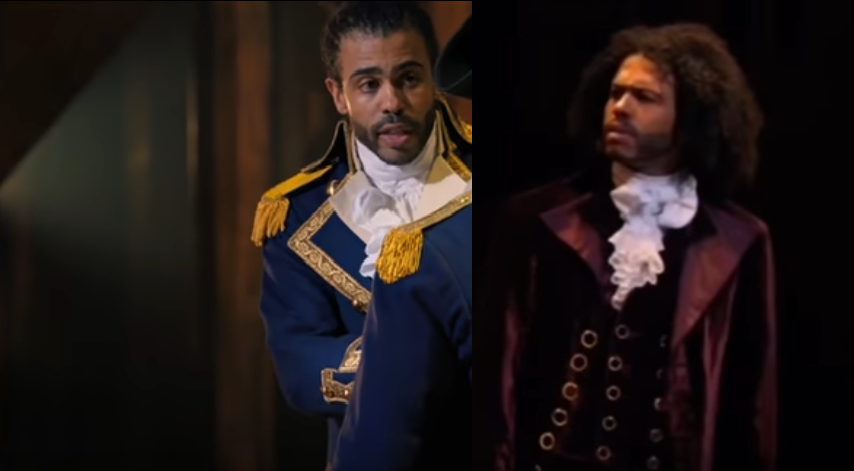
Alternate Best Supporting Actor 2020: Daveed Diggs & Jonathan Groff in Hamilton

Daveed Diggs was nominated for a SAG award for portraying Marquis de Lafayette & Thomas Jefferson in Hamilton. 
 
Hamilton is a fantastic musical about the life of founding father Alexander Hamilton. 

Now here I go about another set of reviews of performances that I know will not be Oscar nominated, although for different reasons than my previous one. Well it was placed in the TV categories for whatever reason at SAG, though it had an intended theatrical release originally, but that really isn't the main point of conflict. The main conflict is the film is essentially a filmed version of the play, though with specific added cinematic touches, and not just a recording for posterity's sake. Now I have heard the argument since it was presented to an audience on stage, though not the entirety of it, that it should preclude itself from being considered a film. Well I would counter, why can't a filmmaker say "my cinematic version of Hamilton is the stage version, with audience reactions"? If it were static, and only shot for posterity, without any additional touches, I would agree, but as is, the exclusion isn't something I can agree with. Furthermore precedent has been set by the Academy, when they nominated James Whitmore's filmed stage performance for Give 'em Hell Harry!, which frankly had fewer cinematic touches than were added to this rendition of Hamilton. It is finally worth mentioning that I don't think it gives any advantage, rather it is a disadvantage in a way, as stage performances are attuned differently. I only think it is fair though then it look at these performances as I would any film performance, which I guess it makes sense then I'm covering my favorite performances of the musical in the form, which are likely the performances that would be the most similar if they ever do make an entirely cinematic version. 
 
This starting with the very talented Daveed Diggs in the dual roles of French liaison to the colonial army Marquis de Lafayette and founding father, writer of the Declaration of Independence, the third president, Thomas Jefferson. Now no historical character in Hamilton is played entirely straight, George Washington comes pretty close, which makes sense it's a musical so there naturally is going to be some riff. Most of these are slight riffs, particularly with the roles of the Schuyler sisters, Aaron Burr and of course the titular Hamilton. They are largely taken seriously as the historical person even within the modernized lens granted to it by Lin-Manuel Miranda. That is less so for Diggs's performances, in both of his roles. The first being, I'll say from the outset his lesser role, though don't take that as a criticism, as Lafayette. This as early on he is nearly the chorus as just part of the group of revolutionary buddies of Hamilton (Miranda). His most noticeable feature being his fairly over the top, not out of the realm of Clouseauesque (though not quite far), French accent that is obviously not meant to grant any strict reality to the Marquis. Diggs's delivery in that way does make him stand out in little beats in the group scenes, such as his dismissive "you are the worst Burr" when regarding Hamilton's frenemy Aaron Burr (Leslie Odom Jr.) as a bit of a random aside. Lafayette's one highlight moment certainly is not wasted though during the song "Guns and Ships" were Lafayette goes about rapping his endeavors. Diggs's fantastic rapping skills are not to be dismissed and the swift ease of the run down is simply wonderful. 

Watching the film the first time though I will say just watching the first half, I was surprised that Diggs was chosen as the supporting actor to win the Tony for the musical, not that he's not good as Lafeyette, but it felt like just a warmup for him....which is the case. This as he comes in to quite the fanfare as Thomas Jefferson in the second half. The most prominent historical figure who is the least like the actual man in any way, the fact that he was played by the ever cold Stephen Dillane in the miniseries John Adams should give a sense of how far from that Diggs is from that. All intended of course, and so brilliantly so. We instantly get a sense of the character, which Diggs plays as a bon vivant celebrity in his outstanding introductory number "What'd I miss". This of course is visually established by his costume, the most over the top out of the main cast, as he wears a purple frilly suit that is sight all on its own. Diggs though does as much visually himself as his whole manner is just pitch perfect in crafting this take on Jefferson, particularly in contrast to the driven Hamilton. Given that Hamilton already has one foil in Burr, we get a new path with Diggs as a man as successful, but who just makes it all look easy. Diggs comes in as THE life of the party. This as the grin on his face is a man who loves how everyone love him, but also just loves his life. Diggs rarely stands up straight, or walks normally. There's almost always a little perk in his step. This just as he brings so much energy that in turn though is perfect though as setting up a guy who just seems to walk on the air of life. The man whose achievements come naturally, and doesn't need to be "Non-stop" he just is. 

Naturally then Hamilton and Jefferson then come to blow in two rap battles, which the script say Hamilton wins, and perhaps he does logically, but one has to admit in terms of actual rap precision...there's no question. Diggs runs away with it in both battles. This just his running down with his rap with it as though it is just as though he would indeed speak. I love that Diggs doesn't copy how he rapped as Lafayette either. He does it with as much ease, but seemingly less effort. By that I mean Jefferson just runs out each word without a care in the world, and a complete belief, because how could a man so overflowing with confidence ever be wrong. I think what needs extra mention is Diggs's performance during Miranda's raps, which I have to say kind of steal the moments from the star each time. This as Diggs is absolutely hilarious in every split second of hearing out Hamilton's arguments. This with moments of a kind of respect, but also a bit more annoyance, and little reactions towards the crowd of either indicating that what Hamilton saying isn't true, or trying to react as he doesn't care, even if does. Diggs I suppose makes Jefferson cheat a bit by taking the spotlight even when he's not owning his portion of the rap arguments. Diggs just literally doesn't stop and it again is fantastic, because again isn't in the non-stop Hamilton way, it's in the Jefferson way, where his drive is with a joyful grin and a loose gait. And the greatest trick of it, is Diggs's charisma makes it so you don't hate him for a moment for his shameless grin, there's just something about him that makes you love every minute of it. 

Now what that is exactly is part of Diggs's whole demeanor in the role. His energy is indeed endearing but just so is the way Diggs plays up every scene for all its worth, even for how much Jefferson might even feature in a scene. In fact I have to say, Diggs kind of just literally makes something out of every second he's onscreen, as he just keeps that unabashed style of the man. Take after the first cabinet argument where Jefferson laughs at Hamilton for not having the votes. This is a completely childish move, but can't help but love Jefferson because Diggs is just so playful about it. Diggs just moving around the stage is something to behold as he makes this basically cocky slide than even can be described as a walk. Diggs though importantly does strike a balance even in his largely comic performance. This as in the second cabinet rap battle he brings a more directed passion even within that ease still that is impressive. Diggs though conveys that the subject, of the French revolution, is meaningful to him and even his dismissive attitude towards Hamilton has a more genuine anger. Diggs even as he's just being incredibly entertaining does craft the arc of Jefferson from a friendlier rival to Hamilton to a more antagonistic one. This eventually leading to the exceptional scene where Jefferson and his little cabal force Hamilton to admit to a crime, though an affair rather than embezzlement as they believed. Diggs is great in his hectoring manner as he makes his little accusations, but the cherry on top of the scene, is Diggs is hilarious "Whaaaat" when finding out the truth. This perhaps only equaled by his slightly annoyed, still comic and confused "My God" towards Hamilton's confession that wasn't quite what he hoped.  This still leading to a partial downfall by Hamilton as he writes and releases his own confession anyways. Leading again to another amazing scene for Diggs. This in the sheer bliss and really gluttony in taking in all the schadenfreude. My personal favorite line delivery in the show being perhaps Diggs "Never gonna president now" as strict jubilation while dancing and making Hamilton's pamphlet "rain". Of course everything Diggs does is a little gem of its own. His reaction to Burr, after Burr runs against him, as a "you kidding me dude", comic gold, even his final line as Jefferson remarking about Hamilton's legacy while still recognizing his attempt to dismantle it, is pure gold. That's the entirety of Diggs's performance. It's comic masterwork of the piece that finds just the right tone and truly runs with it. His Jefferson is broad in the best possible way and works from any perspective. A comically genius performance, that is a proper different kind of foe for Hamilton to be sure, while also just being a joy to behold all on its own.
Jonathan Groff was not nominated for any visual recorded media acting awards for portraying King George III in Hamilton. 

Now Jonathan Groff's performance I think owes a debt, fundamental to Lin Manuel Miranda's inspiration for the inclusion of the King, to Tom Hollander's performance as King George in the miniseries John Adams. A one scene wonder to be sure, but here we get Groff as a 3 scene and a eighth wonder as the musical's version of George that skews closely to Hollander's. This as the intention is not a humane portrait of the man a la Nigel Hawthorne in the underrated Madness of King George, like Diggs's performance there is a more than a degree of flamboyance in this representation of a historical figure. George here being a series of interludes as the King's reaction to various going-ons in America, each of these being highlights within the musical. Now of course Groff has a beautiful voice, and delivers "You'll Be Back" and its pseudo reprises wonderfully. What I want to highlight though is the greatness of his work beyond that. This right from the way he enters the scene with his aggressively proper and regal manner of walking. This in specifically aligning every foot step. Each movement though, even just the way he carries his royal baton there is a grace and manner wholly befitting a monarch. That is all fantastic, but there is more. Now it must be said that Groff's comic timing is impeccable of course. From his over the top pouted lip one remarking on the sadness of the colonies, his petulant stomps at accepting his eventual defeat, and of course his glee at hearing John Adams as Washington's successor, Groff is comic gold. Of course as fun as this performance is what I love most about it is how it strongly it does call back to Hollander's performance. This as much as Groff is a comic presence, he's not just a goof. This as he brings those piercing eyes of a mad man that were so prevalent in Hollander's portrayal that gives a sense of the genuine menace within the King's power. I especially love the way that Groff's voice becomes aggressively more threatening in his declarations about how the colonies will be returning his love. Although Groff admits to his spitting while singing, and even perhaps accidental, the burst of spittle at the most threatening part of the song is striking in creating George as a bit of a drooling mad man. This as that only back ups Groff work that has a bit of a vicious psychopath just behind the regal surface. This of a man who is more than willing to use violence to retain the love he believes he deserves. Is he mostly to be taken a joke, yes, but it's fantastic how Groff finds a real sense of something more sinister in George. Although naturally his later appearances, which are essentially encores, and really just comic returns, yet each is most welcome as Groff is a hoot each time....And one must mention the one/eighth moment where George does some free-styling around Hamilton at one of the latter's lowest moments. Now these are completely silly movements from Groff, and utterly hilarious. Small bit, but worth mentioning. Otherwise this just is a delight of a performance, as sheer comic relief, but also with just the right ounce of villainy.