Showing posts with label 2011 Alternate Best Actor. Show all posts

Sunday, 22 December 2024

Alternate Best Actor 2011: Clive Owen in Trust

Clive Owen did not receive an Oscar nomination for portraying Will Cameron in Trust.

Trust could be much better but also could be much worse about the fallout of a teenage girl being sexually assaulted by an online predator. 

Clive Owen plays the father of the girl Annie (Liana Liberato), whom the opening act of the film seems to be living the idyllic enough lifestyle in a Chicago suburb. Owen plays the early scenes of the film very much  as the common man just going about that life with his family and wife (Catherine Keener) with the rest of the family. Owen doesn't put too much on it in his scenes of advising his son to avoid peer pressure with just a gentle reminder with a bit of a tough dad but not an overplayed quality. Mostly we just see the general warmth of the dad as he's going along with his good life, we see him with his boss occasionally who is overly brash, however even that Owen plays off as a slightly judgmental smirk. That is until his daughter is lured to a hotel room where she raped, however that is only the first crime, as this quickly leads Annie's best friend to report it which creates a public spectacle of the rape. And here's where the film could've fully fallen off a cliff or become something truly powerful but it doesn't really do either. It isn't quite an after-school special, but it isn't completely elevated beyond that. The writing frequently is, David Schwimmer's fairly terrible visual choices throughout additionally are, but what Schwimmer does manage to get right is within the performances of the actors. The actors very much save the film because it would've been extremely easy to fall into over the top choices given the material, but for the most part this is avoided.

Owen is one of the focal points of the emotion of the piece and is moving in the early scenes of reaction to the rape in just presenting the sudden horror upon his face that quickly switches to vicious anger towards the man responsible for the act. Owen matching the intensity effectively by very much bringing to life the immediacy of the reaction. And it would have been easy to seem too much or too soft in a way, but Owen does make it all feel very real in the moment. Unfortunately the film ends up being a little repetitive in where he goes from there as we basically get one frustration after another, as the FBI fails to catch the man, Will notices sexualized images at work and becomes frustrated by the fact that his daughter continues to obsess over her groomer. Owen's performance though does modulate between these elements playing in the moments in the world just the quiet burden that never leaves the man. When reacting to his daughter or to the investigation, Owen's intensity does feel earned as the perpetual anger of a man who wants to hurt something to avenge his pain yet ends up turning back on his own family. The film ends up not giving him too many interesting places to go leaving Owen to have to repeat notes as the character just continues to be in this state of anger, though again Owen effectively always weighs it down with sadness and the sense that is all part of the frustration of the helplessness he feels in what happened to his daughter. I suppose I could be more critical and say Owen doesn't differentiate between these scenes enough, however I think it is more so the writing that keeps him lost and angry for most of it. And Owen does hit his notes effectively again, as we have a more harrowing scene coming from the daughter's reaction to this trauma that is certainly moving and painful in again Owen bringing that pain to life with visceral intensity. The final scene though of the film involving the family is perhaps too clean in a way as the daughter and dad finally connect again as he espouses all his fears to her and they finally reach something. Something that might have worked better if the script built to it more. Again though Owen in the more sedated performance of a moment of clarity is affecting in bringing an earnest vulnerability that shows the same pain just expressed in a healthier way. However then the film ends, and you know just how limited Will's whole story ended up being, though Owen's efforts are admirable avoiding the worst option, albeit not quite truly elevating it beyond the full limitations of the piece. 

Saturday, 27 August 2016

Alternate Best Actor 2011: Results

10. Jakub Gierszal in Suicide Room - Gierszal gives an inconsistent yet still effective portrayal of the descent into a suicidal despair.

Best Scene: The end
9. Michael Smiley in Kill List - Smiley delivers a heartfelt portrayal somehow of a hitman dealing with his friend's increasing instability.

Best Scene: Comforting the son. 
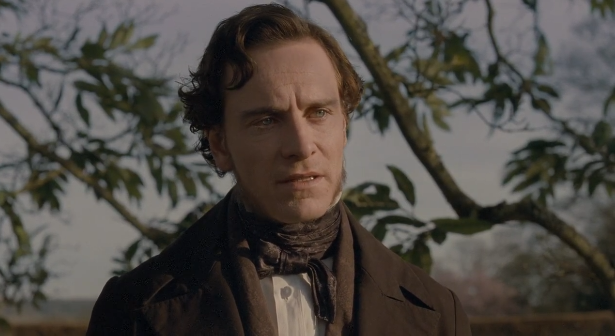
8. Michael Fassbender in Jane Eyre - Fassbender's work is an affecting enough portrayal of man escaping his repression and pain through the love of another.

Best Scene: Rochester admits his love to Jane. 
7. Antonio Banderas in The Skin I Live In - Banderas creates an interesting portrayal of sadistic mind that slowly begins to love his victim.

Best Scene: Ledgard admires his "creation".
6. Daniel Henshall in Snowtown - Henshall crafts a disturbing depiction of a serial killer who casually manipulates those around him to support his violent hatred.

Best Scene: John handles the "town hall". 
5. Jake Gyllenhaal in Source Code - Gyllenhall gives a winning turn as he manages to keep pace with the film, meeting every single demand of his character, and amplifying the film's emotional resonance in turn.

Best Scene: Stevens has a perfect eight minutes.
4. Ralph Fiennes in Coriolanus - Fiennes offers a striking portrayal of a vicious yet vulnerable portrait of a man defined by war.

Best Scene: Caius meets with his family. 
3. Peter Mullan in Tyrannosaur - Mullan creates a moving depiction of a hard man finding some sort of redemption through a kind yet troubled woman.

Best Scene: Joseph confronts Hannah.
2. Woody Harrelson in Rampart - Harrelson, despite the many weaknesses of his film, manages to deliver a nuanced and wholly compelling portrayal of police officer whose brutality seems to be enabled by the system he works in.

Best Scene: Dave's daughters bring him clothes. 
1. Matthias Schoenaerts in Bullhead Good Predictions RatedRStar, Psifonian, Michael McCarthy, Calvin, GM, and Luke. Schoenaerts offers a outstanding performance as a man beneath the perceived brute. He not only gives understanding to his behavior in so few words, but offers a heartbreaking portrait of his struggle with severe detachment due to the horrible injuries he suffered as a child.

Best Scene: Jacky fails to find the words.
Updated Overall

Next Year: 2011 Supporting

Alternate Best Actor 2011: Jakub Gierszal in Suicide Room

Jakub Gierszal did not receive an Oscar nomination for portraying Dominik Santorski in Suicide Room.

Suicide Room is a curious film about a teenager falling into a terrible depression and a strange online community after his world collapses due to a brief homosexual encounter.

Jakub Gierszal's performance begins in as an unassuming enough portrayal of just a pretty standard teenager. He comes from a privilege due to his successful parents, and seems to be popular enough in school. His parents though are shown to be somewhat detached, more interested in their careers in general, and Dominik seems to have just a slight twinge of discontent in him though in a fairly standard way. Gierszal's performance works well in these early scenes in just being just about an average teenager. He brings just a bit of moodiness, and even a bit of ego, that possibly could easily stem given his parent's wealth, that Gierszal makes very natural. This is worth nothing because although the behavior is unlikable, Gierszal makes it at least somewhat less so by making the behavior genuine. Gierszal's performance is unassuming in the right way in that he makes Dominik just as he should be no more no less.

Everything seems fine for Dominik, despite a sudden fascination with a video of someone slicing their arm with razor, and Gierszal's portrayal confidence of this comfort that helps Dominik go along with the dare that begins his downward spiral. The dare being to kiss one of his male classmates, which he does. This in itself does very little, though Gierszal is good at just realizing kind of thrill of the act for Dominik. That thrill which goes a bit far when another encounter with the same young man, goes a bit further accidentally for Dominik. The act though quickly leads to Dominik being widely ridiculed online, and we get the first breakdown scene by Gierszal. It is unfortunately his worst scene in terms of his performance. The scene itself requires an extreme reaction to echo Dominik's vulnerability, but Gierszal goes in the wrong direction with. He goes too in the theatrical direction with his waving of his arms, and his screams that are basically too clean. It feels like an actor's breakdown which is ill-fitting for the film, and the character.

Dominik's early attempts to deal with his life lead him to a depression, which is well portrayed by Gierszal in the margins of his performance. He creates the very real sense of someone just having a weight of despair around them at all times that keep him at a distance. Dominik in some way to combat his problem begins to act out by basically being more "emo", and having lapses of strangeness, such as when kisses a statue. The sense behind these actions seem to be to reflect Dominik's growing unease, however Gierszal never quite attaches that to these individual moments. In fact that seem rather calm, and not too calm that it would still be unnerving. Well eventually Dominik completely closes off by becoming part of a strange online community that seem obsessed by suicide. He becomes obsessed with the chat room of sorts, and the film often becomes basically an animated feature  at times by depicting the virtual reality of the room.

These scenes don't add up to much, though they depict Dominik falling into a world of his own to avoid the one on the outside. In the few moments where we do see him visually, Gierszal does well in portraying the contentment of this escape of sorts, while also portraying the intense nervousness whenever his parents attempt to take him away from it. His parents eventually force him away from it all, but the son still attempts to connect to it by taking a box of potentially deadly pills to meet with a girl he had met in the chat room. It seems that they do meet up and Gierszal is moving in portraying finally a true happiness with another real human being. This is brutally shown to be false vision as the actual last scene we are given is after Dominik has swollen the pills, and is dying. Unlike his previous meltdown, Gierzal excels in revealing the terrible details of Dominik's end with his delivery of broken pleads while showing the physical pain as he collapses from the pills. Gierszal's work is inconsistent though still effective in revealing the unpleasant decay that ends in suicide.

Wednesday, 24 August 2016

Alternate Best Actor 2011: Matthias Schoenaerts in Bullhead

Matthias Schoenaerts did not receive an Oscar nomination for portraying Jacky Vanmarsenille in Bullhead.

Bullhead is effective as a character study, though I'd say less so as a crime drama, that details the life of a man involved with the Belgian underworld of illegal growth hormones for cattle.

Matthias Schoenaerts is one of the most intriguing actors of his age group even though he is currently in a state of the in between in terms of his prominence. He at the very least has broken out internationally, aided no doubt by his unmatched ability with accents, the transformative quality of his performances, and his original leading performances in somewhat prominent foreign films. This includes the 2012 film Rust and Bone but started with his performance in this film. Funny enough, like his contemporary Tom Hardy's work in Bronson, Schoenaerts's first major leading turn came with a massive physical change as a musclebound man. As with Bronson, Jacky is not just fit but seems encased in himself. The opening scene of the film seems to suggest that the purpose of this bulk may be similair to that of Bronson's, as we go see Jacky intimidate a man for dealing with someone other than his own family. Obviously Jacky is an imposing figure to begin with his size and height, and Schoenaerts is appropriately menacing as he brings the needed ferocity to Jacky's hectoring of the man. Soon afterwards we see Jacky injecting himself with some sort of substance, it appears we're following a drug addled thug, but that is only a glance.

It soon becomes clear that it's not so simple and this is even before we learn anything from the film itself because of Schoenaerts's portrayal of Jacky. Schoenaerts portrays a constant discomfort in Jacky as though there is something wrong with his very being. Schoenaerts lumbers around as portrays this certain unease of a man who suffers even from such a simple act as walking. Schoenaerts presents a man who is fundamentally flawed in some way, there is damage in his soul. When Jacky is going about injecting himself, which turns out to be testosterone for the most part, there is a desperation in it. There is a pain in the very moment that Schoenaerts suggests though he never attaches this to say the pain of the needle. It is rather a desperation in the act, which is as though he is searching for some sort of reprieve of his current state through the injection which is never found. Schoenaerts creates even a sense that his muscles are some sort of personal armor to protect himself from this underlying trauma that constantly inflicts him, once again though Schoenaerts shows that this is a failed attempt as nothing can change his past.

That past is eventually revealed through a flashback. The flashback reveals that as a child Jacky's testicles where permanently destroyed by a mentally ill older boy, and his constant injections began as a child in order to allow normal male development. The damage of the event went past the injury as seen through Jacky's current state. After witnessing the event we are given a greater understanding of Jacky as a man and Schoenaerts's portrayal of him. Schoenaerts's work is outstanding the way that event seems ever a part of him. This is not only from the physical manner of the man. Schoenaerts is terrific as he represents also the history that followed. The history of being shunned in a way by others not knowing how to deal with what happened, but also from others mocking him for what happened. There is a barrier that Schoenaerts creates between Jacky and almost everyone he interacts.  This is within the general situations where Schoenaerts always separates himself from the rest as Jacky rarely stays within another's presence, and almost never stares at them directly.

Schoenaerts's work is effortlessly compelling in the way he realize such complexity in Jacky, despite having only the rare spoken word. Schoenaerts creates understanding for the surface of the man, which is as the hulking thug. In the scenes where Jacky becomes violent there is never a satisfaction to it, but rather a sad resignation. Schoenaerts presents a man being the only thing that it seems life has allowed him to be in these moments, as he relies on defense mechanism of sorts. In his most vicious attacks Schoenaerts brings a learned quality to it, as though it is the only way he can react given his past. Again it is always blunt and to the point. There is one moment where one of his associates mocks him for what he lacks, and Jacky smashes the man's face. Schoenaerts brings no sadism in this instead rather portraying it as the only way Jacky can communicate. Schoenaerts shows the way he snaps into the role that he's established for himself, the only role he knows from a life experience of a constant isolation.

There are a few instances where Jacky falls out of that role though. In the scenes where we see Jacky work with his cattle, Schoenaerts brings a more outgoing quality within Jacky. There is finally a bit of comfort in Jacky's interactions, though they are only with animals who are being primed for slaughter to begin with. Schoenaerts portrays so wonderfully the man who could have been. Late in the film Jacky is helped by his old childhood friend, and Schoenaerts portrays this relationship a bit differently from the rest though not inconsistently. Schoenaerts's performance depicts a bit less of that inner intensity that goes hand in hand with his personal pain, as he effectively shows the way Jacky interacts with someone he knew well before the incident. He's not closed off in the same way here as well, though Schoenaerts still infuses some distance fitting their time apart yet creates a proper connection to allude to their history together.

The most powerful aspect to Schoenaerts's work comes in the scenes where Jacky attempts to create any sort of relationship with a perfume saleswoman Lucia, who also is the sister of the boy that had attacked Jacky so many years before. Schoenaerts is downright brilliant in the early interactions as he shows the difficulty in Jacky as he attempts to just ever so slightly break out of his shell. Schoenaerts is rather affecting in portraying this unusual shyness in Jacky as he tries to meet her later in a nightclub, and in his eyes you can see the way how he cannot get past the constrictions brought upon others as well as himself. When Jacky brutally beats another man who tried to pick up Lucia, Schoenaerts even makes this basically an act of despair as he just resorts to the only response he feel he has once again. The film ends with Jacky attempting one more time to really speak to Lucia, which is made difficult after she has discovered that he beat the other man to an inch of his life. Schoenaerts is absolutely heartbreaking in the scene. He has only a couple almost meaningless lines, yet all of the meaning of the meeting is in his face. Schoenaerts is devastating as he shows Jacky trying so hard to come out with the right words, yet cannot bring them to his mouth. Every word and every emotion can be seen in Schoenaerts's haggard expression, but unfortunately Jacky still cannot escape himself failing to connect Lucia before falling into a final depressed rage. This is yet another amazing minimalist performance from 2011. I remained invested in Jacky's story even when the film wavered a bit, as Schoenaertes crafted such a consistently fascinating character who in the wrong hands could have been just an unlikable lout. Schoenaerts says so much with so little in his complex and sympathetic portrait of a truly unique character.

Saturday, 20 August 2016

Alternate Best Actor 2011: Michael Fassbender in Jane Eyre

Michael Fassbender did not receive an Oscar nomination for portraying Edward Fairfax Rochester in Jane Eyre.

Jane Eyre has been adapted a countless number of times (and by that I mean I don't feel like counting) and I've seen one of them. Although I can't compare this to other adaptations I will say it's visually remarkable with appropriately atmospheric direction from Cary Fukunaga.

The film follows through the perspective of a young woman, the title character (Mia Wasikowska) as she goes through a harsh often lonely life during the mid-eighteen hundreds in England. This eventually leads her to become the governess of Thornfield Hall, the home of Fassbender's Mr. Rochester. He's presented as a mystery as much of the story focuses on uncovering that mystery as well as specifically Jane's relationship with the man. 2011 was of course a banner year for Michael Fassbender since he also appeared in Shame, X-Men: First Class, and A Dangerous Method which were released all in the same year. Jane Eyre I suppose is the smallest of these roles, though like Laurence Olivier in Rebecca, his character always seems as important as Jane despite his much more limited screentime. Now I guess Fassbender has a bit of an advantage here in that I have not seen any other actor play the role, which is long list including the likes of Orson Welles, William Hurt, and George C. Scott.

Being unable to compare I'll just have to take Fassbender's version on its own. Well the first time we see Rochester he falls riding his horse as first meets Jane. Rochester begins with his darker hues most prevalent though Fassbender downplays this with his performance. That is Fassbender does not exactly play it all, playing more like Rochester is just having a bit of fun. Fassbender underlies this with a bit of intensity, but in the end he brings more levity than one would expect as Rochester jokes about Jane having bewitched his horse. The story proceeds as Jane acts his governess and she observes Rochester go on about his life as they are separated by class. Although we are never given Rochester's perspective Fassbender makes use of his reactions towards Jane well. Fassbender portrays a greater interest in the slight glances than merely an employer watching his employee. Fassbender effectively conveys the growing affection in Rochester, though still remaining silent for the time being and  keeping a certain distance, for Jane especially after she saves him from a fire.

Fassbender does not convey a simplistic attitude in Rochester though as he accentuates the history of the character in his work. This includes the history of his class as Fassbender brings the stiffness in the scenes where he interacts with others of his class, as he keeps his behavior proper though as a man being someone he is not. When he is with Jane Fassbender brings a stronger degree of honesty in the way he puts forth the man's emotions, though this in itself is still complicated. Fassbender keeps a certain pain in his manner, and still almost a shyness as he shirks from being wholly genuine for a moment. Fassbender brings the needed complexity of a man pulled back by his past, but prodded forward by something true to his heart. Fassbender brings the right awkwardness to the first scene where Rochester sort of declares his love for Jane, by asking her what she would do to ensure his happiness. Fassbender makes Rochester stumble as he should as a man at odds with himself as he says what he means, but never does it seem to be the absolute truth.

Fassbender rightfully expresses a fuller change in Rochester, after Jane leaves for a time, revealing a man who no longer wishes to risk unhappiness. Fassbender chemistry with Wasikowska is curious yet I found to be rather affecting. The connection that the two establish is very particular in that both of them reveal direct emotion, in a time defined by repression, only in their moment of revealing their love for one another. They come together exactly away from the emotional shackles implanted on them through their pasts to reveal better individuals. Fassbender brings a more active charm after the moment of declaration slowly suggesting a man finally content with his existence. Of course being a story set with a large estate though something must threaten to separate the two, this being the revelation of Rochester's pain and past which is his mad wife which prevents Jane and Rochester from being married. Of course this also must lead to further tragedy, though this story does prevent any further suffering as the two are reunited in the end, poor Rochester just needed to be blinded and scarred first. It is a surprisingly short scene yet I found it rather powerful. The scene almost entirely relies on Wasikowska and Fassbender, and they successfully find the poignancy within the reunion. The brevity of it seems right as the two already established the nature of their love, and the two show the scene to be a gentle reminder of this. Now Fassbender might have a slight advantage in that this my first exposure to a portrayal of Edward Fairfax Rochester, however all I can say is the performance worked for me. I'd be surprised if this is the definitive version of the character, but it is a compelling one.

Tuesday, 16 August 2016

Alternate Best Actor 2011: Woody Harrelson in Rampart

Woody Harrelson did not receive an Oscar nomination for portraying Officer Dave Brown in Rampart.

Rampart, which is the character study of a dirty cop in the L.A. police department, suffers as a film from disjointed storytelling and some downright obnoxious aesthetic choices by Oren Moverman.

Woody Harrelson is given the chance to take on the often juicy role of the corrupt police officer. Harrelson is an actor who I haven't always loved but I have never denied his evident talent. It is interesting to see him take on this challenging role, which seems like perhaps an even greater challenge given that the film surrounding him is not particularly good. Now Dave Brown does not have a pressing issue in the opening of the film like say Alonzo Harris in Training Day or Henry Oak in Narc. Dave is his own issue. In the early scenes we see Harrelson as Dave handles his job. Harrelson plays it as less as the master of the streets and more of a thug in a uniform. There is a moment very early on where Dave orders another one of his fellow officers to finish their french fries since he hates people wasting food despite rarely eating himself. Harrelson does not portray this as Dave offering any sort of sage thought, but rather depicts Dave's reaction as annoyance which he corrects bluntly like a proper bully.

This behavior continues as Dave gets into his first bit of PR and legal trouble after a man accidentally crashes into his cruiser. Dave proceeds to repeatedly beat the man with his billy club. Harrelson offers a surprisingly effective approach by downplaying it in a way. He does not suddenly become some deranged lunatic rather he makes the action instead feel like standard procedure for Dave. Again it's less a direct outrage, more of an annoyance, which again does not feel like Harrelson is taking it lightly. Harrelson instead suggests so well the mindset of Dave when on the job which carries a considerable sense of entitlement. Once again Harrelson makes his bully feel very real by the ease in which he shows the beat down. Harrelson keeps in mind the real motivation of Dave, which seems foolish in its simplicity. Harrelson though presents a man with an inherent disdain for people in general who is given an outlet to inflict this against others through his job as an officer. Dave's trials begin though because cameras caught this indulgence.

Dave has to deal with the legal action against him, and Harrelson continues to excel in the role as portrays this sort of switch in Dave. It's not a real switch, and it is in the same exact frame of mind Dave's usually in. That being Harrelson continues to convey this indulgence that so often defines Dave, and the fascinating thing is Harrelson manages to exude this most curious type of power. The power essentially in the lack of shame not only in terms of the crime, but also his ability to skirt any ramifications around the crime. Harrelson is simply great as he does depict Dave in his element as he takes on the assistant district attorney by breaking down exactly what he will do to deal with any charges filed against him. It is in this that Harrelson shows a control, and an understanding in man who is quite sure of his grip on the system knowing exactly how to exploit it to his will. Harrelson reveals a definite comfort in Dave when it comes to this naturally revealing the intelligence that enables his brutish actions.

I love what Harrelson does with the role because he fulfills what you'd expect from a dirty cop, but never quite in the way you might expect it. He manages to do this in a wholly authentic fashion in which he never allows for a thin characterization. There is not a scene where his Dave is one note, even at his very worst. Even in the early beating, or a later scene where he kills some thieves to rob them. Again the base motivation is clear, but that's never all there is to Harrelson's work in these scenes. As he commits the "crimes" Harrelson reveals a certain desperation all within it. Although the man is committing these acts, Harrelson does not show them as evil per se rather as reflections of man doing things the only way he still really knows how. The downfall of Dave is never Dave becoming progressively worse, or more of a bad man so to speak. Harrelson again makes it far more complex in the vivid detail he finds through the nuance he brings to every scene. In the robbery scene Dave lets one of the thieves go as he's not quite so cold blooded as to execute a man in that way. A short moment yet remarkable as Harrelson portrays an earnest humanity, even within one of his most terrible scenes, and makes it true to the character.

As Dave's professional life falls apart so does his personal, though again it's not the descent you might expect. Dave's life is already a mess living with two sisters, having a daughter with each, with all except his youngest daughter treating him with a certain disdain to begin with. Harrelson is outstanding by once more taking an atypical approach in these interactions. In the early scenes Harrelson never plays it as the mean father or husband in the traditional way. Harrelson brings a lived in quality in his cruelty which is never overt, but gentle. It is in the occasional statement which is never yelled, but there is very relaxed barbarism. This extends to the nature of his relationships, which we see the beginnings of when he picks up a lawyer at a bar. Harrelson frankly makes Dave's peculiar life believable as he is extremely charming in the moment, but even in the margins Harrelson places in the faults of the man. In this case a lapses of paranoia that she's out to get him in some way. Harrelson subtly infects the negative against the positive in the man's behavior always reinforcing that the seeds of alienation are already there as Dave cannot help himself.

Harrelson work here is exceptional as he never goes about just making you want to hate Dave, but rather goes about making you understand him which is rather something. He's never just a personification of police cruelty but always a person. Harrelson by doing this makes this into a far more affecting performance than one would expect. As Dave's mistakes only mount up he is abandoned by everyone around him including his family. Harrelson is incredibly moving in the scenes where Dave is forced to be separated from his daughters. Harrelson reveals a genuine heartbreak in Dave that feels wholly earned. This leads to a moment where he meets his daughters one last time and he admits that everything people say about him is true. Harrelson does not use this moment to show just how nasty Dave is, but rather brings such a vulnerability in the admission. He's heartbreaking as he presents a man who is aware of all that he's lost because of his hate, but still accepts who he is. Now if Rampart was a great film this would still be a great performance. What's so amazing is that despite the film's weaknesses Harrelson never falters. His work is consistent, and makes Dave consistently compelling even when the film is very messy. He rises well above the film he's in crafting a singular and complex portrait of a troubled man.

Friday, 12 August 2016

Alternate Best Actor 2011: Jake Gyllenhaal in Source Code

Jake Gyllenhaal did not receive an Oscar nomination for portraying Capt. Colter Stevens often as Sean Fentress in Source Code.

Source Code is entertaining mind bending thriller despite a lame villain and wasting a great ending by unnecessarily going on for a few more minutes.

We first meet Jake Gyllenhaal in the film as a man on a commuter train. Gyllenhaal's performance begins as a proxy for the audience as the man attempts to figure out why he's on a train, and what exactly is going on. Gyllenhaal is effective jumble of thoughts as the man attempts to gain his bearings which are difficult to obtain when he sees someone else's reflection in the mirror, and the train he's riding on explodes only a few minutes later. The man wakes up to find himself in an odd chamber where he is told by a military operative (Vera Farmiga) that he is being used to essentially quantum leap into another man's body in the past in order to discover the source of a terrorist attack. Gyllenhaal's performance works well here as he manages to give reality to the concept immediately by portraying such paranoia in the task, and such confusion as he wonders how exactly he ended up with the task in the first place. Gyllenhaal's own task in the role is to keep up with the film as it continues at a fairly rapid pace as the soldier Colter Stevens keeps getting sent back into the man Sean Fentress in order to find who set the bomb that blew up the train.

Stevens's "handlers" constantly push him to stay on task despite his myriad of questions especially after he learns from a news report in the past that Stevens also has been declared dead. Gyllenhaal basically must constantly be switching intents as Stevens still goes about trying to solve the mystery while trying to attempt some sort of personal closure as well. Gyllenhaal maneuvers this firm pace rather flawlessly as he goes from either in Fentress as he narrows down suspects to Stevens who is kind of broken due to learning about his state. When Stevens "plays" Fentress there is not even a single set manner that Gyllenhaal establishes. Gyllenhaal instead succeeds in matching whatever he needs to be given Fentress's situation in the past. Gyllenhaal importantly never loses the sense of severity as he searches for answers, though he does well to convey a proper variation of it depending on the moment. Whenever he's reminded of the loss of life when he knows that the explosion is about to happen Gyllenhaal gives it the necessary gravity.

Gyllenhaal is never one note as just a hysterical man finding a bomb or a terrorist, even though he does that quite well when it is asked of him as well. Gyllenhaal again plays the part of Fentress in a way and does so brilliantly. This even includes a rapid fire romance with the woman Christina (Michelle Monaghan). Gyllenhaal whips out a bit of required charm for this and makes it convincing, though one should also note Monaghan certainly helps a lot by portraying Christina as being infatuated with Fentress from the beginning. Gyllenhaal is equally efficient in transitioning to the man who will do what it takes to get the job done. Gyllenhaal manages to bring the proper intensity and even menace as he goes about interrogating a few of the passengers to find the culprit. There's even a bit of humor that Gyllenhaal effortlessly find from time to time just within the awkwardness of this man attempting to be so many things at once, I particularly enjoy his false bravado when he pretends to be a train marshal by using a regular wallet.

The final element of Gyllenhaal's performance is when Stevens is in the "chamber" and when he is directly attempting to cope with his bizarre physical state. Gyllenhaal is rather moving by depicting the strange agony. This again is all in rapid succession of one another yet Gyllenhall's portrayal of any of these sides never feels vague or underwhelming. This all culminates to a final trip to the past as Stevens attempts to live a perfect final eight minutes, basically pulling off the last day of Groundhog's day. Gyllenhaal just exudes such a earned confidence as he owns scene while Stevens own the situation. Gyllenhaal presents a man in absolute control of everything in the moment and it is wonderful to watch him basically make the absolute best of his final minutes. This includes one powerful moment when he calls his father. Gyllenhaal infuses such poignancy to the conversation as honestly portrays finally gaining a certain sense of closure as Stevens says his goodbye. Gyllenhaal is outstanding as he builds to the final bittersweet ending of triumph by achieving all he could with his remaining time. The film for some reason goes on, but hey that's hardly Gyllenhaal's fault. This is a very strong performance by Jake Gyllenhaal which is pivotal to the film's success. He not only is an endearing leading man, but keeps its core concept grounded in a very human reality.

Tuesday, 9 August 2016

Alternate Best Actor 2011: Ralph Fiennes in Coriolanus

Ralph Fiennes did not receive an Oscar nomination for portraying Caius Martius Coriolanus in Coriolanus. 

Coriolanus is an interesting adaptation of a lesser known Shakespeare about a successful but unpopular Roman General.  

Ralph Fiennes makes his directorial debut and stars in the titular role of the man eventually dubbed Coriolanus. It is always interesting to see exactly how an actor performs when he is directing himself especially in a leading role. Anyway the story begins with the common people launching a protest at their government with the focus being against Caius himself. Fiennes makes his entrance to confront the mob, and he establishes the character incredibly well. He bares the facial scars of a soldier who has seen many battles, but also the mental scars. In Fiennes's eyes there is the wear of many conflicts as he presents Caius as man truly hardened by his life. Fiennes is one of the masters of intensity and one of the best used examples of this is in his first scene of this film. All the rage and the hate needed for such a life is within his strict yet volcanic manner. Fiennes reveals a man ready to burst due to his past, especially when he sees a seemingly ungrateful mob dismissing his personal sacrifices. 

Caius and the people avoid a direct conflict as he commands the situation. Fiennes proves himself to be an extremely strong Shakespearean actor as the language flows so naturally, and so effectively from him. Fiennes brings the overpowering presence needed for a great general as he dominates with every word and gesture towards the crowd. It is not a clear victory though as the people's disdain is still known to him, and Fiennes importantly portrays the way this outrages the man, however he avoids acting out after the crowd has been calmed. Caius is soon called upon to save Rome again by confronting the commander of the opposing Volscian army Tullus Aufidius(a surprisingly good Gerard Butler). Fiennes is excellent in the war scenes we do see as he essentially portrays his certain devotion to the state of Rome through the devotion to the battle. Fiennes brings the conviction of a true soldier in these scenes. He also reflects the severity of the situation, and active wear caused by the stress of the situation in every halted breath.

After yet another success in battle he is only held in higher regard by the elite of Rome as he is not only given the title of Coriolanus but he begins a political career as well. Caius is triumphant but Fiennes effectively realizes a palatable discontent in Caius. Fiennes suggests an unease due to no longer being a war. Fiennes is excellent by finding the complexity of this state as the war, which paints his body with wounds, is also what he has been so acclimated to that he can understand little else. As Caius becomes senator Fiennes portrays only a growing disdain which exacerbates severely when the commoners once again use him as a specific target for attack. Now this I imagine leads to the more divisive moments in Fiennes's performance as Caius lashes out against the people. Although it is Fiennes unbound, not even held back by a director after all, but I actually find it is absolutely fitting to the character. The sheer hatred that Fiennes unleashes is equal to man having pent it up for far too long as well as makes Caius seem a monster to the masses .This makes the result of the outburst convincing as public outcry causes Caius to be banished from Rome.

There's brief scene where we see Caius wandering alone which is a pivotal moment in Fienne's performance. Fiennes is rather moving and uses well as he shows the actual vulnerability in the man after this defeat that establishes what Caius has lost. Eventually Caius finds Aufidius and his men who end up embracing their former enemy. There are few words that explain this yet it is made believable by both Butler and Fiennes as they convey the earnest respect between the two in every glance. Fiennes goes further to also show a certain comfort in Caius as he interacts with men who lived the same life he has. There is no longer the same type of repressed anger, though that is not to say the man no longer hates. Caius though now directly hates by swearing vengeance against Rome, and joins with Aufidius and his men to destroy his former home. Fiennes in these scenes essentially becomes the villain, or at least the dictator that his critics had claimed to be. Fiennes internalizes the intensity though now of a man with a specific purpose. With that purpose Fiennes loses any of that unease presenting a man made hard by war, now finding comfort in that life. The Romans attempt to assuage his rage first by various envoys, but they come to a final resort by using his family, including his wife Virgilia (Jessica Chastain) and his mother Volumnia (Vanessa Redgrave), to make a final plea for him to stop. This is perhaps Fiennes strongest scene in the film. He's largely reactionary yet incredibly affecting as he portrays the way his family's words slowly wear away on him. Fiennes is terrific by just barely revealing the weakness in the armor as that vulnerability quietly returns, and we do see his love for his family. Fiennes here not only proves himself capable of directing his own performance, but also a truly capable Shakespearean actor. Fiennes finds the power in the tragedy through his portrait of soldier unable to cope with peace, but also forever damaged by war.

Saturday, 6 August 2016

Alternate Best Actor 2011: Daniel Henshall in Snowtown

Daniel Henshall did not receive an Oscar nomination for portraying John Bunting in Snowtown.

Snowtown tells the true story of a teenager who falls into a small of group of men who go on a murder spree.

The film's perspective is from the teenager Jamie (Lucas Pittaway) who, along with his brothers, suffers from sexual harassment, from one of his mother's boyfriends, and Jamie is even raped by his older brother. His mother, as well as Jamie, find a form of justice in their minds through his mother's new boyfriend John played by Henshall. Daniel Henshall work is interesting in that he does not set an alarm initially as he played John as basically an Australian good old boy. Henshall is not excessively charming though he does have a distinctive charisma with his coy smile and gentle banter. He's convincing in his portrayal of the way John worms his way into the family, since all he does is give a nice smile while stating exactly what Jamie and his mother want to hear. Of course what they want to hear which involves a plan to harass the former boyfriend until he leaves the neighborhood. The funny thing though is from the outset John states some more severe plans to handle the situation, though he does it in a most peculiar sort of fashion.

There are a few pseudo town hall scenes where John handles a meeting between the locals as they discuss what should be done with the people they perceive as undesirable. Henshall is brilliant in these scenes as he so warmly encourages the towns' people to speak their minds. Henshall very cleverly inserts the manipulations in John as he constantly pivots off some of the remarks by the other neighbors in order to encourage them to even more extreme measures. What's most chilling about this though is that John gets the people to come up with their own violent ideas. Henshall's realization of John's method is especially off-putting as he presents it in such a friendly way. Henshall does not have John bark at the other neighbors, at least the one who agrees with him, bur rather is just so encouraging with such a gentle touch. He keeps his delivery calm as he adds a few violent ideas to those already presented, or prods someone else to make their idea for an "undesirable" all the more vicious.

John's early endeavors amount to acts of vandalism until the neighbor leaves. These acts though include cutting up Kangeroos to adorn the man's house. John has Jamie help him, and Henshall again is very effective by the strange way he's magnetic. Again it's not something overt, yet his character's sway is never questioned as Henshall projects this amiable dominance over Jamie. As John gets Jamie to go along with it, it's though he's just having the boy work with him on a special project between the two of them. As the film continues so does John's crusade, despite getting the neighbor to leave rather quickly. John's crusade quickly takes an even darker turn as he initiates Jamie further by having him kill a dog, which happens to be John's own dog. The scene is incredibly disturbing as Henshall's work, and Pittaway's makes the scene all too believable. Henshall is especially unnerving as he reveals the true sadism in John.

The film after this point proceeds forward following John with a few accomplices and Jamie as they go about murdering one person after another. The motivation for each becomes thinner, as the details eventually boil down to one torture then killing after another. Now Henshall reveals the true extent of vile nature of John but not in the way you might expect. Henshall does not portray this as John dropping a facade. Instead he is perhaps even more troubling as he instead shows this to only be the man we've always known just a little more unencumbered. Henshall still projects some of that good old boy sentiment, even as he's violently assaulting people. Henshall instead only portrays that intensity, which was always there in his words of encouragement, grows as he essentially gets to do the thing he loves. Henshall depicts in the moments of murder nothing more than an eerie contentment in a man who absolutely enjoys his work. After a certain point the film does become repetitive, though with purpose, as the killings continue. Jamie ends up being the one who changes in this process, while John is a constant though the film begins to focus on him less frequently. Henshall's work still is notable as a dominating presence that constantly reinforces the overwhelming sense of despair. This is fitting given the film ends technically with John still at large, their capture is handled only by a final text. Honestly I feel the closing text undercuts the film slightly in that it does give some form of closure which seems opposed to the intention of the film's final images beforehand. Those images portrays Jamie now lost with the others as John only continues his "work" with no end in sight. Henshall's performance succeeds not as a portrait of a serial killer exactly, but rather as the crux in the progression of a malicious hate.

Tuesday, 2 August 2016

Alternate Best Actor 2011: Michael Smiley in Kill List

Michael Smiley did not receive an Oscar nomination for portraying Gal in Kill List.

Kill list begins as a moderately interesting and disturbing character study about two former soldiers who work as hitmen. The problem is in the last twenty minutes it goes off the deep end by becoming a straight horror film.

Michael Smiley is an actor who I must admit I knew best, before watching this film, as the manic bike messenger from Spaced. Well he's quite a bit more understated here in his scruffier, David Wilmotesque appearance. I must admit I forgot his Spaced connection rather quickly while watching this film which begins by depicting a man and his damaged relationship with his wife. This man is Jay played by Neil Maskell, and Smiley is really the secondary lead, bordering very closely on supporting, as Gal, Jay's old army buddy. Now Maskell's performance is one of constant, though understandably so, intensity. It does not make Jay a particularly likable or relatable sort, luckily there is Smiley to pick up the slack. Smiley is not just a breath of fresh but really any air in the film, considering how suffocating Jay's viciousness can be to witness. Smiley brings a needed low key charm about Gal who we first see trying to be a true friend to Jay just in a dinner party between friends.

Smiley and Maskell strike up the needed chemistry between the two men. Their interactions always have the comfort between two men that have been friends for a long time. There is that natural ease between the two as they make the friendship feel genuine. There is something perhaps even more important there between the two of them in is a level of understanding that shows that they all have been through a lot together as well. Smiley is particularly good in his portrayal of Gal's reactions towards Jay as in his eyes. There is always the present understanding that he knows what afflicts the man, having gone through it himself, even though he is not controlled by it in the same way. Smiley's work though still has Gal carry a similar pain. Smiley presents Gal as someone far more able to cope with the past as it is part of his being, there is a certain dread in him that reveals that pain. Smiley though shows the distinct control Gal has over it which is never the case for Jay.

Smiley allows for the one endearing character in the film, even though Gal is also a hitman, due to the way he establishes the fairly laid back and earnest attitude of the character. There is a very good moment early on in the film, while Jay and his wife are fighting, where Gal takes their son away from yelling to his room. Smiley's wonderful in bringing such a warmth as he comforts the boy while portraying a so well a very genuine concern for Jay and his family. After the dinner scene the film then depicts the two going off on the titular kill list. The two go about eliminating the various targets on the list, but with each target Jay uses increasingly brutal methods to murder the men. Smiley's performance grounds these scenes and keeps them from merely being indulgent moments of graphic violence. Smiley portrays Gal also going through with the murders, though as a straight professional, which is technically chilling its own right. Smiley however manages to bring a degree of poignancy by depicting Gal's unease at Jay's behavior and his own frustration as Jay only becomes worse with each new kill. Of course any build up in terms of Smiley's work or Maskell's work ends up being for nought by the film's hard shift into the world of a human sacrificing cult. Smiley I suppose still aids the film best he can by attempting to ground the final act in real terror, though the whole thing is a bit too ridiculous for him to succeed entirely. It is also unfortunate that the final twist overwhelms all else, and that's all the film ends up being about. Smiley's portrayal of the sympathetic hitman remains a highlight of the film despite the film sort of wasting what he brought to the role through its last act.

Sunday, 31 July 2016

Alternate Best Actor 2011: Peter Mullan in Tyrannosaur

Peter Mullan did not receive an Oscar nomination for portraying Joseph in Tyrannosaur.

Tyrannosaur is a good film about the relationship between a rough man and a Christian charity shop worker Hannah (Olivia Colman).

Peter Mullan is an actor often cast in hard roles given his face that seems to suggest a certain history from the very outset. This film opens with Mullan clearly set in a fitting role it would seem as Joseph who we see go about his average day, well more of his night. Mullan is as one would expect effective in portraying the very worst Joe has to offer as his first action is to kill his own dog in a fit of rage. Mullan himself excels in portraying the animalisitc anger in Joseph in the moment. Mullan portrays this with the needed visceral quality as it overwhelms Joseph. He shows it to be something completely without calculation and just the instinctual reaction of the man. The interesting element in Mullan's performance is the way he displays this anger is often like a dog himself, as shown in a later scene where some locals annoy him. Mullan begins with only this fear suggesting that Joseph is unable to deal with what he is really feeling, and instead falls upon the reaction he has learned over the year. That reaction being just lashing out at whatever is causing him any trouble or merely even making him think about them.

Joseph's usual method though is challenged. First as he comes across Hannah by chance as her initial sunny disposition stands in stark contrast to his own. Mullan and Colman are great together in this early encounter as Colman so well emphasizes only an understanding warmth while Mullan portrays the blunt, though slightly dormant, fury that controls Joseph in the moment. Mullan is remarkable in this scene as he sets up the potential change for Joseph in a very interesting fashion. Mullan does not hold back in portraying the intense venom in Joseph's words as he verbally attacks Hannah for her attempt to comfort him in anyway. Mullan though does not show this to be simple hateful words from a hate filled man. There is something more that Mullan conveys which is a sadness within the vile words. Mullan unveils that hatred hardly defines the man, rather it is emotion of any kind that controls the man. Mullan hows though that the problem with Joseph is that hate simply is the easiest emotion for him to understand.

Joseph's usual behavior does work when he has to face his loneliness while his best friend is dying from cancer. Mullan is incredibly moving in the way he so quietly reveals the very real despair in Joseph as he visits his ailing friend. What's perhaps most powerful in these moments is the struggle that Mullan portrays in dealing with this pain. The apprehension, and even shyness Mullan makes such a natural aspect to Joseph, as he conveys an understanding that his anger did not help, while also portraying a certain confusion as he attempts to find a different way to deal with his feelings. Joseph begins to recognize his own problems in part by attempting to rectify his previous interactions with Hannah. Again Mullan makes this switch so believable as he brings an awkwardness to Joseph. This is as he tries to be wholly courteous and kind to her as he attempts to apologize in his own way as well as gain a bit of her help. This comes first by having her pray for his friend then later on help him find proper clothes for the eventual funeral. Mullan never compromises Joseph, the intensity of the man is always inherent, but he makes the softer qualities that reveal themselves feel wholly genuine.

The film ends up focusing on the hard man who finds a better path, but also focus the good woman who finds a harder path as it details Hannah's relationship with her abusive husband (Eddie Marsan). Hannah eventually comes to Joseph for some sort of shelter after being brutally beaten by her husband. Mullan is terrific in the way he establishes the challenge for Joseph in terms of simply comprehending the situation. Again Mullan is interesting in keeping this timid quality in Joseph as he continues his small steps away from his past, but always keeps the sense that this has been a man who has always been use to people running from him rather coming to him for safety. Mullan's and Colman's chemistry is fascinating as the make the relationship convincing by never simplifying it. The two never play against each other on the exact same wavelength yet they make the connection the two slowly develop honest. They never make the two loving rather there is an underlying understanding that ends up being far more poignant in the end. This is forced to change though as it is revealed Hannah has committed a far more violent act than Joseph ever took part in, though with a different sort of justification involved. What is perhaps Mullan's best scene is found in his heartbreaking reaction as he confronts her over what he saw. Mullan portrays no disgust or judgement, but rather disbelief as Joseph attempts to view the action in context with the woman he has only known to be without hate. The film's final scenes show a reformed Joseph, despite indulging in a violent act though now with an actual reason for it. Mullan does not show us a different man than before, but rather the same man with the needed self reflection. Mullan earns this transition and gives strong depiction of a old dog learning something new.

Wednesday, 27 July 2016

Alternate Best Actor 2011: Antonio Banderas in The Skin I Live In

Antonio Banderas did not receive an Oscar nomination for portraying Dr. Robert Ledgard in The Skin I Live In.

The Skin I Live In is a flawed though effective thriller about a plastic surgeon and the captive in his home.

Antonio Banderas is not commonly known best for his dramatic work, and in the past I'd say his best performance has been one that focused on an outgoing charm, which was in The Mask of Zorro. That is not the focus of his performance here, and apparently director Pedro Almodóvar asked him to tone down his usual style for this role. Now to properly detail this role I will note that I must spoil the film's twist in order to see how effective Banderas's approach to the role is. Chronologically speaking Dr. Ledgard at this earliest point is a man inflicted with tragedy. This begins when his wife is permanently scarred by a car accident who then proceeds to commit suicide. This is only compounded later when he believes he sees his daughter being raped by a man Vicente (Jan Cornet). Banderas in these scenes is properly affecting as he realizes the way the man's heart is ripped from is body. Banderas portrays this though as a change for Legard as his sadness turns to palatable rage after his daughter also commits suicide.

The target of the rage becomes the man Vincente who he decides to enact a peculiar form of punishment. The early stages of this Banderas portrays directly as a fierce hatred in the doctor, and is quite piercing in showing the way Ledgard has been absorbed by his desire for vengeance. Ledgard though does not go about killing the man, or even torturing him in the normal way. In fact Ledgard seems to specifically use proper anesthetic when going about his form of torture. In his first act he gives Vincente a vaginoplasty. During this process Banderas still shows the single mindedness in Ledgard as the act seems solely driven by revenge. Ledgard does not stop there though despite Vincente repeated attempts to commit suicide, which Ledgard overrides simply by always repairing his wounds. Ledgard though continues to proceed which more operations as well as attempts to change Vincente wholly in body and mind a woman Vera (Elena Anaya). During this process though Ledgard also changes as Banderas gradually alters Ledgard's emotional state during the manipulations.

This is a natural transition made by Banderas's work as he shows the rage that originally propelled the doctor's first act against Vincente/Vera dissipates over time. Banderas portrays Ledgard interactions with Vincente/Vera change from violent hatred to a gentle love. The viciousness of his original reactions to his patient wain for something else entirely to replace them Banderas depicts such a tenderness at times as Ledgard goes about repairing whatever self inflicted wounds Vincente/Vera might have sustained, as he begins to suggest a warmth of the very least a loving caregiver if not a loving hussband. Banderas though goes further than that though as he also shows in these moments as Ledgard as a master craftsman going about his work. Banderas eyes fill with a genuine pride of man who believes he's creating his masterpiece, though he works with flesh rather than paints or clay. Banderas's approach is fascinating as he presents a most unique transformation of his own as a man who becomes a most unusual monster.

Banderas is compelling in the way he manages to subvert the usual expectation of such a role, in that he becomes far more disturbing the more affectionate he becomes. Banderas's performance realizes so well the chilling achievement in Ledgard's experiment, by presenting the joy the man gets from it. Again this is notable in that there's not a hint of sadism after a certain point, yet Banderas makes it all the more off-putting by revealing the acceptance in Ledgard that he is essentially personally creating a replacement for his wife out of another human being. Banderas by purging his usually far broader style enables a most unusual yet intriguing approach to such a role. Banderas successfully manifests the more traditionally positive emotions to create a repellent portrait of a man permanently altering another's existence in order to complete his own. 

Monday, 25 July 2016

Alternate Best Actor 2011

And the Nominees Were Not:

Antonio Banderas in The Skin I Live In

Ralph Fiennes in Coriolanus

Woody Harrelson in Rampart

Michael Smiley in Kill List  

Jakub Gierszal in Suicide Room

Predict Those Five, Or These Five, Or Both

Matthias Schoenaerts in Bullhead

Peter Mullan in Tyrannosaur  

Daniel Henshall in Snowtown

Michael Fassbender in Jane Eyre

Jake Gyllenhaal in Source Code

Friday, 27 July 2012

Alternate Best Actor 2011: Results

5. Robert Wieckiewicz in In Darkness- This is not a great performance by any means as the role is relatively simple, but Wieckiewicz nevertheless gives a realistic performance.
4. Michael Fassbender in Shame- A compelling performance by Fassbender that creates a memorable performance of a man seeking pleasure but only finds emptiness.
3. Brendan Gleeson in The Guard- Gleeson makes this just a very entertaining from beginning to end through his realization of a man who may be the best and worst cop simultaneously.
2. Michael Shannon in Take Shelter-Shannon gives an excellent performance here through his ability to maneuver through the complex state of his character.
1. Ryan Gosling in Drive- This is another year where the choice of the winner was extremely difficult not only among the alternates, but also the overall of the year. My top three favorites still consist of the three who speak the least. Gosling gives an amazing performance with few words, but all the meaning needed through the smallest of gestures.
Overall Rank:
  1. Gary Oldman in Tinker Tailor Soldier Spy
  2. Ryan Gosling in Drive
  3. Jean Dujardin in The Artist
  4. Matthias Schoenaerts in Bullhead
  5. Woody Harrelson in Rampart
  6. Michael Shannon in Take Shelter
  7. Brendan Gleeson in The Guard
  8. Michael Fassbender in Shame
  9. Demian Bichir in A Better Life
  10. Aksel Hennie in Headhunters
  11. Peter Mullan in Tyrannosaur
  12. Peyman Moaadi in A Separation
  13. Ralph Fiennes in Coriolanus
  14. Jake Gyllenhaal in Source Code
  15. Daniel Henshall in Snowtown
  16. Antonio Banderas in The Skin I Live In  
  17. Omar Sy in The Intouchables
  18. Francois Cluzet in The Intouchables 
  19. Mel Gibson in The Beaver
  20. Matthew McConaughey in The Lincoln Lawyer
  21. Matt Damon in The Adjustment Burea
  22. Michael Fassbender in X-Men First Class
  23. Tom Hardy in Warrior
  24. Joel Edgerton in Warrior
  25. Andy Serkis in Rise of the Planet of the Apes
  26. John Boyega in Attack the Block
  27. Paul Giamatti in Win Win
  28. Jack Black in Kung Fu Panda 2
  29. Michael Fassbender in Jane Eyre 
  30. Clive Owen in Trust
  31. Luis Tosar in Sleep Tight
  32. Ben Foster in The Mechanic
  33. Lucas Pittaway in Snowtown
  34. Christoph Waltz in Carnage
  35. Ewan McGregor in Beginners
  36. Michael Smiley in Kill List 
  37. Brad Pitt in Moneyball   
  38. Johnny Depp in Rango
  39. Daniel Craig in The Girl With The Dragon Tattoo 
  40. Dominic Cooper in The Devil's Double
  41. Joseph Gordon-Levitt in 50/50
  42. Ryan Gosling in The Ides of March 
  43. Tom Cruise in Mission Impossible: Ghost Protocol 
  44. Andy Serkis in The Adventures of Tintin
  45. Jamie Bell in The Adventures of Tintin 
  46. David Thewlis in The Lady
  47. Robert Wieckiewicz in In Darkness
  48. Neil Maskell in Kill List
  49. Jakub Gierszal in Suicide Room
  50. Robert Downey Jr. in Sherlock Holmes: A Game of Shadows
  51. Michael Fassbender in A Dangerous Method   
  52. Harrison Ford in Cowboys & Aliens
  53. Jude Law in Sherlock Holmes: A Game of Shadows
  54. James McAvoy in X-Men First Class
  55. Owen Wilson in Midnight in Paris
  56. Simon Pegg in Paul
  57. David Hyde Pierce in The Perfect Host
  58. Chris Evans in Captain America
  59. Chris Hemsworth in Thor
  60. John C. Reilly in Carnage
  61. Jason Statham in The Mechanic 
  62. Charlie Day in Horrible Bosses
  63. Jason Bateman in Horrible Bosses
  64. Jason Sudeikis in Horrible Bosses
  65. Asa Butterfield in Hugo
  66. Vin Diesel in Fast Five  
  67. Rhys Ifans in Anonymous
  68. James McAvoy in Arthur Christmas
  69. Alex Shaffer in Win Win
  70. Joel Courtney in Super 8
  71. Bradley Cooper in Limitless
  72. James Franco in Rise of the Planet of the Apes
  73. Daniel Craig in Cowboys & Aliens
  74. Leonardo DiCaprio in J. Edgar
  75. Jason Segal in The Muppets
  76. Daniel Radcliffe in Harry Potter And The Deathly Hollows 
  77. Hunter McCracken in Tree of Life
  78. George Clooney in The Descendants 
  79. Paul Walker in Fast Five
  80. Clayne Crawford in The Perfect Host  
  81. Seth Rogen in Paul
  82. Eddie Redmayne in My Week With Marilyn 
  83. Jeremy Irvine in War Horse
  84. Thomas Horn in Extremely Loud and Incredibly Close
Next Year: 1954

Alternate Best Actor 2011: Ryan Gosling in Drive

Ryan Gosling did not receive an Oscar nomination for portraying the Driver in Drive.

Ryan Gosling here plays a role that never has the name of his character identified, and we really never find out exactly where he came from or how he really got to the place he is at the beginning of the film. As the stuntman/car mechanic/getaway driver Gosling portrays a man of very few words. He is a hero very much in the vein of those once played by Clint Eastwood and Steve McQueen in that his actions always say much more than he does. Gosling though never seems to imitate either of those actors who both naturals in playing such characters, and Gosling creates a very unique character with the Driver.

At the beginning of the film he is the driver for some random criminals, and Gosling is simply astonishing in this scene. He is absolutely in the zone here showing that when the Driver is driving he is absolutely in control. Gosling here says nothing at all it is all in his face, and he is amazing in the way he conveys the absolute conviction in the Driver's eyes as he tries out maneuver the police. There is not hesitation shown by Gosling every movement is precise, and there is not a hint of fear in his eyes. When he is driving Gosling shows the Driver almost as one with the car in his abilities. When he is in the car he is in the world that he completely understands.

We see a very different man after his initial successful getaway. Gosling shows a very different individual when he is not behind the wheel as he approach as woman Irene (Carey Mulligan) who has a son, and a husband in prison. Gosling shows that the man completely in power when behind the wheel, but when out of it he shows a man far less sure of himself. It is not that he is pathetic or anything like that, but Gosling shows the driver to really be rather shy and reluctant in normal affairs. He really is not even able to approach the woman without help form someone else as Gosling portrays the Driver as a man never to purposefully put his first foot forward.

When he does finally actually strike up a relationship with the woman and her son, Gosling still must portray the Driver in the manner of glances rather than in words. Drive could be argued as the film based on the direction of Nicolas Wending Refn, but it never feels as a soley directors picture, as the actors always are able to thrive well even in scenes with a clear stamp of the director. For example his first scene where he drives Irene around both he and Mulligan only really share glances, but Gosling is terrific in showing the genuine enchantment the driver seems to have with her. It is a very unique relationship as Gosling portrays this as driver's first love that really explains how it moves him as much as it does.

Of course the good times do not last long for the Driver as he is forced to do any getaway drive to help Irene's husband make up a debt with the mob, but all goes horribly and the Driver is forced to fight his way out of the situation. Gosling is particularly effective in the very first scene where he has to commit violence against people. It is harsh and brutal violence that the Driver participates in to save himself, but Gosling is incredible in realizing both the veracity of what the Driver is capable of as well though in just his face the extent that the violence does leave him stunned. Gosling shows that the Driver is a man completely capable of the violence he must commit to save himself, but he still brings to life the very real trauma of the situation.

This whole performance is about the subtle movements, and glares that Gosling gives. A performance with as few words as this easily could have been ineffective, but Gosling is able to convey all he needs with the little he is given. Gosling is simply fascinating in so many scenes where a simple gesture can mean so much. He never fails once to bring to life the quick moments so fully to life. One particular stunning scene where Refn's direction and Gosling's performance work in perfect harmony takes place in a elevator late in the film. Gosling maneuvers through the scene perfectly making the moment that begins of complete beauty, to complete brutality. Gosling never loses a step in his depiction of the Driver bringing about the existential quality of the Driver without fault.

It should be noted as well that when he does speak though, a word is never wasted. In the moments in which the driver must face down another Gosling is truly intense. Gosling simply expresses a certain almost silent cool though, that makes the Driver a fascinating character to follow through his journey. Of course the very history of the Driver is never told, but not for a moment does Gosling's characterization seem to simplistic. He is able to convey that this man has come from some where very particular, and he says enough of the Driver's past without really ever saying anything about. It is a truly effective performance from Gosling through doing so much with so little. There is not a single moment where Gosling is not simply fascinating in his memorable and very unique performance here.