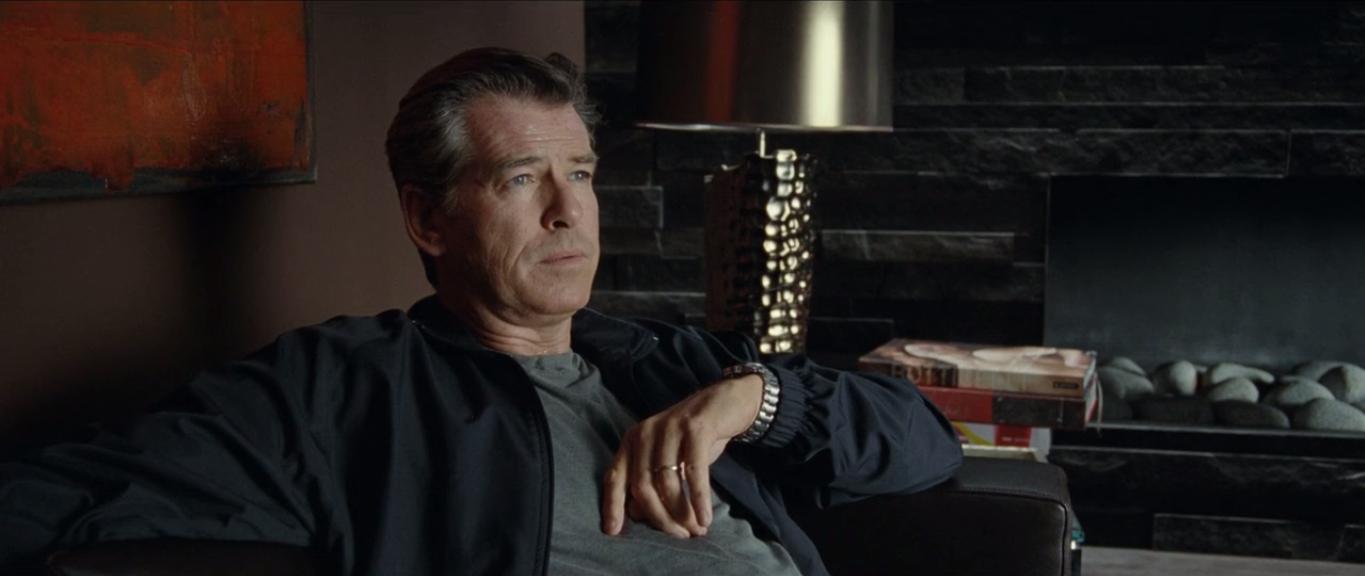
5. Liu Kai-chi in The Stool Pigeon - Kai-chi gives an over the top performance that keeps his character as mostly a ridiculous caricature.
4. Michael Lonsdale in Of Gods and Men - Lonsdale gives a quietly haunting portrayal of a modest monk willing to face his inevitable demise.
Best Scene: The last supper.
3. Armie Hammer in The Social Network - Hammer gives two great performances where he gives both a very entertaining portrayal of privilege, but also bothers to find proper nuance within characters while finding the differences between the two twins.
Best Scene: Meeting the president of Harvard.
2. Ben Kingsley in Shutter Island - Kingsley gives a great performance where he manages to amplify the film's stylistic tone while actually bringing a surprising degree of depth towards the film's twist through the way he builds towards the revelation.
Best Scene: The Lighthouse.
1. Taika Waititi in Boy - Good Prediction Luke, Tahmeed, Omar, RatedRStar, John Smith, and Matt Mustin. Waititi gives my favorite supporting performance of this year with his genuinely hilarious but also rather off-putting portrayal of a petulant father. He manages to find the complexity of his character with such ease never letting a single aspect of the role override his entire performance.
Best Scene: Demanding his coat back.
Updated Overall
Next Year: 1965 Lead
Showing posts with label 2010 Alternate Supporting. Show all posts
Sunday, 10 December 2017
Saturday, 9 December 2017
Alternate Best Supporting Actor 2010: Liu Kai-chi in The Stool Pigeon
Liu Kai-chi did not receive an Oscar nomination for portraying Jabber in The Stool Pigeon.
The Stool Pigeon is a thriller that follows a police inspector Lee (Nick Cheung) and his criminal driver informant Ghost. Although it is bolstered somewhat by a charismatic lead performance by Nicholas Tse as the driver it is bogged down by some rather awkward plotting.
Liu Kai-chi plays the previous titular stool pigeon before Tse takes up the job, and we first meet him in the film's opening where a sting is bungled. That leads Jabber on the wrong end of several machetes when the gangster he was working for becomes aware of his treachery. Liu kind of goes full on manic desperate fool, that you often see in a Hong Kong crime thriller, and it is perhaps a touch over the top. He becomes less sympathetic and more ridiculous in this early scene which is problematic because it is suppose to set up the guilt inspector Lee must suffer. Unfortunately that is made all the more underwhelming by Nick Cheung's bland performance. This is suppose to be an underlying and important plot point however I sort of forgot Liu was even in the film much of the time. He occasionally pops back up as now a deranged homeless man hiding from the criminals and constantly fearful for his life. Again Liu's performance is excessive, and it actually might have been somewhat forgivable if he was a little more subtle in his opening scene. His performance instead goes from an 11 to 11 so the change really doesn't leave any impression. Instead we get more of him reacting in an outrageous fashion to everything. Now he's over the top but not completely terrible at this. There are hints of some genuine emotion in there, but that is often diminished by just how much he oversells every one of his lines as well as all his facial expressions. He leaves nowhere for his character to go, and remains almost a cartoon the entire time. The role itself I do think had potential if there had been a degree of restraint as the idea of his character trying to see his wife again could have been moving. It fails though because of just how big he goes the entire time. There are at least some minor glimpses of a decent performance but for the most part Liu Kai-chi's performance makes Jabber nothing more than a forgettable caricature.
The Stool Pigeon is a thriller that follows a police inspector Lee (Nick Cheung) and his criminal driver informant Ghost. Although it is bolstered somewhat by a charismatic lead performance by Nicholas Tse as the driver it is bogged down by some rather awkward plotting.
Liu Kai-chi plays the previous titular stool pigeon before Tse takes up the job, and we first meet him in the film's opening where a sting is bungled. That leads Jabber on the wrong end of several machetes when the gangster he was working for becomes aware of his treachery. Liu kind of goes full on manic desperate fool, that you often see in a Hong Kong crime thriller, and it is perhaps a touch over the top. He becomes less sympathetic and more ridiculous in this early scene which is problematic because it is suppose to set up the guilt inspector Lee must suffer. Unfortunately that is made all the more underwhelming by Nick Cheung's bland performance. This is suppose to be an underlying and important plot point however I sort of forgot Liu was even in the film much of the time. He occasionally pops back up as now a deranged homeless man hiding from the criminals and constantly fearful for his life. Again Liu's performance is excessive, and it actually might have been somewhat forgivable if he was a little more subtle in his opening scene. His performance instead goes from an 11 to 11 so the change really doesn't leave any impression. Instead we get more of him reacting in an outrageous fashion to everything. Now he's over the top but not completely terrible at this. There are hints of some genuine emotion in there, but that is often diminished by just how much he oversells every one of his lines as well as all his facial expressions. He leaves nowhere for his character to go, and remains almost a cartoon the entire time. The role itself I do think had potential if there had been a degree of restraint as the idea of his character trying to see his wife again could have been moving. It fails though because of just how big he goes the entire time. There are at least some minor glimpses of a decent performance but for the most part Liu Kai-chi's performance makes Jabber nothing more than a forgettable caricature.
Thursday, 7 December 2017
Alternate Best Supporting Actor 2010: Ben Kingsley in Shutter Island
Ben Kingsley did not receive an Oscar nomination for portraying Dr. John Cawley in Shutter Island.
Shutter Island was perhaps slightly misunderstood it seems in its initial evaluation where some seemed to view the tale of two federal marshals investigating an escape from a mental institution as far more prestigious than it is meant to be. Martin Scorsese directs the film purposefully as a much more heightened thriller with overtone closer to the exploitation wing of the horror genre than any real analysis of mental illness.
In that sense I find this film to be a smashing success all outside of a single performance, unfortunately that is Leonardo DiCaprio's leading turn as the federal marshal investigator Teddy Daniels. DiCaprio is the one actor who doesn't seem to understand the tone oddly enough with his excessively intense performance. His work is miscalculated in that it doesn't properly embrace the style but it also gives away the twist through how unhinged he is from the opening scene. A more astute turn for example should have portrayed his opening distress slightly more vague as one should have been able to interpret it as just sea sickness or something else, not obviously something else. Thankfully though DiCaprio is the only off-turn in the film, meanwhile the rest of the film has a terrific ensemble with a particularly brilliant bit of casting as you have various cinematic villains suggesting something is off on this psychiatric island, and not just the patients. There's the Zodiac killer and Buffalo Bill leading the guards, Freddie Kruger hiding in the dark, with Ming the Merciless and Don Logan leading the doctor which brings me to Ben Kingsley.
Kingsley though he originally made his name playing renowned pacifist Mahatmas Gandhi his latter career has often been as the heavy which leaves him in good company with Ted Levine, Jackie Earle Haley, Max von Sydow and John Carroll Lynch on this strange island. What is notable about all those performances, along with Patricia Clarkson, Michelle Williams, and Emily Mortimer as various mysterious women Teddy meets is their mastery of the tone the film is looking for. Kingsley excels best in this which is in part to bring just the right touch of flamboyance, not too much, just the right amount and natural to the character. Kingsley certainly does this in giving the right style and grace of proper psychiatric doctor. There is an emphasis on measure of class in the doctor's manner that is wonderfully realized by Kingsley that adds so well to a bit of his more stylized lines that also makes them natural to the character. I have particular affection for the way Kingsley delivers the line "It's as if she evaporated straight through the walls" when describing the possible method of escape for the missing patient. Kingsley takes that heightened style and makes it all the more vibrant without going over the top, rather amplifying it in the right way.
Of course this being a twisty thriller, and Kingsley playing a man of good nature just doesn't seem right. There is something off about Kingsley's performance but only as it relates to realizing the twist though not in the way one would initially expect. With all these villains you have to be sure that the good Dr. Cawley must be evil, and Teddy's onto something when he thinks there may be unlawful experiments going on the island. Kingsley is brilliant in the way he maneuvers this aspect of the character. On initial viewing he is rather off-putting in a low key way. Kingsley has this certain eeriness in the way he speaks of past psychiatric measures, and the way he interacts with Teddy. Kingsley portrays this keen interest the doctor has in Teddy as though he is perhaps looking for some sort of weakness, and the way he speaks to him Kingsley exerts this gentle persuasion that carries a certain menace within his genial matter. The doctor never seems phased by the lost patient and there is something seemingly quite disturbing in this and something seems to be increasingly not right about the good doctor as the film continues.
Kingsley seems all set for the classical revelation of the attempted comforting paternal figure turning out to be evil not unlike James Cromwell in L.A. Confidential. There just seems to be something about his warmth that doesn't seem quite like it is placed correctly. As the story continues and the situation on the island seems to become more dire though Kingsley seems to tilt his hand in the revelation as Dr. Cawley almost openly threatens Teddy. Kingsley touches towards the absurd in his rather sinister ,overtly if not ridiculously even, way of speaking of his institute as something important something that he will not allow to be destroyed by anyone. That is of course because it suppose to be ridiculous the twist here is not that Kingsley's Cawley is evil, it's that Teddy is in fact delusional and in fact the "missing" patient. Re-watching the film I noticed just how outstanding Kingsley is in the way he offers all the clues yet doesn't give it away. The false give away towards the revelation Kingsley in fact portrays as a purposeful give away in the character of Cawley trying to get Teddy to see that his paranoia is false and frankly absurd. The real truth of Cawley is that he's a good man, simple as that.
Kingsley never hides this either, except in his aforementioned major role play scene. The way he pays so much attention to Teddy, particularly when talking of water torture, Kingsley's reactions are off putting if he was doing it to a stranger, but make perfect sense for an observant doctor trying to help his patient. Kingsley is in fact throughout giving this portrayal of a devoted man tirelessly trying to help the man break from his delusions. His eyes are searching for a break, or some way to try to help the man. On re-watch his speech about being a special kind of doctor who seeks to respect and understand his patents is genuinely moving as Kingsley offers it so earnestly as the true nature of Cawley. Kingsley in fact makes it all natural to the final revelation scenes which are of Cawley trying to directly confront Teddy with the truth. I love Kingsley in this scene as he brings such an incisiveness to the words. He importantly doesn't play this as a vicious attack on man, but rather infuses every word with such palatable emotion of a man striving hard to break the man from his false world as well as save his life. Kingsley offers a real warmth and tenderness in these scenes particularly in his final shot where it seems Teddy has regressed. Kingsley reaction is quite powerful as he finds the man's heartbreak at his failure to save his patient despite his tireless efforts. This is a great performance by Ben Kingsley as he not only offers an entertaining turn by realizing the film's specific tone, yet he still manages to bridge this towards a needed substance and depth required for the film's final act.
In that sense I find this film to be a smashing success all outside of a single performance, unfortunately that is Leonardo DiCaprio's leading turn as the federal marshal investigator Teddy Daniels. DiCaprio is the one actor who doesn't seem to understand the tone oddly enough with his excessively intense performance. His work is miscalculated in that it doesn't properly embrace the style but it also gives away the twist through how unhinged he is from the opening scene. A more astute turn for example should have portrayed his opening distress slightly more vague as one should have been able to interpret it as just sea sickness or something else, not obviously something else. Thankfully though DiCaprio is the only off-turn in the film, meanwhile the rest of the film has a terrific ensemble with a particularly brilliant bit of casting as you have various cinematic villains suggesting something is off on this psychiatric island, and not just the patients. There's the Zodiac killer and Buffalo Bill leading the guards, Freddie Kruger hiding in the dark, with Ming the Merciless and Don Logan leading the doctor which brings me to Ben Kingsley.
Kingsley though he originally made his name playing renowned pacifist Mahatmas Gandhi his latter career has often been as the heavy which leaves him in good company with Ted Levine, Jackie Earle Haley, Max von Sydow and John Carroll Lynch on this strange island. What is notable about all those performances, along with Patricia Clarkson, Michelle Williams, and Emily Mortimer as various mysterious women Teddy meets is their mastery of the tone the film is looking for. Kingsley excels best in this which is in part to bring just the right touch of flamboyance, not too much, just the right amount and natural to the character. Kingsley certainly does this in giving the right style and grace of proper psychiatric doctor. There is an emphasis on measure of class in the doctor's manner that is wonderfully realized by Kingsley that adds so well to a bit of his more stylized lines that also makes them natural to the character. I have particular affection for the way Kingsley delivers the line "It's as if she evaporated straight through the walls" when describing the possible method of escape for the missing patient. Kingsley takes that heightened style and makes it all the more vibrant without going over the top, rather amplifying it in the right way.
Of course this being a twisty thriller, and Kingsley playing a man of good nature just doesn't seem right. There is something off about Kingsley's performance but only as it relates to realizing the twist though not in the way one would initially expect. With all these villains you have to be sure that the good Dr. Cawley must be evil, and Teddy's onto something when he thinks there may be unlawful experiments going on the island. Kingsley is brilliant in the way he maneuvers this aspect of the character. On initial viewing he is rather off-putting in a low key way. Kingsley has this certain eeriness in the way he speaks of past psychiatric measures, and the way he interacts with Teddy. Kingsley portrays this keen interest the doctor has in Teddy as though he is perhaps looking for some sort of weakness, and the way he speaks to him Kingsley exerts this gentle persuasion that carries a certain menace within his genial matter. The doctor never seems phased by the lost patient and there is something seemingly quite disturbing in this and something seems to be increasingly not right about the good doctor as the film continues.
Kingsley seems all set for the classical revelation of the attempted comforting paternal figure turning out to be evil not unlike James Cromwell in L.A. Confidential. There just seems to be something about his warmth that doesn't seem quite like it is placed correctly. As the story continues and the situation on the island seems to become more dire though Kingsley seems to tilt his hand in the revelation as Dr. Cawley almost openly threatens Teddy. Kingsley touches towards the absurd in his rather sinister ,overtly if not ridiculously even, way of speaking of his institute as something important something that he will not allow to be destroyed by anyone. That is of course because it suppose to be ridiculous the twist here is not that Kingsley's Cawley is evil, it's that Teddy is in fact delusional and in fact the "missing" patient. Re-watching the film I noticed just how outstanding Kingsley is in the way he offers all the clues yet doesn't give it away. The false give away towards the revelation Kingsley in fact portrays as a purposeful give away in the character of Cawley trying to get Teddy to see that his paranoia is false and frankly absurd. The real truth of Cawley is that he's a good man, simple as that.
Kingsley never hides this either, except in his aforementioned major role play scene. The way he pays so much attention to Teddy, particularly when talking of water torture, Kingsley's reactions are off putting if he was doing it to a stranger, but make perfect sense for an observant doctor trying to help his patient. Kingsley is in fact throughout giving this portrayal of a devoted man tirelessly trying to help the man break from his delusions. His eyes are searching for a break, or some way to try to help the man. On re-watch his speech about being a special kind of doctor who seeks to respect and understand his patents is genuinely moving as Kingsley offers it so earnestly as the true nature of Cawley. Kingsley in fact makes it all natural to the final revelation scenes which are of Cawley trying to directly confront Teddy with the truth. I love Kingsley in this scene as he brings such an incisiveness to the words. He importantly doesn't play this as a vicious attack on man, but rather infuses every word with such palatable emotion of a man striving hard to break the man from his false world as well as save his life. Kingsley offers a real warmth and tenderness in these scenes particularly in his final shot where it seems Teddy has regressed. Kingsley reaction is quite powerful as he finds the man's heartbreak at his failure to save his patient despite his tireless efforts. This is a great performance by Ben Kingsley as he not only offers an entertaining turn by realizing the film's specific tone, yet he still manages to bridge this towards a needed substance and depth required for the film's final act.
Tuesday, 5 December 2017
Alternate Best Supporting Actor 2010: Armie Hammer in The Social Network
Armie Hammer did not receive an Oscar nomination for portraying Cameron and Tyler Winklevoss in The Social Network.
The idea of playing identical twins seems to be a challenge an actor may relish. This often though is used two give two wildly different if not dramatically opposed performances. The most interesting portrayals of twins are not so extreme, just as identical twins in real life tend to not be Dr. Jekyll and Mr. Hyde. Armie Hammer takes this more realistic approach in his portrayal of the Winklevosses or as titled by Jesse Eisenberg's Mark Zuckerberg the Winklevii. On a cursory glance the two men do appear to be almost exactly the same. They are both notable physical specimens that is further emphasized with an excessively upright posture from Hammer fitting for a pair of Olympiad level rowers. Their diction seemingly stemming from a sliver spoon deep in both of their throats. Hammer, who already has a rather refined articulation, seems to go just a little broader than even his normal accent to reinforce the background of the men, but also their nature. Hammer has the twins speak as men whose voices are usually heard, but perhaps more importantly as men who expect themselves to be heard.
The two are proper representations of privilege in every sense, and there is an inherent danger in playing such a type of character, particularly in an Aaron Sorkin screenplay, to veer towards caricature if the actor is not careful. This is not due to underdevelopment of characters in Sorkin's writing rather in his dialogue which is as treacherous as it is rich given its often flamboyant nature. There is almost this idea of Sorkinese which in the wrong hands can easily sound ridiculous and overwritten if not delivered properly. Hammer has a particular challenge there then in that he's already depicting an often simplified type of character with dialogue that could potentially exacerbate this. Hammer wholly avoids this while also making Sorkin's dialogue sing like few other actors have. Hammer in both performances is a master of every little colorful flourish by so effectively realizing the style of both men as natural to these words, and just delivering the lines so well. Hammer perhaps gives the funniest performance, or performances, in the film by making the most out of every line while also by having just the right type of fun with these very particular sort of men.
Now as amusing as Hammer is when pondering between the Winklevi if Zuckerberg offended one of their girlfriends or scoff at the the Prince of Monaco he's careful not to become two caricatures walking around. This is perhaps best seen through the ways he does distinguish the two twins from one another in nuanced and pivotal ways that actually helps to take them beyond simple figures of entitlement. Hammer portrays Cameron and Tyler differently in their personal styles that attaches to their personal belief in their use of that entitlement, however that isn't to say that is all there is to them or to Hammer's performance. Hammer presents Cameron as a man who very much believes, yet deludes himself, in sort of this honor that comes from his position that requires a certain attitude beyond even the mannerisms he has inherited along with his brother. Hammer shows Cameron as a man ready for every party, every general meeting or otherwise in the future in the way he speaks with such certainty towards his beliefs. Hammer grants this a touch of naivety even foolishness however not dishonestly through the character. There is some fun to be had at this expense, but this is part of the beauty of Hammer's performance. He allows you to have fun watching their plight, but he doesn't make them some sort of villain. They are still people.
On this point you can look at the way he depicts Cameron in two contrasting scenes. The first being one of his very best scenes where the two brothers go to lob a formal complaint about Zuckerberg to the president of Harvard. Hammer is downright hilarious in portraying Cameron's genuine disbelief at the president being completely unimpressed by his candor, and part of what makes this funny is how earnestly Hammer delivers every moment as a self-expressed "gentleman of Harvard". This can be contrasted against the series of court deposition scenes where we see a similair earnest disbelief in Hammer, however he garners a real sympathy when reacting to Zuckerberg's words of extreme disregard for the brothers. Now this is interesting as he iw distinguishing that against his portrayal of Tyler who has fewer pretensions over his position that Hammer realizes in subtle yet brilliant ways. Right in the disposition scenes for example it isn't the disbelief of a proper gentleman that he portrays rather fervent anger of someone ticked off who feels he was screwed out of a billion dollars. This idea Hammer directs throughout his work as Tyler that effectively differentiates between the two twins. In every moment of Cameron's assurance of proper manners of privilege, Hammer offers a terrific contrast through the more blunt of the two men who has no shame in using his wealth but also has no delusions around it either. One of my favorite deliveries of his in the film is " I broke your 335-year old doorknob" after tearing off one of Harvard's valued furnishings, that perfectly exemplifies Tyler's attitude towards frankly sentiments of his own class. This is a great pair of performances by Armie Hammer as he excels as a combination of the two yet makes them distinct. He never falls to any pitfalls in playing twins and most importantly succeeds in crafting two entertaining characters yet still humanizes them perhaps beyond what is even their intended purpose within the story.
The idea of playing identical twins seems to be a challenge an actor may relish. This often though is used two give two wildly different if not dramatically opposed performances. The most interesting portrayals of twins are not so extreme, just as identical twins in real life tend to not be Dr. Jekyll and Mr. Hyde. Armie Hammer takes this more realistic approach in his portrayal of the Winklevosses or as titled by Jesse Eisenberg's Mark Zuckerberg the Winklevii. On a cursory glance the two men do appear to be almost exactly the same. They are both notable physical specimens that is further emphasized with an excessively upright posture from Hammer fitting for a pair of Olympiad level rowers. Their diction seemingly stemming from a sliver spoon deep in both of their throats. Hammer, who already has a rather refined articulation, seems to go just a little broader than even his normal accent to reinforce the background of the men, but also their nature. Hammer has the twins speak as men whose voices are usually heard, but perhaps more importantly as men who expect themselves to be heard.
The two are proper representations of privilege in every sense, and there is an inherent danger in playing such a type of character, particularly in an Aaron Sorkin screenplay, to veer towards caricature if the actor is not careful. This is not due to underdevelopment of characters in Sorkin's writing rather in his dialogue which is as treacherous as it is rich given its often flamboyant nature. There is almost this idea of Sorkinese which in the wrong hands can easily sound ridiculous and overwritten if not delivered properly. Hammer has a particular challenge there then in that he's already depicting an often simplified type of character with dialogue that could potentially exacerbate this. Hammer wholly avoids this while also making Sorkin's dialogue sing like few other actors have. Hammer in both performances is a master of every little colorful flourish by so effectively realizing the style of both men as natural to these words, and just delivering the lines so well. Hammer perhaps gives the funniest performance, or performances, in the film by making the most out of every line while also by having just the right type of fun with these very particular sort of men.
Now as amusing as Hammer is when pondering between the Winklevi if Zuckerberg offended one of their girlfriends or scoff at the the Prince of Monaco he's careful not to become two caricatures walking around. This is perhaps best seen through the ways he does distinguish the two twins from one another in nuanced and pivotal ways that actually helps to take them beyond simple figures of entitlement. Hammer portrays Cameron and Tyler differently in their personal styles that attaches to their personal belief in their use of that entitlement, however that isn't to say that is all there is to them or to Hammer's performance. Hammer presents Cameron as a man who very much believes, yet deludes himself, in sort of this honor that comes from his position that requires a certain attitude beyond even the mannerisms he has inherited along with his brother. Hammer shows Cameron as a man ready for every party, every general meeting or otherwise in the future in the way he speaks with such certainty towards his beliefs. Hammer grants this a touch of naivety even foolishness however not dishonestly through the character. There is some fun to be had at this expense, but this is part of the beauty of Hammer's performance. He allows you to have fun watching their plight, but he doesn't make them some sort of villain. They are still people.
On this point you can look at the way he depicts Cameron in two contrasting scenes. The first being one of his very best scenes where the two brothers go to lob a formal complaint about Zuckerberg to the president of Harvard. Hammer is downright hilarious in portraying Cameron's genuine disbelief at the president being completely unimpressed by his candor, and part of what makes this funny is how earnestly Hammer delivers every moment as a self-expressed "gentleman of Harvard". This can be contrasted against the series of court deposition scenes where we see a similair earnest disbelief in Hammer, however he garners a real sympathy when reacting to Zuckerberg's words of extreme disregard for the brothers. Now this is interesting as he iw distinguishing that against his portrayal of Tyler who has fewer pretensions over his position that Hammer realizes in subtle yet brilliant ways. Right in the disposition scenes for example it isn't the disbelief of a proper gentleman that he portrays rather fervent anger of someone ticked off who feels he was screwed out of a billion dollars. This idea Hammer directs throughout his work as Tyler that effectively differentiates between the two twins. In every moment of Cameron's assurance of proper manners of privilege, Hammer offers a terrific contrast through the more blunt of the two men who has no shame in using his wealth but also has no delusions around it either. One of my favorite deliveries of his in the film is " I broke your 335-year old doorknob" after tearing off one of Harvard's valued furnishings, that perfectly exemplifies Tyler's attitude towards frankly sentiments of his own class. This is a great pair of performances by Armie Hammer as he excels as a combination of the two yet makes them distinct. He never falls to any pitfalls in playing twins and most importantly succeeds in crafting two entertaining characters yet still humanizes them perhaps beyond what is even their intended purpose within the story.
Saturday, 2 December 2017
Alternate Best Supporting Actor 2010: Michael Lonsdale in Of Gods and Men
Michael Lonsdale did not receive an Oscar nomination for portraying brother Luc in Of Gods and Men.
Of Gods and Men is a powerful film that depicts the true story of a group of monks deciding whether or not to remain while under threat of fundamentalist terrorists in Algeria.
Veteran french actor Michael Lonsdale portrays one of the monks of the monastery brother Luc who is also the doctor among the group. The film itself takes a reserved approach to its depiction of such a harrowing story as it quietly examines them attempting to continue their lives and duties in their faith even while the barbarians appear to be at the gate. Lonsdale's Luc is perhaps the most modest of the men who are simply trying to mind their faith and help the locals in their small ways. Lonsdale early on offers the presence of a man who has been living this life for a long time. Lonsdale's whole being is one of earnest empathy to those around him, and there is just such an abundance of natural warmth in his work. Lonsdale is particularly remarkable in the way he brings this with such an ease that reflects those years of this state. This is a pleasant state that Lonsdale reveals in brother Luc, as he offers the assurance of a life of fulfilling his duties as to his belief. There is particularly effective scene by Lonsdale early on where he describes the feelings of love to one of the local teenagers and Lonsdale in his gentle delivery and understanding eyes creates such sense of the caring nature of Luc.
Lonsdale's performance as the film continues is one of consistency and grace even while the world seems to crumble around the monastery. Now this is actually what is so notable about Lonsdale is what he does within potential limits of the role which could have been vague with the wrong actor in the part. Lonsdale while having that grace doesn't make brother Luc someone beyond who is which is a loving person. Lonsdale portrays his moments of dealing with his asthma, and the hardship of the danger of attacks as just that a hardship. Lonsdale's reaction depict the way he takes these things into himself but also takes them in stride. Lonsdale importantly always makes it feel wholly genuine with the man Luc is which is in this calm of his very being. Throughout the film though he is perhaps the least troubled by the impending threat on all of them which may result in their deaths. In every discussion Luc is quick to show his support for staying, and unlike the other monks is never truly conflicted by the choice. Lonsdale again doesn't use this as though Luc is detached, but rather aware of his own state of being.
Lonsdale realizes this elegance in his thoughts which is that as an old man with his health issues he knows he doesn't have long on this earth in any circumstances. Londsdale is tremendous in the way he creates this sense of this understanding that creates perhaps somberness of it, but never a sadness. There is rather where there is that calm in his being, that calm of a man who has lived his life the way he believed to be right. As the film continues then Lonsdale in this portrayal of this acceptance of fate is the most comforting presence in the film. Unlike the other men Lonsdale shows this sort of confidence of a man who can see his end, but rather than being fearful of it readies himself for it with a quiet embrace. As much as this is a place of lasting warmth in the film, particularly in the final moments the monks spend together, the impact of Lonsdale goes even further than expected as the story reaches its end. Lonsdale's work becomes incredibly poignant in never creating a unapproachable martyr, but rather creating this portrait of honest goodness. The final shots of the film of him bearing a storm well slowly moving towards his end are haunting showing the real power of Lonsdale's unassuming yet potent work.
Of Gods and Men is a powerful film that depicts the true story of a group of monks deciding whether or not to remain while under threat of fundamentalist terrorists in Algeria.
Veteran french actor Michael Lonsdale portrays one of the monks of the monastery brother Luc who is also the doctor among the group. The film itself takes a reserved approach to its depiction of such a harrowing story as it quietly examines them attempting to continue their lives and duties in their faith even while the barbarians appear to be at the gate. Lonsdale's Luc is perhaps the most modest of the men who are simply trying to mind their faith and help the locals in their small ways. Lonsdale early on offers the presence of a man who has been living this life for a long time. Lonsdale's whole being is one of earnest empathy to those around him, and there is just such an abundance of natural warmth in his work. Lonsdale is particularly remarkable in the way he brings this with such an ease that reflects those years of this state. This is a pleasant state that Lonsdale reveals in brother Luc, as he offers the assurance of a life of fulfilling his duties as to his belief. There is particularly effective scene by Lonsdale early on where he describes the feelings of love to one of the local teenagers and Lonsdale in his gentle delivery and understanding eyes creates such sense of the caring nature of Luc.
Lonsdale's performance as the film continues is one of consistency and grace even while the world seems to crumble around the monastery. Now this is actually what is so notable about Lonsdale is what he does within potential limits of the role which could have been vague with the wrong actor in the part. Lonsdale while having that grace doesn't make brother Luc someone beyond who is which is a loving person. Lonsdale portrays his moments of dealing with his asthma, and the hardship of the danger of attacks as just that a hardship. Lonsdale's reaction depict the way he takes these things into himself but also takes them in stride. Lonsdale importantly always makes it feel wholly genuine with the man Luc is which is in this calm of his very being. Throughout the film though he is perhaps the least troubled by the impending threat on all of them which may result in their deaths. In every discussion Luc is quick to show his support for staying, and unlike the other monks is never truly conflicted by the choice. Lonsdale again doesn't use this as though Luc is detached, but rather aware of his own state of being.
Lonsdale realizes this elegance in his thoughts which is that as an old man with his health issues he knows he doesn't have long on this earth in any circumstances. Londsdale is tremendous in the way he creates this sense of this understanding that creates perhaps somberness of it, but never a sadness. There is rather where there is that calm in his being, that calm of a man who has lived his life the way he believed to be right. As the film continues then Lonsdale in this portrayal of this acceptance of fate is the most comforting presence in the film. Unlike the other men Lonsdale shows this sort of confidence of a man who can see his end, but rather than being fearful of it readies himself for it with a quiet embrace. As much as this is a place of lasting warmth in the film, particularly in the final moments the monks spend together, the impact of Lonsdale goes even further than expected as the story reaches its end. Lonsdale's work becomes incredibly poignant in never creating a unapproachable martyr, but rather creating this portrait of honest goodness. The final shots of the film of him bearing a storm well slowly moving towards his end are haunting showing the real power of Lonsdale's unassuming yet potent work.
Wednesday, 29 November 2017
Alternate Best Supporting Actor 2010: Taika Waititi in Boy
Taika Waititi did not receive an Oscar nomination for portraying Alamein aka "Shogun" in Boy.
Boy is a very funny but also rather poignant coming of age story about...well...a boy (James Rolleston) getting a chance to reunite with his absentee father.
Boy I suppose wasn't quite a surprise in its balance of being both heartwarming and gut busting based upon Taika Waititi's later work as a director in Hunt for the Wilderpeople. What was perhaps a bit more of a surprise though was how this also translates to his work as an actor. Waititi in addition to directing the film plays the boy's father Alamein, which is also the boy's real name. In the opening of the film he is in jail where the boy imagines him as some sort hero even at times when he admits he's in jail. Waititi gives us glimpses of Alamein in fantastical visions of the man which grant us some great physical comedy from Waititi. These are perhaps the most purely comic moments in Waititi's work given he is basically being a human cartoon in them. Each one is a splendid piece of ridiculousness from Waititi. Whether it is performing a Maori dance by way of Michael Jackson's thriller, engaging in a dramatic fight with a gang of bikers, or even escaping prison like ninja by throwing dirt as if it was a ninja star, Waititi is highly entertaining. He properly gives a portrayal that is a little too much in that it so clearly a false image of almost this superhuman hero rather than an actual man. Waititi properly invents the hero for a child's dream being oh so endearing, and easy to be proud of, while being quite funny to us by just how absurd these images are.
We meet Alamein in the flesh a bit later as he surprisingly comes with his friends to visit the boy's home. The boy takes it as Alamein wanting to get to know him and his little brother Rocky. Waititi is brilliant in many ways here in the way he portrays the part of Alamein, or as he prefers to be called Shogun, but I'll still keep calling him Alamein. On one front Waititi does make Alamein a likable charming guy on the surface. He brings certainly an energetic spirit to the role, though carefully downplays this in comparison to those scenes of the fantasy. Waititi creates a more natural charm in these scenes fitting to the type of man Alamein is. Now in this Waititi creates these layers, that are not of facades but rather how this behavior can be seen and interpreted depending on who is watching him. At the most surface point this is just an entertaining performance to watch as Waiti has such a considerable comedic skill. This is in flawless delivery when humor is already within the line though Waiti has a particular great skill of even making technically mundane lines hilarious through unique approach as a performer as well as his perfect timing. Waititi makes this an inherent element within Alamein's charm that makes the initial view of him believable, and even what perhaps the boy's deceased mother had seen in him.
Waititi isn't simply entertaining here, though he certainly is that, but he brings real nuance within even this behavior that offers more than just an entertaining dad, although maybe less in a way. That behavior although can be enjoyable, Waititi uses it to also show the state of Alamein which is basically as a man child right down to his insistence that he and his couple guys, the not so amply named "Crazy Horses, are a proper gang. This extends to his interactions with his kids where Waititi walks such a fine line in his portrayal of this. In that he shows exactly how his kids could believe him to be just a fun dad as he encourages them to help him dig for treasure, even while it is in fact a selfish act of him just trying to find his ill-gotten gains he buried before going to jail. Waititi is fun as Alamein however in this he also conveys just how unabashed he is in choosing to misuse his kids. When he speaks over the phone about how there are so many kids around, or asks his boy not to call him dad rather to call him Shogun, there is a earnestness to the petulance that makes him endearing on the surface. Looking further than that surface though Waititi shows a real problem there showing to us the bad father who really is not performing his duties, even while his sons are tricked, initially anyways, even if it appears he's there just spending a good time with them. Waititi goes even further though with this than just having Alamein be a bad father, even though he is definitely that.
Waititi keeps in mind just how unprepared the man is to be a father, and that earnestness in much of his behavior is never wholly false even if somewhat deceiving. He's often having fun with the kids as though they are just his friends, as Waititi conveys the way the guy can't get his head around being a proper paternal figure to the boys. Waititi finds the complication of this in such authentic fashion. Throughout the film as his behavior becomes worse Waititi shows what happens when such behavior is basically forced to directly deal with reality. Waititi is actually most unsettling when this happens as we see the man acting as a boy in a less positive light, and it isn't easy to watch. Waititi doesn't hold back in this particularly in one scene where he suspects his son has taken his money. Waititi delivers in bringing a downright scary side to Alamein, that feels entirely cohesive to the rest of the character due to Waititi's deft handle on the role. Waititi brutally shows the truth of what happens to the "fun dad" when there is no fun to be had, and his childishness comes into conflict with his kids. When he yells at the boy Waititi shows the very real danger of the man living as the boy.
Again though Waititi carefully does not simplify this to suddenly make Alamein a terrible person, even though he is, in every single scene. Waititi is actually quite moving in the scene right afterwards in portraying so sincerely his attempt at apology, though still recognizing the problem in this since even the apology doesn't fully recognize the nature of his action. In this though Waititi finds a melancholy around the character as exudes the challenge of the man to connect with them in someway he understands, as well as deal with the loss of his wife. There are times in the fun moments there is a genuine warmth that Waititi brings showing Alamein trying to be an actual father to them. Waititi makes these moments properly awkward though genuine. These moments though he makes that somberness the most palatable suggesting that when he acts as the dad remembering the loss of his wife weighs most strongly on his mind. Waititi is downright heartbreaking in his portrayal of the particularly in the final pseudo reconciliation with his sons at the grave of his wife. I'll admit I was a bit surprised by just how well Waiti proves himself as able as an actor as he is a director in terms of so delicately and effectively balancing these tones. I loved this performance as Waititi within his portrayal is ridiculous, moving, horrible, likable, and funny all in his singular complex realization of the mess of a man Alamein is.
Boy is a very funny but also rather poignant coming of age story about...well...a boy (James Rolleston) getting a chance to reunite with his absentee father.
Boy I suppose wasn't quite a surprise in its balance of being both heartwarming and gut busting based upon Taika Waititi's later work as a director in Hunt for the Wilderpeople. What was perhaps a bit more of a surprise though was how this also translates to his work as an actor. Waititi in addition to directing the film plays the boy's father Alamein, which is also the boy's real name. In the opening of the film he is in jail where the boy imagines him as some sort hero even at times when he admits he's in jail. Waititi gives us glimpses of Alamein in fantastical visions of the man which grant us some great physical comedy from Waititi. These are perhaps the most purely comic moments in Waititi's work given he is basically being a human cartoon in them. Each one is a splendid piece of ridiculousness from Waititi. Whether it is performing a Maori dance by way of Michael Jackson's thriller, engaging in a dramatic fight with a gang of bikers, or even escaping prison like ninja by throwing dirt as if it was a ninja star, Waititi is highly entertaining. He properly gives a portrayal that is a little too much in that it so clearly a false image of almost this superhuman hero rather than an actual man. Waititi properly invents the hero for a child's dream being oh so endearing, and easy to be proud of, while being quite funny to us by just how absurd these images are.
We meet Alamein in the flesh a bit later as he surprisingly comes with his friends to visit the boy's home. The boy takes it as Alamein wanting to get to know him and his little brother Rocky. Waititi is brilliant in many ways here in the way he portrays the part of Alamein, or as he prefers to be called Shogun, but I'll still keep calling him Alamein. On one front Waititi does make Alamein a likable charming guy on the surface. He brings certainly an energetic spirit to the role, though carefully downplays this in comparison to those scenes of the fantasy. Waititi creates a more natural charm in these scenes fitting to the type of man Alamein is. Now in this Waititi creates these layers, that are not of facades but rather how this behavior can be seen and interpreted depending on who is watching him. At the most surface point this is just an entertaining performance to watch as Waiti has such a considerable comedic skill. This is in flawless delivery when humor is already within the line though Waiti has a particular great skill of even making technically mundane lines hilarious through unique approach as a performer as well as his perfect timing. Waititi makes this an inherent element within Alamein's charm that makes the initial view of him believable, and even what perhaps the boy's deceased mother had seen in him.
Waititi isn't simply entertaining here, though he certainly is that, but he brings real nuance within even this behavior that offers more than just an entertaining dad, although maybe less in a way. That behavior although can be enjoyable, Waititi uses it to also show the state of Alamein which is basically as a man child right down to his insistence that he and his couple guys, the not so amply named "Crazy Horses, are a proper gang. This extends to his interactions with his kids where Waititi walks such a fine line in his portrayal of this. In that he shows exactly how his kids could believe him to be just a fun dad as he encourages them to help him dig for treasure, even while it is in fact a selfish act of him just trying to find his ill-gotten gains he buried before going to jail. Waititi is fun as Alamein however in this he also conveys just how unabashed he is in choosing to misuse his kids. When he speaks over the phone about how there are so many kids around, or asks his boy not to call him dad rather to call him Shogun, there is a earnestness to the petulance that makes him endearing on the surface. Looking further than that surface though Waititi shows a real problem there showing to us the bad father who really is not performing his duties, even while his sons are tricked, initially anyways, even if it appears he's there just spending a good time with them. Waititi goes even further though with this than just having Alamein be a bad father, even though he is definitely that.
Waititi keeps in mind just how unprepared the man is to be a father, and that earnestness in much of his behavior is never wholly false even if somewhat deceiving. He's often having fun with the kids as though they are just his friends, as Waititi conveys the way the guy can't get his head around being a proper paternal figure to the boys. Waititi finds the complication of this in such authentic fashion. Throughout the film as his behavior becomes worse Waititi shows what happens when such behavior is basically forced to directly deal with reality. Waititi is actually most unsettling when this happens as we see the man acting as a boy in a less positive light, and it isn't easy to watch. Waititi doesn't hold back in this particularly in one scene where he suspects his son has taken his money. Waititi delivers in bringing a downright scary side to Alamein, that feels entirely cohesive to the rest of the character due to Waititi's deft handle on the role. Waititi brutally shows the truth of what happens to the "fun dad" when there is no fun to be had, and his childishness comes into conflict with his kids. When he yells at the boy Waititi shows the very real danger of the man living as the boy.
Again though Waititi carefully does not simplify this to suddenly make Alamein a terrible person, even though he is, in every single scene. Waititi is actually quite moving in the scene right afterwards in portraying so sincerely his attempt at apology, though still recognizing the problem in this since even the apology doesn't fully recognize the nature of his action. In this though Waititi finds a melancholy around the character as exudes the challenge of the man to connect with them in someway he understands, as well as deal with the loss of his wife. There are times in the fun moments there is a genuine warmth that Waititi brings showing Alamein trying to be an actual father to them. Waititi makes these moments properly awkward though genuine. These moments though he makes that somberness the most palatable suggesting that when he acts as the dad remembering the loss of his wife weighs most strongly on his mind. Waititi is downright heartbreaking in his portrayal of the particularly in the final pseudo reconciliation with his sons at the grave of his wife. I'll admit I was a bit surprised by just how well Waiti proves himself as able as an actor as he is a director in terms of so delicately and effectively balancing these tones. I loved this performance as Waititi within his portrayal is ridiculous, moving, horrible, likable, and funny all in his singular complex realization of the mess of a man Alamein is.
Tuesday, 28 November 2017
Alternate Best Supporting Actor 2010
And the Nominees Were Not:
Armie Hammer in The Social Network
Ben Kingsley in Shutter Island
Liu Kai Chi in The Stool Pigeon
Michael Lonsdale in Of Gods and Men
Taika Waititi in Boy
Armie Hammer in The Social Network
Ben Kingsley in Shutter Island
Liu Kai Chi in The Stool Pigeon
Michael Lonsdale in Of Gods and Men
Taika Waititi in Boy
Friday, 19 April 2013
Alternate Best Supporting Actor 2010: Results
5. Sam Rockwell in Conviction- Rockwell gives the best performance in his film giving some poignancy to his character's situation even though the power of his performance is limited by the film's problems.
4. Andrew Garfield in The Social Network- Garfield plays the emotions of his role a little to heavily at times but still gives an effective performance with a few stand out moments.
3. Chow Yun-Fat in Let the Bullets Fly- Yun-Fat gives a very entertaining villainous turn even if he could have brought just a little more menace to his role.
2. Pierce Brosnan in The Ghost Writer- Brosnan gives a strong performance effectively creating the different faces of a career politicians with too many secrets.
1. Ben Mendelsohn in Animal Kingdom- Good Prediction Fisti. This might not be a great year for great performances as I don't give anyone a five, but it is a great year for good performances. My personal winner came down to the two criminal uncles of Mendelsohn and John Hawkes in Winter's Bone.
Overall Rank:
4. Andrew Garfield in The Social Network- Garfield plays the emotions of his role a little to heavily at times but still gives an effective performance with a few stand out moments.
3. Chow Yun-Fat in Let the Bullets Fly- Yun-Fat gives a very entertaining villainous turn even if he could have brought just a little more menace to his role.
2. Pierce Brosnan in The Ghost Writer- Brosnan gives a strong performance effectively creating the different faces of a career politicians with too many secrets.
1. Ben Mendelsohn in Animal Kingdom- Good Prediction Fisti. This might not be a great year for great performances as I don't give anyone a five, but it is a great year for good performances. My personal winner came down to the two criminal uncles of Mendelsohn and John Hawkes in Winter's Bone.
- Ben Kingsley in Shutter Island
- Taika Waititi in Boy
- Armie Hammer in The Social Network
- Ben Mendelsohn in Animal Kingdom
- John Hawkes in Winter's Bone
- Michael Lonsdale in Of Gods and Men
- Cillian Murphy in Inception
- Pete Postlethwaite in The Town
- Ted Levine in Shutter Island
- Barry Pepper in True Grit
- Joel Edgerton in Animal Kingdom
- Jackie Earle Haley in Shutter Island
- Jeremy Renner in The Town
- Tom Hardy in Inception
- John Ortiz in Jack Goes Boating
- Ray Winstone in Edge of Darkness
- Pierce Brosnan in The Ghost Writer
- David Bradley in Another Year
- Joaquin Cosio in El Infierno
- Chow Yun-Fat in Let The Bullets Fly
- Guy Pearce in Animal Kingdom
- David O'Hara in Harry Potter and the Deathly Hallows
- Olivier Rabourdin in Of Gods and Men
- Peter Wight in Another Year
- Jon Hamm in The Town
- Kayvan Novak in Four Lions
- Andrew Garfield in The Social Network
- Nigel Lindsay in Four Lions
- Max von Sydow in Shutter Island
- John Malkovich in RED
- Mark Ruffalo in Shutter Island
- Michael Keaton in The Other Guys
- Jason Schwartzman in Scott Pilgrim vs. The World
- Justin Timberlake in The Social Network
- Bob Hoskins in Made in Dagenham
- Sam Rockwell in Iron Man 2
- Chris Evans in Scott Pilgrim vs. The World
- Bill Murray in Get Low
- Kieran Culkin in Scott Pilgrim vs. The World
- Ed Harris in The Way Back
- Sam Rockwell in Conviction
- Brandon Routh in Scott Pilgrim vs. The World
- Laurent Lafitte in Little White Lies
- Arsher Ali in Four Lion
- Philipee Laudenbach in Of Gods and Men
- Gary Oldman in The Book of Eli
- Emilio Estevez in The Way
- Ken Watanabe in Inception
- Ned Beatty in Toy Story 3
- Guy Pearce in The King's Speech
- Colin Farrell in The Way Back
- Jack McGee in The Fighter
- Jacques Herlin Of Gods and Men
- Benoit Magimel in Little White Lies
- Sullivan Stapleton in Animal Kingdom
- Nicolas Cage in Kick-Ass
- Morten Rose in Submarino
- Te Aho Aho Eketone-Whitu in Boy
- Ewan McGregor in I Love You Philip Morris
- Michael Douglas in Wall Street: Money Never Sleeps
- Adeel Ahktar in Four Lions
- Mark Strong in Kick-Ass
- Michael Keaton in Toy Story 3
- Gary Lewis in Valhalla Rising
- Gabriele Ferzetti in I am Love
- Frank Langella in All Good Things
- John Carroll Lynch in Shutter Island
- Ewan Stewart in Valhalla Rising
- Lucas Black in Get Low
- Samuel L. Jackson in Mother and Child
- Chris Cooper in The Town
- Joseph Gordon-Levitt in Inception
- Garret Dillahunt in Winter's Bone
- Mickey O'Keefe in The Fighter
- Mark Webber in Scott Pilgrim vs the World
- Matt Damon in True Grit
- Luke Ford in Animal Kingdom
- Bill Cobbs in Get Low
- Choi Moo-sung in I Saw the Devil
- Chris Evans in The Losers
- Dustin Hoffman in Barney's Version
- Jim Sturgess in The Way Back
- Brian Cox in RED
- Chris Cooper in The Company Men
- Oliver Platt in Please Give
- Maarten Stevenson in Valhalla Rising
- Pete Postlethwaite in Inception
- Kevin Costner in The Company Men
- Tom Wilkinson in The Ghost Writer
- Don Cheadle in Iron Man 2
- Idris Elba in The Losers
- Ray Winstone in Sex & Drugs & Rock & Roll
- Karl Urban in RED
- Stephen Rea in Ondine
- Eli Wallach in Wall Street: Money Never Sleeps
- Rupert Grint in Harry Potter and the Deathly Hallows
- Mickey Rourke in The Expendables
- Paolo Bonacelli in The American
- Josh Brolin in Wall Street: Money Never Sleeps
- Robert Pugh in The Ghost Writer
- Andrew Garfield in Never Let Me Go
- Benedict Cumberbatch in Four Lions
- Saul Rubinek in Barney's Version
- Michael Caine in Inception
- Michael Gambon in The King's Speech
- Morgan Freeman in RED
- Gilles Lellouche in Little White Lies
- Stellan Skarsgard in King of Devil's Island
- Tom Berenger in Inception
- Gerard Butler in How to Train Your Dragon
- David Zayas in The Expendables
- Dileep Rao in Inception
- Mark Strong in The Way Back
- Stanley Tucci in Easy A
- Jimmy Smits in Mother and Child
- Lee David in Poetry
- Scott Speedman in Barney's Version
- Jean Dujardin in Little White Lies
- Frank Grillo in Edge of Darkness
- Hugo Weaving in The Wolfman
- Edoardo Gabbriellini in I am Love
- Tim Blake Nelson in Leaves of Grass
- Eric Roberts in The Expendables
- Jackie Chan in The Karate Kid
- Yoruck van Wageningen in The Way
- Elias Koteas in The Killer Inside Me
- Christopher Mintz-Plasse in Kick-Ass
- Peter Gallagher in Conviction
- James Nesbitt in The Way
- Flavio Parenti in I am Love
- Ned Beatty in The Killer Inside Me
- Vincent Cassel in Black Swan
- Thomas Haden Church in Easy A
- Alan Rickman in Alice in Wonderland
- Richard Dreyfuss in Leaves of Grass
- Bill Pullman in The Killer Inside Me
- Michael Sheen in Alice in Wonderland
- Mark Ruffalo in The Kids Are Alright
- Derek Jacobi in The King's Speech
- Josh Hutcherson in The Kids Are Alright
- Josh Brolin in True Grit
- Jason Statham in The Expendables
- Mickey Rourke in Iron Man 2
- Danny Huston in Edge of Darkness
- Miles Teller in Rabbit Hole
- Ben Barnes in The Voyage of the Dawn Treader
- Crispin Glover in Alice in Wonderland
- Brandon T. Jackson in Percy Jackson
- Liu Kai-chi in Stool Pigeon
- Jamie Foxx in Due Date
- Josh Pais in Leaves of Grass
- Timothy Spall in The King's Speech
- Dolph Lundgren in The Expendables
- Jet Li in The Expendables
- Randy Couture in The Expendables
- Anthony Hopkins in The Wolfman
- Jesse Moss in Tucker & Dale vs. Evil
- Jason Patric in The Losers
Alternate Best Supporting Actor 2010: Andrew Garfield in The Social Network
Andrew Garfield did not receive an Oscar nomination, despite being nominated for a Golden Globe, Bafta and several critic awards, for portraying Eduardo Saverin in The Social Network.
The Social Network has three notable supporting performances in the film. Armie Hammer is properly pompous and gets across the entitled nature of the Winklevoss twins well, although his work since then suggests this might of been the part he was born to play. Justin Timberlake has the juiciest role as the ambitious but paranoid Sean Parker. He isn't terrible, there is an awkwardness in his performance though, and he particularly falls flat when portraying Parker's paranoia. Andrew Garfield as Facebook co-founder and Mark Zuckerberg(Jesse Eisenberg)'s best friend Eduardo Saverin received most of the attention out of the supporting players.
The first time I watched the film Andrew Garfield actually left the biggest impression on me and I was little cold on Jesse Eisenberg's portrayal. Watching the film again though switched things around with Eisenberg's performance left the best impression, and Garfield weakened for me. A strange occurrence sure but watching Never Let Me Go the other film he received praise for made me understand a little bit of why. In Never Let Me Go Garfield gives an emotionally charged performance, but frankly too emotionally charged without the proper depth of character to really make the emotion resonate. His breakdown in that film left me completely unmoved because he just did not build to it well enough.
I do believe his performance in this film is better than his performance in Let Me Go though, but it shares the same problem where he gives an excessive emphasis to the emotional state of his character. He puts too much at once limiting his ability to play through the scene properly, or to powerfully build the fears and insecurities in Saverin as he sees Zuckerberg slowly edge him out. I don't want to sound to negative as I don't think he is bad at all, I just don't think he is great. He still does put on a great deal of effort and he does bring the emotions needed to his scenes even if he he takes a little too earnest of approach in his portrayal of Saverin who is suppose to be the moral center of the film.
There are plenty of things to like about this performance still particularly his chemistry with Eisenberg which finds the difficult connection between the two by having a genuine friendship there but as well a distance there due to the conflicting natures of the more self absorbed Mark, and the far more open and modest Eduardo. They are quite effective in creating early on both how the two would work together to make Facebook but as well create the seeds of the rift that would slowly develop between the two. Eisenberg and Garfield both handle this incredibly well by having the vastly different styles of performance that still work together in the same scene.
This is not a perfect performance as his character's arc would have been all the stronger if he simply eased up a little on some of the earlier scenes in his performance. Garfield though is very good in the final payoff scene for his character as he confronts Mark and Sean for betraying him. He delivers absolutely in this scene portraying the righteous anger in Eduardo for what they did to him. Yes this payoff would have been even greater I think if he slowly built up the vulnerability in Eduardo to this point, but as it is it still is an effective scene. All in all Garfield is quite good in his role, even if he does not stand as the best performance as the film.
The Social Network has three notable supporting performances in the film. Armie Hammer is properly pompous and gets across the entitled nature of the Winklevoss twins well, although his work since then suggests this might of been the part he was born to play. Justin Timberlake has the juiciest role as the ambitious but paranoid Sean Parker. He isn't terrible, there is an awkwardness in his performance though, and he particularly falls flat when portraying Parker's paranoia. Andrew Garfield as Facebook co-founder and Mark Zuckerberg(Jesse Eisenberg)'s best friend Eduardo Saverin received most of the attention out of the supporting players.
The first time I watched the film Andrew Garfield actually left the biggest impression on me and I was little cold on Jesse Eisenberg's portrayal. Watching the film again though switched things around with Eisenberg's performance left the best impression, and Garfield weakened for me. A strange occurrence sure but watching Never Let Me Go the other film he received praise for made me understand a little bit of why. In Never Let Me Go Garfield gives an emotionally charged performance, but frankly too emotionally charged without the proper depth of character to really make the emotion resonate. His breakdown in that film left me completely unmoved because he just did not build to it well enough.
I do believe his performance in this film is better than his performance in Let Me Go though, but it shares the same problem where he gives an excessive emphasis to the emotional state of his character. He puts too much at once limiting his ability to play through the scene properly, or to powerfully build the fears and insecurities in Saverin as he sees Zuckerberg slowly edge him out. I don't want to sound to negative as I don't think he is bad at all, I just don't think he is great. He still does put on a great deal of effort and he does bring the emotions needed to his scenes even if he he takes a little too earnest of approach in his portrayal of Saverin who is suppose to be the moral center of the film.
There are plenty of things to like about this performance still particularly his chemistry with Eisenberg which finds the difficult connection between the two by having a genuine friendship there but as well a distance there due to the conflicting natures of the more self absorbed Mark, and the far more open and modest Eduardo. They are quite effective in creating early on both how the two would work together to make Facebook but as well create the seeds of the rift that would slowly develop between the two. Eisenberg and Garfield both handle this incredibly well by having the vastly different styles of performance that still work together in the same scene.
This is not a perfect performance as his character's arc would have been all the stronger if he simply eased up a little on some of the earlier scenes in his performance. Garfield though is very good in the final payoff scene for his character as he confronts Mark and Sean for betraying him. He delivers absolutely in this scene portraying the righteous anger in Eduardo for what they did to him. Yes this payoff would have been even greater I think if he slowly built up the vulnerability in Eduardo to this point, but as it is it still is an effective scene. All in all Garfield is quite good in his role, even if he does not stand as the best performance as the film.
Thursday, 18 April 2013
Alternate Best Supporting Actor 2010: Ben Mendelsohn in Animal Kingdom
Ben Mendelsohn did not receive an Oscar nomination, despite winning a couple Australian film awards, for portraying Andrew 'Pope' Cody in Animal Kingdom.
Animal Kingdom is an effective crime drama about a 17 year old boy 'J' who slowly gets deep into his criminal family after the death of his mother. The film is very good but it has one big flaw which is that James Frecheville in the lead as the boy is just awful, especially when compared to the rest of the cast.
Ben Mendelsohn despite not being Oscar nominated for this role has apparently still broken through from now being one of the go to guys for a sleazy low life. Like Christoph Waltz who happened to have a similar break through that resulted in being cast in a few lesser variations (I refer to Three Musketeers and The Green Hornet), the original performance tends to be the best. As Pope Cody he portrays one of the Cody brothers who is an armed robber with his partner Barry Brown (Joel Edgerton), but as the film opens currently is hiding out from a group of police who kill first and never bother to ask questions.
Mendelsohn actually creates sympathy for Pope early on in his portrayal as he just shows him to be a man who finds himself caught in a corner. Although Mendelsohn properly hints that Pope is definitely not just a normal guy he does well in being rather humane in his performance in these early scenes to allow us to see honestly why J would not be instantly sworn off by them. Mendelsohn has a few good moments where he establishes that Pope is somewhat distance thanks to his current problems with the police but as well there is a certain camaraderie that properly suggests the history of the family as well.
There is one particularly excellent moment for Mendelsohn when his friend his suddenly killed by the police and Pope is near enough to see it. Mendelsohn is terrific in showing a very human reaction filled with both fear that it very well could have been him but also a sadness over seeing his friend killed in such a way. It is a great subtle scene for Mendelsohn and particularly effective in showing the man before we meet the monster. Mendelsohn honestly allows you to feel sorry for Pope in the succeeding scenes as he makes the grief Pope feel understandable to at least a certain extent, and the eventual determination for revenge almost seem not as horrible as it is.
Jackie Weaver as the mother to the uncles and grandmother to J received high praise for her work which seemed like the a likable enough mother type but turned out to be pure evil. Mendelsohn has a similar arc although less extreme as it is no secret that Pope is a criminal to begin with. He does in a way though make Pope initial actions of revenge, even if that includes just murdering to random police officers who did not have anything necessarily to do with his friends death, somewhat reasonable through his passionate and authentic portrayal of Pope's feelings up to the point, and he allows us to believe that he could rope J in on the crime even.
After Pope succeeds in his revenge and the cops press the whole family about what happened we see the true terror in Pope. Where you could sympathize with the unease of Pope in his early scenes Mendelsohn becomes quite frightening as he shows Pope become like a violent animal in the corner. Mendelsohn has a great unpredictability in his performance not allowing us to know exactly what he is going to do, but one thing is sure that the uneasiness in the man should not be taken lightly. Mendelsohn is terrific in revealing the true nature of the man as he portrays a violent intensity that slowly builds as Pope begins to constantly question whether J can really be trusted.
Mendelsohn builds well to the moment in which Pope finally does murder someone he thinks will implicate him in the murders. Mendelsohn is absolutely chilling in the scene by how quickly and by the matter of fact fashion he handles the scene. He begins in such a gentle welcoming fashion, even when he is offering heroine to the person, than the way he than just proceeds to murder the person without hesitation is terrifying. It is an effective scene perfectly handled by Mendelsohn which portrays the animal in the man. It made all the more fearsome by Mendelsohn since once every gets cleared up, he shows that Pope is able to act like nothing happened.
This is a terrific performance by Ben Mendelsohn that honestly makes the film work as he almost steals the place lead, because the actual lead could not steal a free sample let alone a scene. James Frecheville should have conveyed how J was emotionally pulled in than out of the family's sway, but he does not. The film still works though because Mendelsohn through his performance as Pope which starts out as sympathetic and slowly reveals to be only horrific actually makes J's journey believable without the actor playing J to even portray it. Mendelsohn through his compelling portrayal of Pope manages to overcome the major flaw of the film which is really something to say the least.
Animal Kingdom is an effective crime drama about a 17 year old boy 'J' who slowly gets deep into his criminal family after the death of his mother. The film is very good but it has one big flaw which is that James Frecheville in the lead as the boy is just awful, especially when compared to the rest of the cast.
Ben Mendelsohn despite not being Oscar nominated for this role has apparently still broken through from now being one of the go to guys for a sleazy low life. Like Christoph Waltz who happened to have a similar break through that resulted in being cast in a few lesser variations (I refer to Three Musketeers and The Green Hornet), the original performance tends to be the best. As Pope Cody he portrays one of the Cody brothers who is an armed robber with his partner Barry Brown (Joel Edgerton), but as the film opens currently is hiding out from a group of police who kill first and never bother to ask questions.
Mendelsohn actually creates sympathy for Pope early on in his portrayal as he just shows him to be a man who finds himself caught in a corner. Although Mendelsohn properly hints that Pope is definitely not just a normal guy he does well in being rather humane in his performance in these early scenes to allow us to see honestly why J would not be instantly sworn off by them. Mendelsohn has a few good moments where he establishes that Pope is somewhat distance thanks to his current problems with the police but as well there is a certain camaraderie that properly suggests the history of the family as well.
There is one particularly excellent moment for Mendelsohn when his friend his suddenly killed by the police and Pope is near enough to see it. Mendelsohn is terrific in showing a very human reaction filled with both fear that it very well could have been him but also a sadness over seeing his friend killed in such a way. It is a great subtle scene for Mendelsohn and particularly effective in showing the man before we meet the monster. Mendelsohn honestly allows you to feel sorry for Pope in the succeeding scenes as he makes the grief Pope feel understandable to at least a certain extent, and the eventual determination for revenge almost seem not as horrible as it is.
Jackie Weaver as the mother to the uncles and grandmother to J received high praise for her work which seemed like the a likable enough mother type but turned out to be pure evil. Mendelsohn has a similar arc although less extreme as it is no secret that Pope is a criminal to begin with. He does in a way though make Pope initial actions of revenge, even if that includes just murdering to random police officers who did not have anything necessarily to do with his friends death, somewhat reasonable through his passionate and authentic portrayal of Pope's feelings up to the point, and he allows us to believe that he could rope J in on the crime even.
After Pope succeeds in his revenge and the cops press the whole family about what happened we see the true terror in Pope. Where you could sympathize with the unease of Pope in his early scenes Mendelsohn becomes quite frightening as he shows Pope become like a violent animal in the corner. Mendelsohn has a great unpredictability in his performance not allowing us to know exactly what he is going to do, but one thing is sure that the uneasiness in the man should not be taken lightly. Mendelsohn is terrific in revealing the true nature of the man as he portrays a violent intensity that slowly builds as Pope begins to constantly question whether J can really be trusted.
Mendelsohn builds well to the moment in which Pope finally does murder someone he thinks will implicate him in the murders. Mendelsohn is absolutely chilling in the scene by how quickly and by the matter of fact fashion he handles the scene. He begins in such a gentle welcoming fashion, even when he is offering heroine to the person, than the way he than just proceeds to murder the person without hesitation is terrifying. It is an effective scene perfectly handled by Mendelsohn which portrays the animal in the man. It made all the more fearsome by Mendelsohn since once every gets cleared up, he shows that Pope is able to act like nothing happened.
This is a terrific performance by Ben Mendelsohn that honestly makes the film work as he almost steals the place lead, because the actual lead could not steal a free sample let alone a scene. James Frecheville should have conveyed how J was emotionally pulled in than out of the family's sway, but he does not. The film still works though because Mendelsohn through his performance as Pope which starts out as sympathetic and slowly reveals to be only horrific actually makes J's journey believable without the actor playing J to even portray it. Mendelsohn through his compelling portrayal of Pope manages to overcome the major flaw of the film which is really something to say the least.
Wednesday, 17 April 2013
Alternate Best Supporting Actor 2010: Chow Yun-Fat in Let The Bullets Fly
Chow Yun-Fat did not receive an Oscar nomination for portraying Huang Fox in Let the Bullets Fly.
Let the Bullets Fly is an entertaining film about a bandit leader who pretends to be the governor of a city only to be faced by a crime lord.
Chow Yun-Fat portrays the villain of the picture Huang Fox who is the crime lord who quickly does not take to kindly to the governor. The film amounts to their struggle for the city which involves a lot of double crosses, banter, and some bullets of course. Chow Yun-Fat when acting in his own language has a tremendous amount of presence and just owns the screen. This is true here and important in his role as Huang Fox who is a pompous somewhat over the top crime lord who does not mind telling everyone about his money and power.
Chow Yun-Fat has a lot of fun in his role as the crime lord giving a very expressive performance as the crime lord. A great deal of the scenes are where the bandit and the crime lord are basically trying to out think each other in various ways particularly in long scenes where they try to out trick each other in strange negotiations. Yun-Fat is great in all this scenes showing a sly intelligence in the man and always the joy of the game in Fox throughout the whole thing. He and Wen Jiang as the bandit create the right tone by portraying their power struggle in a very strange yet oddly believable fashion.
Although he plays the villain this is a very humorous performance by Chow Yun-Fat. Most of the humor comes from his scenes where he flaunts his power which Yun-Fat portrays in such a joyful and completely unabashed manner. Whether he is abusing people randomly or having some of his men kill themselves Yun-Fat honestly is able to bring some comedy to the scenes through the gleefully insane way that he plays the part. Fox easily could have fallen flat but the energy Yun-Fat brings to the part brings this part alive in a very entertaining fashion.
The only part of the performance that is a little underwhelming is the menace in the role. This is not to say Chow Yun-Fat does not make a fine villain, he does, but he is not quite an amazing villain. Yun-Fat is decent enough when he needs to show the direct villainy and does have some intensity. He never quite finds the perfect balance between being the evil crime lord and the comedic crime lord. Yes he does manage some menace while being enjoyable to watch but he never meets the two aspects of the character in a way that would make Huang Fox an all time great villain.
He handles the role in an energetic fashion with a lot of style and that usually Yun-Fat screen presence on display. Chow Yun-Fat gives a strong performance as Huang Fox although to be sure he is better in the comic moments than the menacing ones. This is not one where he is okay in one bad in the other though. He is great in the comedic scenes of his portrayal, and still fine in the moments where the true villain comes out. Chow Yun-Fat gives an effective villainous turn here, it is not one of those absolutely unforgettable villain portrayals but it is a pretty good one.
Let the Bullets Fly is an entertaining film about a bandit leader who pretends to be the governor of a city only to be faced by a crime lord.
Chow Yun-Fat portrays the villain of the picture Huang Fox who is the crime lord who quickly does not take to kindly to the governor. The film amounts to their struggle for the city which involves a lot of double crosses, banter, and some bullets of course. Chow Yun-Fat when acting in his own language has a tremendous amount of presence and just owns the screen. This is true here and important in his role as Huang Fox who is a pompous somewhat over the top crime lord who does not mind telling everyone about his money and power.
Chow Yun-Fat has a lot of fun in his role as the crime lord giving a very expressive performance as the crime lord. A great deal of the scenes are where the bandit and the crime lord are basically trying to out think each other in various ways particularly in long scenes where they try to out trick each other in strange negotiations. Yun-Fat is great in all this scenes showing a sly intelligence in the man and always the joy of the game in Fox throughout the whole thing. He and Wen Jiang as the bandit create the right tone by portraying their power struggle in a very strange yet oddly believable fashion.
Although he plays the villain this is a very humorous performance by Chow Yun-Fat. Most of the humor comes from his scenes where he flaunts his power which Yun-Fat portrays in such a joyful and completely unabashed manner. Whether he is abusing people randomly or having some of his men kill themselves Yun-Fat honestly is able to bring some comedy to the scenes through the gleefully insane way that he plays the part. Fox easily could have fallen flat but the energy Yun-Fat brings to the part brings this part alive in a very entertaining fashion.
The only part of the performance that is a little underwhelming is the menace in the role. This is not to say Chow Yun-Fat does not make a fine villain, he does, but he is not quite an amazing villain. Yun-Fat is decent enough when he needs to show the direct villainy and does have some intensity. He never quite finds the perfect balance between being the evil crime lord and the comedic crime lord. Yes he does manage some menace while being enjoyable to watch but he never meets the two aspects of the character in a way that would make Huang Fox an all time great villain.
He handles the role in an energetic fashion with a lot of style and that usually Yun-Fat screen presence on display. Chow Yun-Fat gives a strong performance as Huang Fox although to be sure he is better in the comic moments than the menacing ones. This is not one where he is okay in one bad in the other though. He is great in the comedic scenes of his portrayal, and still fine in the moments where the true villain comes out. Chow Yun-Fat gives an effective villainous turn here, it is not one of those absolutely unforgettable villain portrayals but it is a pretty good one.
Alternate Best Supporting Actor 2010: Pierce Brosnan in The Ghost Writer
Pierce Brosnan did not receive an Oscar nomination for portraying Adam Lang in The Ghost Writer.
The Ghost Writer is a very effective thriller about a new ghost writer (Ewan McGregor) brought in to finish the memoirs of a former British Prime Minister while he is under scrutiny for his involvement with the torture of suspected terrorists.
Pierce Brosnan plays the former British Prime minster Adam Lang. Brosnan is of course best known as his run as James Bond, but here he goes a bit against type as the somewhat shady politician. Brosnan's character is one we hear of several times before we finally meet him in the film. He has a build up and Brosnan does not disappoint when we do meet him. He takes a rather interesting approach in his performance which is he makes Lang sort of a mystery, but he plays him as a man who does not at all wanted to be taken for one. It is an effective portrayal in his few scenes he get across the several different faces of the career politician.
Brosnan has his scenes on the television where he seems the most confidant although as well the least natural. Brosnan creates the right posture though the way he so firmly speaks, and the way he seems to be happy and confidant even when there is no reason to be. Brosnan knows just how to be basically the fake man, but at the same time makes Lang seem like the leader he should have been considered at one time. He does very well here and he does well in showing the difference between the public persona and the real man that we meet when he speaks to the ghost writer, although even then there are really two sides to the man.
On one hand Brosnan keeps Lang as a base man of former power and still one of wealth and importance. Brosnan creates the right type of casual pompousness in the man in the way he deals with his entire staff and particularly the ghost writer. Brosnan is good actually because he never makes Lang to seem overly malicious in his behavior as it Brosnan allows us to see this as the sort of behavior that developed from being a person of such power. There is more than the fairly shallow rich powerful man behavior to this man, and Brosnan does create the right depth in his performance to suggest why Lang is in the trouble he currently has.
When pressed about his troubles Brosnan shows Lang is an intensely defensive and angry man over his fall from glory. He is very good in portraying just the sheer bitterness the man feels, but as well alludes early on that maybe he is hiding a darker secret. Brosnan is great though in his very last scene though as he seems in a way breaks the mystery with his performance even if in terms of the film's development we do not yet know that he has. Brosnan creates strong passion in Lang for what has done and there is not an undercurrent suggesting otherwise in this moment perhaps suggesting that Lang is not hiding anything in terms of his own actions.
This is a very solid performance by Pierce Brosnan particularly by the way his performance allows the secret in the film to exist while completely supporting the eventual revelation in regards to his character. He handles every aspect of his character very well especially through his portrayal of each shade of the man in terms of both the public and private man. Brosnan all in all actually does not have too many scenes to his name or even that much total screen time. Brosnan within the time that he does inhabit though gives the proper life to his character to support the character who is in always at the center of the film even though is often not on screen.
The Ghost Writer is a very effective thriller about a new ghost writer (Ewan McGregor) brought in to finish the memoirs of a former British Prime Minister while he is under scrutiny for his involvement with the torture of suspected terrorists.
Pierce Brosnan plays the former British Prime minster Adam Lang. Brosnan is of course best known as his run as James Bond, but here he goes a bit against type as the somewhat shady politician. Brosnan's character is one we hear of several times before we finally meet him in the film. He has a build up and Brosnan does not disappoint when we do meet him. He takes a rather interesting approach in his performance which is he makes Lang sort of a mystery, but he plays him as a man who does not at all wanted to be taken for one. It is an effective portrayal in his few scenes he get across the several different faces of the career politician.
Brosnan has his scenes on the television where he seems the most confidant although as well the least natural. Brosnan creates the right posture though the way he so firmly speaks, and the way he seems to be happy and confidant even when there is no reason to be. Brosnan knows just how to be basically the fake man, but at the same time makes Lang seem like the leader he should have been considered at one time. He does very well here and he does well in showing the difference between the public persona and the real man that we meet when he speaks to the ghost writer, although even then there are really two sides to the man.
On one hand Brosnan keeps Lang as a base man of former power and still one of wealth and importance. Brosnan creates the right type of casual pompousness in the man in the way he deals with his entire staff and particularly the ghost writer. Brosnan is good actually because he never makes Lang to seem overly malicious in his behavior as it Brosnan allows us to see this as the sort of behavior that developed from being a person of such power. There is more than the fairly shallow rich powerful man behavior to this man, and Brosnan does create the right depth in his performance to suggest why Lang is in the trouble he currently has.
When pressed about his troubles Brosnan shows Lang is an intensely defensive and angry man over his fall from glory. He is very good in portraying just the sheer bitterness the man feels, but as well alludes early on that maybe he is hiding a darker secret. Brosnan is great though in his very last scene though as he seems in a way breaks the mystery with his performance even if in terms of the film's development we do not yet know that he has. Brosnan creates strong passion in Lang for what has done and there is not an undercurrent suggesting otherwise in this moment perhaps suggesting that Lang is not hiding anything in terms of his own actions.
This is a very solid performance by Pierce Brosnan particularly by the way his performance allows the secret in the film to exist while completely supporting the eventual revelation in regards to his character. He handles every aspect of his character very well especially through his portrayal of each shade of the man in terms of both the public and private man. Brosnan all in all actually does not have too many scenes to his name or even that much total screen time. Brosnan within the time that he does inhabit though gives the proper life to his character to support the character who is in always at the center of the film even though is often not on screen.
Tuesday, 16 April 2013
Alternate Best Supporting Actor 2010: Sam Rockwell in Conviction
Sam Rockwell did not receive an Oscar nomination, despite being nominated for a critics choice award, for portraying Kenny Waters in Conviction.
Conviction is a bit of waste of an interesting story about a single mother Betty Anne Waters (Hillary Swank) who does everything even going to law school herself to prove that her brother was innocent of a murder he was convicted for. The film goes for a forced sentimentality too often rather than just allowing the emotions to flow as they should, and many of the performances are underwhelming including Swank in the lead.
The one performance that rises above the film is Sam Rockwell's. I have reviewed Rockwell twice before for his wildly entertaining performances in Galaxy Quest and Seven Psychopaths. This is a rather different performance from Sam Rockwell who plays a much more toned down sort of guy here, he has a few short Rockwellian moments but they are brief in scenes that work for when Kenny is either drunk or very excited. For the most part Sam Rockwell downplays his role very much and plays Kenny as a down to earth guy who is a bit of a trouble maker who ends up in some serious troubles when a cop targets him for the crime.
Sam Rockwell has several scenes he appears in but they tend to be fairly short scenes. Many of his scenes mostly consist of reaction shots, and frankly the film would have done well to stay a little more with his character. Rockwell therefore is limited here by the film which is all about finding his character's innocence but there is not even a scene where he is really even pressured about the whole affair. The film never takes Kenny's predicament far enough leaving most of it to Rockwell to show it in just his brief scenes. Rockwell though does do his very best to make this a moving characterization despite the limitations of the part.
Early on Rockwell makes Kenny a likable trouble maker. He has it clear that he is a guy who speak his mind too often is is not opposed to foolish behavior, but underneath he has a good heart. Rockwell manages to be sympathetic while showing exactly why though he would be so easily find himself in hot water as well. This leads as he is quickly convicted. Rockwell is very effective in first showing his disbelief at first, than is quite moving in his first scene in prison after a suicide attempt. It is a very strong scene almost silent portraying that he has finally realized the weight of the situation.
As the film goes on we get quick scenes to keep us updated on Kenny's feelings throughout his sister's journey to find him innocent. Rockwell is very good in all of these short scenes which are easily the best moments in the film as his portrayal of Kenny's reactions to the development bring out the most genuine emotions in the film. Rockwell gets across the pain of the situation in scenes of failure as he shows the frustrations and paranoia due to being placed in jail for a crime he did not commit. At the same time he gets across the poignancy of the moments when Rockwell portrays the jolt of euphoria as Kenny sees that perhaps he will make it out after all.
This is a good performance by Sam Rockwell. It does not rank as one of his very best performances though merely because the film never allows him to really go as far with the character as it appears he could have gone with a better script. He is by far the best part of the film though. He is the only actor who does not flub his accent by over doing as well as more importantly Rockwell manages to bring the dramatic weight of the situation despite the limitations set on him by the film. He made me actually care about his character's story enough to get through the many weak passages found throughout the rest of the film.
The one performance that rises above the film is Sam Rockwell's. I have reviewed Rockwell twice before for his wildly entertaining performances in Galaxy Quest and Seven Psychopaths. This is a rather different performance from Sam Rockwell who plays a much more toned down sort of guy here, he has a few short Rockwellian moments but they are brief in scenes that work for when Kenny is either drunk or very excited. For the most part Sam Rockwell downplays his role very much and plays Kenny as a down to earth guy who is a bit of a trouble maker who ends up in some serious troubles when a cop targets him for the crime.
Sam Rockwell has several scenes he appears in but they tend to be fairly short scenes. Many of his scenes mostly consist of reaction shots, and frankly the film would have done well to stay a little more with his character. Rockwell therefore is limited here by the film which is all about finding his character's innocence but there is not even a scene where he is really even pressured about the whole affair. The film never takes Kenny's predicament far enough leaving most of it to Rockwell to show it in just his brief scenes. Rockwell though does do his very best to make this a moving characterization despite the limitations of the part.
Early on Rockwell makes Kenny a likable trouble maker. He has it clear that he is a guy who speak his mind too often is is not opposed to foolish behavior, but underneath he has a good heart. Rockwell manages to be sympathetic while showing exactly why though he would be so easily find himself in hot water as well. This leads as he is quickly convicted. Rockwell is very effective in first showing his disbelief at first, than is quite moving in his first scene in prison after a suicide attempt. It is a very strong scene almost silent portraying that he has finally realized the weight of the situation.
As the film goes on we get quick scenes to keep us updated on Kenny's feelings throughout his sister's journey to find him innocent. Rockwell is very good in all of these short scenes which are easily the best moments in the film as his portrayal of Kenny's reactions to the development bring out the most genuine emotions in the film. Rockwell gets across the pain of the situation in scenes of failure as he shows the frustrations and paranoia due to being placed in jail for a crime he did not commit. At the same time he gets across the poignancy of the moments when Rockwell portrays the jolt of euphoria as Kenny sees that perhaps he will make it out after all.
This is a good performance by Sam Rockwell. It does not rank as one of his very best performances though merely because the film never allows him to really go as far with the character as it appears he could have gone with a better script. He is by far the best part of the film though. He is the only actor who does not flub his accent by over doing as well as more importantly Rockwell manages to bring the dramatic weight of the situation despite the limitations set on him by the film. He made me actually care about his character's story enough to get through the many weak passages found throughout the rest of the film.
Alternate Best Supporting Actor 2010
And the Nominees Were Not:
Ben Mendelsohn in Animal Kingdom
Sam Rockwell in Conviction
Andrew Garfield in The Social Network
Pierce Brosnan in The Ghost Writer
Chow Yun-Fat in Let the Bullets Fly
Ben Mendelsohn in Animal Kingdom
Sam Rockwell in Conviction
Andrew Garfield in The Social Network
Pierce Brosnan in The Ghost Writer
Chow Yun-Fat in Let the Bullets Fly
Subscribe to:
Posts (Atom)