Showing posts with label 1991 Alternate Best Actor. Show all posts

Thursday, 1 January 2026

Alternate Best Actor 1991: John Gielgud in Prospero's Books

John Gielgud did not receive an Oscar nomination for portraying the titular character of Prospero’s Books. 

Prospero’s Books is a strange Avant Garde adaptation of the Tempest. 

John Gielgud plays the role of Prospero however not any version of the character you’d think in your typical adaptation. Although he is frequently visually onscreen the performance shares much in common with his stellar, largely vocal, performance in Providence. It is hardly exactly the same however as Providence. Even in his storytelling and ramblings he is distinctly a tangible human we are visiting through his night of random thoughts and ideas. Prospero here isn’t a character you can grasp onto in the same way; rather he is often literally at a distance in a near constant recitation of various speeches. A critical choice however as Gielgud is one of the very best actors to call upon for constant Shakespearean or at least Shakespearean-esque endless monologuing. Gielgud after all has this specific almost singing way of delivering the verse that I think is important here in creating the flow not only for his performance but for the film as a whole. As we need to prevent any stops or even more so feelings of strict repetition or even dullness. Gielgud skirts each by just the precision of his performance where there’s not a moment where you do not feel in assured hands as Gielgud presents us with every dictation and thought of Prospero through the film. 

Prospero isn’t Prospero as a character however in fact he is more so Shakespeare conceiving the world and characters as we also see him acting upon it. So Gielgud’s performance beyond his dictatorial delivery isn’t exactly a certain through line of a character in any kind of traditional sense, rather what Gielgud does is highlight certain aspects of the character and of the “creator” as we progress through the narrative. As we have moments of Gielgud where he brings a grandfatherly kind of grace, other moments where he switches to a more demented kind of fixated vengeance, others where he has a curious charm and joy all as Prospero. We don’t see the shifts as much as the picking up from one idea to another. As more so the creator Gielgud plays very much the power of the dictatorial god where there are moments of him placing his decisions on those in his view. Moments where Gielgud accentuates in his eyes a certain mischievousness of someone playing with his pets, sometimes that shifts to a calmer demeanor of a graceful man just doing what he sees as right in the moment, and even more so where his eyes glow of the more loving man allowing the character’s happiness at times. Although these elements are theoretically disconnected, Gielgud never feels disconnected in his one performance which is one of the natural flow, albeit in a purposefully unnatural way.

Gielgud’s performance delivers on its very specific task which he previously achieved with Providence which is to carry a film on his great voice. I would say Gielgud does so again and it is pivotal you have him where he never loses his specific tempo and control. I will say however the performance never exactly became more than just a marvelous bit of almost musicianship, where I admired the technique here more so than it connected with me on an emotional level beyond, well, admiration. And yes it is experimental but contrasting that Providence very much did connect with me both as an amazing bit of technique and genuine emotional impact in exploring a character. I don’t feel I really *know* Prospero from this, nor do I see where he’s coming or going, or even as some otherworldly entity. Having said all that, it is still incredibly striking work that in lesser hands would be completely lost in all the visual madness of what is going on around him, or he could’ve been monotonous. Gielgud does neither and instead consistently elevates the film. A film I wouldn’t say wholly worked for me as I honestly felt the style went from inspired to a little tiresome, to repetitive at times, however Gielgud’s work I found an essential anchor that carried me through the rough spots and highlighted the more exceptional moments from the film. 

Wednesday, 20 December 2023

Alternate Best Actor 1991: Utpal Dutt in Agantuk

Utpal Dutt did not receive an Oscar nomination for portraying the titular character in Agantuk. 

Agantuk follows a husband and wife, as they receive the wife's long lost uncle, who they aren't sure if he's genuinely her uncle or a stranger there to steal her inheritance. 

As a final send off for Satyajit Ray, this is a very modest, but potent film where essentially we are doing variation on the idea of what exactly bridges the gap between family and strangers. This is personified by Utpal Dutt's titular character, who is the uncle/stranger, who comes into their lives, and creates seeming upheaval as they can't quite be sure if he's the truth or not. Dutt's performance then is essential to creating this mystery of sorts to the film, as the man who could be or could not be who he says he is. Dutt's performance is remarkable in the way he carries himself with this quiet dignity that also is that of an enigma. Dutt importantly plays the part with this sense of knowing in his eyes, about the suspicions of the family, even if he doesn't exactly let on either to completely ease their suspicions. What the man does do though is immediately begin to reveal his great ability for storytelling. Dutt is wonderful in the delivery of his first story with this delivery but also a way of almost looking into the memory as something he is experiencing in the moment. It is difficult to not get caught up with the story yourself as Dutt articulates the memory so authentically as this undisputed truth, that is also filled with a particular style and character that helps to define the man. 

Where the man seems to be less of a mystery is in his interactions with his nephew. Where Dutt brings such an enormous amount of warmth in his performance. There's such a generosity of spirit that seems to exude off of the man as he speaks to his nephew. Dutt is just lovely in these moments in creating the bond, which again he implements through his stories and even just a teaching lesson when he speaks to his nephew and friends about celestial bodies. Dutt suddenly makes the stranger the most wonderful teacher, where he delivers with this exact sense of knowledge, but more importantly the moments he accentuates creates this intrigue. Dutt very much gives a performance as the stranger giving the performance, where he makes the learning not only fun, but creates the sense of connection between uncle and nephew through this experience. And we see this consistently where Dutt brings such a sense of life in each of these interactions. Where Dutt's performance isn't that he shows the nephew brightly shining from the manner of his supposed uncle, but also via Dutt's performance where he brings this particularly important sense of the appreciation the stranger gets from every moment he can entertain and connect to his supposed nephew. 

Still unconvinced, particularly by the husband, we see a series of pseudo interrogators brought in by him to try to decipher the stranger's intention. And these scenes are wonderful "interrogations", where the first one, the man just seems charmed by this man who has these stories from all around the world. And it is easy to find this completely convincing because it is hard not to be charmed by Dutt yourself as he details his view of Calcutta as civilized, or just explaining how the homeless present themselves in New York, it is hard not to get drawn into his calm way of sharing his experiences. But even when barely remembering Pele, which would cause one to think perhaps he's lying about being in South America, Dutt even then is entirely winning in his joking way of noting his complete ignorance of football past a certain geographic area. Dutt disarms with such ease that it becomes impossible to seemingly disbelieve him as just a wonderful man with much history, at least as he runs circles around the first interrogator. The last interrogator is far more intense and far more intended on trying to uncover this man as some liar than reveal a definite truth. And here is where Dutt once again excels here though now with more conflict as the man doesn't just listen to him, but rather constantly challenges him with far more incisiveness than just telling him that someone should know about Pele. A conversation that isn't as much about just who he is, but also the very nature of his philosophy where he has appreciation for traditional cultures as much as he is a man of modern cultures as well. 

Dutt is magnificent in the monologue explaining this appreciation is amazing work, as there is such articulate passion he brings, that so clearly and concisely reasons the man's worldview that while still in conflict, feels just beautifully spoken in every word. When speaking for example on the difference between using a gun to brutally murder many against cannibalism, Dutt's wrapping of the terms of barbarism is almost music in the ease in which he speaks this difficult contrast, and again shows such honest emotion in revealing the very real passions within the man. And what all this reveals is this isn't really a film about a mystery of whether or not the man is this uncle, rather it is merely the story of the discovery of all this man of the world has to offer, and just presenting his unique perspective of the world, while also connecting with who are his family still after all this time. Dutt, who sadly passed away not much later than Ray himself, is essential to the success of this film. Because it is more or less, a series of conversations, nearly monologues in rooms, and the film is a success. One being the words are written brilliantly by Ray as he is able to explore so much with this conceit, but as important is Dutt's flawless delivery of every one of these. Every single one that creates not only a sense of who this "stranger" is, but even more so he makes every story, every philosophical thought, every warm connection with the family, absolutely captivating, pointed, or poignant within his performance. Dutt delivers a truly great performance which does more than make the most of the concept, it gives its essential life, in creating a most fascinating portrait of a most idiosyncratic man. 

Tuesday, 29 May 2018

Alternate Best Actor 1991: Results

5. Christopher Eccleston in Let Him Have It - Eccleston gives a good portrayal of his mentally stunted "criminal" however the film fails to utilize the potential of his performance due to the material given to him.

Best Scene: Seeing his family the last time.
4. Wesley Snipes in New Jack City - Snipes gives a charismatic yet vicious portrayal of his drug dealer with even a touch of a pathos though his film fails to realize its value to the film.

Best Scene: Killing his partner.
3. Joe Mantegna in Homicide - Mantegna manages to make his material work by giving a properly confident portrayal of a professional detective while also effectively undercutting it in his subtle realization of a man without roots.

Best Scene: Confrontation.
2. Alan Rickman in Truly, Madly, Deeply - Rickman gives an absolutely charming yet also moving portrayal of a ghost who represents both the comfort of the past, but also what is lost in time.

Best Scene: Witnessing her moving on.
1. River Phoenix in Dogfight - Good Prediction Emi Grant. Phoenix manages to make some rather tricky material work through his charismatic and complex portrayal of a marine torn between the expectations of his peers, and his more genuine good nature.

Best Scene: Eddie's apology.
Updated Overall

Next Year: 1991 Supporting

Alternate Best Actor 1991: Gary Oldman in Rosencrantz And Guildenstern Are Dead

Gary Oldman did not receive an Oscar nomination for portraying Rosencrantz in Rosencrantz And Guildenstern Are Dead.

Rosencrantz And Guildenstern Are Dead actually works to a degree just due to the strength of the source material though it suffers by being too close to it for its own good, which isn't too surprising given it is directed by the original playwright. Although it is not a bad film, it is a little bit of a shame as the story could have lent itself to a more dynamic adaptation that played upon tropes of films, rather than of the theater.

A quick note on this review that will be in lieu of Wesley Snipes in New Jack City. A good performance mind you though frustrating stuck within a film that isn't sure whether it wants to be revenge thriller, Scarface, or Boyz N The Hood. Snipes is effective in his role however his charismatic, and surprisingly emotional at times, work is too often diluted by the film that consistently steers away from him to focus on the nearly one dimensional police chasing him. So instead decided to look at a rather different performance from the great Gary Oldman. Although Rosencrantz and Guildenstern as it stands as a slightly adapted film version it at least commands a notable cast, the most important members being the titular duo, of Hamlet fame despite not being the most important in that play either. They take center stage here though purposefully while still staying to the side of the central action of Hamlet. In these "leading" roles the film features two then up and comers of Tim Roth as Guildenstern and of course Oldman as Rosencrantz. I will also mention this is purposefully not a dual review for Roth as well who well isn't bad as the more analytical Guildenstern his performance is perhaps too serious for its own good, and perhaps needed a performer with a natural comedic energy, who would then tone that down.

Now I really mention that as we have Gary Oldman who is not thought of as a comic actor, though in a way some of his more overt performances can be comedic in some sense that is usually not their central purpose. Oldman here though gives a wholly comic approach to the role of Rosencrantz who is far more just in for the ride of the strange journey that the two semi-throwaway characters find themselves in. Oldman finds the right approach within that to essentially make the most out of this strange position that is also detached from the central plot, but rather than burdened by the need for understanding as Guildenstern is that he takes what comes. Oldman plays with this certain idea of the ignorance that is bliss for a rather interesting performance from his oeuvre to begin with. In that Oldman is far more the passive individual in a way, even though he steals the film in his own way, however this is through cleverly low key take that achieves a most successful duality within the character who doesn't stand out in the story yet Oldman makes him stand out within that idea. In Oldman plays Rosencrantz as the extra who essentially has just found out that he is an extra in an ongoing film, and is just trying to work with that.

Oldman is rather delightful in the role in his way of creating this man with this certain eagerness to please in a way that is rather endearing. Oldman defines his Rosencrantz with an earnestness, that will make sense even within the technically duplicitous character as he stands within Hamlet the play, as a fairly simple man trying to deal with a rather complex issue of one's metaphysical nature. Oldman makes that certain bafflement particularly entertaining though by presenting it with such an optimistic spirit within every moment of it. This comes right down to Oldman's frequent delivery of Rosencrantz introducing the pair, often wrongly introducing himself as Guildenstern before being corrected. Oldman delivers this so spiritedly of a man somewhat in the thrall of the idea that there is some bliss to be had of their peculiar state of mind. This attempt to find joy that Oldman brings in every moment is what makes this performance work particularly well, and greatly aids the film which could otherwise get lost in its own pondering, sometimes it does. Oldman brings this sense of always befuddled sense of discovery in the moment that is always rather humorous whether it is Rosencrantz discovering their new geographic location, or the way their coin consistently lands on heads as though they are stuck within time.

Oldman's performance though goes further in every scene in a way to provide very much a bit of a cinematic edge needed to his work which remains dynamic even when just reacting towards whatever it is Rosencrantz is seeing. Oldman never wastes such a moment either to create this sense of confusion over his place in the world, or just an often hilarious moment of Rosencrantz trying to make the most of his odd circumstances through Oldman always optimistic approach to the role. His timing is simply impeccable here to bring humor to every scene, even against Roth's often too dour of an approach. Oldman's physical performance even helps to accentuate the needed humor within it by presenting Rosencrantz physically as not quite right, honestly to be an extra. Oldman nicely plays within the lines, yet still doesn't quite fit in rather splendid way, particularly his almost Stan Laurelesque  way of going to sleep with a sleeping mask, well really a blindfold. This is even right down to when the two come to decide to go along with the plan to kill Hamlet, through a false letter, though for rather different reasons. Oldman presents this determination on Rosencrantz's part one built upon fear, not of any typical action, but rather of concern of the need to take action when the "world" requires them to take action. Oldman once again finds the right comical energy even within the strangeness of the thought by even bringing almost this sweet petulant sadness within his portrayal of concern over it all. Oldman manages to make even Rosencrantz's acceptance of Hamlet's demise okay within the character, by presenting it as just again his way of cheerfully accepting his very strange lot in "life". Oldman gives a terrific performance here as he not only brings to life the stage character, but he does manage to find the right tone within the adaptation as well. His performance bridges certain gaps in a way to give a rather enjoyable turn that finds the wit within the material, but also in a way that never feels burdened by it.

Thursday, 24 May 2018

Alternate Best Actor and Best Supporting Actor 1991: Alan Rickman in Truly, Madly, Deeply and Closet Land

Alan Rickman did not receive an Oscar nomination, despite receiving a BAFTA nomination, for portraying Jamie in Truly, Madly, Deeply nor did he receive one for playing the interrogator in Closet Land.

Truly, Madly, Deeply is a rather delightful but also poignant film about a woman Nina (Juliet Stevenson) being visited by the ghost of her late musician boyfriend. Closet Land is a film that gets lost within its own pretensions about a children's author (Madeleine Stowe) being interrogated in some unknown country for an unknown reason. The promise of such a premise being far better realized by Martin McDonagh's play The Pillowman.

What these two otherwise disparate films do happen to have in common is in British thespian Alan Rickman and his one of a kind voice. Rickman's talents though went beyond his voice, though that was certainly one of his great assets, and these two films do grant insights into two vastly different sides to Rickman's talent as a performer. The roles couldn't be more different playing in Truly Madly Deeply a likable musician, who happens to be a ghost, and in Closet Land playing a vicious state interrogator. I suppose one clear comparison within the two is that we are granted some prime Rickman vocal work who thankfully in no way hides that drawling baritone of his. He in fact has a bit of fun with it in both films, which is quite an accomplishment in the serious minded to a fault Closet Land. Both performances though very much begin with the initial idea which seems rich enough in each. The dead lover returned in Jamie, and the interrogator with more than few tricks up his sleeve. The former allowing Rickman to play nicely against what became his "formal" type in mainstream cinema due to his career defining role as Hans Gruber in Die Hard, meanwhile the interrogator very much plays right into that type.

Might as well take the more expected then with the interrogator, who really you could not ask for a better performer to make the rather laborious material of the film work. In that so much of the film is long monologues or dialogues pieces, that sadly wears their thematic ideas a little obviously on their sleeves leaving little subtly or perhaps even reality within the text, leaving the actors to some how make them work. Although I can't say either Rickman, or Stowe make the film "work" they do make it far easier to watch than it otherwise would be, and do their best to attempt to illustrate what the film was going for even though the film itself fails in its attempt. Rickman's typical deadpan yet forceful delivery is really perfection for the interrogator as it not only invokes the sort of assumed menace needed for the part it also expertly emphasizes the minutia of the man's existence. In that Rickman carefully plays that as the interrogation opens this is hardly the first, nor would it intend to be the last person the interrogator intends to break to satisfy the state's demands. Rickman is appropriately chilling by playing it very much a matter of routine from the outset finding the certain bureaucracy in the process of the interrogator, despite his process involving trying to physically and mentally destroy an individual for an unnamed crime.

Now enough of that "high minded" nonsense though as we also have here a Rickman turn that shows he could be just as charming as he could be menacing if he so chose to be. Rickman takes a bit to appear, as we follow around Stevenson's Nina failing to get over the grief of his loss, and I would actually say Rickman is supporting despite the importance of his character. When Jamie does suddenly appear in their old home, despite being quite dead, this is not a haunting but rather a wondrous event it would seem. Rickman doesn't take long to show what Nina saw in old Jamie as there is such a considerable charisma in his work. He is just exuding this pure joy, and importantly he and Stevenson drum up an immediate chemistry. An important sort of chemistry though where the two barely even need to state their love for one another since one can just feel it through not only the jubilation the two actors express so well in their interactions, but just the warmth within their casual interactions. Despite the strange situation, there is no stiffness or formality between the two as Rickman and Stevenson deliver their lines and react to one another with this sense of comfort natural to their long standing great affection for one another.

Enough of that fun though lets get back to slow torture in a film that seems a touch too impressed with itself during every development in the interaction between the writer and the interrogator. Rickman though cannot be faulted for so well illustrating every moment of this horrible process. The way he plays it is as this true professional who in every moment is well aware of what step he is in terms of trying to break her. In that Rickman brings this slight air of irritability within a false civility. Rickman develops this false earnestness whenever the interrogator claims he's just going through the interrogation as a routine, though with always this momentary gaps realized in a hesitation in his delivery or a single turn of the eyes that Rickman brilliantly signals as the reality of the viciousness. Rickman creates so much of the uneasiness, and sense of threat within the film through his work. The actual moments where the interrogator uses violence in particular Rickman performs so well by drawing out in a way as he sort of overtly mannered each that effectively reveals the interrogator purposefully taking his time to show what is doing before he is doing it to create this dread even before the pain.

Of course enough of that, and let us looks back at Jamie where we get Rickman playing the part in a way that is a little atypical for a ghost. In that Rickman portrays Jamie as a ghost in no way troubled by his death, in fact has this rather distinct ease about the whole situation reflecting a man quite enjoying the freedom it grants him in a way. Rickman shares that enjoyment by being this great ball of energy really, which is notable for the often deadpan Rickman, as he has quite a bit of fun with his performance it would seem. The right kind though as he lets us right in on it, to the point that is quite infectious honestly in his early scenes. He and Stevenson together are simply wonderful though in the exuberance of it all as the two seem to live the reunion to the fullest. I especially adore the moment in which the two sing a duet of "The Sun Ain't Gonna Shine Anymore". Neither actor is this great singer however it doesn't at all matter as that is hardly the point. The scene is a wonder because of that great happiness the two create through that is absolutely endearing for every second of it. Both bringing such a glow to it through their performance, with Rickman, so known for his icy characters, being rather splendid as this loving soul.

Well back to the hateful soul where Rickman is quite remarkable in realizing more within the character even in its limited presentation. This includes the interrogator putting on other parts, when the writer is blindfolded, that Rickman quite dynamically realizes as this guttural monster as the more brutal interrogator while also doing a high pitched pathetic wine to represent a fake witness being tortured to implicate the writer. Rickman is great there in creating yet another tool of the interrogator, however he goes a bit further when the interrogator is playing the witness when he claims to be left alone with the writer. Rickman uses this moment to its fullest as the witness describes the main interrogator, as a rich cultured man. Of course this is to create a false image for the writer to confess to, however given the writer is blindfolded Rickman subtly goes a bit further. When he delivers these words of propping up the interrogator as this good man Rickman silently portrays this honest sorrow in the man's eyes, showing the broken humanity of a man who once had morals, and is pained by the man he has becomes. This is a small moment, but honestly probably the best moment in the problematic film, because of how honest Rickman makes it through his performance. This plants the proper seed actual as the film goes on, and on, in the torture. Rickman though at least brings something out of this process by presenting the gradual wear in the interrogator own resolve revealing this desperation as he realizes his failures as the writer refuses to break.

Now his performance as Jamie also has more to it as well, as Nina continues to come home to him, while he introduces his fellow ghost friends who all just sort of hang about since they have nothing better to do. Rickman is rather hilarious in this, even as Jamie encroaches on Nina's patience, by showing this purity of the behavior. In that Rickman makes every, sometimes even inconsiderate moment technically speaking, genuinely goodhearted by playing it with the sense that Jamie truly has nothing more to do than hangout since he essentially an embodiment of living in the past. Rickman in turn doesn't hold back in terms of showing the joy that can come from such nostalgia, however also presents the limitations as Jamie has nowhere to go. Rickman doesn't at all present this as Jamie being truly troubled, even when he and Nina have a brief squabble, but rather direct as showing Jamie being all that Jamie can be. Eventually this, and the addition of a new boyfriend leads Nina to move on, leaving Jamie to be left in the past though not gone. The film ends with Jamie watching as she moves on, and Rickman is outstanding in the moment. His reaction is heartbreaking as he captures the sadness of losing her, but with a hint of joy reflective of Jamie's love for her that goes beyond even the point she has moved on from him. These two performances couldn't be more different in intent, and even within the contexts of the film since one amplifies a good film, and other makes a failure far more digestible. The two together though are representations of the talent of Alan Rickman who could be the most unpleasant of interrogators, or the most enchanting of ghosts.
Sunday, 20 May 2018

Alternate Best Actor 1991: River Phoenix in Dogfight

River Phoenix did not receive an Oscar nomination for portraying Eddie Birdlace in Dogfight.

Dogfight despite its cruel opening premise of a group of marines rounding up a group of women for a contest involving who can find the ugliest date becomes a rather sweet romance between one of the marines and his date.

River Phoenix's tragically brief career was rather different than say a James Dean who had three major films, iconic to their era, although also in roles who all begin their films as rebellious young men against whatever system they are within. Phoenix's career perhaps resulted in fewer classics, although that may differ based on one's specific definition of a classics, his output was fairly prolific even within its brevity. Phoenix in his eight year long career made 13 (and half to include Dark Blood) films within a variety of genres, and importantly a variety of roles for Phoenix. This included within 1991 itself where he played the physically troubled prostitute in My Own Private Idaho, and here as Eddie Birdlace a marine on leave just before he is set to go over sea to Vietnam. Phoenix as he was believable in realizing the meekness Mike in that film, Phoenix captures the problematic machismo of Eddie here. Phoenix offers that certain swagger of both his personality and physicality as Eddie and his fellow "B" men, based upon their names, come into town looking for women. Phoenix delivers the complimentary hollow intensity as he portrays this inherent tension with every delivery really every movement that works in tandem as the other men hard bent on convincing they are all really fighting men, even though none of them have yet to feel the sting of battle.

Phoenix's performance wisely though brings enough of subtle nuance even within these moments that are properly overt as intended showing perhaps there is maybe a bit more substance to Eddie than his cohorts even if it is rather hidden. Eddie nonetheless goes about his task to find a "dog" for the dogfight coming across a local music loving waitress Rose (Lili Taylor). Phoenix is great in the initial pick up scene which involves obviously showing more interest than is honest towards Rose by Eddie. Phoenix though actually though sets up the potential for more in their relationship even in the troublesome initial setup there. Phoenix is great in the way he delivers that certain leading man charisma he was capable, though sadly was not able to show off frequently enough, though he brings though in somewhat overly forceful way. He cools the intensity of before though to reveal that charisma within it but in his initial pursuit Phoenix rather is able to establish the act Eddie is performing, while being believable that he would indeed be charismatic in Rose's eyes. When he shows interest in Rose's music though Phoenix subtly delivers more a genuine charm in line with these moments, and quieter attitude that effectively alludes to something more even as Eddie is still just propositioning her for a humiliating situation. 

Phoenix finds the right approach within the dogfight sequence itself, which to the film's benefit is fairly early on in the story. In that again he creates the right sense of the circumstances that define Eddie's behavior against what is perhaps truer to Eddie's real nature. He still brings the moments directly with the other marines withe all the excessive bluster and absurd confidence needed. He subverts though in his moments with Taylor where he depicts a slowly growing unease as the two reach the titular event. Phoenix during the event itself shows Eddie only comfortable in the moments of complete blind support by his fellow marines within their deplorable behavior, and in turn Phoenix gradually in turn portrays this as a more difficult act to perpetuate. Phoenix naturally creates the complete loss of this attitude by in turn delivering such an earnest, if hesitant, warning towards Rose as she unknowing engages in parts of the "show". Phoenix properly shows not a hint of joy except in the most direct interactions with Rose, however even these Phoenix makes only the faintest fitting towards the compromise of the situation. When Rose discovers the truth and lashes out at Eddie, Phoenix powerfully delivers the vulnerability, not so much as classic Phoenix vulnerability, but more fitting to the character that Eddie is. He's moving though in so honestly creating this moment of full realization of actions through every word of Rose's. Phoenix says very little in the moment, but in his eyes conveys wholly Eddie's understanding of his wrongdoing.

The actual romance of the film begins when Eddie seeks to track down Rose to apologize for his actions while also taking her out on an actual date. Phoenix excels though as he shows still this struggle between his learnt expectation against his more genuine self. Eddie's initial apology is a beautifully realized moment by Phoenix by again so naturally purging the bluster, to show the more genuine individual in the moment. Eddie though once the new date starts puts it again as he shows her around town while trying to mock a maitre di. Phoenix once brings that same excessive unearned confidence in the moment throwing himself into every venom and profanity laced insult. What Phoenix does so well though is to portray this with such a extreme edge that is more fitting to it as almost an automatic reaction from his "education" in the marines. He pushes this as a blind rush into the type of man he's established himself with which Phoenix shows is still thin even when Eddie uses it for a less overtly problematic purpose. Rose calls him on this behavior again, though more gently than before, and Eddie finally lets it go. From there on Phoenix reveals really the real man that is beneath all that posturing and poignant portrays the far gentler soul within. From then on what we get instead is just this wonderfully realized romance between Eddie and Rose. Phoenix and Taylor have amazing chemistry with one another.

Their romance reminded a lot of the romance in Marty, which is always a good thing, in that while there is some underlying tension from the cause of their initial meeting, the two find such a beauty in their unassuming yet so very warm interactions with each other. The two just slowly build these ease from each subsequent scene, and the two are so genuine together that is so delightful just to watch the two interact with each other. What they even do for the most part isn't even that dramatic yet it doesn't matter because of how special yet still understated they make the relationship. Each step isn't this major act, but just this ingenious coming together two people. I love how simple yet special their final moments are that just seem right by how effectively Phoenix and Taylor realized the developing love between the two. That ends on a great note, but the film keeps going. The film then gets its second chance for a good ending where Eddie has a sobering talk with one of his fellow marines where he reveals his real self, as does his comrade. The film keeps going to cover the Kennedy assassination, Eddie's traumatic time in Vietnam then finally his return to Rose. Although I don't think these scenes are at needed to the overall story Phoenix's performance manages to give them at least some purpose by at least portraying Eddie's continuing down his path to becoming a more mature man even through his suffering. His final scenes back from the war Phoenix is moving in realizing the losses in his eyes, creating the right haunted quality within them, which in turn does make his return embrace with Rose rather moving even if paced strangely. Of course this is all just good film going on longer than it should, and at the very least we are granted more time with Phoenix's charismatic turn here. A performance that not only carries that extra time, it also just creates a fascinating and affecting portrait of a man finding himself while also finding love, and is a testament to the talent that was lost in River Phoenix. 

Tuesday, 15 May 2018

Alternate Best Actor 1991: Joe Mantegna in Homicide

Joe Mantegna did not receive an Oscar nomination for portraying Bobby Gold in Homicide.

Homicide follows a Jewish detective while he tries to solve the murder of an elderly Jewish woman, and while he tracks down a brutal drug dealer.

Homicide, yeah homicide, that's the name of an act and film. It's two things, right, maybe a metaphor or two. What the hell do I know. It's like a movie where everybody talks. Talks with this way of speaking. You know what I'm saying? Well do you? There are spaces to make sure you hear what I'm saying though. Make sure you here it right clear like I'm talking to someone else, but instead I'm monologuing. Monologuing like I'm a stage actor, but hey I'm suppose to be here talkin up a film. A film performance that is. A film where everyone talks a little strange. The plot seems a little convoluted. You know the type of film? Ever see Redbelt? A bit like that, although at least here, in this film, you can see at least some connections to the complications. If you know what I'm saying. All the supporting characters though they still all seem strange in their weird way of speaking through monologue, that isn't at all cinematic. David Mamet. Ever hear of the guy? Well it seems he could use another set of eyes to adapt his words on film, even just to direct em if you know what I'm saying. You see his words. His words, yeah, they're just a too thick, too thick for their own cake, like bad bunt cake. Ever have a bad bunt cake? Hopefully not, I wouldn't inflict you with that disease of the guttural intestines. This film, even as is, isn't terrible, not great, potential there you know. Doesn't come together. Also how are you suppose to believe Ricky Jay could physically impose Joe Mantegna, not the easiest pill to swallow, maybe he was using some slight of fist.

Okay, I'll stop writing like that and focus on once again the element of Mamet's film that manages to overcome the burdens from his way of directing his own work. Once again it is in the lead character who is the only character who seems to come to life. This again comes partially from the storytelling which doesn't effectively intertwine its elements partially because it doesn't quite develop them enough. The one element it does develop though is the central character who is given life by Mamet's frequent collaborator Joe Mantegna. Mantegna does need to contest with bit of Mamet's stylized dialogue, often overly stylized, however Mantegna is able to ease this a bit. One he is one of the better actors in terms of delivery of it anyway that makes it at all sound natural. He is helped further though by thankfully the character of Bobby Gold only needing a bit of it. He thankfully gets to be a bit more grounded and frankly more cinematic. Mantegna in turn is able to give a far more cinematic turn here that is the center of the film even beyond the lead. In that he is the true cohesion of the film as Gold deals with the two wildly contrasting plots, and has to connect them essentially by creating the personal journey of Gold in how it connects with the mystery and the manhunt.

Mantegna from his first scene is effective in establishing really this duality of the character. In that on one end as he discusses police procedure, and his procedure as detective in a most personal way, as in just specifically speaking of his own methods Mantegna brings this confidence and control of a true professional. He has the right calm and intensity of his eyes of a man who is well reasoned and well seasoned in his position. This is against the moment where he loses this comfort from either a hostile colleague or even a captive prisoner physically attacking him in order to try to steal his gun. Mantegna reveals this considerable unease even beyond the attack itself. There is this discomfort that reveals a greater anxiety in his reactions. A palatable desperation of a man who is not just uncomfortable in the situation, but also in terms of his sense of place within his profession. Mantegna naturally affords the character this duality by creating this sense of calm when only there can be a detachment. Even when he fawned over by his hero-worshiping partner (William H. Macy) Mantegna shows an appreciation only through his delivery that emphasis a courtesy, while physically reflecting this unease even in processing this type of support. Mantegna reveals a detective who has fashioned his place through his work as a detective, but as a man still is lost.

Mantegna uses this setup well then to explore the two avenues that reveal themselves as he tries to track criminal as a typical detective, and tries to solve the murder of the Jewish woman that forces him to examine his own, lost, heritage. We initially see this as he succeeds in the interactions towards the tracking with that same detached confidence, but with the murder investigation Mantegna portrays so well this pained forced connection. A way as he reacts with such unease to any sight that forces him to think about his own place as a Jew and what it means to him. Mantegna is able to bring the appropriate humanity to this struggle, which is a bit too academically worded by the supporting characters within this plot line. Mantegna successfully captures far more nuance in his portrayal of how this investigation in a inflicts him with his true sense of a lost identity. This is something he finds so well early on in his reactions that Mantegna shows in his eyes clearly reach him on a deeper level as he sees Jewish custom around this murder. He initially seems to try to hide this, by the same way he himself is dismissed by others, by self-hating antisemitism which Mantegna delivers so well as this specific yet hollow outrage as though he is simply aping others that seems ill-fitting to Gold.

Mantegna develops gradually this loss of distance as the reactions begin to also bring a greater depth into his direct delivery in the moments of trying to uncover the truth. This leads him deeper into his own culture/religion and Mantegna delivers this emotional connection through showing almost a relief when he stumbles upon a Zionist organization in his city. Briefly Mantegna reveals still hesitation but finally some comfort as he speaks more openly with the group, and even aids them in the arson of an anti-Semitic group's headquarters. Homicide being a Mamet film though quickly reveals this to be ruse by the organization to try to use Gold's connections in the police force to their benefit. Although this rushed Mantegna manages to at least bring a genuine emotion to this in his realization of the heartbreak of the moment of again being lost in his own identity. This quickly rams Gold into his other plot line following the crook which is connected only through Mantegna's performance. Mantegna does deliver though in realizing the emotionally spent state of Gold in every harried moment and exasperated work spoken as a man who really is fed up with life. He only speaks dripping with a caustic hate and cynicism that he essentially tries to bring down the criminal (Ving Rhames) to his level of thought. This is more or less where the film leaves us, and the film itself doesn't quite come together towards something wholly remarkable. Mantegna though does overcome the material, and in some ways makes it digestible by giving a moving portrait of a detective trying to come terms with his own self through his investigations. It doesn't make the film itself wholly successful, however Mantegna at least offers a stable emotional center through his successful performance.

Saturday, 12 May 2018

Alternate Best Actor 1991: Christopher Eccleston in Let Him Have It

Christopher Eccleston did not receive an Oscar nomination for portraying Derek Bentley in Let Him Have It.

Let Him Have It is a somewhat decent however overly basic depiction of the story of a mentally stunted man being accused of murder after falling in with a violent thug.

Christopher Eccleston gives his debut feature film performance, although the film's aesthetic feels closer to a TV film but I digress. This performance though has the chance to depict rather tragic story of this central real life character as this young man struggling with his very existence. Eccleston is effective in the role in realizing Derek's state of being. He doesn't overplay this rather finding the stunted nature in this certain direct manner of speaking and reacting to people. Eccleston finds this narrow way of Derek of really in the way he even looks at people. There is this obvious focus that Eccleston depicts showing that Derek needs to put this certain extra energy into interacting just like a typical person. Eccleston finds this though not quite perfect and as this show that he feels almost average yet not quite. There is the right type of struggle in every moment of this showing Derek as having difficulty navigating just the normal day to day, and even then he realizes as a clear struggle. Eccleston's work is tasked even further though as Derek is not only troubled by his mental difficulties, but also physical ones as an epileptic. Eccleston to his credit is terrific in the moments of showing the fits, which could led to some wild overacting very easily. Eccleston though performs them believably while again realizing the precarious state that is Derek's life.

Eccleston, despite these clear problems, nicely doesn't always overwhelm his performance with them. He shows these moments with his family as rather sweet by showing the simple humanity even within the struggle. He is never simply a series of tics, but realizes the man within it all. He creates the right pathos through those interactions with his father, mother and sister where we can see the potential for some growth or at least some comfort. Eccleston offers the right warmth in these interactions to provide the basis for some idea of a future that are rather moving through how genuine they feel. This is against his interactions with his "friends" who are petty criminals, who frequently abuse Derek's nature. Eccleston is very good in these interactions as well though by making the right yearning in the interactions as his delivery is that of a simple man aiming to please, and in turn receive some sort of acceptance from these people. This becomes problematic though when he is pulled into a criminal endeavor, which again Eccleston excels with by conveying Derek's attempt to comprehend what is going on throughout. Eccleston though offers an earnestness and a confusion. In that he shows the man trying to be part of it, but also not really wholly aware of what he is part. When the crime turns violent, Eccleston is rather moving in realizing just the mess of the man.

Eccleston even captures the right ambiguity in the specific delivery of the titular line that could either mean for his friend to shoot the cop, or for his friend to drop the gun. Eccleston rightly balances the line by delivering it as this moment of sheer fear that could be either interpreted as plea, or the reaction of a muddled mind. Eventually the crime leaves a police officer dead with Derek and the actual murderer, a minor, facing punishment. The murderer though cannot be executed due to his age leaving Derek as receiving the full brunt of the wrath of the judicial system. The film rather rushes this period of the story however Eccleston manages to find some of the tragedy by portraying that even as he faces death Derek still is struggling to understand what exactly is going on. It is moving by reinforcing the man just trying very hard to figure what is happening right down to the execution itself where he has very little time even to breakdown because of that. This is a good performance by Christopher Eccleston however the film doesn't entirely allow Eccelston to fully sink his teeth into. The film never quite gives the time to Eccleston to truly make this a heartbreaking portrait of this man that seemed quite possible given the subject matter. Eccleston's performance is good, but the full potential of it seems somewhat unrealized by the film's underwhelming approach to the material.

Thursday, 10 May 2018

Alternate Best Actor 1991

And the Nominees Were Not:

Alan Rickman in Truly Madly Deeply

River Phoenix in Dogfight

Wesley Snipes in New Jack City

Joe Mantegna in Homicide

Christopher Eccleston in Let Him Have It

Wednesday, 3 April 2013

Alternate Best Actor 1991: Results

5. River Phoenix in My Own Private Idaho- Phoenix gives a good performance even if it is somewhat muted by the film's direction and his co-star.

Best Scene:  Mike thinks about his mother.
4. Raul Julia in The Addams Family- Julia gives an entertaining enjoyable performance which shows that an actor can overplay and underplay a role.

Best Scene: The Mamushka.
3. Viggo Mortensen in The Indian Runner- Mortensen gives an effective intense performance that brings to life the unpredictable nature of his character.

Best Scene: Joe tries to convince Frank to turn his life around.
2. Val Kilmer in The Doors- Kilmer gives an excellent performance by becoming the role of Jim Morrison through his brief highs and his considerable downs.

Best Scene:  Any of Morrison's performances.
1. John Turturro in Barton Fink- Although Kilmer was great my favorite of year goes to John Turturro's portrayal of Barton Fink. Turturro leads through his incredible film in a brilliant fashion in both realizing his particular character but as well stands as an honest humane portrait of a normal man in this strange world as well.

Best Scene: The Life of the Mind.
Overall Rank:
  1. John Turturro in Barton Fink
  2. Val Kilmer in The Doors
  3. Utpal Dutt in Agantuk
  4. Viggo Mortensen in The Indian Runner
  5. Gary Oldman in Rosencrantz and Guildenstern Are Dead
  6. Raul Julia in The Addams Family  
  7. John Gielgud in Prospero's Books
  8. Kevin Costner in JFK 
  9. River Phoenix in Dogfight
  10. James Woods in The Hard Way
  11. Robby Benson in Beauty and the Beast
  12. Hugo Weaving in Proof
  13. Joe Mantegna in Homicide 
  14. Michael J. Fox in The Hard Way
  15. Alan Rickman in Closet Land
  16. Albert Brooks in Defending Your Life
  17. Denis Lavant in Lovers on the Bridge 
  18. William Hurt in The Doctor
  19. David Morse in The Indian Runner
  20. River Phoenix in My Own Private Idaho 
  21. Kevin Kline in Soapdish
  22. Stellan Skarsgard in The Ox
  23. Arnold Schwarzenegger in Terminator 2  
  24. Dipankar Dey in The Stranger
  25. Maury Chaykin in The Adjuster
  26. Wesley Snipes in New Jack City
  27. Jeff Bridges in The Fisher King
  28. Peter Weller in Naked Lunch 
  29. Christopher Eccleston in Let Him Have It 
  30. Chang Chen in A Brighter Summer Day
  31. Elias Koteas in The Adjuster
  32. Christopher Lloyd in The Addams Family
  33. Richard Dreyfuss in What About Bob  
  34. Jeremy Irons in Kafka
  35. Robert Duvall in Rambling Rose
  36. Dominique Pinon in Delicatessen
  37. Nick Nolte in Cape Fear
  38. Steve Martin in L.A. Story
  39. Leslie Nielsen in Naked Gun 2 1/2
  40. Lukas Haas in Rambling Rose 
  41. Ethan Hawke in White Fang
  42. Keanu Reeves in Bill and Ted's Bogus Journey
  43. Alex Winter in Bill and Ted's Bogus Journey
  44. Steve Martin in Father of the Bride 
  45. Robert Arkins in The Commitments 
  46. Michel Piccoli in La Belle Noiseuse
  47. Tim Roth in Rosencrantz and Guildenstern Are Dead
  48. Kevin Kline in Grand Canyon 
  49. Clive Owen in Close My Eyes
  50. Kenneth Branagh in Dead Again
  51. Billy Crystal in City Slickers  
  52. Jason Patric in Rush
  53. Al Pacino in Frankie And Johnny
  54. Adrian Dunbar in Hear My Song
  55. Harrison Ford in Regarding Henry
  56. Woody Allen in Shadows and Fog
  57. Bill Campbell in The Rocketeer 
  58. Robin Williams in The Fisher King 
  59. Jacques Dutronc in Van Gogh
  60. Damon Wayans in The Last Boy Scout
  61. Charlie Sheen in Hot Shots!
  62. Bill Murray in What About Bob
  63. Robin Williams in Hook 
  64. Jean-Marc Barr in Europa
  65. Mel Brook in Life Stinks
  66. Bruce Willis in The Last Boy Scout
  67. William Baldwin in Backdraft
  68. Robert De Niro in Cape Fear
  69. William Shatner in Star Trek VI
  70. Edward Furlong in Terminator 2 
  71. Keanu Reeves in My Own Private Idaho
  72. Wesley Snipes in Jungle Fever  
  73. Nick Nolte in The Prince of Tides
  74. Steven Waddington in Edward II
  75. Loren Dean in Billy Bathgate 
  76. Jason Foster in The Man in the Moon
  77. Christopher Lambert in Highlander II
  78. Chevy Chase in Nothing But Trouble
  79. Jim Varney in Ernest Scared Stupid 
  80. Keanu Reeves in Point Break 
  81. Ice-T in New Jack City 
  82. Warren Beatty in Bugsy
  83. Sylvester Stallone in Oscar 
  84. James Caan in For the Boys
  85. Kevin Costner in Robin Hood: The Prince of Thieves
Next Year: 1991 Supporting

Alternate Best Actor 1991: River Phoenix in My Own Private Idaho

River Phoenix did not receive an Oscar nomination, despite winning the Independent Spirit Award and the NSFC, for portraying Mike Waters in My Own Private Idaho.

My Own Private Idaho tells the story of two street hustlers who go on a journey of personal exploration that leads them apart. I found the film somewhat interesting with some good scenes, but I was not overly impressed by many of Gus Van Sant's directorial flairs.

River Phoenix is best known for dying prematurely after appearing in several films. He never attained a James Dean iconic status but he definitely has his own cult following of sorts. Phoenix appeared in a few more films after this one but this is generally considered his best work. Of course Phoenix is not the only lead in the film and shares the story with Keanu Reeves as Scott Favor. Favor's story is molded after Henry IV as he is drifter who lives an aimless life but after the death of his father assumes his place and becomes a respectable sort. The reason I mention Reeves is because the central relationship between the two is a central part of the film although that is unfortunately part of the problem with the film.

Keanu Reeves unfortunately only gives a performance that is considerably better than his performance in Dracula. The problem with that is that means he still is very wooden here. His Scott Favor feels almost a non presence, and he and Phoenix do not share a chemistry to make their relationship anything even remotely special. There is no heartbreak when they grow apart because there is not any reason why it seems they should be even together. He and Phoenix do not create any connection, and Reeves fails miserably to make Favor's transformation at the end seem like anything at all since he is just as bland as he was before. There is nothing about his performance to establish the central relationship the film needs.
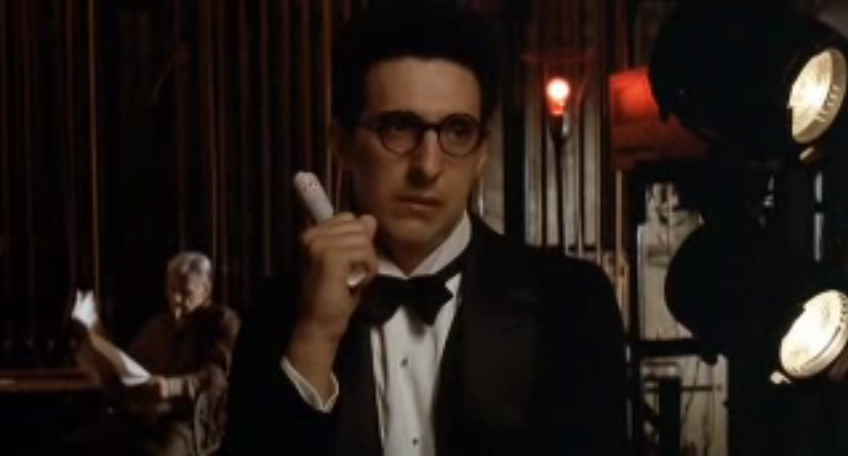
Of course I will lay the blame almost entirely on Keanu Reeves as Reeves makes far far less out of his individual scenes than what Phoenix does. Phoenix goes about portraying Mike in not all that different of a manner to the way that he portrayed Danny in Running on Empty. He is very quiet in this performance playing Mike as shy and retiring which certainly fits his character who suffers from fits of Narcolepsy which keeps him at a bit of a distance from everyone. Phoenix deserves a lot of credit for not overplaying Mike's problem as whenever he plays it quickly without ceremony in a believable and thankfully non theatrical style. He handles this very well, and goes about showing that this is always weighing on Mike keeps him in a troubled state.

This is a film that spends a lot of time with many characters. Reeves and Phoenix are the leads but they do play second fiddle rather often to Van Sant's direction where he just uses the actors as entirely pawns in many scenes. None of the actors in film get to do a whole lot to really bring their characters forward in these scenes and are purely there to be worked into the editing and visual styles employed. This made it so Phoenix's performance is limited in a certain way as these types of scenes are brought in throughout the picture and the arc of the two characters often feels secondary to whatever Van Sant feels like doing. This leaves Phoenix with little time to really make much of Mike as a character.

I guess I should stop being so negative because I did like this performance as it went along, although much like the film I thought there were powerful scenes that weren't all that well strung together. There is a great deal of power that Phoenix brings out in portraying Mike's painful struggle with himself just in individual moments such as when he goes to see his mother who is not there, or when he confronted by his mother. He has strong individual moments in his portrayal of Danny as a drifter who cannot be anything but and realizes this personality quite effectively which keeps him a certain distance throughout the film.

River Phoenix is entirely consistent throughout the film, and I would say he is the best part of the film. My biggest problem really with his performance is the way it is used in the film, which never quite allows Phoenix to reach his full potential. He some very moving moments here and there, but his overall affect of his performance just does not have the impact perhaps it could have had. Van Sant's over indulgent direction as well as Keanu Reeves inability to fulfill his role prevents Phoenix from creating the compelling central relationship that one would think would be in the film. This simply never quite feels as good of a performance as it perhaps could have been if it had been better utilized within the film.

Alternate Best Actor 1991: Raul Julia in The Addams Family

Raul Julia did not receive an Oscar nomination for portraying Gomez Addams in The Addams Family.

The Addams Family certainly is a film that takes me back and has a considerable nostalgic factor for me. Discounting that, it is a visually memorable and enjoyable film version of the strange family fascinated with macabre.

The last time I looked at a Raul Julia performance it was for his powerful turn in the very dramatic Kiss of the Spider Woman. This is a very different film for Julia but shows his great range as a performer as now he takes on a comedic turn as the patriarch of the Addams Family. Julia takes the approach that Gomez is pretty much certifiably insane although he does this quite uniquely in both downplaying the part and overplaying it at the same time for the best effect for the film. This sort of technique to go about a role certainly would be troublesome, but Julia knows how to handle such a role with the proper conviction.

In his scenes of downplaying Julia is great in being the overload of his manner in his quiet dignified manner, but always with a sly sense of humor at the same time. That is really what Julia does in every aspect of playing Gomez which is easily fulfill the dramatic requirements of the role when they are required but more importantly always stays quite humorous in the role. What works so well about this approach is how much conviction Julia has in a role like this, just because he is a comedy that is of the Addams Family never gives him a reason to give a halfhearted performance no matter what he is quite passionate and throws himself completely in the role.

Julia is enjoyable in playing morose quality of Gomez but for my money he is even better when he goes wild which Julia has a tremendous amount of fun with. His expressions are always have the utmost glee in them and he makes watching his behavior quite enjoyable. Although he could not be more different than when he is downplaying somehow Julia manages to make it all part of the Gomez. Hard to explain how other than we see him go from quiet to loud in the same scene and Julia does it so naturally even if it seems completely insane. Julia is always entertaining although he goes overboard technically speaking it always fits the character even when he goes all the way mamushka which is very enjoyable thanks to Julia.

Gomez obviously is not the most complex performance that Raul Julia ever gave but it does show his considerable talent as an actor. Julia shows his great ability as a comedic actor, although part of the reason his performance works as well as it does is in a certain way he portrays the role just like he would a serious role. He has great moments throughout the film, and my personal favorite would have to be when Gomez goes into a depression and forgets his duties as a father stating that he could not go on a drive with his family because it would cause him to miss Gilligan's Island. This might not be Julia's greatest role or his greatest performance but it is a fun one just to watch.

Tuesday, 2 April 2013

Alternate Best Actor 1991: Val Kilmer in The Doors

Val Kilmer did not receive an Oscar nomination for portraying Jim Morrison in The Doors.

The Doors depicts the rise and fall of Jim Morrison the lead singer of the rock band the Doors. As film The Doors is a most unpleasant experience as the decay of Morrison is long and drawn out and rather repetitive after awhile. Morrison's story probably would have to be this way, but it probably did not have to be for over 2 hours or with as much over the top symbolism and style that Oliver Stone utilizes here.

Although I would not recommend the film to anyone who wishes to watch a pleasant or even a particularly compelling film Val Kilmer's portrayal of Jim Morrison is far and away the best part of the film. We follow Morrison from his early childhood to his beginnings as a musician through his stardom and through his slow, and I mean slow, fall into drinks, drugs and other vices. Kilmer does honestly meet the challenges of the part through the whole affair. Kilmer takes a difficult route with his portrayal in that he starts out Morrison as a bit of a flighty sort who always seems in at least a bit of a daze even when he is not on drugs. This is certainly a more challenging approach for Kilmer to take as he has to show the differences in Morrison's behavior in much smaller strokes than if he had him fall into the dazed quality.

Kilmer makes Morrison a very distinct sort. He talks slowly, he responds in his own way to everything that goes on around him. Kilmer manages to get down the rather strange type that Morrison, and Kilmer does it with such ease. This is not a case where Kilmer seems to be imitating the Morrison style by any means instead he just becomes Morrison from his first scenes as him and never looks back. He never seems to be play acting as Morrison or sort of getting down the style. Kilmer absolutely seizes the role in a way that he does just possess the idea of Morrison as a person in such an effortlessly fashion that the fact that Kilmer is lead can instantly be forgotten because of just how good in he is. It feels like you simply are watching Morrison not Kilmer playing him.

Kilmer is excellent in the role in finding the differences in the daze and his performance. Early in the film Kilmer makes Morrison very much of his own style but before the downfall there is a sensibility about him that shows that Morrison is far more in control of himself in these early scenes. In the scenes near the beginning where he and the band first get together we see the brilliance of the man of the musician. Although Kilmer still very much keeps Morrison's style and there is an energy even in his slow manner of speaking and acting. Although it is especially low key there is something quite passionate about his performance, and he realizes the discovery in his music alive, which leads to the musical performances in the film.

Kilmer is terrific in the musical performances because he succeeds in being the almost strangely laid back performer, but also quite confrontational sort at the same time. In that all Kilmer also makes Morrison charismatic performer even if his charisma is something especially peculiar Kilmer realizes it without fault. It is testament to how much Kilmer nailed the role that the film freely uses his own vocals in the film and Morrison's original and there isn't any sort of disconnection. He makes Morrison the unique rock star he should be even though this is sort of short lived in the film as Morrison quickly decays. Kilmer is great as he slowly shows the loss of Morrison's stage presence to the point that he seems exactly like what he is a drunk drug addict being drunk and drugged up.

The last, well it is hard to say the last when it is about three fourths of the film depicts Morrison's own personal self destruction with sex, drugs, alcohol, and in general self destruction. Although the scenes are repetitive in tone, and style Kilmer is quite strong in meeting the requirements of the role. What is important about it is just the insanity of it all that Kilmer gets across, and he himself does not remain at just one level throughout these scenes even if the film basically. He is terrific in realizing the completely ludicrousness of the state Morrison gets to. He never comes out of it fully there will be moments fully, sometimes he will seems kind of there but even than Kilmer still shows that the damage pretty much is done, and Morrison will never recover.

Honestly all of the drug addled stuff would be an easy time for some big overacting, but even as he gets more and more out of it Kilmer always stays believable through all the different phases whether he is down as far as he goes, up in some sort of deranged high or somewhere in between he always keeps all as merely part of Morrison's fall. Kilmer makes it a particularly difficult ride to go through as he really does show that he only falls further and further, and although he seems to be enjoying himself some of that time Kilmer makes even that enjoyment a little stomach churning. One of the most effective facets is how Kilmer expresses that the charisma and intelligence of the man starts to become completely lost as he slowly turns into a twisted deposit of different highs than a man anymore.

This is a superb piece of work by Val Kilmer. Although I would say it is not always used as well as it could as Kilmer plays it straight as Morrison as a self destructive junkie, but Oliver Stone tries far to hard, and fails, to try to get some sort of understanding out of the man through his use of the naked Indian that comes off as more silly than anything else. I would not take anything away from Kilmer's performance though since it is purely Stone's fault for overplaying his hand as director. Kilmer should get all the praise for really the entire film as his performance rises well above some of the material he is given. Playing a well known person is a difficult task and many actors either try to hard or not hard enough to bring the well known person to life on screen. Val Kilmer only succeeds in giving a stunning performance that absolutely succeeds in bringing to life Jim Morrison in a fully convincing fashion.

Monday, 1 April 2013

Alternate Best Actor 1991: John Turturro in Barton Fink

John Turturro did not receive an Oscar nomination, despite winning Cannes, for portraying the titular character of Barton Fink.

Barton Fink is an absolutely brilliant film, easily my favorite of the year, that on the surface is about a playwright who gets a severe case of writer's block as he tries to write a screenplay while staying at a strange hotel.

Barton Fink is a director's film in many ways as Coen brother films often are. Their films though always allow actors to give performances that are interesting all their own while serving the needs of the film. Many of the performances in this film are heavily stylized and effectively so, they tend to fit a particular type and they do this well. Two performances do not do this, one who I will get to soon enough, and the other one is by John Turturro. Although Turturro does fit a particular type Turturro very much goes about playing Barton Fink as a normal human first even though he does happen to fit a certain type at the same time, but he is not defined by this in the same way say Tony Shalhoub's fast talking film producer, or John Mahoney's drunkard writer are.

We first meet Barton as he clearly is presiding over a great success in his first produced play. Turturro doesn't shy away here from being a bit alienating as Fink reacts to the production.Turturro does two things here quite effectively. On one hand he does show a man who honestly reacts to his first play being put on with the proper unease as it is unfolding, but eventually a certain disbelief as he sees his play being love by all.  He sets him up as a bit of retiring sort who is quite a peculiar sort in a way a certain type filled with shyness and hesitations. On the other hand though Turturro sets up Fink's pretentiousness with a great deal of believability. Turturro in this moment gets across Barton as almost over thinking this success, and perfectly realizes Fink as a man who think that though his play is loved by all it still is not that great.

Barton quickly finds himself even less comfortable than before as he moves into the strange hotel known as the Earle. Turturro does something particularly special as Fink in these scenes as he makes him a compelling character to follow despite how self absorbed he keeps his character. Turturro takes his role straight as this Clifford Odets type of playwright who is always very much concerned about his craft. As Barton goes to write film merely to finance more "important" plays Turturro portrays Barton almost as ready to be disinterested by the whole thing, and entirely out of his element. Turturro makes him a man who honestly doesn't understand, and is not at all prepared just to write a b-movie wrestling picture. He stays very subtle, but is quite great in that his realization of Barton is just so pure.

John Turturro just is Barton Fink the playwright who has talent, but his aspirations are far greater than they probably should be. Importantly Turturro does not ever turn Fink into a caricature as it would so easy to have done considering how obtuse Fink is in certain ways. Turturro though is excellent though in his refusal to do this and because of that he succeeds in creating Fink into a truly complex character. Turturro's performance strives well the line of doing what exactly Fink is while still making him a man we can relate to in at least some way. Turturro purposefully does not make Fink a character we easily emphasize with. He does though make Fink human in that his reactions to the more normal things he has very truthful moments that perhaps show Fink without any pretension.

Turturro is actually extremely sweet in his more tender moments like when he goes about meeting one of his writing idols W.P. Mayhew, who he ends up finding rather pathetic and becomes far more interested in Mayhew's secretary/mistress Audrey (Judy Davis). Turturro is terrific in the scenes with Davis because we see a vulnerability as he tries to reach out to her for some sort of companionship as he suffers from some intense loneliness. The way he uneasily tries to ask her out, and later speak to her is all brilliantly handled by Turturro as he shows Fink to be deep down just a normal guy with the needs of any normal man. Turturro treads so well though pitching through the complexities of Fink in those scenes and of course his scenes with John Goodman as Charlie Meadows an insurance salesman who also is staying at the hotel Earle.

Goodman and Turturro have perfect chemistry as two very different men. In these scenes Turturro goes through the whole of Fink. In one instance we see him as the sensitive writer as he expresses Fink's troubles and his inability to write his wrestling picture. He moves so well though as he espouses about his big ideas about the theater of the common man. Turturro is amazing with the amount of passion and energy he expresses in Fink's philosophy loudly but fitting of Fink as this is what really drives Fink to write. At the same time Turturro is so great because the pretentiousness of his ideas, and the fact that Fink really is not all that well versed with the common man is not avoided at all. He makes it all part of the singular man that is Fink the same Fink.

Turturro in his scenes with Goodman is both the alienating Fink as he seems too self absorbed in his own ideas to really even understand what is going on around him, but as well the vulnerable human being who creates a honest friendship with Charlie despite Fink's assuming nature. They are everything together really as Turturro shows that disconnect from the apparently normal man Charlie, and are quite humorous together in the dynamic they create between the two styles that differ so much between the two men. They are quite moving too though when the do reach a connection in some way and the friendship is made quite genuine by both Turturro and Goodman as Barton and Charlie do meet some sort of mutual understanding between the two.

I can't praise this performance enough Turturro is just so good. Turturro never falters once in his vivid creation of this very particular playwright. It is entertaining performance, funny at times, but most of all it is an endlessly captivating performance as we go through the mind and experiences of this man. Turturro not only acts as just a fascinating figure on his own but he also brings us into this strange world that he experiences both inside and outside of the hotel. Turturro does something so incredible here that he is just captivating in  simply looking forward in confusion, understanding, or anything. He makes a stare something to behold all in itself doing so much even in the slightest moment, and he is the one who keeps this film as a singular whole. He matches the film wholly throughout never being overwhelmed instead working in tandem to make the film the unforgettable experience it is.