Showing posts with label 1981 Alternate Best Actor. Show all posts

Friday, 23 September 2022

Alternate Best Actor 1981: Results


5. Sam Neill in Possession - Neill gives a scattershot yet potent performance that matches his insane film, though he is overshadowed by his co-star.

Best Scene: Rocking Chair
4. Jeremy Irons in The French-Lieutenant's Woman - Irons is able to deliver honest and power to both forbidden romances of very different ilks.

Best Scene: A late visit. 
3. Keith Carradine in Southern Comfort - Carradine gives a striking performance through his calm yet incisive demeanor. 

Best Scene: Making decisions. 
2. Michel Serrault in Garde à Vue - Serrault effectively delivers a tricky performance that is convincing in creating the sense of a man in an emotionally heightened state. 

Best Scene: Seeing something horrible.
1. John Heard in Cutter's Way - Good predictions Robert, Ytrewq & Calvin. Heard proves he was perhaps a largely untapped talent with this powerfully intense portrait of a wounded war vet attempting a strange sort of revenge. 

Best Scene: Cutter's reasoning for his plan.

Next: 81 Supporting

Thursday, 22 September 2022

Alternate Best Actor 1981: Michel Serrault & Lino Ventura in Garde à Vue

Michel Serrault nor did Lino Ventura receive an Oscar nominations for portraying Jérôme Martinaud and Inspector Antoine Gallien respectively in Garde à Vue.

Garde à Vue is an effective psychological thriller about one night of interrogating the prime suspect in a child murderer investigation. 

Michel Serrault plays the suspect and Lino Ventura plays the investigator in this game of cat and mouse, although part of the mystery you might say is what type of film this actually is and the development of it. Is it a character study of this kind of man and just trying to achieve the confession, or is this a genuine attempt to discover the truth of the matter? Each performer crafts a possible narrative through their performances and much of the compelling drama is through their interactions with one another. Ventura is obviously the more straightforward performance as the investigator who takes in this wealthy attorney on New Year's to ask him a few questions after the man had discovered one of the victims. Serrault on the other hand must be the enigma as the possible suspect, and the question isn't just whether or not he's guilty, but also if the film is about him confessing or about him being guilty or not. The game then is afoot for both actors to ply their trade with engaging conversation as the investigator goes through his evidence and leaves Serrault to attempt to tell his story. 

Ventura and Serrault are an effective duo in this game by projecting very different manners of the person. The old pro Ventura presents a man of convictions with his slightly haggard but penetrating stare. Ventura suggests a man who has been through similar matters before, and while it is another day in his life, it is the day in the life of a true professional. Conversely, Serrault is anything but at ease. There is such a prominent tension in his physicality in the role, as a man who is clearly filled with some kind of anxiety, although the exact anxiety is the key. When Ventura as the inspector asks his first questions in a calm yet assertive manner, the suspect initially disparages the inspector back by questioning his virtues as an inspector. Serrault's delivery contrasts strongly with sharp intensity. Serrault makes the words filled with a fit of almost unspecific anger, he is angry at the questions but it goes beyond that in the sense of frustration in him. Serrault's whole face is filled with a whole lot as he stares at the cop, and while this doesn't necessarily immediately denote guilt, it does suggest a man who is hiding something. 

The first obstacle in the attorney's story is the whereabouts of a dog he claimed to be walking and his whereabouts during the time the children went missing. Ventura prodding through this rather strict and cold efficiency in his words. Ventura plays the detective well by showing a man who knows the evidence, even if circumstantial, is more than enough to stumble the man he is interrogating. He doesn't accentuate the idea he just supports it. Serrault though is quite effectively frustrating as the man in that you can fully get the read on his frustrations fully other than he has them. Serrault is properly obtuse though as he speaks with such bile in stating his position in the community as seen as someone who must be taken down or lashes out at the detectives who will not accept any of his claims as the truth. Ventura and Serrault work well together by really just playing the two sides of the musical piece with Ventura being the steady bass against Serrault's far more manic tenor. In each duet, though you see some bits of sanity seemingly stripping from Serrault's performance as he reveals a man who is seemingly more and less than he is claiming he is. 

Serrault's work is purposefully unlikable I'd say right down to his typical grimace and perhaps most obvious when one of the other cops presses him about the crime. The reaction of the man though is not one of ardent denial but rather this bitter insistence on correctly describing the order of the crime which Serrault plays as this fixation of a pedantic nature. Serrault plays it well by being horrible, however horrible in a somewhat ambiguous way. Serrault makes it clear that the man's mind is probably not fixated correctly however he suggests potentially the man is stuck within his frustrations of the false accusations or the possibility of being caught. It doesn't help that the deeper we dive the more vicious the man is. Serrault though is key in that when the man seems to try to come up with an excuse, for example by noting his wife's sexual refusals of him and his visiting of a whore, he shows some very deep seeded anguish in the man. Anguish perhaps as a man trying to avoid his punishment, or a man just living a very difficult emotionally fraught life. Again this is particularly effective against Ventura's calmly penetrating stare as he pesters the man, before going to his wife (Romy Schneider) for more information on the man. 

Where we, spoilers, get to seemingly the truth as the wife implicates the husband leaving the inspector to introduce this to the man. Serrault is excellent in the scene in just expressing such a quiet state of defeat as he admits to all the crimes with this sort of passive indifference of a man who sees that he is seemingly meaningless to his wife. Although the scene is excellent because it actually makes one immediately suspect for the first time that the attorney isn't guilty because his admittance is without that anger or bitterness, it is just sadness for life itself. This is quickly discovered to be the truth as by chance the real killer is discovered instead. This reworks the thoughts behind Serrault's performance throughout, which reveals that his anger was just like a man in an unhappy life, with the secrets of that unhappy life being pulled out in an unpleasant way. Serrault's work naturally reveals itself as working both as the possible killer and also just an innocent man going through hell. With he and Ventura just doing striking work in articulate this unique dance that does get to the truth of the man, but just not the truth that was expected. The very final moment then is exceptional work by both actors as you could say it is the most real moment, as neither man is playing a game, that is the now are just human. The moment is after the death of the attorney's wife, where Serrault is heartbreaking by the man's emotion being wholly uncompromised in just his disbelieving yells of heartbreak, and Ventura is also quite moving by showing now his reaction to no longer being the calculating detective, instead being just the empathetic human feeling for the man wronged by circumstance. 

Monday, 19 September 2022

Alternate Best Actor 1981: James Caan in Thief

James Caan did not receive an Oscar nomination for portraying Frank in Thief. 

James Caan plays the role that you see ready to be the ultimate badass. He's the individualistic titular thief who we see running scores from the opening of the film. Caan is of course an actor who has man's man energy overflowing out of every one of his pours. He has that innate presence that is just powerful in itself, and in turn that is a great shorthand for the role. Caan though plays into it further by presenting this strict precision in his manner through the opening heist scene, he's a true professional who goes straight for it and takes care of business. When we see him meet with his fence, there's no ego about it, just straightforward talk of the man making the deal, making his money, and being on his way. When his payment gets basically ripped off by a few other crooks Frank has to take care of more than business. Caan, for the lack of a better word, is cool, as he changes gears with such ease as he delivers his lines with a calm persuasion before he has to show his gun and release enough intensity to get some results. Caan is specific in his intensity, we see how he puts it on directly and with purpose as he pushes the men into doing exactly what he wants for him to get exactly what is his. Again Caan shows Frank means business, but very specifically as a man taking care of business. This even when threatening gun violence he does with his specific purpose and Caan shows it to be the most direct of his exact manner.
 
Caan is a captivating figure here, but why I'm reviewing this performance is because he really goes further than just being the tough badass here, something Caan's done before, but here he's going an extra distance with his performance. Caan's work delivers a very specific method I think in creating a sense of the man living this life. There's not really the expected obvious blitheness about it that I think is what is notable here, and makes his work distinct within the genre. Now part of this is Caan very much plays the sense of the meat and potatoes aspect of the thief. Caan delivers this specific sort of blunt and interesting truth about it. Whether we see him running his car dealership or negotiating with a gangster Leo (Robert Prosky), for steadier work, Caan does some brilliant work just really in the subtle intelligence he really brings to Frank. In his eyes, he shows a man negotiating different ideas, truly thinking about each element. Caan doesn't portray a man who already knows everything, rather he shows someone who takes his time to consider his options. Caan is captivating in creating the right sense of the man being the professional, also by very much dealing with it as a professional as in a job. I love the way Caan handles the moments of the prep because he doesn't romanticize them, rather he shows Frank just considering the steps and then making his choices. Caan's portrayal manages to be both the expectation of the slick thief, in a way kind of the subversion as we see the workaday aspects of being a successful thief.

Although this would be a very good performance by Caan if he was purely the badass protagonist thief, which he certainly is, again I would not be reviewing this performance if that was the only case. What makes this a truly special performance by Caan is that it honestly is one of his most vulnerable performances. We see that in the scene where he visits his old mentor Okla (Willie Nelson, who is actually pretty heartbreaking in his short bit). Caan is great in the scene though, just from the way he looks at Okla you can get the sense of admiration for the man and warmth in their relationship. His slightly hurried delivery is filled with quiet excitement as he goes to Okla with the new romantic possibility in his life. When Okla reveals he's in the process of dying, Caan is so great in the way he just shows the real subdued, yet very potent, devastation in Frank as he hears about his friend. Caan shows the man with the tough exterior so potently that there is so much emotion that is just lying beneath the surface. His revelation of that at this moment is so very powerful as he shows that Frank has so much heart in him despite being in what is expected to be a heartless profession. This aspect though is a dominating feature of Caan's performance that creates a rather fascinating exploration of the thief that is surprisingly human. 

We see more of this when meets a waitress Jessie (Tuesday Weld) who flirts with him initially, but is angry with him when he arrives late for their date. Frank follows this with this kind of strange tirade about basically getting past any potential drama and just getting on with their romance. What makes this strange declaration work is Caan's performance of it. Caan manages to be both upfront but also has this desperation of it. Caan's portrayal of it though has this certain emotional intensity that suggests a man who wants to waste no time, but not as some quick way to get the woman, but rather as a man who had so much time wasted and doesn't want to waste anymore. Caan manages to show even in frustration this genuine pledge of affection that is just brilliantly performed by him. Caan earns especially by the way he then segues towards opening up himself to her, and Caan delivers such honest intimacy in this scene it is rather incredible. First in the character talking about his traumatic experience in prison where Caan speaks the words on the most immediate surface as the tough guy prison story, yet his brief moments of hesitation and his eyes show the real difficulty Frank had in that life. When he then goes to show Jessie his dreams, that he literally visualized, there is this really I'd say sweet simplicity in Caan's performance that shows just the sincere dream of the man to raise a family.

It is an intriguing performance in a way because as much as it is a purity of Caan's expected form it also is a striking subversion of it. Take the scene where he and Jessie go to attempt to adopt a child. Caan starts off very much in the fully Sonny Jerkoff hot head mode as he derides the adoption agent who clearly is going to give either of them a chance. Caan certainly delivers on that rage and bites into the scene, making the scene as you'd expect from Caan. Caan though goes further here as his frustrations reveal the honest emotion in Frank that propel the anger. When Frank begins questioning why he can't take a kid since no one wants him, his frustration is filled with so much genuine anguish in the anger of a man speaking the real truth to himself. When he speaks of his own past in the state system Caan even in anger shows so much vulnerability in Frank. Caan beautifully measures the moment by fully delivering on that intensity but bringing in such potent heart wrenching pain in the man at the same time. Caan at the moment reveals really the poor child who wants to do right by another poor child more than anything. I love the ease Caan is able to really bring so much sensitivity in the man, even as a man who has to be "tough" for the lack of a better word. Caan finds the right short hand, and a sort of penetrating emotion in the man, like when Okla dies, Caan shows the effort in Frank to just barely hold it together as he is going through emotional hell. Caan succeeds here in building a real humanity within a role that could've been straight badass potentially. Caan mines every deeper aspect of the role though to bring a greater depth and power to the work. When Frank does take on the role of the badass, there is a real investment in his survival and the personal threat against him, because we know where he is sincerely coming from. It is also earned though because Caan does become the straight badass in every way as Frank goes about dealing with Leo's treachery and taking down his whole operation. Caan finds the catharsis of these scenes, and achieves a real sense of cool to put it simply. A truly remarkable performance from Caan because he is everything you'd want him to be in this role, but also so much you wouldn't have expected him to be either, in the very best of ways. 

Monday, 12 September 2022

Alternate Best Actor 1981: John Heard in Cutter's Way

John Heard did not receive an Oscar nomination for portraying Alex Cutter in Cutter's Way. 

Cutter's Way is a bit of a hidden gem that follows two friends Bone (Jeff Bridges) and the titular Cutter as they conduct their own murder investigation, after Bone becomes a suspect. Although don't be fooled into thinking this is your typical murder mystery. 

There are certain performances that one discovers are just fascinating piece of "might've been" or "could've been", however that might not be the right term as oftentimes it simply "was". Take the case of John Heard in this film, an actor unquestionably best known today for his role as the straitlaced dad from Home Alone. Any such notions of that performance are instantly forgotten the moment we see Heard in the film, not just because he's playing a war vet, missing both an eye and an arm, is bearded and speaks with a grizzled cigarette-stained voice, but just the very being is of another type of actor entirely. Heard is instantly fascinating in the natural bravado he delivers as we first meet him as Cutter is "holding court" aka drinking in a bar with an audience. Heard plays the part almost like a smiling wound in this scene as everything about his person is broken it seems in his bent posture, and his sloppy delivery, yet there is such a zest in that smile of his as he names the members of his court, before of course ending his rounds with a racial epithet with the intention seemingly to start a fight. Heard's performance festers with such brilliance as in the scene Heard brings this combination of a man seeking such joy, yet seemingly doing so in a way that is dancing around obvious pain and seemingly attempting to inflict additional. Heard instantly leaves an impression upon the film, that while he doesn't immediately make you like Cutter, he certainly makes you immediately intrigued by whatever exactly he is.  

Although an early 80's film, the vibe feels very much right within the 70s particularly in its leading characters who are not your typical leads, not even leads in a murder mystery. In that '70s vein, Cutter has to be said to be captivating even with his many many flaws and Heard absolutely owns this challenge with his performance that is as daring as the character. Heard, as despicable as Cutter often is, is truly charismatic in the way he wholly performs directly into the man's specific nature. Heard is in this amazing kind of flow state in depicting Cutter who always seems at least slightly deranged and at least slight, if not, very drunk. Heard through performs it as such in showing the way Cutter kind of wields this state to control his surroundings in this strange way. Heard is entertaining, if in a very dark way, in showing the man's lack of hesitation in any word he speaks. He states every line, including having some strange threesome with his wife and friend, or some offensive term, with brashness and real confidence of a man with nothing to lose, which Cutter in many ways is. There is nothing simplistic in this dialogue though in a way though as Heard's energy is such that he is ferocious while strangely casual in demeanor. Heard as broken as he is as Cutter physically has this strange power he exudes through that lack of concern that Heard brandishes in every curse word or really just cursed behavior.

Heard's performance offers a painful window into this man's state of mind, even as he depicts someone who seems to be constantly deflecting things. The state of mind though alludes to this most intense disillusionment with the state of his reality and the state of his world. An absolutely stunning scene for Heard is as Cutter is drunk driving, wrecking his neighbors lawn, while also doing so with an expired license. Again as Cutter is doing it, Heard is amazing in being completely grotesque while also completely convincing. He depicts a man who is seemingly seeking this joy in life even forcing it out of himself, and without a care, yet also still with this internalized weight. We get this, even more, when the cops show up and Cutter is able to talk his way out of it, which is another terrific moment for Heard. Heard shows Cutter as he purposefully plays the vet card as he calmly explains what happened with the "utmost sincerity" that would be convincing to a half-caring cop. Although that alone would be impressive what is more impressive is when Cutter speaks of his knowledge of duty in his explanation. Although Heard you can see emphasizing it on the surface per sympathy there is also this subtle real pain that flashes against his face, showing a sense of the terrible pain that is within the man, the pain that most of his behavior seems to be covering up with all that he does. 

Speaking of covering it up, the mystery in a way seems to be a method to do this as Cutter seems to insert himself into Bone's problems, and takes over the "investigation". Cutter makes for a most unlikely detective, but that is where the success of the film lies. The investigation is something else when you have Cutter at the helm and Heard leading us through. Heard speaks a bit differently in these moments, with really a cool cutting of this most assured detective, which Cutter has invented himself for this very purpose. Heard through is so striking in this performance, so unorthodox for such a role, and that is what makes him so compelling in the depiction. For Cutter doesn't show this normal justice seeking rather this is some kind of fantasy seeking in the ease with which he broaches every word of his insight. Cutter absolutely seems to know what he is talking about in Heard's performance, as Heard shows us a man who has convinced himself that is the case. Again though Cutter playing with the truth and the delusion is what makes Cutter so fascinating. This is as the two men seem to find their suspect, a rich man, and Cutter wants to blackmail him rather than turn him in. Cutter's speech is really just an excuse to get Bone in on the blackmail as he speaks about the war and the exploiters. Again though Heard portrays truth doing dishonest work, as much as he delivers the speech as a speech, there is real power in it as the façade but more so in his eyes, there is genuine belief in it all even as Cutter's idea is hardly the pure act of revenge he's claiming it to be. Heard shows cutter to be lying, but the lie isn't all there is to it. 

In Cutter's relationship with his wife Mo (Lisa Eichhorn), we see perhaps Cutter at both his most dishonest and honest. As his wife doesn't buy any claims by him, in turn, Heard presents the most direct frustrations of the man, the man's sense of self-loathing in the man that bubbles to the surface. Heard naturally shows the anxiety of her words cutting through his particular demeanor which typically seems to hide his pain through his false joy. Heard bluntly shows the man's hatred as the man lashes out against the woman he probably feels most deeply for him, basically for telling the truth of his delusions. That is in contrast to the man living his false fantasy in his blackmail. Heard is exceptional in being despicable in the man as he tries to seduce their co-conspirator, the murder victim's sister, with a vulgar, playact that Heard shows as a revolting delusion. When it seems like Bone will go with his blackmail though we see what the fantasy gets him in his moment of jubilation which Heard conveys with such direct jubilation. The jubilation of a man convincing himself of a purpose in his life. Striking then is seeing this shatter when Bone reveals that he wouldn't go through with their scheme after all. Heard's incredible in the intensity he brings as he attacks Bones's lack of "resolve". Heard makes the intensity there more fundamental than simple anger, it is hatred of a man lashing out at something breaking his delusional dream. 

This is extraordinary work because there is so much that shouldn't work because Cutter is despicable, yet so effortlessly dynamic. Heard cultivates a true complexity in the role, and in that earns a strange sympathy as much as it is probably against your best judgment. Take a late scene when there is a terrible loss for Cutter, and Heard is indeed heartbreaking in Cutter's reaction that is a man who can hide his emotion at the moment. The resignation but also deep seeded sadness shows a man who has somehow lost so much, has lost even more. Heard is so dynamic somehow after this point showing the man on the deep end going further off it. Heard becoming more intense in his hatred. Heard is so powerful in delivering the bile from the man, because as hateful as it is there is such gripping pathos within the man's hate that extends seemingly to the person he believes is responsible for his loss, for a betrayal by Bone, but also himself. Heard's outstanding in his moment of the man finally writhing in all his pain, and it is terrible to watch, however, also you can't help but watch. Heard reveals all that hurt the man has been trying to assuage, and it is tremendous. When Cutter decides to seek his "revenge", albeit likely misguided, Heard's performance carries this eerie conviction where his depressed state is now fixated on this revenge as essentially his last desperate anchor to anything at all in terms of holding himself together. Heard delivers a tragic, complex and uncompromising portrayal of this broken man. There is never an "easy" choice with the performance or character, yet in every one of these choices there is such a dynamic exploration of such a difficult figure that is Alex Cutter. To return to my opening of this review, this performance makes me wonder what simply "was" here not what could've been when it comes to John Heard. If you watched this work in microcosm you'd imagine this was the early work of an actor who became one of the premiere performers of tortured souls, not the man who became known for making a slightly confused face while saying "Kevin". Such is the strange fate of some in film. Nonetheless, even with the somewhat baffling development of Heard's career, this stands as a stellar performance that dominates this film in a way few performances dominate films, worthy of any great actor. The question then remains, what did that make John Heard then? Well, a great actor. 

Monday, 5 September 2022

Alternate Best Actor 1981: Sam Neill in Possession

Sam Neill did not receive an Oscar nomination for portraying Mark in Possession.

Possession is supposedly about the fallout after a woman Anna (Isabella Adjani) asks her husband for a divorce...but that hardly gives you a sense of things now does it. 

Sam Neill plays the man, Mark who we see in his professional shady world briefly, before just as briefly having a harsh conversation with his wife who wants to leave him, he then seems completely gone over the hill in drink, then he is a loving father disturbed his son seemingly being mistreated by his wife then he confronts her however while doing so is sinisterly and intensely going back and forth in a rocking chair that is far too swift and dangerous than the recommended rocking chair use. Now the purpose of that rambling description is to give you at least a minor understanding of the experience of watching the film and the introduction of the character of Mark. I suppose though one must in turn ask about Neill's performance which defies traditional logic in many ways. As the extremes here are also represented in Neill's performance without traditional pacing involved. Neill though is convincing as the man is just a bit taken aback by his wife's seemingly sudden request and the proper cold professional disposition when we see him discussing his enigmatic work. As sudden, as it is Neill certainly shows the extreme gaunt expressions of a man over the bend as he falls into despair. He brings warmth suddenly when trying to see what is going on with his son and projects a realistic concern. Then immediately has full-on brutal intensity as he confronts Anna. Of course, though this is without that connective tissue you'd expect in performance. The rub, as is a term often used, is obviously in the disconcerting design of the film, so judgment becomes a bit trickier as the work defies convention. 

All performances though are contextual in some sense and therefore what the context here becomes is essential in looking at Neill's work. The real question becomes then is Neill compelling or successful in depicting this unusual extreme? Well largely so I would say, and the film does begin to calm down...a bit when it comes to Mark's emotional state. Although the strangeness hardly goes away as we see Mark perhaps trying to figure out the situation that only becomes stranger. This includes Mark confronting Anna's supposed lover who himself seems more interested in Mark than Anna in these confrontations even if in a sadistic sort of way. Neill's performance though manages to realize something within them in the confusion and frustrations as the man presents far more riddles than solutions. Confusing things further is Mark finding that his son's teacher Helen looks just like Anna, more or less. There as he tries to raise his son alone and interacts with her again you suddenly get a kind of reality from Neill. Just a kind of thought as there is fully a man who seems to be dealing with the truth of it, as he might be too accepting of it all, although there is something compelling in Neill's quietly emotional moments in crafting a man seemingly accepting this sudden bent reality with this new woman who looks almost like his wife. At the same time though Neill still makes Mark occasionally equally bent in some of his reactions towards others, such as an overly loving delivery to the man reporting more disturbing news about Anna. 

Neill is effective as he is in his own blend of insanity, but I'll admit it really is but a warm up act for when the film shifts focus closer on Anna/Adjani. Adjani's performance is completely insane yet utterly transfixing to the point all other elements of the film are overshadowed in comparison. In one easy comparison, there is a moment of a freak-out by Adjani at a certain point that is absolutely unforgettable. Neill also gets such a scene, though while it isn't forgettable, it doesn't quite leave as strong of a mark, probably the best moment of it is Neill's blissful grin after it is over. Where the film goes at a certain point isn't about logic it is about insanity and a whole insane notion. There are tangibles kind of, but to say anything makes sense in an obvious way would be quite wrong. Neill's performance, as was in the earliest scenes, is basically a vortex of emotional and physical extremes. One moment he's full ferocity of violence to the next he's a man whimpering as crawling in agonizing pain. Every switch as such is as extreme as the extremes themselves. What Neill's performance though does do is actualize them to some extent in that at the very least it is captivating to see him perform the insanity of these moments, even if it is a bit of "take what you will from them" at a certain point. One does ponder what if Mark had been portrayed wholly straight as a complete foil to what Adjani is doing, however that isn't what we get here. We get a performance more befitting the overall madness of the film by being completely mad itself. This including Neill's work at the end of the film as Mark's seeming clone where he is truly creepy in the completely joyful smile that is twisted in the "perfection" of his state. This is a performance that is all over the place and over the top, both matching the nature of the film's intention. Does it work, yes, in at least my reaction, although even then perhaps not to the degree of Adjani's work that truly embraces the madness in a way that somehow elevates psychotic ramblings to a kind of genius. 

Thursday, 25 August 2022

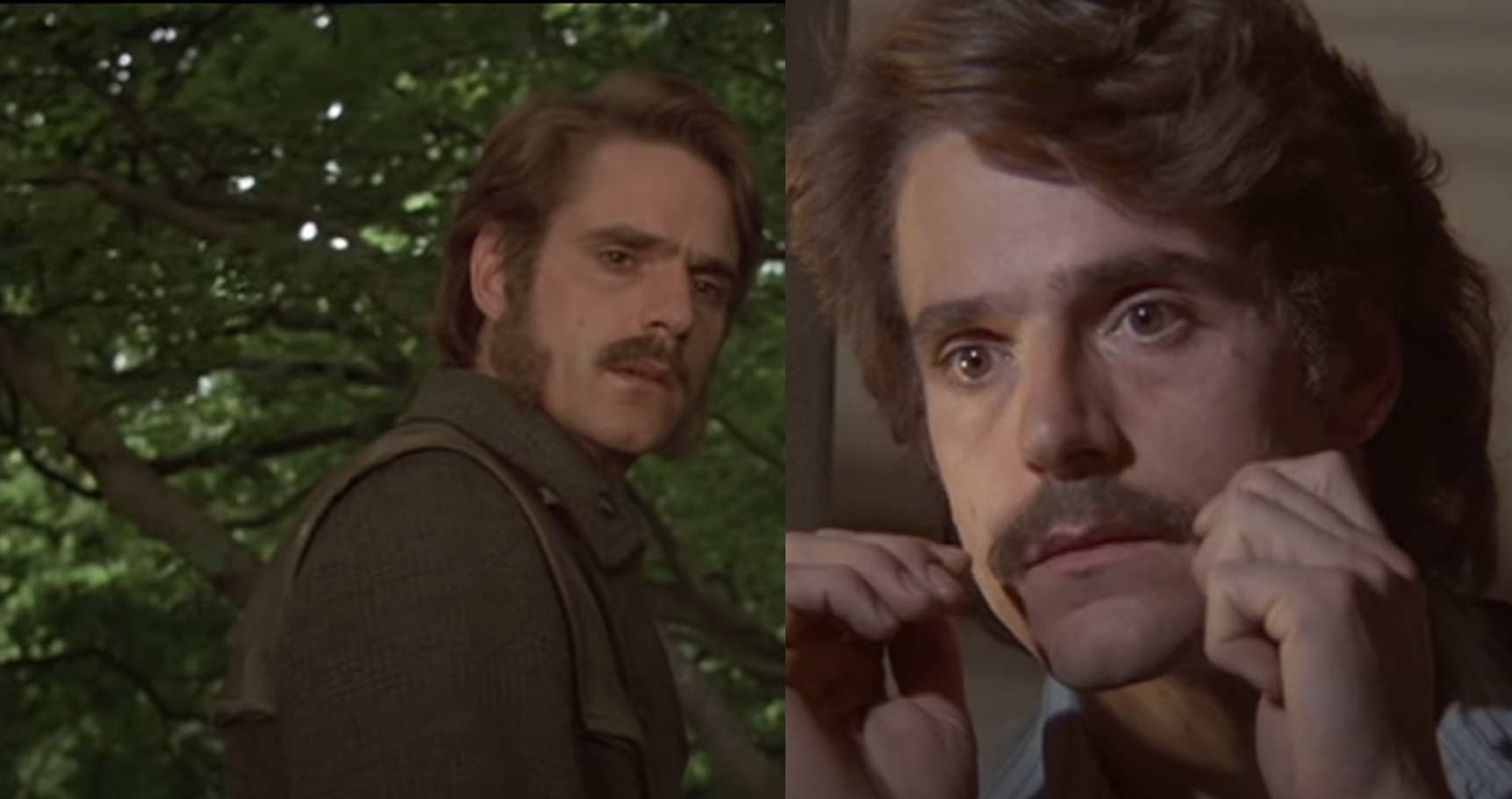
Alternate Best Actor 1981: Jeremy Irons in The French Lieutenant's Woman

Jeremy Irons did not receive an Oscar nomination, despite being nominated for a BAFTA, for portraying Charles Henry Smithson and Mike in The French Lieutenant's Woman. 

The French Lieutenant's Woman tells of two actors having an affair portraying a forbidden romance of the past. 

It must be said Jeremy Irons has a peculiar relationship with the academy with his one nomination and one win to his name, though a most deserving win to be sure. Being ignored throughout what was his most prominent decade of the eighties consistently including this film, which did quite well with Meryl Streep's leading role, as Charles's eventual lover Sarah and Mike's lover/co-star Anna, I would say just missed winning, losing out over an unneeded fourth win for Katherine Hepburn, given that Streep had won the drama Globe and later the BAFTA for her performance. Anyway Irons I think, as much as he would be dynamic in many more off-beat roles, seems tailored made for a period drama. That is his patrician look and far more patrician voice of his, but also Irons being just an especially striking performer. What makes him striking though is very specific in that Irons has all the surface-level qualities of a stuffy performer however he doesn't feel as such. Irons is rather brilliant in being able to ply his trade in this form as he is an actor very much of the eyes in a film like this where Charles is the proper gentleman. The proper gentleman in as we see him with his more proper fiancée do we have Irons projecting the gentle smile and upright demeanor expected of such a man. His eyes though are the truth of the man, and when he first sees Sarah dramatically at the end of a long dock, Irons's performance so subtly, yet potently, reveals the emotional conflicts of the man as the image of the woman clearly weighs within the man's mind, almost against his wishes. 

The development of this affair is the classic narrative of the man really of deep contemplation of Charles. Irons is exceptional really at that as he really does it with such ease, and for the best work, grace. He knows exactly how to contain emotion in his performance while still portraying a very reserved man. In this relationship, we get the scenes of the two together that slowly develop and really begin with Charles just being fascinated with this woman. Irons portrays this so well because he doesn't make it really this obvious lust but rather genuinely this captivation with her that goes far beyond that. This is carried in their conversation, as she describes her state after a lurid affair with the titular French Lieutenant, and Irons is exceptional in presenting this deeply rooted empathy and interest even as she reveals herself in this way. Irons presents his man not as a lothario but rather with this deep compassion for this woman that becomes a real love for her. This even in the moment of forgetting his fiancée, even having to face society who is against any rejection of the expected match, Irons presents Charles's attitude so effectively as this man burdened by this truth in his mind. We see everything that is going on through his mind so carefully and elegantly in his performance. Again Irons is ideal for such a film and such a character because as much as he can be a magnificent broad performer, he can contain so much in a look. That is what we get here from Irons and he naturally creates the sense of the development of the relationship with Streep's Sarah. 

Contrasting all of that is his performance as Mike where Irons doesn't put on any overt mannerisms per the change, other than somewhat less emphasizing the properness of his accent, Irons though demeanor naturally segues in a way where you might not even take notice. The stiffness of the man is removed and there is just much more of a man a more modern man as we see him with Anna. The two share a moment in bed being purposefully far less dramatic but effectively far less dramatic in that sense. The two are much more bluntly having an affair, but here you get very strong work from Streep and Irons in portraying a modern affair in this sense. Although there is a reserve in their scenes out among others, as they are hiding an affair, and there Irons presents a different kind of pressure in Mike as opposed to Charles. A man who is more overtly frustrated at times. This is against their intimate moments where there is an ease between the performances. Both in a way that articulates this connection as almost too blithe in a way and perhaps too casual between the two. They just really are with each other, you get a playful sense of them together. The change here is not that burden of the woman on his mind in such a grandiose way as with Charles, but much more viscerally of the now. Irons is as good at presenting this much more overtly in his performance and expresses it more openly. Irons really excels in showing two different distinct shades of the same idea. Each shows a man needing to deal with this affair, one with that deep contemplation and the other just a direct pressure upon him to try to make their relationship more than it is.  

The performances of both actors really are the key to this film working, as much as it is certainly well helmed and rather beautifully shot. These are the differences in the two performances is which help to craft the contrasting affairs of the film of Sarah and Charles again Mike and Anna. We see two people going through a similar thing but very differently by the age they live in. And in turn, you get two great moments of building towards their finale in facing the affair. Irons as Charles in the past confronts Sarah where it is this unleashing of emotion, a powerful unleashing where the restraint naturally goes away as basically the quiet man having the secrets within him forced out of him at this moment. Although in that release seemingly find solace and perhaps tenderness between the two. Contrasting that one final time is Mike and Anna as their wrap party. A simpler and now it is quieter resolution. The two just kinds of very subtly portray each considering each other, but not quite embracing each other. Both find just the right sense of two people with a secret that is almost too separated within the loud world of the party to share. The final moment is the last spoken word of Mike trying to cry out. Irons is great though in showing not the distraught pathos of old, but this modern just recognition of the failed state of the affair. Although as dual role performances go, even in Irons's career, this is relatively reserved, it is strong work in presenting and articulating the same idea though as changed by the nature of time and place. 

Saturday, 13 August 2022

Alternate Best Actor 1981: Keith Carradine & Powers Boothe in Southern Comfort

Keith Carradine and Powers Boothe did not receive an Oscar nominations for portraying Private First Class Spencer & Corporal Charles Hardin respectively in Southern Comfort. 

Southern Comfort from Walter Hill is about a group of Army National Guard who come afoul of some backwoods locals via a mistake that leads to violence. A largely effective film, though the very end feels a bit rushed. 

Keith Carradine is probably one of the most underrated leading men of his era, offering such a unique offbeat charisma to his role. Ideal then for the role of a national guardsman who finds himself in the wrong place at the wrong time. Carradine plays the anti-establishment soldier, although here quite different in that he's not the typical army or anywhere near a traditional warzone. Carradine delivers instead a more casual sort of roughish energy to his performance as the character introduces himself by remarking, not too positively, on some of his fellow soldiers from the country. Carradine's performance creates the right sense of a man who is a bit dismissive, but actually not too dismissive. Fittingly Carradine shows the man making the joke, but given what they're there for is technically a training game, there isn't too much seriousness to even his dismissiveness. Carradine though expresses the nature of the man as someone who seems to have a good head on his shoulders even if his eyes denote a certain sly sense of humor at the same time. Powers Boothe, who just might have one of the greatest names known to man, was a particularly reliable character actor. Here he is kind of sort of the co-star of Carradine providing a terrific contrast yet also similarity. Powers's innate presence is that of a striking strength, and here he brings that with a stoic command. He differs a bit though in that he shows also shows a man who isn't all that much of a believer in his fellow soldiers, Hardin differs as a transferred soldier, but his manner is more of exasperation towards nonsense rather than the jovial approach we see with Hardin. 

Both do what is essential for this narrative and completely accentuate the sensible nature of each man in these early interactions, even when Hardin turns down Spencer's offered opportunity for meeting a prostitute, it is with just a blunt deliver of a man who has his specific moral stances and doesn't need to preach about them, he just believes in them. Carradine on the other hand though just still presents a man in Spencer who finds his little ways to enjoy life whenever he can, in whatever way he can. The two emphasize that these men as likable and more than anything reasonable even as they are separate in what makes them different. Boothe and Carradine create a great dynamic by Carradine being the off-the-books potential hero and Boothe being the by-the-books man. This is in contrast to their fellow soldiers who are as much of the source of the trouble as are the locals who return fire against the soldiers, after one of the soldiers foolishly, though jokingly, shot blanks at them. With the first casualty being their CO, we get the breakdown and in this we get the sides forming of the soldiers who want to meet the violence with violence, those in the middle who have no idea what to do, and Spencer and Hardin. Boothe and Carradine again are terrific here in taking you from too many making their way in this pretty low-stakes situation and instantly bringing you into the high-stakes situation. Their reactions are both just completely honest in emphasizing the sudden horror and disbelief of the situation. Each man just showing in their eyes reason more than anything. Walter Hill is in a way often a director of few words, and oftentimes very much relies on the actor to convey a lot. Luckily here he has both Carradine and Boothe who bring you right into the reality of the situation and these two men. 

Both Boothe and Carradine are fantastic in creating in each moment a subtle shift essentially in each man due to the immediate danger of their situation. One is just the two men coming to an understanding basically because both see each other as sensible. I love Boothe's just straightforward delivery of this message and Carradine's almost surprised but understanding reaction just realizes the two men so well in the moment of solidarity through sanity. Each man shifts through in his character so effectively and naturally as the situation becomes direr. Boothe presents a hardening and greater gritty conviction. The certain exasperation is gone in his eyes he shows the determination of the man to survive but also does what is right. Carradine on the other hand gradually loses that casualness that defined his early scenes. Finding instead this internalized power of someone basically finding their strength in the situation. His delivery becomes tenser, his eyes becoming that much more ensured, even with a sense of fear, of showing that in a way the best of Spencer comes from the worst of the situation. Each has to take extreme measures to go. We see that in Spencer taking charge as much as he can and Carradine wielding power in desperation so potently. With Boothe, we see this righteous, and honestly righteous conviction as he fights to the death to save a local. Boothe is great at the moment in just exuding the sense of certainty in the man's eyes as he fights for the man, not for any love or anything, but just because it is what is right. All at the same time the two are so good in just crafting a sense of understanding between the two that grows towards a greater sense of connection. There isn't too much time spent on this, again it's by Hill, but it is all in their performance. This is to the point that by the final sequence you see each man wholly have that connected sense with each other as they try to survive, both actors also pulling you as the audience into their plight. Every moment is given proper resonance and visceral connection by their performance that give life both to their characters and to the situation. The best compliment I can give actually is that both Boothe and Carradine succeed in not making either of their characters seem underwritten. They rather wholly thrive within the film's style and each gives a hero you can root for, Carradine in crafting a charming rogue and Boothe making for a proper strong silent type. 

Tuesday, 9 August 2022

Alternate Best Actor 1981

And the Nominees Were Not:

John Heard in Cutter's Way

Michel Serrault in Garde à Vue

Jeremy Irons in The French Lieutenant's Woman

Keith Carradine in Southern Comfort

Sam Neill in Possession 

Sunday, 24 November 2013

Alternate Best Actor 1981: Results

5. William Hurt in Body Heat- Hurt is good when he allowed to be, but much of the time it seems the filmmakers were more interested in his physical form than his acting ability.

Best Scene: Ned Racine looks over Matty's yearbook.
4. Klaus Maria Brandauer- Brandauer gives a very daring performance in his portrayal of the growing compromises of an artist that oddly brings out a greater humanity.

Best Scene: Hendrik Hoefgan tries to plead for one of his fellow artists.
3. Harrison Ford in Raiders of the Lost Ark- Ford gives a great performance creating his most iconic role with his funny, thrilling and all together entertaining portrayal of Indiana Jones.

Best Scene: The opening quest.
2. Jürgen Prochnow in Das Boot- Prochnow's performance is a spectacular based on being a gritty face of reality aboard submarine on the wrong side of a war. 

Best Scene: The Captain watches the helpless men drown.
1. Mel Gibson in Gallipoli- Good Predictions Koook160, Psifonian, and RatedRStar. All I can say is my top four is an extraordinary group, but I'm going with the performance that I got the strongest emotional reaction from, which is really saying something considering I reacted pretty strongly to all of them. Gibson's performance though is an amazing piece acting, the early part of his performance being Gibson at his charismatic best in his depiction of the cynical Frank, and the end being such a heartbreaking portrayal of such a man having to face the harsh realities of World War I trench warfare.  

Best Scene: Frank and Archy both fail to complete their final run.
Overall Rank:
  1. Bob Hoskins in The Long Good Friday
  2. John Heard in Cutter's Way
  3. Mel Gibson in Gallipoli
  4. Jürgen Prochnow in Das Boot
  5. James Caan in Thief
  6. Harrison Ford in Raiders of the Lost Ark 
  7. Klaus Maria Brandauer in Mephisto
  8. Dudley Moore in Arthur
  9. Ian Charleson in Chariots of Fire
  10. Ben Cross in Chariots of Fire
  11. John Travolta in Blow Out
  12. Michel Serrault in Garde à Vue
  13. Robert Duvall in True Confessions
  14. Alberto Sordi in Il Marchese del Grillo
  15. Keith Carradine in Southern Comfort
  16. Mark Lee in Gallipoli
  17. Armin Mueller-Stahl in Lola
  18. Powers Boothe in Southern Comfort
  19. Henry Fonda in On Golden Pond
  20. Herbert Grönemeyer in Das Boot
  21. Lino Ventura in Garde à Vue
  22. Jeremy Irons in The French-Lieutenant's Woman
  23. Sam Neill in Possession
  24. Ugo Tognazzi in Tragedy of a Ridiculous Man
  25. Mario Adorf in Lola
  26. Philippe Noiret in Coup de Torchon
  27. Andre Gregory in My Dinner With Andre
  28. Mel Gibson in Mad Max 2: The Road Warrior
  29. Steve Martin in Pennies From Heaven
  30. Richard Dreyfuss in Whose Life Is It Anways?
  31. Kurt Russell in Escape from New York
  32. Timothy Hutton in Taps 
  33. William Hurt in Body Heat
  34. Donald Sutherland in Eye of the Needle
  35. David Naughton in An American Werewolf in London
  36. John Gordon Sinclair in Gregory's Girl
  37. Sean Connery in Outland  
  38. Jeff Bridges in Cutter's Way
  39. Fernando Ramos da Silva in Pixote
  40. Craig Warnock in Time Bandits
  41. Treat Williams in Prince of the City  
  42. Marian Opania in Man of Iron
  43. Jerzy Radziwiłowicz in Man of Iron
  44. Carlos Alberto Riccelli in They Don't Wear Black Tie
  45. Nigel Terry in Excalibur
  46. John Belushi in Continental Divide
  47. Mickey Rooney in The Fox and the Hound
  48. Wallace Shawn in My Dinner With Andre
  49. Bruce Campbell in Evil Dead
  50. Mel Brooks in History of the World Part I
  51. Kurt Russell in The Fox and the Hound
  52. Harold Ramis in Stripes
  53. Bill Murray in Stripes
  54. Frédéric Andréi in Diva
  55. William Hurt in Eyewitness
  56. Jack Nicholson in The Postman Always Rings Twice
  57. Peter MacNicol in Dragonslayer
  58. Makiko Shibata in Muddy River
  59. Diogo Dória in Francisca
  60. Paul Newman in Absence of Malice 
  61. Robert De Niro in True Confessions
  62. Harry Hamlin in Clash of the Titans 
  63. Warren Beatty in Reds 
  64. Roger Moore in For Your Eyes Only
  65. Sylvester Stallone in Nighthawks
  66. Sylvester Stallone in Victory
  67. Stacy Keach in Butterfly
  68. Richard Benjamin in Saturday the 14th 
  69. Andy Kaufman in Heartbeeps
  70. Stephen Lack in Scanners 
Next Year: 1981 Supporting 

Saturday, 23 November 2013

Alternate Best Actor 1981: Ian Charleson and Ben Cross in Chariots of Fire

Ian Charleson did not receive an Oscar nomination for portraying Eric Liddell, and Ben Cross did not receive an Oscar nomination for portraying Harold Abrahams in Chariots of Fire.

I was originally going to review William Hurt for Body Heat but his performance, which is essentially his own take on Fred MacMurray's character from Double Indemnity, would have been the weakest of his works that I have reviewed. I still liked him, particularly his final scenes where his character realizes he's been had where I would say he was quite great, but for most of the film I did not think he was really used for his acting ability. Hurt is just about a piece of meat for much of the film, and seeing this and Altered States, where he was also frequently without clothes, I can see actually that Kiss of the Spider Woman was actually quite a departure for him.

I decided instead to look at the leads to the film that was the best picture winner for 1981. Chariots of Fire is often derided among best picture winners, even the nominees of that year, but it's one best picture winner that I will defend to my last breath. I love pretty much everything about the film actually, and I really like the two performances that lead the film. Unlike most films about two men, the two men actually don't interact that much as they have only one scene where they even talk to each other which actually is only a slightly awkward greeting. They are united though by their passion for running, which brings them to the Olympics, and the way their faiths drive them.

One half of the duo is Harold Abraham's played by Ben Cross, who is technically the more driven runner. Cross has what seems like the more challenging role in that Abrahams's is the much more flawed character. The Jewish Abrahams is a man with a chip on his shoulder as he feels he is constantly being judged by so many for his religion, the thing is though he is not really wrong about it. Cross portrayal of Abrahams is a smartly handled one. There is a difficulty in the character which is not to make him entirely unlikable in his performance considering that his character is not the easiest to get along with. Cross is able to find where the man's personality comes from, therefore allowing sympathy for the man's plight.

Cross is rather intense in his performance by he is able to show the nature of the intensity. Cross makes this intensity as something that Abrahams has devised through his experience through life. He is often mocked in someway, Abrahams never outright reacts to this rather Cross keeps Abrahams slightly belligerent most of the time, even some of the time when he is not he is quick to become so if he thinks he is being threatened. Cross expresses this as his defense mechanism to frankly always show his distaste for his treatment at all times, but this is not the man which is important to his character. When Abrahams is with his good friend Aubrey or his future wife, Cross reveals a much more tender calmer man behind that shield he uses to protect against the discrimination.
Ian Charleson plays the other runner a Scotsman who is also a Christian missionary. Eric Liddell is a plainly good man whose major crises is that he must stand by his beliefs even if that interferes with the Olympics itself.  Charleson's performance is the much more unassuming work of the two but he deserves so much credit for what he does with Liddell. The purity of Liddell could have seemed to much, he could have sanctimonious, or just an unbelievable character, that is never the result of Charleson's portrayal which turns Liddell into a genuine man. Much like Mark Lee in Gallipoli, Charleson gives an honest portrait of a good man with an incredibly strong personal conviction in his principals.

Charleson's two best scenes in the film are his two sermons one from the bible, and one that Charleson actually wrote himself. Both of the speeches are flawlessly delivered by Charleson as he brings out such a power in the words. Charleson firstly brings such devotion in his delivery which always stress the deep belief that Liddell had, and just how much following the Lord's word meant to him. Charleson never overplays the moment to make the seems overly grand in nature, but instead gently tells the speeches. Charleson does not portray Liddell as a man who is trying to force anyone to believe, but rather a man who humbly asks them to because the strength he finds in his faith.

Both men are very fast, although their running style vastly differ and Charleson and Cross even make the style of running as part of their character. Cross is very straight forward and determined as Cross wishes to use his running as a way to override people's view of him. Cross, therefore runs straight with this purpose as the running is the only thing he thinks about it. Charleson is rather different though as Liddell believes showing off his God given talent brings glory to him. Charleson in turn plays the running as a joyous experience for Liddell who seems almost one with the heavens as he almost seems to float across the track in his most unorthodox running style.

Both actors realizes their characters, and realize the unique dynamic between the two in a marvelous fashion. Charleson and Cross both gives the story of two men who can run fast, and manage to create two distinctly different drives and passions in the men who come from very different places but end up technically reaching the same goals in the end. Although even their success still does not bridge the gap as Liddell is overjoyed by the experience and Abrahams actually is a bit perplexed, that result is really the only natural for these two men who Charleson and Cross realize so well in their performances that drive this great picture, that's right great picture you wanna make something out of it?

Alternate Best Actor 1981: Jürgen Prochnow in Das Boot

Jürgen Prochnow did not receive an Oscar nomination for portraying the Captain in Das Boot. 


Das Boot is a great film that depicts that life of the crew of a German U-boat during World War II. 

This film seems quite strange in conception in that it actually takes the perspective of German soldiers fighting the war against the allies, and even more than that it shows them in a sympathetic light. The film is able to do this by firstly very sharply making it clear that there is a separation between the standard soldiers, and Nazi superiors. What really makes it work above that though is found in the character of the Captain played by Jürgen Prochnow. The Captain is the oldest most experienced man on the submarine even though he technically isn't even that old himself, and  unlike some of the men he has been around long enough to know that there is nothing grand about the Nazi cause. 

Prochnow is terrific in setting up the Captain in the early scenes of the film which establish the nature of the Captain. Although the film really does not delve into the past of the Captain it does not need to. Prochnow presents the past of the Captain right in his face as he is a war weary man. Prochnow is careful though to still show the Captain who is fully in control of his facilities, which is the case for one of his other fellow veterans. Prochnow performance has the right striking cynicism with the Captain and this is very important in frankly allowing us to go along with Captain and his crew as we the audience think the whole Nazi movement is a crock of (four letter expletive), and Prochnow shows that the Captain feels pretty much the same way. 

The Captain is an interesting character in the film as for a leader of men he is a fairly quiet man. This actually makes sense though due to the nature of the particular form of combat they are participating in which seems most of the time is finding ways to pass the time getting to the war than fighting in the war itself. Prochnow's handles his role brilliantly in finding the very distinct role he has on the ship. In the scenes of boredom Prochnow makes the Captain a properly reserved man. He never makes his own frustrations known, rather he keeps as a calm figure in the crew. Prochnow finds the right underlying strength in his performance, and it is easy to see him as a man the men will look up to and respect. 

Prochnow's performance is actually largely a reactionary one, as the film does leave much of the Captain's character unsaid. Prochnow has a challenge to bring everything between the lines so to speak, and Prochnow does this pretty much flawlessly with his performance. There is such strength to Prochnow's work in the way he always let's us in on the Captain's mindset all while not being overly emotional which would be inappropriate for such a man. Prochnow is able to show why exactly the Captain is even bothering to try to fight the way. The Captain does not believe in the cause, and Prochnow's shows no blood lust in the Captain for this. What drives the Captain is survival for his men, which Prochnow always brings this in his devoted performance. 

Without a doubt the greatest scenes of Prochnow performance are the intense scenes where the submarine fights in the battle and must deal with the damage the U-boat suffers from the sea battles. Prochnow is amazing in every one of these scenes as he internalizes the internal pressure so powerfully in every one of the scenes. Where the other men are often scared, the Captain cannot and Prochnow is exceptional the way he expresses the Captain firm grasp of his command while bringing to life the very human fears that the Captain must bottle up for the sake of the ship and his crew. The weight of every scene is built up to extraordinary levels in the film and Prochnow deserves a great deal of his credit for his uncompromising depiction of the horror of the situation. 

Prochnow's performance is extremely fascinating because he is so withdrawn at times yet always magnetic in his presence. Prochnow does so much with mostly just his facial expressions with his performance to show the silent conflicts of the Captain. One of his best moments in the film is when the Captain watches a decimated allied destroyer that still has live crewmen who have not been rescued and attempt to swim to the U-Boat. The Captain has no choice but to move away from the men. Prochnow is outstanding in the scene because again the Captain stays calm as the Captain should, but behind that Prochnow shows that the Captain is truly torn apart inside as he is forced to watch men slowly dying in the ocean. 

 Prochnow is able to make journey of the Captain much like the journey of the ship itself. Through all the trials of it the ship it seems as though it just is able to just pull through by the end, Prochnow reflects this in the Captain in a natural fashion. Every trail Prochnow portrays as getting under the Captain's skin deeply, but through it all there is always a strong resilience even within the decay. The connection between the two never seems even the slightly melodramatic or forced in anyway because Prochnow is able to deliver the dynamic with such a honest passion and the utmost conviction to make the ending of the film something very special. Prochnow's work throughout the film is a thoughtful and moving portrait of a commander trying to bring his men through a war he does not believe in.

Friday, 22 November 2013

Alternate Best Actor 1981: Harrison Ford in Raiders of the Lost Ark

Harrison Ford did not receive an Oscar nomination for portraying Indiana Jones in Raiders of the Lost Ark.

Raiders of the Lost Ark is a great adventure film about the search for the Ark of Covenant which is said to hold the ten commandments as well as a great power.

Raiders of the Lost Ark actually was extremely well received by the academy winning 5 Oscars and being nominated for four more including best director and best picture. Harrison Ford despite leading the film was ignored completely, and the academy would not recognize him for leading a picture until Witness. Witness, although is a fine performance by Ford, is not the the very best Ford had to offer. Ford already broke out in a big way through his performances as Hans Solo in the Star Wars film. Ford avoided being stuck as that role in the public mindset though, unlike his Star Wars co-stars, by his next major role being a character even more iconic than Hans Solo.

As Hans Solo Ford actually technically was secondary to the main story that involved Mark Hamill's Luke Skywalker. Ford would show up and do Solo's routine but he would only come in and out of the film. Ford as Indiana Jones must lead the film rather than being a side hero in the piece, Ford is more than up to the task as he brings his very best qualities as an actor to life in the role of Jones. Although when you sum them up in a fairly simple way Solo and Indiana Jones seem like Ford would just be repeating himself. It never feels that way at all as Ford makes Jones very much his own man, even if many of the ideas behind the character are shared in terms of conception.

One of the major differences between Solo and Jones comes in the idea of Ford taking on the role of guiding the audience through the adventure exclusively. Ford shows a growth in maturity as an actor. Although he definitely was good in the Empire Strikes Back, Ford brings another level of confidence here as Jones and takes a different approach with the character. As Solo there was a certain slight pompousness to him, yes he was good but not quite as good as he thought. Indiana Jones also thinks he is pretty good at what he does, but really he is as good as he is. There is a humble quality actually within the character that Ford plays very nicely, as there is never an off putting ego even with the great assurance of his own ability.

Raiders of the Lost Ark is a wonderful adventure to go on in the film, and Ford deserves a great deal of the credit for making the great film it is for his portrayal of Indiana Jones. He is a great guide to follow through the film as he so perfectly goes along with any action scene. Ford is superb because he never turns Jones into a super hero in the action scenes, even though some of his feats are rather extraordinary, because there is always an effort shown. Ford shows that Jones is often an inch from failure and he really has to push himself to fight the villains. There is a humility and humanity in his performance by making Jones a man who gets tired through all the mayhem, and doing so makes every victory harder earned and much sweeter.

Raiders of the Lost Ark is thrilling, but there is more to it than just that. It is also a very funny movie with some brilliantly placed gags throughout. Ford does not lose any footing with his performance as he handles the quick comedic moments with as much ease as he does the intense scenes. Ford really knows how to sell the moments and makes them hit their mark all the better. The best comic moment in the whole film is of course the gun sword duel where Jones, instead of getting into a likely drawn out fight, just shoots a man who is brandishing a sword. The idea is funny in itself, but Ford makes it pure gold through his deadpan shrug as Jones dispatches the man with barely a second thought.

There is one other element of the film that is not as often mentioned which is the grandeur of the mystery behind the Ark of the Covenant. The film makes it more than just something to be found and there is something appropriately otherworldly about it. Ford once again adds so much with his performance as he is also creates an investment in the mystery. Ford would later falter in his later performances by seeming so disinterested in his films frankly, but here he brings such an investment into the film. Ford is fantastic in bringing the power of every part of the unfolding story and in this he also shows more in Indiana Jones than the action hero. Jones is an archeologist, and Ford brings the sense of discovery in his performance showing that Jones is absolutely fascinated by the idea of the Ark.

This is Harrison Ford's greatest performance, and there is no question to why the film propelled him to super stardom. All the best qualities of Harrison Ford as a leading man are present here, his incredible physical presence, his charm, his confidence, and even an unassuming humorous side. Ford is a perfect fit for the film. Every tone the film takes Ford matches and only amplifies whatever the scene is going for. If the scene wants to funny, Ford makes it funnier, if it needs to be exciting Ford makes the scenes burst with energy. The Academy made a very foolish mistake in ignoring Harrison Ford's work here, especially since they seem to have loved the film otherwise, as Ford was essential to the film's success and he managed to make Indiana Jones one of the unforgettable characters of cinema.

Wednesday, 20 November 2013

Alternate Best Actor 1981: Klaus Maria Brandauer in Mephisto

Klaus Maria Brandauer did not receive an Oscar nomination for portraying Hendrik Hoefgen in Mephisto.

Mephisto is an interesting character study of the career of an actor that grows along with the Nazi movement in Germany, although it is a film with a very steep decline in the quality of the characters from the main character to the next largest supporting role.

Klaus Maria Brandauer takes a most unusual stance with his performance which all begins when Hendrik Hoefgan is an actor doing his own form of revolutionary theater. The growing evil force in Germany is yet to be that prevalent and Hoefgan is allowed to be a true artist so to speak. Brandauer takes this as to be actually pretty hammy, although knowingly so. What Brandauer does here is show that since he can do whatever he wants on stage at the moment he basically carries this personality around with him no matter where he goes. Brandauer makes Hoefgen pretty much always performing because there is not a single thing he has to worry about otherwise.

Brandauer hams it up in the right way in these early scenes as Hoefgan carries on in his personal affairs the same way he does on stage. Although certainly theatrical in his style Brandauer never goes overboard because he shows it as flamboyant stage actor being a flamboyant stage actor. Hoefgan is not suppose to be untalented though, in fact he is suppose to be quite the opposite. Brandauer makes Hoefgen a bit of a Charles Laughton style figure, yes he is not exactly perfectly realistic in his style of performance but there is an energy and charisma in his rather extreme actions that makes it entirely believable why Hoefgan would grow in popularity on the stage.

Brandauer is equally believable in playing Hoefgan's personality off the stage. Brandauer is good because he does not make it as though Hoefgan only is his stage personality by any measure. Brandauer rather very effectively shows Hoefgan's behavior to be the indulgence of an artist without any holds on him. This is the most unusual stance that I was referring to at the beginning, as it is actually the beginning of the film when he is doing his revolutionary work that Brandauer makes Heofgan the least of a man. Brandauer keeps just a man of surface behavior who is so into himself that he barely even notices that some very big changes are going on around him.

Once the Nazis take over Hoefgan does not leave the country despite his communist past, the fact that his wife is a fervent Anti-Nazi, and that he has black mistress. Hoefgan decision is easily believed because of that indulgence that Brandauer has shown in the earlier scenes. Hoefgan simply demands to be seen on stage, and refuses to let anyone hold back this dream. Hoefgan does continue to perform having great success, particularly of the role of Mephisto in Faust. Hoefgan's indulgence cannot continue though as he meets the Nazi officer who oversees the stage. The Nazi officer, although impressed with his performance, is not overly impressed by Hoefgan himself.

The Nazi officer gives Hoefgan some light criticism regarding Hoefgan's handshake, this enough though for Hoefgan to lose his indulgence and start to notice the world does not revolve around him. Brandauer is effective in his depiction of the changing nature of Hoefgan. Firstly there is no longer that flamboyance off the stage as Brandauer shows the officers remarks act as almost a blunt trauma to Hoefgan that snaps him out of his world of the actor. Brandauer is rather interesting in that being forced to work around the Nazis actually seems to make Hoefgan a far more responsible man than he had been when he was allowed to perform with complete freedom.

Brandauer's performance excels as he shows Hoefgan changing his overall attitude as he brings a thoughtfulness to his performance that was not there before. Although Hoefgan basically does what the Nazis command him to do, and consistently follows the orders they give him to allow his advancement in the world of the theater, he as well does try to help others that the Nazis would otherwise have discriminated against or even killed. Brandauer is rather moving in his portrayal of a real conscience in the man as opposed to the social conscience he merely claimed to have in a very Barton Fink sort of way. Brandauer loses the presumption creating a much more honest man.

Klaus Maria Brandauer gives a very strong performance that is brilliant in his risky conception of the character of Hoefgan. It is very easy to see how the character could have been played the complete opposite with the true man being in the beginning and then losing himself in the end. Brandauer gives a far more complex and much more fascinating performance by taking the approach in which he slowly reveals a greater humanity in his character as human decency seems to fade around him. Brandauer takes a daring approach all the way through from Hendrik's rather hammy beginnings to his much more somber end, every risk he takes pays off giving a most powerful depiction of the way a man changes to be allowed to continue his craft.