Showing posts with label 1961. Show all posts

Wednesday, 23 March 2011

Best Actor 1961: Results

5. Charles Boyer in Fanny- Boyer is fine enough but his role is too small and simple for him to accomplish all that much.
4. Spencer Tracy in Judgment At Nuremberg- Tracy gives a quietly affecting portrayal of a man quietly coming to grips with a terrible situation. 
3. Maximilian Schell in Judgment At Nuremberg- Schell's performance is a triumph of so powerfully presenting on the wrong side of an issue.
2. Paul Newman in The Hustler- An absolutely terrific performance, where Newman really creates a fascinating original character in Fast Eddie Felson. Newman never goes the easy way with his character, always going for instead a complex and creative character.
1. Stuart Whitman in The Mark- This one was extremely close for me, and much harder to choose than I expected it to be, before I watched the Mark. Whitman though completely threw me off with his extremely powerful complex performance of a deeply troubled man trying to change his life. I will say I do not think Whitman is better Newman, they are both equally great, but the nature of the award is choosing one, and for the moment I will choose Whitman. This is a year though where I am sure my choice could easily go back forth, because both create such memorable and powerful portraits of two incredibly unique characters.
Deserving Performances:
Open to Suggestions.

Tuesday, 22 March 2011

Best Actor 1961: Paul Newman in The Hustler

Paul Newman received his second Oscar nomination for portraying Fast Eddie Felson in The Hustler.

The Hustler is a very interesting film that shows the underworld of sorts that the pool hustler lives in.

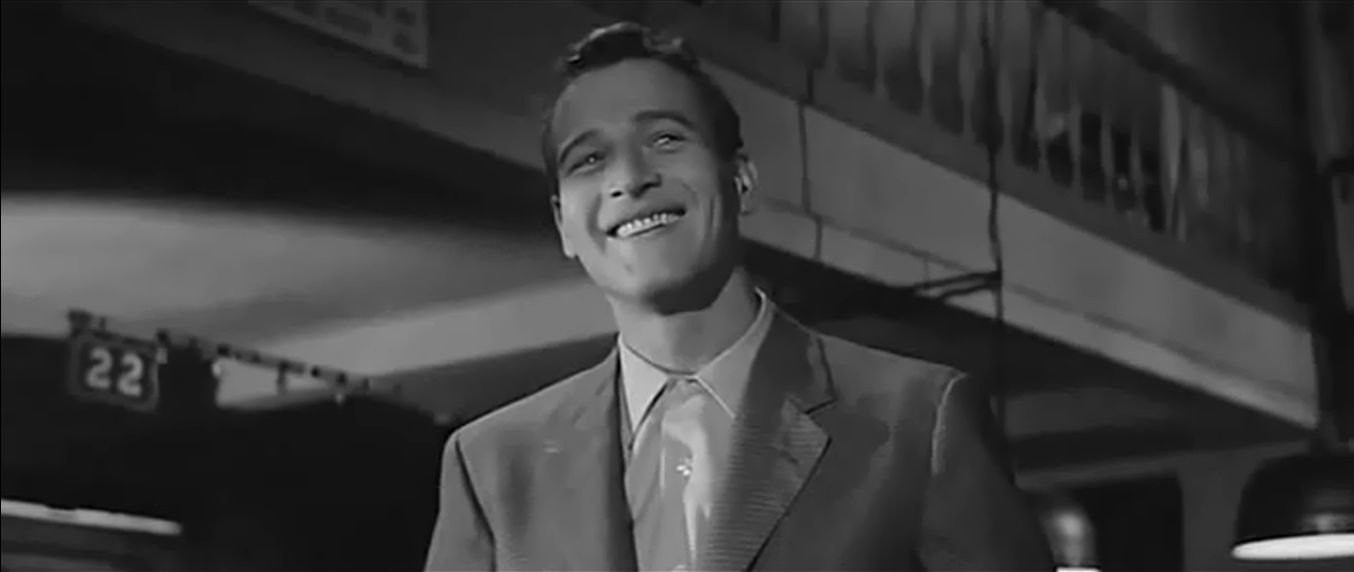
Fast Eddie first begins in the film with his mentor Charlie (Myron McCormick) in a quick hustle at a small bar. In this short early scene, Newman is good at putting the act of the hustle, and shows instantly that Fast Eddie is a pretty slick costumer who knows his trade. I really like this early scene. I like how he at first shows Eddie as the over reactive kid as he creates the condition for the hustle, than leads up to just his smile before he pulls the trick is perfect. That smile shows Eddie knows exactly what he is doing and Newman uses his trademark charisma to amplify Eddie joy of the hustle to perfect effect.

Eddie though goes to play pool with the ultimate pool player Minnesota Fats (Jackie Gleason), for a prolonged night of gambling and playing. Newman's performance in this scene is excellent, because he starts out as the fully charismatic Newman who is eager to play against the great Fats. Newman perfectly displays his eagerness and passion he puts into this ultimate game and hustle. What is truly great about this scene though is his slow degradation over the night, and day of playing. Newman carefully drains himself of his charisma, and slowly loses his control over the game and himself into he basically becomes an emotional and physical mess until he loses the final game.

After he loses the hustle in the end Fast Eddie really falls flat, and Newman shows a loss in charisma which properly connects with Eddie's complete loss in confidence. Eddie down on his luck meets also a woman Sarah (Piper Laurie) who never has really had any luck. This relationship is pivotal to the film, and it is an interesting complex one. It is interesting because it is not a big lover affair, but rather a meeting of two troubled souls that is not actually always warm. Newman though and Laurie find the right charisma not of a loving relationship, but one that does have connection even if very cold at times.

Newman is strong in these scenes because he really shows that Eddie is not at all a perfect guy, in fact a very much troubled man. He is properly cold with Laurie, and his anger is well founded suggesting that Eddie really is not  a stable man, and that Hustling attempts to bring himself a respect of sorts. Now equally fantastic though is the love he does show to Laurie's Sarah. Newman projects this love, in the right the right almost cold and a somewhat resistant fashion that is always completely natural.

Eddie has a rough path to being himself up again, that is tortured. It is interesting because Newman shows Eddie's attempts than failures not as something that just happens but weaknesses in his personality. Eddie though learns from each of his failures, but Newman carefully displays that he does not learn everything or enough each time. For example his quiet talk with Laurie after being beaten for hustling, is a quiet poignant moment by Newman, but astutely portrayed because he still shows Eddie to not be entirely aware of himself.

Eddie's final tragic failure leads himself back to play Minnesota Fats once again. This is a spectacular scene. It is a quick change but an effective and believable one that Eddie has found his ground and confidence, not of true understanding himself, but brought about by passionate hatred and sadness. Now this is not really said, but I feel Newman does without fault show this change in Eddie. His final scene is outstanding as he finally does have control over himself, and over the pool table. This top he wins the hustle, and this was what the film was leading to, and Newman came to this conclusion brilliantly. Overall a very strong performance from Newman that creates a very interesting and incredibly memorable character.

Best Actor 1961: Charles Boyer in Fanny

Charles Boyer received his fourth and final Oscar nomination for portraying Cesar in Fanny.

Fanny is an odd one, because it seems like it should be a musical but it isn't. I mean colorful locale, a rather simple story with various colorful characters, and Maurice Chevalier, one would think that would equal to a musical, but it is not, even though apparently it was on stage.

I guess the Academy did not value many lead performances from this year since Maximilian Schell was really supporting, as is Charles Boyer in Fanny, especially in the first half of the film. Cesar is the father of the young man Marius (Horst Buchholz) who impregnates Fanny (Leslie Caron), but hops on a ship to get adventure in his life. Fanny to not be disgraced marries another older man Panisse (Maurice Chevalier).

Boyer's Cesar is one of the colorful characters, a nice bar owner, who loves his son, even though he does get very much disappointed by some of his decisions. Boyer is nice and colorful, enough, and is good at portraying an over the top character without being too over the top. Boyer early on is likable enough, but I really do not think he would stick out all that well, if not for the fact that I was always looking for him.

Boyer really does not do all that much, but show love for his son I guess, and and act happy or surprised I guess, and occasionally saddened as the situation involving his son changes. Cesar always wants to do the right thing, always even if that means stopping his son from breaking up the marriage between Panisse and Fanny. I suppose he is properly strict, and saddened by his son, but still it never is anything all that special, or anything that really needs to be noted.

Overall Boyer's performance really fulfills his role as well as it probably could be filled, but the role just demands far too little from him. He needs to be nice, somewhat charming, and also a good figure in the film, and he does all of these well enough, but the film gives him no time to do anything more than this. Boyer is perfectly fine throughout his performance I do believe that, but even for a supporting performance it is a very limited character.

Monday, 21 March 2011

Best Actor 1961: Spencer Tracy in Judgment At Nuremberg

Spencer Tracy received his eighth nomination for portraying Judge Dan Haywood in Judgment at Nuremberg.

Judge Judge Dan Haywood is an American Judge who is set as the chief justice of the tribunal who sits to judge the Judges of the Nazi regime. Tracy is the actual lead of the film, although he does not get to do all that pointing and yelling that co-nominee Schell gets to do (you can watch Inherit the Wind if you want to see Tracy do that) instead Tracy gives a quieter performance as the presiding Judge.

The film follows him through his time in the trial, and his path reaching basically to his verdict. It is rather interesting because most of the performances have the biggest moments inside the courtroom but Tracy is almost entirely reactive in the courtroom sequences. Tracy's performance is very minute in a lot of these moments though on subsequent rewatches it becomes all the more evident that what Tracy is doing in his performance is showing the way the judge is slowly coming to his final speech. And early on you see a man who is more so than an observer, sometimes frustrated by the hostility in the court, and at other moments the sense of the extreme nature of the horror he must preside over seems to weigh on him. 

Tracy's more active moments come outside of the courtroom. He is very reactive even then. His performance though I think is effective in terms of showing two sides of a man, one being a kind of tourist and the other being a man taking in the weight of the experience of Nazi Germany. His performance does balance this with slightly humorous moments, such as his quiet frustration when being called grandpa by a young German woman, with also the sense of understanding of it all that slowly seems to weigh more on him as the film proceeds. 

So what does his character come to, well he comes to that the men are guilty of their horrible crimes. He says it in a verdict strongly depicted by Tracy, and then reassured once again by Tracy directly to the repentant of Judge Ernest Janning (Burt Lancaster). Tracy does have the right forcefulness in showing the character's belief in justice, but this really just is what occurs at the end. On-rewatch these scenes have only become more powerful. The verdict scene is excellent work from Tracy where you do see the ideal Tracy where he says the words as fact, and in this case the facts have such tremendous power to them. The other being his moment of indignation is calm yet so piercing as he directly reprimands the judge for doing something he should've known was wrong. 

On-rewatch this is one of Tracy's better performances and one that works well within the expectations of the film. Tracy's performance is supposed to be this kind of bedrock foundational idea of someone who believes in the law and must try to comprehend this situation as best he can. He does so in a way that has a natural humanity in it, and for much of it is a man slightly lost in trying to find a way to figure out what all this madness contains. His realization is a calm one by Tracy, but in the end also a very potent and essential one for the film. 

Best Actor 1961: Maximilian Schell in Judgment At Nuremberg

Maximilian Schell won an Oscar from his first nomination for portraying defense lawyer Hans Rolfe in Judgment At Nuremberg.

This This may seem a bit of a strange win in that Schell was only in a few films before his win here and was hardly really a well-known actor at the time. It seems even odder that he defeated his veteran actor co-star Spencer Tracy. Additionally his role of Hans Rolfe is a firmly supporting one, and not the actual lead which is Spencer Tracy. Now perhaps his win is not that odd though just look at the acting winners, the academy that year had no interest in rewarding veterans even long overdue ones like Montgomery Clift for this film in the Supporting Actor category for this same film, and they really just wanted to award newcomers, since all winners were first time nominees.

Another reason that helped him win is although his role is supporting, it is a very juicy role with still a good amount of screen time even if really supporting. Hans Rolfe is a very passionate lawyer who fights to find the accused Judge Ernest Janning (Burt Lancaster) innocent on the charges of crimes committed against humanity due to his work for the Nazis. Rolfe bases his case that they were just acting within the law of their country, therefore did not do something technically wrong.

Rolfe to illustrate his points make many passionate speeches before the court. Schell excels in all these moments and does realize the want for German respect for Rolfe very well. His speeches are thrilling because Schell infuses them with great command and energy. Schell is very charismatic in his performance and does control the screen whenever he is speaking. It could be easy for the viewer to shrug off all of his points that make excuses for the horrendous crimes of the Nazis, but Schell avoids this because he just simply states Rolfe's views exceedingly well.

Now does that mean I was convinced by his points, no, but Schell's performance allows for a thoughtful discussion because of his earnest portrayal as Rolfe. Now Rolfe has many scenes where he must show how someone was "justly" convicted because they did fit into guilty of Nazi laws. If these scenes break apart the witnesses of the Nazis or victims of them. Schell is exceptional again, in his cold demeanor, and it is realistic in his calculative method of finding what he wants. Schell essentially plays the part of the old Nazi judge in using the laws in place to dismantle a witness and Schell is brutally effective in these moments and succeeds in showing how the man can achieve a guilty verdict, however, as it was in an unjust system. 

It is hard to say Schell is given a few scenes that show the true nature of his character. He is given a total of three scenes outside the courtroom. Two he speaks to Lancaster's character and shows his respect for him, and claims he did not like doing what he had to do in the courtroom. Schell is given little dialogue, and I really find he suggests this for the German respect side of this character's interpretation. I think one other scene actually in court further supports this side, and that is his face when he must react to the concentration camp footage. Schell does show quite well show that Rolfe really was very emotionally affected by the footage. We see then honesty in the earliest scenes of essentially apologizing for his actions in a more private moment, and the man's hope for any respect for Germany is sincere even if these methods are so extreme.

But really with all this, on reflection, this is a great performance, because it is honestly a performance I never forget after watching the film. And it is a performance, alongside Clift's heartbreaking performance, that brings me back to watching the film, or at least parts of the film. One being just that he is just so magnetic to watch, and if that isn't a great performance, what is? Schell makes every courtroom scene compelling with his presence as he is the powerful showman but also the passionate advocate. His final scene of condemning the whole world's actions in being complicit with the Nazis is an amazing bit of performance with how he accentuates every word in the speech in his indictment. Even if you don't agree with Rolfe, Schell forces you to see his points presented as cogently as possible and makes him an effortlessly captivating figure every moment he's onscreen. One should always admit when you're wrong, and I was, this isn't a good performance it is a great one. 

Saturday, 19 March 2011

Best Actor 1961: Stuart Whitman in The Mark

Stuart Whitman received his only Oscar nomination for portraying Jim Fontaine/Fuller in The Mark.

The Mark is a rather difficult film to track down, so I was actually glad when I found out it is a fairly good film. It must not be well seen film since many quick mentions of the film I have found misidentify the main character as a pedophile. It is true he comes very close to being one, but he stops himself. The film is frank and effective discussion of this topic through a character study. Having watched this and A Patch of Blue I am starting see Guy Green as a talented and very sensitive filmmaker that is quite under appreciated.

The Mark is rather strange in that it is rather obscure despite taking on a very controversial and unusual subject matter for its time which usually gain films a notoriety of some sort. Perhaps it would have been with the original casting Richard Burton in the lead role, but I must say it is perhaps better for the quality of the film itself that Whitman was the one eventually cast. I say this is that Burton is perhaps to individualistic looking, whereas Stuart Whitman could be just about anyone which works very well for the role. He does not look like a sexual deviant, and it really works because of this.

Whitman is an actor I will admit, I have actually seen films with him in it, like the Longest Day, but I never noticed him in these films. I do not think this was really his fault he just really did not have any parts that would or could create any notoriety, well here he has a very complex and interesting role. Jim Fontaine at the beginning of the film has just been released from prison, with a new name of Jim Fuller and another chance at life. Whitman is really effective early on, as he is clearly off kilter, and very nervous to re-enter society. He shows that he is always trying to be calm, but is a little naturally awkward, as well as it hiding a secret about himself.

Whitman does what is perfect and needed is that he creates sympathy for Fuller here. He shows him to be basically a normal guy who has a sad past, which we don't know yet, but Whitman is able to really create the right sympathy for his character to stop the audience from outright rejecting him later on as more of who he is revealed. Whitman does not overplay his character at all to gain sympathy, and does have an outburst here and there, when people ask too much about his past. Whitman though shows these outbursts as a natural reaction that the character must hide his past, and is just as natural, in his apologies quickly afterward.

The truth of the character is slowly revealed in that he had a troubled sexual past triggered by his relationship with his parents. He is unable to connect with older women, and goes to exceedingly younger women, and eventually girls. These scenes  of his are revealed through sessions with his Psychiatrist effectively portrayed by Rod Steiger, in both in the present and flashbacks with the not all recovered Jim. Whitman effectively shows the differences between Fontaine and Fulller though as he is angry, very confused, overly frustrated in the past, but just as effective showing a very much changed Fuller, even if still strained he shows him to be a now quieter calmer man, with a greater understanding of himself.

Whitman has an incredible challenge to really show this as a serious problem that has developed in his character's psyche over his childhood, but he manages showing that it really was a complex problem for this man. A particular challenge for Whitman is the pivotal scene where his character does almost commit the horrendous act. A challenge for any actor, but Whitman is superb in presenting the sheer unsuitability of the character in this scene, as the thoughts of his character are rushing through his head. It is a scene that could have been completely unwatchable, if Jim was at all portrayed wrongly, but Whitman utterly delivers.

Whitman is just as effective as he works naturally with developing the character's actual growth in understanding other women, and properly develops Jim's romantic relationship with Maria Schell's character and the daughter of her character. The relationship with the daughter is key, because yes there is awkwardness, but Whitman has worked this out not to show Jim as a man who fully understands how to behave, but is doing with earnest his best to create a proper honest relationship with this little girl.

The whole concept of this film and this character really could have been just evil, just disgusting, or just bad, but thanks to Whitman and Guy Green's delicate direction it works. Whitman did make me care for this man throughout his journey, especially when everyone takes him for a complete pedophile at the end and his life falls apart. Whitman performance works because he never portrayed him as just a creep, but actually an honestly disturbed man, who has now changed after much needed help. Whitman's work his subtle, and very effective work that creates an effective honest, complex portrait of this man.

Friday, 18 March 2011

Best Actor 1961

And the Nominees Were:

Paul Newman in The Hustler

Stuart Whitman in The Mark

Maximilian Schell in Judgment At Nuremberg

Spencer Tracy in Judgment At Nuremberg

Charles Boyer in Fanny

 Well here it is the most requested year. I frankly do not know how almost everyone was so interested in this year exactly, but I guess I'll see how it is.