Showing posts with label 1954 Alternate Supporting. Show all posts

Tuesday, 28 December 2021

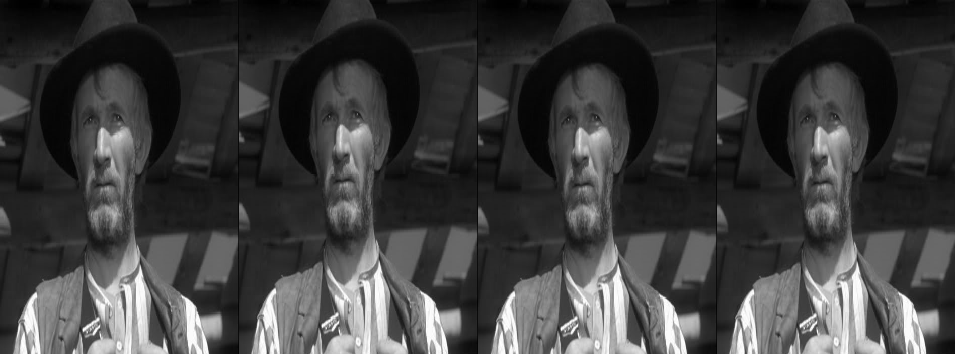
Alternate Best Supporting Actor 1954: Alastair Sim in An Inspector Calls

Alastair Sim did not receive an Oscar nomination for portraying Inspector Poole in An Inspector Calls. 

An Inspector Calls follows an upper class family as they face charges over their mistreatment of a recently deceased working class woman. 

Alastair Sim essentially portrays the master of ceremonies for this piece as the titular inspector we learn little of, rather he used for us to learn of each family member's relation, and in turn related "crime", with the young woman who he informs them has ingested a kind of poison. It is upon Sim's performance much to create what is captivating about the Inspector. An actor who has an advantage that being his distinctive face, which makes quite the impressive as he suddenly appears in the film without entering. Sim's initial delivery of the death of the woman is striking in his manner. Sim speaks bluntly of the invents with this certain though inherent sympathy within the death even as he is so matter of act. Sim speaks with more than one card to play as it seems. Still though he appears but an inspector until the patriarch of the family speaks to being unaware of the woman. Sim's expression changes to a kind ghoulish smile as he indicates that the man should most certainly know her. There is an accusation in the grin, and almost something quite sinister even in Sim's portrayal. There is more though than that as the man explains himself, shirking responsibility claiming it would be awkward to maintain any responsibility. Sim's speaking of "oh yes, very awkward" carries a duality of complete lack of sympathy for the man and irony for the statement of a man clearly trying to avoid any connection with the person he wronged. 

Sim's performance carries still this kind of nearly monstrous quality, as he almost seems like a shark when another member of the family enters the room who he is going to accuse of their crime against the young woman next. Sim's eyes carry a quick accusation in them, and this incisive stare. The grin that he carries with them seeming a man just waiting to reveal his truth, and knowing the weaknesses that will be revealed within the family. Sim though has this calm about him that is quite unnerving in this way, but what makes it so remarkable is the particular edge his performance sits on. This as we see his reactions towards the family with this vindictive joyful quality in his attacks, however that isn't all there is. This as he speaks of the woman, of any success, there is some greater sense of care about it properly to some one. He doesn't make it even then as an easy sympathy, rather almost this sort of tragedy within any notion of good news. Sim speaks the Inspectors news always with this certain almost laughing manner towards the woman, not out of hate, but this kind of bemusement that she could possibly attempt to find any success in this particular world. Sim brilliantly colors the exposition with dynamic depth within every moment of it. Sim as much as the inspector is just telling the story, never is doing it so simply as that. The texture he brings to every line creates such a palatable sense of the nature of this story through the seemingly lack of sympathy of the family and the tragedy in the young woman's story. 

Now the film itself, based on a play that makes its allegory even more obvious than it is here, I would is repetitious in its point and characters too much pawns per the scenario to exist. The one aspect of the film that is wholly successful is in the overarching dramatic device of the inspector, this as it grants a certain haunting mood to the whole drama, though with Sim being the most essential ingredient. Frankly director Guy Hamilton unnecessarily overplays the supernatural nature of the inspector (literally named Goole in the play which is painfully on the nose), because Sim already has it entirely in hand. Every scene with Sim is compelling due to Sim as you can just watch him throughout every one of these scenes, as he brings this quietly terrifying ethereal omnipotent quality within his work. This as Sim never simply sits and stare, rather there is this judgment that is being inflicted whether it is through a turn down of the nose to imply a bit of exhaustion at the family's dodges, to a penetrating glare when forcing a bit of information out of his given target in a moment. Sim himself is compelling to watch as this essential force for truth, which to his credit again finds the right balance. Sim plays the part perhaps as some supernatural force implying this inquisition, however he does so with the right humanity even as the inspector seems so all knowing. Sim brings, for the lack of a better word, this sort of nearly playful sense of exhaustion in the inspector. This sort of weariness upon his duties, less so as an obvious vengeful spirit, but rather a man there to deliver a painful message, a message he has seemingly delivered far too many times before. Sim gives a great performance, that really realizes every virtue of the material, and creates this captivating portrait of the accuser who both thrives within the allegory, but also successfully exists beyond it.

Monday, 24 July 2017

Alternate Best Supporting Actor 1954: Fredric March in Executive Suite

Fredric March did not receive an Oscar nomination, despite being nominated for a BAFTA, for portraying Loren Phineas Shaw in Executive Suite.

Executive Suite is a rather effective drama about the power struggle that ensues in a successful company after their president dies without leaving an obvious successor.

Executive Suite follows the several vice presidents of the company dealing with the calamity. The two strongest figures shown in the film are William Holden's McDonald "Don" Wallin against March's Shaw. Now March's performance is essential to the film in more ways than you may initially expect. Now on one hand this is simply an engaging performance, as March tends to be when he dials it back a bit playing to his strengths as a performer. That is what March does here as he carries his very distinct and assured presence to the role of Shaw. March brings that confidence to the role to create Shaw as a powerful figure in the company. March is innately compelling here as he offers such an efficiency in his performance, so rarely wasting time on the wrong emotions which is quite fitting to his character. This is part of March's performance which is always very much on point and straight forward in a remarkable way. In that there is nothing dull in this as March in particular makes the technical dialogue involving the company not only effortless in his delivery yet always comprehensible. When in the early scenes of the film Shaw figures out what happens and takes immediate action, March brings an incisiveness not only in words but also through his very assured physical body language as he carefully breaks down the reasoning behind his actions.

Now this is where March's performance though goes beyond in terms of how it amplifies the film. There are elements to the film that could have made it potentially into a more hamfisted morality play particularly in the role of Shaw. March's work is what avoids this problem. It would easy to imagine Shaw being made into an overt villain, but March wisely avoids this and in turn avoids simplifying the drama. March importantly always plays the role as a man who believes he is doing the right thing throughout the film. Again in that early scene where he establishes basically his authority, where technically Shaw is just assuring that the company will not collapse, March presents a confidant man yet not an egotistical one as he could have been here. There is a sense of righteousness but not a sanctimonious self-righteousness. March brings what is a genuine passion within his words that reflect the will of a man who is looking beyond himself even as he does take steps to try to secure his position as president. When he's making his moves within the story Shaw moves with precision but again March plays these scenes by emphasizing how Shaw working towards his goal. When he negotiates even with the less savory men of the company, March delivers his lines in a direct fashion again reinforcing that this is not a game to Shaw, but something he feels must be done.

The plot comes to a head with the final voting to determine who will be the next president and what their exact vision for the company is. Shaw offers his vision which is essentially to keep things as they are but in doing so ensuring the greatest dividends to their stockholders. In this explanation March gives it all the sincerity and certainty of a seasoned and intelligent businessman. There is no purposeful stubbornness in March's approach but a very direct earnestness behind the explanation. Now this is a low key earnestness to be sure, but March uses that so well to give his view that paints Shaw as a reasonable man who wants what he believes to be best for the company. Even as the first vote does not exactly go his way March is very good in revealing a bit more emotion in Shaw. March even in this stays true to his approach and plays this emotion most strongly as a quiet frustration that they are making things more difficult for the company. I particularly like his scene with Louis Calhern's more amoral board member, where March just presents such a genuine disbelief that the fool would sabotage his own desires by voting against him. March portrays no real anger, but rather reinforces the nature of Shaw by only being confused by the man's actions. When Holden's Don presents his view with a stirring speech, March earns the acceptance in Shaw due to his reactions not being of a man being defeated but rather taking in the idea and seeing that they could work towards the success of the company. March's performance here keeps the film from becoming too black and white by providing a real opposition to what becomes the final message. He never allows Shaw to be a straw man by not only delivering his view as a reasonable alternative but also creating three dimensional character who is merely doing what he believes is the right.

Wednesday, 14 November 2012

Alternate Best Supporting Actor 1954: Results

5. Clifton Webb in Three Coins in a Fountain- Webb is a bit wasted in his film, but he does well to create a warmer take on his most frequent role as a snobbish intellectual.

Best Scene: Shadwell confesses both his love and the fact that he is dying. 
4. Raymond Burr in Rear Window- Burr certainly gets help from his director, but in very key moments his performance as well amplifies power of his character within the film.

Best Scene: Thorwald notices Jeff.
3. Fred MacMurray in The Caine Mutiny- MacMurray makes for an excellent villain playing the part with such charm that he tricks you into thinking that he is not even the villain.

Best Scene: Keefer suggests the officers mutiny. 
2. Peter Lorre in 20,000 Leagues Under the Sea- Lorre is a very likable and lends some very nice lighthearted relief in his film as the endearing sidekick Conseil.

Best Scene: Any scene between Conseil and Ned Land.
1. Van Johnson in The Caine Mutiny-Johnson gives the best performance not nominated for an Oscar this year through his moving down to earth portrayal of a man who tries to do the right thing despite tremendous pressures all around him.

Best Scene: Maryk takes the stand in his court martial. 
Overall Rank:
  1. Toshiro Mifune in Seven Samurai 
  2. Humphrey Bogart in The Caine Mutiny
  3. Rod Steiger in On the Waterfront
  4. Lee J. Cobb in On the Waterfront
  5. Karl Malden in On The Waterfront
  6. Alastair Sim in An Inspector Calls
  7. Fredric March in Executive Suite
  8. Peter Finch in The Detective
  9. Van Johnson in The Caine Mutiny
  10. Peter Lorre in 20,000 Leagues Under the Sea
  11. Kuroemon Onoe in Samurai I: Musashi Miyamoto
  12. Richard Basehart in La Strada
  13. Fred MacMurray in The Caine Mutiny
  14. Raymond Burr in Rear Window
  15. Ken Uehara in Sound of The Mountain
  16. Van Johnson in Brigadoon 
  17. Geoffrey Keen in Carrington V.C
  18. John Williams in Dial M For Murder  
  19. Eitaro Shindo in The Crucified Lovers
  20. Jose Ferrer in The Caine Mutiny 
  21. Geoffrey Keen in Doctor in the House
  22. Louis Calhern in Executive Suite
  23. Clifton Webb in Three Coins in a Fountain
  24. Edmund Gwenn in Them!
  25. Rene Dary in  Touchez Pas Au Grisbi
  26. John Williams in Sabrina 
  27. Allen Cuthbertson in Carrington V.C
  28. Brian Worth in An Inspector Calls
  29. Robert Cummings in Dial M For Murder
  30. Minoru Chiaki in Seven Samurai
  31. Bryan Forbes in An Inspector Calls
  32. Isao Kimura in Seven Samurai  
  33. Lee Marvin in The Raid
  34. Emile Meyer in Riot in Cell Block 11
  35. Broderick Crawford in Human Desire
  36. John Hamilton in On the Waterfront 
  37. Paul Fix in The High and the Mighty
  38. Walter Pidgeon in Executive Suite 
  39. Otto Kruger in Magnificent Obsession
  40. Seiji Miyaguchi in Seven Samurai
  41. Pat Henning in On the Waterfront 
  42. Alexander Knox in The Divided Heart
  43. Yoshio Inaba in Seven Samurai 
  44. Lino Ventura in Touchez Pas Au Grisbi
  45. Robert Newton in The High and the Mighty 
  46. Geoffrey Keen in The Divided Heart
  47. James Robertson Justice in Doctor in the House
  48. Walter Brennan in The Far Country
  49. Paul Douglas in Executive Suite
  50. Rentaro Mikuni in Samurai I: Musashi Miyamoto
  51. Richard Widmark in Broken Lance
  52. Ernest Borgnine in Johnny Guitar
  53. Donald Houston in Doctor in the House
  54. Arthur Young in An Inspector Calls
  55. Walter Hampden in Sabrina
  56. Dean Jagger in Executive Suite 
  57. Edmond O'Brien in The Barefoot Contessa
  58. Wendell Corey in Rear Window 
  59. Brock Peters in Carmen Jones
  60. Harry Morgan in The Glenn Miller Story 
  61. Charles Bronson in Vera Cruz
  62. Ernest Borgnine in Vera Cruz 
  63. Robert Stack in The High and the Mighty
  64. Paul Muller in Journey to Italy
  65. John McIntire in The Far Country
  66. William Holden in The Country Girl 
  67. Cesar Romero in Vera Cruz 
  68. Jack Carson in Phffft
  69. Dean Jagger in White Christmas
  70. Charles Bickford in A Star is Born 
  71. Cecil Parker in The Detective 
  72. E.G. Marshall in Broken Lance
  73. Russ Tamblyn in Seven Brides for Seven Brothers
  74. Noah Beery Jr. in The Black Dakotas
  75. Rory Calhoun in River of No Return
  76. Tom Tully in The Caine Mutiny
  77. Sidney Blackmer in The High and the Mighty
  78. Louis Jordan in Three Coins in a Fountain
  79. Jack Carson in A Star is Born 
  80. John Broomfield in The Black Dakotas
  81. Rossano Brazzi in Three Coins in a Fountain
Next Year:  1993 supporting

Alternate Best Supporting Actor 1954: Clifton Webb in Three Coins in a Fountain

Clifton Webb did not receive an Oscar nomination for portraying John Frederick Shadwell in Three Coins in a Fountain.

Three Coins in a Fountain is a very breezy film about three women trying to find love in Rome. I can't say it is particularly compelling especially since two of three relationships in the film are quite dull.

Clifton Webb here once again portrays a upper crust character who certainly has a high opinion of himself. I would say that the writer John Frederick Shadwell is considerably less into himself than Waldo Lydecker, his character in Laura, or that of Mr. Belvedere in Sitting Pretty. In fact this is very much a character in the vein of the type Webb tended to play, but actually Webb shows his ability to soften his characterization quite well. Shadwell still is very assured of his own intelligence, but Webb does well in softening the edge of his usual manner here.

John Frederick Shadwell does not appear all that often in the film, and certainly has the least amount of screen time out of the three men. This is unfortunate as he is the most interesting of the three, he as well does not really get his part in the film until late into the last third of the film. Webb actually does well in doing his usual thing, because like John Gielguld he was simply very good at being the upper crust sort so why not cast him in such a role. The role simply suits Webb's style perfectly, but he does well in not giving the exact same performance as his other earlier performances.

Webb actually is quite good in being a warmer sort of intelligentsia. He still critiques and constantly presents his opinion in an incisive manner, but here Webb dials back the cynicism taking an honestly more charming approach. Webb shows that Shadwell does not mind flaunting his knowledge by he tries to be nice and considerate about it as much as he is able to do so. It actually is quite difficult to make what is a very snobbish character likable, but Webb does here in a similar manner to the way John Gielgud did in Arthur. He is not quite on the level of that performance here, but he does the nicer snob well.

Webb does not really become a part of the romance aspect of the film until very late in it when his secretary Miss Francis (Dorothy Maguire) finally indicates her love for him, but at the same he finds he is in all very likely hood he is terminally ill. I must say despite being given the least amount of time I actually cared about this romance far more than the other two. Webb and Maguire are actually quite nice together because they do not try to push on the romantic elements of their relationship, and because of that their relationship feels a little more natural actually.

Webb and Maguire are given the short end of the stick as they are forced to do something with the extremely limited amount of time they have. They do make the most of it in that I found their's far more moving than the other two in the film, which felt rather forced. The limitations of the role do bare down on Webb's performance which never becomes as substantial as it might of been if the film had not put him in the back seat in favor of lesser performances. This still is a good performance by Clifton Webb, and it does well in showing that there is more than just one way to play a snob.

Tuesday, 13 November 2012

Alternate Best Supporting Actor 1954: Peter Lorre in 20,000 Leagues Under the Sea

Peter Lorre did not receive an Oscar nomination for portraying Conseil in 20,000 Leagues Under the Sea.

Peter Lorre despite his long career as an actor was never nominated for an Oscar. Although to be sure he probably was not in consideration for this performance it is still worth looking at. When one refers to playing against type one would usually says a villainous performance from a actor who tends to play heroic performances. Peter Lorre in this film is the opposite case who commonly played monsters villains even apparently commenting that the giant squid in this film had the role that was usually given to him. In this film though Lorre does not play a villain by any means in fact one could easily argue he is the most positive character in the film.

Where James Mason's Nemo is too hell bent on his revenge, Kirk Douglas's Ned Land perhaps is a little to quick to becomes an adversary to Nemo, and Paul Lukas's professor is perhaps just a little too eager to sympathize with Nemo, Conseil for the most part just wants to do what is best for all of three of them who ended up on Nemo's submarine. This is a supporting performance in the most traditional way, in that Conseil is a wholly supportive character. He never has his own personal scenes and he is always very much a sidekick at first of the professor than later Ned's.

Lorre simply is adorable in the role as Conseil and is just a warm very likable presence throughout the film. He might be the least important figure out of the four stars of the film, but he still leaves his own mark on the film in his own way. He is a very nice warm presence and it is really something special within in the film. He lightens things up in the film in just the right way despite never really feeling like an sort of comic relief. Lorre though shows well his under utilized talent of some nice comedic timing here and there in his down to earth reactions to the strange events occurring around. I particularly like when he demands a "fair trial" aboard the submarine.

His two relationships in the film are with the professor and Land. His relationship with the professor is appropriate enough, but he becomes Ned's friend when he sees that the professor is too wowed by Nemo's discoveries for his own good. Lorre and Douglas have excellent comedic chemistry with one another, and their interactions are some of the more enjoyable parts of the film. Whether it is the two of them running from cannibals, the repeated hair tossing gag, or when Douglas lets Lorre do a retribution punch to confirm their friendship they are always a great deal of fun together. Their lighthearted moments really work well, and are effective in the way they properly balance against some of the weightier scenes involving Mason's Nemo.

Lorre here is a quiet charmer with this performance and does well to make Conseil a low key but entertaining part of the film. His moments are small and short in regards to film, but I have to say I liked everything Lorre did in the role. This certainly is far from his more complex performances earlier in his career, but that does not mean this is not a performance worth mentioning. Lorre does his very best in making what could have been a truly throwaway side kick character, but instead makes Conseil a very warm and endearing character in the film. This simply is a treat for any Lorre fan as one can see that he could be just as much of a loveable teddy bear, as he could be a fierce monster.

Monday, 12 November 2012

Alternate Best Supporting Actor 1954: Raymond Burr in Rear Window

Raymond Burr did not receive an Oscar nomination for portraying Lars Thorwald in Rear Window.

This is not a usual performance by any means as Lars Thorwald is at first just one of the many people being watched by James Stewart's L.B. "Jeff" Jefferies as he tries to pass the time as his broken legs slowly heals. At the beginning not one of the windows really stands out especially as they are all seem to do their own thing, but slowly something odd seems to come up when Lars the man in the apartment across from his window seems to no longer have his invalid wife with him.

In many ways this is an impersonal performance as we seem Thorwald only from a great distance from Jeff's apartment and we rarely hear him. When we do here Thorwald it is distance and faint. For the most part it is easy to argue that really all of the performances out the window are very much a product of Alfred Hitchcock the director and not as much by the actor. I would say that is possibly quite true for some if not most, but I would not say that really is that case as Thorwald who becomes the most interesting person out the window.

Thorwald of course becomes the most fascinating when Jeff suspects that Thorwald may have killed his wife. Before the suspicions we just see Thorwald which Burr does well as a tired and not particularly happily married man of his wife. There is nothing that one should expect really expect from him, as he may be just a normal unhappily married man. After suspicions arise though Jeff starts to look more closely, and more comes from Burr's performance as Thorwald. After the murder Burr does just right with his part as a man doing some sort of job, but the question is what he is doing.

Burr creates the mystery of Thorwald well suggesting something very dark about Thorwald, but still leaving it entirely open that Jeff just might have too much free time on his hand. This becomes less likely though as we see more of Thorwald, and more of Burr. In the close up moments Burr does his best to make the most out of them to actually create Thorwald into a villain that works well for the film and actually even a more in depth character than one would expect given the circumstances.

In his very short moments where we see his reactions to the accusations, Burr does not portray just a blunt one dimensional villain, but more effectively portrays a very scared man suggesting that perhaps Thorwald's murder was something quite sudden and hasty. This is not to say though that Burr does not make Thorwald a proper threat. In his face he conveys a certain instinctual violence that is properly freighting. It is not that Thorwald is exactly a serial killer, but Burr shows that he is certainly capable of murdering to protect himself.

My two favorite two moments of his performance sum up the success of his performance. The first moment being when Thorwald finally looks and sees that Jeff is watching him. Burr's look of contained anger, and fear is very chilling creating a great deal of dread as he leaves his apartment and goes to Jeff's. The second moments is finally when he confronts Jeff and Thorwald asks Jeff why he is doing this. Burr is terrific in this moment as Burr does not deliver the questions so much like threats but rather like pleads. In strange way Burr actually makes you feel a little sorry for him, becuase he actually manages to humanize Thorwald. He makes Thorwald honestly a character, but as well still a proper villain for the film.

Friday, 9 November 2012

Alternate Best Supporting Actor 1954: Fred MacMurray and Van Johnson in The Caine Mutiny

Fred MacMurray did not receive an Oscar nomination for portraying Lieutenant Tom Keefer the communications officer in The Caine Mutiny.

Fred MacMurray did not find himself nominated for this role despite Tom Tully being nominated for his wholly unimpressive performance. MacMurray like he did later in the Apartment manages to show his ability to portray a slimy character with a certain style all his own. I guess maybe the academy never nominated MacMurray was that most of his work was too lightweight for their tastes, than perhaps his best work was always as too much of a despicable character for their tastes.

MacMurray though excels with the character of Tom Keefer a man who is only in the navy in the moment and seems far more interested in writing his novel than really doing a proper job on his ship. MacMurray is excellent because his naturally warm presence makes it so you really do not suspect that Keefer is nearly as lowly as one might think. He cynical behavior never really comes off as one would imagine, and he really manages to make the character of Keefer work through his distinctly Fred MacMurray manner.

Keefer role in the film ends up being the one who lays the seeds in his fellow officers mind that the Caine's new Captain Queeg (Humphrey Bogart) is mentally unstable. MacMurray is really perfect in the role because although his character is devious from the start of Queeg's command, MacMurray shows it his eyes, but not in his way. When he tries to convince his other officers of the Captain's problems MacMurray is entirely convincing that he could sway them due to his charm that absolutely works for the character of Keefer.

When his true colors come out near the end of the film MacMurray is very good because he doesn't compromise the rest of his performance. In the moment where he even admits his pitiful actions, MacMurray is good in that he portrays the fact that Keefer still never seems to feel that much shame. MacMurray instead stays true to his self indulgent character who only really feels shame for the fact that he ended up being caught on his behavior. This is a good performance from MacMurray that succeeds in portraying well the tricky character of Keefer who needed to be a villain without ever seeming one.
The only performance better in the Caine Mutiny than MacMurray's is found in Van Johnson's who was also not nominated for his turn as Lieutenant Steve Maryk.

Van Johnson portrays the executive officer Steve Maryk who really is the heart of the film, and actually feels like he should have been lead of the film. Well that would at least make the film better since it would spare us the very dull performance by Robert Francis as Ensign Keith, and the even duller romantic subplot that could have been excised completely from the film. It also would have also been made better because Van Johnson as Maryk, who seems to be the only one of the officers who seems to treat the Naval institutions properly in the film, is clearly the standout of the film.

Van Johnson who bears his very real scars in the film, which he usually covered up with makeup, realizes the character of Maryk beautifully. Johnson plays Maryk as a friendly officer who genuinely enjoys doing his duties on the ship, but as well takes his job with the appropriate seriousness. Johnson is pretty much the exact opposite of MacMurray's portrayal. Where MacMurray's portrayal was really one of underhanded cynicism, Johnson on the other hand is one of openness and honesty. He makes the positive aspects of his character of truthful, and easily makes Maryk the most likable character in the film.

When Queeg comes on board Johnson is very good because unlike MacMurray there is not a hidden hostility portrayed, but instead a genuine concern for Queeg's methods. There is nothing false about Johnson's portrayal of Maryk caring for his men, as well as running the ship in a way that works, he makes his problems with Queeg's methods ones of true concern opposed to Keefer's far petty problems with Queeg. Johnson is already very good but his performance only becomes better when Keefer starts to push the issue of Queeg's mental instability. Johnson's portrayal of Maryk's struggle with the issue as a highlight of the film.

Van Johnson is very effective in portraying Maryk's approach to dealing with Queeg's problems as well as Keefer's persistence. He keeps Maryk as a man who is very much still devoted to the Naval code, and method as evidence by the scenes where he stops the extreme mocking of Queeg. Johnson is moving because he portrays well the strong persistent beliefs in the naval tradition and does well in showing the degree of disgust Maryk feels of the other men's over zealousness in dismissing Queeg. He as well though does properly convey the internal feelings of doubt in his mind over Queeg's performance.

It is Johnson who delivers on the central conflict of the film which is to break naval protocol and mutiny to save the ship. It is Johnson's ability to give weight to the conflict within Maryk own mind that makes us sympathize with him with the mutiny, and importantly we stay with Maryk through the court martial. Johnson makes us very concerned for Maryk because he only ever showed genuine concern on the ship. Johnson creates the most powerful moments of the film during the court material through his moving heart wrenching reactions to some of the testimony that could put him at the end of a rope.

Thursday, 8 November 2012

Alternate Best Supporting Actor 1954

And the Nominees Were Not:

Peter Lorre in 20,000 Leagues Under the Sea

Raymond Burr in Rear Window

Clifton Webb in Three Coins in The Fountain


Van Johnson in The Caine Mutiny

Fred MacMurray in The Caine Mutiny