Showing posts with label 1946 Alternate Supporting. Show all posts

Saturday, 1 August 2026

Alternate Best Supporting Actor 1946: Claude Rains in Deception & Results

Claude Rains did not receive an Oscar nomination for portraying Alexander Hollenius in Deception.

Deception follows as a cellist Karel Novak (Paul Henreid) reunites with his lover Christine (Bette Davis) after the end of WWII, unfortunately a famous composer might complicate things.
 
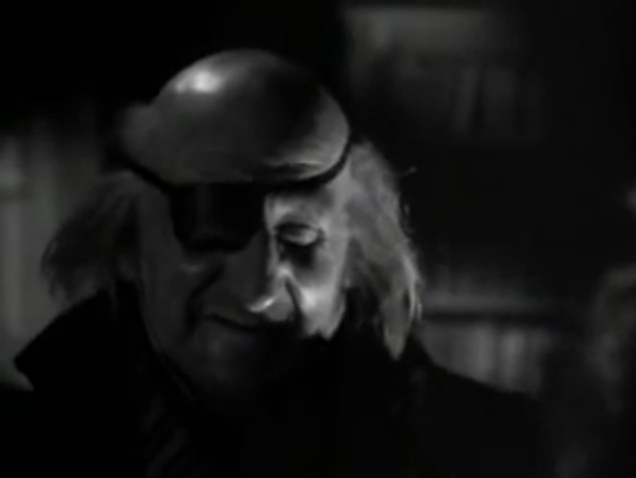
That famous composer is of course played by the great Claude Rains in his third performance from 1946, following his Oscar nominated performance as a lovelorn Nazi in Notorious and as a rather jovial Satan in Angel on My Shoulder. Despite playing a Nazi and the devil, strangely enough his performance here as lauded composer Alexander Hollenius might be the most actively nefarious in his manner. Rains makes his dynamic entrance as Novak and Christine decide to marry, despite it being clear that Christine had been Hollenius’s lover at the time of the couple’s reunion. Naturally Hollenius decides to crash their wedding and the intensity of Rains’s passive aggression as he comes in to "congratulate" the pair on their nuptials reveals immediately his true intentions. The direction of the character’s ire is properly conducted by Rains with an artful combination between a seething jealousy and egotistical derision. Rains’s eyes present caution immediately towards Christine, his true hatred for this development with nearly the petulance of a boy being denied his cookie, but also with the grandiosity fitting a man who has been declared as a genius by many…including Novak himself. 

There is an unquestionably joy of performance within Rains’s performance that manages to easily differentiate himself from his “other man” performances including his Oscar nominated turn from 46. Rains makes a choice in this instance really not to emphasize any empathetic qualities within his Hollenius instead making an alternative choice in reinforcing the despicable nature of the character. That isn’t to say Rains forgoes any genuine emotion, quite the contrary, however in this instance, unlike Notorious where he weirdly makes one sorry to a degree for the villain in that film, he essentially plays Hollenius as an entitled brat. He has a blast, and it is hard not to enjoy it with him as Rains, even while keeping a certain regal veneer by the virtue of his innate presence and voice, goes all in to show that it is nothing but a hollow facade to the nature of the man. It is especially easy to enjoy Rains’s truly petulant delivery of describing musicians who play his music basically as Monkeys doing his bidding. Rains creates no fancy qualities in this explosion but rather enjoyably strikes right into the heart of who this man is by delivering his outburst with a decided lack of refinement. 

The situation exacerbates quickly when Hollenius recruits Novak to be a musician for his next piece which gives him easy access to brow beat Christine’s love. Rains though shows a slightly different side as the conductor/composer where he still emphasizes just the general sadistic glee he gets from every second, but within it there is at least some notion of general passion in his delivery where we see the musical genius prodding for more. While Christine believes it to be purposeful torture, Novak appreciates the treatment as a method to improve his skill, which naturally leads Christine to confront her old lover for his true intentions. Rains takes complete ownership of this sequence as to be expected where he delivers every line as this long planned dictation that emphasizes the sense of planning in every word while in his eyes still bringing just this childish type of joy of victory over a playground rival. When the composer explains he will essentially make Novak brilliant, before destroying him by revealing the affair Christine had with him, Rains is delightfully diabolical in his ability to present such confidence in the plan meanwhile you sense the seething resentment behind that confidence that is his true motivation. Rains successfully finds a new avenue in playing yet another scene stealing villain that while it has shades of his other works in no way feels a copy of it. Although I wouldn’t say he quite hits the high of his Oscar nominated turn, this is another delicious slice of the Rains pie so to speak, and just another example of him being the very best when it came to character acting in that period.

Updated Overall

Next: 1990 Lead

Saturday, 25 July 2026

Alternate Best Supporting Actor 1946: Alastair Sim in Green For Danger

Alastair Sim did not receive an Oscar nomination for portraying Inspector Cockrill in Green For Danger. 

Green For Danger is a hospital soap opera that becomes a murder mystery because everyone chooses to act a little too dramatically for their own good. 

This is the second time I’ve covered an Alastair Sim performance as an inspector. Although this is in no way a copy of his mysterious and imperious inspector Poole, Sim’s Cockrill is earthy in comparison which Sim makes great use of. Sim begins as a narrator before we meet him where he offers a nice alternative delivery where he adds a nice slightly comedic manner to Cockrill’s recitation even while still finding the needed gravity as he describes that the hospital staff consists of victims, a murderer and the suspects. Sim comes in after two murders have taken place in the hospital and a group of two doctors and a few nurses are the suspects. Sim’s great ease for comedy comes into play as we immediately undercut the Inspector a little bit as we emphasize his constant worry about a German bomber throughout the film. Sim really makes the most out of the comedy in his instant switch to the upward reactions of worry and a run and hide that in no way brings any vanity to the character. Leading eventually to a rather enjoyable punchline at the end of the film where Sim’s reaction of slightly frustrated disbelief is some comedic gold. 

His main purpose within the film is to solve the case and where Sim is most welcome as the alternative voice within the constant various emotional compromises of the other characters. Sim arrives with an ease of presence within the Inspector’s role to find out the truth. Sim though is very different here than as Poole, because where Poole already knew everything, Sim very much gives a different style of someone who intends to find out everything, is quite capable of doing so, but has yet to figure it out. Sim conveying an intelligence intent on finding out more despite not having all the answers. Sim brings a wonderful ease and a distinct lack of putting on any airs when dealing with the hospital staff. Sim finding a directness and I especially love the use of his eyes which are always seeming peering through the nonsense being spotted by his list of suspects who all have something to hide even beyond the mystery. Sim provides a directness with a combination between determination with wit as highlights that cut through every scene. Amplifying this only with his physical manner of confident movement within the case and particularly his brandishing of the truth, including my favorite moment in the film with his wholly casual manner of cutting down a bush to reveal an eavesdropper in a rather hilarious fashion. 

Naturally we give Sim a natural detective summation sequence, though in this instance via surgery, where Sim manages to convey a direct urgency of the detective genuinely wishing to avoid any further death with also the wonderful intelligence in his eyes as we see the spark of the man figuring it all out. He manages to even sell a completely ludicrous moment where one character basically acts nefarious for no reason that leads to someone’s death, but Sim’s reactions towards hearing the truth of the situation is pretty great as we get the man completely surprised. Sim earns the change up for the character on an acting level even if the setup is completely unbelievable. Sim offers the right steady presence here that enlivens the mystery and the overall film with ease. He naturally segues between his comedic and dramatic moments in crafting detective that manages to be both exact in his intelligence yet properly humorous in his very much human foibles. Inspector Cockrill evidently is a literary detectives with multiple entries and it's a shame that this was Sim's only go around as it certainly would've been a treat to go through a few more mysteries with him. 

Friday, 10 July 2026

Alternate Best Supporting Actor 1946: Michael Redgrave in The Captive Heart

Michael Redgrave did not receive an Oscar nomination for portraying Capt. Karel Hašek alias Geoffrey Mitchell in The Captive Heart. 

The Captive Heart follows the story of various British POW’s during WWII. 

Michael Redgrave is the most dominant but technically just one of many stories among a handful that we follow throughout the film. He is featured in the one with the most dramatic tension as we are first introduced to him as an officer who is fluent in German, though we quickly flashback to see Redgrave as a distraught man who hurriedly takes the clothes of a dead British officer who dies in front of him. Redgrave leaves a fine and quick impression as he brings just so much innate emotion within his face here. There’s the sense of a lot of years within the man, though I think this distinct combination between wear but also empathy. Even though we see him as a false soldier initially, we suspect better of him with the care within Redgrave’s performance as he tries to help the British soldiers before they are sent to the camp. Within the camp the other soldiers soon begin to suspect the fake captain due to his suspicious behavior and fluency in German leading to a confrontation. A scene where you really see the power of Redgrave’s presence, which is one honestly built on silences more than declarations. As the man actually named Karel’s reply is to admit the truth, which is that he is in fact a Czech concentration camp survivor, whose only chance was to replace the captain, and within this delivery Redgrave is wonderful as you can feel the intensity of position of isolation, however also this quiet degree of shame but also determination with needing to take the measures he did. Redgrave convinces you that Karel’s actions were justified and in turn makes it wholly believable that not only are the men willing to believe him, they eventually champion his survival. 

A situation that is all the more difficult as the camp’s gestapo agent was also at Karel’s concentration camp, though this initially enabled him to prove his story to the British. Redgrave brings such a striking emotional power within largely his silent reactions where you can see him taking in the severity of the situation while in the silence still presenting the man just being a soldier no more no less. Through the film then we follow him as he tries to maintain his identity which becomes all the trickier when the agent is wondering why he doesn’t send any letters home leading to Karel not only needing to break his hand but also write the unknowing widow Celia (Rachel Kempson, Redgrave’s actual wife) as the man he is impersonating. It speaks to Redgrave’s specific abilities as a performer as he does bring so much nuance within these moments of wording the letters and even contemplating the weight of the ruse. Something that is initially a survival necessity slowly becomes more with each letter and within each letter Redgrave’s performance in a few words but mostly just in thoughtful reflection conveys the connection. A connection all the more meaningful as Karel learns of the deaths of his own family and Redgrave presents a man in a personal purgatory reaching out to another, albeit in a most curious fashion. 

While having that more emotional story we follow one step after another of the specific deceits that eventually lead to Karel needing to find a way out in a large prisoner release through a daring mission, which again Redgrave adds a bit more gravity just in embodying the tension that Karel is going through as witnesses the difficult steps to get him out. Leading to probably the weakest aspect of the film, though it isn’t bad, where the film runs through everyone returning home and Karel having the strange duty of not only revealing to the captain’s wife that her husband’s dead but that she’s also had been corresponding with him the whole time. We do get a good scene of Karel telling the truth to her where again Redgrave is able to weaponize the empathy in such a moving fashion where you do sense completely his understanding of her plight but also brings just as much assurance that he had to do it. Finding though with just the right glint of appreciation and warmth, fittingly not to push too far given the nature of the moment but laying the seed that their connection might’ve been more than ruse. Unfortunately I will say the last bit of the film that basically is a montage of the two coming together feels less like the natural realization of the relationship and more of a “let’s wrap this up”, though this is no fault of Redgrave. Redgrave gives a strong performance that often is working in the silences and naturally finds the needed power in those silences. 

Friday, 21 November 2014

Alternate Best Supporting Actor 1946: Results

5. Finlay Currie in Great Expectations- Currie brings the right roughness and heart to the role but still never makes that much an impression.

Best Scene: Magwitch comes back.
4. William Bendix in The Blue Dahlia- Bendix, despite the writing messing up his ending, gives an affecting portrayal of a man driven to moments of insanity due to his war experiences.

Best Scene: Buzz is bothered by the music. 
3. Roger Livesey in A Matter of Life and Death- Livesey steals the film right out from David Niven and manages to give weight to the central romance of the film than the two performers portraying it do.

Best Scene: The doctor fights for Peter's life in the Heavenly court.

2. Henry Travers in It's A Wonderful Life- Travers gives a funny and quite wonderful realization of the pure goodness of his character.

Best Scene: George after visiting his mother.
1. Lionel Barrymore in It's a Wonderful Life- Good Predictions Kevin, Maciej, moviefilm, koook160, and  Jackiboyz. The year itself came down to one of my favorite depictions of a villain of all time against Claude Rains who manages to make the villain the most sympathetic character in his film. Both I think are equally good in their roles and I don't see how either could be better. In a way to cheat out of really choosing I'll just base it on their second films of the year. Rains was also great in Angel on my Shoulder whereas Barrymore was quite forgettable in Duel in the Sun.

Best Scene: George goes to Potter for help.
Overall Rank:
  1. Claude Rains in Notorious
  2. Lionel Barrymore in It's A Wonderful Life
  3. Harold Russell in The Best Years of Our Lives
  4. Henry Travers in It's A Wonderful Life
  5. Roger Livesey in A Matter of Life and Death
  6. Thomas Mitchell in It's A Wonderful Life 
  7. Michael Redgrave in The Captive Heart 
  8. Claude Rains in Deception  
  9. Claude Rains in Angel on My Shoulder
  10. William Bendix in The Blue Dahlia
  11. Alastair Sim in Green For Danger 
  12. Charles Coburn in The Green Years 
  13. Robert Mitchum in The Locket 
  14. Raymond Massey in A Matter of Life and Death 
  15. François Périer in A Lover's Return
  16. Jean Vilar in Gates of the Night 
  17. Samuel S. Hinds in It's A Wonderful Life  
  18. William Conrad in The Killers   
  19. Hume Cronyn in The Postman Always Rings Twice
  20. H.B. Warner in It's A Wonderful Life  
  21. Marius Goring in A Matter of Life and Death
  22. Raymond Bussières in Gates of the Night
  23. Basil Radford in The Captive Heart 
  24. Kirk Douglas in The Strange Love of Martha Ivers 
  25. George Coulouris in The Verdict 
  26. Burgess Meredith in The Diary of a Chambermaid 
  27. Jimmy Hanley in The Captive Heart 
  28. Finlay Currie in Great Expectations
  29. Mervyn Johns in The Captive Heart 
  30. Jack Warner in The Captive Heart 
  31. Alexander Knox in Sister Kenny 
  32. Serge Reggiani in Gates of the Night
  33. Arno Paulsen in The Murderers Are Among Us 
  34. Ian Wolfe in Bedlam 
  35. Oscar Levant in Humoresque 
  36. Richard Haydn in Cluny Brown 
  37. Victor Mature in My Darling Clementine
  38. Alec Guinness in Great Expectations 
  39. Reginald Gardiner in Cluny Brown
  40. Francis Lederer in The Diary of a Chambermaid
  41. Andy Devine in Canyon Passage
  42. Pierre Brasseur in Gates of the Night 
  43. Billy House in Bedlam 
  44. Peter Lorre in Black Angel 
  45. Francis L. Sullivan in Great Expectations
  46. Peter Lawford in Cluny Brown 
  47. Sheldon Leonard in It's A Wonderful Life
  48. Richard Attenborough in A Matter of Life and Death  
  49. Lee J. Cobb in Anna and the King of Siam 
  50. Robert Shayne in Three Strangers  
  51. Jason Robards Sr. in Bedlam 
  52. Walter Brennan in my Darling Clementine  
  53. Frank Faylen in It's A Wonderful Life 
  54. Ward Bond in Canyon Passage 
  55. Glen Vernon in Bedlam 
  56. Roman Bohnen in The Best Years of Our Lives 
  57. Alan Napier in Three Strangers 
  58. Thomas Mitchell in The Dark Mirror
  59. Robert Mitchum in Till the End of Time 
  60. Monty Woolley in Night and Day 
  61. Bobby Anderson in It's A Wonderful Life  
  62. Glenn Ford in A Stolen Life 
  63. Walter Huston in Dragonwyck 
  64. Bernard Miles in Great Expectations 
  65. Cecil Kellaway in Kitty 
  66. Ward Bond in It's A Wonderful Life 
  67. Walter Baldwin in The Best Years of Our Lives
  68. Howard da Silva in The Blue Dahlia 
  69. Hoagy Carmicheal in The Best Years of Our Lives
  70. Robert Coote in A Matter of Life and Death 
  71. Elisha Cook Jr. in The Big Sleep
  72. Nigel Bruce in Terror By Night  
  73. Albert Dekker in The Killers  
  74. Harry Morgan in Dragonwyck 
  75. William Edmunds in It's A Wonderful Life
  76. Anthony Wager in Great Expectations
  77. Henry Travers in The Yearling
  78. Walter Brennan in A Centennial Summer 
  79. Charles MacGraw in The Killers 
  80. Ray Bolger in The Harvey Girls
  81. Reginald Owen in Kitty  
  82. Lucien Coëdel in L'Idiot
  83. Hoagy Carmichael in Canyon Passage 
  84. Marcel Andre in Beauty and the Beast
  85. Walter Huston in Duel in the Sun
  86. Reinhold Schunzel in Notorious
  87. Hardie Albright in Angel on My Shoulder
  88. Todd Karns in It's A Wonderful Life 
  89. George Brent in The Spiral Staircase
  90. Kent Smith in The Spiral Staircase 
  91. Clifton Webb in The Razor's Edge
  92. Lionel Barrymore in Duel in the Sun 
  93. John Hodiak in The Harvey Girls 
  94. Will Wright in The Blue Dahlia
  95. Richard Haydn in The Green Years 
  96. George Brent in Tomorrow is Forever 
  97. Herbert Marshall in The Razor's Edge
  98. Michel Auclair in Beauty and the Beast
  99. William Demarest in The Jolson Story
  100. Ward Bond in My Darling Clementine
  101. Brian Donlevy in Canyon Passage 
  102. Louis Calhern in Notorious
  103. Charles Waldron in The Big Sleep
  104. Cecil Kellaway in The Postman Always Rings Twice
  105. Jess Barker in The Time of Our Lives
  106. Joseph Calleia in Gilda
  107. John Payne in The Razor's Edge
  108. Leon Ames in The Postman Always Rings Twice
  109. Hume Cronyn in The Green Years
  110. Philip Mervale in The Stranger
  111. Hugh Beaumont in The Blue Dahlia 
  112. Chill Wills in The Yearling
  113. Richard Long in The Stranger
  114. Philip Terry in To Each His Own
  115. Dane Clark in A Stolen Life 
  116. George Macready in Gilda
  117. Bill Goodwin in To Each His Own 
  118. Richard Fraser in Bedlam 
  119. Hurd Hatfield in The Diary of a Chambermaid 
  120. Edwin Maxwell in The Jolson Story
  121. Bill Goodwin in The Jolson Story 
  122. John Lund in To Each His Own
Next Year: 1932 Lead might as well suggest any Supporting ideas as well.

Alternate Best Supporting Actor 1946: Finlay Currie in Great Expectations

Finlay Currie did not receive an Oscar nomination for portraying Abel Magwitch in Great Expectations.

Great Expectations is a well directed adaptation of Charles Dickens's book about a meek orphan Pip's coming of age story which includes meeting some unusual characters.

One of these unusual characters appears rather early on in the film as the boy Pip finds an escaped convict who he is played by Currie. Currie is appropriately rough in his depiction of the convict's manner not sugar coating him at all at the beginning, and suggesting the hard life that the man his lead. Currie moment here is quite brief but he makes Magwitch memorable enough before he is taken away again by the police. Eventually Pip finds himself rich through a mysterious benefactor, who Pip assumes is the wrong person, but eventually he is surprised to see Magwitch in his house once again which is quite the surprise. Currie's is quite good in his reappearance by know portraying Magwitch as a much more jovial sort certainly made happy by his far better life, although Currie still carries the right roughness around the edges to still show that Magwitch never could quite lose his criminal past completely. 

Currie is effective in turning Magwitch into a likable figure in these few short moments and realizes his whole character best he can. We do want to indeed see Pip help him out as Currie brings an earnest charm into the role. After his first introduction he disappears for a long time and then after his second introduction he placed firmly into the background as the film focuses on Pip basically coming up with a way and the preparing his eventual devised way to smuggle Magwitch out of England. Currie has one more scene where talks about the pain of his past which he makes fairly poignant by honestly portraying the sentiment within the general roughness of Magwitch's character. This is a solid enough performance by Currie as he probably does as much as one could do with how the role Magwitch is used in this version at least. He does not make that much an impact, but his work certainly is more than satisfactory.

Thursday, 20 November 2014

Alternate Best Supporting Actor 1946: Lionel Barrymore in It's A Wonderful Life


Lionel Barrymore did not receive an Oscar nomination for portraying Henry F. Potter in It's A Wonderful Life.

The previous collaboration before It's Wonderful Life between director Frank Capra and Lionel Barrymore was in You Can't Take It With You where Barrymore played the role of the jovial patriarch of a free spirited family. Well in this their next collaboration Barrymore's character could not be more different. Barrymore plays the antagonist of the film Mr. Potter who is a banker who owns half the town of Bedford Falls to begin with as the film opens. Although Barrymore was certainly quite believable as a lovable old man he's even better here as Mr. Potter who is introduced as being the meanest man in the county. We first introduced to Potter as he is chewing out George Bailey's father for not foreclosing on homes. Even though Barrymore is confined to a wheel-chair he has a considerable presence as Potter, and is actually quite imposing figure despite needing to be wheeled around by a lurch like figure at all times. His brief introduction though is really a warm up though for the rest of Barrymore's performance.

The greatness of Barrymore's performance actually comes most into play as a most worthy opponent for James Stewart as George. There first face off, and Barrymore's second scene, is after George's father has died and the share holders of his father's company the Bailey Building and Loan are there to determine its fate. Potter wants it to be dissolved as it poses a threat to his control of the town, although he has a backhanded praise of George's father. Barrymore is brilliant in how he does this as he stats that Bailey was a man of so called ideals. The way he looks to the side in discontent and pauses with the so called is time so perfectly by Barrymore that gives such an a callousness to his statement. Barrymore continues to excel and is a great counterpoint to Stewart's performance as George makes his passionate rebuttal against Potter's view of the people of the town. Barrymore's reaction is perfect in showing just how little Potter thinks of George's words. What's particularly great is the way he does the yawn, where he kinda tries to hide but in a way to bring more attention to it.

I don't know if I can name a performance where someone makes their face as expressive as Barrymore more does here as Potter. It never feels strange or awkward or any way and in fact Barrymore uses that as well as his hands as an effective way to make up for the fact that he obviously has some physical constraints. Barrymore is great just to watch here with all that he does in his various facial movements and hand gestures. They never feel like too much but only aid in making his Potter all the more memorable as a character. These certainly come into play in one of Barrymore's best scenes when Potter calls in George to his office in an attempt to get George to accept a high paying  job in order to rid himself of his rival. Barrymore is amazing in this scene because he does shed the true nature of the character ever so much as Potter makes his offer. For a moment Barrymore is terrific as he brings a false kindness to Potter as such a sweet offer to George, and makes it so very tempting. My favorite moment is that final smile where he thinks he has George, since there is such deviousness within it.

Well his offer to George is Potter at his most "kind" later on we get Potter at his worst and Barrymore is once again outstanding. George comes to Potter for help due to a misplacement of funds, which actually accidentally fell into Potter's hands, hoping that Potter will help him. Barrymore does not hold back at just how despicable Potter is in this scene as Barrymore begins with Potter almost confused and concerned by George's predicament. As Potter asks about embezzlement or possibly an affair George is thought to be, incorrectly, having Barrymore has almost a fatherly tone as if Potter is trying to mentor the young man on proper business practices, even though he knows the truth. When Potter sees that George has nothing financially to offer him Barrymore brings out the full sinister nature of Potter, and he gives basically a sickly inverted of George's earlier speech against him. Barrymore's is incredible as he matches Stewart's passion from that earlier scene but is quite chilling by making the passion serve such a horrible notion and purpose.

Lionel Barrymore and Henry Travers don't share any scenes together and whereas Barrymore has a some scenes throughout Travers's are all one after another, but they fulfill two polar opposites. Where Travers was such a wonderful personification of good, Barrymore is such a personification of evil. Lionel Barrymore succeeds in making Mr. Potter one of the all time great villains of cinema, and Potter does not even need to physically harm a soul. Barrymore's performance makes Potter such a vile sort by realizing the man's cruel ideology. It is interesting to note that Barrymore was originally going to play Ebenezer Scrooge in the 1938 version of A Christmas Carol, but was unable to do to his legs. It is easy to see him, due to his role here as Potter, to play the unreformed Scrooge, but actually Barrymore does not make Potter just the unreformed Scrooge. Barrymore makes Potter a darker sort, a man incapable of seeing the error of his ways. I love this performance, which is even very entertaining due to Barrymore's energetic style, yet that never takes away even an ounce of the viciousness of his characterization.  

Alternate Best Supporting Actor 1946: Henry Travers in It's A Wonderful Life

Henry Travers did not receive an Oscar nomination for portraying Clarence Odbody, angel second class, in It's A Wonderful Life.

Henry Travers first speaks rather early in the film as he is called upon by God and Joseph to be the one to go down to Earth to help George Bailey (James Stewart) before he takes his life. Before Clarence can go help him though he is first given George's back story which is about the first two thirds of the film. During this time Clarence makes the occasional comment, and you could not ask a better voice for an angel. There is such a genuine warmth and goodness to Travers voice that is hard to imagine anything but kindness coming from him, making his casting as a mean old man in The Bells of Saint Mary's all the more ridiculous I mention this mostly because it's the movie on the marquee in Bedford Falls. Anyway, although we get the very short comments Travers does not appear in the flesh until very late in the film when it takes its last act turn, and Travers's appearance is what indicates this turn in the film.

George is about to commit suicide, due to a lost large sum of money, by jumping off a bridge. In this darkest of moments for the film we suddenly and unexpectedly get a bright beam of light in the face of Henry Travers as Clarence when he makes his first onscreen appearance. Travers could not have a more kindly smile instantly offering some hope to the situation of a possible suicide, which alleviated all the more when Clarence jumps in himself forcing George's good nature to kick causing him to jump in as well to save Clarence. What follows is one of my favorite scenes in the film, although I'll admit I have a lot of favorite scenes in this film, as George and Clarence dry off giving Clarence a chance to introduce himself as his guardian angel.Travers is pitch perfect in the role and he makes his first substantial scene wonderful to watch. Travers establishes such a sweetness in his performance, which never feels too much or forced, but rather is truly angelic.

Travers also manages to bring a certain kookiness to the role that he also so carefully portrays as it could easily become cloying but Travers is only ever endearing in his portrayal of it. Travers has a very sly comic timing and manner in his performance. He never distracts too much away from the importance of the emotions concerning George's story and brings these humorous moments flawlessly into these scenes. Travers is actually quite unassumingly hilarious as Clarence as he makes the character's naivety and somewhat absentmindedness both funny yet just so very charming at the same time. This is one of those performances where you could almost take any line delivery from Travers and find something special in it. Two moments perhaps are my favorite, on the comic side of things, the first being his oh so friendly goodbye of "Cheerio my good man" after scaring a man away in disbelief after giving out what AS2 stands for, and my second is his rather futile attempt to name a drink for himself at a bar.

Travers's work is not just merely funny and sweet even if it is both those things as well because Clarence is sent there with a mission which is to convince George that his life is worthwhile. Travers excels in this regard as well as he carries himself with this otherworldly wisdom that he manages to make a natural part of the daffy angel. Travers is outstanding in the moments where he shows Clarence to merely quietly prod George with the information. There is something so powerful about the way Travers delivers his lines in these scenes as he speaks the blunt truth with such a severity but always with a warmth. Travers brings such a poignancy in every lines he speaks particularly "Strange, isn't it? Each man's life touches so many other lives. When he isn't around he leaves an awful hole, doesn't he?". Travers is excellent as he portrays Clarence as having such an inspiring soulfulness about him that George would have to take notice of Clarence's message.

It is interesting in that the exact final moment of Clarence's exit of the film is not particularly climatic, but it strangely ends up not mattering. Travers makes such a grand impression in the screen time he does have that it doesn't feel like Clarence is shortchanged by the end of the film. The reason being that it feels though Clarence's presence is still with George to the very last frame of the film. Travers accomplishes this by just how good he is in the role. This is an incredibly entertaining performance by Travers to say the least as he's consistently funny and makes Clarence so likable as well. It is more than just a likable characterization by Travers though as he makes Clarence serve an even greater purpose. George going from the worst to finding the will to live is of course beautifully brought to life by Stewart's amazing performance, but Travers also contributes greatly to making the transformation as powerful as it is through his realization of Clarence as a entity of pure goodness.

Wednesday, 19 November 2014

Alternate Best Supporting Actor 1946: William Bendix in The Blue Dahlia

William Bendix did not receive an Oscar nomination for portraying Buzz Wanchek in The Blue Dahlia.

The Blue Dahlia is a decent enough film noir about an ex-bomber pilot Johnny (Alan Ladd) who is accused of murdering his unfaithful wife.

William Bendix plays Buzz who is one of the two buddies who comes home along with Johnny. The other buddy is George who is as much as a straight arrow as one can be but what do you expect when he's played by Hugh Beaumont. William Bendix is one of the more underrated character actors from the period as I have yet to be disappointed by him, although I must admit that I have not seen the Babe Ruth Story. Bendix, like in his work in Lifeboat, carries an innate likability. There is such a genuine earnestness about his work that he manages to make Buzz a guy who is pretty easy to feel sorry for even though in his first scene it becomes clear that Buzz has a short fuse as he lashes out against a guy simply for playing music from a jukebox. The reason for his short fuse though is not because Buzz simply has a bad temper, but rather due to his experiences from the war which left a metal plate in his head.

Like in his performance in Lifeboat where he had the drunk scenes here he has those angry outburst which again could lead to some very over the top style of performance, but once again Bendix excels by not doing this. Bendix portrays Buzz's moments of losing his mind incredibly well as he portrays them as basically a nervous jolt of emotional desperation. Bendix is terrific because as he goes into the rather intense moments of Buzz he carefully always reinforces that it comes from his own pain, and that his outburst is Buzz's attempt to alleviate that even though it may be a bit futile. Bendix makes these moments all the more disconcerting because he does have such an endearing quality to his performance. He believably turns that gentle quality into a viciousness so effectively, and even though the film does not spend too much time on it, Bendix gives a fairly remarkable portrayal of his character's post traumatic stress disorder.

The film is about Ladd's characters attempt to find the real culprit to his wife's murder so it might seem obvious where Buzz fits into that when Johnny's wife invites Buzz over. Bendix is extremely effective in these rather brief scenes as brings a considerable poignancy to the moment where Johnny's wife talks to Buzz, even though she is only trying to manipulate him. Bendix makes it appropriately tragic though by honestly portraying how desperate Buzz is for a real tenderness which he will not be receiving from Johnny's wife. There major problem in regards to Bendix comes into play when the film reaching its conclusion and it turns out Buzz is at best a red herring and at worst a completely pointless to the plot. The film seems to be building to Buzz being the murderer caused by one of his moments of insanity then forgetting about it due to his moments of memory loss, that is not the case though. 

I was not surprised to say the least when I read that Buzz was the original murderer and it was changed and it does feel like a last minute change since the real conclusion is rather unsatisfactory. The reason this mattes in regards to Bendix though is the film fails to give him one last scene to show where it is Buzz is going in regards to his potential insanity as his story just kinda stops after Buzz is cleared of the charges. The reason this is a problem with the film is that Buzz is easily the most interesting character in the film and Bendix easily gives the best performance. I would much rather have had the more emotionally explosive ending involving Buzz rather than the overly simple one where a character no one cared about to begin with turned out to be the killer. The usage of Buzz only does harm to the film itself but not really Bendix's performance past denying one more potentially great scene. Bendix still manages to give a moving portrait of a man traumatized by war, even if film itself doesn't use it to its fullest potential.

Tuesday, 18 November 2014

Alternate Best Supporting Actor 1946: Roger Livesey in A Matter of Life and Death

Roger Livesey did not receive an Oscar nomination for portraying Dr. Frank Reeves in A Matter of Life and Death.

Roger Livesey plays the doctor who Peter (David Niven) and June (Kim Hunter) goes to see because of Peter miraculous survival from jumping out of a plane, and his subsequent apparent visitations from someone from beyond. As I wrote in David Niven's review the romance between Peter and June loses its steam as soon as they meet each other face to face for the first time I still loved the film though because of the splendid direction of Powell and Pressburger, and due to the performances from the supporting players with Livesey being the most important of these. Livesey basically picks up the slack since he becomes the crowd in Niven and Hunter's scenes together. It should be stated that Roger Livesey has one of the underrated voices of cinema as that along with his whole manner as a performer makes himself quite the magnetic figure who just seems to bring something quite special to the picture.

Livesey technically does not do too much in his early scenes other than observe Peter and offer some exposition here and there of what he believes it might. Well that's apparently more than enough for Livesey since he infuses so much into the role of doctor. Livesey's has such a tremendous presence and brings such a palatable authority to his words. There is this dramatic determination that Livesey has that brings weight to Peter's situation with such ease when the doctor does start to give his own diagnosis on Peter's problem. Livesey's portrayal of the doctor is not some excessively serious performance and he equally excels in his reactionary moments. Livesey is excellent in beginning a certain casual curiosity as the doctor seems somewhat bemused by Peter's claims, but he effectively transforms this to genuine concern as it becomes abundantly clear that no matter what is the truth it's not good for Peter's well being.

Livesey's best scene though takes places in the court of the most high as he defends Peter's right to stay and lie a much longer life then what was intended for him. The doctor must defend Peter against the bitter prosecution of one Abraham Farlan (Raymond Massey) who hates all things English since he was the first casualty of the American Revolution. Livesey and Massey's face off is one of the best highlights of the film. Massey brings his usual dignified manner in his character's fairly petty points made against Peter. Livesey is terrific in this scene carrying himself in such a clever fashion actually. I like how both he and Massey bring a very different kind of passion to each of their characters. With Massey's being a venomous side of things while Livesey keeps the doctor points as spoken in a lighthearted yet still very forceful manner. Livesey portrays it as  if the doctor is shooting down Abraham's points by turning them into a bit of a joke.

Livesey makes the most out of every single moment of speechifying in the heavenly court. Livesey never let's this become at all boring instead he makes his tradeoff with Massey surprisingly thrilling. Livesey's performance even manages through his delivery to give weight to the idea of the central romance even though the central romance ends up not even being anything that special past their first scene. This is a strong performance by Roger Livesey as he steals the film right out from under David Niven, although he does not do this in the way you might expect. He does not go for any sort of obvious flamboyant overacting nor does he make an overt attempts to bring needless attention to himself. Livesey very effortlessly just makes the doctor the most watchable character in the film, and the one who simply enlivens the story the most.

Monday, 17 November 2014

Alternate Best Supporting Actor 1946

And the Nominees Were Not:

Henry Travers in It's A Wonderful Life

Lionel Barrymore in It's A Wonderful Life

Roger Livesey in A Matter of Life and Death

Finlay Currie in Great Expectations

William Bendix in The Blue Dahlia