Monday, 10 December 2012
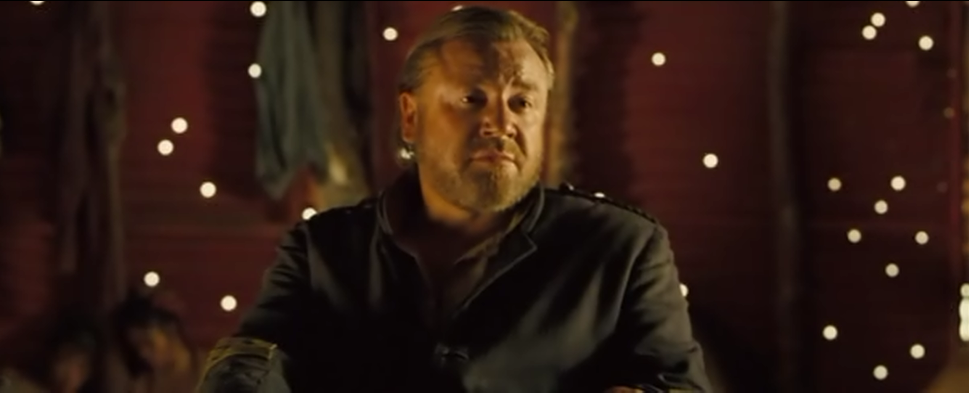
Alternate Best Actor 2005: Ray Winstone in The Proposition
Ray Winstone portrays the other lead of the film the lawman who makes the most unusual proposition to Charlie Burns (Guy Pearce) to kill his brother. Winstone like Pearce gives a very understated performance as the Captain who gives this proposition in his attempt to civilize the Australian Outback. Winstone really has a rather interesting role as the Captain, as this role really very easily could have been an unsympathetic character. After all Winstone certainly is not opposed to playing unsympathetic roles, but in this case Winstone actually gives the most sympathetic performance he probably has ever given.
In his very first scene when the Captain makes the Proposition Ray Winstone portrays it with a calm but clear authority. He shows the Captain who very much intends to get what he wants, but more importantly Winstone here does not portray the Captain as a small minded man. The Captain in telling Charlie about the proposition also tells him how he plans to civilize the land. Winstone in does particularly well in portraying the Captain's sentiments here as partially dream perhaps, but he makes the Captain's statement as one of earnestness and entirely genuine. He makes the Captain an honest man, who is very easy to empathize with his plight.
Winstone is brilliant in internalizing so well the pain the Captain feels over his difficult struggle to try to fulfill his duties. Winstone is perfect in honestly showing how the responsibilities weigh very heavily on the Captain. Winstone importantly shows that the Captain still is very able, intelligent, knowledgeable of what it is that he is doing. Winstone though always conveys that underneath the Captain never is able to alleviate all that is on his mind due to all that is required of him of his job. Winstone carefully never makes this as something too overbearing in his performance, but rather something that is simply part of the Captain he can't get over.
One of the most important parts of the story with the Captain is his relationship with his wife Martha (Emily Watson). The relationship between the two is extremely understated, and at times quite unspoken. Winstone, and Watson are terrific together because despite the quietness in their relationship the two are able to bring to life the two unrequited love together clearly, even though their is a distance as well. Winstone is excellent because through his tenderness in the moments with Watson he shows that the Captain does very much love his wife very deeply, but at the same Winstone always portrays a certain distance as well. Winstone though is careful to show it comes from not wanting to share his pain, and horrible experiences though.
Winstone is terrific in creating the Captain as a man who honestly does want to do what his right, and there is nothing underhanded about his desire to civilize. Winstone is always great in reflecting the very real dangers that the Captain entirely understands, which is especially true in the scene where the Captain's bureaucrat superior Fletcher (David Wenham) orders that the captured and mentally troubled Burns's brother Mikey be whipped for the crimes of Arthur Burns. Winstone, though still staying reserved, is very moving as the Captain tries to convince Fletcher both for the fact that he knows Mikey's mental state, but as well knows what will happen if the proposition is broken. Winstone is amazing as he powerfully shows in this scene the way the Captain can barely hold back his pain due to knowledge of what the consequences will be.
This is really an outstanding performance by Ray Winstone because really the Captain in lesser hands could have been a throwaway part almost, as the complexities of the man could have easily been lost. Winstone though makes the Captain a fascinating three dimensional character whom we can easily empathize with. Importantly though he makes the Captain story just as interesting, and in fact more powerful even than the other half with the Burns brothers. Truthfully the Captain story could have seemed dull compared to the crazy and violent Burns clan. Winstone though never allows his half of the story to sink for even a moment though. He uplifts it at all times creating a full fledged and incredibly poignant portrait of a man whose dream to civilize becomes a nightmare of chaos.
Sunday, 9 December 2012
Alternate Best Actor 2005: Guy Pearce in The Proposition
The Proposition is an effective film about a British lawman making a deal with an outlaw that if the outlaw kills his older brother he will not hang the outlaw's younger brother.
Guy Pearce portrays the outlaw given the proposition that he seems to accept, and goes off to find his older brother Arthur (Danny Huston) while his younger brother Mikey is being held to be hung if Charlie does not kill his brother by Christmas. Pearce portrays one of the two leads in this film, which is a very interesting film in that although there are flamboyant performances in the film from a great number of the supporting cast particularly Danny Huston, and John Hurt as a racist Bounty Hunter, but the leads of the film both give rather understated performances.
Pearce portrays Charlie Burns as a reserved man and does well to show the life of the man is reflected in his face. In the film we only learn of rather limited information about the Burns boys and their endeavors of outlaws. We never do learn exactly how much Charlie and Mikey were really involved with the crimes ascribed to Arthur, but Pearce does well in creating his own history of Charlie through his performance. He portrays Charlie as a rather hard man, certainly with his own wealth of less than savory experiences that seems to have permanently tarnished his expression to at least some degree.
The Proposition is an interesting film in that really one can sympathize with both leads, even though they are in a way at opposite ends. Pearce though allows us to easily follow Charlie through his half of the story as well as sympathize with him by portraying that the driving force that propels him in this story is his concern for his younger brother. Pearce is very strong in creating the strong need Charlie has to protect his brother. In the film itself Charlie says very little in regards to how deeply he cares about, but Pearce very powerfully portrays the very emphatic need Charlie feels to do what is best for his brother.
Pearce really says very little throughout the film, in fact most of the time he is looking at others studying them in some way. Pearce is especially adept at portraying the feelings within Charlie without saying very much at all during his performance. His very best scenes involving this come in all of his scenes with Danny Huston as Charlie's deranged older brother. Pearce is almost completely silent in these scenes but he is perfect in conveying the struggle within Charlie during these scenes on whether or not to kill his older brother to save his younger. Pearce is excellent because he portrays a distaste for his brother, yet at the same time the two actors properly establish a familiarity between the two.
Guy Pearce is a strong presence throughout the film, but his best scenes come at the very end of the film when Charlie finally does choose to act. Pearce is perfect in the last moments of the film portraying the part still very quietly but with tremendous impact as he shows quickly Charlie's grief for his younger brother that quickly becomes a passionate anger against Charlie's older brother. His fierce stare, and his delivery of "no more" Pearce absolutely delivers the necessary impact the final scene of the film deserves, and as well he creates the proper resolution between the relationship between the two brothers.
Guy Pearce gives a very good performance here as the co-lead of the film, and fulfills his half of the film extremely well. Pearce although underplays his role very throughout the film but he does not fail to stand out just the same. Even in scenes with far more extroverted characterizations Pearce never allows himself to be overshadowed in the film. He stays firm in the film doing well in his assured, and realistic reactions in the film. In a way Pearce through his work here even allows the performances of Hurt, and Huston the impact they should through the way he reserves himself in the film. Yet Pearce even in his minimalist approach still creates a remarkable portrait of this outlaw.
Thursday, 6 December 2012
Alternate Best Actor 2005
Guy Pearce in The Proposition
Ray Winstone in The Proposition
Viggo Mortensen in A History of Violence
Tommy Lee Jones in The Three Burials of Melquiades Estrada
Robert Downey Jr. in Kiss Kiss Bang Bang
Alternate Best Supporting Actor 1984: Results
Best Scene: Centauri's introduction.
4. Jeffrey Jones in Amadeus- Jones gives a funny little performance with his reactions throughout the film, but does convey the right command of his character.
Best Scene: The Emperor gives his opinion on Mozart's new opera.
3. Richard Burton in 1984- Burton gives a swan song performance being properly oppressive and cruel as his torturer character.
Best Scene: O'Brien tortures Winston.
2. Hector Elizondo in The Flamingo Kid- Elizondo gives a very moving performance and effectively is the heart of his film.
Best Scene: Mr. Willis meets Mr. Brody.
1. James Wood in Once Upon a Time in America-Woods wins this year easily as he gives the most complex and compelling performance. He creates an incredible depiction of one man's journey of ambition and where it leads him to.
Best Scene: Noodles meets Secretary Bailey.
Overall Rank:
- James Woods in Once Upon a Time in America
- Harry Dean Stanton in Repo Man
- Kenneth McMillan in The Pope of Greenwich Village
- Adolph Caesar in A Soldier's Story
- Pat Morita in The Karate Kid
- Kenneth McMillan in Dune
- Hector Elizondo in The Flamingo Kid
- Denholm Elliott in A Private Function
- Harold Ramis in Ghostbusters
- Tsutomu Yamazaki in Farewell to the Ark
- Richard Burton in 1984
- Jeffrey Jones in Amadeus
- Daniel Day-Lewis in The Bounty
- Sting in Dune
- Robert Preston in The Last Starfighter
- Dan Aykroyd in Ghostbusters
- Roy Dotrice in Amadeus
- Richard Frank in Amadeus
- Rick Moranis in Ghostbusters
- Robert Englund in A Nightmare on Elm Street
- John Candy in Splash
- Powers Boothe in Red Dawn
- John Malkovich in The Killing Fields
- William Atherton in Ghostbusters
- Tim Roth in The Hit
- Sy Richardson in Repo Man
- John Litgow in Footloose
- Richard Crenna in The Flamingo Kid
- Bill Hunter in The Hit
- Amrish Puri in The Temple of Doom
- Dean Stockwell in Paris, Texas
- Treat Williams in Once Upon a Time in America
- Tracey Walter in Repo Man
- Charles Kay in Amadeus
- Fred Gwynne in The Cotton Club
- Richard Griffiths in A Private Function
- Burt Young in The Pope of Greenwich Village
- Martin Kove in The Karate Kid
- Patrick Hines in Amadeus
- Wilford Brimley in Country
- William Zabka in The Karate Kid
- Jonathan Moore in Amadeus
- Bob Hoskins in The Cotton Club
- Denzel Washington in A Soldier's Story
- Wilford Brimley in The Natural
- Simon Callow in Amadeus
- Richard Edson in Stranger Than Paradise
- Rusty Jacobs in Once Upon a Time in America
- Richard Farnsworth in The Natural
- Dan O'Herlihy in The Last Starfighter
- Ernie Hudson in Ghostbusters
- Judge Reinhold in Beverly Hills Cop
- John Malkovich in Places in the Heart
- Pete Postlethwaite in A Private Function
- Rob Reiner in This is Spinal Tap
- Harry Shearer in This is Spinal Tap
- John Ashton in Beverly Hills Cop
- Robert Duvall in The Natural
- Liam Neeson in The Bounty
- Nicolas Cage in The Cotton Club
- James Fox in A Passage to India
- Harry Dean Stanton in Red Dawn
- Danny Glover in Places in the Heart
- Christopher Lloyd in Star Trek III
- Edward Woodward in Champions
- Robert Prosky in The Natural
- Ian Holm in Greystoke
- Charlie Sheen in Red Dawn
- Hard Boiled Haggerty in Micki and Maude
- Alec Guinness in A Passage to India
- Gregg Henry in Body Double
- Matthew Modine in Mrs. Soffel
- Joe Pesci in Once Upon a Time in America
- Richard Jordan in Dune
- Darren McGavin in The Natural
- Ray McNally in Cal
- Nick Apollo Forte in Broadway Danny Rose
- Michael Winslow in Police Academy
- Gregor Fisher in 1984
- Ronny Cox in Beverly Hills Cop
- William Forsythe in Once Upon a Time in America
- Richard Mulligan in Micki and Maude
- C. Thomas Howell in Red Dawn
- DeForest Kelly in Star Trek III
- Mike Monetti in Once Upon a Time in America
- Anthony Andrews in Under the Volcano
- Ed Harris in Places in the Heart
- Bubba Smith in Police Academy
- Nigel Havers in A Passage to India
- Jonathan Banks in Beverly Hills Cop
- James Remar in The Cotton Club
- Danny Aiello in Once Upon a Time in America
- Fernando Rey in The Hit
- Ralph Richardson in Greystoke
- Julian Sands in The Killing Fields
- Steven Berkoff in Beverly Hills Cop
- Dan Hedaya in Tightrope
- Chris Penn in Footloose
- Seymour Cassel in Love Streams
- Patrick Stewart in Dune
- Jose Ferrer in Dune
- Jurgen Prochnow in Dune
- Scott Glenn in The River
- Freddie Jones in Dune
- Wallace Shawn in The Bostonians
- Charles Durning in Mass Appeal
- Johnny Depp in A Nightmare on Elm Street
- Dean Stockwell in Dune
- Bruce Davison in Crimes of Passion
- Brad Dourif in Dune
- Jonathan Ke Quan in The Temple of Doom
- Eugene Levy in Splash
- David Graf in Police Academy
- Andrew Rubin in Police Academy
- Scott Tiler in Once Upon a Time in America
Alternate Best Supporting Actor 1984: Hector Elizondo in The Flamingo Kid
The Flamingo Kid like the Last Starfighter is very much a film of the 80's, nevertheless it is an enjoyable film about a young man Jeffrey (Matt Dillon) who decides to work beach resort being pulled in by the lifestyles of its customers particularly a slick car salesman Phil Brody (Richard Crenna).
Although the film was nominated for one Golden Globe nomination for Richard Crenna, but the best performance in the film was not nominated. I should quickly say that Richard Crenna is fine in his role being both appropriately slick with just the right amount of slime as well hidden by a certain charm. Crenna makes the way Dillon's character becomes fascinated by the man, is made believable by Crenna. The best performance though comes as really the rival of Crenna's character is Elizondo as Jeffrey's father who does not like the path his son is taking.
Hector Elizondo plays the role of Arthur Willis in a very down to earth, and decidedly flamboyant fashion that is rather different from Richard Crenna's performance. Elizondo plays Arthur as very much an honest joe, who works hard and wants the best for his son. In his first scene Elizondo is very good in naturally showing a fatherly camaraderie with his son as they playfully talk to one another. He and Dillon are very good in this scene because they establish properly the good relationship the two have with one another that feel very genuine due to the performances.
The father's role is very much a reality to Jeffrey who tries to convince Jeffrey that the way of life taken by the car salesman is not as good as it looks. Elizondo is extremely good in all of the scenes where Arthur tries to convince his son not to abandon everything that he seemed to value before getting his new job. Elizondo is excellent because he does not show Arthur to be angry with his son over these decisions but instead actually disappointed with him. Elizondo portrays that this disappointment does not stem from Jeffrey not doing what he wants, but rather than he loves his son and wants what is the very best for him.
Even as Jeffrey continues down the wrong path failing to heed his father's warning Elizondo is steadfast in his portrayal that he very much does love son, and that is where the disappointment comes from. Elizondo is very moving as he shows Arthur's sadness slowly grow as he continues to see his son accept values that he knows will not be good for him. Elizondo is very quiet, but terrific in portraying the way his concerns do create a strong understated passion in him. He is particularly strong in his scene where he confronts Crenna, the two are excellent in this scene together as Elizondo plays an upfront quality that plays off well against all of Crenna's slick talking.
This is a very good performance by Hector Elizondo as he stays as the firm presence of good really as he tries to convince his son to do the right thing. He creates his character honestly making every one of his scenes is very moving without every seeming sappy. His final scene is especially effective as he finally reconnects with his son after his son has learned his lesson. The way the two play the scene is marvelously because they both reaffirm the love the son and the father share with on another, yet they do it in a blunt fashion that ends really working due to both Elizondo and Dillon. Elizondo's work is not nearly as showy as Crenna's work, but Elizondo effortlessly makes his character the heart of the movie.
Wednesday, 5 December 2012
Alternate Best Supporting Actor 1984: Robert Preston in The Last Starfighter
The Last Starfighter is certainly a film of the 80's, but there is enjoyment to be had from it. It stays mostly remembered for its story about a young man Alex (Lance Guest) who after getting a high score on an arcade game he finds it is in fact a test to join in an intergalactic battle against an evil empire.
Robert Preston also like Richard Burton is giving his last feature film performance, although there is no reason to assume this here as Preston looks considerably healthier here than Burton did in his film. The Last Starfighter is very much a very typical eighties film about a young man in a trailer park who wants more, but finds is unlikely to go where he wants. There is not anything too notable about until Preston appears in a strange looking car as apparently the inventor of the video arcade game The Last Starfighter which Alex has just gotten the high score on.
Preston takes a unique take on the part of the "man" who gets Alex into the intergalactic battle. This could have easily been a part of a dull mentor perhaps, but Preston instead portraying Centauri as an energetic con man of sorts. Preston does his quick talking thing marvelously here, and is very entertaining as he tries to convince Alex to join the fight. There is the right slightly mischievous grin in his face suggesting that he may have some alternative motives, but as well certainly suggesting there is something fun in store. Preston is just a delight as Centauri.
Centauri might not be as a follower of the cause as he might claim and really his intent is to try to make money for himself by bringing in a Starfighter. Preston is enjoyable because he shows that Centauri is a man, while more an alien who has no second thoughts about just trying to get his fair share of the money no matter what, but it his scene where Centauri seems like he is dead Preston does a very good job in making Centauri noble after all with his final short impassioned speech.
Alternate Best Supporting Actor 1984: Jeffrey Jones in Amadeus
One thing I have to say before I get on with my review is my annoyance in the way the director's cut of the film is used as the preferred cut by distributors. The film is a masterpiece as the theatrical cut, the director's cut adds nothing to the film, and at times very much hurts the perfect pace found in the Best Picture winning original cut.
Anyway with that out of the way onto Jeffrey Jones as the Emperor of Vienna Joseph II considered the musical King who wishes Mozart (Tom Hulce) to become part of his court, even though many of the other musical officials of Vienna dislike Mozart including the jealous Salieri (F. Murray Abraham) the official court composer for the Emperor. Amadeus is a film really with many enjoyable smaller roles filled well by various character actors, but Jones perhaps does the most with his part as the Emperor. His role is not a big one but important to the film.
Jones plays the Emperor as not a man of great power, or necessarily even a man of great substance. Jones finds a very particular way of portraying the Emperor as a bit of a doofus, well at least when it comes with the official musical dealings of the court. Jones is quite good though because he puts a great deal of wit into his portrayal that really could have been far more of an over the top idiot, but instead Jones finds just the right tone in which to play the part.The most important part of this is by taking this approach to the part he frankly is far funnier.
It is an entertaining performance particularly in his short little moments of showing the Emperor's ineptitude like when he struggles to think of a word to describe how he felt about Mozart's first opera for him, and merely takes to heart the suggestion of one of his underlings. Importantly though Jones does not overplay the stupidity of the Emperor, as there are other times where he believably shows himself to at least be a leader of some sort. In the way he carries himself, and addresses others he does suggest the right undercurrent of power in the man, but as well as a certain welcoming quality within in.
Jones finds a way to play the Emperor as he should be by supplying both laughs in displaying the Emperor's lack of musical knowledge, but as well that this man is an Emperor after all. He is particularly very good in the scene where Mozart pleads his case to be able to put on the Barber of Seville. He does well in conveying a genuine interest in the artists endeavor, but as well just the right power in his oppositions. As the Emperor states his own case Jones is convincing in that he is not opposed because he is stupid, but rather it does stem from a genuine concern as the leader of his people. This is not an especially complex part, but Jones handles it just right and adds quite a bit of joy to his film.


