Friday, 25 September 2015

Alternate Best Actor 1940: Results

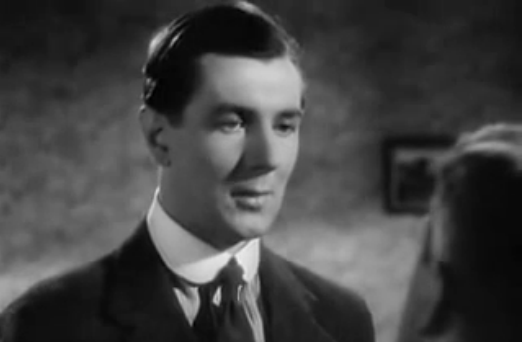
5. Michael Redgrave in The Stars Look Down - Redgrave, despite being somewhat limited by his film, gives an effective depiction of a shy man finding courage for a cause.

Best Scene: His last speech.
4. Laurence Olivier in Pride and Prejudice - Although apparently in the minority I find Olivier gives a charming and rather funny portrayal of an excessively proper gentleman.

Best Scene: His failed proposition.
3. Edward G. Robinson in Brother Orchid - Robinson calls upon his more serious gangster performances then cleverly subverts them to give a comic, and surprisingly moving portrayal.

Best Scene: Brother Orchid is denounced.
2. Cary Grant in His Girl Friday - Grant gives a very entertaining performance that creates the properly dominating and manipulative presence of the character while still being quite charming.

Best Scene: The final sequence.
1. James Stewart in The Shop Around the Corner - Good Predictions Michael Patison, Jackiboyz, ruthiehenshallfan99, and RatedRStar. Stewart gives an immensely likable and sympathetic performance that is a great example of his appeal as a leading man.

Best Scene: Alfred confronts Vadas.
Overall Ranking:
  1. Laurence Olivier in Rebecca
  2. Charlie Chaplin in The Great Dictator
  3. James Stewart in The Shop Around the Corner
  4. Henry Fonda in The Grapes of Wrath
  5. Conrad Veidt in Contraband
  6. Cary Grant in His Girl Friday 
  7. Edward G. Robinson in Brother Orchid
  8. Laurence Olivier in Pride and Prejudice
  9. James Stewart in The Mortal Storm
  10. Michael Redgrave in The Stars Look Down 
  11. Brian Donlevy in The Great McGinty 
  12. W.C. Fields in The Bank Dick
  13. Joel McCrea in Foreign Correspondent 
  14. Errol Flynn in The Sea Hawk
  15. Henry Fonda in The Return of Frank James
  16. Stanley Ridges in Black Friday
  17. Cary Grant in My Favorite Wife
  18. Raymond Massey in Abe Lincoln in Illinois 
  19. Boris Karloff in Black Friday
  20. Cary Grant in The Philadelphia Story
  21. Tyrone Power in The Mark of Zorro
  22. Dickie Jones Pinocchio
  23. James Stewart in The Philadelphia Story
  24. Charles Laughton in They Knew What They Wanted 
  25. Frank Craven in Our Town
  26. William Holden in Our Town
  27. Mickey Rooney in Strike Up The Band
  28. Gary Cooper in The Westerner 
Next Year: 1940 Supporting

Alternate Best Actor 1940: James Stewart in The Shop Around the Corner

James Stewart did not receive an Oscar nomination for portraying Alfred Kralik in The Shop Around the Corner.

The Shop Around the Corner is an enjoyable romantic comedy about the various things going on in the titular shop.

James Stewart's Oscar win must be noted as a bit of a head scratcher, as his win for The Philadelphia Story is perhaps most notable because it gave Stewart his only competitive Oscar. It always feels a bit of a shame as for me personally it is his only Oscar nominated performance that I don't either really quite like or flat out love. Insult is added to injury is when one realizes that it was not even Stewart's best work from 1940. Stewart here once again plays a romantic lead, although this time this time it more closely focuses on his character unlike The Philadelphia Story where one could possibly argue that both he and Cary Grant were supporting Katherine Hepburn the whole time. Stewart's given a far more substantial role here as a salesman at a leather goods shop. Stewart naturally makes Alfred extremely likable with his easy going charm that is not more fitting for the director, Ernst Lubitsch's fairly, although not quite entirely, breezy tone that he establishes for the lighthearted story. Stewart could not feel more effortless in the role and is an extremely easy lead to follow through this romantic comedy.

Actually one of the things I did not care for in his performance in The Philadelphia Story was that I felt Stewart actually made his character's disgust and boredom at his task of covering socialites a little too realistic to the point that he was a bit too off putting for it to be fun. Stewart actually directly fixes that mistake with this performance as he must conveying a similair sentiment in his earliest scenes with his eventual love interest, Klara Novak, played by Margaret Sullavan. The early set up is that she's the new employee at the shop whose particular method of selling items quickly gets on Alfred's nerves. Stewart now this time strikes exactly the right tone in portraying this. He certainly gets across just how much Klara gets under his skin in his fairly intense reactions, but Stewart accentuates them in the right fashion in which they become appropriately comic without being too ridiculous. Stewart while driving the humor from it properly he also makes the initial conflict between the two characters actually feel wholly honest rather than simply just the superfluous and rather thin barrier to be broken down throughout the story. 

What's worth nothing on Stewart's work though is that he never treats any element of the film just a means to get to the eventual happy end of the film. Stewart does not allow any part of it just to be taken for granted, and succeeds in realizing any aspect of Alfred's life not simply making him feel stuck in the romantic comedy structure. One of the subplots is dealing with the high strung nature of his boss Mr. Matuschek (Frank Morgan) which causes some minor problems earl yon but these problems grow as Matuschek becomes concerned about more pivotal things in his life. This inadvertently effects Alfred early on though eventually it becomes directly problematic for him. Stewart is very good in portraying Alfred's rightful frustrations at the behavior, and is quite moving when portraying the severe disappointment when it appears that Mr. Matuschek's paranoia has gotten the best of him causing him to fire Alfred. Stewart, as per usual, makes this feel so honest that he makes it incredibly easy to sympathize with Alfred's plight during these scenes. Things switch around soon enough though when, through very problematic circumstances, Mr. Matuschek comes back to his senses.

Stewart is great in the scene where Alfred takes on the actual source of Mr. Matuschek's misery, bring that classic Stewart passion into Alfred's disgust which makes the moment rather powerful. The film after all is a romantic comedy though so an essential element of it is the relationship. In this case they are quite dismissive of one another, even though they unknowingly write love letters to one another. What works so well is that Stewart and Sullavan do not depict is that immediate switch from hatred to love. Simply in their scenes together, where they are not necessarily interacting all that much, Stewart and Sullavan slowly depict just a gradual distinguishing of hostilities. There are occasional fall backs to some more aggressive behavior but both actors make this feel particularly natural. The two of them earn the eventual heartwarming sweetness that comes from the ending, since neither of them make it easy by having either the love or the fights seem forced in the least. It's lovely work from the both them. For Stewart this is a great example of just what made him so appealing as a leading man, and if he had to win leading actor for 1940 it should have been for this performance. 

Thursday, 24 September 2015

Alternate Best Actor 1940: Laurence Olivier in Pride and Prejudice

Laurence Olivier did not receive an Oscar nomination for portraying Fitzwilliam Darcy in Pride and Prejudice.

Pride and Prejudice is an enjoyable enough film about the complications that ensue from five sisters without inheritance attempting to find proper suitors.

Having not seen any other versions of the story nor read the book, I'm going into this interpretations with absolutely no idea about the true nature of the story, or perhaps how the tone should be. This as just a film though I felt worked as basically "proper" screwball romantic comedy. A great deal of a reason for this is Laurence Olivier as Mr. Darcy who we meet as one of the targets of the Bennet sisters' mother for a proper suitor for her daughters. Mr. Darcy though is not the sweeping romantic type though, and Olivier actually takes a similair approach to the character that Daniel Day-Lewis would later take with a somewhat similair role in A Room With A View. That being that Olivier goes about portraying Darcy as an excessively proper English Gentleman, particularly in the early scenes where he first meets the Bennets including Elizabeth (Greer Garson). He makes a poor initial impression by making his patrician attitudes known out loud, and Olivier depicts him as a man almost constrained within himself in his tight movements, and the fairly stilted voice he uses as though every words has been rehearsed over and over again beforehand.

Olivier, like Day-Lewis in that later film, does a great service to the film through his work as he makes Darcy quite an amusing presence in the film by making his proper behavior extreme enough that it actually becomes quite comic. The best part about this is that there is nothing that Darcy does that is necessarily funny in itself but Olivier effortlessly brings out through his purposefully overt performance. Although Olivier does technically over do it, so the character is funny rather than just serious and dour as I feel he easily could be, Olivier does not over do it to the point that Darcy is merely a caricature either. Rather Olivier is quite effective in fashioning the barrier necessary for the character, since there must  be some transition for Elizabeth. Olivier interestingly is able to help realize this through his own performance as he depicts the surface of the man as almost impenetrable. Olivier does not do this in order to portray Darcy as cold or unfeeling, but rather fashions the reserve fitting for a man who has spent all his life learning to behave in this distinctly proper fashion even though it may not actually be the true nature of Darcy after all.

Although much of his performance is in the role of being a tad overstuffed, and entertainingly so, Olivier is terrific in alluding to the better nature of Darcy quite early on. The moments where she purposefully embarrasses him Olivier quietly depicts Darcy not reacting like a simple pompous fool being surprised, but rather a more complex man being honestly hurt by this treatment. My favorite scene of Olivier's has to be his initial proposition of marriage of Elizabeth that rejects as in the single scene it shows exactly what's so good about Olivier's performance. In his stumbling proposal Olivier is very funny as well as in his needlessly direct responses to Elizabeth when she announces her objections, as he always stays as the proper gentlemen who never should be too emotional. My favorite moment in the scene is as Darcy exits the room, and its only a brief moment though an extremely important one. When Darcy finally turns his head away from Elizabeth's view Olivier shows just how genuinely torn apart emotionally Darcy is by the rejection, and in the moment Olivier is quite moving by revealing the sensitive man he really is. Olivier is able to make Darcy transition from pompous charmless gentleman to the perfect rather charming gentleman a wholly effortless one, by creating the sense that Elizabeth brings this better side out of him. It's not a change exactly, but rather simply having him shed some of his thick shell he learned over the years. It's strong work from Olivier and I doubt I would have liked the film to the same degree if it were not for his performance, as much of the humor of the film comes from him. It's a splendid performance, that might not be his best work from 1940, but that's hardly a problem. 

Monday, 21 September 2015

Alternate Best Actor 1940: Cary Grant in His Girl Friday

Cary Grant did not receive an Oscar nomination for portraying Walter Burns in His Girl Friday.

His Girl Friday is an entertaining remake of the Front Page about an editor attempting to get their retiring top writer through various schemes around an up coming state execution.

The major change in this version of the story is that the top writer Hildy has been made into a woman played Rosalind Russell, and that she had been formerly married to the editor played by Grant. Naturally she's attempting to get away from town with her fiancee Bruce played by Ralph Bellamy, because who else would that role be played by? I've covered Grant before in the scheming husband with The Awful Truth where he tried to win back Irene Dunne by tripping up Ralph Bellamy in more ways than one. In that film though Grant portrayed these attempts with a certain meekness about them, and that everything he did was a bit haphazard. Grant with Walter Burns takes a different approach as he makes Walter Burns a much more dominating force in the film as the editor from his earliest scene, as he first hears about Hildy's attempt to leave him and the paper behind permanently, something he obviously intends to put a stop to anyway he can.

Cary Grant is terrific in allowing for a bit of his change from the luckless romantic with an attempt at a scheme brewing. Grant here portrays Walter as a man who absolutely knows his plan from the start, and is technically playing the game every second he's on screen. Grant realizes this within his performance with the sort of ease he always has in a romantic comedy sort of role, but here he does adjust it quite nicely to fit the part of Walter. Grant makes Walter far more active in his methods and Grant does have this certain command about him in any scene, as there is always an underlying confidence as though Walter is already quite sure everything is going to go his way before he even starts his plan. Grant's reactions are great here particularly when Hildy first starts to tell Walter about Bruce. Grant is so hilariously cruel actually in his exceedingly sarcastic manner as he hears every detail about her supposed new life that she's quite happy to start. What's so remarkable is that Grant never loses his innate charm even when he technically is doing some rather reprehensible things to service his plan.

The idea of adding the editor and the writer being romantically involved on paper actually is often the cliche of what someone does in order to ruin an original idea. It's what makes His Girl Friday stand out as a remake, besting the Front Page as a film, and finding new ground in the story through this variation. The variation though is made all the better by having Grant and Rosalind Russell as the divorced team. Russell and Grant are wonderful together. Firstly by just how well both have a grasp on the material, in fact I'd actually say Russell perhaps even bests Grant in this regard. Within that though the two have spectacular chemistry together, but what's so special about it is that they really don't exactly have any romantic scenes in this romantic comedy. The closest it comes is a couple of seconds near the end of the film. The two though to create the idea that the two should be together through their non-romantic interactions throughout the film, as Grant and Russell just make it as though Hildy and Walter seem on the wavelength, particularly in the memorable conclusion of the film.

Grant manages to effortlessly work within the somewhat swift pace of the film and particularly its dialogue which often juggles many things at once. Grant never loses step once as he so well realizes Walter's controlling ways of the whole situation. Whether that is putting on all the supposed charm and a sort of repentant attitude when trying win Hildy again in the early scenes of the film before they sort of join forces but then at a moments notice when dealing with one of his men whose help facilitating everything for him Grant switches perfectly to the fairly cutthroat editor whose eyes show he knows exactly what he's doing. Some of my favorite moments though may be the ones that he shares with Bellamy, as Grant makes Walter on even more of an act than usual as what he says and the way he moves feels so genuine even while he simply comes up with one way after another to imprison the poor guy in order to keep him away from Hildy. Grant is incredibly entertaining here as he makes the most of the dialogue absolutely nailing every one liner he has well making the the dialogue flow beautifully. This is splendid work from Grant and one of his best performances within the genre he was so well known for.

Saturday, 19 September 2015

Alternate Best Actor 1940: Edward G. Robinson in Brother Orchid

Edward G. Robinson did not receive an Oscar nomination for portraying "Little" John T. Sarto also known as the titular Brother Orchid.

Brother Orchid is a slight though quite enjoyable comedy about a retired gangster trying to reclaim his crown, though nothing turns out the way he expects.

Edward G. Robinson was no stranger to playing gangsters as he originally made his name through Little Caesar. Little Sarto is a lot like Caesar, if Caesar lasted a bit longer, and lived in a nicer world to begin with. The early scenes of the film are quite interesting to basically watch Robinson play the part of Little Caesar but in a comedy. What's so great is that Robinson does not take this as an excuse to not take things seriously. Robinson isn't far off from the way he handled Caesar, other than there is just a strong innate likability he brings to Little Sarto to begin. Caesar always seemed a bit unpleasant, that's not the case for Sarto. Robinson still though would be convincing with the same performance even in a more serious minded film, as he still carries himself with the command and certain menace that he brings so effortlessly with his presence. Robinson manages to use this for the purposes of comedy quite effectively since he ends up playing everything in such a surprisingly straight fashion. 

Robinson does not change his manner much that's what makes it so much fun to watch Robinson being basically Little Caesar though doing some things that are exactly fitting to Little Caesar. Little Sarto isn't really that different of a guy but in the early scenes of the film he's far more interested in where's he's going to be spending his retirement while having a very relaxed approach towards the life of the gangster. It's a great deal of fun just to watch Robinson do some pretty unassuming and non-threatening actions while still performing it as if he really was a big time mobster. There is actually really a surprising sweetness to this behavior that Robinson realizes as though Little Sarto is almost playing gangster, since he does not really have that edge that would require one to be a true mob boss. Robinson quietly shows that even though he's able to exude that tough exterior deep down he's a big softie. This is what Sarto unfortunately discovers when he attempts to reclaim his place as top dog, as his original second in command Jack (Humphrey Bogart) is not too keen on giving up what he got from Sarto's abrupt departure.

This leads to a gunfight which leaves a severely wounded Sarto who only finds refuge at a monastery full of monks. Here is where Robinson alters his performance slightly, but he does it so delicately that it absolutely works. What Robinson changes that he does start more directly going for laughs, although he was certainly getting them beforehand when not trying to do so. This is not a bad thing at all though as Robinson acts as the comic foil against the extreme straight men that are the monks played in a very calm and stoic manner. Robinson is hilarious though as he makes the gangster attitude and mannerisms all become a bit thicker as to accentuate the way Sarto just does not fit in, even after he decides to join the monks, in order to just use the place as a hide out while he plans his comeback. The way Robinson is just so off and out of place with the rest works in creating a series of funny moments. I particularly enjoy the way Robinson so quickly sounds off constant gangster speak that plays so well off against the monks who speak in a very straight forward fashion.

During his time with the brothers though Robinson does have some slight and momentary reactions that are very effective in suggesting that perhaps Sarto's beginning to see the place as a bit more than just a way for him to avoid his pursuers. Nevertheless Sarto decides to cut corners in his duties  as the new novice brother, brother Orchid, by stealing milk as well as hiring a local boy to do some of his chores for him. This is eventually found out by a senior brother which leads him to announce this shame in front of the whole monastery. The moment is surprisingly heartfelt due to Robinson makes Brother Orchid's breakdown so genuine as he reveals how much he has enjoyed his time in the monastery revealing a stronger pride in his life than he ever did as a gangster. This whole setup could have fallen very flat. Robinson not only manages to make it believable that Sarto could transform himself into Brother Orchid, but also that he makes this transformation and realization as heartwarming as it is. This is wonderful work by Robinson as he turns his usual image on his head, to give a delightful performance.

Wednesday, 16 September 2015

Alternate Best Actor 1940: Michael Redgrave in The Stars Look Down

Michael Redgrave did not receive an Oscar nomination for portraying Davey Fenwick in The Stars Look Down.

The Stars Look Down an effective film depicting the hardships a mining village in England.

Michael Redgrave played Davey who we follow through most the story as the son in a family of mine workers, although he's studying in order to go to university. Redgrave is indeed the lead though the film gives ample time to the community of the miners particularly in the opening scenes where Redgrave's appearances are somewhat sparse. In the few appearances we do see him though Redgrave makes for a likable enough lead, and does well to realize two sides to Davey's character. The first being the somewhat shy and unassuming bookworm type. Redgrave has a particularly meek manner and a very meek voice. Redgrave portrays this quite naturally which is very important for what his character means for the film. Although the miners show their discontent they don't have an exact voice, and this is what Davey intends to be, which might seem odd considering how he usually behaves. Redgrave's approach is an intelligence one that gives a certain arc for his character that might not have been there otherwise.

This is found through his delivery of four key speeches throughout the film. In the first speech, which is particularly impromptu, Redgrave is very good in portraying all the passion in Davey as it is fierce and you really feel the emotions that pour into. At the same time though Redgrave makes it tense and sharp in a way that is not that of a natural speaker. The shyness is there in the speech, even though the speech itself is an extroverted act, Redgrave does well to depict the sort of hesitation and effort required for such a man to do this. At this point Davey goes away to University to where gets into vying for the affection of a young woman with the more outgoing Joe Gowlan (Emlyn Williams), the young woman Jenny being played by Redgrave's The Lady Vanishes co-star Margaret Lockwood. Where Redgrave and Lockwood were quite endearing in Hitchcock's comedic thriller, this relationship is very different. Well of course Redgrave plays an introverted fellow rather than his extroverted outgoing hero in that film, and instead of playing a spunky heroine plays a vapid woman.

During this time we are given his second speech in a college debate which Redgrave begins to give a bit more refinement in his speech, though there is still a certain weakness, and distance reflecting that in the moment Davey is not in the presence of the people he wants to fight for. At the same time the relationship continues and Redgrave and Lockwood once again have chemistry though this time of a different sort. Redgrave depicts Davey's interest in Jenny with all earnestness, and shows him to almost be in fear in his interactions with her as though he is so taken aback that she is bothering to give him the time of day, even though she's really just using him as a game on Joe. Joe rejects the game leaving Davey for Jenny to fall back on who takes her to his home, which she is not particularly found. Lockwood and Redgrave are quite good at striking up the right sort of awkwardness as her thin personality results in constant complaints and strong passive aggressive streak, while Redgrave so well portrays Davey's terrible state of clearly being ruled by infatuation while realizing simply a resigned confusion idea with Davey on what to do with her behavior.

Although his return home does not work for his marriage it brings him to make one more attempt for some sort of reform. This third speech Redgrave earns Davey as finally being in his element with the passion and power of persuasion in his force. There's no hesitation in this case as he makes his speech, it only comes when he pressed on his marital woes, and Redgrave is quite good in how he slightly reduces Davey to his meeker self when reminded of his personal weaknesses. The film's final act actually forced Redgrave to disappear for much of it as it instead focuses on a group of men stuck in a mine, and the efforts to attempt to rescue them. Redgrave isn't even given much to do in between the lines so to speak in these scenes as he's simply off screen much like the early scenes of the film. He's never really given any focus again until right near the end of the film where Davey gives his last "speech", which isn't a speech at all, but rather a rejection of his earlier position as the speaker for the miners. It's a powerful moment as Redgrave shows Davey's grief and apparent final understanding of the world. Although Redgrave's character is often sidelined, he still manages to give a moving and compelling portrait of a man finding his place in life.

Monday, 14 September 2015

Alternate Best Actor 1940

And the Nominees Were Not:

Edward G. Robinson in Brother Orchid

Cary Grant in His Girl Friday

James Stewart in The Shop Around the Corner

Laurence Olivier in Pride and Prejudice

Michael Redgrave in The Stars Look Down